Growth Stages and Development Differences
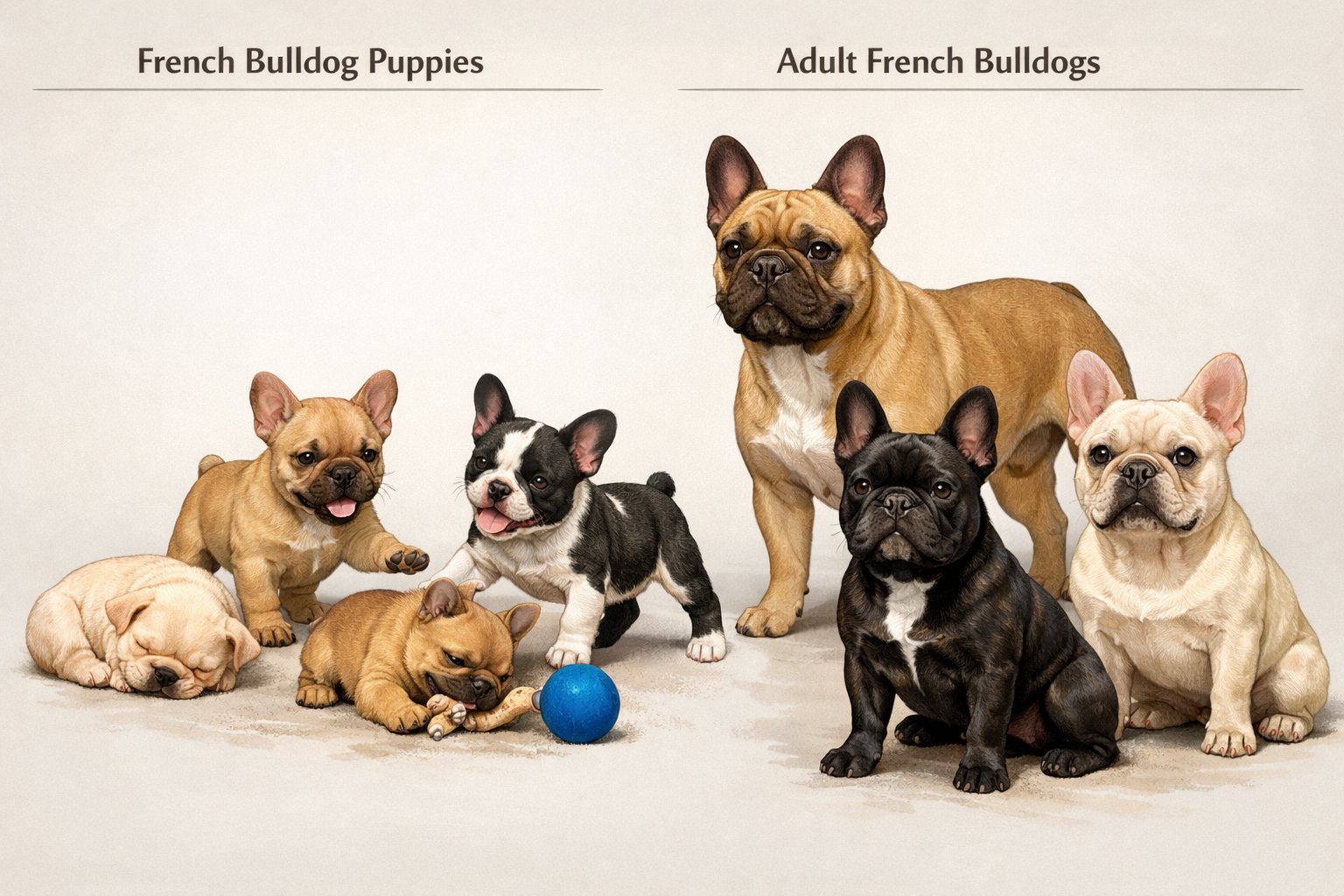
French Bulldogs change fast from birth to adulthood. Each stage brings clear shifts in size, behavior, and care needs.
Newborn to Weaning: Milestones and Needs
Newborn French Bulldogs depend fully on their mother. A newborn french bulldog cannot see or hear at first and spends most time sleeping and nursing.
During the earliest french bulldog growth stages, weight gain matters more than play or training. Care focuses on warmth, steady feeding, and safety.
Handling should stay gentle and brief.
Key needs during this stage include:
- Warmth to support body temperature
- Frequent nursing for steady growth
- Low stress to protect health
As explained in guides on French Bulldog growth stages from birth, eyes and ears open within the first few weeks. By weaning, newborn french bulldogs start to stand, wobble, and react to sound.
Puppyhood to Adolescence: Socialization and Training
A french bulldog puppy becomes alert, curious, and social between 8 weeks and 6 months. This period shapes behavior more than any other stage.
French bulldog puppies need daily exposure to people, sounds, and safe places. Short training sessions help them learn manners and basic commands.
Consistency matters more than strict rules.
Important focus areas include:
- Positive social contact with people and pets
- Basic training like sit and leash walking
- Balanced food to support french bulldog growth
Growth charts, like those used in French Bulldog puppy growth tracking, show rapid weight and muscle changes. Adolescence may bring stubborn behavior, so patience stays important.
Adulthood: Personality, Maturity, and Physical Changes
Adult French Bulldogs reach full height by about 10–12 months. Most filling out finishes soon after, as noted in studies on when a French Bulldog stops growing.
Adult french bulldogs show steadier energy and more predictable behavior. Training holds better, and routines feel easier to manage.
Common adult traits include:
- Stable temperament with strong attachment to owners
- Moderate exercise needs, not intense activity
- Ongoing health care to manage weight and breathing
An adult french bulldog keeps the playful personality of puppyhood but needs less supervision and fewer daily adjustments.
Comparing Puppies vs. Adults: What Owners Should Know

French Bulldog puppies and adults bring different needs, costs, and daily routines. Owners should understand training time, health risks tied to a brachycephalic breed, and how age affects temperament and lifestyle fit.
Training and Socialization Needs
French Bulldog puppies need daily training and steady social time. They learn house rules, leash manners, and basic cues from scratch.
Short sessions work best because attention spans stay limited. Early exposure to people, pets, and sounds helps shape calm adult behavior.
Adult French Bulldogs often arrive with habits already formed. Many know basic commands and may be house-trained.
This saves time but leaves less room to change behavior. Adopting adults often means working with known traits, which many owners prefer.
Articles comparing adopting an adult French Bulldog vs a puppy highlight how predictability can reduce stress for first-time owners.
Health Considerations and Vet Care
French Bulldogs face health risks at all ages due to their brachycephalic build. Flat faces raise concerns tied to brachycephalic syndrome, including breathing trouble and heat sensitivity.
Puppies need vaccines, parasite control, and spay or neuter surgery within the first year. Adults may already show signs of chronic issues.
These can include airway limits, skin folds infections, or joint strain. Weight matters at every stage.
A healthy French Bulldog weight usually ranges from 16–28 pounds, depending on size and build. Owners often track growth using a French Bulldog growth chart during puppyhood.
Breed health guidance from the American Kennel Club’s French Bulldog overview explains these risks clearly.
Lifestyle, Commitment, and Temperament
Puppies demand more time at home. They need frequent bathroom breaks, feeding schedules, and close supervision.
Growth happens fast, and routines change often during the first year. Puppies also test limits, which requires patience and consistency.
Adult French Bulldogs usually settle into calmer patterns. They nap more and handle short periods alone better.
Temperament stays easier to predict, which helps match the dog to the household. Most adults still enjoy play but balance it with rest.
Their compact size and moderate exercise needs fit apartment living well when owners manage heat and breathing limits.
Common Challenges and Rewards
Puppies challenge owners with chewing, accidents, and night waking. Vet bills add up early.
Training mistakes can set habits that last. Owners shape behavior from the start and watch steady growth into adulthood.
Adults may bring unknown history. Some need help adjusting or unlearning past behaviors.
Medical costs may rise sooner. Many owners value giving an adult French Bulldog a stable home while gaining a dog with a clear personality and lower daily training demands.