Key Qualities That Make French Bulldogs Outstanding Companions

French bulldogs stand out as companion dogs because they form strong bonds, adjust well to daily routines, and stay calm in busy homes. They suit many households, from single adults to families with pets.
Affectionate and Loyal Nature
French bulldogs rank high among affectionate dogs because they enjoy close contact with their people. They often follow owners from room to room and prefer to rest nearby.
This behavior reflects the loving and affectionate nature of French Bulldogs, which many owners value in a companion dog. A frenchie shows loyalty through attention rather than guarding.
They respond well to calm voices and gentle handling. This makes them easy to bond with, even for first-time dog owners.
They also read human moods well. Many owners notice their french bulldog becomes quiet during stressful moments and playful during relaxed times.
Adaptability to Different Lifestyles
Frenchies adapt well to many living situations. They do not need long daily runs and feel comfortable in apartments or houses.
This flexibility explains why French Bulldog personality traits appeal to city and suburban owners. They adjust to work schedules as long as they get steady attention.
Short walks, indoor play, and routine feeding keep them content.
Lifestyle fit at a glance
| Situation | How French Bulldogs Respond |
|---|---|
| Apartment living | Calm indoors, low space needs |
| Busy owners | Do well with routines |
| Quiet homes | Relaxed and observant |
| Active homes | Playful in short bursts |
This balance helps frenchies stay easy to manage without constant activity.
Good With Children and Other Pets
French bulldogs usually show patience with kids when adults set clear rules. Their size and friendly temperament help reduce rough play.
Many families describe them as good with children because they prefer gentle interaction. They also tend to be good with other pets.
Early social time helps them accept cats and other dogs without tension. A french bulldog often treats new animals as part of the group rather than a threat.
Supervision still matters, especially with young children. With guidance, frenchies fit smoothly into multi-pet and family homes.
Unique Features and Care Considerations
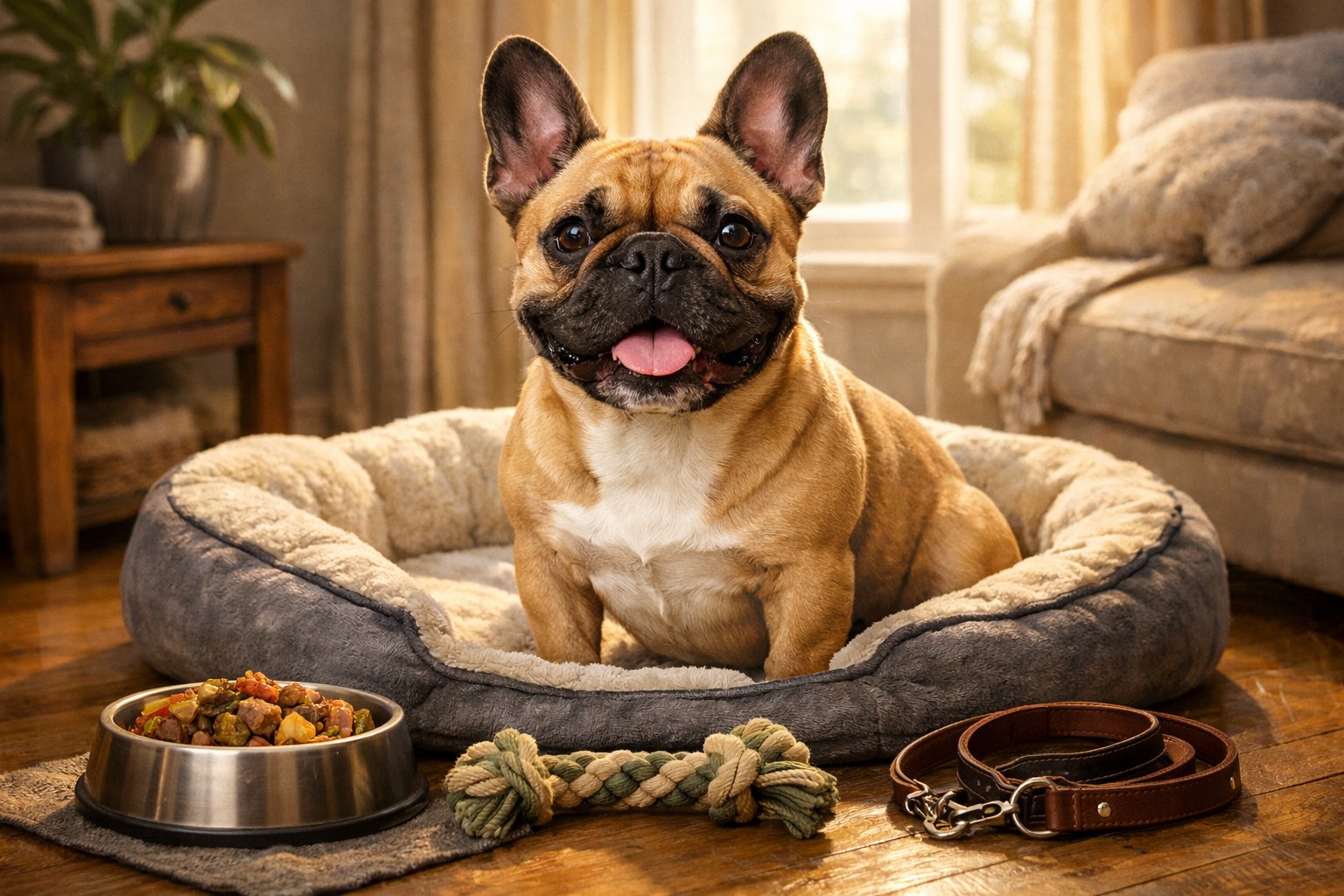
French Bulldogs stand out for their looks, easy daily care, and well-known variations. Their bodies, faces, and coats shape how owners care for them at home.
Distinctive Appearance and Physical Traits
French Bulldogs have bat ears, a wrinkled face, and a compact size that fits well in small homes. They usually weigh under 28 pounds and have a strong, muscular build.
Their short nose gives them a flat face, which many people love, but it also affects breathing. These traits mean owners should watch heat and exercise levels.
Long runs and hot weather can stress them. Vets often note breathing limits tied to flat faces, which owners should plan for, as explained in this guide to French Bulldog breed characteristics and care.
French Bulldog puppies show these traits early. Their ears often stand up within the first few months, and facial wrinkles deepen as they grow.
Low Maintenance and Grooming Needs
French Bulldogs have short coats that shed lightly and need simple grooming. Weekly brushing removes loose hair and keeps skin healthy.
Bathing every few weeks usually works well. Daily care focuses on skin folds and ears.
Moisture can build up in wrinkles, so gentle cleaning helps prevent irritation. Nail trims and dental care also matter.
Basic grooming tasks
| Task | How Often | Why It Matters |
|---|---|---|
| Face fold cleaning | Daily | Prevents skin infections |
| Brushing | Weekly | Reduces shedding |
| Nail trimming | Monthly | Supports joint health |
Their grooming needs stay low compared to many breeds, as noted in this overview of French Bulldog physical traits.
Popular French Bulldog Variations
French Bulldogs come in several coat colors and types. Standard coats include fawn, brindle, and cream.
Some owners seek rare looks, such as the lilac French Bulldog, which shows a pale gray-purple coat due to specific genetics. Another growing trend is the fluffy French Bulldog.
This type has longer hair caused by a recessive gene. While eye-catching, it needs more brushing than standard coats.
Color and coat do not change personality, but some rare traits link to higher costs and added care. Breed guides like this complete French Bulldog overview explain these differences in clear terms.
Important Health Insights for Owners
French Bulldogs bring a lot of joy, but they also have specific health needs. Owners who understand breathing limits and common medical risks can make better daily choices and spot problems early.
Brachycephalic Traits and Breathing
French Bulldogs are a brachycephalic breed. They have short noses, narrow airways, and compact skulls.
These traits shape how they breathe, rest, and handle exercise. Many Frenchies face BOAS, which stands for brachycephalic obstructive airway syndrome.
This condition can cause loud breathing, snoring, heat stress, and trouble after activity. Hot weather and overexertion raise the risk.
Owners should keep walks short, avoid midday heat, and watch for signs like heavy panting or blue gums. A vet familiar with brachycephalic breeds can explain testing and treatment options, including lifestyle changes or surgery when needed.
Detailed guidance appears in this expert guide to French Bulldog breathing risks and BOAS.
Common Health Concerns
French Bulldogs also face several non-breathing health issues. Skin allergies, ear infections, and eye problems rank high on the list.
One well-known eye issue is cherry eye, which causes a red bulge near the eyelid and often needs treatment.
Back health matters too. Their short, muscular build increases the risk of intervertebral disc disease (IVDD).
IVDD can lead to pain, weakness, or trouble walking. Jumping off furniture often makes it worse.
Owners can help by using ramps and keeping weight stable. Scheduling regular vet visits is also important.
Veterinarians outline these risks clearly in discussions about French Bulldog health concerns and care needs.