French Bulldog Feeding Schedules by Life Stage
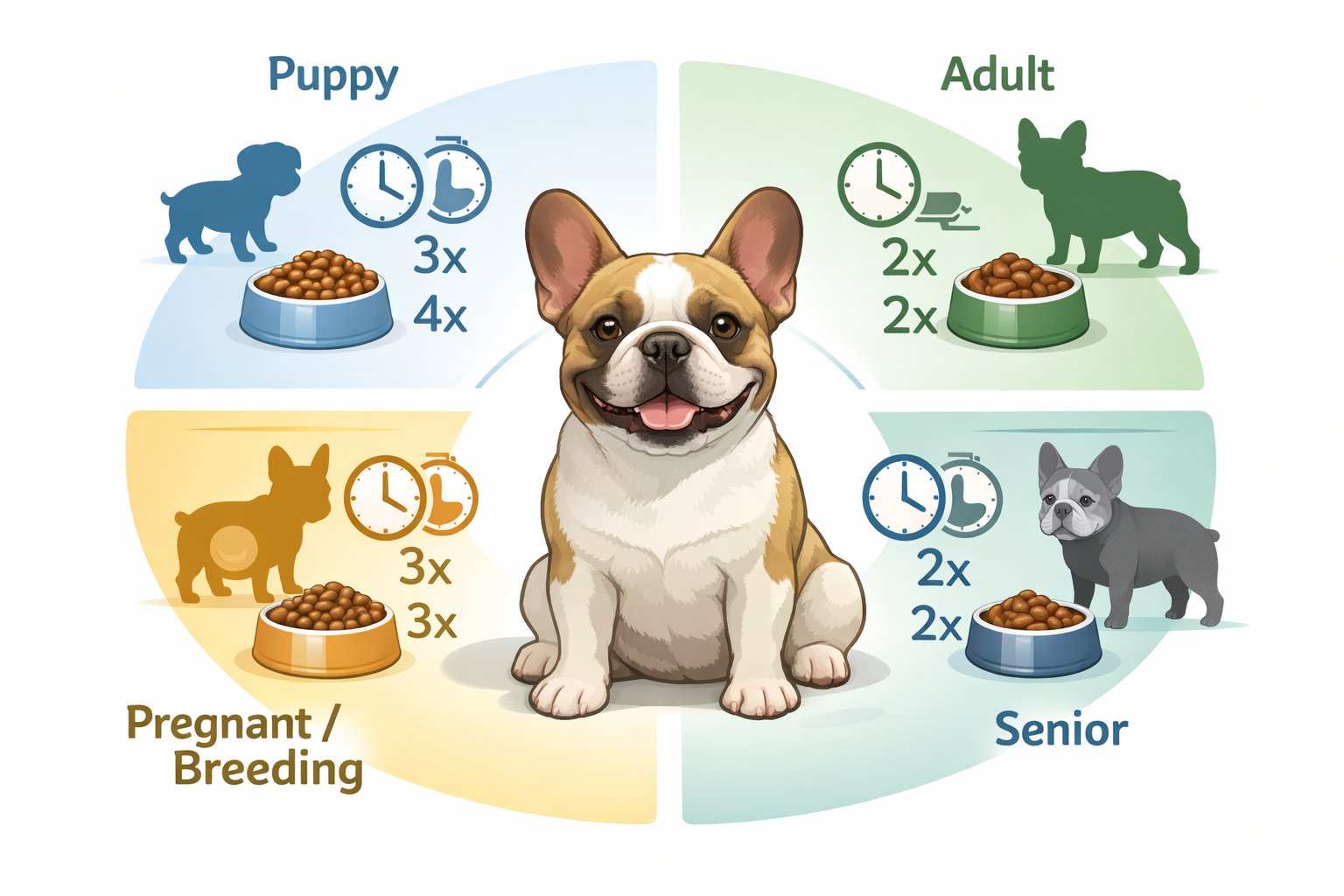
French Bulldogs need different feeding times and portion sizes as they grow. Age affects how often they eat, how much food they need, and what kind of diet works best for their body.
French Bulldog Puppy Feeding Schedule and Amounts
French Bulldog puppies need frequent meals to support fast growth. Most puppies eat 3–5 meals per day, depending on age.
Younger puppies eat smaller portions more often to avoid stomach upset. A clear french bulldog puppy feeding chart helps owners track meals by age and portion size.
Many vets suggest starting with puppy-specific food that supports bone and muscle growth. Owners should measure each meal and avoid free feeding.
Typical puppy feeding guide by age:
| Age | Meals per Day | Approx. Portion |
|---|---|---|
| 4–8 weeks | 4–5 | 1/4–1/2 cup |
| 8–12 weeks | 3–4 | 1/2–3/4 cup |
| 3–6 months | 3 | 3/4–1 cup |
A detailed French Bulldog puppy feeding schedule by age gives helpful examples. Owners should adjust portions based on weight and appetite.
Adult French Bulldog Feeding Times and Portions
Adult French Bulldogs do best with two meals per day, spaced about 10–12 hours apart. This routine supports steady digestion and helps control weight.
Most adults eat 1 to 2½ cups per day, split evenly. Portion size depends on body weight and activity level.
Less active dogs need smaller meals to prevent weight gain. Measuring food matters more than guessing.
Adult feeding chart by weight:
| Weight | Daily Amount |
|---|---|
| 16–20 lbs | 1–1½ cups |
| 21–25 lbs | 1½–2 cups |
| 26–30 lbs | 2–2½ cups |
A full French Bulldog feeding chart based on weight and age can guide daily portions. Treats should stay limited and counted as part of daily calories.
Senior French Bulldog Feeding Considerations
Senior French Bulldogs, usually 7 years and older, need fewer calories but steady nutrition. Many do well with two smaller meals per day to ease digestion.
Weight gain becomes easier at this stage, so portion control matters. Older dogs may benefit from food with added fiber and joint support.
Some seniors develop sensitive stomachs and eat better with softer textures. Owners should watch changes in appetite or weight closely.
Regular vet checks help confirm if meal size or food type needs adjustment.
Key Factors Affecting How Much and How Often to Feed
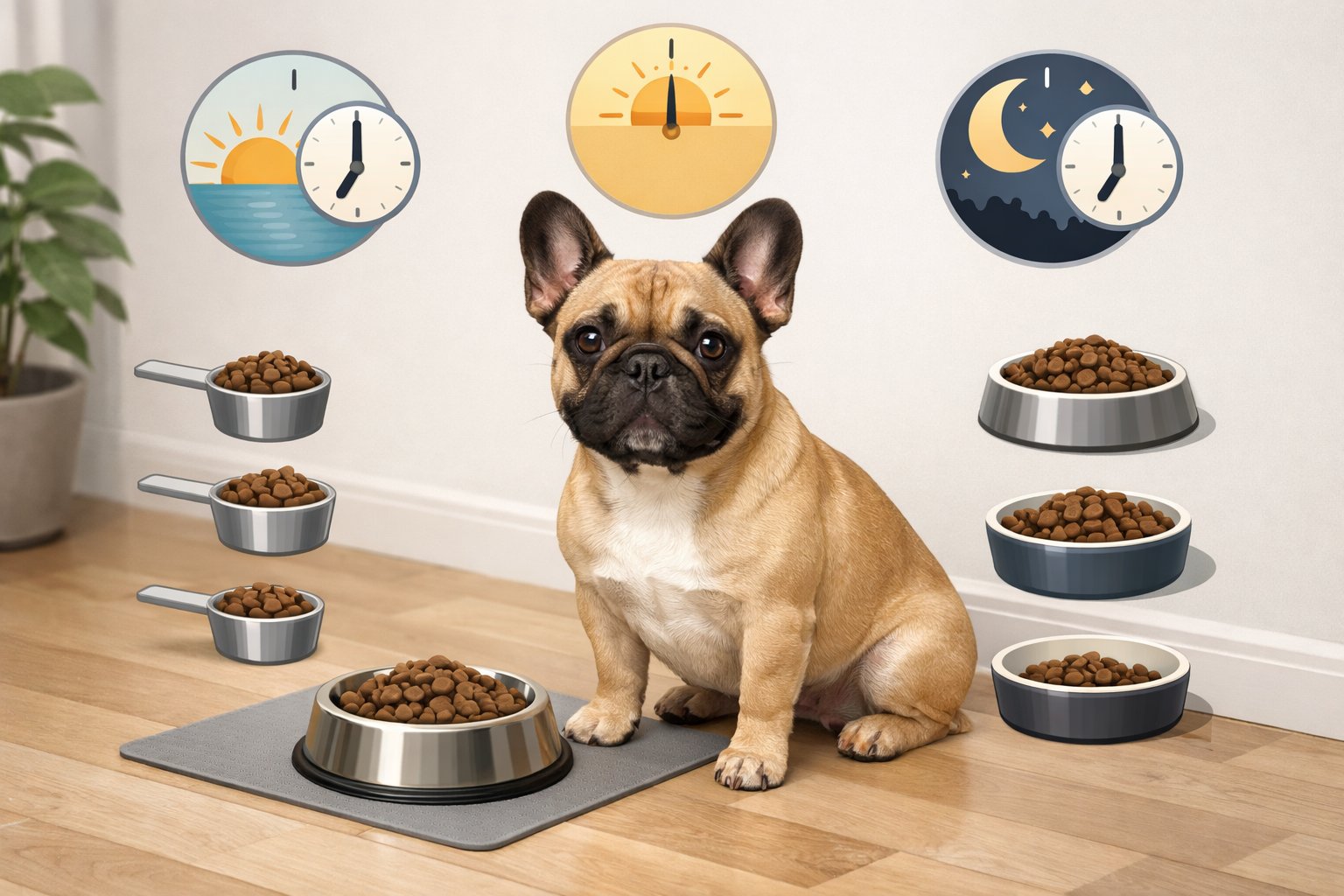
A French Bulldog’s feeding schedule depends on age, body size, daily movement, and health needs. Food type and life stage changes also affect portion size and meal timing.
How Age, Weight, and Activity Level Impact Feeding
Age sets the base schedule. Puppies need more meals because they burn energy fast and have small stomachs.
Many owners follow guidance similar to this French Bulldog feeding frequency guide to match meals to growth stages. Weight controls portion size.
Most adult French Bulldogs weigh between 16 and 28 pounds. Heavier dogs need more calories, but only if they stay active.
Activity level fine-tunes the plan. A dog that walks daily needs more fuel than one that naps most of the day.
Overfeeding a low‑activity Frenchie often leads to weight gain.
Quick reference
| Dog type | Meals per day |
|---|---|
| Puppy | 3–4 |
| Adult | 2 |
| Senior | 2 smaller |
Adjusting For Health, Special Needs, and Food Types
Health issues often change feeding needs. Dogs with allergies may need limited‑ingredient food.
Those with sensitive stomachs often do better with smaller, steady meals. Food type also matters.
Dry food packs more calories per cup than wet food. Fresh or home‑cooked diets vary widely, so portions must match calorie content, not bowl size.
Treats affect daily intake. Keep treats under 10% of daily calories to protect weight and digestion.
Water access matters, especially with dry food. Clean water supports digestion and helps prevent constipation.
Transitioning Between Puppy, Adult, and Senior Diets
Diet changes should follow growth, not the calendar.
Most French Bulldogs switch from puppy to adult food around 9 to 12 months. Owners often use a slow change like the one explained in this French Bulldog puppy feeding schedule by age.
A gradual transition protects digestion. Mixing old and new food over 7 to 10 days lowers the risk of loose stools.
Senior dogs often need fewer calories. Lower activity and slower metabolism mean smaller portions work better.
Many seniors still eat twice a day. Meals should stay light and easy to digest.
Watching body shape helps guide changes more than strict charts.