Understanding Labradoodle Coat Types
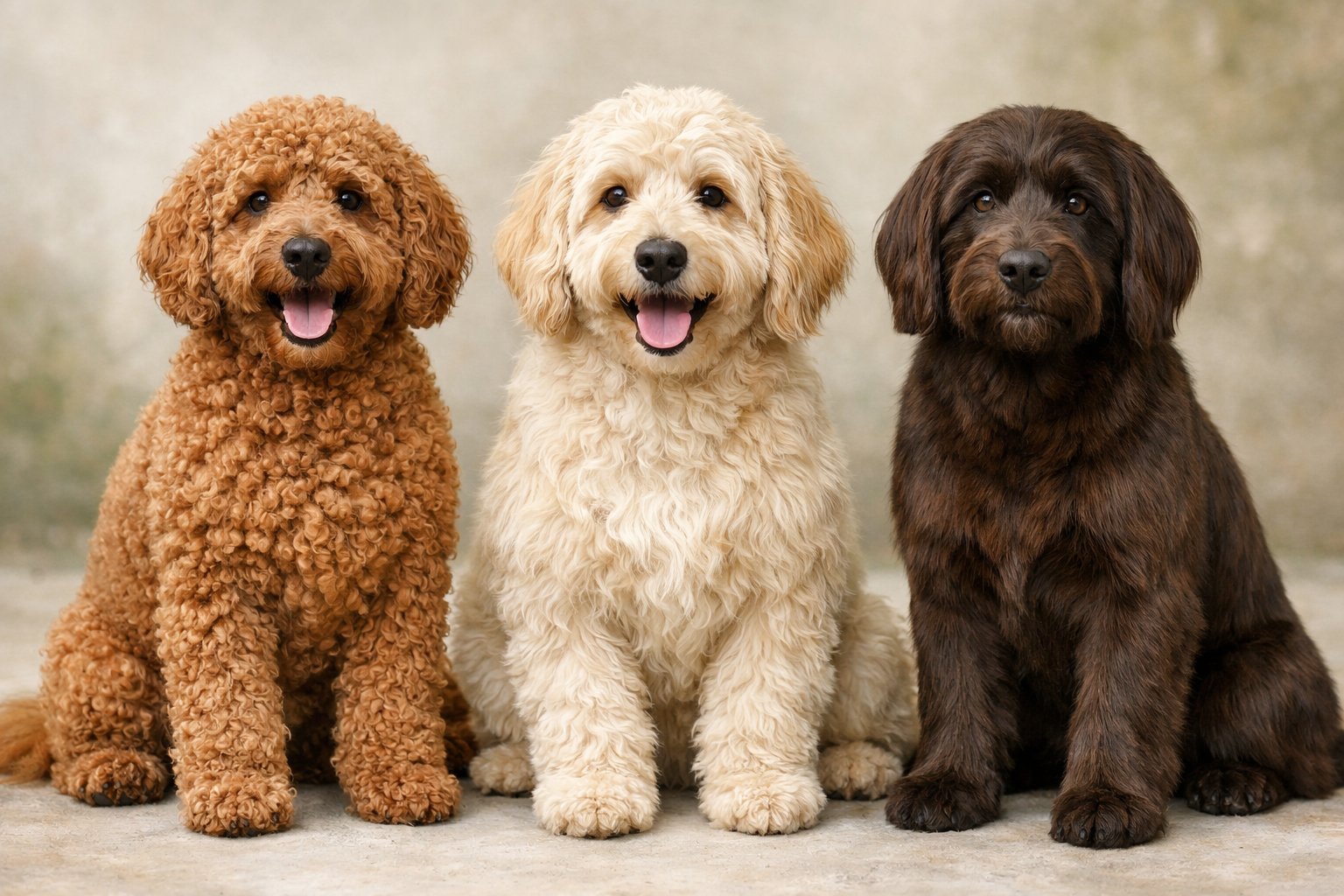
Labradoodles can look very different from one dog to the next. Their coat texture affects shedding, grooming time, and how close they match the typical Labradoodle look.
Curly Coat Characteristics
The curly coat, often called a wool coat, looks most like a Poodle’s fur. It forms tight curls that sit close to the body and feel dense rather than soft.
This coat sheds very little, which many allergy‑sensitive families prefer. Curly coats tangle easily, and mats often form behind the ears, under the legs, and around the collar.
Daily or near‑daily brushing helps prevent this problem. Many owners schedule trims every 4 to 6 weeks to keep the coat short and clean.
Curly coats appear most often in an F1B Labradoodle, where one parent is a Poodle.
Key points:
- Very low shedding
- High grooming needs
- Strong Poodle influence
Wavy Coat Features
The wavy coat, commonly called a fleece coat, is one of the most popular Labradoodle coat types. It falls between curly and straight hair.
The texture feels soft and loose, with gentle waves instead of tight curls. This coat sheds lightly to moderately.
Regular brushing, about 2 to 3 times a week, keeps tangles under control and helps the coat stay smooth. It mats less than a curly coat but still needs care.
Many people picture this coat when they think of the typical Labradoodle look. Wavy coats appear often in early‑generation Labradoodles.
Common traits:
- Soft, flowing texture
- Moderate grooming effort
- Popular family choice
Straight Hair Coat Details
The straight hair coat, sometimes called a hair coat, looks more like a Labrador Retriever’s fur. It lies flat or slightly shaggy and lacks curls or waves.
This coat sheds the most among the types of Labradoodle coats. Brushing once or twice a week usually works well.
The coat rarely mats, which makes daily grooming unnecessary. However, shedding can increase during seasonal changes.
Straight coats suit owners who want low grooming effort and do not mind dog hair around the home. This coat type may not match expectations for a low‑shedding Labradoodle.
Basic features:
- Higher shedding
- Low matting risk
- Simple grooming routine
How Genetics Influence Coat Type
Genetics play a major role in a Labradoodle’s coat. The mix of Labrador and Poodle genes determines whether the dog develops a wool, fleece, or hair coat.
Breeders often predict coat type based on parent dogs, but results can still vary. An F1B Labradoodle has a higher chance of a curly coat because it carries more Poodle genetics.
First‑generation crosses may produce wavy or straight coats more often. Puppy coats also change with age.
Many Labradoodles start with soft fluff, then shift texture between 6 and 12 months. Adult coats reveal the true labradoodle coat type over time.
Helpful facts:
- More Poodle genes increase curl
- Puppy coats often change
- Coat type cannot be guaranteed
Essential Grooming and Coat Care for All Types
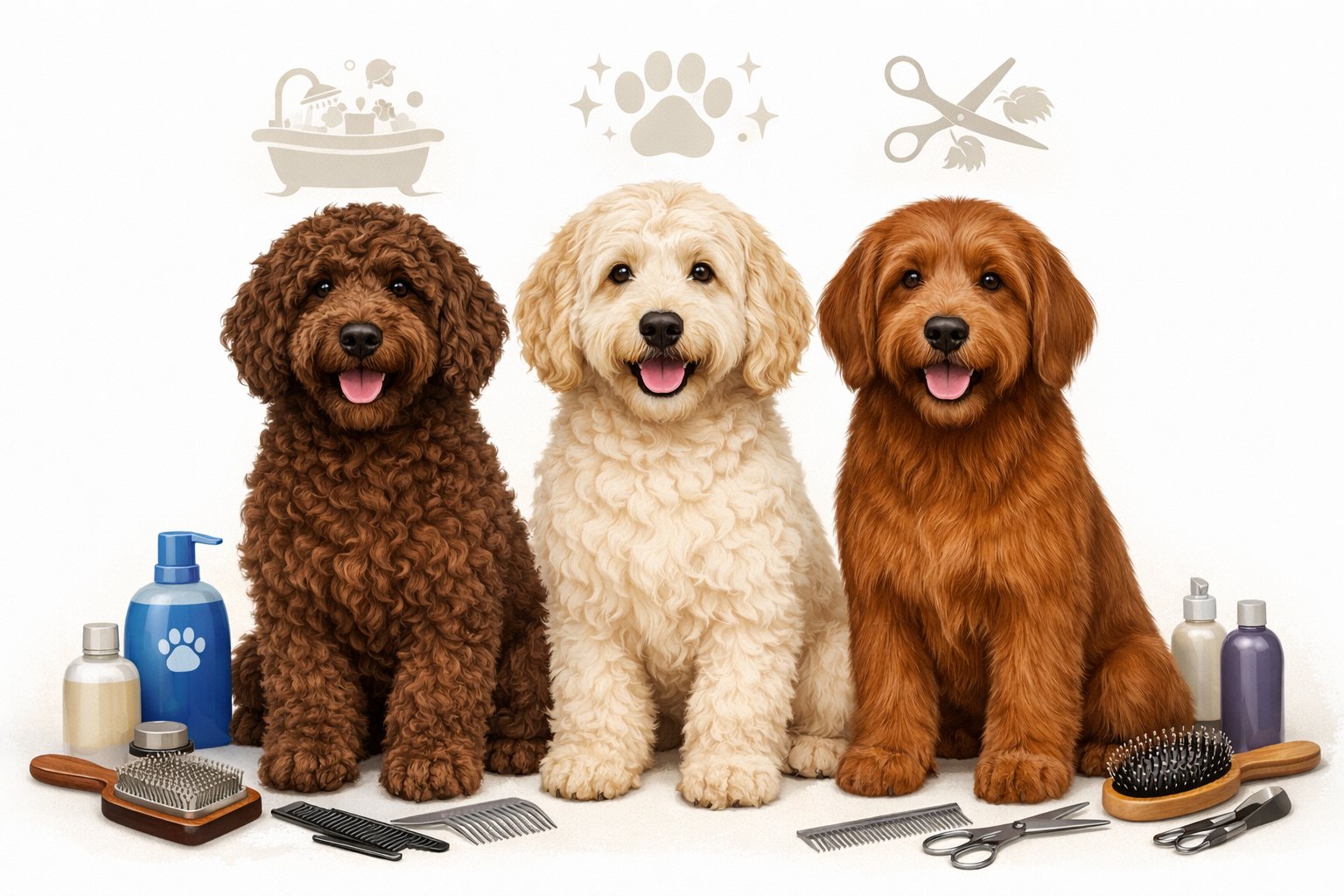
Good labradoodle grooming keeps the coat clean, comfortable, and easy to manage. Consistent coat maintenance, the right tools, and timely haircuts reduce skin problems and help prevent matting across curly, wavy, and straight fur.
Brushing Frequency and Tools
Regular brushing matters for every coat type, but the schedule changes with texture. Curly and wavy coats need daily brushing or brushing every other day.
Straight coats usually do well with brushing once or twice a week. A slicker brush works best for curls and waves because it reaches deep into the coat.
A pin brush helps smooth longer hair and works well for straight fur. Keep a dematting tool or de-matting tool on hand for small knots.
Many groomers recommend brushing in sections, starting at the skin and moving outward. This method removes loose hair and helps prevent matting before it turns into a matted coat.
For more detailed labradoodle coat care guidance, see this guide on labradoodle coat types and grooming needs.
Bathing and Drying Techniques
Bathing supports healthy skin, but too much washing dries the coat. Most Labradoodles need a bath every 6–10 weeks, or sooner if they get dirty.
Use a mild dog shampoo made for sensitive skin. Always brush before bathing, since water tightens knots and makes tangles harder to remove.
After rinsing, apply a light conditioner or detangling spray to reduce breakage. Drying matters as much as washing.
Towel dry first, then use a blow dryer on low heat. Keep the air moving to avoid hot spots.
Dry the coat fully, since damp fur can lead to matting and skin irritation.
Professional Grooming and Haircuts
Professional grooming helps keep labradoodle haircuts neat and functional. Most Labradoodles need a groom every 6–10 weeks, depending on coat type and length.
Curly coats often need more frequent visits. A groomer uses clippers and shears to shape the coat, trim the face, and clean sensitive areas.
Clear communication helps. Owners should explain desired length and daily grooming ability.
Common labradoodle haircuts include the puppy cut, teddy bear cut, and shorter sport trims. Each style affects how much brushing the dog needs at home.
A well-planned grooming routine saves time and keeps the coat comfortable.
Preventing and Dealing with Matting
Matting starts close to the skin and worsens fast if ignored. Areas behind the ears, under the collar, and near the legs tangle most often.
Frequent checks help catch problems early. To prevent matting, brush regularly and keep the coat at a manageable length.
Use detangling spray during brushing to reduce pulling. Avoid skipping grooming sessions.
For small knots, gently work them out with fingers or a dematting tool. Never pull hard.
Severe matting often needs professional help, as cutting too close at home can injure the skin. This detailed article on labradoodle grooming techniques explains safe detangling methods.