Labradoodle Size Categories and Key Differences
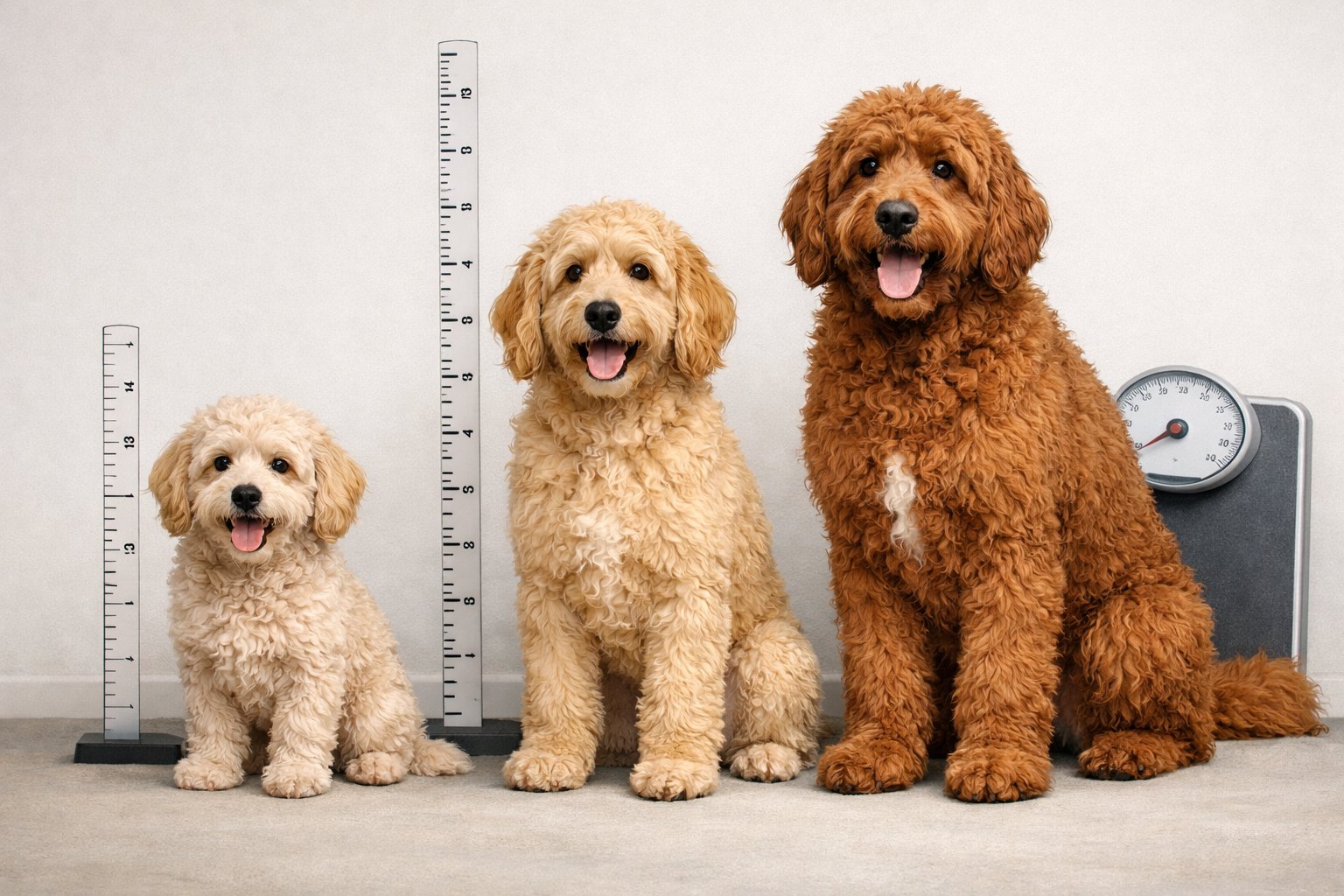
Labradoodle size affects daily care, space needs, and exercise habits. The three main labradoodle sizes differ most in adult weight, height, and activity level, which helps families choose the best fit.
Mini Labradoodle Size Overview
The miniature Labradoodle, also called a mini Labradoodle, suits smaller homes and lighter routines. Most adults weigh 15 to 25 pounds and stand about 14 to 16 inches tall at the shoulder.
This labradoodle size works well for apartments or homes without a yard. Daily walks and short play sessions usually meet their needs.
Mini Labradoodles often live 12 to 15 years. Their smaller frame may lower the risk of joint stress compared to larger dogs.
Some breeders also use the term toy Labradoodle, but this size is less standardized and not always recognized. A typical labradoodle size chart showing miniature ranges helps set clear expectations before adulthood.
Medium Labradoodle Size Overview
The medium Labradoodle size offers a middle ground between compact and sturdy. Adults usually weigh 30 to 45 pounds and reach 17 to 20 inches in height.
This size fits well in suburban homes. They handle longer walks and light jogging without needing constant activity.
Medium Labradoodles tend to mature by 12 to 15 months. Their labradoodle weight stays manageable while still feeling solid during play.
Exercise needs remain moderate, not intense. Breed groups widely recognize this category, as shown in this complete guide to Labradoodle sizes.
That consistency helps buyers plan food, space, and training.
Standard Labradoodle Size Overview
The standard Labradoodle is the largest and original guide-dog size. A full-grown adult weighs 50 to 65 pounds and stands 21 to 24 inches tall.
This labradoodle size needs more room and daily exercise. Most standards do best with 60 to 90 minutes of activity, such as walks, hikes, or yard play.
Standards reach full size later, often between 15 and 18 months. Owners must monitor growth closely to protect joints.
A clear labradoodle weight chart for standard Labradoodles helps track healthy development. Australian Labradoodle lines often show more predictable standard labradoodle size outcomes due to multigenerational breeding.
What Affects Labradoodle Size and Growth
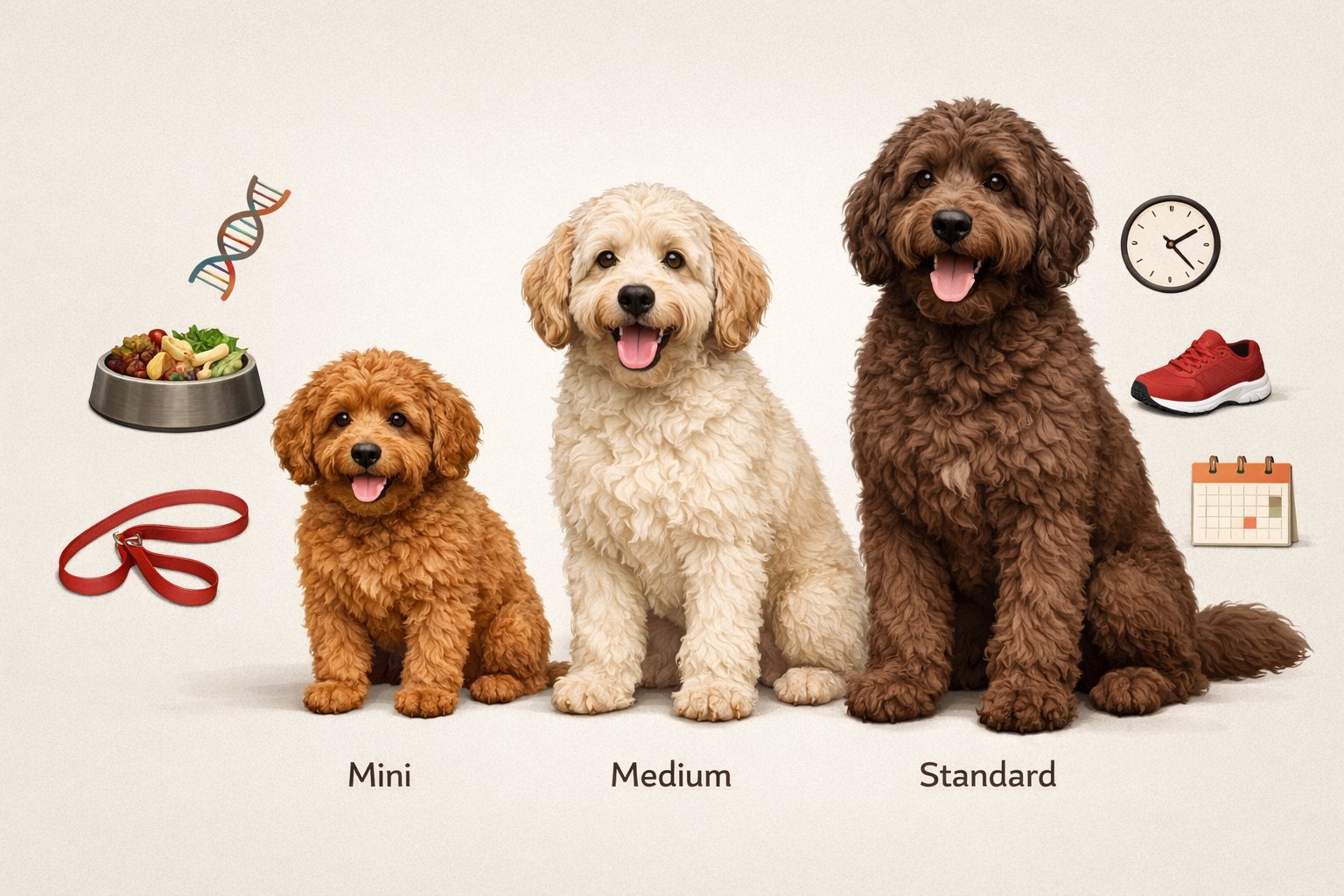
Several clear factors shape how big a Labradoodle gets and how fast it grows. Genetics set the range, parent dogs guide the direction, and daily care influences how closely a puppy reaches its potential.
Labradoodle Generations and Genetics
Labradoodle generations play a major role in adult size. Each generation reflects how much Poodle or Labrador Retriever DNA the dog carries.
This mix affects height, weight, and how predictable growth will be. An F1 Labradoodle comes from a Labrador Retriever and a Poodle.
Size can vary more in this generation. An F1B Labradoodle pairs an F1 Labradoodle with a Poodle, which often leads to more consistent size results.
Breeders use later generations to guide outcomes. A standard F1B Labradoodle often stays closer to standard size because of the larger Poodle parent.
More detail on how these size ranges compare appears in this Labradoodle size chart with weight data.
Poodle and Labrador Retriever Parent Influence
The size of the parent dogs strongly affects Labradoodle growth. The Poodle parent matters most, since Poodles come in standard, medium, and miniature sizes.
A puppy with a Standard Poodle parent will likely grow taller and heavier. A Miniature Poodle parent usually leads to a smaller adult dog.
The Labrador Retriever parent also influences bone structure and overall build. When both parents fall in similar size ranges, adult size becomes easier to predict.
Breeders often share parent weights to help set expectations. This approach helps explain why Labradoodles do not have a single fixed size, as shown in this guide on how big Labradoodles get.
Labradoodle Puppy Growth Patterns
Labradoodle puppy growth follows a steady pattern during the first year. Most puppies gain weight quickly in the first six months, reaching about half of their adult size during that time.
Height usually develops before weight. Many Labradoodles reach full height near one year, then fill out over several more months.
Standard dogs often take longer than mini or medium dogs. Owners often track progress using a Labradoodle puppy growth chart.
These charts compare age in weeks to average weight. This data-based approach helps explain typical doodle puppy growth stages, as outlined in this Labradoodle growth and weight chart.
Nutrition and Exercise Impact
Nutrition and exercise shape how well a Labradoodle grows within its genetic range. Puppies need balanced food made for growth, with enough protein and calories to support bones and muscles.
Overfeeding can cause rapid weight gain, which may stress joints. Underfeeding may slow Labradoodle puppy growth and affect development.
Consistent portion control matters. Exercise should match age.
Young puppies benefit from short walks and play, not long runs. As they mature, activity supports muscle strength and healthy weight.
Proper care helps a puppy grow steadily rather than quickly, which supports long-term health, as explained in this Labradoodle size and growth guide.
Choosing the Right Labradoodle Size for Your Home
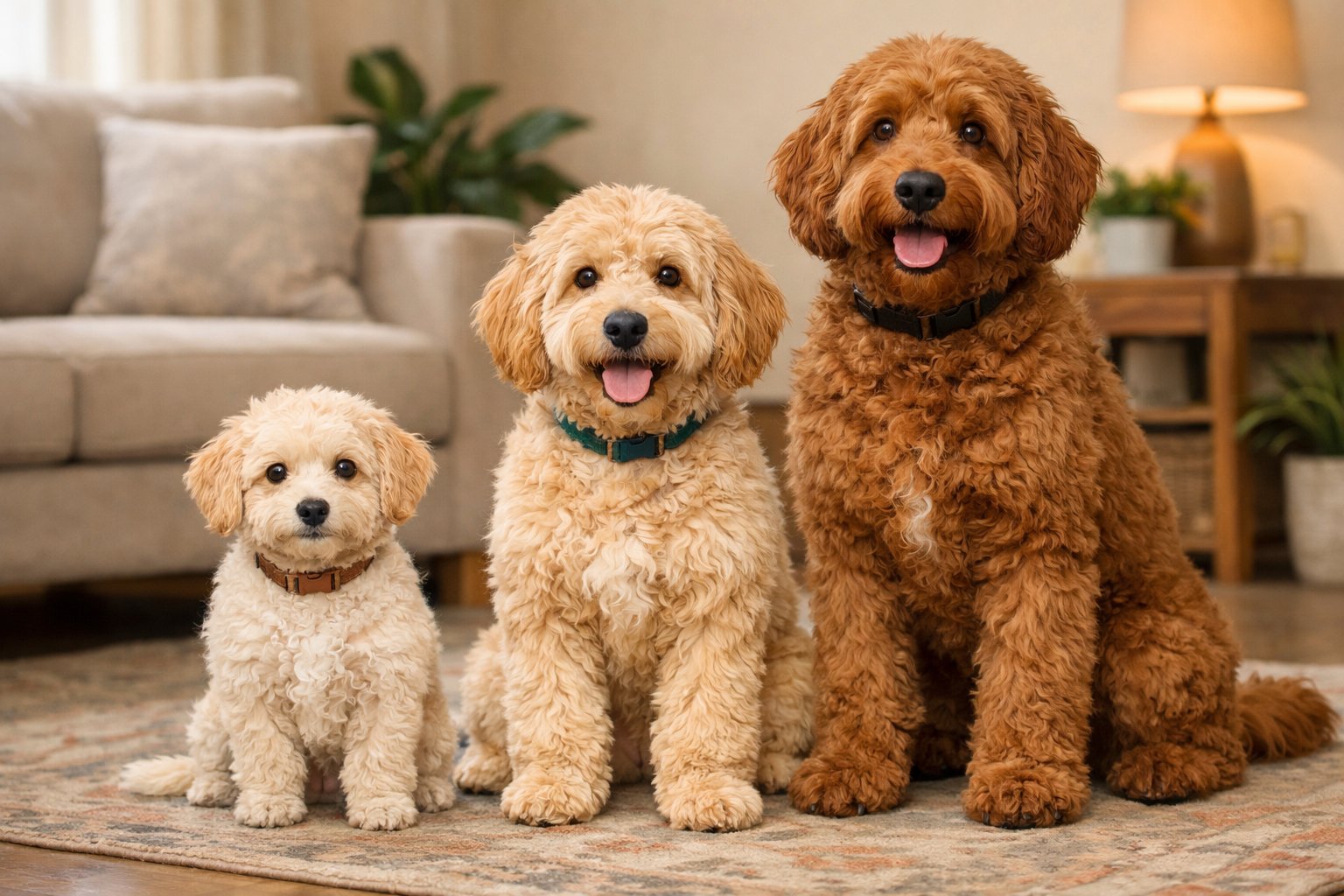
Home size, daily routine, and family needs shape which Labradoodle size works best. Coat traits, color options, and allergy concerns also matter, especially when choosing among Labradoodle puppies.
Living Space and Activity Level Considerations
Living space sets clear limits on Labradoodle size. Mini Labradoodles fit well in apartments and smaller homes.
They need short daily walks and indoor play to stay healthy. Medium Labradoodles suit suburban homes.
They handle moderate yards and enjoy regular walks, light jogging, and backyard play. Standard Labradoodles need more room.
Larger homes or yards help them move comfortably. They also need longer daily exercise, such as hikes or active play.
Activity level matters as much as space. Families with calm routines often choose minis or mediums.
Very active households tend to prefer standards that can keep up.
| Size | Best Home Type | Daily Exercise |
|---|---|---|
| Mini | Apartment, condo | Short walks, play |
| Medium | Suburban home | Walks, light jogging |
| Standard | Large home, yard | Long walks, hikes |
Coat Types and Labradoodle Colors
Labradoodle coat type affects grooming and daily care. Most coats fall into fleece, wool, or hair textures.
Fleece and wool coats shed less but need regular brushing and professional grooming. Hair coats may shed more.
They often feel closer to a Labrador coat and need less trimming. Labradoodle colors vary widely.
Common options include cream, chocolate, apricot, caramel, black, and red. Color does not change temperament or size.
Coat and color should match lifestyle, not trends. Families should plan time and budget for grooming based on coat type, not appearance alone.
Allergies and Hypoallergenic Traits
Many families ask, are Labradoodles hypoallergenic. No dog is fully allergy-free.
Some Labradoodles shed less and may reduce allergic reactions. Lower-shedding coats, such as wool or fleece, often work better for people with mild allergies.
Size does not control allergy risk. A mini can trigger reactions just like a standard.
Spending time with adult dogs helps test reactions before choosing Labradoodle puppies. Dander levels vary by dog, even within the same litter.
Regular grooming, bathing, and home cleaning also reduce allergens.