Essential Preparations Before Bringing Home Your Labradoodle
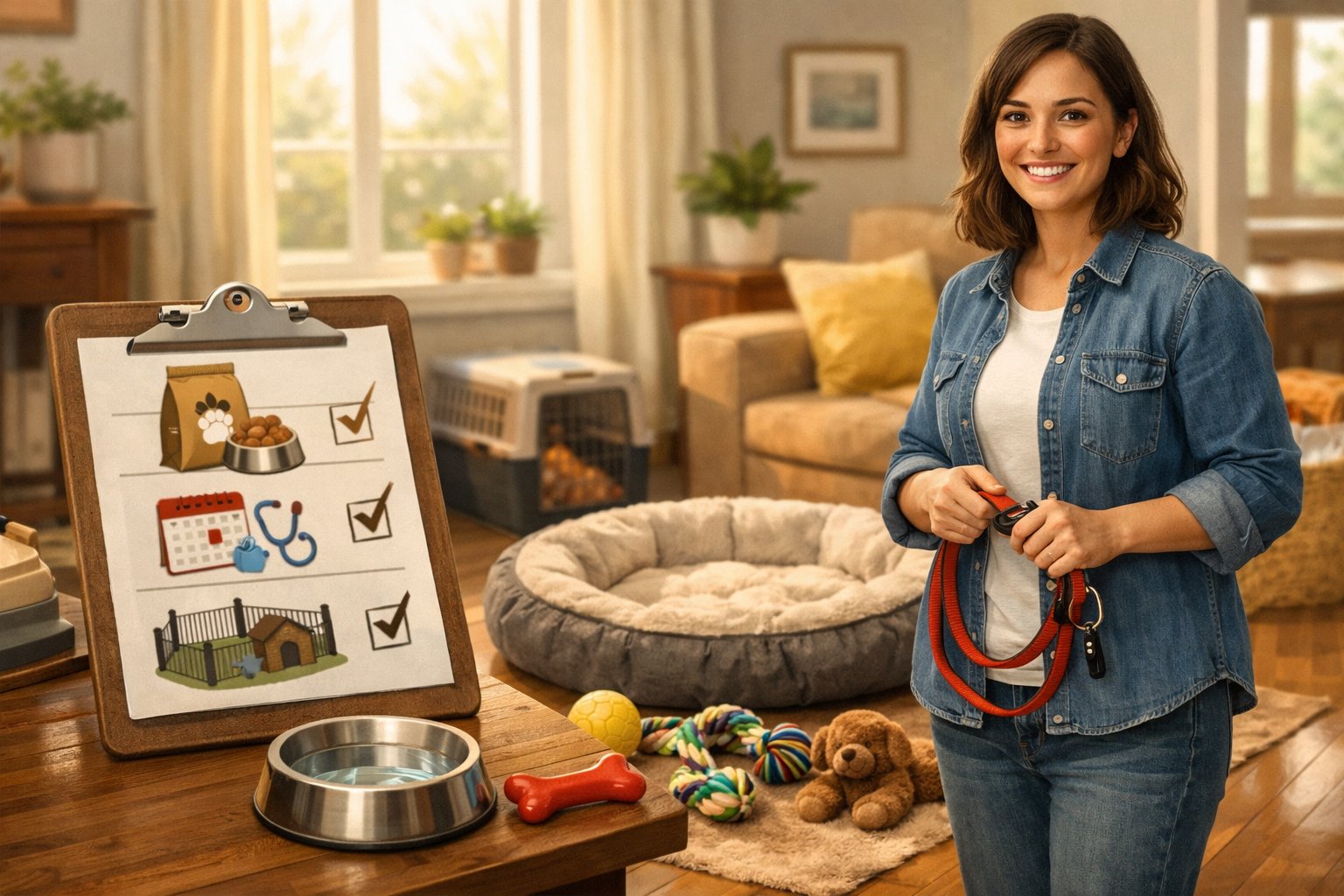
Bringing a Labradoodle puppy home goes smoother when the home is safe and supplies are ready. The first day should have a clear plan.
These steps help a first-time Labradoodle owner avoid common problems. The focus stays on care instead of stress.
Puppy-Proofing Your Home
A Labradoodle puppy explores with its mouth, paws, and nose. A first-time dog owner should puppy-proof the home before the puppy arrives.
They should secure loose cords and block stairs with baby gates. Remove small items from floors.
Trash cans need lids or heavy bases. Shoes, kids’ toys, and cleaning products should stay out of reach.
These steps lower the risk of choking and injury. Set clear boundaries early.
Many guides on preparing your home for a Labradoodle puppy stress limiting free roaming during the first weeks. Using gates or one safe room helps the puppy learn faster and stay safe.
High-risk items to secure first:
- Power cords and chargers
- Medications and cleaners
- Lightweight trash bins
- Houseplants that dogs may chew
Choosing Supplies and Puppy Essentials
Having supplies ready makes bringing a puppy home less chaotic. A first-time Labradoodle owner should focus on items that support feeding, sleep, safety, and training.
The basics include food and water bowls, age‑appropriate puppy food, a crate, a leash, and ID tags. Labradoodles also need grooming tools early.
Many owners follow a Labradoodle puppy supplies checklist to avoid missing key items. Toys matter more than many expect.
Chew toys protect furniture and help with teething. Training treats support early learning.
Extra cleaning supplies help manage accidents, which are normal when bringing a Labradoodle home.
Essential supplies at a glance:
| Category | Items |
|---|---|
| Feeding | Bowls, puppy food, treats |
| Safety | Crate, gates, ID tag |
| Care | Brush, nail clippers |
| Training | Leash, chew toys |
Preparing for the First Day
The first day shapes how a Labradoodle puppy adjusts. Calm routines help the puppy feel secure.
Plan quiet time and avoid visitors. A designated area with a crate, water, and toys gives the puppy a clear place to settle.
Many owners use tips from guides on bringing home a Labradoodle puppy to reduce stress. Feeding should match the breeder’s schedule at first.
Sudden food changes can upset a puppy’s stomach. The puppy should go outside often to start house training right away.
Short leash walks, gentle play, and rest help the puppy adjust without overload. Simple routines build trust during the first hours and days.
Key Care and Routines for Your New Labradoodle
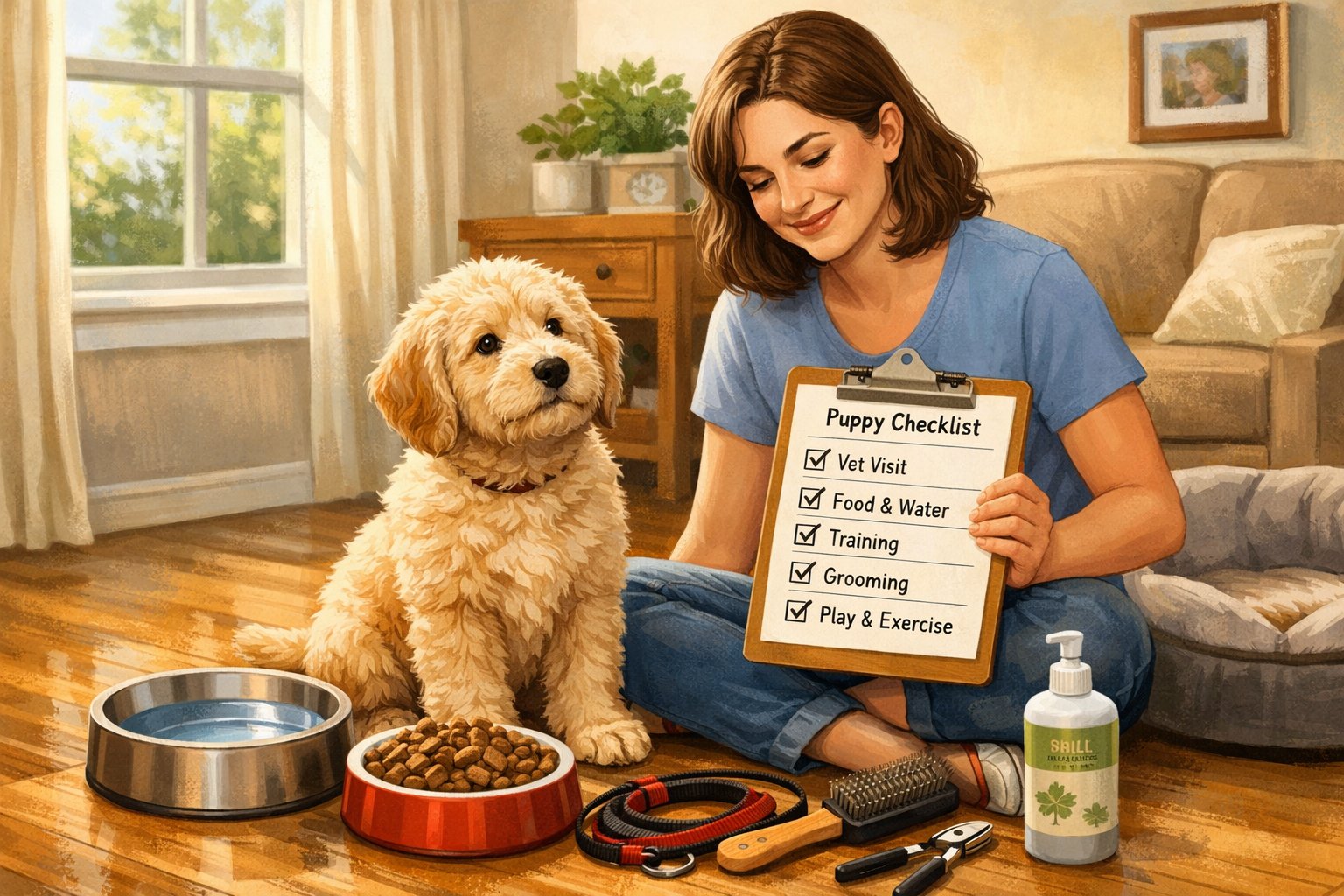
Strong daily habits help a Labradoodle feel safe and learn faster. Clear feeding rules, steady training, and a simple schedule reduce stress for both the puppy and the owner.
Consistency matters more than perfection during the first weeks.
Feeding and Nutrition Basics
A Labradoodle puppy needs high‑quality puppy food made for growth. Choose dog food with real meat as the first ingredient and clear feeding instructions by age and weight.
Avoid switching foods often, since sudden changes can upset digestion. Most puppies eat three meals per day.
Measure each meal to prevent overfeeding.
| Puppy Age | Meals per Day | Notes |
|---|---|---|
| 8–12 weeks | 3 | Small portions, same times daily |
| 3–6 months | 3 | Gradually increase amounts |
| 6+ months | 2 | Ask a vet before switching food |
Fresh water should stay available at all times. Treats help with training, but they should make up less than 10% of daily calories.
For a deeper look at feeding and early health needs, this Labradoodle puppy care guide explains common first‑year basics.
Crate Training and Housebreaking
Crate training supports safety, sleep, and housebreaking. The crate should feel calm and secure, not like a punishment.
It must be large enough for the puppy to stand, turn, and lie down. Place the crate near people during the day.
Keep nighttime crates close to the bedroom. Use soft bedding and a familiar-smelling item.
Take the puppy outside after waking, eating, playing, and naps. Many owners use puppy pads indoors during early weeks, especially at night or in apartments.
Pads help prevent accidents but should not replace outdoor trips long term. Clear steps for early training appear in these Labradoodle training tips for new owners.
Building a Daily Schedule
A steady routine supports calm behavior and faster learning. Labradoodles do best when days follow a predictable flow.
A simple daily plan includes:
- Morning potty break and short walk
- Meals at the same times each day
- Short training sessions, 5–10 minutes
- Play, rest, and quiet time in the crate
Young puppies sleep a lot. Planned naps reduce biting and stress.
Gentle structure forms the base of long‑term labradoodle care and helps the puppy adjust with fewer problems.
Labradoodle Grooming, Training, and Socialization Essentials
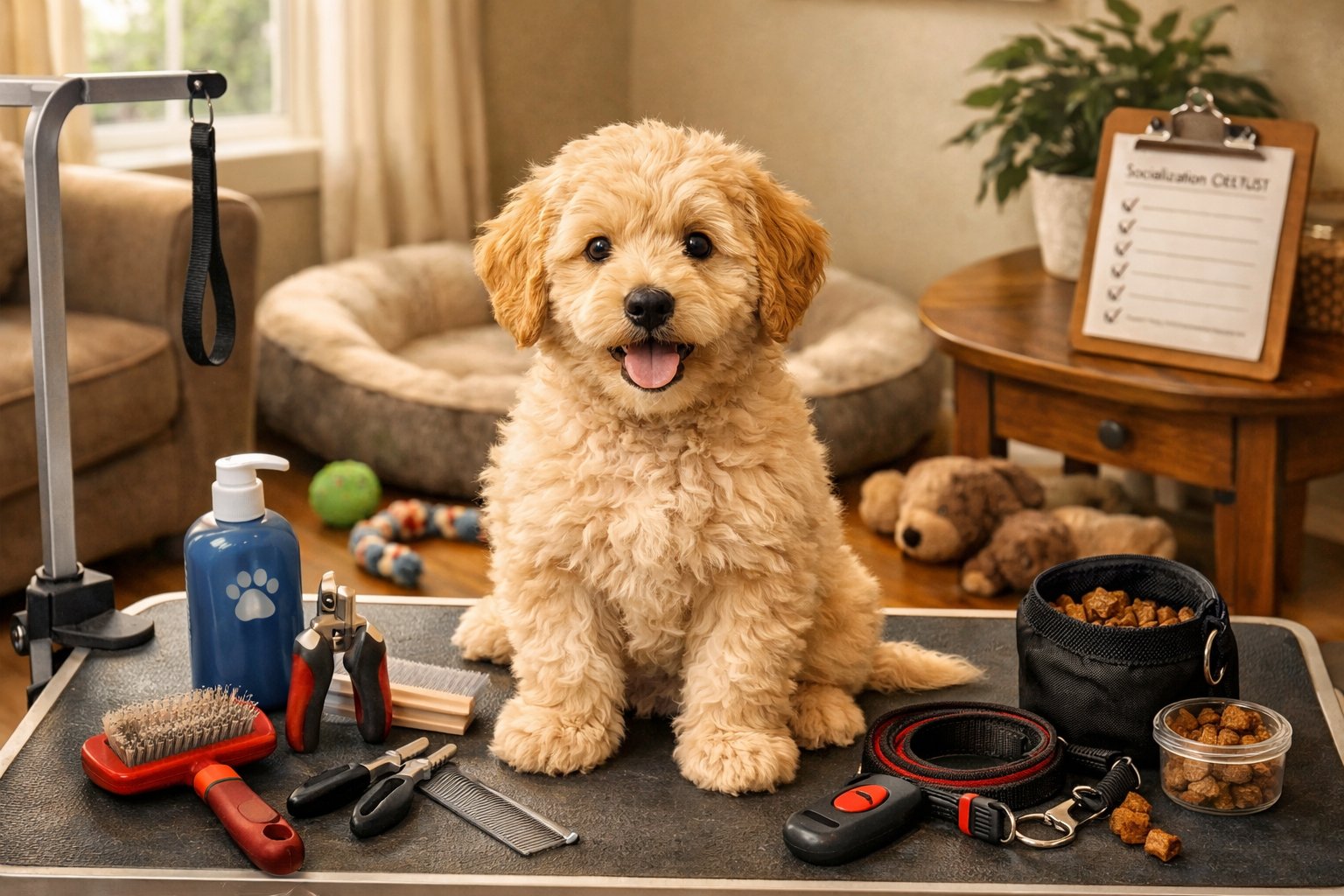
A Labradoodle needs steady care to stay healthy and calm. Good grooming prevents skin and coat problems.
Early training shapes daily behavior. Smart social habits reduce fear and stress.
Grooming Tools and Routine
A Labradoodle coat often mixes traits from a poodle and a labrador retriever, so care must match the curl level. Daily brushing prevents mats, especially behind the ears and under the legs.
Use a gentle dog shampoo every 6–8 weeks to protect skin oils. Trim nails with quality nail clippers every 3–4 weeks to avoid pain and posture issues.
Basic grooming kit
- Slicker brush and metal comb
- Dog shampoo made for sensitive skin
- Nail clippers or grinder
- Ear cleaner and soft towels
Many owners follow a simple routine based on guidance from this Labradoodle grooming guide, which explains coat care step by step.
| Task | Frequency |
|---|---|
| Brushing | Daily |
| Bathing | Every 6–8 weeks |
| Nail trim | Every 3–4 weeks |
Foundational Training Tips
Strong labradoodle training starts on day one. Short sessions work best because attention fades fast.
Most puppies respond well to 10–15 minute sessions, one or two times a day. Positive rewards shape better labradoodle behavior than punishment.
Treats, praise, and toys help reinforce sit, stay, and leash walking. Clear cues and repeat practice matter more than complex commands.
Crate training helps with sleep and reduces anxiety when alone. Many trainers suggest starting with meals and rest time in the crate.
Clear steps appear in these Labradoodle training tips for new owners.
Training priorities
- Name response
- Sit and down
- Leash manners
- Calm greetings
Healthy Socialization Habits
Early social time helps a Labradoodle feel safe in busy places.
Controlled exposure builds confidence and lowers fear reactions later.
They should meet adults, children, and calm dogs during the first months.
Short visits work better than long ones.
Each new setting should stay positive and low stress.
Group puppy classes offer structure and safe play.
They also reinforce training around distractions.
Many owners follow advice from this detailed Labradoodle breed guide to balance play, rest, and learning.
Good social habits include
- Daily walks in new areas
- Supervised dog meetups
- Calm handling of paws and ears
- Praise for relaxed behavior