Core Traits of the Beagle Temperament
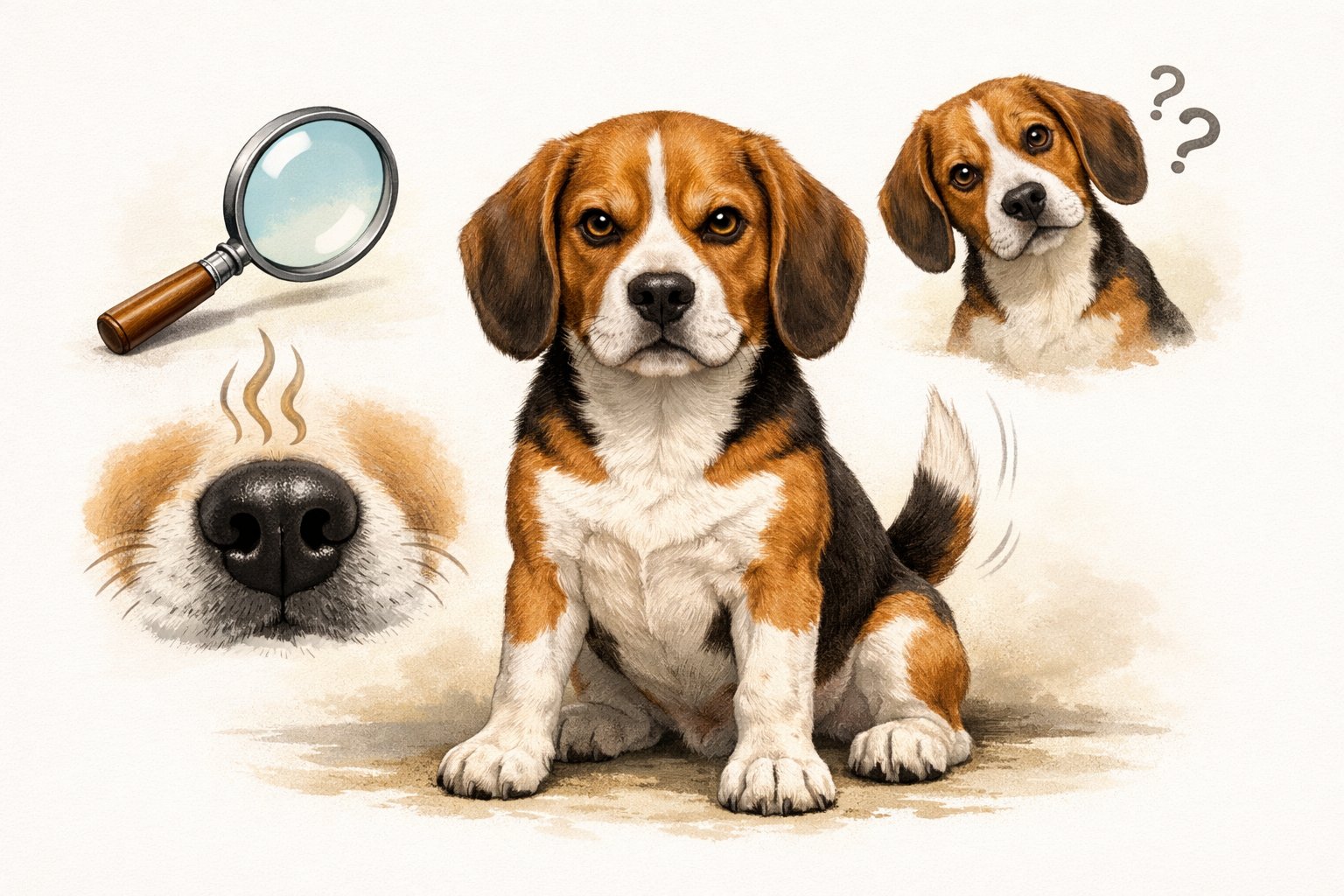
The beagle temperament centers on strong social bonds, constant curiosity, and a nose that guides daily behavior. These traits shape the beagle personality and strongly affect training, home life, and relationships with people and pets.
Friendliness and Family Compatibility
Beagles show a warm and open nature with people they meet. Many owners describe them as cheerful, gentle, and eager for attention, which aligns with common descriptions of a friendly and playful Beagle temperament.
They often fit well into busy homes because they enjoy interaction and routine. This helps explain why people often ask are beagles good family dogs.
They usually do well with respectful children and enjoy games, walks, and shared time. Living with a beagle works best when the household offers daily contact and activity.
Long periods alone can frustrate this pack‑oriented hound, which may lead to barking or restlessness.
Best matches for families:
- Homes with regular schedules
- Families who enjoy outdoor time
- Owners ready for daily interaction
Curiosity and Scent-Driven Nature
A beagle’s nose leads almost everything it does. As a scent hound, it was bred to follow trails for long distances, which still shapes modern behavior.
Many guides on beagle behavior and temperament point to scent drive as the root of both charm and stubbornness. When a beagle catches a smell, attention shifts fast.
Commands may lose importance, even with training. This does not mean low intelligence.
It shows focused instincts. Curiosity makes walks slow and detailed.
It also increases the risk of wandering if off leash. Secure yards and leash control matter when living with a beagle.
Common scent‑driven habits:
- Nose to the ground on walks
- Pulling toward smells
- Ignoring recall when distracted
Social Behavior With People and Other Pets
Beagles tend to enjoy company more than solitude. Their history as pack hounds explains why many resources describe a sociable and affectionate beagle personality.
They usually greet strangers with interest rather than fear. This makes them poor guard dogs but pleasant neighbors.
Early exposure helps shape calm responses to new people. With other dogs, beagles often do well, especially when raised together.
They may also live peacefully with cats if introduced early. Small animals can trigger chasing due to hunting instincts.
Key social traits:
- Comfortable in group settings
- Low aggression toward people
- Strong need for companionship
The Stubborn and Independent Side of Beagles
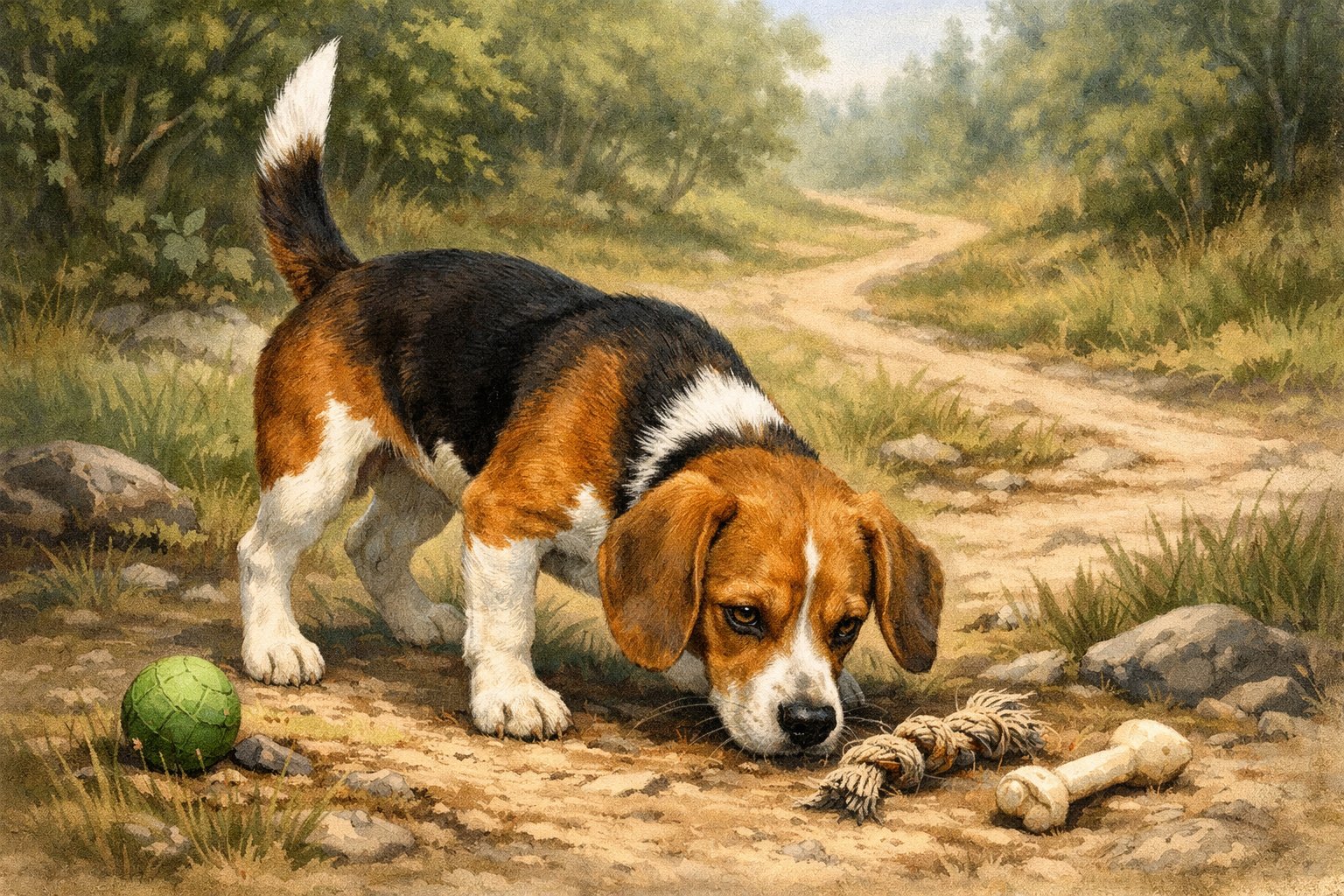
Beagle behavior often blends charm with determination. Their independence shows most during training, walks, and moments when an interesting smell takes over.
Understanding Beagle Stubbornness
Beagles were bred to follow scent trails, not to wait for instructions. This history shapes how a beagle thinks and reacts today.
When they lock onto a smell, they often ignore commands and focus on the task they find rewarding. Many owners describe this trait as stubbornness, but it reflects problem‑solving and focus.
Breed experts note that beagles can seem willful because they decide what matters most in the moment, especially outdoors. Articles on beagle stubborn behavior explain that this mindset comes from instinct, not defiance.
This independence does not mean a beagle lacks affection or intelligence. It means the dog works best when training matches how the brain is wired.
Training Challenges and Successful Techniques
Training a beagle often takes more repetition than with other breeds. Commands that feel boring or unclear lose value fast.
Short sessions with clear rewards work better than long drills.
Effective techniques include:
- Food rewards, especially small, soft treats
- Positive reinforcement, never harsh corrections
- Consistency, using the same cues every time
Many trainers stress that patience matters more than control. According to guidance on beagle temperament and training challenges, progress improves when training feels like a game instead of a test.
A beagle learns fastest when the reward feels equal to the effort. Timing matters, too.
Praise and treats must come right after the desired action.
How Scent Games Support Engagement
Scent games turn a beagle’s strongest instinct into a training tool.
These activities give the dog a clear job and a reason to focus.
They also reduce frustration during training sessions.
Common scent games include:
| Game Type | How It Helps |
|---|---|
| Treat hunts | Builds focus and calm searching |
| Scent trails | Uses natural tracking skills |
| Puzzle toys | Encourages problem solving |
Scent‑based work keeps training relevant to how beagles think.
Experts on scent‑driven beagle behavior note that mental work often tires a beagle more than long walks.