Understanding Beagle Behavior Problems
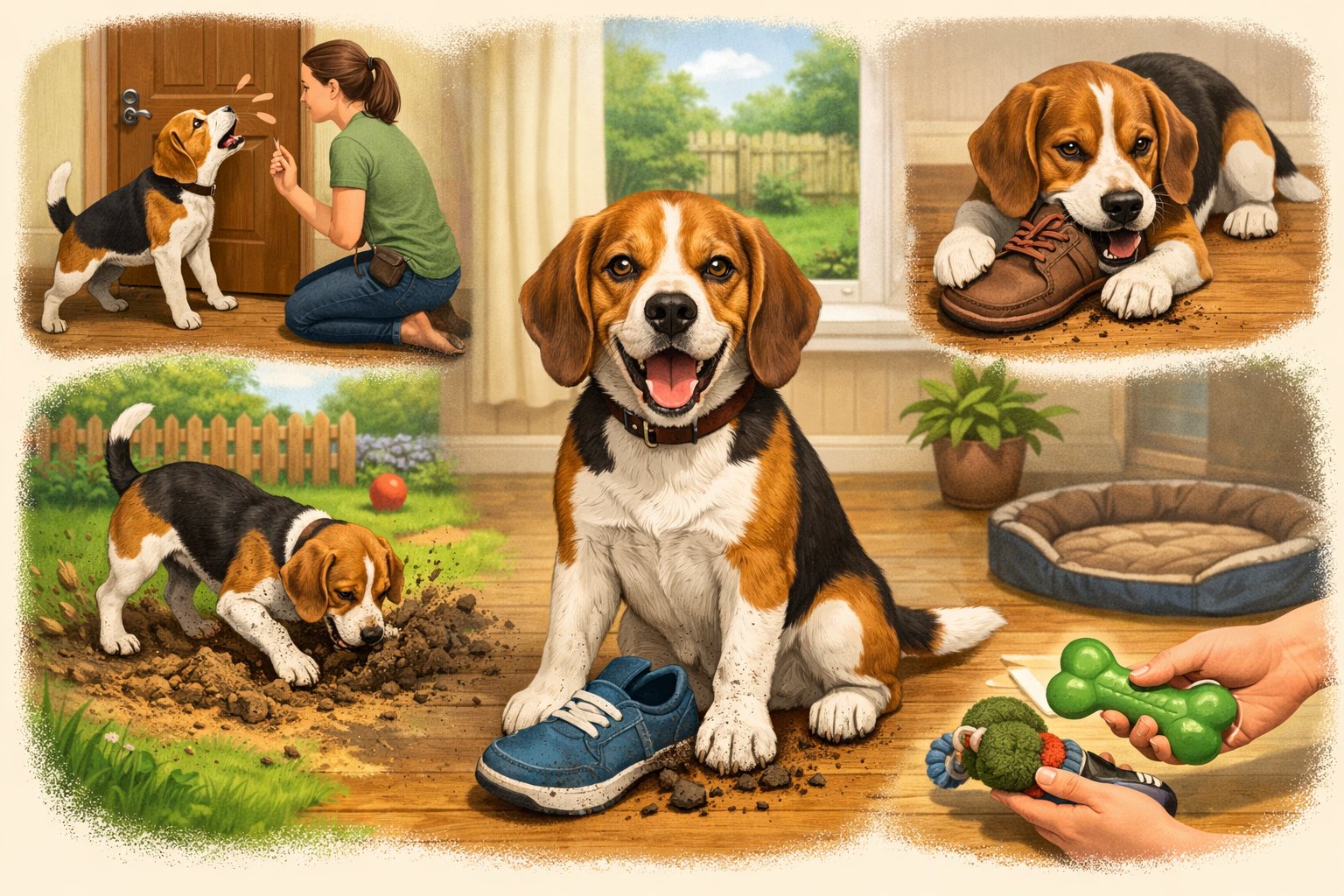
Beagle behavior often links to breed traits, daily routines, and natural instincts. Understanding beagle behavior helps owners respond with clear training and realistic expectations.
Breed Traits That Influence Behavior
Beagles are scent hounds bred to track and follow trails. This background shapes many beagle behavior problems seen in the home.
They tend to show high energy, strong curiosity, and a need for mental work. When daily exercise falls short, behaviors like chewing or barking often appear.
Beagles also thrive on social contact. They prefer company and may struggle when left alone too long.
This trait explains why some common behavioral problems in beagles include whining or destructive habits during absences. Stubborn moments happen, but they reflect focus, not defiance.
Beagles often prioritize smells over commands, especially outdoors.
Typical Behavioral Issues and Why They Happen
Common behavioral problems in beagles usually have clear causes tied to boredom, hunger, or anxiety.
Frequent issues include:
- Excessive barking or howling, often triggered by noise or scents
- Destructive chewing, linked to unused energy
- Food stealing and begging, driven by scent and opportunity
- Ignoring commands, caused by distractions
Many of these behaviors start when needs go unmet. A lack of structured walks, training, or play can quickly lead to frustration.
Clear routines and consistent rules reduce confusion. Owners who understand beagle behavior can address problems early, before habits set in.
For a detailed breakdown of these patterns, this guide on common behavioral problems in beagles offers practical context.
The Role of Scent and Instinct
A beagle’s strong sense of smell guides much of its behavior. Once a scent catches attention, focus narrows fast.
This instinct explains wandering, pulling on the leash, and selective hearing. The dog follows its nose first and people second.
Indoors, scent drives food obsession. Outdoors, it increases roaming risk if off leash.
These actions reflect instinct, not poor training. Channeling scent work helps.
Activities like sniff walks or hide-and-seek games give purpose to the behavior. Owners who respect this scent hound nature see better results.
This overview of beagle behavior problems and how to fix them highlights how instinct-based training reduces conflict.
Most Common Beagle Behavior Problems and Practical Fixes
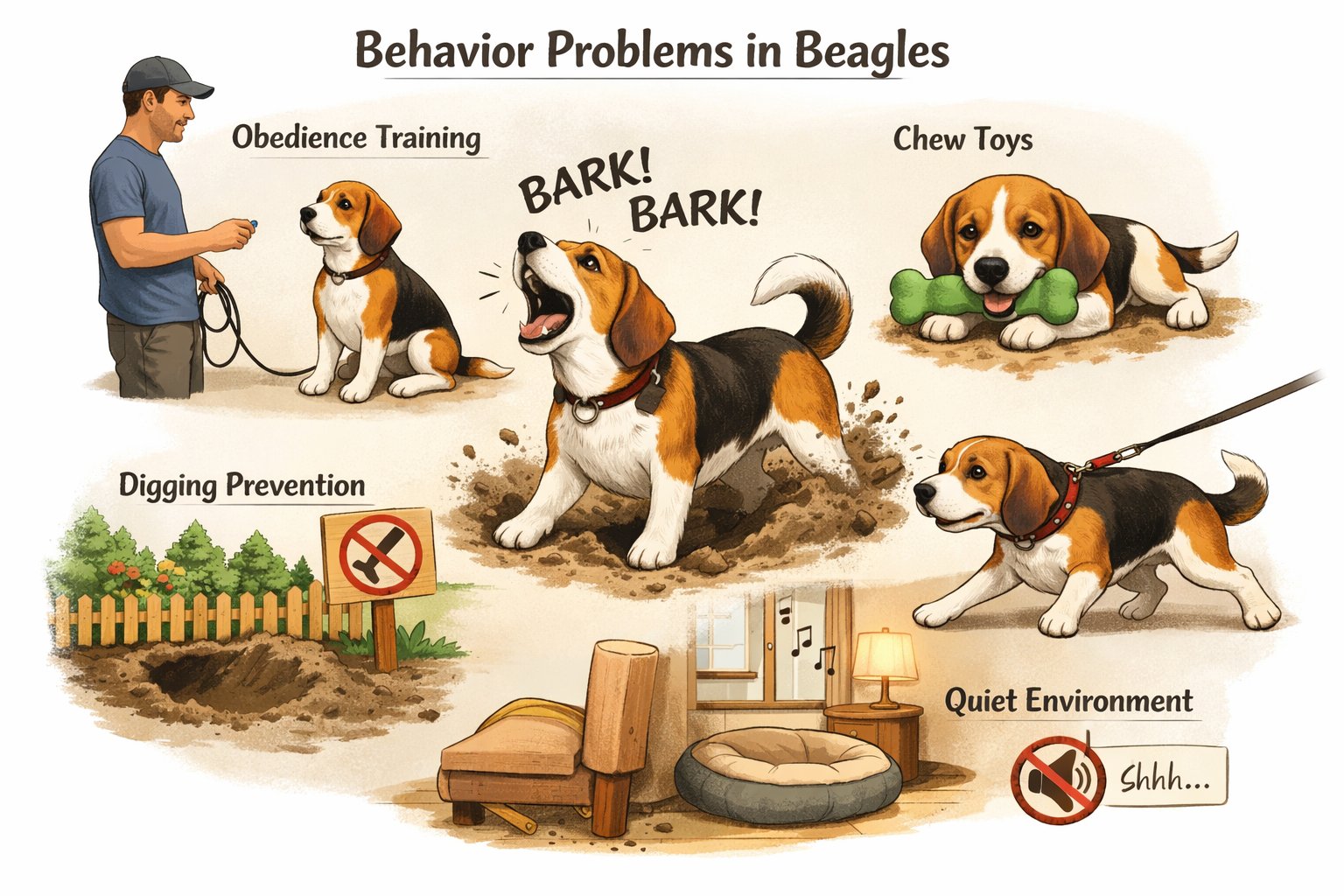
Many beagle behavioral issues come from strong instincts, high energy, and a love of food and scents. Clear rules, daily routines, and the right outlets can reduce these problems and improve behavior at home.
Excessive Barking and Howling
Excessive barking and howling often frustrate beagle owners. Beagles bark to alert, seek attention, or release boredom.
Their history as scent hounds also makes them vocal when excited or anxious. Owners should first identify the trigger, such as door noises or being left alone.
Daily exercise matters. Long walks, scent games, and short training sessions lower pent-up energy.
Teaching a “quiet” command works best when paired with calm rewards. Ignoring attention-seeking noise also helps.
Respond only when the dog stays quiet. Consistent routines and mental work reduce vocal habits linked to boredom, as shown in guides on common beagle behavior problems and how to fix them.
Separation Anxiety and Solutions
Separation anxiety in beagles shows through barking, pacing, or destructive chewing when alone. Beagles bond closely with people, so sudden absences feel stressful.
Managing separation anxiety starts with short departures. Owners should leave for minutes, not hours, and increase time slowly.
Calm exits and returns prevent building fear. A safe space with bedding and puzzle toys can also help.
Mental work matters as much as physical exercise. Feeding from interactive toys keeps the dog busy after the owner leaves.
Clear steps for managing separation anxiety appear in expert advice on beagle behavioral issues and management strategies.
Digging and Outdoor Destruction
Digging feels natural to beagles. They dig to follow scents, burn energy, or escape boredom.
Yards with loose soil or wildlife smells increase the risk. A designated digging area gives the dog a safe outlet.
Owners can bury toys or treats there to guide behavior. Praise should follow digging in the right spot.
Fences should extend below ground to prevent escapes. Daily walks and scent-based games reduce the urge to dig.
Practical digging fixes often appear in training advice that covers addressing common beagle behavioral problems.
Food Stealing and Counter Surfing
Food stealing happens because beagles stay highly food motivated. Counters, tables, and trash bins attract them with strong smells.
Prevention works better than punishment. Owners should clear counters and use sealed trash cans.
Teaching a “place” command during meals keeps the dog away from food prep areas. Reward calm behavior with treats given away from the table.
Never feed scraps by hand during meals. Clear rules and consistency reduce food stealing, as outlined in guides on beagle behavior problems and training tips.
Effective Training and Prevention Strategies
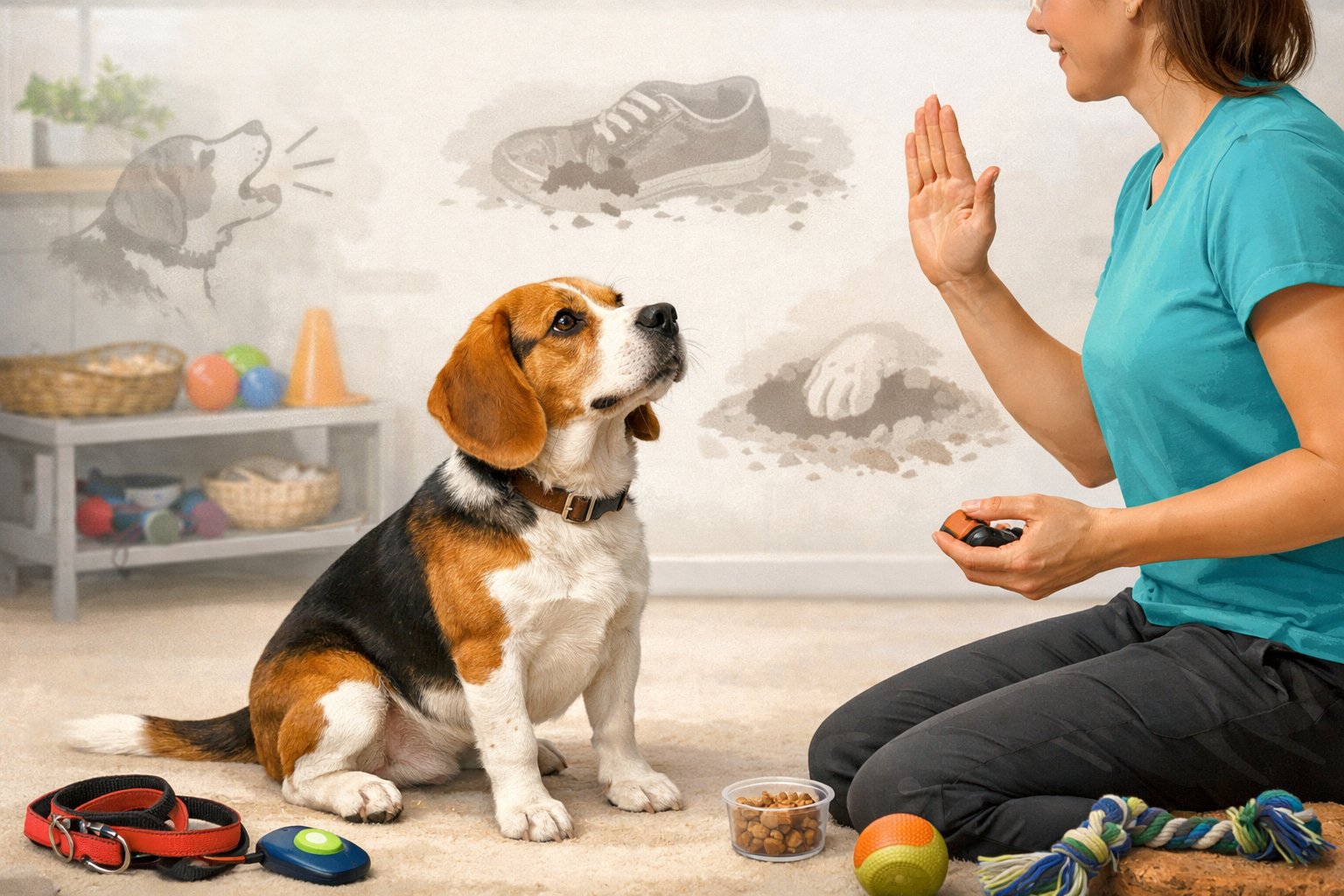
Beagles respond best to training that respects their instincts and energy level. Clear rewards, steady routines, and early exposure to new situations help prevent many common behavior problems.
Positive Reinforcement and Reward-Based Training
Positive reinforcement training works well for Beagles because they stay highly food motivated. The trainer rewards a desired behavior right away, which helps the dog repeat it.
This approach forms the core of reward-based training and builds trust instead of fear. Rewards should match the task.
Simple behaviors may need kibble, while hard tasks often need chicken or cheese. Timing matters more than quantity.
Key tips for success:
- Reward within one second of the behavior
- Use praise along with treats
- Ignore mistakes instead of punishing them
Many trainers recommend this method because it reduces stress and improves focus, as explained in guides on effective Beagle training methods.
Leash Training and Recall Commands
Leash training helps control pulling, which often happens when a Beagle follows scents. A front-clip harness gives better control without pain.
The handler should stop walking when pulling starts and move again only when the leash relaxes. Recall command training protects the dog’s safety.
Beagles may ignore calls if a smell distracts them, so rewards must feel valuable.
Practical steps:
- Practice recall indoors first
- Use a long line outdoors
- Reward every successful return
Many owners struggle here due to scent drive, which training experts highlight in discussions of common Beagle behavior problems.
Establishing a Consistent Routine
A consistent routine reduces anxiety and unwanted behaviors. Beagles feel calmer when they know what happens next.
Feeding, walks, training, and rest should follow the same daily pattern. Routine helps manage barking, chewing, and restlessness.
Dogs that lack structure often create their own activities, which leads to trouble.
A steady routine includes:
- Fixed meal times
- Daily walks with sniff breaks
- Short training sessions
Behavior specialists note that structure supports learning and emotional balance, as seen in guides on Beagle behavior and training basics.
Importance of Early Socialization
Early socialization shapes how a Beagle reacts to people, dogs, sounds, and places. Puppies should meet many safe and calm experiences before adulthood.
This lowers fear and reduces future aggression or anxiety. Socialization should stay positive.
Overwhelming situations can backfire.
Helpful socialization ideas:
- Short visits to new places
- Calm meetings with friendly dogs
- Exposure to household noises