Beagle Growth Stages and Physical Development

A beagle’s body changes in clear and predictable ways from birth through old age. Size, muscle tone, energy level, and beagle weight shift with each stage.
Owners should adjust care as those changes happen.
Puppyhood: Birth to 6 Months
Beagle puppies grow fast during the first six months. They double their weight quickly and gain height each month.
Most puppies leave their mother at about eight weeks, when they weigh only a few pounds. Bones and joints are still soft, so short play sessions work best.
Long runs or jumping can stress growing legs. Puppies need several small meals a day to support beagle growth and weight gain.
Teething starts around three to four months. Chew toys help protect furniture and ease sore gums.
Regular vet visits track beagle growth stages and catch issues early.
Adolescence: 6 to 18 Months
Adolescence brings slower height growth and steady weight gain. Most beagles reach adult height by eight to ten months, but their chest and muscles continue to fill out.
Energy stays high during this stage. Daily walks and scent games help manage behavior and support healthy muscle growth.
Training matters more now because curiosity and stubborn habits peak. Diet also changes.
Many dogs switch from puppy food to adult food between 12 and 18 months. Monitoring beagle weight helps prevent early obesity, which is common in this breed.
Adulthood: 18 Months to 7 Years
An adult beagle has a stable body size and predictable energy level. Most adults weigh between the mid-teens and mid-twenties in pounds, depending on height and build.
Owners can use a beagle growth and weight chart as a general reference. Muscle tone stays strong with regular exercise.
Without it, weight gain happens quickly. Beagles love food, so measured meals and limited treats matter.
Routine vet checks help track joint health, teeth, and body condition during these prime years.
Senior Years: 7 Years and Beyond
A senior beagle shows gradual physical changes. Muscle mass declines, and joints may stiffen.
Weight can increase or drop, so regular weigh-ins help spot problems early. Activity levels slow, but daily walks still support joint health.
Softer bedding and shorter outings improve comfort for senior beagles. Diet often shifts to lower-calorie or senior formulas.
These foods support aging organs while helping manage weight. Physical aging usually becomes noticeable after seven years, as outlined in guides on when a beagle is considered fully grown.
Beagle Behavior by Age and Key Changes
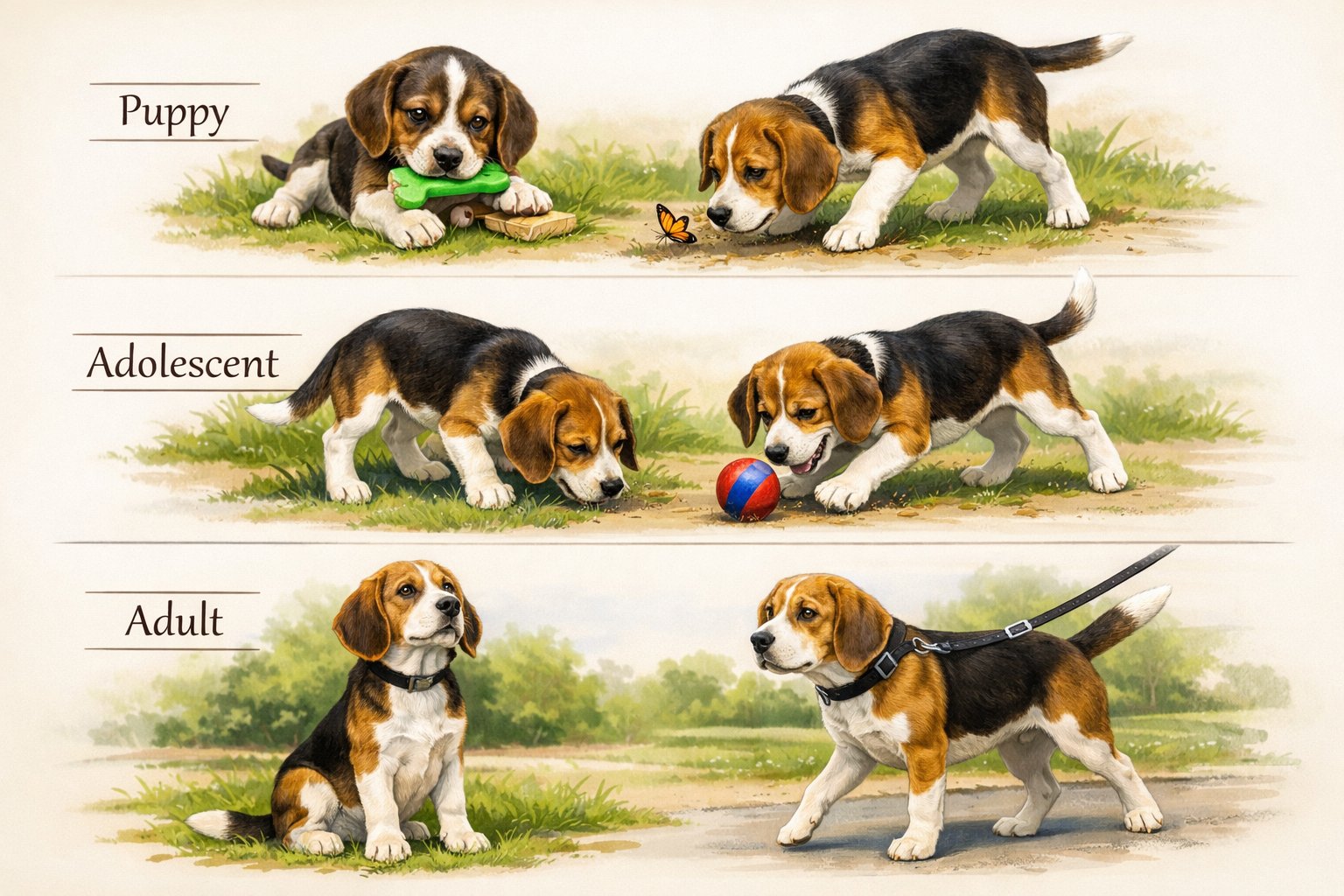
Beagle behavior by age follows clear patterns tied to growth, energy, and health. Each stage brings specific needs in training, exercise, and daily care.
Puppy Behavior and Training Focus
Beagle puppies show high energy, strong curiosity, and short attention spans. They explore with their nose and mouth, which often leads to chewing, digging, and distracted behavior.
Early routines matter because habits form fast at this age. Training should focus on house training, basic commands, and social skills.
Short sessions work best since puppies tire quickly. Consistent rewards help guide good behavior.
Social exposure also plays a key role. Puppies benefit from meeting people, other dogs, and new environments early, as explained in this guide on beagle behavior by age.
Key priorities for puppies
- Potty training and crate use
- Bite control during teething
- Calm exposure to sounds and places
Adolescent Behaviors and Challenges
Between six months and one year, beagles enter an adolescent phase marked by testing limits. Energy levels rise, and listening skills often drop.
They may ignore commands they already know. This stage often frustrates owners.
Beagles may pull on the leash, bark more, or wander due to strong scent instincts. Regular exercise helps reduce these issues.
Training should stay firm and predictable. Skipping rules during adolescence often leads to long-term problems, as noted in discussions of beagle behavior changes by age.
Common adolescent challenges
- Selective hearing
- Increased independence
- Strong desire to roam
Adult Beagle Behavior and Lifestyle
Adult beagles usually settle into steadier routines between one and seven years. Energy remains moderate, but behavior becomes more predictable.
Many owners see improved focus and calmer indoor habits. Adult beagle behavior still requires daily activity.
Walks, scent games, and food puzzles prevent boredom-driven habits like barking or digging. Mental work matters as much as physical exercise.
Training does not stop at adulthood. Ongoing practice helps maintain manners and supports a balanced lifestyle, as outlined in this overview of adult beagle behavior and maturity.
Typical adult traits
- Consistent energy patterns
- Strong food motivation
- Improved impulse control
Behavioral Shifts in Senior Beagles
Senior beagles, usually seven years and older, slow down both physically and mentally. They sleep more and prefer shorter, gentler activities.
Long walks often give way to relaxed sniffing sessions. Behavioral changes may link to health issues like joint pain or hearing loss.
Patience becomes essential, especially if training response declines. Clear routines help reduce confusion.
Owners should watch for new habits such as restlessness or clinginess. These shifts often appear in later life stages discussed in guides on senior beagle behavior changes.
Common senior changes
- Lower stamina
- Increased need for comfort
- Slower response to cues