Core Nutritional Needs for Dogs
Balanced dog nutrition supports healthy growth, clear eyes, strong muscles, and a shiny coat. It involves the right amounts of proteins, fats, carbohydrates, vitamins, minerals, and water to maintain energy and proper body function at every life stage.
Essential Nutrients Every Dog Requires
Every dog relies on six key nutrients: protein, fat, carbohydrates, vitamins, minerals, and water. Each works together to maintain daily health and body systems.
Dogs cannot create all these nutrients on their own, so their diet must supply what they need. Proteins build and repair tissues; fats fuel energy and support brain development.
Carbohydrates provide quick energy and fiber. Vitamins and minerals guide metabolism and keep bones and organs strong.
Water regulates temperature, helps digestion, and moves nutrients through the bloodstream. According to PetMD’s overview on balanced dog food, a complete diet ensures all these elements meet the standards of the Association of American Feed Control Officials (AAFCO).
Feeding an AAFCO-compliant food helps meet everyday needs.
The Role of Protein, Fats, and Carbohydrates
Protein fuels growth, maintains cells, and supports healthy skin and coat. Dogs need high-quality proteins from sources like chicken, fish, or eggs.
Animal proteins are usually easier to digest and contain more essential amino acids than plant proteins. Adult dogs should get at least 18% crude protein while puppies need over 22%, based on a dog nutrition breakdown from DogFoodReviewz.
Fats provide up to twice as much energy per gram as protein or carbohydrate. They supply essential omega-3 fatty acids that reduce inflammation and support heart, joint, and brain health.
Common sources include fish oil, poultry fat, and flaxseed oil. Fats also help absorb vitamins A, D, E, and K.
Though not essential, carbohydrates boost energy and aid digestion through fiber. Whole grains or vegetables like peas, beans, and potatoes are typical sources.
Balanced carbohydrates help maintain healthy gut flora.
Vitamins, Minerals, and Hydration
Vitamins control hundreds of body functions. Fat-soluble vitamins (A, D, E, K) assist with vision, skin, bones, and blood clotting.
Water-soluble ones (B and C) aid metabolism and nerve function. Dogs usually make enough vitamin C but may need more during stress or illness.
Minerals like calcium, phosphorus, magnesium, zinc, and iron support bones, teeth, muscles, and the immune system. A proper calcium-to-phosphorus ratio—about 1.2:1—is vital for puppies and large breeds.
Too much or too little of any mineral can affect growth or heart health, as noted in Country Grove Vet’s canine nutrition guide.
Water is essential. It makes up most of a dog’s body weight and supports every organ.
Dogs should always have access to fresh, clean water, especially after exercise or in warm weather, to prevent dehydration and maintain healthy kidney function.
Choosing and Feeding the Right Dog Food

A healthy diet keeps a dog’s body strong, coat shiny, and energy steady. Good nutrition depends on balanced ingredients, correct portions, and close attention to a dog’s age, size, and activity level.
Thoughtful choices can help owners avoid common dog nutrition mistakes, such as overfeeding or relying on poor-quality fillers.
Evaluating Commercial Dog Food Options
Owners can find hundreds of commercial dog food brands, each claiming to be the best. Trusted foods labeled “complete and balanced” meet nutrition standards set by the Association of American Feed Control Officials (AAFCO), ensuring all essential nutrients are included.
Reading expert advice from the American Kennel Club helps owners identify quality options tested for safety and nutritional completeness. A food that lists real meat, fish, or poultry as the first ingredient often provides better protein quality.
Dog food comes in various formulations for life stage and breed size. For example, large-breed puppies need controlled calcium for steady bone growth, while small breeds may require calorie-dense kibble.
Choosing food that matches a dog’s unique needs supports long-term health and reduces avoidable dietary issues.
Deciding Between Dry, Wet, Raw, and Homemade Diets
Each type of dog food has benefits and downsides. According to Dog Food First, dry kibble is easy to store and supports dental health, while wet food offers more moisture and flavor for dogs that prefer softer textures.
Raw diets appeal to some owners seeking less processed food, yet they carry a higher risk of bacterial contamination if not handled safely. Homemade diets give full ingredient control but can easily lack vital nutrients without veterinary guidance.
When comparing diet types, consistency matters more than novelty. Dogs thrive when they get steady, reliable nutrition.
Any major diet change should happen slowly over several days to avoid stomach upset or rejection of new food textures.
Portion Control and Avoiding Overfeeding
Maintaining a healthy weight prevents many health issues. Overfeeding is one of the most common dog nutrition mistakes, often caused by guessing serving sizes or frequent treats.
Feeding guidelines printed on packaging give a rough starting point but should be adjusted based on the dog’s age, energy, and condition. Veterinarians often recommend routine body condition checks: ribs should be easy to feel but not visible, and the waist should be clear from above.
Owners can monitor calorie intake using measuring cups, slow feeders, or feeding charts. For dogs prone to obesity, meals divided into smaller servings throughout the day can help manage hunger.
Regular exercise also plays a key role in achieving balanced pet nutrition.
Reading Ingredient Labels and Avoiding Fillers
Labels can be confusing, but they hold valuable information. The product name gives major clues—terms like “chicken dinner” mean only about 10% chicken content, while “with chicken” means about 3%, as explained in the AKC guide.
Owners should compare ingredient lists to ensure that protein sources appear first and artificial additives stay low. Good-quality foods use grain, fruits, and vegetables as nutrient sources, not fillers.
Low-quality products may rely on byproducts, corn, or soy to bulk up weight without adding nutrition.
Checklist for reading labels:
| What to Look For | Why It Matters |
|---|---|
| Real named meat first | Indicates high-protein quality |
| AAFCO “complete and balanced” claim | Confirms full nutrient profile |
| Clear feeding guidelines | Helps set accurate portions |
Customizing Your Dog’s Diet for Life Stages and Special Needs
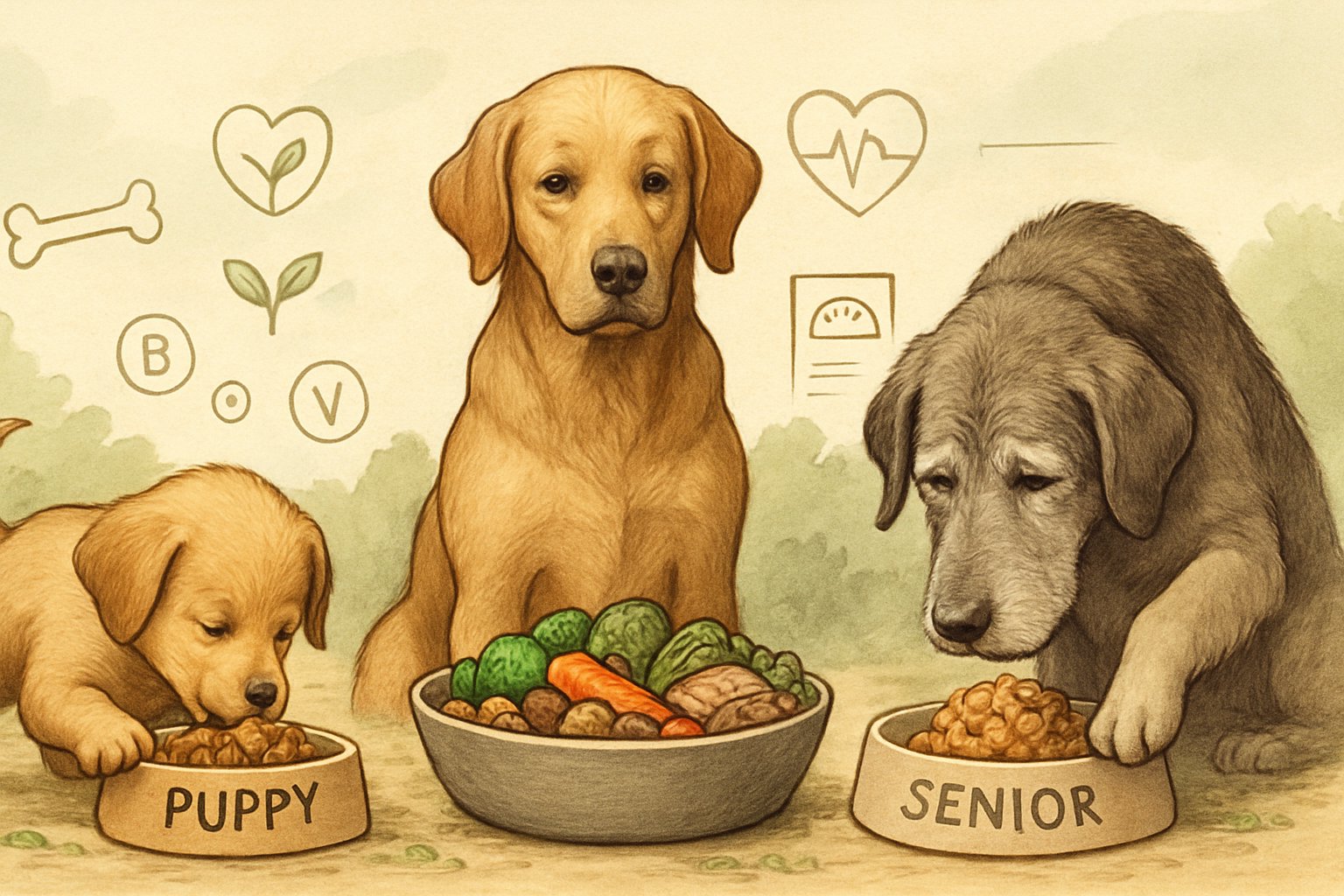
A dog’s body changes from puppyhood to its golden years, and its diet should change with it. Nutrition affects growth, energy, muscle tone, and even joint health.
Adjusting meals to match a dog’s age, size, and medical condition supports balanced canine nutrition and overall well-being.
Puppy Nutrition and Growing Dogs
Puppies grow rapidly and need high-quality food with the right mix of protein, fats, vitamins, and minerals. Their diet should include complete puppy formulas that meet AAFCO standards.
These formulas provide balanced nutrients essential for tissue growth and strong bones.
Key components for puppy diets:
- Protein (22–32%) to support muscles and organ development
- Fat (8–20%) to fuel energy and brain growth
- Calcium and phosphorus for proper skeletal formation
- DHA, an omega-3 fatty acid, for healthy eyes and brain
Feeding frequency matters too. Young pups often eat 3–4 small meals a day, gradually reducing to twice daily as they grow.
Avoid overfeeding or giving human food since excess calories can cause joint and weight problems. For details on growth stage diet planning, the guide from New Age Pet provides useful examples based on breed size.
Adult Dog Dietary Adjustments
Adult dogs need steady energy and nutrient balance rather than extra growth support. Their meal plan depends on size, breed, and activity level.
For most, a maintenance diet includes about 18–25% protein and 10–15% fat to sustain muscle tone and a shiny coat. Adding complex carbohydrates from rice or oats helps maintain energy without weight gain.
Fresh fruits and vegetables supply natural fiber and antioxidants. Serving food twice daily helps prevent overeating, and portion control keeps weight consistent.
For canines with high activity, such as working or sporting breeds, slightly richer foods may be beneficial. When formulating adult diets, many owners follow AAFCO guidance to maintain balanced dog nutrition across life stages.
Senior Dog Nutrition and Common Diet Changes
Older dogs experience slower metabolism and potential joint or dental challenges. They often thrive on foods lower in calories but higher in fiber and easily digestible proteins.
Maintaining a moderate protein content supports muscle mass without straining kidneys. Nutrients like omega-3 fatty acids play a big role in reducing inflammation and supporting cognitive health.
Supplements such as glucosamine and chondroitin are frequently included in senior blends to help joints stay flexible. Choosing softer kibbles or wet food makes chewing easier for dogs with dental wear.
Weight control and hydration remain priorities for seniors. Specific age-based recommendations, such as those on the Animalzoid feeding guide, help owners make age-appropriate changes.
Addressing Special Dietary Needs and Supplementation
Some dogs face allergies, food sensitivities, or medical issues requiring tailored nutrition. Common allergens include beef, chicken, and wheat.
In those cases, switching to limited-ingredient diets or hydrolyzed protein recipes can ease symptoms. Dogs with diabetes or kidney disease may need prescription diets formulated for controlled nutrient intake.
Omega-3 supplements are often used to reduce skin inflammation and aid coat health. For joint support, glucosamine and fish oil remain popular.
It’s important that owners consult a veterinarian before adding any supplement to ensure proper dosage and benefit.
Custom meal planning, such as breed-focused or individualized options from DoggoBaggins, helps dogs with special conditions receive balanced, digestible meals. These plans are designed to match their unique nutritional requirements.