Essential Exercise Needs for Border Collies
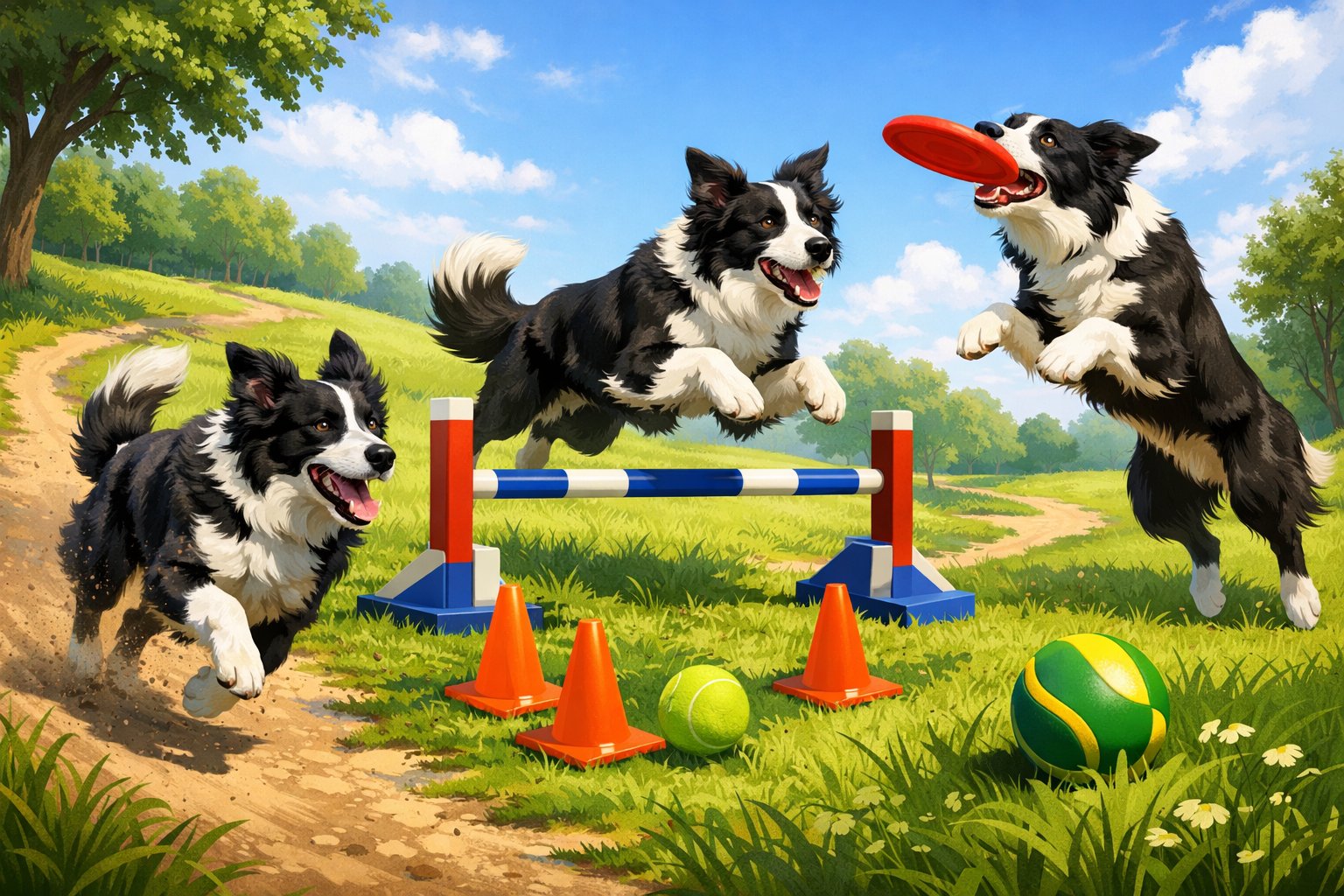
Border Collies thrive on steady movement and regular thinking tasks. Their exercise plan must balance physical exercise, mental work, and proper recovery to support long-term health and calm behavior.
Daily Physical Activity Requirements
Most adult border collies need 90 minutes to 2 hours of daily exercise. This time should include both movement and thinking tasks to match their high endurance and focus.
Many vets and trainers agree that Border Collies need around 2 hours of exercise each day. Daily walks form the base of border collie exercise, but walking alone rarely meets their needs.
Add faster-paced walking, hiking on uneven ground, or swimming to work different muscles. Helpful daily activity mix:
- Daily walks: 30–60 minutes total
- High-energy play: fetch, frisbee, or running
- Low-impact options: swimming for joints and recovery
Without enough variety, even long walks may leave a dog restless.
Age-Specific Exercise Guidelines
Exercise for border collies must change with age. A border collie puppy needs far less structured activity than an adult to protect growing joints.
Many experts follow the rule of 5 minutes of exercise per month of age, which is outlined in this Border Collie exercise needs guide.
Age-based guidelines
- Border collie puppies: Short walks, free play, light training
- Adults (1–7 years): 90–120 minutes split across the day
- Seniors: Shorter walks, swimming, and gentle hiking
Border collie puppies may seem tireless, but overdoing it early can cause joint problems later.
Risks of Under- and Over-Exercising
Too little activity often leads to behavior problems. Border collies without enough exercise may chew furniture, bark nonstop, or pace.
These issues often improve when owners increase both movement and mental tasks, as noted in this Border Collie exercise guide. Over-exercising brings its own risks.
Signs include limping, long recovery times, or refusing normal activities. Border collies may push past pain, so handlers must watch closely.
Warning signs to watch:
- Heavy panting that lasts too long
- Stiffness after walking or hiking
- Sudden drop in endurance
Physical Activities for a Happy Border Collie
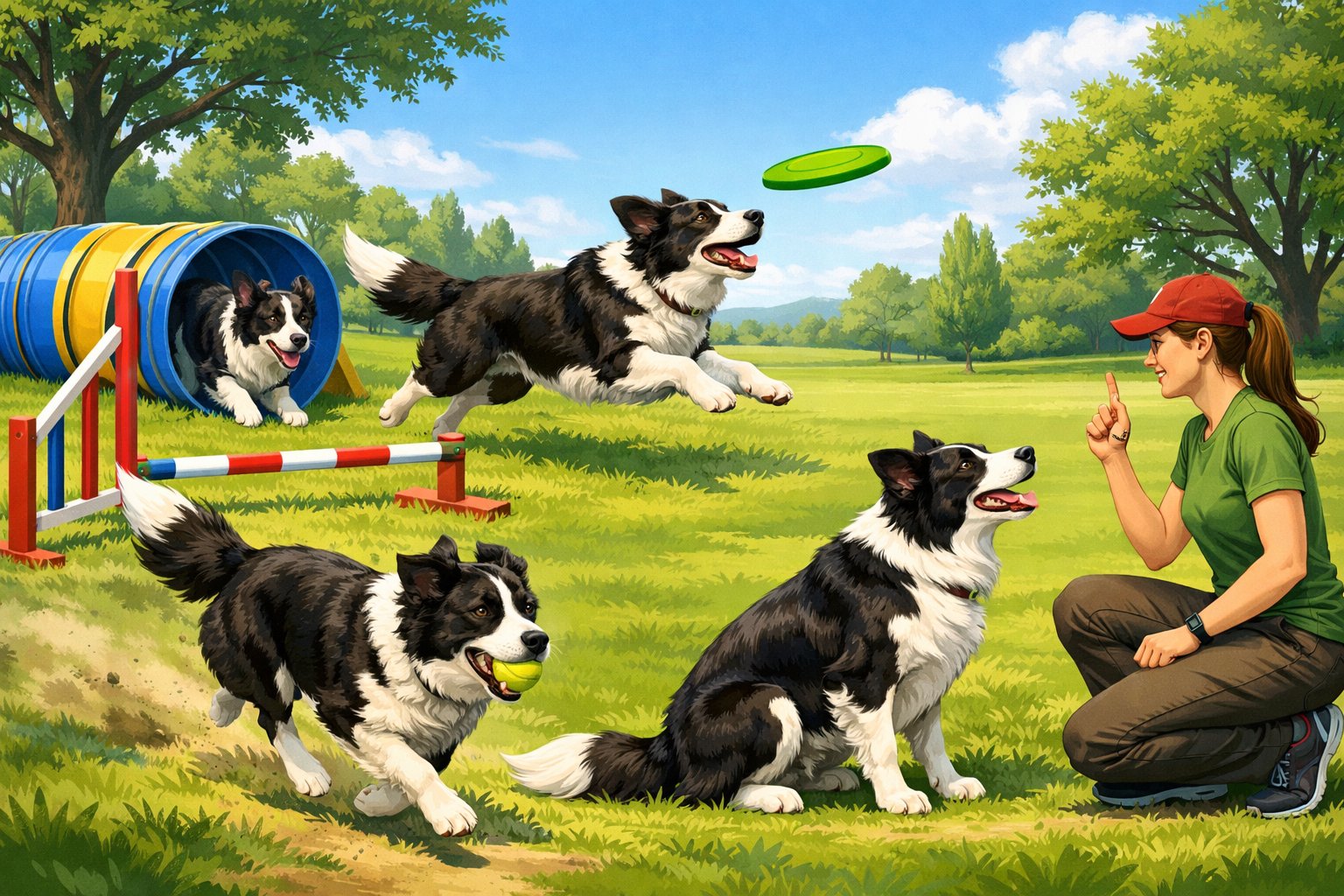
Border Collies stay healthy when daily exercise includes steady movement, short bursts of speed, and tasks that match their herding instincts. The activities below focus on safe outlets for energy, skill building, and purposeful work.
Walking and Hiking Adventures
Daily walks build a strong base for fitness and behavior. Border Collies do best with 60–90 minutes of walking, split into two or three outings.
Experts agree that time matters, but pace and variety matter more than distance, as explained in this guide on Border Collie exercise needs. Hikes add value because they include hills, uneven ground, and new smells.
These features engage muscles and the brain at the same time. A long leash allows safe exploring without pulling.
| Tip | Why it helps |
|---|---|
| Vary routes | Prevents boredom |
| Allow sniffing | Lowers stress |
| Avoid extreme heat | Reduces injury risk |
Agility and Obstacle Course Play
Agility training gives Border Collies a clear job to do. It uses agility courses with tunnels, hurdles, weave poles, and balance boards.
Short sessions work best. Ten to twenty minutes keeps focus high and joints safe.
Home setups work well. Simple obstacle courses made from cones or low jumps still teach body control and listening skills.
These exercises support coordination and confidence. Many owners add agility because it blends physical effort with thinking.
Fetch, Frisbee, and Water Games
Playing fetch fits natural chase behavior, but structure matters. Repetitive throwing without breaks can overstimulate dogs.
Owners should limit fetch games to short sets with rest in between. Frisbee adds difficulty because the dog tracks a moving object in the air.
Soft discs reduce mouth injuries. Clear start and stop cues help control excitement.
Water games work well in warm weather. Swimming protects joints while still burning energy.
Best practices
- Warm up before intense play
- Stop if the dog pants heavily
- Avoid slippery surfaces
Dog Sports and Herding Activities
Organized dog sports give Border Collies focused work. Options include flyball, rally, and agility trials.
These activities reward speed, accuracy, and teamwork. Herding-based games match strong herding instincts.
Treibball lets dogs push large balls toward goals using commands. It mimics control and movement without livestock.
Some dogs also enjoy real herding trials, where trained handlers guide dogs around sheep. This work satisfies instinctive drives and requires advanced training.
Mental Stimulation and Training For Border Collies

Mental work keeps a Border Collie calm and focused. Structured games, clear training, and steady rewards build good habits and reduce problem behavior.
Puzzle Toys and Problem-Solving Games
Puzzle toys turn daily routines into mental stimulation exercises. They force the dog to think, pause, and try new actions.
This type of work often tires the brain faster than long runs. Puzzle feeders work well at mealtime.
A Kong, snuffle mat, or sliding tray makes the dog solve a task before eating. Many owners replace bowls with feeders to slow fast eating and reduce stress, as explained in this guide to mental stimulation games for Border Collies.
Interactive games should stay simple. Rotate toys every few days to keep interest high.
| Game Type | Skill Built |
|---|---|
| Snuffle mats | Focus and scent use |
| Sliding puzzles | Problem-solving skills |
| Treat balls | Patience and impulse control |
Obedience and Trick Training
Obedience training gives structure and clear rules. Border Collies respond well to short sessions that focus on accuracy, not speed.
Five to ten minutes works better than long drills. Start with basic obedience commands like sit, down, stay, and place.
Add recall training early to build safety and trust. Consistent cues matter more than volume or force.
Trick training adds variety. Spins, bows, and leg weaves build body control and confidence.
Teaching tricks also supports impulse control when paired with calm starts and clean finishes.
Scent Work and Hide-and-Seek
Scent work taps into natural instincts. It slows the dog down and shifts focus from motion to thinking.
This helps dogs that struggle to relax. Hide-and-seek works well indoors.
One person hides while another holds the dog. A release cue sends the dog to search, building recall and confidence at the same time.
Treat searches add variety. Hide food under cups or behind furniture.
Keep the first rounds easy, then increase difficulty.
Socialization and Positive Reinforcement
Socialization shapes how a Border Collie reacts to the world. Calm exposure to people, dogs, sounds, and places prevents fear and overreaction.
Positive reinforcement training works best. The handler rewards calm choices with treats, praise, or play.
This method builds trust and speeds learning without pressure. Social training should stay controlled.
Leash training, brief greetings, and quiet observation teach good manners. Crate training and alone training also support independence and rest.
A simple training schedule helps balance activity and downtime. Clear rewards and timing remain key, as shown in this guide on positive reinforcement mental enrichment for Border Collies.