Essential Mental Stimulation Games for Border Collies
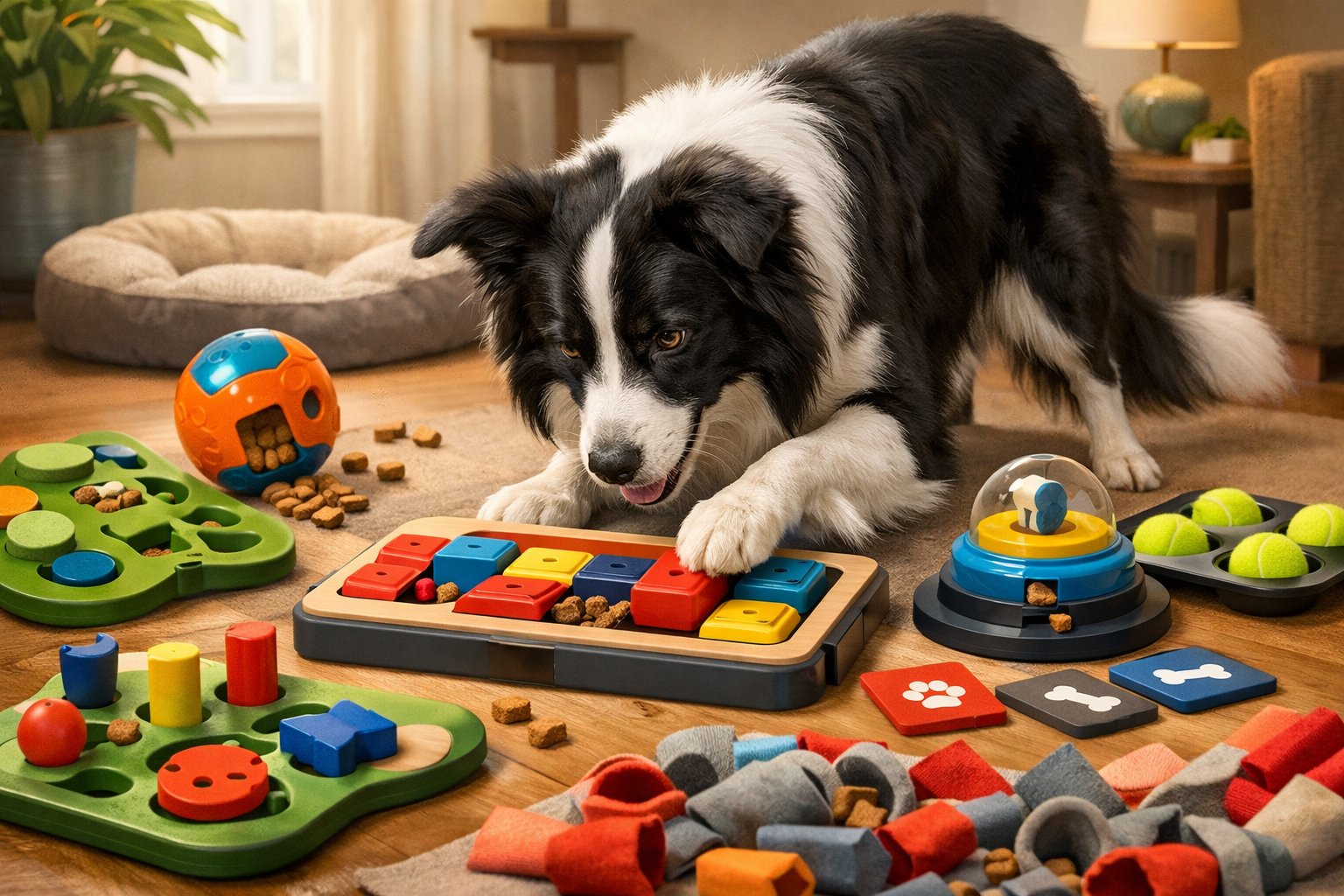
Border collies need daily mental stimulation to stay calm and focused. The right games build problem-solving skills and reduce boredom-driven hyperactivity.
Puzzle Toys for Problem-Solving Skills
Puzzle toys give border collies clear mental challenges with a reward at the end. These interactive toys ask the dog to slide, lift, or spin parts to release food.
That process builds problem-solving abilities. Many dogs stay engaged longer when owners rotate toys instead of leaving the same one out every day.
Short sessions work best and prevent frustration.
Common puzzle toy styles
| Toy type | Mental skill used |
|---|---|
| Treat sliders | Cause-and-effect thinking |
| Food balls | Patience and focus |
| Flip lids | Memory and control |
This type of mental enrichment pairs well with short walks. For more ideas, this guide on interactive puzzle toys for border collies explains how to match toy difficulty to skill level.
Scent Work and Nose Games
Scent work uses a border collie’s strongest sense. Simple scent games like hiding treats around a room create a powerful mental workout.
These games tap into natural scent skills and require steady focus. Owners often start easy by hiding food in plain sight, then increase difficulty by using boxes, towels, or different rooms.
This type of mental exercise tires the brain faster than many forms of physical exercise. Scent games also help dogs who struggle with anxiety.
Slow sniffing lowers stress and improves attention. Articles on daily scent games and mental stimulation show how short sessions fit into normal routines.
Hide and Seek: Tapping Into Instincts
Hide and seek blends brain games with movement. One person hides while another holds the dog, then calls them to search.
The dog must track sound, scent, and memory at the same time. This game supports mental stimulation activities without special tools.
It also strengthens recall and listening skills. Border collies enjoy the challenge because it mimics light herding and searching tasks.
Owners should keep the game fair. Hiding spots should challenge the dog but still allow success.
Repeating the game in different rooms keeps the mental challenges fresh and rewarding.
Agility Courses and Brain Workouts
Agility training works both the body and mind. Dogs must listen, remember patterns, and move with control.
Each obstacle adds a new decision, which turns exercise into a full mental workout. Home agility does not need professional gear.
Cones, low jumps, and tunnels work well. Short courses reduce injury risk and prevent overload.
Agility also channels herding instincts into safe structure. Dogs learn to wait, move, and respond to cues.
This balance of mental exercise and physical exercise helps reduce hyperactivity. Many enrichment ideas appear in this overview of agility-based mental enrichment for border collies.
Training and Interactive Activities for Daily Mental Engagement
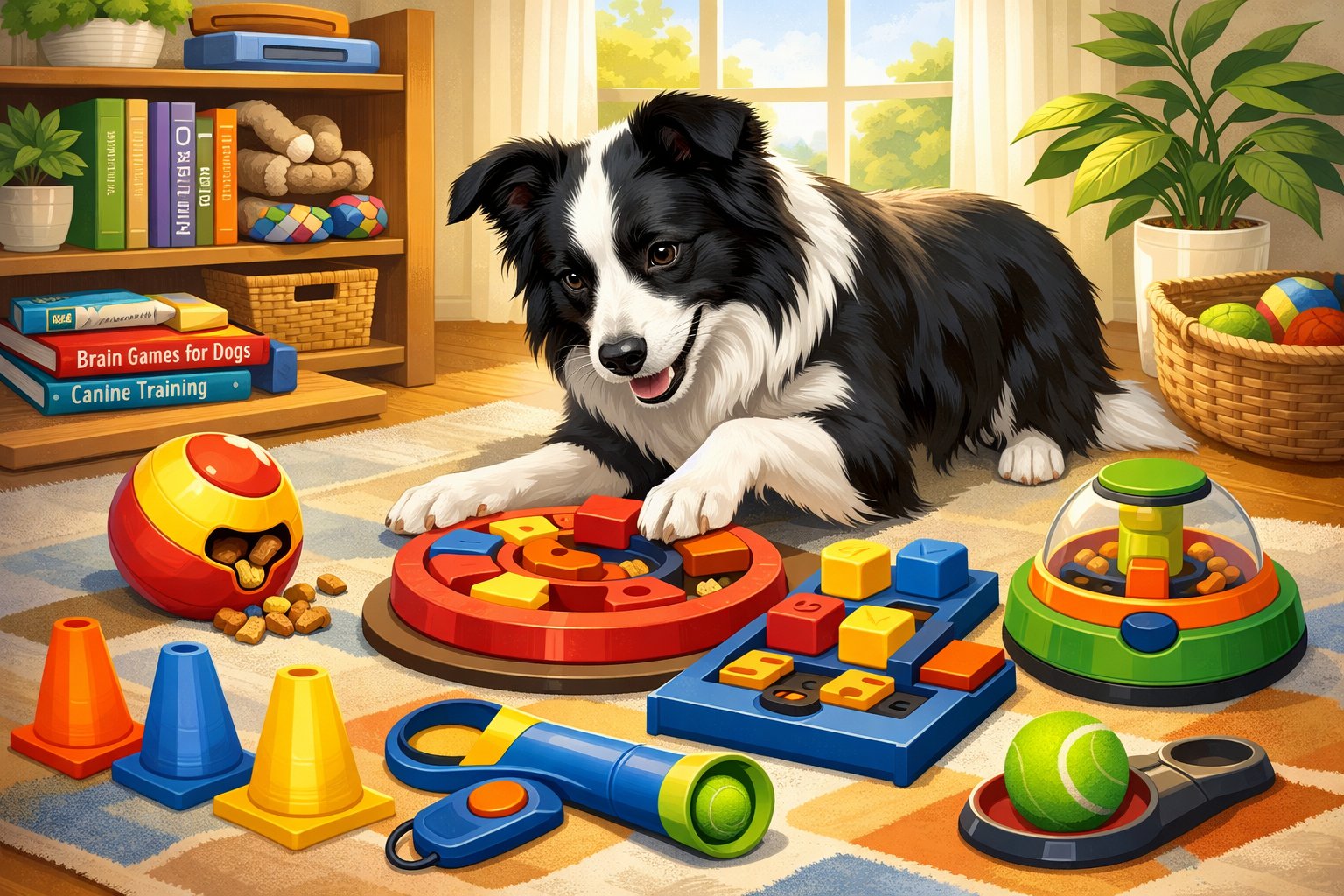
Daily mental work keeps a Border Collie focused and easier to live with. Short training sessions, problem-solving games, and regular social contact give the dog clear tasks and steady brain exercise.
Obedience and Trick Training Routines
A simple training routine gives structure to the day and keeps the dog mentally busy. Obedience training should focus on basic commands like sit, stay, down, come, and place.
These commands build control and reinforce good habits. Trick training adds variety and challenge.
Learning new tricks such as spin, roll over, or touch engages memory and focus. Short sessions work best, usually 10–15 minutes, two times a day.
Many owners use clicker training because it gives clear feedback. The click marks the right behavior and speeds learning.
As skills improve, advanced training techniques like distance commands or longer stays increase difficulty without adding stress.
Interactive Feeding and Puzzle Feeders
Feeding time can double as brain training. Interactive feeding tools make the dog work for each bite instead of eating from a bowl.
This slows eating and keeps the mind active. Popular options include:
- Puzzle feeders with sliding or lifting parts
- Treat-dispensing toys that release food when rolled
- Snuffle mats that hide kibble in fabric
- Treat-dispensing balls that reward steady effort
These tools support problem-solving and patience. They also help on busy days when long training sessions are not possible.
Rotating feeder styles keeps the challenge fresh and prevents boredom.
Rotating Toys and Daily Socialization
A small toy collection works better when owners rotate toys every few days. This makes old items feel new and keeps interest high.
Mixing interactive toys, chews, and brain teasers supports different thinking skills. Interactive play matters as much as solo play.
Tug games, short fetch sessions, and guided play build focus and impulse control. Socialization adds another layer of mental work.
Regular exposure to new people, dogs, and places strengthens confidence. Calm, positive experiences reduce stress and improve behavior.
Daily social contact, even brief, gives the dog real-world problem solving practice.
Addressing Behavioral Concerns: Preventing Boredom and Anxiety
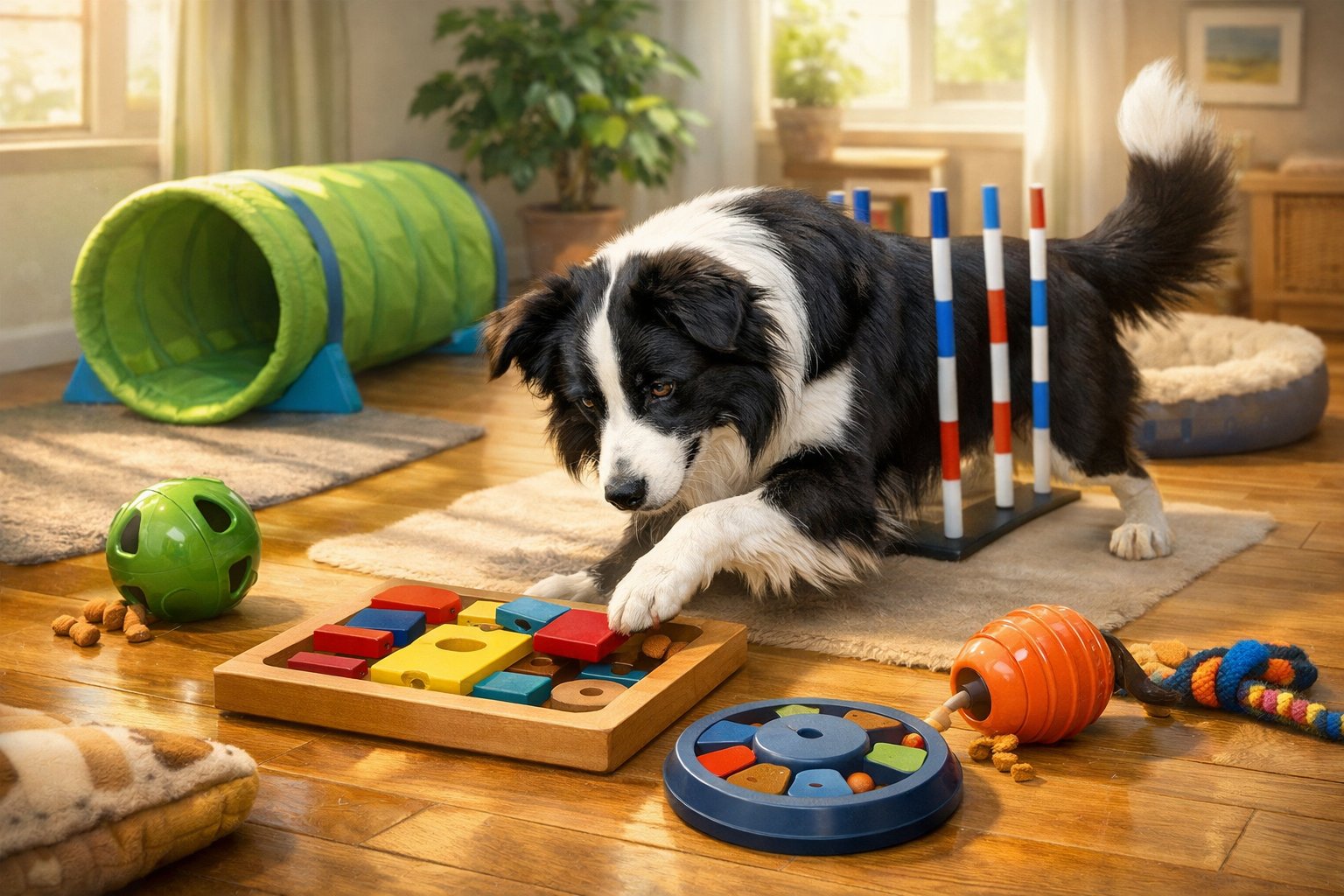
Border Collies need steady mental work to stay calm and focused. Clear routines, active games, and close interaction help reduce anxiety and limit destructive behaviors in energetic dogs.
Identifying Signs of Mental Fatigue
Mental fatigue does not always look like calm behavior. A Border Collie may show stress when the brain feels overloaded or underused.
Common signs include excessive barking, pacing, ignoring cues, or sudden restlessness. Some dogs stop engaging and appear withdrawn.
Others seem alert but struggle to settle. Behavior changes often appear before clear exhaustion.
A dog may start chewing furniture, digging, or reacting strongly to small noises. These actions often signal unmet mental needs, not bad training.
Early signs to watch for include:
- Short attention span during games
- Repeated behaviors with no goal
- Increased anxiety when routines change
Balanced play, rest, and a structured environment help prevent mental fatigue while keeping the dog engaged and confident.
Reducing Destructive and Hyperactive Behaviors
Boredom often drives destructive behavior in Border Collies.
Without clear tasks, they create their own outlets, which leads to digging, barking, and damaged items.
Mental games reduce these behavioral issues by giving the dog a clear purpose.
Activities like training drills, puzzle toys, and scent games help focus energy in a healthy way.
These tools work well for preventing boredom in Border Collies.
Consistency matters.
A daily plan that mixes physical movement with problem-solving lowers anxiety and builds trust.
A simple structure may include:
- Short training sessions
- One problem-solving game
- Calm social time
This approach helps energetic dogs stay settled without frustration.