Critical Border Collie Health Issues to Monitor
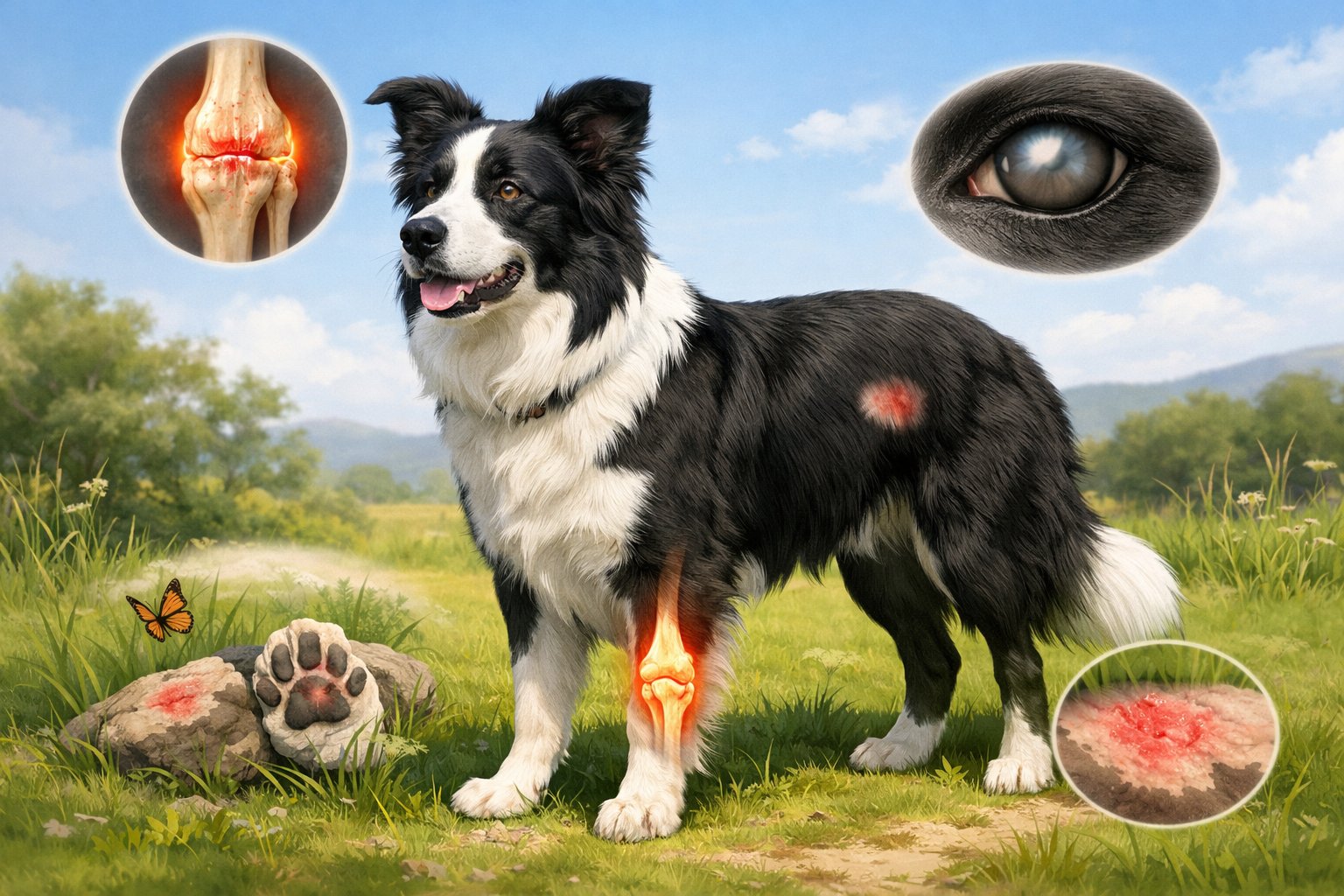
Border Collies face several serious health problems that often have a genetic cause. Owners should watch for joint pain, vision loss, seizures, and rare immune disorders, and use early screening to guide care and breeding choices.
Hip Dysplasia in Border Collies
Hip dysplasia affects how the hip joint fits and moves. In Border Collies, this problem can limit running, jumping, and daily comfort.
It often starts early but worsens with age. Signs of hip dysplasia in Border Collies include stiffness after rest, trouble standing, limping, and less interest in exercise.
Weight gain can make symptoms worse. Vets diagnose hip dysplasia with X-rays.
Treatment may include weight control, joint supplements, pain medicine, or surgery in severe cases. Responsible breeding practices and early screening reduce risk.
Owners can learn more about hip dysplasia in Border Collies.
Collie Eye Anomaly and Progressive Retinal Atrophy
Collie Eye Anomaly (CEA) and Progressive Retinal Atrophy (PRA) both affect vision. These genetic health problems can lead to partial or total blindness.
CEA changes how the eye develops. Many dogs show no pain but may struggle in low light.
PRA causes slow damage to the retina, often starting with night blindness and later vision loss. There is no cure for CEA or PRA.
DNA testing helps identify carriers before breeding. Regular eye exams help track changes.
Owners can read about Collie Eye Anomaly in Border Collies.
Epilepsy and Seizure Disorders
Epilepsy in Border Collies causes repeated seizures with no clear trigger. Seizures may include shaking, collapse, drooling, or confusion after the event.
Signs of epilepsy often begin between one and five years of age. Stress, illness, or fatigue may increase episodes.
A vet will rule out other causes before diagnosing epilepsy. Treatment focuses on seizure control with daily medicine and routine care.
Keeping a seizure log helps track patterns. Clear guidance on epilepsy in Border Collies can help owners know what to watch for.
Trapped Neutrophil Syndrome and Other Genetic Disorders
Trapped Neutrophil Syndrome (TNS) is a rare but severe immune disorder in Border Collies. Puppies with TNS cannot fight infections and often fail to grow normally.
Symptoms include frequent illness, poor weight gain, and weakness. There is no cure, and many affected dogs do not survive long.
Other genetic health problems include neuronal ceroid lipofuscinosis (NCL or CL), which causes nerve damage and behavior changes. Genetic testing and DNA testing support safer breeding.
Detailed information on genetic disorders in Border Collies helps owners understand these risks.
Additional Conditions and Prevention Strategies

Several less obvious conditions can affect Border Collies and change daily care needs. Medication safety, joint health, hormone balance, and exercise limits all play a role in long-term health.
Multidrug Resistance Mutation and Medication Sensitivities
Some Border Collies carry the mdr1, also called the multidrug resistance mutation. This gene problem affects how the body handles certain drugs.
Dogs with it can have serious reactions to common medications.
Drugs often linked to risk include:
| Medication type | Examples |
|---|---|
| Parasite control | ivermectin, milbemycin |
| Digestive meds | loperamide |
| Cancer drugs | vincristine |
A simple DNA test can confirm the mutation. Vets adjust drug choices and doses once they know the result.
Owners should remind every vet about this risk. Clear records help avoid preventable reactions.
More details appear in this guide on Border Collie health issues and medication risks.
Osteochondritis Dissecans and Joint Support
Osteochondritis dissecans (OCD) affects growing joints, often in the shoulders. It starts when cartilage fails to attach to bone during growth.
Rapid weight gain and genetics raise the risk. Dogs may limp, avoid play, or seem stiff after rest.
X-rays confirm the problem. Treatment ranges from rest to surgery, based on severity.
Daily care focuses on joint support. Many vets suggest joint supplements with chondroitin and omega-3 fatty acids to support cartilage and reduce inflammation.
Controlled exercise also matters. This overview of osteochondritis dissecans in Border Collies explains warning signs owners often miss.
Hypothyroidism and Endocrine Challenges
Hypothyroidism occurs when the thyroid gland makes too little hormone. In Border Collies, signs often develop slowly and seem mild at first.
Common signs include:
- Weight gain without diet change
- Low energy and mental dullness
- Thin coat or hair loss
Blood tests confirm the diagnosis. Most dogs respond well to thyroid hormone replacement therapy, taken daily for life.
Vets recheck levels to adjust the dose. Early treatment improves energy and skin health.
This article on common Border Collie health problems outlines how hormone imbalance affects daily behavior.
Exercise-Induced and Border Collie Collapse
Border Collie Collapse, also called exercise-induced collapse (EIC), causes sudden weakness after intense activity. Episodes often start after 5–15 minutes of hard play, especially in hot weather.
Dogs may stagger, fall, or seem confused. Most recover within minutes once activity stops.
Unlike heart defects such as PDA (patent ductus arteriosus), collapse episodes do not usually involve pain. Management focuses on prevention.
Owners limit high-intensity work, add rest breaks, and avoid heat stress. Tracking patterns helps reduce repeat episodes.
This resource on exercise-induced collapse in active Border Collies explains common triggers and safety steps.
Proactive Health Management for Border Collies
Good health for a Border Collie depends on routine care, smart daily habits, and an understanding of breed-specific risks. Owners who act early can reduce the impact of many common problems linked to the Border Collie breed.
Veterinary Check-Ups and Early Detection
Regular veterinary check-ups play a key role in protecting Border Collie health. Most vets recommend exams at least twice a year, even when the dog appears healthy.
These visits help catch early signs of joint issues, eye disease, or nerve problems before they worsen. Vets often check hips, eyes, weight, and movement during routine veterinary care.
They may suggest eye exams or imaging for dogs used as working dogs, since heavy activity can stress joints. Blood tests can also flag hidden issues like inflammation or metabolic changes.
Owners should track changes at home. Limping, restlessness at night, or vision changes often signal a need for a vet visit.
Early action usually leads to better outcomes.
Diet, Weight Control, and Lifestyle Tips
A balanced diet helps Border Collies stay active and maintain strong joints. High-quality food with clear protein sources supports muscle health and energy needs.
Portion control matters, since extra weight adds stress to hips and knees. Daily exercise should match age and condition.
Young dogs need controlled activity, while adult dogs benefit from steady routines like walks, agility, or herding games. Overtraining can raise injury risk, especially in working dogs.
Helpful daily habits include:
- Feeding measured meals at set times
- Limiting high-calorie treats
- Using soft surfaces for intense play
- Allowing rest days after heavy activity
These steps support long-term mobility and comfort.
Understanding Inherited and Breed-Specific Risks
The Border Collie breed carries known inherited health risks. Common concerns include hip dysplasia, epilepsy, and eye disorders such as Collie Eye Anomaly.
Many of these conditions have genetic links. Responsible breeders often screen for these issues.
Owners can also ask vets about genetic testing or early eye exams. One overview of common conditions appears in this guide on Border Collie health issues owners should know.
Stiff movement, seizures, or vision trouble should never be ignored. Informed owners can plan care that fits their dog’s needs and activity level.