How Much Exercise Does a Border Collie Really Need?
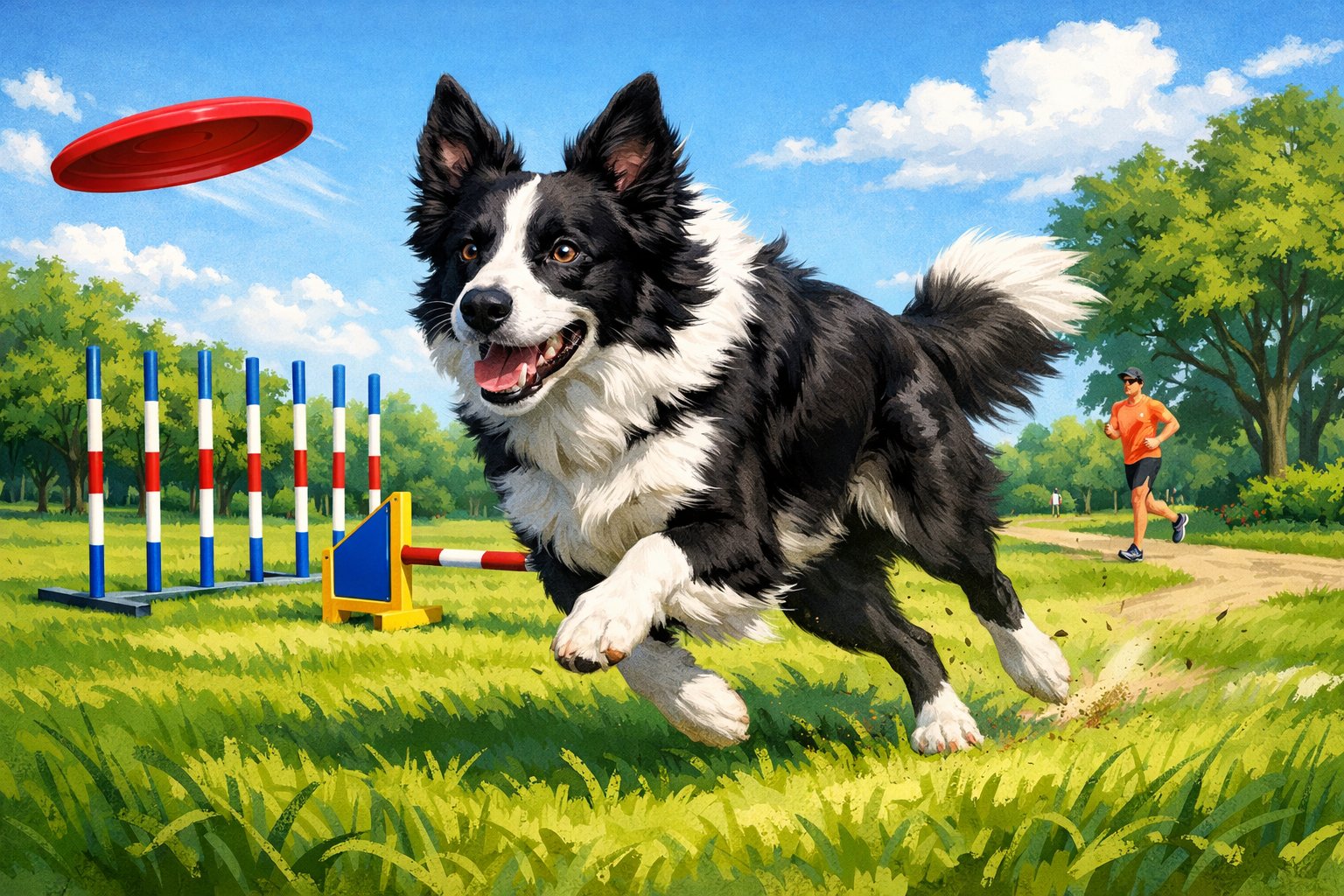
Border collies need structured activity that matches their strong drive to move and think. The right amount depends on energy level, age, health, and daily routine.
Understanding Border Collie Energy Levels
Border collies rank among the most active herding dogs. Breeders developed them to work for hours while herding livestock.
This background explains their high exercise needs and sharp focus. Most border collies need vigorous exercise that raises the heart rate.
Slow walks rarely meet this need. Activities like running, fast-paced fetch, agility, and hiking work better.
Individual temperament matters. Some dogs settle with less activity, while others need more time to burn energy.
Articles on how much exercise Border Collies need note that most adults need about one to two hours each day. Mental work also matters.
Training, puzzle toys, and learning new commands help protect border collie health and reduce stress. Physical and mental activity work best together.
Daily Exercise Guidelines by Age
Age and health shape safe and effective daily exercise. Puppies, adults, and seniors need different routines.
| Age Group | Daily Activity Focus | Typical Time |
|---|---|---|
| Puppy | Short play, training, rest | 30–60 minutes |
| Adult | Running, games, training | 90–120 minutes |
| Senior | Low-impact movement | 45–60 minutes |
Puppies should avoid long runs. Short play sessions protect growing joints.
Adults thrive on structured exercise routines with both speed and skill. Many experts suggest 90 minutes to 2 hours of daily exercise for healthy adults.
Seniors still need movement. Gentle walks and light games support mobility without strain.
Always adjust exercise for age and health limits.
Signs Your Border Collie Needs More Activity
Behavior often shows when activity levels fall short. Common signs include pacing, chewing objects, or constant demand for attention.
Other signs include weight gain, restlessness indoors, and trouble settling after walks. These issues often improve when owners increase vigorous exercise and mental tasks.
Working breeds also show focus problems when bored. They may ignore cues or fixate on motion.
Guides on Border Collie exercise needs link these behaviors to unmet activity demands. Changes should happen slowly.
Adding time, variety, or intensity helps meet needs without injury. Regular activity supports mood, focus, and long-term health.
Best Types of Exercise and Enrichment for Border Collies
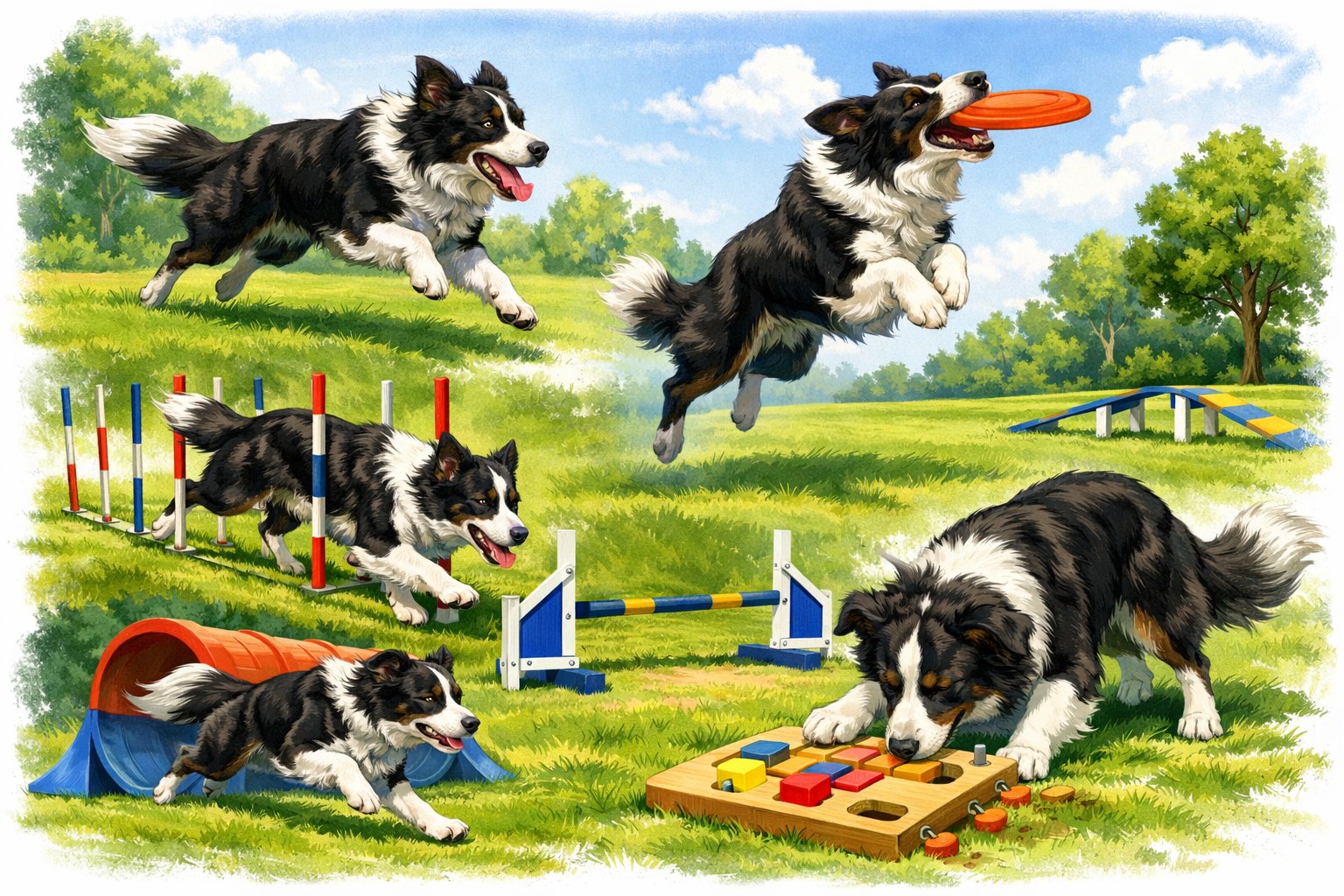
Border Collies need daily physical exercise and mental enrichment to stay calm and focused. The right mix of movement, thinking tasks, and structured play keeps energy levels balanced and behavior steady.
Physical Exercise: Walks, Runs, and Outdoor Activities
Border Collies need vigorous activity every day. Long walks help, but brisk walks, runs, and hikes work better for this high-energy breed.
Many owners aim for 60–120 minutes of movement spread across the day. Outdoor activities like hiking and swimming give joints a break while still burning energy.
Playing fetch and other fetch games allow fast sprints and quick turns, which suit herding dogs well. Safe off-leash areas or fenced yards work best.
A dog walker can help on busy days. Some owners use dog daycare for supervised playtime, but not all dogs enjoy group settings.
Watch behavior and stress levels closely.
Mental Stimulation and Enrichment Ideas
Mental stimulation matters as much as physical exercise for border collie exercise needs. Without it, excess energy often turns into pacing, barking, or destructive habits.
Short training sessions during the day build focus and confidence. Basic obedience, trick training, and impulse control games work well.
Puzzle toys, puzzle feeders, and interactive toys slow eating and encourage problem solving. Scent games offer simple mental enrichment.
Hide treats or toys and let the dog search by smell. Rotate activities often to avoid boredom.
Even 10–15 minutes of focused thinking can reduce restless behavior.
Structured Activities and Canine Sports
Structured activities give Border Collies a clear job to do. Many thrive in agility training, which combines speed, balance, and listening skills.
Courses challenge both body and brain. Canine sports like flyball and disc games reward fast reactions and teamwork.
These sports suit dogs that enjoy rules and repetition. Proper training and rest prevent overuse injuries.
Some dogs benefit from controlled herding lessons, where available. This taps into natural instincts without creating bad habits.
Visits to well-managed dog parks can help with social skills, but only for dogs that enjoy group play.
Tailoring Exercise to Your Border Collie’s Life Stage and Personality
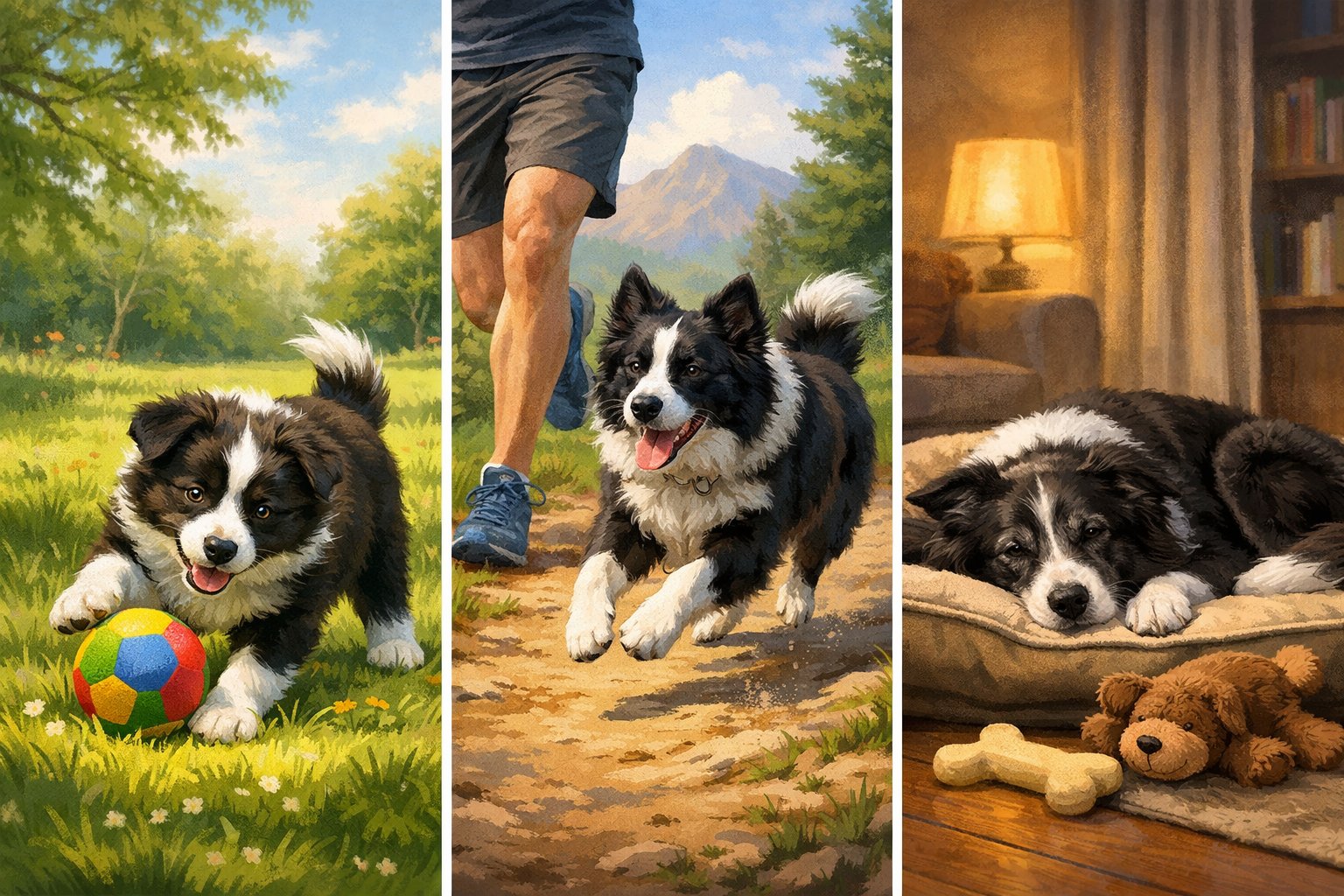
Border collies do not all need the same amount or type of activity. Age, daily role, and individual temperament shape the right exercise schedule.
Health and recovery matter just as much as time spent moving.
Exercise Needs of Border Collie Puppies
Border collie puppies need short, controlled activity that protects growing joints. Their bones stay soft during early months, so long runs and hard jumping increase injury risk.
Many vets follow the five minutes per month of age rule for walks, which helps prevent overuse injuries. Puppies benefit most from mental work mixed with play.
Simple training, puzzle toys, and scent games tire the brain without stressing the body. Light play in the yard or house works well.
Several guides warn against overdoing walks at this stage, including this breakdown of border collie puppy exercise needs by age. Rest periods matter.
Puppies need quiet time after activity to avoid overtired behavior that looks like excess energy.
Activity Guidelines for Adults and Seniors
Healthy adult border collies usually need 90 minutes to 2 hours of daily activity. This should include both movement and thinking tasks.
Long walks, fetch, agility basics, and training sessions work well when spread across the day. Many adults thrive on a varied exercise routine rather than the same walk every day.
Working dogs often need more structure and challenge than pet dogs. This guide explains how most adults need around 2 hours of daily exercise, though some need less.
Senior border collies still need daily movement, but intensity should drop. Short walks, gentle games, and light training help protect joints while supporting dog health and mobility.
Adjusting for Health, Age, and Temperament
Individual temperament matters as much as age. Some border collies settle easily after exercise, while others become overstimulated.
Calm cooldown time reduces pacing and restlessness after activity. Dogs with joint issues, heart conditions, or weight concerns need custom exercise plans.
A vet should guide changes tied to border collie health or recovery. Mental work can replace some physical strain during healing.
Owners should watch behavior cues. A dog that refuses to continue feels tired.
One that cannot settle may need calmer routines.