Essential Facts About French Bulldogs

French Bulldogs combine a compact body, a flat face, and a calm personality. New owners should understand their physical limits, social nature, family fit, and daily living needs before bringing a Frenchie home.
Physical Features and Brachycephalic Traits
The French bulldog breed has a short, muscular body and a smooth coat. Most adult Frenchies weigh under 28 pounds and stand about a foot tall.
Their large ears, short nose, and wrinkled face give them a clear look that many people recognize right away. French bulldogs have a brachycephalic head shape.
This flat face can cause breathing problems, loud snoring, and low heat tolerance. Many vets warn owners to limit exercise in hot or humid weather.
According to this guide on French bulldog breathing issues, owners should watch for heavy panting or stress during activity.
Breed Temperament and Personality
French bulldog temperament tends to be friendly, playful, and people-focused. Frenchies often follow their owners from room to room and prefer company over being alone.
They usually enjoy short play sessions and long rest periods. French bulldogs learn quickly but may show stubborn behavior.
Clear rules and calm training work best. Many first-time dog owners do well with this breed because Frenchies respond well to praise and routine.
This overview of French bulldog breed characteristics and care explains why consistency matters during training.
Are French Bulldogs Good with Children?
Many families ask, are French bulldogs good with children? In most cases, yes.
Frenchies tend to be patient and gentle when raised with kids. Their small size lowers the risk of accidental knocks compared to larger dogs.
Adults should still supervise play, especially with younger children. Kids should learn not to pull ears or disturb a resting dog.
When families set clear boundaries, French bulldogs often form strong bonds with children. The AKC shares more insight in these French bulldog facts and family traits.
Living Requirements for a Frenchie
Living with a Frenchie works well in apartments or small homes. French bulldogs do not need large yards, but they do need daily interaction.
Short walks, indoor play, and time with people meet most of their needs. Frenchies struggle with heat and should stay in cool spaces with access to water.
Owners should also clean facial folds and ears often to prevent skin issues. Many people choose this breed because their care routine fits busy schedules.
Caring for Your French Bulldog
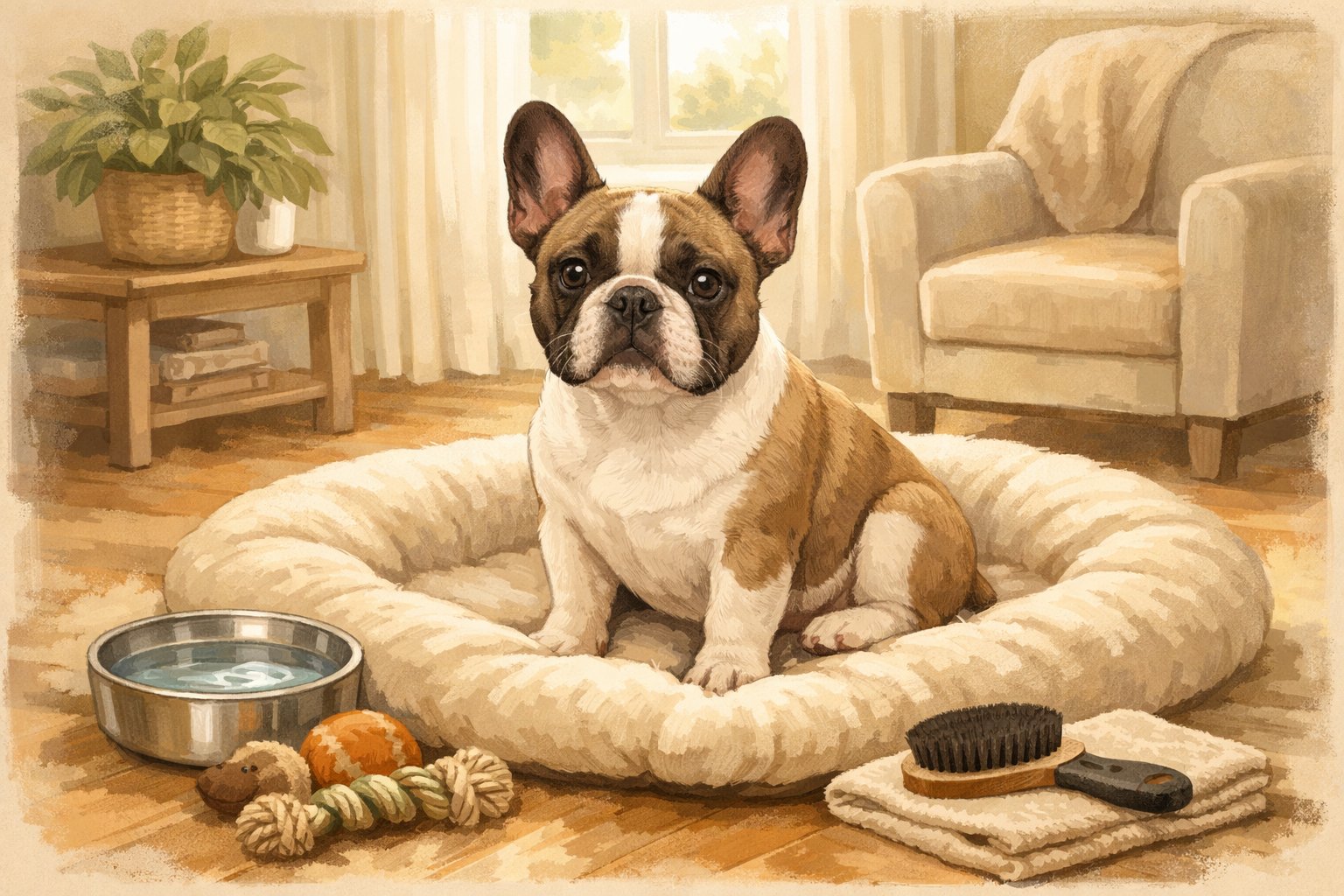
French bulldog care focuses on health checks, smart feeding, safe exercise, and gentle grooming. These steps help reduce common problems like breathing issues, skin trouble, and weight gain.
French Bulldog Health and Common Issues
French bulldog health needs close attention because the breed has known risks. Many Frenchies face breathing issues tied to brachycephalic syndrome, also called brachycephalic obstructive airway syndrome (BOAS).
Short noses can lead to respiratory issues, loud breathing, or trouble cooling down. Owners should watch for heavy panting, coughing, or low energy.
A vet familiar with Frenchie health can spot early signs and guide care, as explained in this overview of French Bulldog health concerns for new owners.
Routine care matters. Schedule yearly vet visits, keep vaccines current, and use flea and tick prevention year-round.
Weight control also lowers strain on joints and airways, which supports long-term health.
Exercise and Activity Needs
French bulldog exercise should stay short and controlled. Most adults do best with two daily walks of 15–20 minutes.
Puppies need even less to protect growing joints. Heat raises risk fast.
Frenchies overheat easily due to their airways, so owners should avoid midday walks and stop activity at the first sign of stress. Indoor play works well on hot or cold days.
Helpful activities include:
- Tug toys and light fetch indoors
- Puzzle toys for mental work
- Short training games
This balanced approach matches guidance found in practical French bulldog care tips for daily activity.
Nutrition and Feeding Guidelines
Good nutrition supports french bulldog health from puppyhood through adulthood. Most Frenchies need measured meals to prevent obesity, which worsens breathing and joint strain.
Key feeding rules
- Choose food made for small breeds
- Feed adult dogs twice daily
- Limit treats to training only
| Age | Meals per day | Notes |
|---|---|---|
| French bulldog puppy | 3 | Smaller portions, steady schedule |
| Adult | 2 | Watch weight closely |
Some dogs have food sensitivities. Signs include itchy skin or loose stool.
This complete French Bulldog feeding and care guide explains when diet changes may help.
Safe Grooming and Skin Care
French bulldog grooming stays simple but must stay consistent. Short coats shed lightly, yet skin folds need daily care to prevent infection.
Owners should:
- Wipe face and tail folds with a damp cloth
- Dry folds fully after cleaning
- Brush weekly to remove loose hair
Baths every 4–8 weeks work for most dogs. Use mild dog shampoo only.
Trim nails every few weeks and clean ears weekly. Regular grooming supports comfort and helps owners catch skin problems early, a key point in this detailed French Bulldog grooming and skin care guide.
Ownership, Training, and Everyday Life
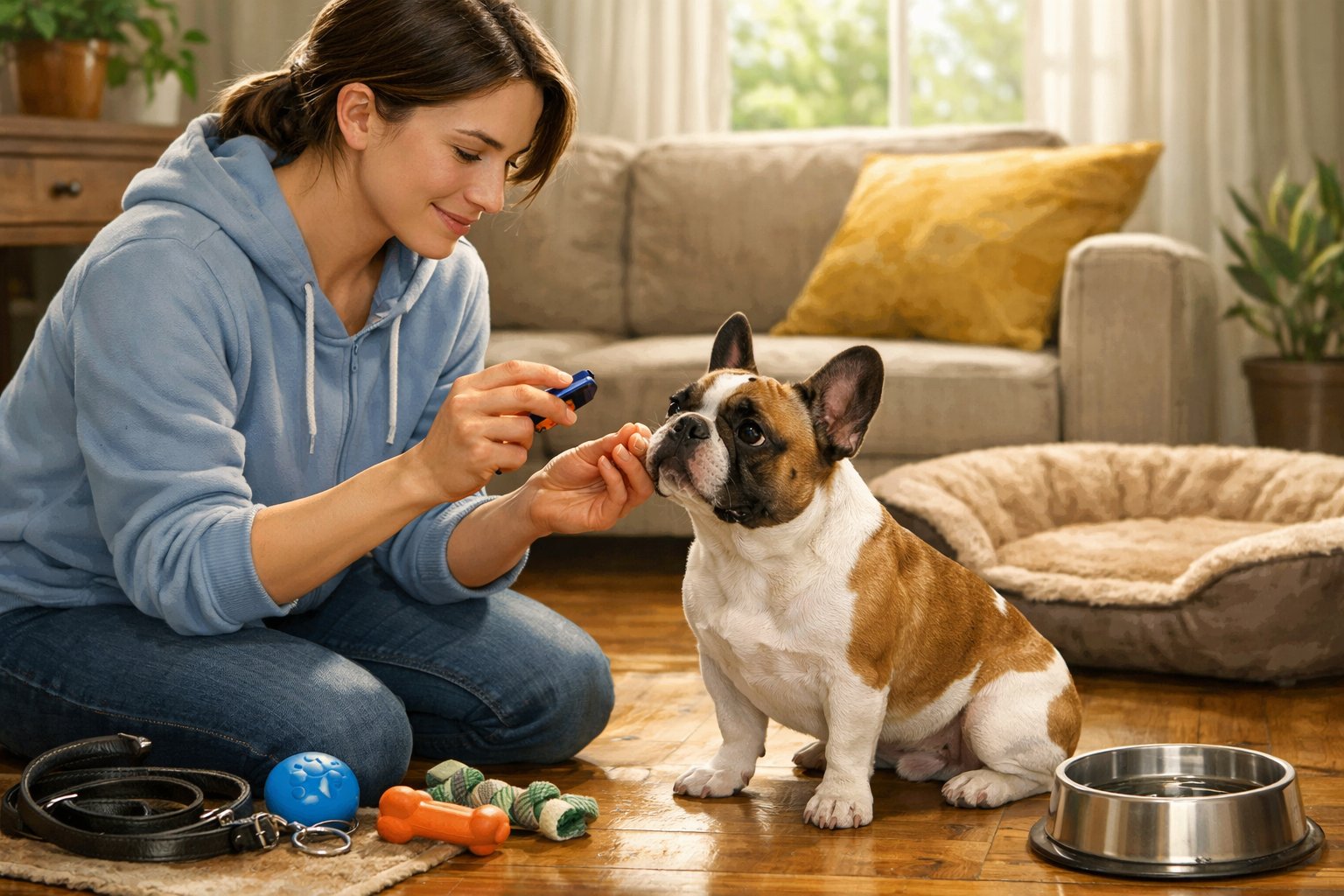
French bulldog ownership works best when daily care, training, and health planning stay simple and steady. A frenchie owner should focus on clear training methods, early social habits, smart health planning, and safe routines at home and outdoors.
Positive Reinforcement Training
Positive reinforcement training works well for French Bulldogs because they respond to rewards, not pressure. They learn faster when training uses small treats, praise, and short sessions.
A frenchie owner should keep lessons under 10 minutes to hold attention. Frenchies can act stubborn, but they usually lose focus before they refuse to learn.
Consistency matters more than firmness. Calm repetition builds habits over time.
Helpful rewards include:
- Soft treats broken into small pieces
- Verbal praise in a cheerful tone
- Quick play with a favorite toy
Clear guidance helps reduce confusion. Many owners follow advice from guides like this French Bulldog training guide for owners to set realistic expectations.
Puppy Socialization Essentials
Puppy socialization shapes how a French Bulldog reacts to people, pets, and new places later in life. Early exposure helps prevent fear and stress as the dog grows.
A frenchie owner should introduce new sights and sounds before six months of age. This includes gentle handling, car rides, and meeting calm dogs.
Important social experiences include:
- Visitors of different ages
- Short walks in quiet areas
- Basic grooming at home
Socialization should stay positive and slow. Owners can follow tips from detailed care guides like this French Bulldog care overview for new owners to avoid overstimulation.
Pet Insurance and Proactive Health Management
Pet insurance helps manage the long-term cost of french bulldog ownership. This breed faces higher risks for breathing issues, allergies, and spinal problems.
Early coverage often costs less and covers more. A frenchie owner should compare plans that include:
- Chronic condition coverage
- Diagnostic testing
- Emergency care
Routine vet visits matter just as much. Regular checkups help catch problems early and keep costs lower.
Many veterinarians stress proactive care in breed-focused guides like this French Bulldog 2025 health and care guide.
Can French Bulldogs Swim?
Can French Bulldogs swim? Most cannot swim safely without help.
Their short legs, heavy chest, and flat face make staying afloat difficult.
Water safety rules should stay strict:
- Always use a dog life jacket
- Never leave them alone near water
- Avoid deep pools and rough water
Some Frenchies enjoy shallow water with supervision. Swimming should not count as exercise.
Many breed guides explain this risk clearly, including this French Bulldog breed facts and safety overview.