Key Training Strategies for Stubborn French Bulldogs
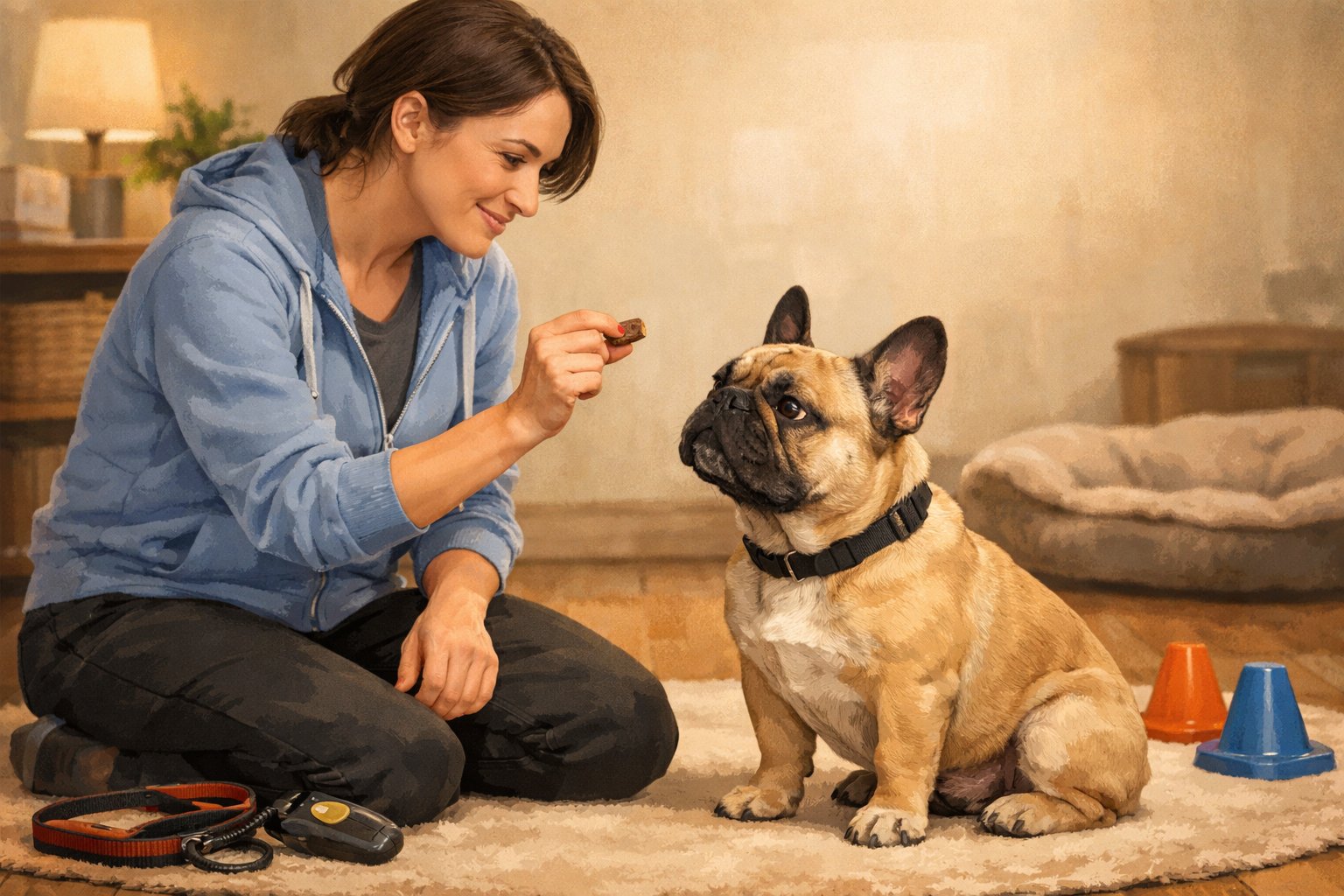
Training a stubborn but sweet French bulldog works best when owners match clear structure with kind rewards. The right mix of patience, routine, and food motivation helps a Frenchie stay focused and willing to learn.
Understanding Stubbornness and Breed Traits
A stubborn French bulldog often shows independence, not defiance. The breed likes comfort, routine, and choice, so it may pause before obeying a command.
This behavior links to personality, not intelligence. Frenchies respond better when training feels useful or fun.
Short legs and flat faces also affect focus, especially during active drills. Owners who adjust expectations tend to see faster progress when training stubborn French bulldogs with proven methods.
Common traits that shape training:
- Strong food motivation
- Short attention span
- Preference for calm, repeatable tasks
Understanding these traits helps reduce frustration and improves timing during lessons.
Importance of Patience and Consistency
Patience and consistency guide behavior change in a French bulldog. Learning happens through repetition, not force.
When commands stay the same each time, the dog connects words with actions faster. Consistency matters across the household.
Everyone should use the same cues, tone, and rules. Mixed signals slow progress and confuse the dog.
Helpful habits include:
- Training at the same time each day
- Using one word per command
- Rewarding the same behavior every time
Clear routines support calm learning.
Positive Reinforcement and Reward-Based Methods
Positive reinforcement builds trust and motivation. A Frenchie learns faster when good behavior earns something valuable.
Reward-based training avoids fear and supports long-term habits. Rewards should follow behavior right away.
This timing helps the dog link action and outcome. Praise, toys, and treats all work, but food often wins.
Effective reward-based training uses:
- Immediate treats or praise
- Calm, upbeat voice
- Short sessions under 10 minutes
Trainers widely recommend this approach for positive reinforcement techniques for French bulldogs. It keeps training cooperative, not confrontational.
How to Choose High-Value Training Treats
High-value treats increase focus during training. These treats smell strong, taste rich, and stay small.
A stubborn French bulldog often works harder for better rewards. Soft treats work best because they chew fast.
Reserve special treats only for training to keep interest high.
Examples of high-value training treats:
| Treat Type | Why It Works |
|---|---|
| Cooked chicken | Strong smell, easy to chew |
| Freeze-dried liver | Very motivating in short bursts |
| Soft commercial training treats | Consistent size and texture |
Owners often succeed faster by pairing commands with high-value training treats for French bulldogs. This choice supports steady progress without overfeeding.
Fundamental Skills and Habits for French Bulldog Training
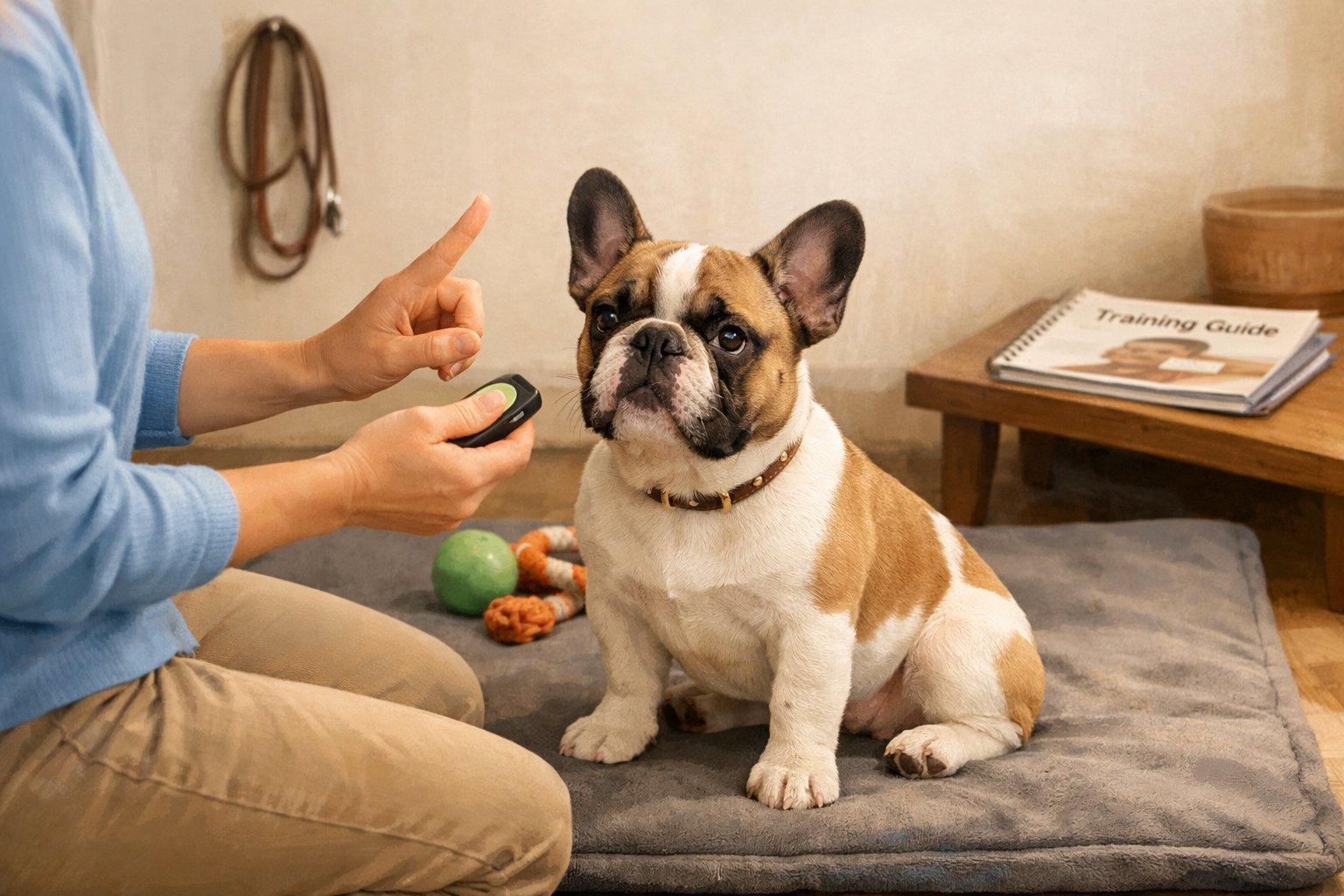
Strong daily habits shape good behavior in Frenchies. Clear routines, calm rewards, and short practice sessions help when training a stubborn French Bulldog that still wants to please.
Leash Training Success for Frenchies
Leash training works best when it starts indoors. French Bulldogs focus better in quiet spaces, which helps early dog training stick.
Many owners choose a harness instead of a collar. A harness protects the neck and supports easier breathing, which matters for this breed.
This approach aligns with common advice in guides on how to train French Bulldogs.
Key leash rules to follow:
- Stop walking when pulling starts
- Reward walking beside the handler
- Keep sessions under 10 minutes
Short walks with clear rules build better habits than long, unfocused outings.
Crate Training Basics for Better Behavior
Crate training gives French Bulldogs a safe place to rest. It also helps reduce chewing, barking, and stress when alone.
The crate should feel calm and positive. Owners should place it in a quiet area and add soft bedding.
Many trainers stress consistency, which appears often in French Bulldog training techniques and tips.
A simple schedule helps:
- Crate after meals
- Crate during short absences
- Crate overnight
They should never use the crate as punishment. Calm exits and entries matter.
Potty Training and Housebreaking Tips
Potty training depends on routine. French Bulldogs learn faster when meals, walks, and sleep follow the same schedule each day.
Frequent outdoor trips reduce accidents. Puppies may need breaks every one to two hours.
This matches advice shared in French Bulldog training 101 guides.
Helpful habits include:
- Taking the dog to the same spot
- Praising right after success
- Cleaning accidents with enzyme cleaners
Patience matters when training a French Bulldog with a stubborn streak.
Recall Training for Reliable Response
Recall training teaches the dog to come when called. This skill keeps French Bulldogs safe at home and outdoors.
Training starts indoors with few distractions. Handlers should use a happy voice and reward fast responses.
Many trainers highlight this method in beginner French Bulldog training guides.
A strong recall uses:
- One clear command
- High-value treats
- Short practice sessions
They should never punish slow responses. Calm repetition builds trust and better recall over time.
Reducing Stubborn Behavior and Advancing Progress
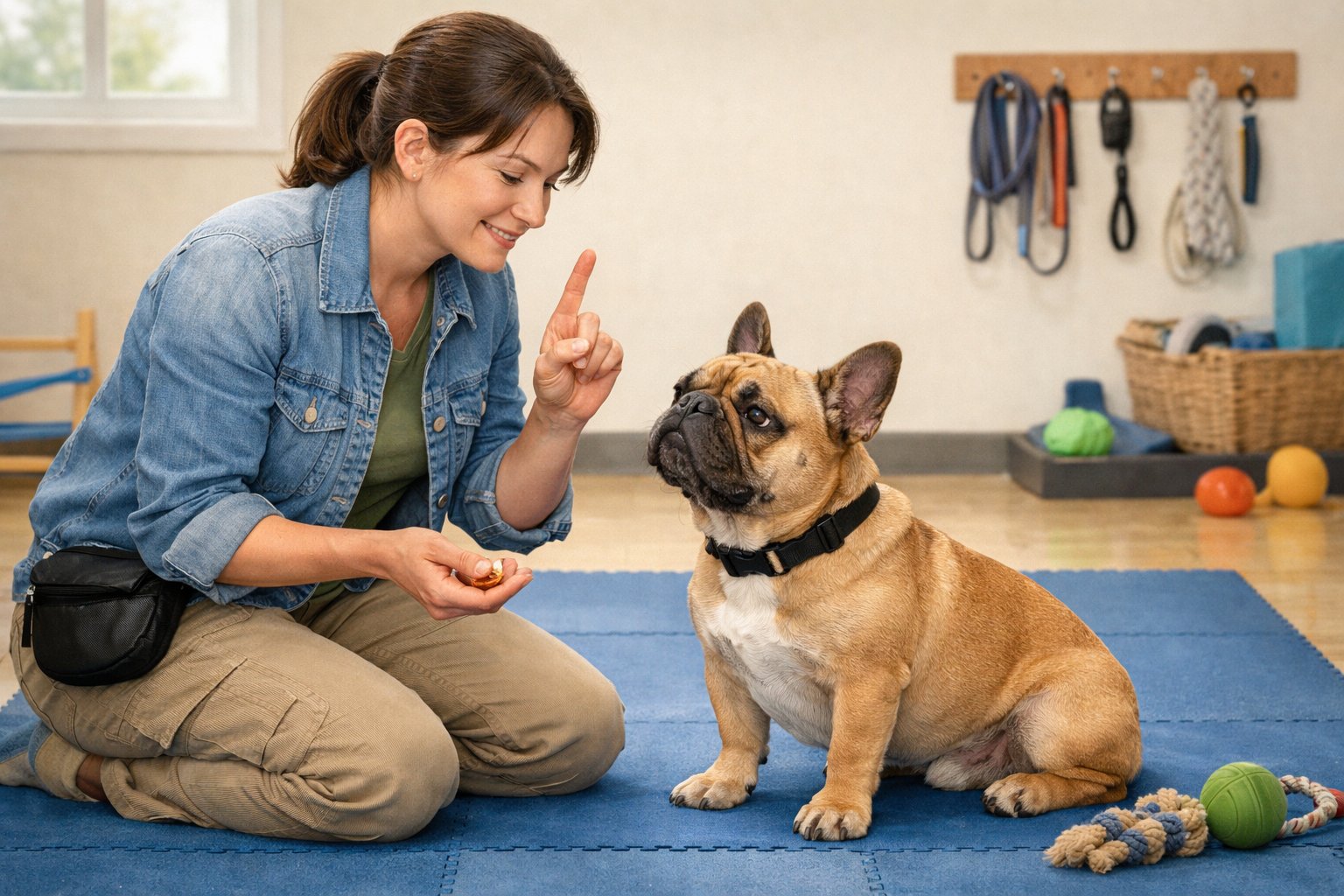
French Bulldogs often resist training when they feel bored, confused, or overstimulated. Clear routines, steady mental work, and smart adjustments help reduce stubborn behavior while keeping a stubborn Frenchie confident and willing to learn.
Mental Stimulation and Enrichment Ideas
Mental work matters as much as walks for a stubborn Frenchie. Short thinking games lower frustration and cut down on refusal behaviors.
These activities help the dog focus and follow cues.
Effective enrichment options include:
- Puzzle feeders that slow eating and reward effort
- Hide-and-seek games using treats or toys
- Basic scent games with one clear target
Training sessions work best at 5–10 minutes, two or three times a day. Ending on a success keeps motivation high.
According to guidance from trainers who specialize in Frenchies, mental games help manage stubborn habits without pressure, as explained in this guide on training a stubborn French Bulldog.
Socialization and Group Training Classes
Social exposure helps reduce stubborn behavior tied to fear or control. Puppy classes and group training classes teach French Bulldogs how to respond around distractions.
Group settings improve:
- Focus around other dogs
- Calm behavior with new people
- Response to commands under mild stress
A well-run class uses reward-based methods and small group sizes. Trainers guide owners on timing, tone, and body language.
Many programs also coach owners on consistency at home, which supports long-term progress. Structured classes like those described in French Bulldog training essentials help sweet but strong-willed pups learn faster without harsh correction.
Adapting When Challenges Arise
Progress rarely moves in a straight line.
When a French Bulldog regresses, trainers often adjust the environment before changing the command.
Distractions, noise, or fatigue can trigger pushback.
Helpful adjustments include:
- Training in a quieter space
- Lowering expectations for one session
- Switching from treats to praise or toys
If stubborn behavior increases, short breaks help reset focus.
Some owners also benefit from one-on-one support.
Professional guidance, like the approach outlined in this article on how to train a stubborn French Bulldog, can clarify next steps and keep training steady without stress.