How Much and How Often to Feed Your Beagle
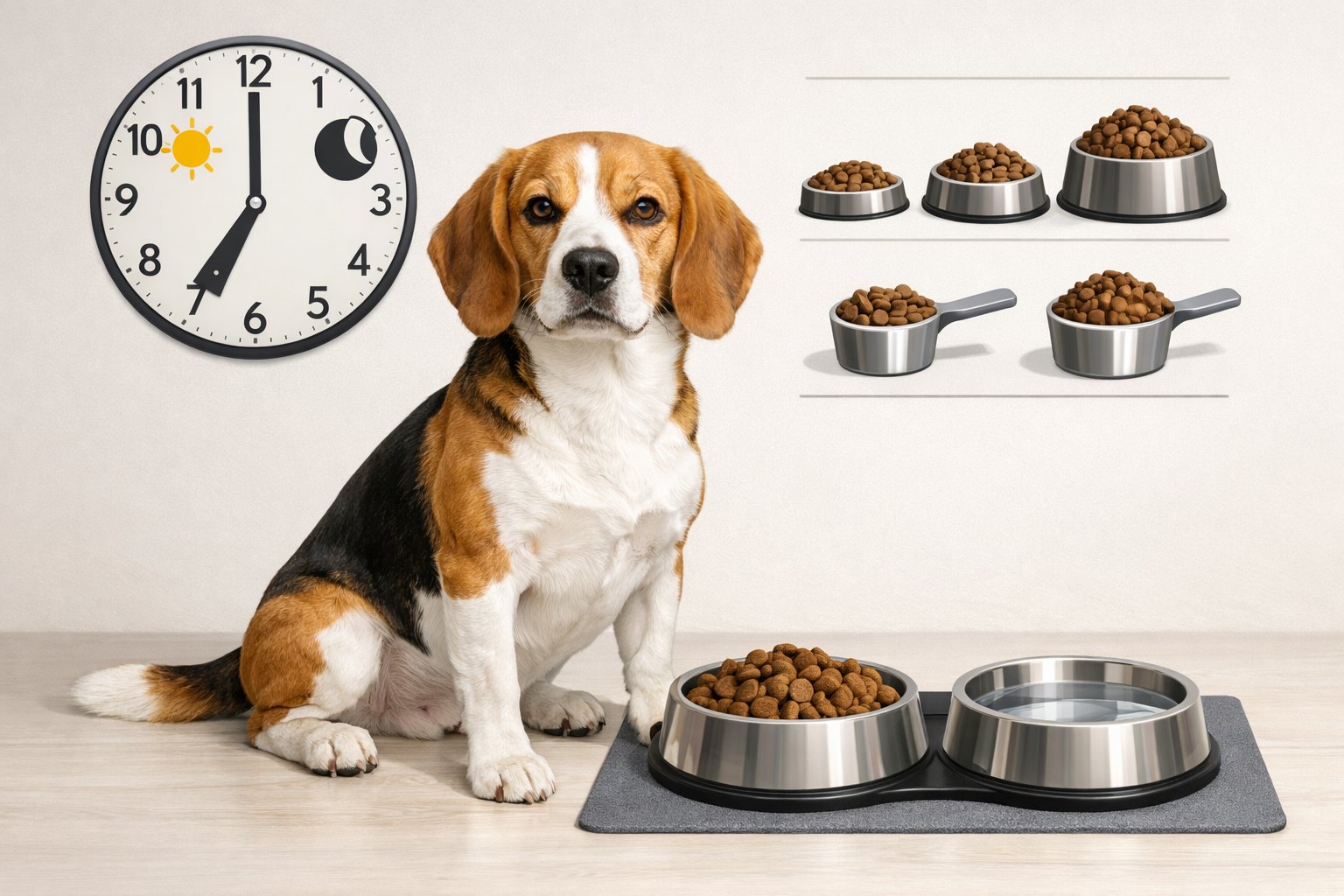
Beagles need the right portion size and a steady feeding routine to stay healthy. Age, weight, and activity level affect how much food they need and how often they should eat.
Beagle Feeding Chart by Age
A beagle feeding chart helps owners adjust portions as the dog grows. Puppies need more food for growth, while adults need steady portions to avoid weight gain.
Seniors need fewer calories but balanced nutrition.
| Beagle Age | Daily Meals | General Portion Guidance |
|---|---|---|
| Under 2 months | Free-fed | Small amounts available all day |
| 2–5 months | 4 meals | Puppy food split into small meals |
| 5–12 months | 3 meals | Gradually increase portion size |
| 1–7 years | 2 meals | Measured adult food portions |
| 7+ years | 2 meals | Smaller portions, lower calories |
This chart gives a starting point. Owners should adjust based on body condition and vet advice.
Feeding Frequency and Schedules
Feeding beagles on a set schedule helps control weight and digestion. Free feeding works only for very young puppies.
Older beagles tend to overeat if food stays out all day. Most adult beagles do best with two meals per day.
Morning and evening feedings help keep energy levels steady. Puppies need more frequent meals because their stomachs are small.
A consistent schedule also supports house training. Regular meal times lead to more predictable bathroom habits.
Treats should stay limited and count as part of daily food intake.
Puppy, Adult, and Senior Beagle Feeding Amounts
How much to feed a beagle depends on age and life stage. Puppies need more calories per pound than adults.
A growing puppy may eat about ⅔ to 1¾ cups per day, split into several meals, based on size and food type. This aligns with common puppy feeding chart ranges found in guides like beagle puppy feeding recommendations.
Adult beagle feeding usually falls between 1 to 1.5 cups per day, split into two meals. Active dogs may need slightly more, while less active dogs need less.
Guides such as how much to feed an adult beagle give similar ranges. Senior beagle feeding requires smaller portions, often ½ to 2 cups per day, depending on weight and health.
Lower-calorie food helps manage slower metabolism.
Choosing the Best Food for Beagles
Beagles stay active and curious, so they need food that supports steady energy and healthy weight. The right choices depend on ingredient quality, food type, and the dog’s age.
Best Dog Food Ingredients for Beagles
High-quality dog food starts with real animal protein. Chicken, turkey, beef, or fish should appear first on the label.
Protein supports muscle, energy, and growth. Healthy fats also matter.
Look for fish oil or chicken fat to support skin and coat health. Beagles do well with moderate fat levels since they gain weight easily.
Carbohydrates should come from whole foods, not fillers. Brown rice, oats, and sweet potatoes provide steady energy.
Avoid foods with excess fillers and artificial colors. These add calories but little nutrition.
Key ingredients to look for:
| Nutrient | Why it matters |
|---|---|
| Protein | Supports muscles and energy |
| Healthy fats | Helps skin, coat, and brain |
| Whole carbs | Provides steady fuel |
| Vitamins | Supports immune health |
Many owners choose premium brands like Orijen because they focus on meat-based recipes. Reviews of high-quality beagle dog food options often highlight the value of clear ingredient lists.
Commercial vs. Home-Cooked Meals
Commercial dog food offers convenience and balanced nutrition. Reputable brands design formulas to meet daily needs without extra supplements.
Dry food also supports dental health and stores easily. Home-cooked meals give owners more control.
Fresh meat, vegetables, and grains can work well when portions stay balanced. Dogs still need vitamins and minerals, which often require supplements.
Some owners mix both approaches. They serve high-quality dog food as a base and add small amounts of fresh food.
A vet should review any long-term home-cooked plan.
Feeding Beagle Puppies: Food Choices
Beagle puppies need food made for growth. Beagle puppy food contains more calories, protein, and fat than adult formulas.
Puppies often start with softened dry food or wet food. This makes chewing easier during early months.
By six months, most puppies handle regular dry kibble. Owners should still choose formulas labeled for puppies or “all life stages.”
Good puppy food traits include:
- Smaller kibble size
- Clear meat-based ingredients
- No artificial flavors
Many feeding charts for beagle puppies and portions show that quality matters more than volume. Consistent meals help puppies grow without excess weight gain.
Special Feeding Considerations
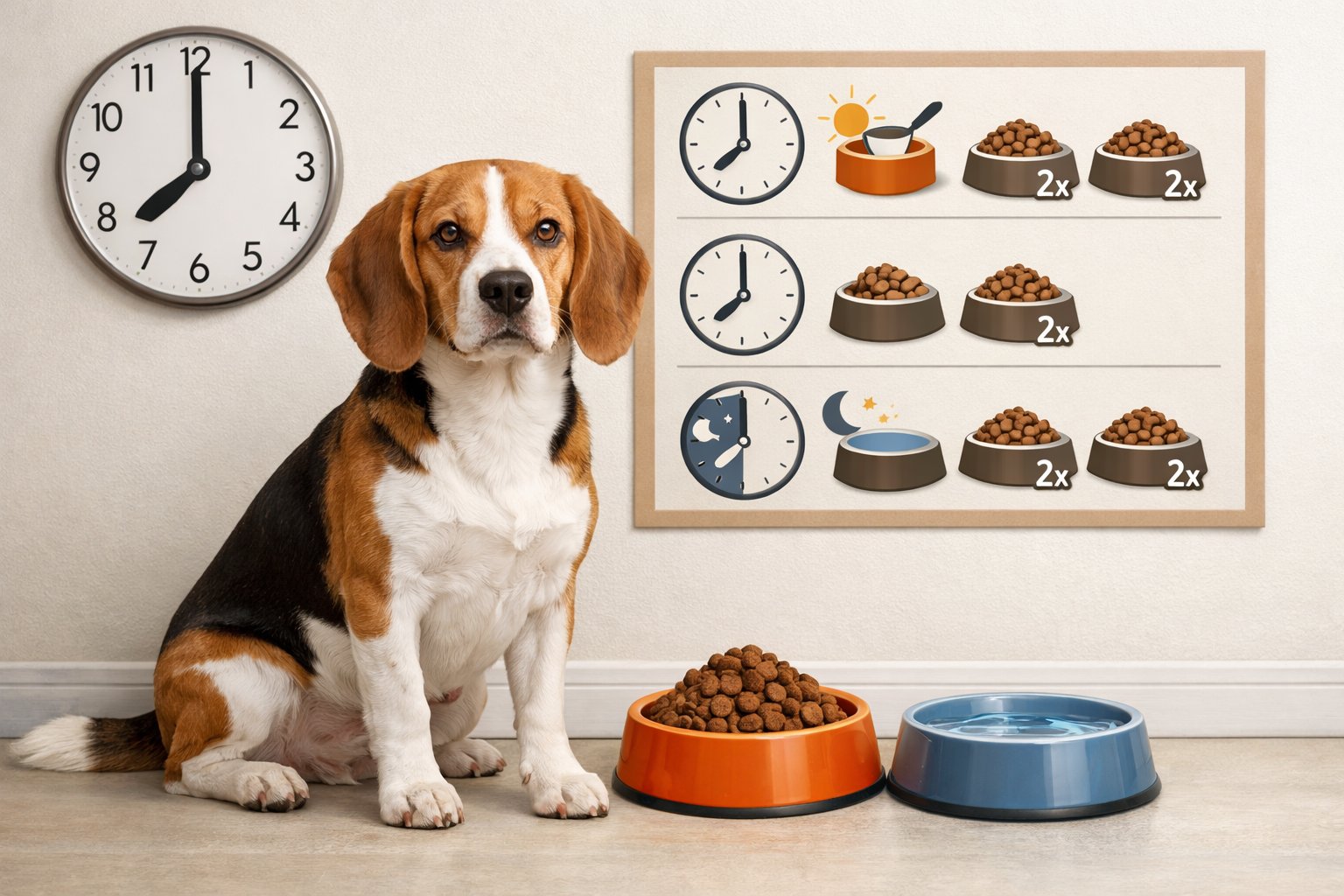
Beagles often need extra care with portions, food choices, and treats. Weight control, accurate portion sizing, and safe chewing habits all affect long-term health and daily comfort.
Feeding an Overweight Beagle
When a beagle gains excess weight, food control becomes the top priority. Extra pounds increase stress on joints and raise the risk of health problems.
Owners should measure every meal and stop free feeding right away. A vet-approved weight target helps guide daily intake.
Most adult beagles do better with two measured meals per day and limited treats. Treats should make up less than 10% of daily calories.
Helpful adjustments include:
- Switching to lower-calorie, high-protein food
- Replacing treats with small pieces of carrot or green beans
- Increasing daily walks by 10–15 minutes
Many vets and feeding charts explain safe portion changes for feeding an overweight beagle. Slow, steady weight loss works best and helps avoid muscle loss.
Using a Dog Food Calculator
A dog food calculator helps match food portions to a beagle’s size, age, and activity level. These tools estimate daily calories, which makes portion control more accurate than guessing.
Most calculators ask for:
- Current weight
- Age (puppy, adult, or senior)
- Activity level
The result gives a daily calorie range, not an exact rule. Owners should still watch body shape and energy levels.
If ribs are hard to feel or the waist disappears, portions may be too large. Online tools like a dog food calculator for beagles work best when paired with regular weigh-ins.
Adjust portions every few weeks, not daily, to track real progress.
Can Beagles Eat Bones?
Many owners ask, can beagles eat bones? The short answer depends on the type of bone.
Cooked bones are never safe because they splinter and can cause choking or internal injury.
Raw bones can be safer, but only under strict rules. Choose large, raw bones that cannot be swallowed.
Supervise at all times. Remove the bone after 10–15 minutes.
Soft raw bones, like chicken necks, still carry risk for beagles who gulp food.
Dental chews designed for dogs offer a safer option for teeth and gums.
Some feeding guides explain safe chewing choices when discussing beagle feeding and diet basics. When in doubt, owners should skip bones and choose approved chew products.