Understanding Beagle Obesity Risks
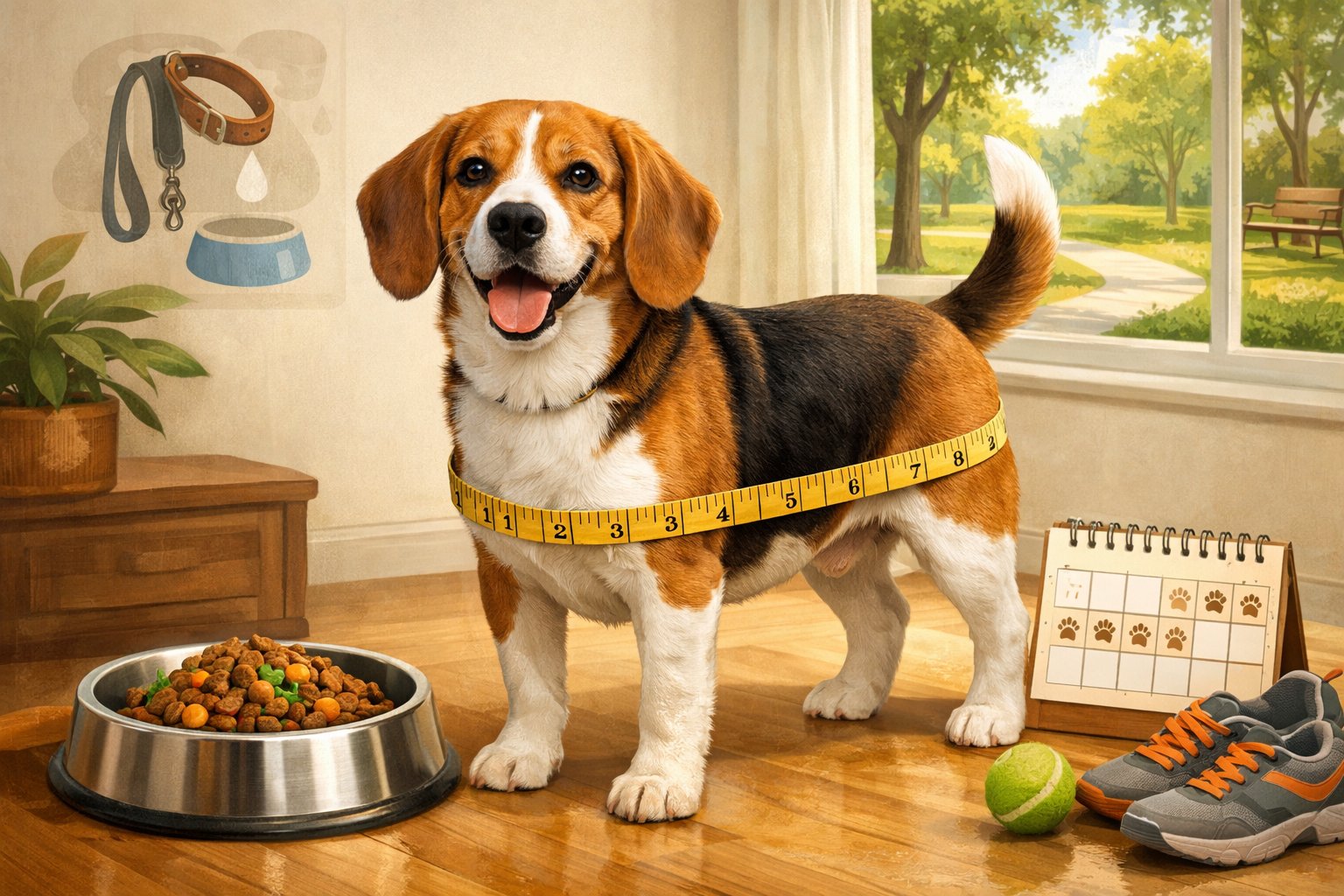
Beagles gain weight faster than many breeds, and extra pounds affect their health early. Owners need to know why weight gain happens, how to spot it, and which health problems follow.
Why Beagles Are Prone to Weight Gain
Beagles have a strong food drive. This trait helped them track scents, but it also leads to overeating in the home.
Many will keep eating if food stays available. Their energy level also plays a role.
Beagles enjoy walks and play, but they do not burn calories as fast as very active breeds. When meals stay large and activity drops, weight adds up quickly.
Age and neutering increase the risk. Middle‑aged and neutered dogs need fewer calories, yet many owners keep feeding the same amount.
According to a detailed guide on why beagles gain weight easily, even small daily calorie extras can lead to steady weight gain.
Recognizing Signs of an Overweight Beagle
An overweight beagle often shows physical and behavior changes. These signs appear slowly, so owners may miss them.
Common signs include:
- Ribs are hard to feel under fat
- No clear waist when viewed from above
- Belly hangs lower than the chest
- Gets tired faster on walks
- Hesitates to jump or climb stairs
Weight changes matter more than looks. A beagle should weigh about 20 to 30 pounds, depending on size and build.
The article on healthy weight ranges for beagles explains how even a few extra pounds can signal a problem.
Health Problems Linked to Canine Obesity
Extra weight strains a beagle’s body every day. Joints take the first hit, which often leads to arthritis and stiffness.
Movement becomes painful, so activity drops even more. Heart disease and diabetes also become more likely.
The body must work harder to support excess fat, which raises long‑term health risks. Breathing issues can appear as well, especially during exercise or warm weather.
Studies discussed in beagle obesity health risks show that obesity can shorten a dog’s lifespan.
Building the Ideal Beagle Diet for Weight Control
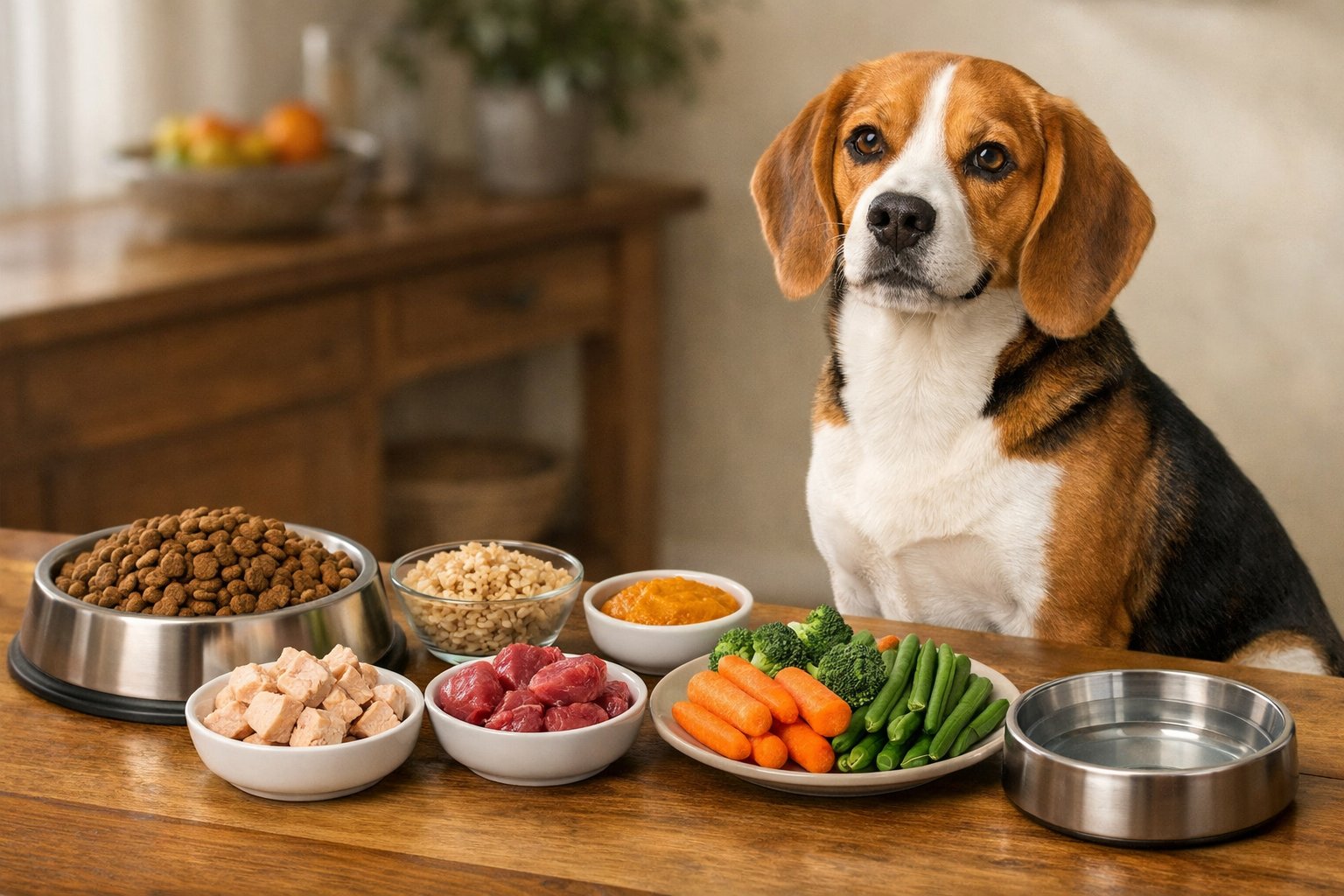
A Beagle controls weight best with the right nutrients, smart food choices, and steady portions. Clear rules around meals help limit overeating while still meeting daily nutrition needs.
Key Nutrients and Macronutrient Ratios for Beagles
Beagle nutrition should support muscle while limiting extra calories. Protein matters most because it helps preserve lean mass during weight loss.
Many vets suggest high protein dog food with added fiber to control hunger. A balanced beagle diet often follows this pattern:
| Nutrient | Why it matters |
|---|---|
| Protein (25–30%) | Supports muscle and fullness |
| Fat (10–15%) | Limits excess calories |
| Fiber (5–10%) | Slows digestion and reduces begging |
Carbohydrates should stay moderate and come from whole foods like oats or brown rice. Avoid diets heavy in fillers, which raise calories without adding value.
Clean ingredient lists help support long-term weight control.
Choosing the Best Dog Food for Beagles
Dog food for Beagles should match their strong appetite and moderate activity level. Many owners choose formulas made for weight control or satiety.
These foods balance protein and fiber while cutting fat. Look for labels that list real meat as the first ingredient.
Avoid foods with sugar, corn syrup, or vague meat by-products. Brands discussed in guides to the best dog food for Beagles often meet these standards.
Prescription weight-loss foods may help obese dogs under vet care. Guides on managing obesity in Beagles stress careful calorie control and routine checkups when using these diets.
Benefits of Natural and Raw Food Diets
Natural dog food uses simple ingredients with minimal processing. Many owners like these diets because they avoid artificial colors and preservatives.
For some dogs, this improves digestion and stool quality. Raw dog food benefits may include higher moisture and fewer fillers.
These diets often use raw meat, bones, and vegetables. They can support weight control when portions stay exact.
Raw diets carry risks if prepared poorly. Bacteria and nutrient gaps can occur.
Vets often suggest commercial raw options or balanced recipes to reduce risk. Natural or raw diets still require strict portion control to prevent weight gain.
Portion Control and Feeding Schedules
Portion control drives weight loss more than food type alone. Beagles overeat when owners free-feed or guess portions.
Measuring every meal helps stop calorie creep. A simple schedule works best:
- Two or three meals per day
- Measured portions using a scale
- Treats under 10% of daily calories
Small, frequent meals reduce hunger spikes. Timed feeding also limits begging.
When owners stay consistent, beagle food routines become predictable and easier to manage.
Everyday Tips for Preventing Obesity in Beagles
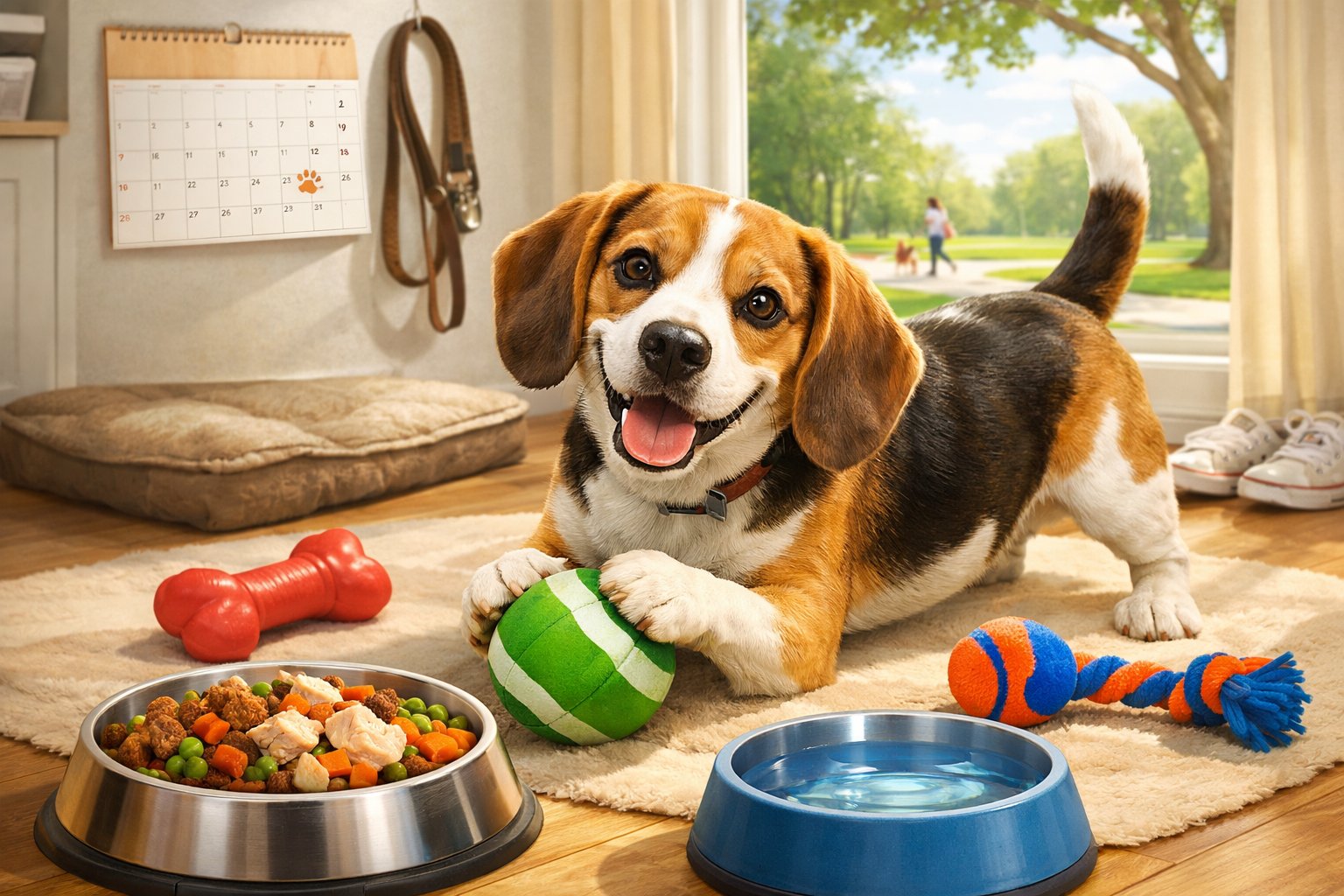
Daily habits shape a Beagle’s weight more than occasional changes. Smart treat control and steady exercise help manage a strong food drive without stress for the dog or the owner.
Managing Treats and Table Scraps
Beagles respond fast to food rewards, so treat control matters every day. Keep treats under 10% of daily calories and count them as part of meals, not extras.
Owners should avoid table scraps, since even small bites add up fast for a dog that should weigh about 20–30 pounds, as explained in this guide to healthy Beagle weight management.
Better options reduce risk while keeping training effective. Low‑calorie treats like carrots or measured kibble work well.
Some owners use LifeSource Bits because they are small and easy to portion.
Helpful rules to follow:
| Tip | Why it helps |
|---|---|
| Break treats in half | Cuts calories without cutting rewards |
| Measure treats daily | Prevents accidental overfeeding |
| Feed on schedule | Reduces begging and food anxiety |
Exercise Ideas for Food‑Motivated Dogs
Beagles need daily movement to balance their appetite. Most do best with 30–60 minutes of activity, split into short sessions to avoid fatigue.
Brisk leash walks burn calories and support joint health, especially for dogs already carrying extra weight. Food motivation can drive exercise instead of weight gain.
Scent games, scatter feeding in the yard, and puzzle toys keep dogs moving while engaging their nose. These activities reflect advice shared in practical diet and exercise tips for preventing Beagle obesity.
Swimming works well for overweight Beagles because it limits joint stress. Owners should start slow and increase time over weeks.
Consistency matters more than intensity. Daily routines help dogs stay active without frustration.