Top Purposeful Jobs and Activities for Border Collies
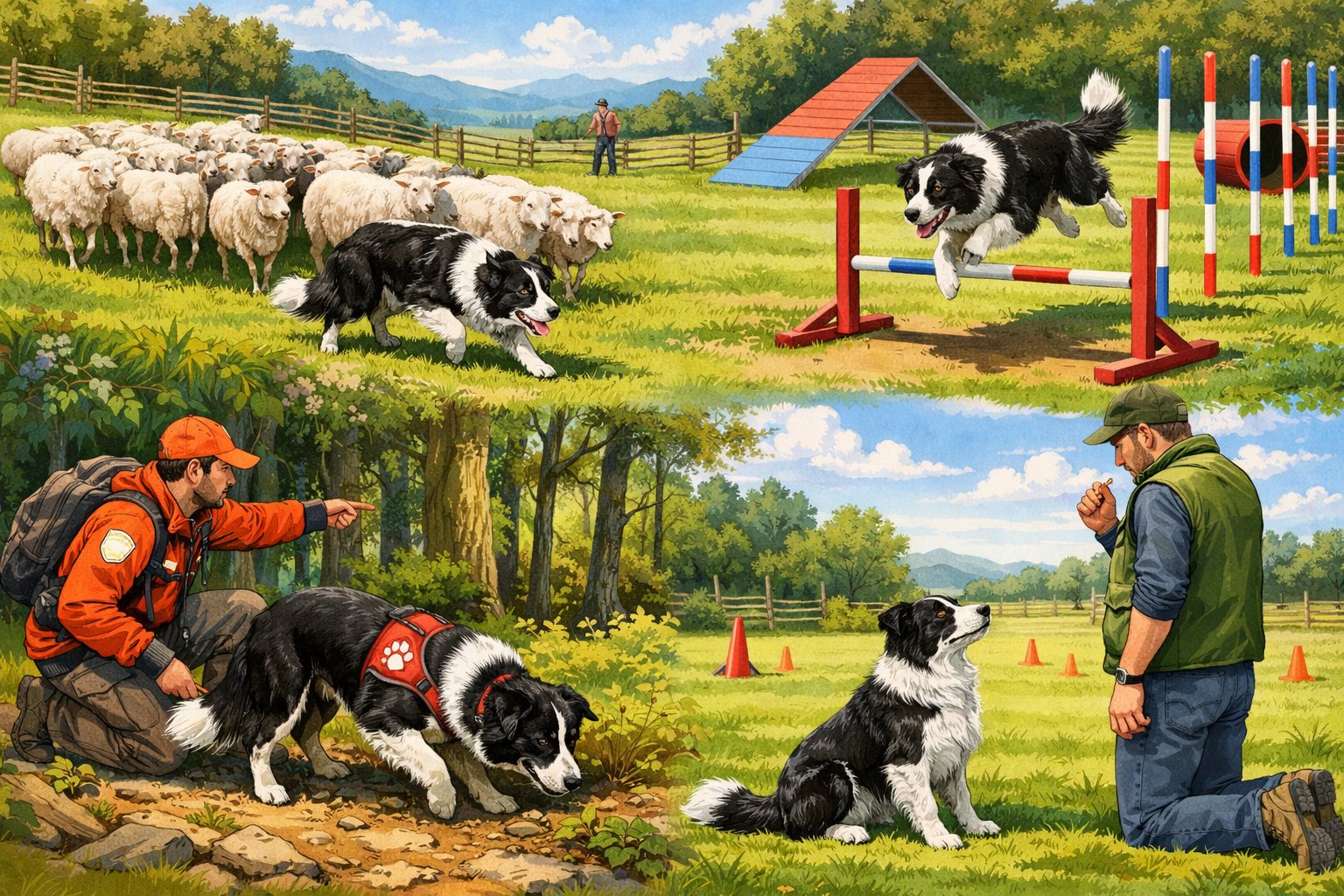
Border collies thrive when daily life includes clear tasks and steady training. Both mental and physical stimulation are essential for their well-being.
Purposeful work channels their focus and reduces problem behaviors. It also builds strong habits in active homes.
Herding and Herding Trials
Herding taps into the herding instinct that defines the border collie as a working dog. Real livestock work offers the most natural outlet, but herding trials also give structure and goals.
These trials test control, distance work, and calm movement around sheep. Handlers start with basic commands and progress to longer sends and stops.
Many trainers use puppy herding to safely introduce young dogs. Even short sessions can meet deep needs for focus and problem solving.
For owners without livestock, organized events and classes provide access to this work. See examples of structured herding trials and jobs at https://thinkersvine.com/jobs-for-your-border-collie/.
Why it matters
- Uses natural herding instincts
- Builds impulse control
- Suits working breeds with high drive
Agility Training and Obstacle Courses
Agility training combines speed, precision, and teamwork. Border collies excel at jumps, tunnels, weave poles, and tight turns.
These obstacle courses demand fast thinking and body control, which suits the breed’s sharp mind. Training a border collie for agility starts with flatwork and short sequences.
Handlers focus on cues, timing, and safe movement. Backyard setups work well for practice, while clubs offer full courses and trials.
Regular agility sessions provide strong physical stimulation without long, repetitive runs. Many owners use agility to replace boredom with routine.
For practical examples of agility-style jobs, visit https://juniperpets.com/20-stimulatingjobs-for-your-border-collie/.
Canine Sports: Flyball, Disc Dog, and Dock Diving
Canine sports add competition and variety. Flyball blends sprinting, jumping, and ball retrieval in a team format.
Disc dog focuses on controlled chasing and clean catches. Dock diving rewards strong swimmers that enjoy water retrieves.
Each sport suits a different drive profile. Flyball fits dogs that love structure and speed.
Disc dog rewards precision and handler focus. Dock diving suits confident dogs with water interest.
| Sport | Best Fit |
|---|---|
| Flyball | High-speed, social dogs |
| Disc Dog | Focused retrievers |
| Dock Diving | Strong swimmers |
Many border collies rotate between sports. Organized options appear in guides to working roles and canine sports at https://lifeatherpaw.com/border-collie-working-roles/.
Search and Rescue and Scent Work
Search and rescue (SAR) and scent work rely on the border collie’s problem-solving skills. These dogs learn to track human scent, locate hidden targets, and alert handlers.
SAR work demands calm focus, stamina, and strong obedience. Formal SAR training requires time and certification.
Recreational nose work offers a simpler path. Handlers hide scented items indoors or outdoors and reward accurate finds.
This work tires the mind faster than long runs and suits aging dogs as well. Scent-based jobs mirror real tasks used by working dogs worldwide.
Step-by-step scent games and training ideas appear at https://thepuppymag.com/keep-your-border-collie-mentally-stimulated/.
Mental Stimulation and Enrichment for Intelligent Border Collies
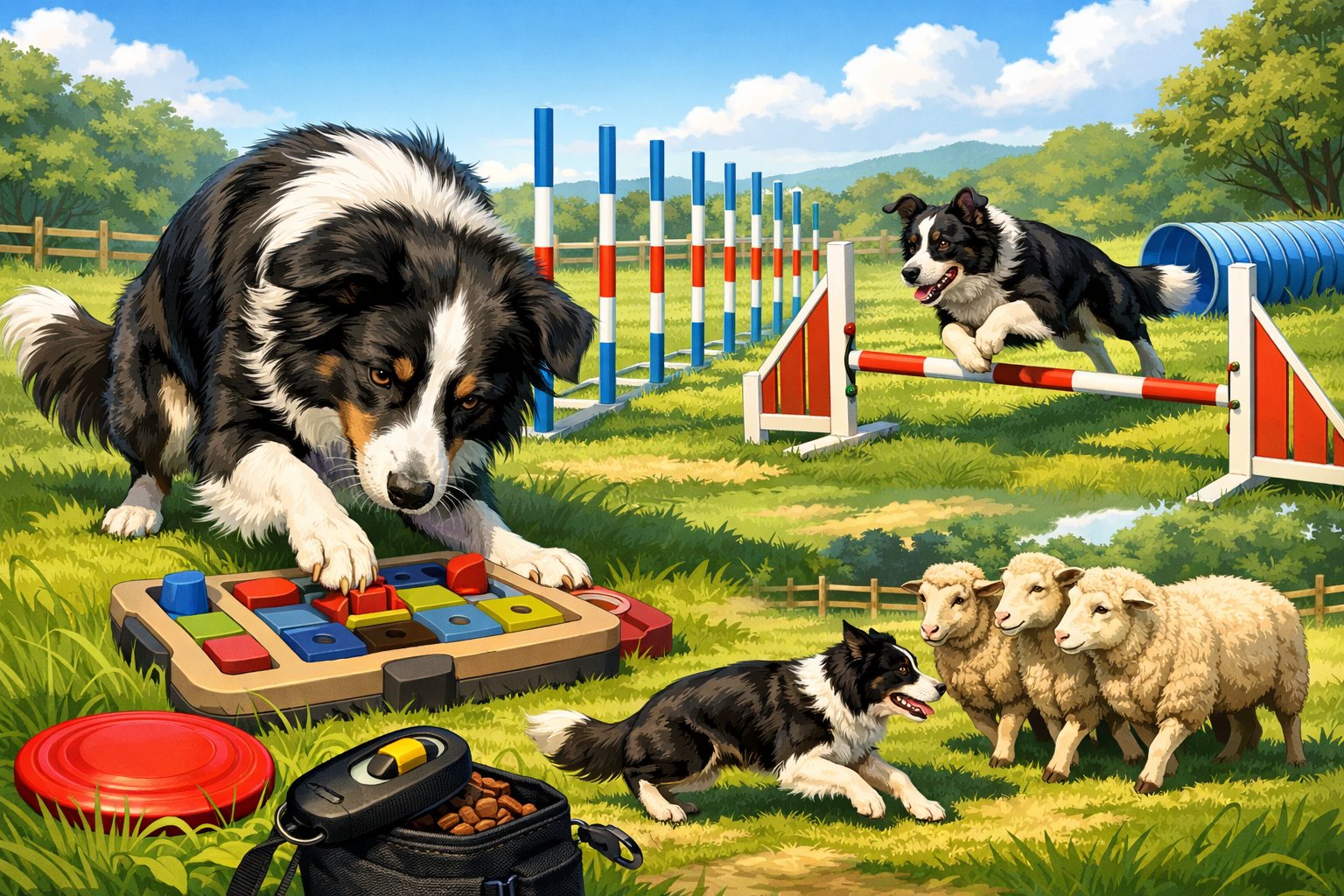
Border Collies need daily mental stimulation to stay calm and focused. Clear tasks, varied games, and short training sessions give these intelligent dogs a real sense of purpose.
Interactive Puzzle Toys and Games
Interactive toys give Border Collies mental exercise when people feel busy. Puzzle toys work best when they require steps, like sliding parts or lifting lids, to reach food.
These toys slow eating and push problem-solving skills. Owners should start easy and increase difficulty over time.
That keeps frustration low and learning high. Rotating puzzles every few days also prevents boredom.
Good options include treat boards, rolling dispensers, and layered puzzles. Many owners rely on structured ideas from guides on keeping Border Collies mentally stimulated with puzzle games.
Short play sessions of 10–15 minutes work better than long ones. Mental effort tires a Border Collie faster than running alone.
Trick Training and Obedience Exercises
Trick training gives Border Collies clear jobs and steady goals. These dogs learn fast, so obedience training should stay challenging and active.
Commands like “spin,” “back up,” or “put toys away” add purpose to daily routines. Training sessions should stay short and focused.
Two or three sessions a day often work better than one long session. Positive reinforcement, such as small treats or praise, keeps learning steady and stress low.
Structured plans help many owners succeed. Lists of daily needs, like those explained in mental stimulation essentials for Border Collies, help balance skills and rest.
Hide and Seek, Fetch, and Extreme Fetch
Interactive games combine movement with thinking. Fetch works best when owners add rules, such as waiting, naming toys, or returning items to a basket.
These steps turn a simple game into mental work. Extreme fetch raises the challenge.
Owners throw multiple balls in different directions and ask the dog to collect them one by one. This builds memory, focus, and impulse control.
Hide and seek adds scent work. The dog waits, then searches for a person or toy.
Many activity plans, like those found in stimulating jobs for Border Collies, show how to turn games into real tasks. These games work best in short, focused rounds.
Rotating Toys and Mental Exercise Routines
Routine matters, but variety matters more. Rotating toys every few days keeps interest high and prevents habits.
Owners can group toys by type and switch them on a schedule.
Example rotation plan:
- Day 1–2: Puzzle toys and slow feeders
- Day 3–4: Interactive games like tug or scent toys
- Day 5–6: Training tools and fetch items
Mental exercise routines work best when paired with physical movement. Many enrichment plans, such as those in brain games for Border Collies, stress balance over intensity.
Simple changes keep intelligent dogs engaged without overstimulation.
Unique Jobs, Socialization, and Everyday Activities
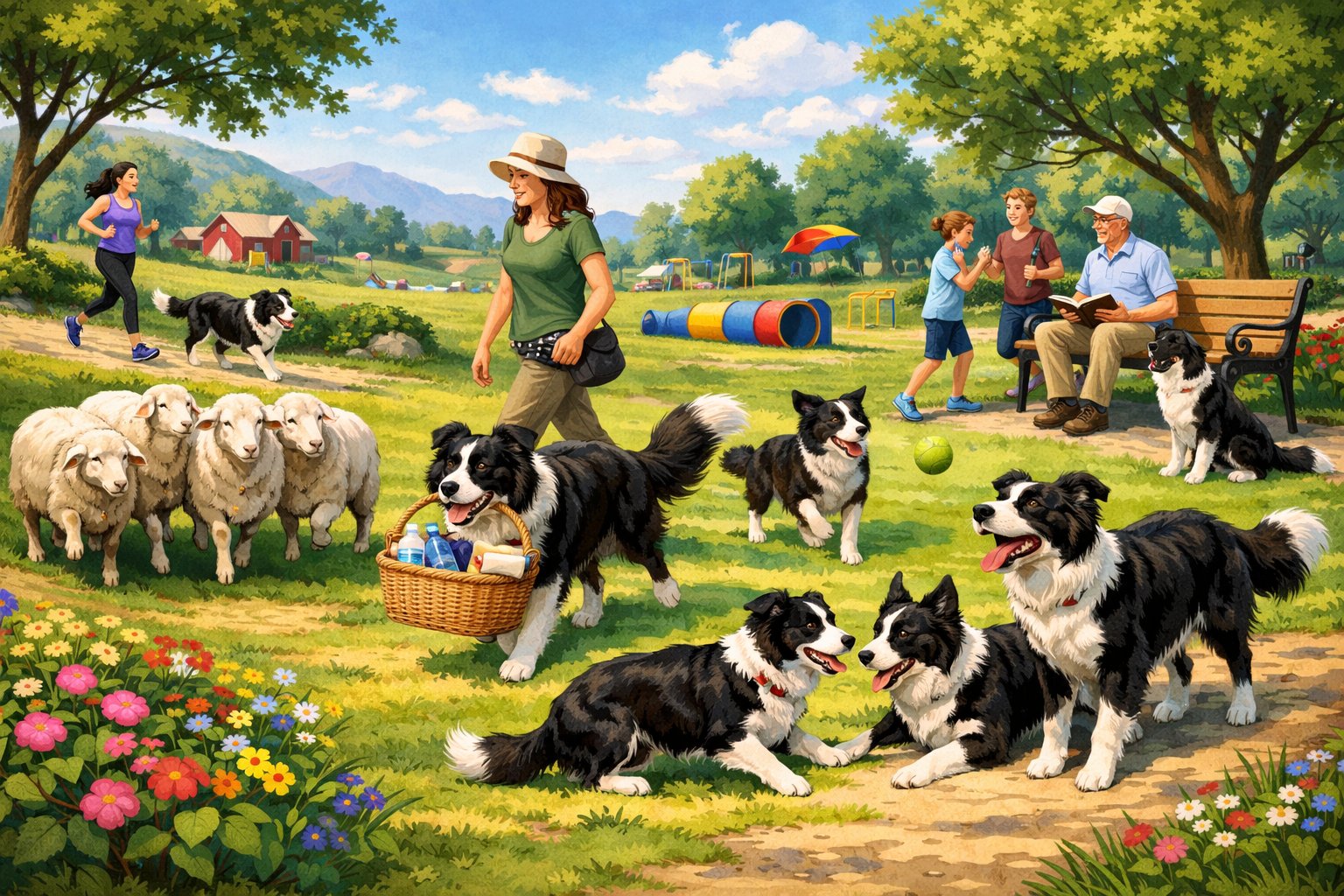
Border Collies thrive when daily life gives them clear tasks, regular social contact, and ways to use both their minds and bodies. Purposeful routines help them stay calm, focused, and confident.
Household Tasks and Service Roles
Border Collies learn household tasks fast because they watch closely and respond to cues from the eye. Owners often train them to pick up toys, carry laundry, or bring specific items on command.
These tasks give steady mental work and light physical stimulation. Some Border Collies also succeed as therapy dogs or service dogs.
Their focus and sensitivity make them strong helpers when training matches their temperament. This type of work demands calm behavior, impulse control, and comfort around strangers.
Not every dog fits this role, but the structure alone helps many dogs thrive. Simple tools help with training consistency.
- Interactive toys to reinforce tasks
- Clear verbal cues and hand signals
- Short sessions to prevent stress
Structured work matters more than difficulty.
Socialization and Group Activities
Regular socialization helps Border Collies handle busy spaces without stress. Group classes, playdates, and public walks teach them to stay focused despite noise and movement.
This matters for dogs with a strong prey drive that react to bikes, runners, or children. Many owners use dog sports to combine structure with social exposure.
Activities like agility or flyball train control, speed, and teamwork. These settings also teach dogs to work near others without losing focus.
Controlled group settings work best.
- Small class sizes
- Clear rules and rest breaks
- Positive reinforcement only
Guides on channeling a Border Collie’s natural drive through social activities explain how purpose reduces unwanted behaviors when dogs interact often and early.
Swimming Lessons and Water Games
Swimming lessons give Border Collies low-impact exercise that still burns energy. Many dogs enjoy water, but early lessons build confidence and safety.
Owners should start slow, use a dog life vest, and keep sessions short. Water games also satisfy instinctive behaviors.
Fetch in shallow water or herding floating toys gives mental focus without joint strain. These games work well for dogs that need heavy physical stimulation but tire of land activities.
| Water Activity | Key Benefit |
|---|---|
| Swimming lessons | Endurance and confidence |
| Dock-style fetch | Focus and recall |
| Floating toy herding | Prey drive control |