Comparing Border Collie Puppies and Adults: What to Expect
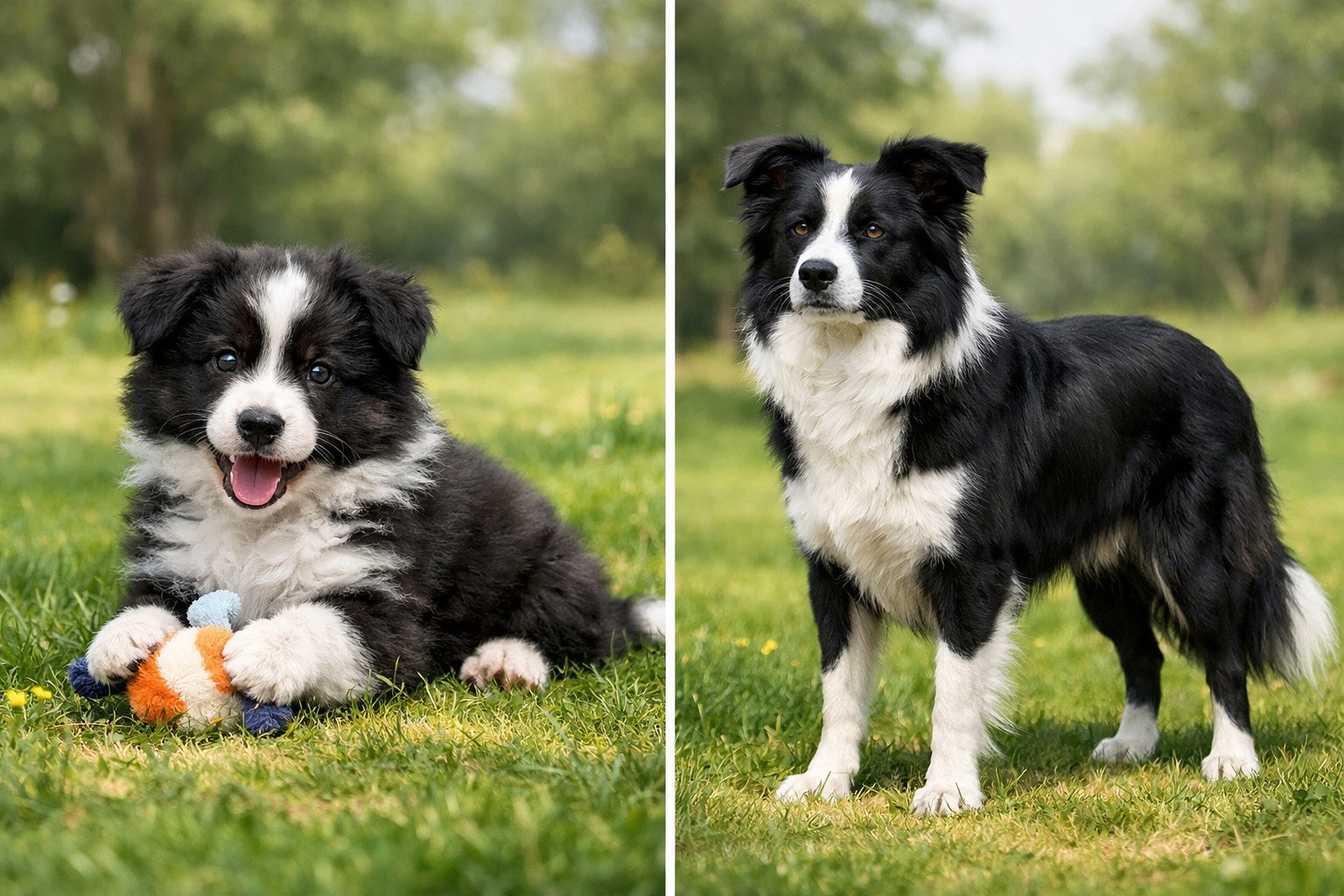
Border Collie puppies and adults differ in clear, practical ways. Size, energy, learning style, and behavior all change as the dog moves from puppyhood into adulthood.
Physical Growth and Size Differences
A border collie puppy grows fast during the first year. Most puppies look lean and lanky as their legs lengthen before their bodies fill out.
This stage of border collie growth often includes uneven movement and frequent rest. An adult border collie reaches full height by about 12 months, but muscle and chest width continue to develop until around 18 months.
The typical adult border collie size places them among medium-sized dogs, usually weighing 30–55 pounds. Owners who want details on growth stages can review a clear Border Collie growth chart and puppy milestones.
Monitoring weight and body shape helps prevent joint strain during growth.
Energy Levels and Exercise Requirements
Energy levels peak during puppyhood. A border collie puppy shows short bursts of intense activity, followed by long naps.
Too much forced exercise can stress growing joints, so owners should focus on short walks and safe play. As dogs reach adulthood, energy becomes more controlled but does not fade.
Border Collies still need daily activity to stay healthy. Most adults require 1–2 hours of exercise split into multiple sessions.
| Life Stage | Daily Exercise Style | Key Focus |
|---|---|---|
| Puppy | Short play sessions | Joint safety |
| Adult | Walks, runs, games | Endurance |
Meeting exercise requirements prevents weight gain and restlessness.
Mental Stimulation Needs Through the Stages
Mental work matters as much as physical movement. Puppies learn rapidly but tire quickly.
Simple training, food puzzles, and basic commands support early mental stimulation without overload. Adult dogs need more complex challenges.
Advanced obedience, scent games, and task-based play suit their sharper focus. Without mental work, adult Border Collies often develop unwanted habits.
Structured learning supports long-term success. Mental effort keeps both stages calm and engaged.
Behavioral Development and Socialization
Behavior shifts clearly from puppyhood to adulthood. Puppies explore with their mouths, test limits, and seek attention often.
Early socialization with people, dogs, and environments shapes long-term confidence. During behavioral development, consistency matters more than intensity.
Calm routines help puppies understand expectations. Fear periods may appear, so positive exposure works better than correction.
In adulthood, behavior stabilizes. An adult border collie often shows stronger focus and loyalty but may become cautious with strangers if socialization was limited.
Ongoing exposure and training maintain balanced behavior throughout adulthood.
Navigating Each Life Stage: Care, Health, and Training

Border Collies change fast as they grow. Each stage brings clear needs for care, health checks, and training that shape behavior and long-term health.
Puppy Stage: Key Milestones and Puppy Care
The puppy stage moves quickly and demands structure. Border Collie puppy growth follows a steady pattern, with rapid weight gain and long sleep needs.
A clear overview of expected size helps owners plan feeding and exercise using a Border Collie growth chart and milestones. Potty training can start around eight weeks.
Puppies need breaks every one to two hours. Puppy teeth begin falling out near 12 weeks, so safe chew toys matter.
Early veterinary care sets the foundation. Puppies need vaccines, parasite control, and routine health check-ups during these months, as outlined in Border Collie life stage care guidance.
Puppy care priorities
- Short training sessions
- Gentle social exposure
- Balanced puppy food
Adolescence: Transitioning From Puppy to Adult
Adolescence often tests patience. Energy spikes, focus drops, and boundaries get pushed.
Border Collies remain a working herding dog at heart, so daily mental tasks matter as much as walks. Training should shift from basics to consistency.
Leash manners, recall, and impulse control help manage this phase. Light agility training can begin, but jumps and sharp turns should wait until joints mature.
Health monitoring continues. Vets may discuss spay or neuter timing and watch for early signs of border collie health issues like hip dysplasia or elbow dysplasia.
A structured routine helps reduce stress:
- Exercise at set times
- Clear rules at home
- Calm rewards for focus
Adult Stage: Ongoing Needs for Mature Border Collies
Adult Border Collies thrive on purpose. They need daily activity that challenges both body and mind.
As natural herding dogs, they excel at advanced training, sports, or task-based games. Diet now shifts to maintenance.
A balanced diet supports muscle, joints, and energy without excess weight. Annual health check-ups remain essential to screen for inherited risks such as progressive retinal atrophy and collie eye anomaly, which vets often monitor in this breed.
Training never stops. Adults benefit from refining skills rather than learning many new ones.
Clear cues and regular practice keep behavior steady.
Helpful adult care habits:
- One to two hours of daily activity
- Annual vet exams
- Ongoing skill work
Senior Years: Supporting Your Aging Border Collie
A senior border collie slows down but still needs structure.
Exercise shifts to shorter, gentler sessions that protect joints and stamina.
Mental games stay important and help prevent frustration.
Nutrition often changes again.
Senior diets support joint health and digestion.
Vets may increase visit frequency during the senior years to manage pain, vision loss, or mobility changes.
Owners should watch closely for stiffness, weight loss, or confusion.
These signs can point to arthritis or age-related vision issues.
Prompt care improves comfort and daily function, as outlined in detailed Border Collie care and health guidance.
Simple adjustments help seniors stay engaged:
- Soft bedding
- Ramps or low steps
- Consistent daily routines