Common French Bulldog Behavior Problems and Solutions
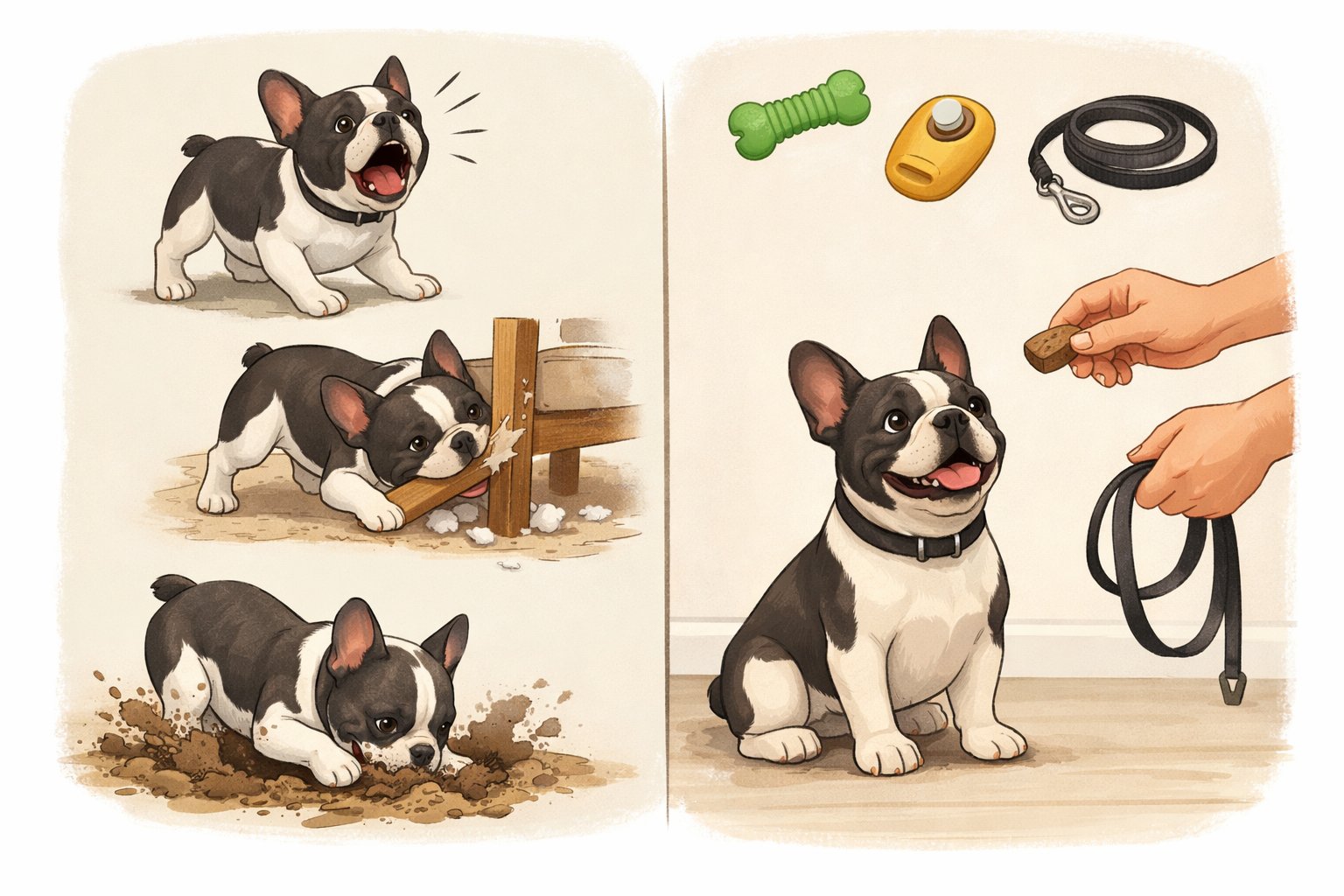
French bulldog behavior problems often follow clear patterns tied to boredom, stress, and routine. Owners see the best results when they act early and match training to the breed’s needs.
Separation Anxiety Signs and Management
Separation anxiety in French Bulldogs shows up fast and loud. Common signs include nonstop barking, pacing, drooling, or accidents soon after the owner leaves.
Frenchies bond closely with people, so sudden alone time feels stressful. Many owners mistake this behavior for stubbornness, but anxiety drives it.
Clear warning signs appear in guides on separation anxiety in French Bulldogs.
Simple steps help reduce stress:
- Keep departures calm and brief
- Practice short absences several times a day
- Offer a food puzzle only during alone time
Crates help some dogs but stress others. Owners should test slowly and watch body language.
Excessive Barking and Attention-Seeking
French Bulldogs bark to get results. They bark when bored, excited, or rewarded by attention.
This behavior often grows when owners react by talking, touching, or yelling. Articles on French bulldog behavior problems note that attention-seeking barking works because it gets a response.
Effective fixes focus on timing:
- Ignore barking until it stops
- Reward calm behavior right away
- Add short daily play and training sessions
Mental activity matters more than long walks. Puzzle toys and scent games reduce barking without overexertion.
Destructive Chewing and Furniture Damage
Chewing feels normal to dogs, but Frenchies often target furniture, pillows, and shoes. This usually happens during teething, boredom, or anxiety.
Owners often lack enough safe chew options. Many behavior guides, including common French Bulldog behavior problems, point to poor chew rotation as a key issue.
Helpful chewing rules:
- Keep 3–5 approved chews available
- Rotate chews every few days
- Remove access to problem areas
Bitter sprays help, but supervision matters more.
Resource Guarding and Aggression
Resource guarding appears when a dog stiffens, growls, or snaps over food or toys. It often starts small and worsens if ignored.
French Bulldogs guard items when they feel insecure or rushed. Guides on French Bulldog behavior issues stress early training to prevent escalation.
A simple trade-up method works well:
| Step | Action |
|---|---|
| 1 | Approach calmly |
| 2 | Offer higher-value food |
| 3 | Say “trade” |
| 4 | Return the item |
Punishment increases fear and risk. Calm exchanges build trust and reduce aggressive responses over time.
Essential Training Strategies and Prevention Methods
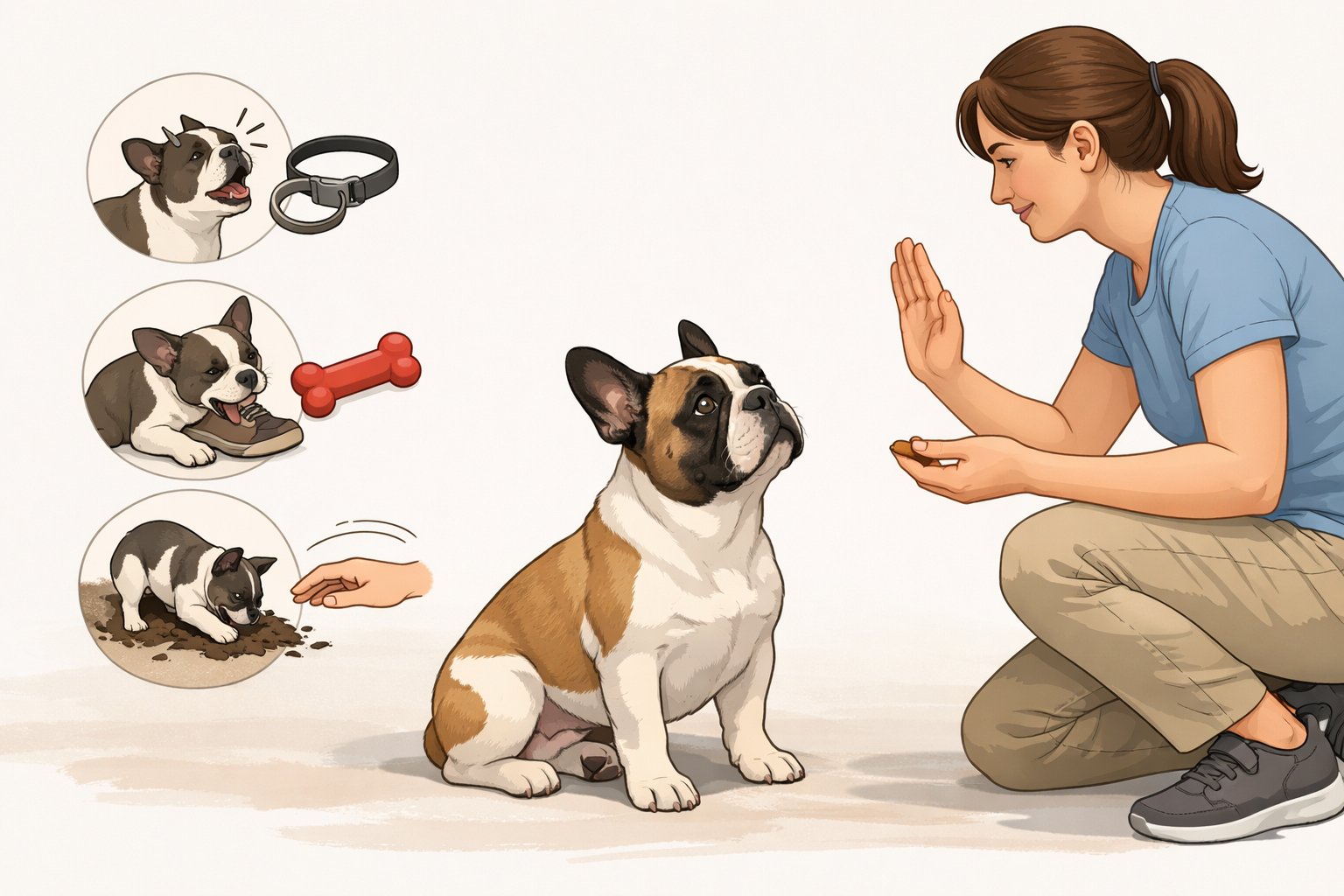
French Bulldogs respond best to clear rules and steady routines. Training works best when owners focus on rewards, early exposure to new situations, and timely help when problems grow beyond basic home training.
Positive Reinforcement Training Techniques
Positive reinforcement training helps French Bulldogs learn faster and with less stress. Owners should reward wanted behavior right away using small treats, praise, or play.
Timing matters more than the reward size. Short sessions work best because French Bulldogs lose focus quickly.
Five to ten minutes, two or three times a day, keeps training productive. Consistency across all family members prevents confusion.
Common rewards that work well include:
- Soft treats that are easy to chew
- Verbal praise in a calm, happy tone
- Brief play with a favorite toy
Punishment often increases fear or stubborn behavior. Many guides on French Bulldog behavior problems and training methods stress that reward-based methods protect trust while correcting issues like barking or leash pulling.
Early Socialization Tips
Early socialization reduces fear-based behavior later in life. Puppies should meet new people, see other dogs, and experience different sounds before bad habits form.
Owners should start with controlled settings. Calm dogs, quiet parks, and short car rides help build confidence.
Each new experience should stay brief and positive. Key socialization areas include:
- People of different ages and appearances
- Other dogs with gentle temperaments
- Environments like sidewalks, stores, and vet offices
Lack of mental activity often leads to behavior problems. Some trainers note that missing daily mental work is a major cause of issues, as explained in common French Bulldog behavior issue breakdowns.
Puzzle toys and scent games help meet this need.
When to Consult a Professional Dog Trainer
Some behavior problems need expert help. Aggression, severe anxiety, or ongoing disobedience often signal the need for a professional dog trainer.
A qualified trainer assesses the dog’s triggers. They build a plan that fits the breed’s limits.
French Bulldogs struggle with harsh methods. Owners should look for trainers who use reward-based systems.
Signs it is time to seek help include:
- Escalating aggression toward people or pets
- Separation anxiety that causes damage or distress
- Training stalls despite consistent effort
Breed-specific guidance matters. Many owners benefit from structured programs like those outlined in essential French Bulldog training strategies, which focus on patience and realistic expectations.