Do French Bulldogs Bark a Lot?
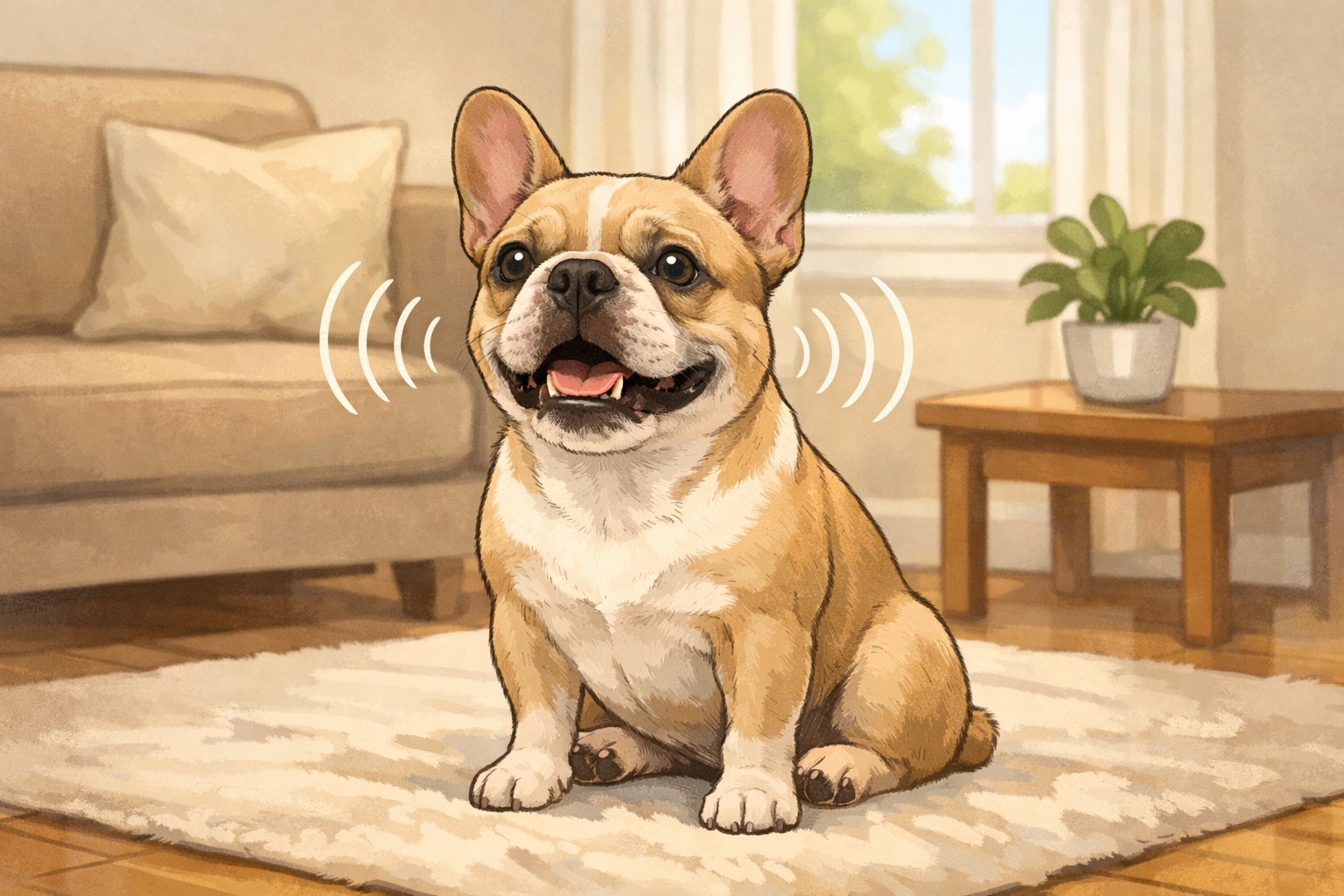
French Bulldogs usually stay quiet compared to many other dogs. Most barking comes from clear triggers like attention, strangers, or being left alone.
Their sounds also differ from the sharp yaps people expect from small breeds.
Typical Barking Levels in French Bulldogs
Most owners find that French bulldogs do not bark a lot. Many Frenchies bark only at specific moments, such as when someone knocks or when they want attention.
A large owner survey reported that most dogs bark rarely or not at all, while only a small group barked enough to cause problems. This pattern makes them a good fit for apartments and shared walls, as explained in this guide on French Bulldog barking behavior and frequency.
French bulldog barking often signals a need. Common reasons include hunger, play, boredom, or anxiety when alone.
Some Frenchies bark more if owners respond right away, which can teach the dog that noise brings rewards.
Common triggers include:
- Doorbells or knocks
- Wanting food or play
- Seeing other dogs
- Being left alone
How French Bulldog Barking Compares to Other Breeds
When people ask do French Bulldogs bark a lot, comparison helps. Frenchies bark less than many working or herding breeds.
Their frenchie bark also tends to be softer and less sharp than breeds known for guarding or alert work.
| Breed Type | Barking Tendency |
|---|---|
| French Bulldogs | Low to moderate |
| Herding breeds | High |
| Guard breeds | High |
| Scent hounds | Moderate to high |
Breed experts note that Frenchies rely more on body language than noise. This comparison appears in breed overviews like how much French Bulldogs bark compared to other dogs.
Unique Barking Sounds of Frenchies
Frenchies sound different when they do bark. Owners often describe the frenchie bark as low, rough, or short.
It lacks the high-pitched yap common in many small dogs. French bulldog barking may include grunts, chirps, or brief yelps mixed with breathing noises.
These sounds reflect their flat faces and short airways. Some owners mistake these noises for barking at first.
This mix of sounds leads many people to say Frenchies “talk” more than they bark. A closer look at why Frenchies make unique barking and vocal sounds helps explain what owners hear day to day.
Reasons for French Bulldog Barking
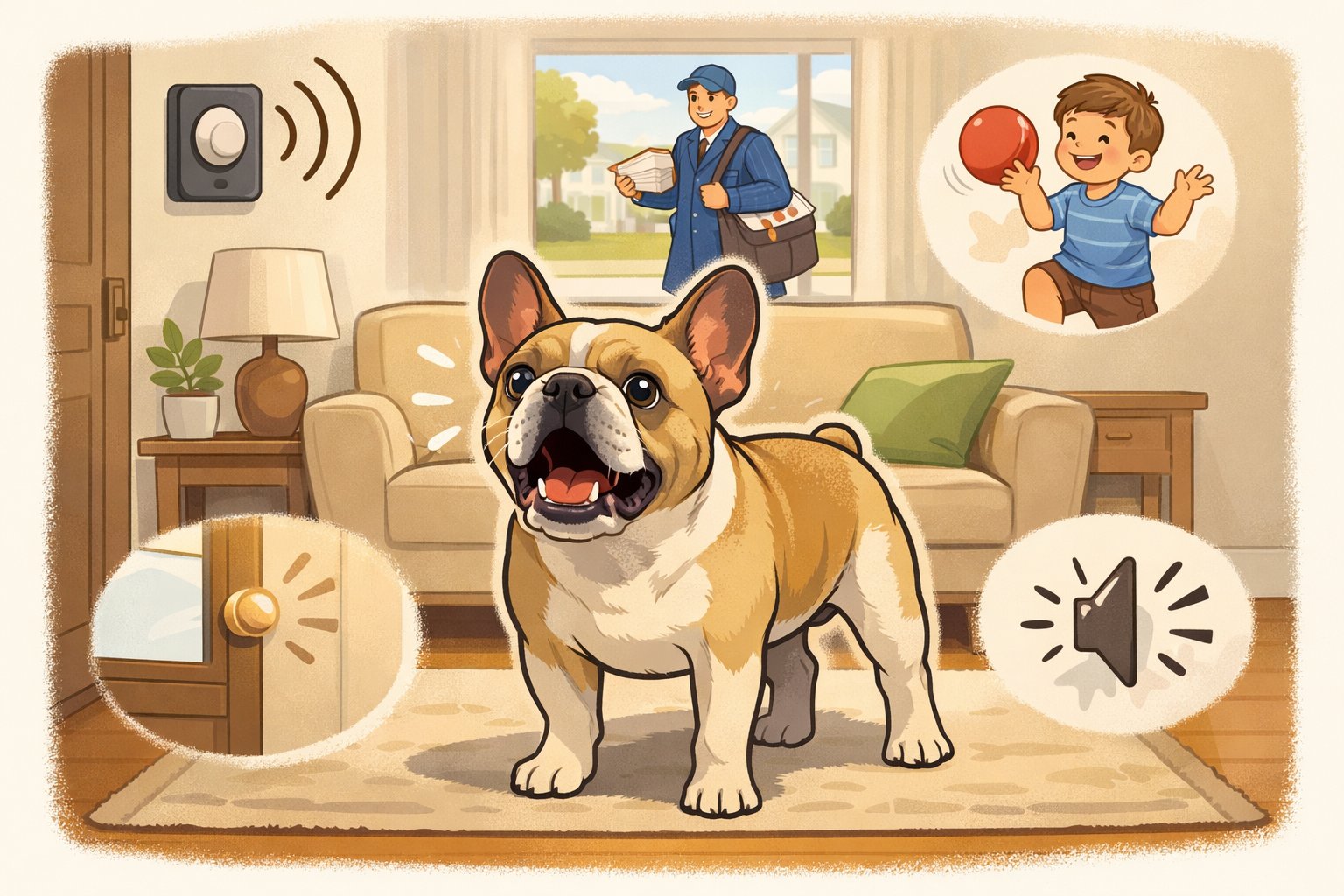
French Bulldogs usually stay quiet, but certain situations trigger barking. These sounds often link to emotional needs, daily routines, and how the dog reacts to people and places around it.
Loneliness and Separation Anxiety
Loneliness stands out as one of the most common reasons for French Bulldog barking. Frenchies form strong bonds with their owners and struggle when left alone.
When the owner leaves the house or even another room, the dog may bark to express distress. This type of dog barking often starts soon after the owner leaves.
It may include pacing, whining, or barking near doors and windows. The answer often points to separation anxiety.
Signs linked to loneliness include:
- Barking only when alone
- Destructive behavior
- Restlessness or drooling
Guides like this overview on French Bulldog barking when left alone show this pattern appears often in the breed.
Boredom and Lack of Stimulation
Boredom causes frequent Frenchie barking, especially in dogs with limited activity. French Bulldogs may not need intense exercise, but they still need daily movement and mental tasks.
When a dog lacks stimulation, barking becomes a way to release energy. It may happen during quiet times of day or repeat for no clear reason.
Common boredom triggers include:
- Short or skipped walks
- Few toys or puzzle games
- Long periods without interaction
In these cases, barking acts as self-entertainment. Many trainers note that structured play and short training sessions reduce this type of noise.
Territorial Barking
Territorial barking appears when a French Bulldog tries to protect its space or owner. This reaction often targets doorbells, knocks, or people passing by windows.
Frenchies do not serve as guard dogs, but they stay alert. When something feels unfamiliar, barking acts as a warning.
This explains why many owners hear barking at guests or delivery drivers. Territorial barking often includes:
- Barking toward doors or windows
- Stiff posture or raised head
- Barking that stops once the trigger leaves
Articles like do French Bulldogs bark a lot explain that this type of barking stays situational and not constant.
Anxiety, Fear, and Environmental Triggers
Anxiety-driven barking happens when a French Bulldog feels unsure or scared. Loud noises, new people, other dogs, or unfamiliar places can trigger this response.
This form of Frenchie barking may sound sharp or sudden. It often pairs with shaking, hiding, or attempts to escape.
Owners may notice barking during storms, fireworks, or car rides. Common environmental triggers include:
- Vacuum cleaners or alarms
- Crowded areas
- Other dogs approaching quickly
Resources like French Bulldog barking issues connect these reactions to stress rather than defiance. Understanding the trigger helps reduce fear-based barking without punishment.
Managing and Reducing Unwanted Barking

French Bulldogs respond best to calm, consistent handling. Owners can reduce barking by rewarding quiet behavior, setting clear cues, and keeping daily routines predictable.
Mental activity and early support also help stop excessive barking before it becomes a habit.
Positive Reinforcement Training Techniques
Positive reinforcement training works well for French Bulldogs because they seek attention and food rewards. When the dog stays quiet during a common trigger, the owner should reward the calm behavior right away.
This timing helps the dog connect silence with a positive outcome. Owners should ignore barking that seeks attention.
Even eye contact can reward the behavior. Consistency matters more than intensity.
Effective rewards include:
- Small soft treats
- Verbal praise in a calm voice
- Short play sessions
Several training guides note that reward-based methods outperform punishment when owners want to reduce French Bulldog barking issues.
Establishing the Quiet Command
The quiet command gives owners a clear way to stop barking without yelling. To start, the owner waits for a brief pause in barking.
They say “quiet” once and reward the silence. Practice works best in short sessions.
Owners should begin in low-distraction settings, then slowly add real triggers like doorbells or passing dogs.
Key steps to follow:
- Wait for a short break in barking
- Say the cue once
- Reward calm behavior
Many trainers recommend this approach to help stop excessive barking in French Bulldogs without raising stress levels.
Enrichment and Interactive Solutions
Boredom causes many barking problems. French Bulldogs need daily mental work, not just walks.
Interactive toys keep their focus and burn energy indoors. Owners can rotate activities to prevent boredom.
Even ten minutes of problem-solving can lower noise levels.
Helpful enrichment options include:
- Puzzle feeders
- Snuffle mats
- Short trick-training sessions
Environmental changes also help. Closing blinds or adding background noise can limit triggers, as explained in guides on managing French Bulldog barking.
Professional Help and Calming Tools
Some dogs need extra support. A professional dog trainer can spot patterns owners miss and help train a French Bulldog with a clear plan.
Certified trainers use science-based methods and avoid harsh tools.
Calming aids may support training but should not replace it. Anti-barking devices that rely on shock or pain often raise anxiety.
Safer options include:
- Pheromone diffusers for stress relief
- Anxiety wraps for short-term use
Veterinary behavior experts often discourage punishment-based tools.