Preparing for Your Beagle’s Arrival
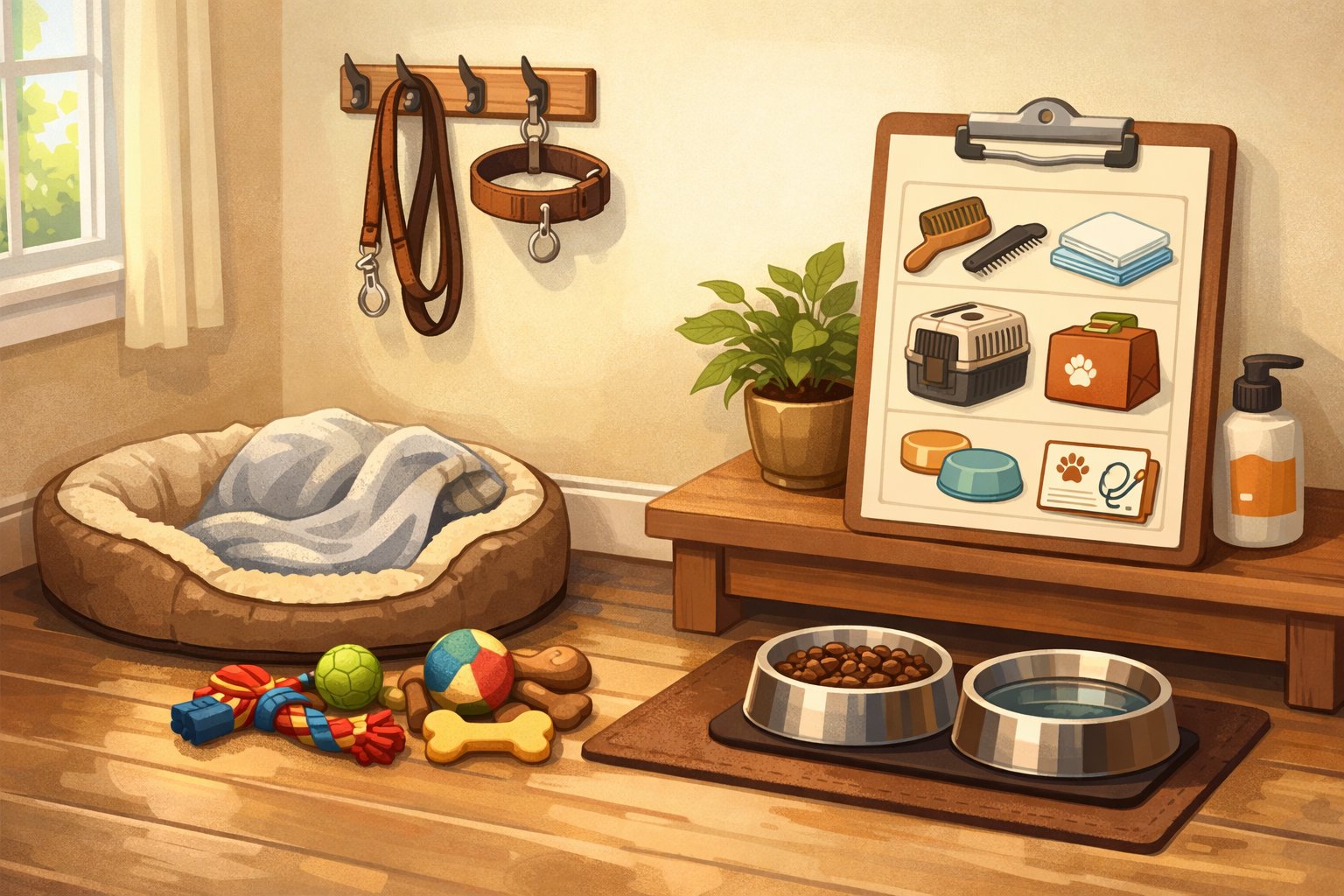
Preparing ahead makes bringing home a beagle smoother and less stressful. The right dog choice, a safe home setup, and basic supplies help a new beagle owner start with clear routines and fewer surprises.
Choosing the Right Beagle for Your Family
A first-time dog owner should look closely at how a beagle fits daily life. The beagle breed is social, active, and food driven.
These traits shape training, exercise, and supervision needs. Families can choose between beagle puppies from a breeder or an adult beagle from a rescue.
Puppies need more time at home for house training and social skills. Adult dogs may arrive with habits already formed.
When meeting a dog, they should watch for:
- Clear eyes and clean ears
- Steady walking and alert movement
- Calm curiosity, not fear or aggression
Reputable breeders and rescues answer questions and allow visits. This step matters before bringing home a beagle that will live with the family for many years.
Setting Up a Safe Puppy‑Proofed Space
A new beagle owner should prepare the home before the dog arrives. Beagles explore with their noses and mouths.
Unsafe spaces lead to chewed items and health risks. Choose one quiet area as the main puppy zone.
Remove loose cords, shoes, plants, and small objects. Use baby gates to block stairs or off-limit rooms.
Outdoor spaces need attention too. Beagles dig and slip through gaps.
Fences should sit low and secure. Basic safety steps include:
- Locking trash cans
- Storing food out of reach
- Keeping cleaning products in closed cabinets
This setup helps beagle puppies learn boundaries while staying safe.
Essential Supplies and Shopping List
Having supplies ready makes the first days easier. New beagle owners should focus on comfort, feeding, training, and health.
Core items to have at home:
| Category | Items |
|---|---|
| Feeding | Puppy food, bowls, training treats |
| Comfort | Crate, bed, soft blankets |
| Training | Leash, harness, poop bags |
| Enrichment | Chew toys, snuffle mat |
| Health | Brush, vet contact info |
A snuffle mat supports mental stimulation and slows eating. Poop bags should stay near doors and in travel kits.
Buying these items early helps routines start right away.
Successful Training and Daily Care
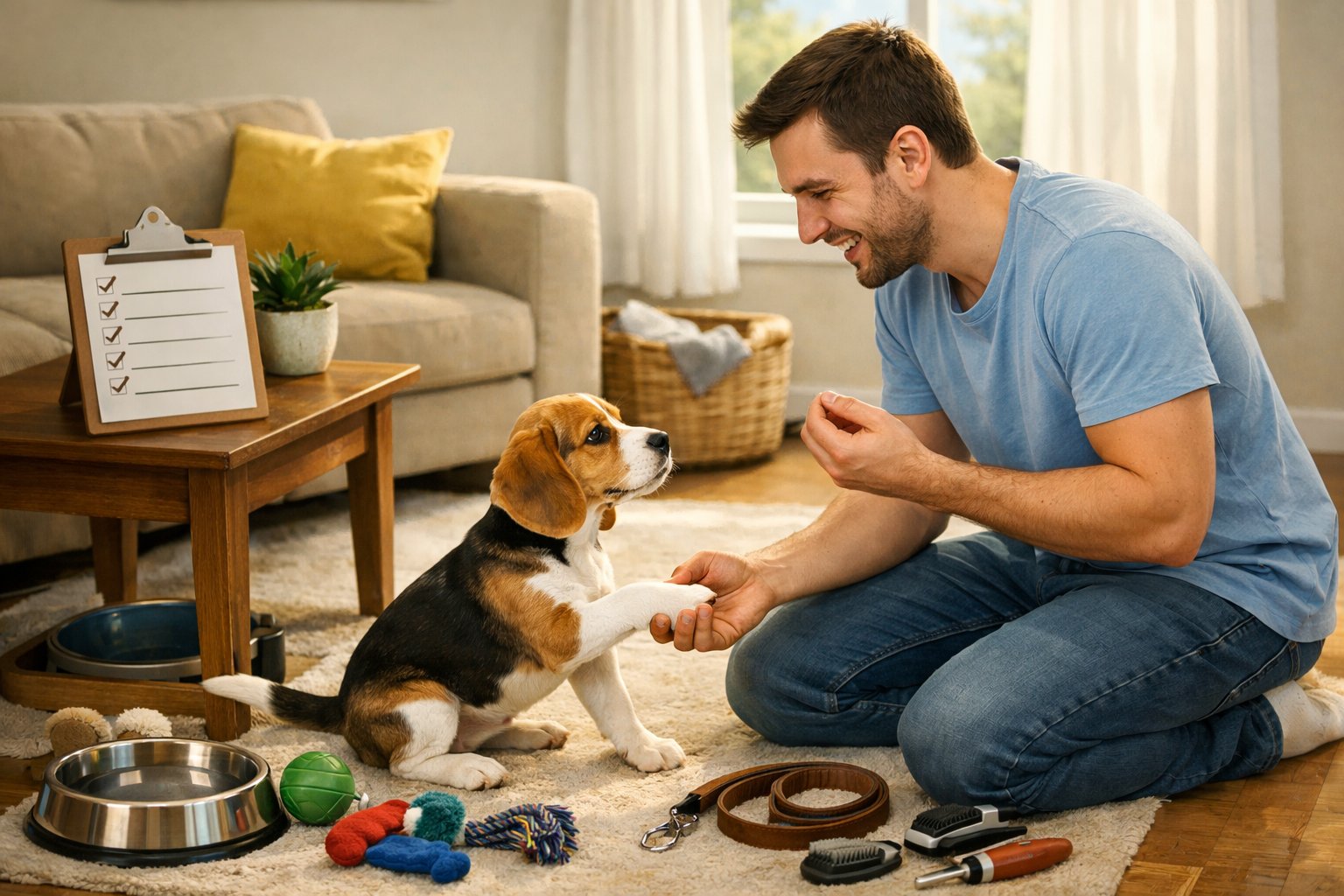
A Beagle puppy learns best with structure, clear rules, and daily practice. Consistent house training, smart crate use, simple training tools, and steady routines shape good habits early.
House Training Basics
House training should start on day one. A Beagle puppy needs frequent trips outside, especially after waking, eating, playing, and naps.
They respond well to routine and fast feedback. Set a fixed potty spot and use the same door each time.
Praise and reward right after success. This timing matters.
Helpful house training tips:
- Take the puppy out every 2–3 hours
- Use a leash to limit wandering
- Clean indoor accidents with enzyme cleaner
- Avoid punishment; it slows learning
Beagles follow scents, which can distract them. Stay calm and patient.
Most puppies show steady progress within weeks when owners stay consistent. Learn more about early house training from this beagle training guide.
Crate Training Techniques
Crate training helps with safety, sleep, and house training. A crate gives the puppy a quiet space to rest and settle.
It should feel safe, not like a penalty. Choose a crate large enough to stand and turn, but not roam.
Line it with soft bedding and keep it in a calm area.
Crate training basics:
- Introduce the crate during calm moments
- Feed meals near or inside the crate
- Keep crate time short at first
- Take the puppy out right after release
Never use the crate for punishment. For a step-by-step approach, this beagle puppy preparation guide explains how crate training fits into daily care.
Training Your Beagle: Tips and Tools
Training a Beagle works best with short, focused sessions. Their strong sense of smell can pull attention away fast.
Owners should train before meals when motivation is high. Use simple commands like sit, stay, and come.
Keep sessions under 10 minutes.
Useful training tools:
- Soft treats in small sizes
- A standard 6-foot leash
- A flat collar or front-clip harness
- A clicker for timing rewards
Positive reinforcement builds trust and focus. Harsh methods often cause stubborn behavior.
This Beagle puppy training timeline shows what skills to teach at each stage.
Daily Routines and Early Socialization
Daily routines help a Beagle feel secure and calm. Regular feeding, walks, training, and rest times reduce stress and confusion.
Socialization should begin early and stay controlled. Expose the puppy to new sounds, people, and places in small steps.
Daily routine example:
| Time of Day | Activity |
|---|---|
| Morning | Potty, short walk, breakfast |
| Midday | Play, training, rest |
| Evening | Walk, dinner, calm time |
Early exposure supports better behavior later. This first-year Beagle care guide explains how routines support long-term health and learning.
Health, Nutrition, and Enrichment
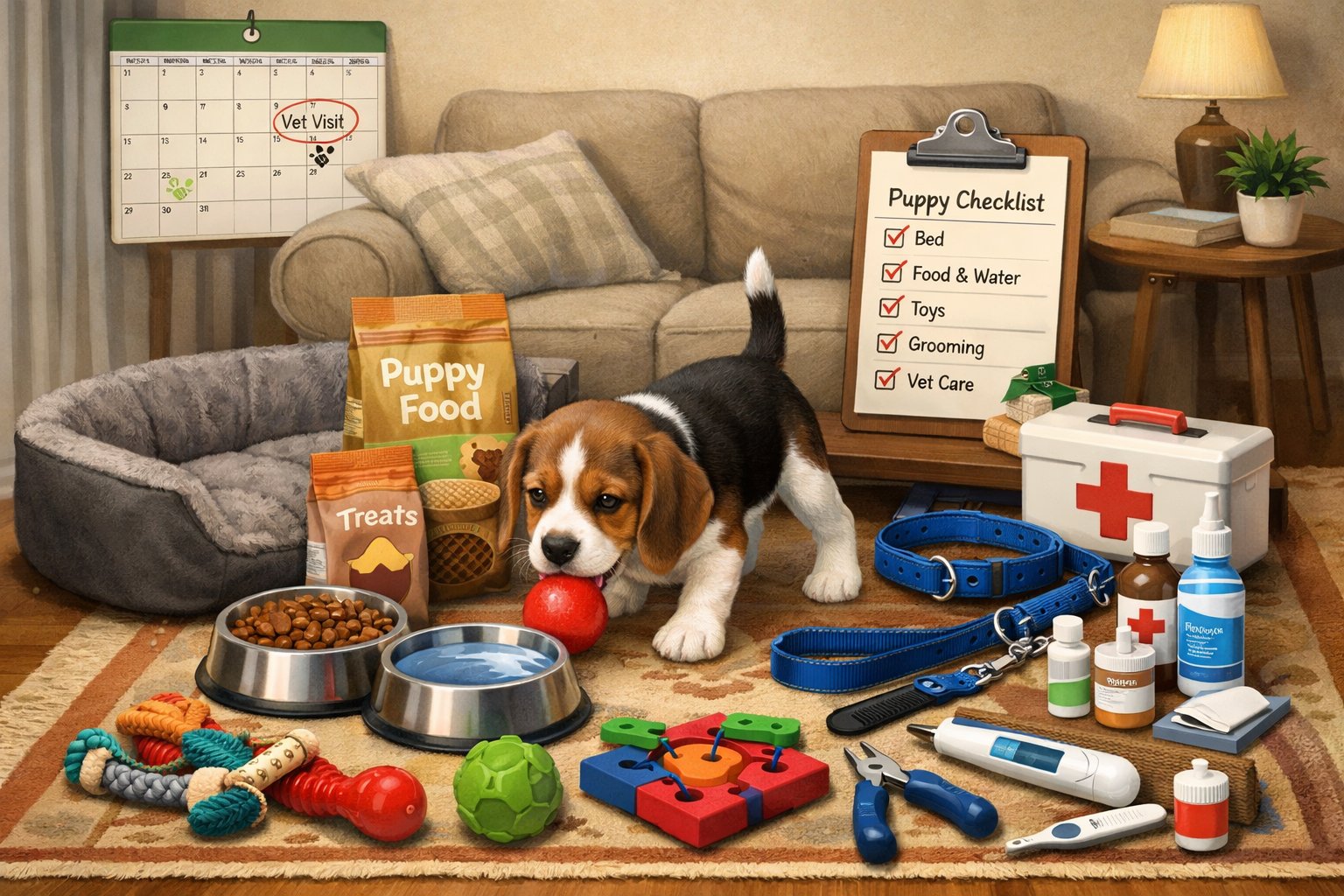
A healthy beagle dog needs the right food, steady exercise, and basic care routines. These areas shape energy levels, behavior, and long-term comfort for both adult beagles and beagle puppies.
Feeding and Nutrition Essentials
Beagles love food, so owners must control portions from day one. Free feeding often leads to weight gain, which strains joints and affects energy.
A high-quality diet with clear protein sources works best for this breed. Many owners follow guidance from a detailed beagle nutrition guide to balance calories, fats, and nutrients by age.
Key feeding basics:
- Measure every meal.
- Limit treats to training rewards.
- Avoid table scraps.
Beagle puppies need more frequent meals, usually three per day, to support growth. Adult beagles do well on two meals daily at the same times.
Fresh water should stay available at all times.
Exercise Needs and Mental Stimulation
A beagle needs daily movement to stay calm and focused. Walks alone rarely meet this need because the breed also needs mental work.
Most beagles benefit from:
- At least 60 minutes of activity per day
- Sniff-based games that use their nose
- Puzzle toys or food-dispensing feeders
Mental enrichment prevents boredom behaviors like barking or chewing. Many owners rely on ideas from an actionable beagle enrichment checklist to rotate toys and activities.
Short training sessions also count as mental exercise. Five to ten minutes of focused work can tire a beagle more than a long walk.
Grooming and Routine Health Care
Beagles have short coats, but they still need regular grooming. Weekly brushing removes loose hair and keeps skin healthy.
Ears need special attention. Their floppy shape traps moisture and dirt, so owners should clean ears once a week to reduce infection risk.
Nail trims usually help every three to four weeks.
Routine care should include:
- Annual vet visits
- Core vaccinations
- Flea, tick, and heartworm prevention
A simple schedule, like the one outlined in a complete beagle care guide, helps first-time owners stay consistent.