Must-Have Supplies for First-Time French Bulldog Owners
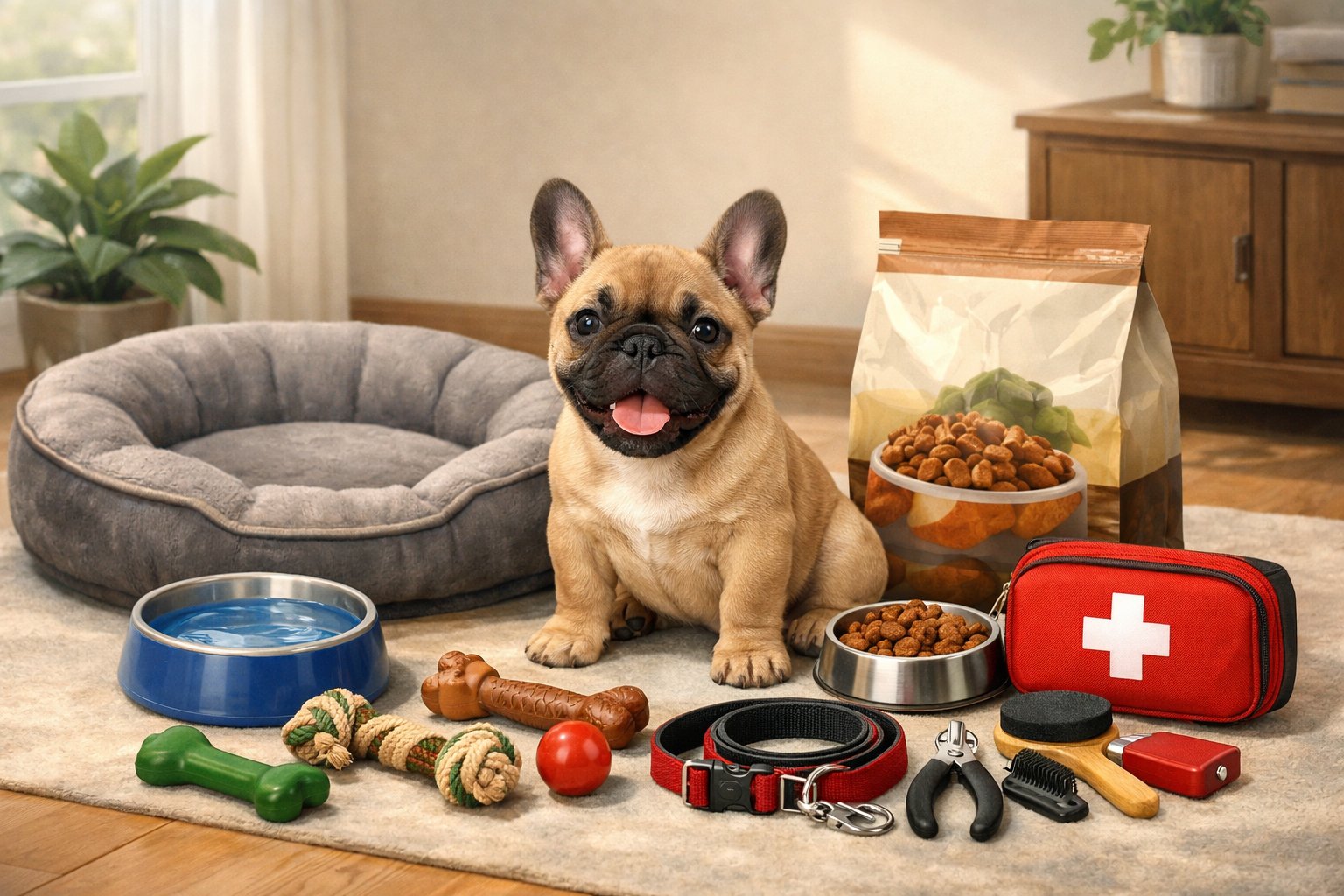
First-time French Bulldog owners need supplies that support daily care, safety, and comfort. The right choices help with feeding routines, rest, house training, and setting clear boundaries at home.
Food and Water Bowls Selection
French Bulldogs eat best from stable, easy-to-clean bowls. Stainless steel and ceramic bowls resist bacteria and odors better than plastic.
They also last longer and clean faster. Bowls should match the puppy’s size.
Shallow bowls often work well for flat faces and help reduce mess during meals. A non-slip base keeps bowls from sliding across the floor.
Many owners use a mat under the bowls to catch spills. This keeps feeding areas clean and helps protect floors.
Clean bowls daily to reduce germs and support good digestion. For more details on bowl options, see this guide to French Bulldog puppy food and bowl essentials.
Cozy Dog Bed and Safe Puppy Area
A French Bulldog needs a soft, supportive dog bed placed in a calm area. Beds with raised edges can help puppies feel secure while resting.
Washable covers matter because accidents happen often during early months. The puppy should also have a safe puppy area for supervised play and rest.
Many owners use puppy gates to block stairs, kitchens, or other risky spaces. This setup limits chewing, reduces stress, and helps with house training.
Place the bed away from drafts and loud noise. A consistent rest spot helps the puppy settle faster and build a routine.
For a broader view of home setup basics, this checklist of essential supplies for a new French Bulldog puppy offers useful examples.
Dog Crate and Crate Training Essentials
A dog crate supports crate training, sleep routines, and safety. The crate should allow the puppy to stand, turn, and lie down without extra space.
Too much room can slow potty training. Wire crates allow airflow and visibility.
Plastic crates create a den-like feel that can calm anxious puppies. Many owners add a divider so the crate grows with the dog.
Inside the crate, keep it simple:
- Thin crate mat or towel
- Safe chew toy
- No food or water overnight
Crate training works best with short, positive sessions. Never use the crate as punishment.
A helpful overview appears in this French Bulldog puppy shopping list.
Choosing Puppy Pads and Puppy Gates
Puppy pads support house training, especially in apartments or during bad weather. Pads should absorb quickly and stay flat to prevent sliding.
Some owners prefer washable pads to reduce waste. Place pads in one consistent location.
Moving them often can confuse the puppy and slow learning. Keep pads away from feeding and sleeping areas.
Puppy gates help control movement and protect unsafe spaces. They work well for blocking stairs, hallways, or rooms with cords and furniture.
Gates also help puppies learn boundaries without isolation. Together, pads and gates create structure.
This structure reduces accidents and supports calm behavior during early training stages.
Health and Everyday Care for French Bulldogs
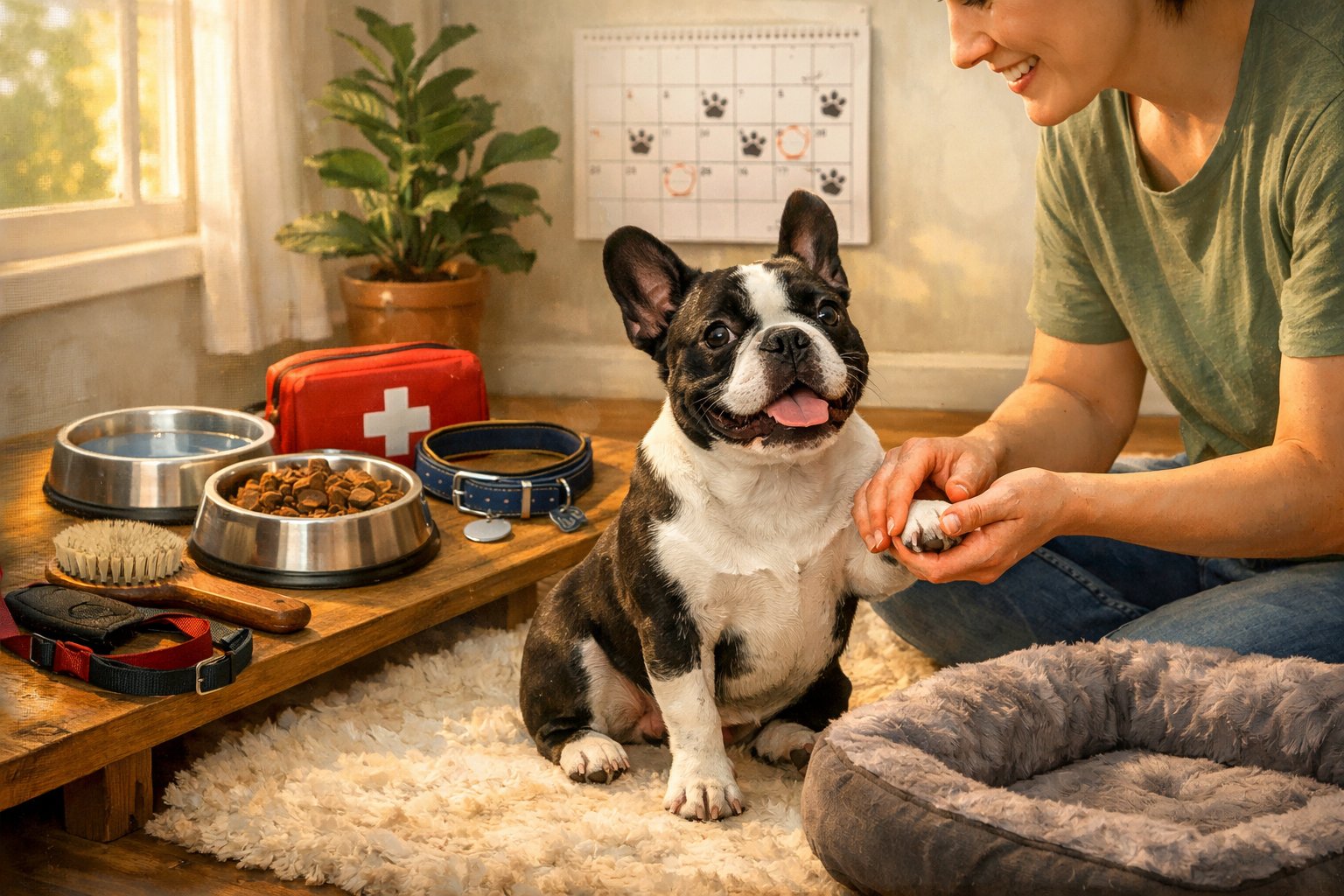
Daily care for a French bulldog focuses on breathing safety, steady nutrition, simple grooming, and regular vet care. These habits help reduce common health risks and support comfort from puppyhood into adulthood.
Understanding Brachycephalic Breed Needs
French bulldogs belong to a brachycephalic breed, which means they have short noses and flat faces. This build can cause brachycephalic syndrome, including noisy breathing and heat stress.
They need cool spaces and calm activity. Owners should avoid long walks in warm weather and never leave them in cars.
A harness works better than a collar because it does not press on the throat. Signs that need vet attention include heavy panting, blue gums, or collapse.
Clear guidance on daily care and breathing risks appears in this French Bulldog care overview for new owners.
Daily safety basics
- Walk during cooler hours
- Provide fresh water at all times
- Stop activity if breathing sounds strained
Recommended Puppy Food and Feeding Tips
A french bulldog puppy needs food made for small breeds. The kibble should list real meat first and avoid heavy fillers.
Protein supports muscle, while controlled fat helps prevent weight gain. French bulldog puppies do best with two to three small meals per day.
This schedule supports digestion and reduces bloating. Treats should stay limited and simple.
Portion control matters because extra weight makes breathing harder. Owners should check body shape weekly and adjust food if the waist disappears.
Simple feeding guide
| Age | Meals per day |
|---|---|
| 8–16 weeks | 3 |
| 4–12 months | 2–3 |
| Adult | 2 |
Basic Grooming: Bathing and Dog Shampoo
French bulldogs have short coats, but grooming still matters. A weekly brush removes loose hair and dirt.
This also helps owners spot skin changes early. Bathing once every 4–6 weeks works for most dogs.
Use a mild dog shampoo made for sensitive skin. Human shampoo can dry the skin and cause itching.
Facial folds need special care. Owners should wipe them with a damp cloth and dry them well to prevent infections.
Nails should stay trimmed to avoid joint strain. Skin and coat issues often link to allergies, which vets explain clearly in this vet-reviewed guide to French Bulldog health issues.
Essential Vet Visits and Vaccinations
Vet care starts early for french bulldog puppies. The first visit usually happens within a few days of coming home.
The vet checks breathing, heart, joints, and skin. Core vaccinations protect against serious illness.
Puppies follow a set schedule, then move to yearly boosters. Parasite prevention also matters, even for indoor dogs.
Adult french bulldogs should see the vet at least once a year. These visits help track weight, dental health, and breathing changes.
Typical early care
- Puppy exams and vaccine series
- Spay or neuter discussion
- Dental and weight checks
Training, Socialization, and Settling Your Frenchie

Training shapes daily behavior, while social time builds confidence and calm habits. A steady routine helps a frenchie feel safe and learn faster from day one.
Establishing Routines for Your Frenchie
A first-time French Bulldog owner should set a simple daily schedule. Feed, walk, train, and rest at the same times each day.
Dogs learn patterns fast, and frenchies do best with predictability. Short training sessions work better than long ones.
Aim for 5–10 minutes, two or three times a day. Use treats and praise right after good behavior.
A basic routine can look like this:
| Time of Day | Activity |
|---|---|
| Morning | Potty break, short walk |
| Midday | Play or light training |
| Evening | Dinner, calm play |
| Night | Final potty break |
Crate time should feel calm, not like punishment. When used correctly, it helps the dog relax and settle faster in a new home.
Potty Training and Early Socialization
Potty training starts with timing. Take the puppy out after sleep, meals, and play.
Praise right away when it goes outside. If accidents happen, clean them well and move on.
Consistency matters more than speed. Most frenchies learn faster when owners stick to one potty spot and one door.
Early social time should stay controlled and positive. Introduce new people, sounds, and places slowly.
Avoid crowded areas at first. Many owners follow simple guidance on how to socialize a French Bulldog to reduce fear and stress.
Calm exposure helps puppies grow into relaxed adults. Socialization should include:
- Adults and gentle children
- Common household sounds
- Short car rides
Puppy Classes and Basic Obedience
Puppy classes give structure and safe exposure to other dogs. They also help owners learn clear handling skills.
Classes usually start after core vaccines.
Basic obedience focuses on a few key commands:
- Sit
- Stay
- Come
- Leave it
These commands improve safety and daily control.
Keep practice sessions short and upbeat.
Many trainers recommend starting with simple steps from guides on how to train a French Bulldog.
Group settings also teach frenchies to focus around distractions.
For extra help, first-time owners often use breed-specific advice from French Bulldog training tips to handle stubborn moments with patience and clarity.