Key Signs of Breathing Issues in French Bulldogs

French bulldog breathing issues often show up through clear physical signs. These signs can appear during activity, rest, or sudden stress, and they tend to worsen with heat, excitement, or poor airway structure.
Loud Breathing, Snoring, and Wheezing
Many French Bulldogs make noise when they breathe, but loud snoring, wheezing, or raspy sounds signal possible breathing problems in French Bulldogs. These sounds often come from narrow nostrils, long soft palates, or tight airways linked to brachycephalic anatomy.
Noisy breathing may happen while awake, asleep, or lightly active. Owners may hear snorting, grunting, or harsh airflow, especially in warm rooms.
Some dogs also show reverse sneezing, which looks like fast, forceful inhaling through the nose. Persistent noise suggests restricted airflow and deserves attention.
Conditions such as those described in French Bulldog breathing issues and airway disorders can worsen over time if ignored.
Exercise Intolerance and Fatigue
French Bulldogs with breathing trouble often struggle during short walks or play. They may stop, sit down, or refuse to move after mild effort.
Heavy panting and slow recovery are common warning signs. This happens because limited airflow reduces oxygen delivery during activity.
Even normal excitement can push their breathing past safe limits. Heat and humidity make this worse.
Key signs during exercise include:
- Rapid panting that does not slow down
- Wide mouth breathing
- Lagging behind or lying down
These patterns point to poor breathing efficiency, not laziness. Overexertion can raise the risk of overheating and collapse, especially in dogs with airway narrowing.
Noisy or Labored Breathing at Rest
Breathing problems become more concerning when they appear at rest. A relaxed French Bulldog should breathe quietly with minimal effort.
Labored breathing, chest movement, or constant noise suggests airway obstruction. Some dogs sleep with their neck stretched or mouth open to pull in more air.
Others wake suddenly due to breathing discomfort. These signs often reflect structural issues that affect airflow even without activity.
Owners who hear persistent rasping or honking sounds should take note. Guidance on recognizing abnormal breathing appears in resources like how to diagnose breathing problems in French Bulldogs.
Cyanosis and Collapse
Cyanosis means a bluish or purple tint to the gums or tongue. This sign shows a dangerous lack of oxygen and requires immediate care.
Collapse, fainting, or sudden weakness often follows severe breathing distress. These events may occur during heat exposure, stress, or intense excitement.
French Bulldogs face higher risk due to their limited ability to cool and breathe efficiently.
Emergency signs include:
- Blue or gray gums
- Loss of balance
- Unresponsiveness
Situations like overheating linked to airway disease are outlined in bulldog and French bulldog breathing problems. Quick action can prevent lasting harm or death.
Major Causes and Risks of French Bulldog Breathing Problems
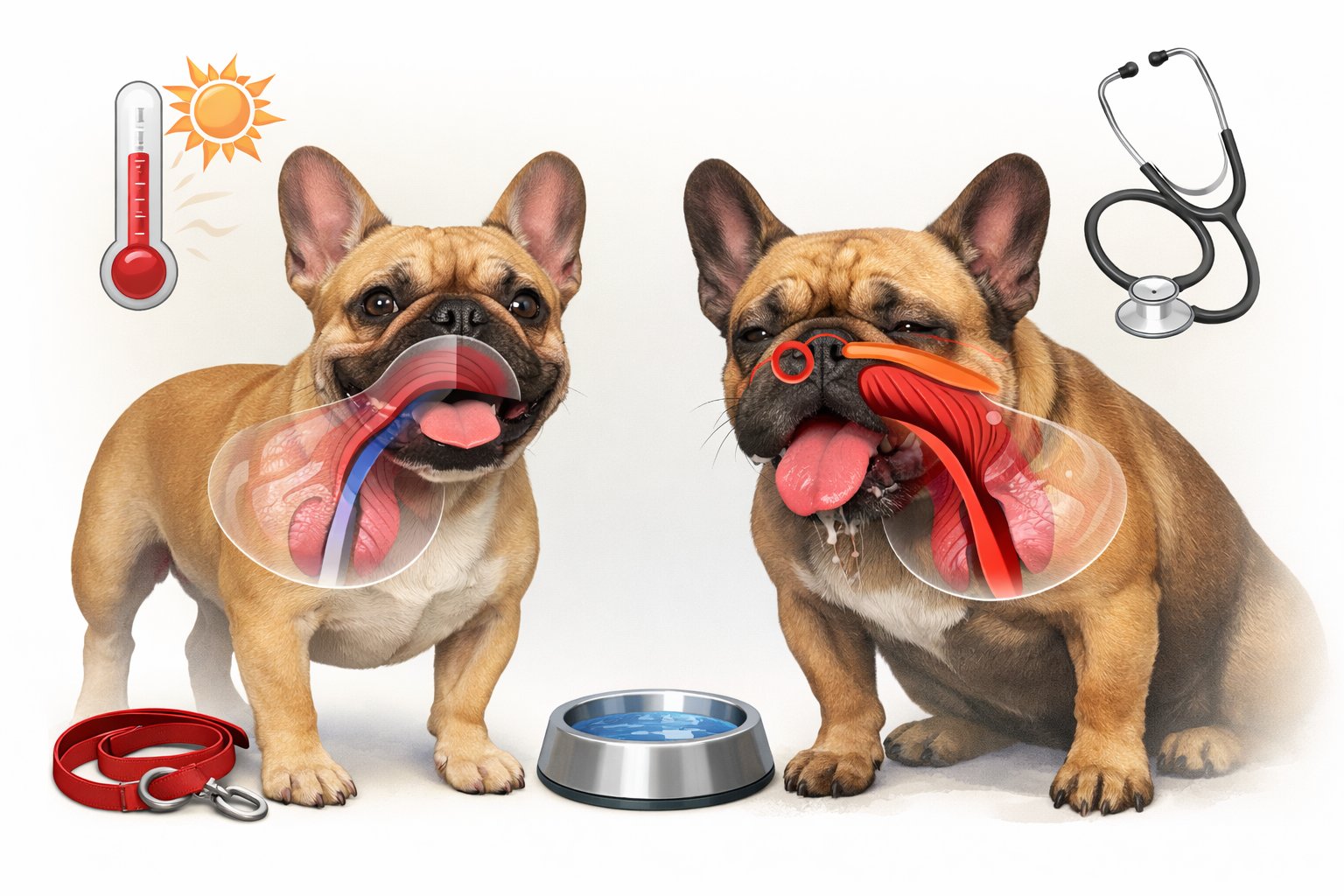
French Bulldogs face breathing problems because of their short skull shape and tight airways. These risks often worsen with heat, exercise, weight gain, and age.
Brachycephalic Obstructive Airway Syndrome (BOAS)
BOAS affects many brachycephalic dogs, including French Bulldogs. The short face and compact skull leave less room for normal airflow.
This condition often combines several airway defects into one problem. Dogs with BOAS in French Bulldogs may pant fast, snore loudly, or struggle after light activity.
Heat makes symptoms worse because dogs rely on airflow to cool down. Stress and excitement can also trigger trouble.
Common BOAS features include:
- Narrow nostrils
- Long soft palate
- Thick tongue tissue
Veterinarians often group these issues under brachycephalic airway syndrome. Early care lowers the risk of fainting or collapse.
A detailed overview appears in this guide on French Bulldog breathing problems and BOAS.
Stenotic Nares and Narrow Nostrils
Stenotic nares mean the nostrils are pinched or too small. This limits how much air enters the nose with each breath.
French Bulldogs often show this problem at birth. Narrow nostrils force the dog to breathe harder, which strains the throat and lungs.
Over time, this extra effort can damage deeper airway structures. Even calm breathing may sound noisy.
Signs owners may notice include:
- Flaring nostrils
- Mouth breathing at rest
- Quick fatigue on walks
Surgery can widen the nostrils in severe cases. Clear explanations of how breeding affects this risk appear in bulldog and French Bulldog breathing problems.
Elongated Soft Palate and Everted Laryngeal Saccules
An elongated soft palate hangs too far back in the throat. It can block airflow, especially when the dog pants.
This problem often develops alongside BOAS. As airflow struggles continue, tissue near the voice box may turn outward.
These are everted laryngeal saccules. They further narrow the airway and raise breathing effort.
This chain reaction increases the risk of choking sounds, gagging, and blue gums. Dogs may avoid activity because breathing feels hard.
Vets may recommend surgery if swelling and obstruction persist. Keeping weight low and avoiding overheating helps reduce irritation.
Collapsed Trachea and Laryngeal Collapse
A collapsed trachea occurs when the windpipe weakens and flattens. Some French Bulldogs also have tracheal hypoplasia, meaning a hypoplastic trachea that is too narrow from birth.
These issues limit airflow to the lungs. Coughing, wheezing, and exercise intolerance often follow.
With time, strain can lead to laryngeal collapse, where throat cartilage fails. Risk increases with:
- Long-term airway strain
- Obesity
- Age-related respiratory decline
Early diagnosis matters. Imaging and exams help track tracheal collapse and guide care plans for long-term comfort.
Care Tips and Treatments for Breathing Issues

Good care focuses on early vet checks, clear treatment choices, and daily habits that lower stress on the airway. Surgery can help some dogs, while routine management helps most dogs breathe with less effort.
Vet Diagnosis and Monitoring
A veterinarian should confirm the cause of breathing trouble and track changes over time. Exams often include airway checks, chest imaging, and oxygen levels during rest and activity.
Clear records help guide care. Regular visits matter because signs can worsen with age.
Owners should log symptoms at home and share them during visits. This helps spot patterns and triggers.
What to track at home
| Sign | What it may mean |
|---|---|
| Loud snoring | Narrow airways |
| Fast panting at rest | Airflow limits |
| Blue tongue or gums | Low oxygen |
| Exercise stops early | Poor tolerance |
Guides on French Bulldog breathing problems care and management explain why steady monitoring reduces risk.
Surgical Options: Nares Resection and Soft Palate Reduction
Some dogs need surgery to widen airflow when daily care falls short. Nares resection opens narrowed nostrils to improve air intake.
Soft palate reduction or soft palate resection trims excess tissue that blocks the throat. Veterinarians may also perform laryngeal saccule removal if swollen tissue adds blockage.
These procedures often occur together to reduce strain. Surgery works best when done early, before severe damage develops.
Recovery includes pain control, rest, and short-term feeding changes. Not every dog needs surgery, but it can reduce noise, heat stress, and collapse risk.
Many clinics discuss options for BOAS treatment and prevention during consults.
Lifestyle Adjustments and Daily Management
Daily choices strongly affect breathing comfort. Keep dogs cool, calm, and fit without overwork.
Heat and humidity raise risk fast.
Daily management tips
- Walk during cool hours and keep outings short.
- Use a harness, not a neck collar.
- Keep weight in a healthy range.
- Provide cool floors, fans, and fresh water.
Short rest breaks prevent flare-ups. Calm play works better than running.
Simple steps like shade and air conditioning matter, as shown in advice on treating breathing problems in French Bulldogs.
Preventive Tips and Responsible Breeding
Prevention starts before birth. Responsible breeding practices reduce extreme traits that limit airflow.
Breeders should screen parents for breathing function. They should avoid pairing dogs with severe signs.
Owners can also prevent setbacks. Avoid smoke, strong scents, and dusty rooms.
Train calm behaviors to limit stress panting. Schedule routine dental care to reduce mouth swelling.
Early vet checks for puppies help set a baseline.