Common French Bulldog Exercise Mistakes
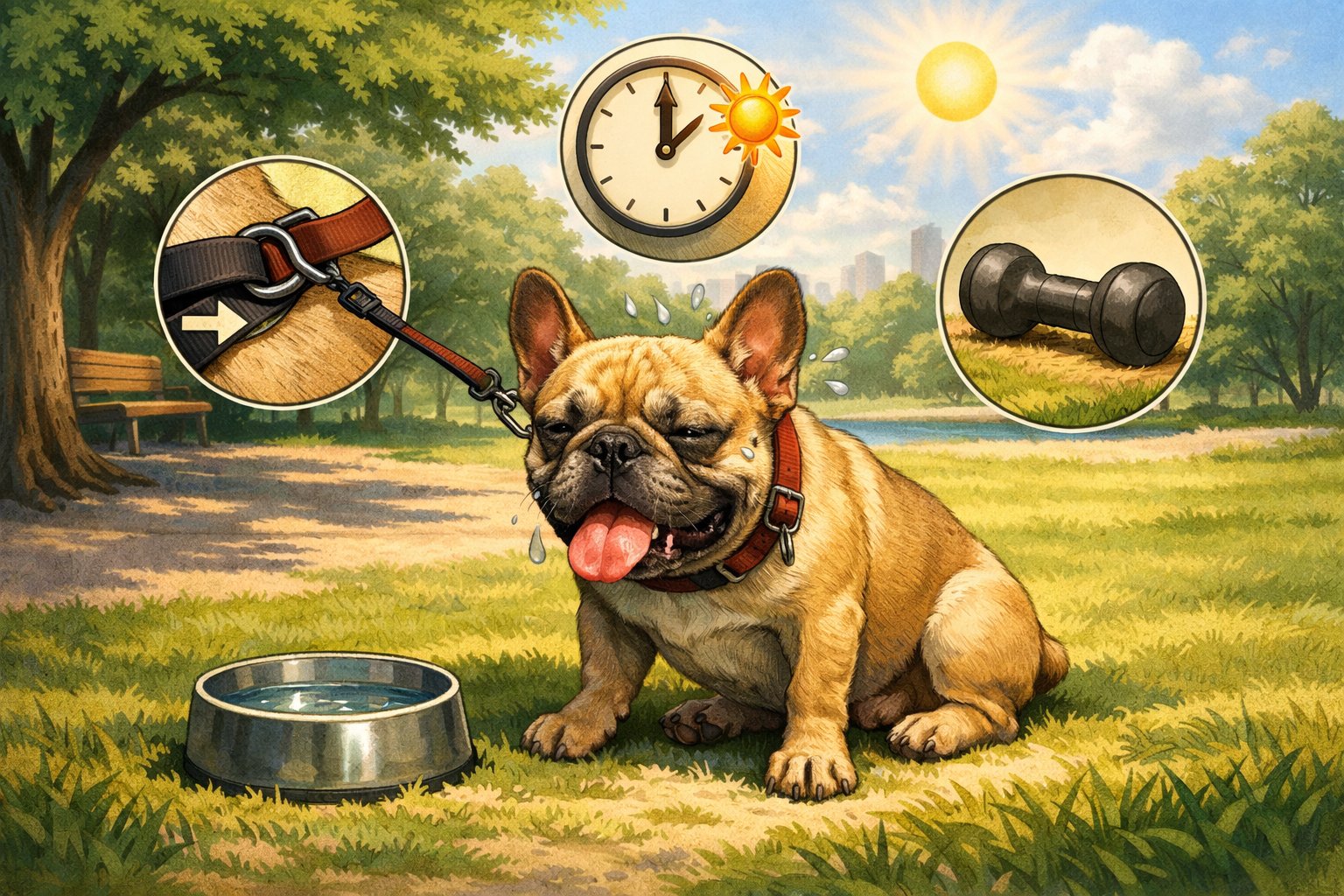
French bulldogs need movement, but they also need limits. Many health problems start when owners push exercise too hard, ignore weather risks, or choose the wrong activities for the dog’s age and body.
Overexertion and Signs of Distress
Overexertion ranks among the most harmful french bulldog exercise mistakes. French bulldogs have short airways, so heavy activity can overwhelm them fast.
Many owners misjudge how much exercise does a french bulldog need and assume longer walks build strength. Clear warning signs include heavy panting, slowing down, wide eyes, coughing, or lying down during activity.
Some dogs refuse to move when they feel stressed. These signs mean exercise must stop right away.
Short sessions work best for french bulldog exercise needs. Most adults do well with 20–30 minutes per day, split into small blocks.
Guides like this one on safe French Bulldog exercise tips stress rest breaks and close monitoring.
Exercising in Extreme Temperatures
Exercising in heat or cold puts french bulldogs at high risk. Their flat faces make cooling difficult, especially in warm weather.
Many cases of heat stress happen during normal walks, not intense play. Owners should avoid outdoor activity when temperatures rise above 75°F or when humidity stays high.
Hot pavement can burn paws in seconds. Cold weather also creates problems, especially for dogs with thin coats.
Safer options include early morning or evening walks and indoor play on bad weather days. Articles like how to exercise your French Bulldog safely explain why timing and surface temperature matter as much as duration.
Inappropriate Exercise Types
Some activities look fun but harm french bulldogs. High-impact games like jumping, long runs, or chasing bikes strain joints and breathing.
These dogs are not built for endurance or speed. Swimming also causes confusion.
Owners often ask can french bulldogs swim. Most cannot swim safely due to body shape and low buoyancy.
Without a life jacket and close control, swimming can turn dangerous fast. Low-impact choices work best:
| Good Options | Risky Options |
|---|---|
| Short walks | Long-distance running |
| Gentle tug | Repeated jumping |
| Puzzle games | Rough fetch |
| Supervised swim with vest | Unassisted swimming |
Resources like this French Bulldog exercise routine guide explain safer activity choices.
Ignoring Age-Specific Needs
Exercise mistakes often happen when owners ignore age. Puppies, adults, and seniors all have different limits.
Treating them the same can lead to injury or long-term pain. Puppies need short play sessions and controlled walks.
Their joints are still forming, so forced exercise causes damage. Adults need steady movement to manage weight but still require breaks.
Seniors benefit from gentle walks that support mobility without strain. A clear understanding of French Bulldog exercise needs by age helps owners adjust routines.
Matching exercise to life stage protects joints, breathing, and overall health.
Mental Stimulation and Safe Activities
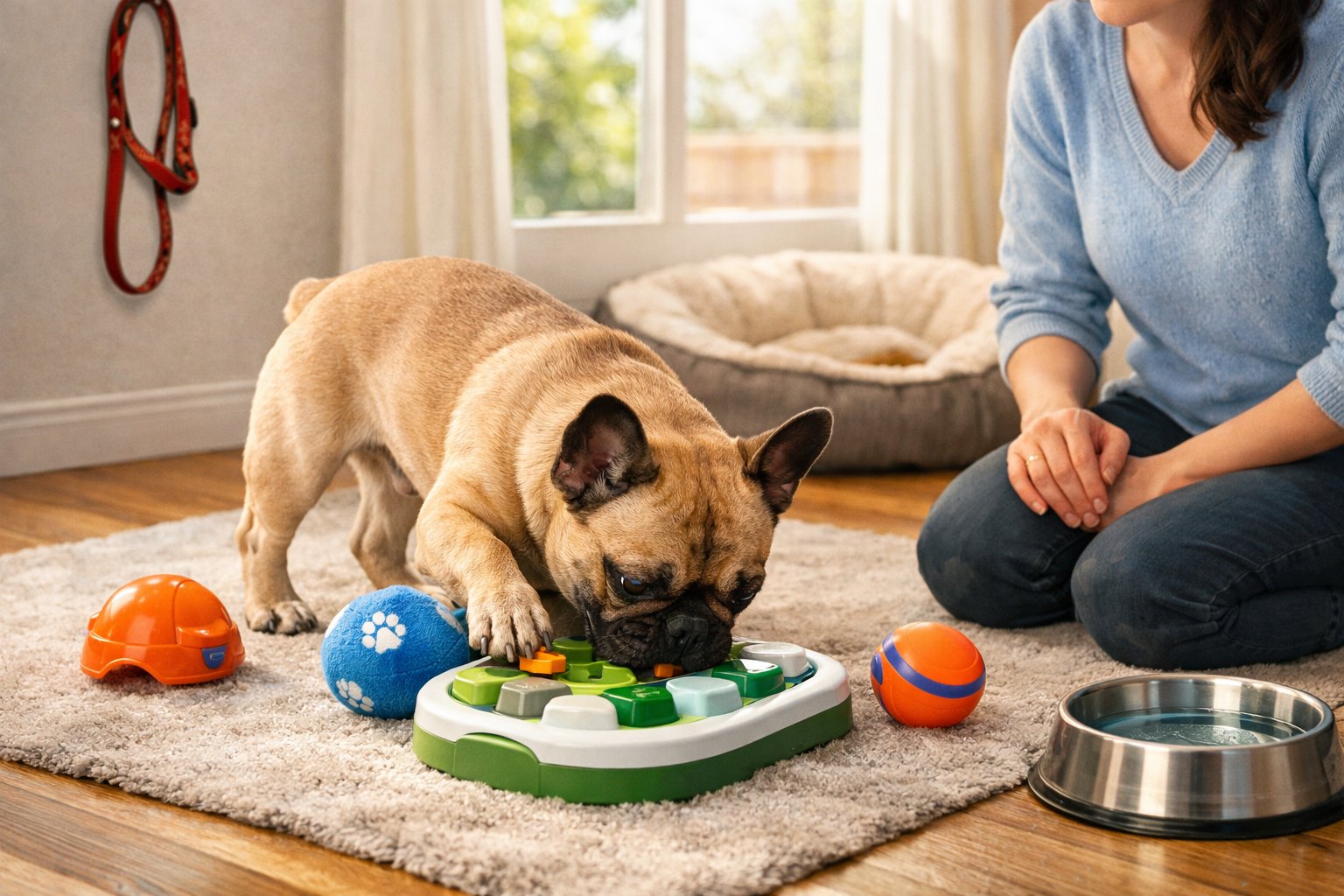
Frenchies need more than short walks to stay balanced and calm. Mental tasks, safe play, and clear rewards protect their health while meeting daily activity needs.
Importance of Mental Stimulation
Mental stimulation plays a key role in exercise for French Bulldogs, especially when physical limits exist. Frenchies tire faster than many breeds, but their minds stay active.
Without mental tasks, they may show boredom through chewing, barking, or restlessness. Simple thinking games help burn energy without stressing joints or airways.
Activities like scent games or basic training sessions work well indoors. These tasks also support focus and confidence.
Many vets and trainers stress the value of mental work for this breed. Daily brain games pair well with short walks and gentle play.
Articles on mental stimulation for French Bulldogs explain how this balance supports better behavior and safer routines.
Best Interactive Toys and Games
Interactive toys give Frenchies a safe way to stay busy. Puzzle feeders, treat balls, and snuffle mats slow eating and encourage problem-solving.
These tools reduce the urge to overexercise while keeping dogs engaged. Good choices focus on thinking, not speed or jumping.
Tug toys, soft indoor fetch, and hide-and-seek with treats work well. Owners should avoid toys that require nonstop running or hard pulling.
A simple weekly rotation helps keep interest high.
Safe options include:
- Treat-dispensing puzzles
- Soft chew toys for supervised play
- Short indoor games on non-slip floors
Guides on French Bulldog exercise ideas highlight how these games support healthy routines without strain.
Utilizing Positive Reinforcement
Positive reinforcement shapes behavior while keeping training calm and safe. Frenchies respond best to praise, small treats, and gentle cues.
Harsh methods increase stress and can worsen breathing issues.
Short training sessions fit this breed best. Five to ten minutes of basic commands or trick learning provide mental stimulation without fatigue.
Rewards should stay small to avoid weight gain.
Clear timing matters. Owners should reward the exact behavior they want to see, then pause.
Helpful rewards include:
- Soft training treats
- Verbal praise and calm touch
- Brief play with a favorite toy