Essentials for French Bulldog Potty Training Success
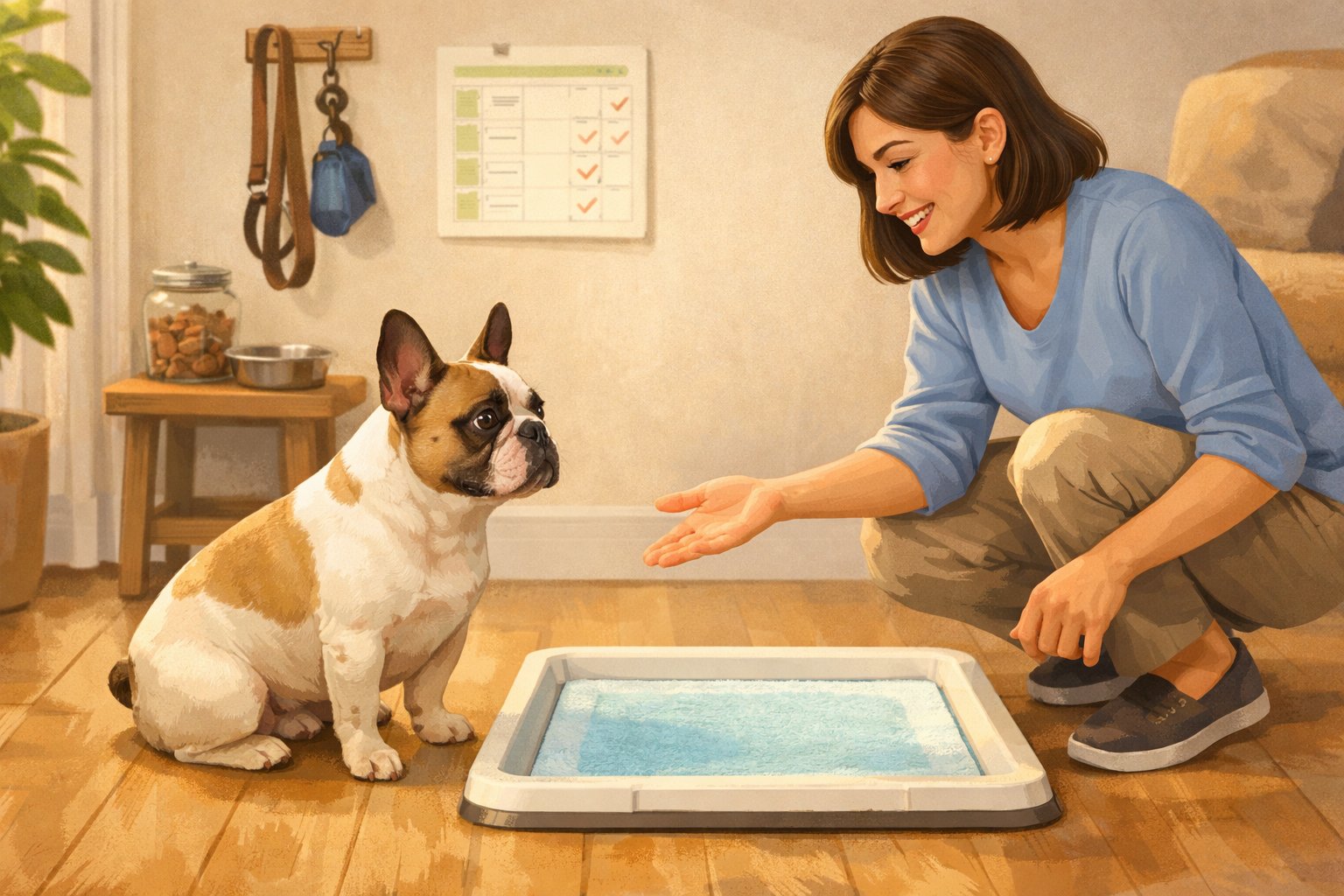
French bulldog potty training works best when owners understand their dog’s limits and prepare the right tools. Staying consistent with location and timing is key.
Clear routines and simple setups reduce confusion. This helps speed up learning.
Understanding Your Frenchie’s Potty Training Needs
French Bulldogs need a structured potty training plan because their small size limits bladder control. Most puppies need a potty break every 1–2 hours, especially after meals, naps, and play.
Expect more frequent trips during the first weeks. They respond best to calm, steady routines.
Sudden schedule changes often cause accidents. Consistency matters more than speed.
Frenchies may show subtle signals before they need to go. Common signs include sniffing the floor, circling, or stopping play.
Close supervision helps catch these cues early. Short training sessions work better than long ones.
Clear praise right after success builds understanding faster than delayed rewards or corrections.
Gathering the Right Supplies
The right supplies make potty training easier and more predictable. Keep items within reach so responses stay quick and consistent.
Essential items include:
- Crate sized for the puppy, not too large
- Leash and harness for controlled potty trips
- High-value treats used only for potty success
- Enzyme cleaner to remove accident odors
- Puppy pads for indoor or backup training
Puppy pads help in apartments or during bad weather. They also support young puppies who cannot hold it long.
Many trainers recommend pads during early french bulldog potty training, then slowly transitioning outdoors, as described in this complete French Bulldog potty training guide.
Choosing a Designated Potty Area
A designated potty area teaches the puppy where potty behavior belongs. Pick one outdoor spot and use it every time.
Repetition builds clear location habits. Bring the puppy to the same area on a leash.
This limits distractions and keeps focus on the task. Avoid changing spots, even if progress feels slow.
Indoor training also needs a fixed location. Place puppy pads in one quiet area, away from food and sleeping zones.
Moving pads confuses learning and delays progress. Using a consistent cue like “go potty” helps connect the action to the location.
Over time, the puppy begins to associate the command with the designated potty area. This supports faster and more reliable potty training.
Establishing a Potty Training Schedule and Routine
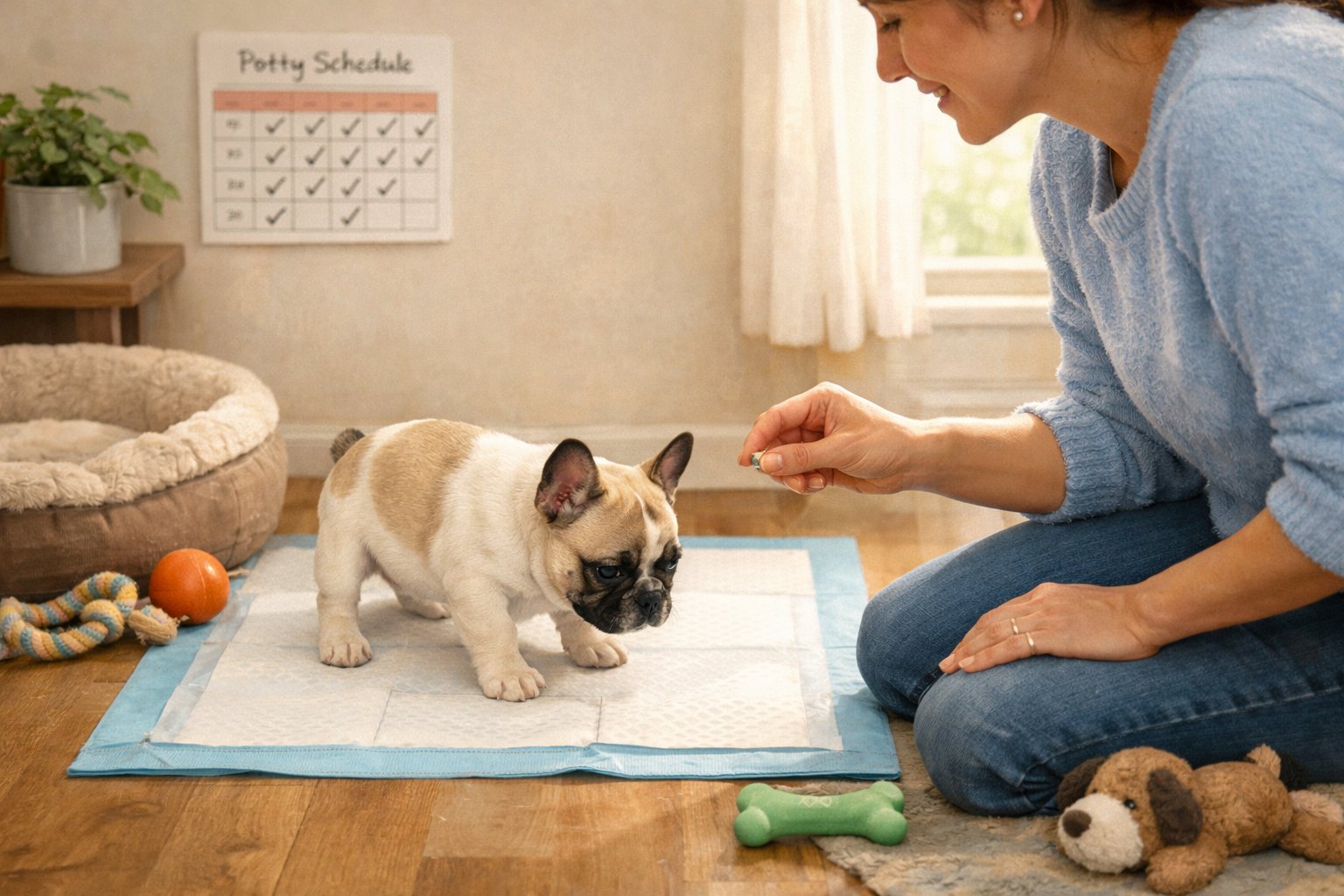
A clear routine helps a French Bulldog learn faster. Set fixed potty times and watch for clear signals.
Use the same words every day. These habits reduce accidents and build trust.
Creating a Potty Training Schedule
A potty training schedule gives structure to daily life. Puppies do best when trips happen at the same times each day.
This approach works well when potty training a French Bulldog puppy. Most puppies need a potty break:
- Right after waking up
- 5–20 minutes after eating or drinking
- After playtime
- Before naps and bedtime
A common rule says puppies can hold it about one hour per month of age, plus one. Many breeders and trainers still recommend outings every 1–2 hours at first, as shown in this French Bulldog potty training schedule guide.
| Puppy Age | Potty Interval |
|---|---|
| 8–10 weeks | Every 1 hour |
| 11–14 weeks | Every 1–2 hours |
| 3–4 months | Every 2 hours |
Consistency matters more than perfection. Missed trips often lead to accidents.
Recognizing Potty Signs and Cues
Dogs usually give signals before they go. Learning these signs helps when figuring out how to potty train a French Bulldog puppy.
Common potty signals include:
- Sniffing the floor
- Walking in small circles
- Sudden restlessness
- Whining or pacing
- Moving toward doors
French Bulldogs can be subtle. Some give only a short pause or a focused sniff.
Close supervision matters during early training. If an accident starts indoors, handlers should interrupt calmly and move the puppy to the potty area.
Trainers and vets often stress this point in guides like vet-approved French Bulldog potty training tips. Clear observation shortens training time and lowers stress.
Using Command Words and Consistency
Simple command words help connect action to place. Many owners use phrases like “go potty” or “outside”.
The key is to use the same words every time. Steps that support consistency:
-
Say the cue as the puppy starts to go
-
Wait quietly
-
Praise and reward right after finishing
Everyone in the household should follow the same routine. Mixed signals slow progress when trying to potty train a French Bulldog.
Rewards should come fast and only for correct behavior. Calm praise works better than loud excitement.
Over time, dogs respond to the cue alone, even in new places.
Effective Techniques to Accelerate Potty Training
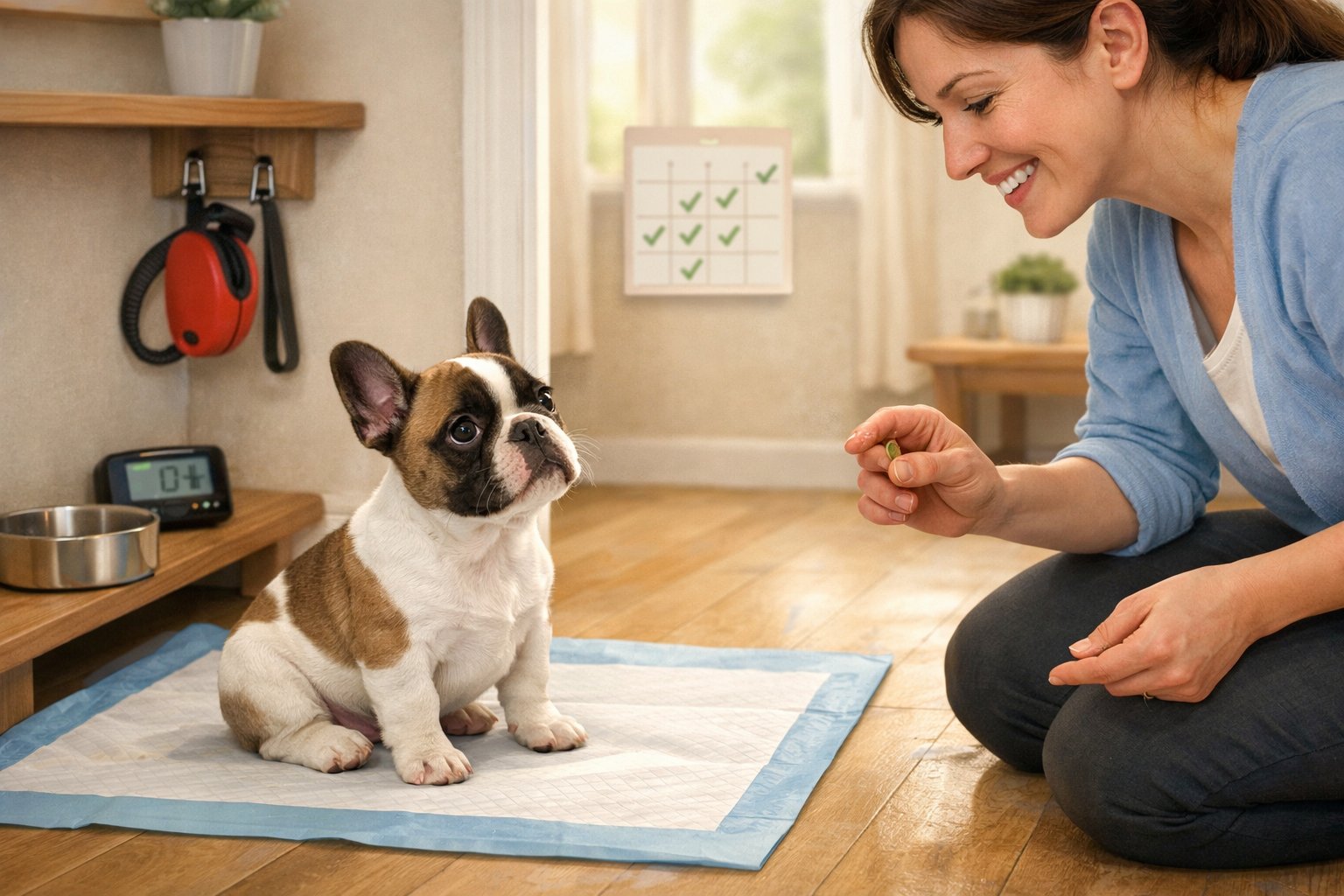
Faster results come from structure, timing, and calm feedback. Clear routines, smart rewards, and quick responses help potty train a French Bulldog with fewer accidents.
Crate Training Your French Bulldog
Crate training supports fast learning because dogs avoid soiling their sleep space. The crate should feel safe and calm, not like punishment.
It must fit the dog well so it can stand, turn, and lie down. Use the crate during naps, short breaks, and at night.
Take the dog outside right after release. This habit builds bladder control and clear expectations, as shown in French Bulldog potty training steps.
Simple crate schedule
| Time | Action |
|---|---|
| Morning | Outside potty, then breakfast |
| After meals | Outside within 5–10 minutes |
| Naps | Outside right after waking |
| Night | Last potty before bedtime |
Never leave the dog crated too long. Puppies often need breaks every 2–3 hours.
Positive Reinforcement and Rewards
Rewards shape behavior faster than corrections. Give praise and a small treat within seconds of going outside.
Timing matters more than treat size. Use one clear phrase like “good potty” each time.
The dog links the words, place, and action. Over time, reduce treats and keep verbal praise.
Avoid punishment for mistakes. Experts note that calm, reward-based methods work best for this breed, as outlined in vet-approved French Bulldog potty training tips.
Best rewards
- Soft treats the dog can eat fast
- Calm praise in a happy tone
- Short playtime outside
Handling Accidents and Troubleshooting
Accidents mean the routine needs adjustment. The dog may need more frequent breaks or closer supervision.
Watch for signs like circling, sniffing, or sudden restlessness. Clean accidents with an enzyme cleaner.
Regular cleaners leave scents that draw repeat mistakes. Do not scold or rub the dog’s nose in it.
That causes fear, not learning. If accidents happen often, reduce freedom.
Return to leash time indoors or short crate periods. Many trainers recommend resetting the basics, similar to advice in step-by-step French Bulldog potty training guides.
When to Talk to a Vet Online
Some potty issues link to health problems, not training gaps. Frequent urination, pain signs, or sudden changes need medical input.
Pet parents can talk to a vet online to ask about:
- Urinary tract infections
- Digestive upset
- Age-related control issues
Online vet visits save time and reduce stress for the dog. A vet can rule out medical causes and guide next steps.