Determining Healthy Weight for French Bulldogs
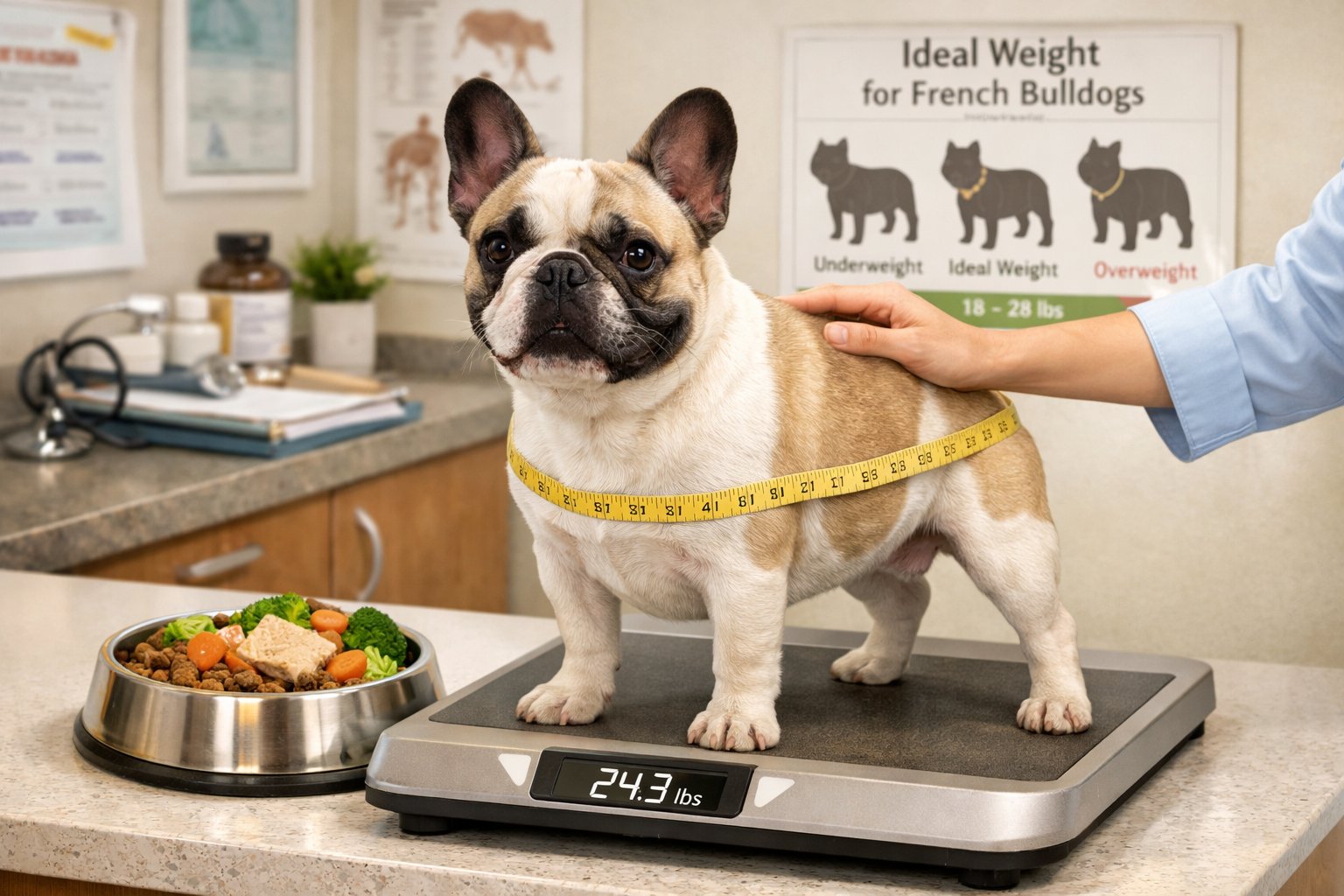
Healthy French Bulldog weight depends on more than a number on a scale. Owners should look at breed-specific standards, body shape, and clear physical signs that point to weight problems.
Breed-Specific Standards and Weight Ranges
Most adult French Bulldogs weigh between 16 and 28 pounds. This range reflects common breed-specific health standards and allows room for differences in height, bone structure, and muscle.
Males often sit near the upper end of the range. Females usually weigh a few pounds less.
Age also matters, since most French Bulldogs finish growing by 12 to 14 months. Weight alone does not define health.
Some dogs weigh more because they carry muscle, not fat. A vet can confirm whether a dog fits a healthy range based on size and build.
Many owners use guides like this overview of the ideal French Bulldog weight range to set realistic expectations.
Understanding Body Condition Scoring
Body condition scoring (BCS) helps owners judge healthy weight without relying only on pounds. Vets use a 1–9 scale, where 4 or 5 means healthy.
At a healthy score, ribs feel easy to touch but do not stick out. The waist should narrow behind the ribs when viewed from above.
From the side, the belly should tuck up slightly. Owners can check BCS at home every few weeks.
This method works well because it adjusts for body type. It also helps spot small changes before weight becomes a health issue, which matters for breeds prone to breathing and joint stress.
Recognizing Signs of Overweight and Obesity
An overweight French Bulldog often loses a visible waist and gains a round body shape. Ribs feel hard to find under a thick fat layer.
Other signs include slower movement, low energy, and heavy panting after short walks. Trouble jumping or climbing stairs may also appear.
These changes raise concern for obesity in French Bulldogs, which links to joint pain and breathing strain. Behavior can shift too.
Dogs may tire quickly or avoid play they once enjoyed. Tracking weight trends and body shape helps owners act early instead of waiting for serious health problems to develop.
Practical Strategies for Weight Management
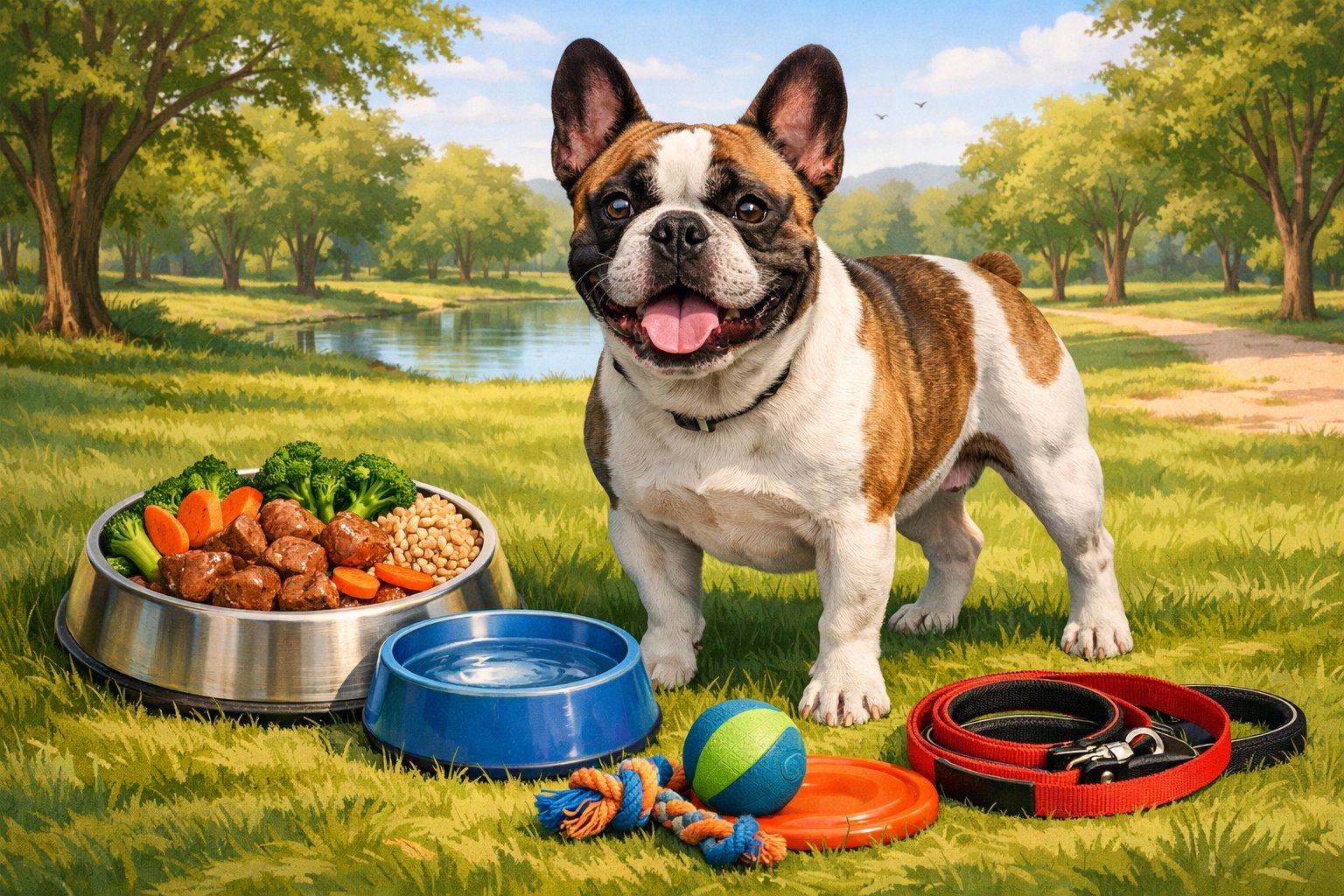
Healthy weight control for French Bulldogs depends on food quality, meal timing, and safe daily movement. Clear routines help owners spot problems early and keep weight changes steady and controlled.
Balanced Nutrition and Portion Control
French Bulldog weight management starts with measured meals and simple ingredients. Owners should choose food with named animal protein as the first ingredient and avoid diets high in fillers or added sugars.
Calories matter more than volume. Portions should match the dog’s current weight, age, and activity level.
Measuring cups or a kitchen scale work better than guessing. Treats count as calories and should stay under 10% of daily intake.
Helpful portion habits include:
- Feeding based on ideal weight, not current weight
- Using low‑calorie treats like carrots or green beans
- Adjusting portions after weight checks
Owners managing weight often follow guidance from a vet or use tips from guides on French Bulldog weight management and nutrition.
Establishing a Consistent Feeding Schedule
A consistent feeding schedule helps control hunger and prevents overeating. Most adult French Bulldogs do best with two meals per day, spaced about 10–12 hours apart.
Puppies may need three smaller meals. Scheduled feeding reduces begging and makes appetite changes easier to notice.
Free feeding often leads to slow weight gain that owners miss. Key schedule practices include:
- Feeding at the same times each day
- Picking up uneaten food after 15–20 minutes
- Avoiding table scraps between meals
Owners tracking weight changes often rely on structured plans like those outlined in this French Bulldog weight guide.
Exercise and Activity Guidelines
Exercise supports weight control but must match the breed’s limits.
French Bulldogs do best with short, low‑impact activities that avoid heavy breathing or joint strain.
Two or three daily walks of 15–30 minutes usually work well.
Play sessions at home matter just as much.
Tug toys, short fetch games, and puzzle feeders burn calories without stress.
Hot weather calls for shorter outings and more indoor play.
Safe activity tips include:
- Walking during cooler hours
- Allowing rest breaks
- Stopping if breathing becomes labored
Many owners follow structured routines similar to those in guides on exercise routines for French Bulldogs.