Labradoodle Exercise Requirements by Age and Size
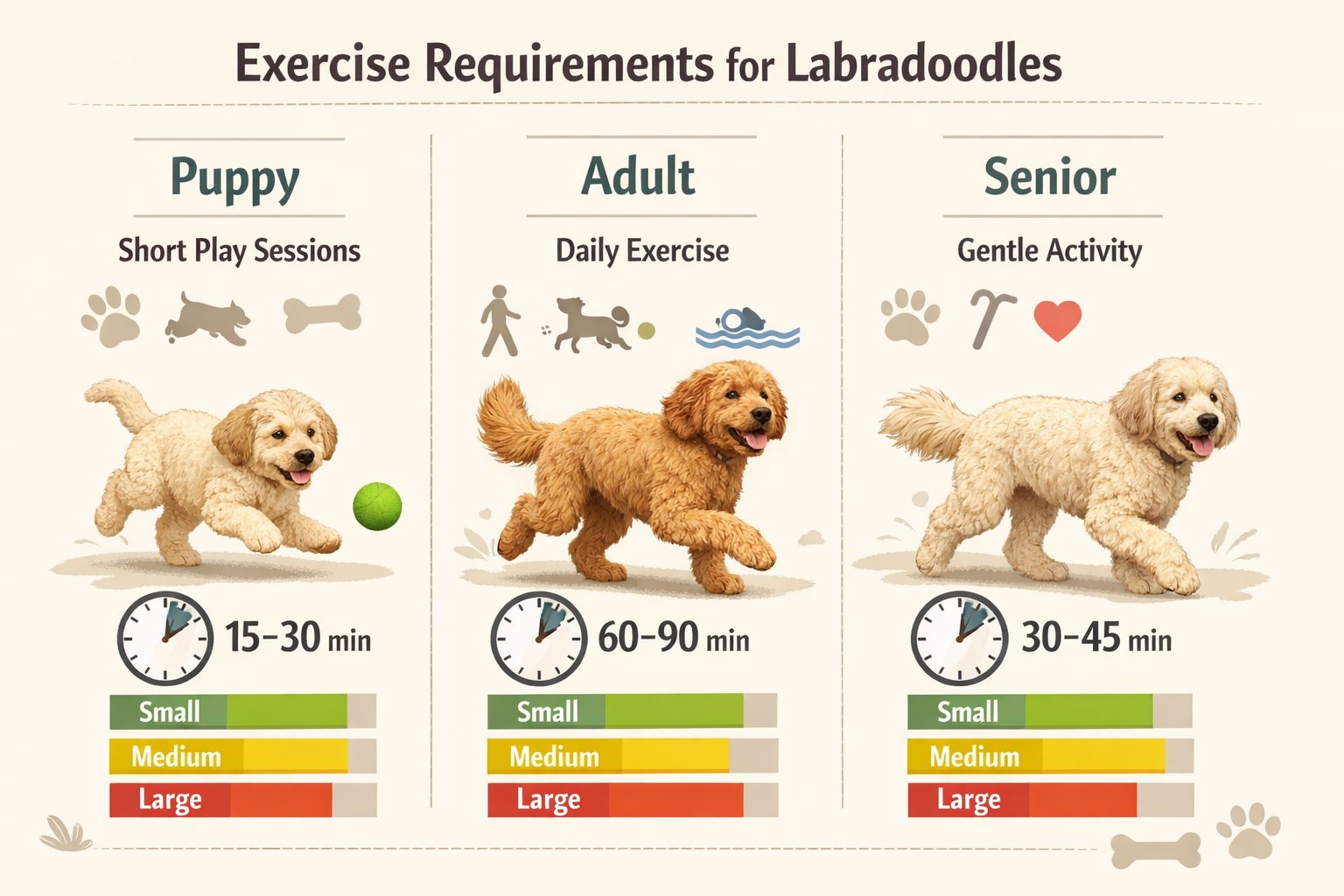
Labradoodle exercise needs change as the dog grows and slows with age. Size also matters, since larger Labradoodles usually need more daily movement than smaller ones.
Exercise Guidelines for Puppies
Puppies need short, gentle activity that protects growing joints. A common rule works well: about 5 minutes of exercise per month of age, up to three times per day.
For example, a four‑month‑old puppy should get about 20 minutes per session. Size does not change this rule much for young puppies.
Toy, Mini, and Standard Labradoodles all benefit from the same slow build. Focus on low‑impact play, leash walks, and training games.
Avoid running, jumping, and long hikes. These can stress joints before they fully form.
Clear guidance on safe puppy limits appears in this breakdown of Labradoodle exercise needs by age and size.
| Puppy Age | Typical Session Length |
|---|---|
| 2 months | 10 minutes |
| 4 months | 20 minutes |
| 6 months | 30 minutes |
Recommendations for Adult Labradoodles
Adult Labradoodles need steady daily exercise to stay healthy and calm. Most adults require 30 to 120 minutes per day, split into one or two sessions.
How much exercise Labradoodles need depends on size, energy level, and routine. Smaller adults often do well with 30 to 60 minutes daily.
Standard Labradoodles usually need 60 to 120 minutes. Walks, fetch, swimming, and structured play work best.
Mental activity also matters. Training, scent games, and puzzle toys help prevent boredom.
A clear comparison of adult activity levels appears in this guide on how much exercise does a Labradoodle need by age and size.
Senior Labradoodle Activity Needs
Senior Labradoodles still need daily movement, but at a slower pace. Most seniors do best with 20 to 60 minutes per day, divided into short sessions.
Consistency matters more than intensity. Smaller seniors often stay comfortable with 30 to 45 minutes daily.
Larger seniors may handle 30 to 60 minutes if joints allow. Walks should stay relaxed and on flat ground.
Watch for stiffness, heavy panting, or reluctance to move. These signs mean it is time to shorten sessions.
Helpful age‑based limits appear in this overview of how much exercise Labradoodles need as they age.
Key Factors That Influence Labradoodle Exercise Needs
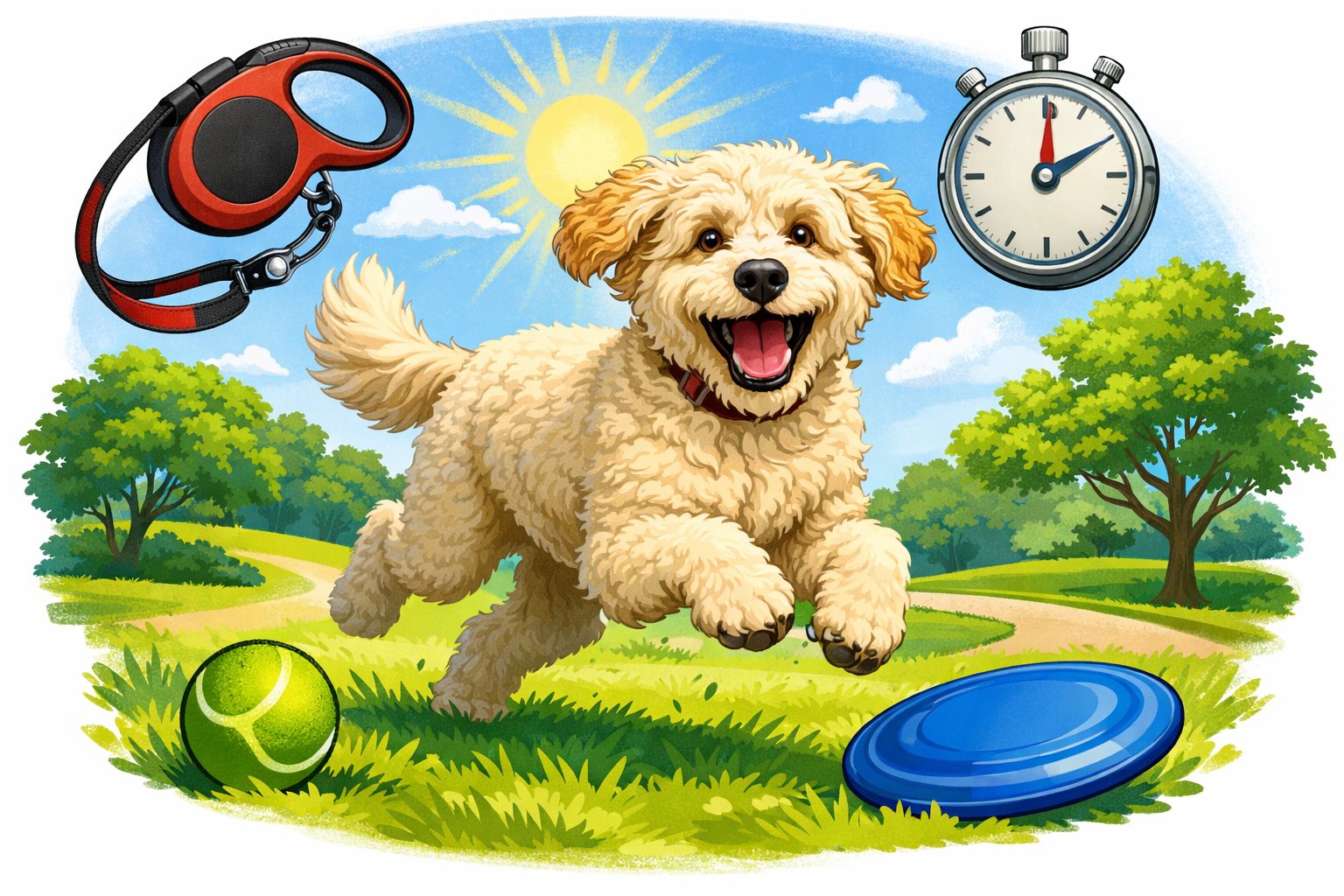
Several clear factors shape how much daily activity a Labradoodle needs. Size, natural energy, and daily routine all affect how long and how often a dog should move.
Effects of Size and Type
Size plays a major role in labradoodle exercise needs. Larger dogs usually need longer and more active sessions than smaller ones.
A Standard Labradoodle often handles extended walks, hiking, or play that lasts up to two hours per day, split into two sessions. Smaller dogs still need daily activity, but in shorter blocks.
Many Mini and Toy Labradoodles do well with moderate walks and play that total under 90 minutes. Their smaller joints also tire faster.
Age and growth matter just as much as size. Puppies need short, gentle sessions to protect developing joints.
A common guideline limits puppy activity to a few minutes per month of age, which aligns with widely used advice on labradoodle exercise by age and size.
Personality and Energy Level
Each Labradoodle has a unique activity level. Some stay calm after a short walk, while others need more movement to stay relaxed.
Dogs with strong Labrador traits often show higher energy and enjoy longer or faster-paced exercise. Low-energy Labradoodles may prefer steady walks and light play.
High-energy dogs often need a mix of walking, games, and training to feel settled. Behavior gives clear clues.
Restlessness, chewing, or excess barking can signal too little activity. Mental work also affects labradoodle exercise.
Training sessions, puzzle toys, and scent games reduce the need for constant physical movement. Balanced activity keeps energy steady without pushing the dog too hard.
This is supported by guidance on daily Labradoodle exercise requirements.
Routine and Environmental Considerations
A Labradoodle’s daily environment shapes how exercise fits into the day. Dogs with fenced yards often get more natural movement, but still need structured walks.
Apartment dogs rely more on scheduled outings to meet their needs. Weather also changes activity plans.
Hot days call for shorter walks and indoor play. Cold or wet days may shift exercise toward training or games inside.
A steady routine helps dogs stay calm and healthy. Most Labradoodles respond well to two planned sessions per day, rather than one long outing.
Clear routines support healthy weight and behavior. This aligns with practical advice on how much exercise a Labradoodle needs each day.
Best Types of Exercise for Labradoodles

Labradoodles do best with a mix of steady movement and simple brain work. Daily activity helps control weight, limits bad habits, and supports long-term health.
Physical Exercise Ideas
Daily walks form the base of exercise for Labradoodles. Most do well with one or two walks that last 30 to 60 minutes, based on age and size.
Walks also support leash manners and calm behavior at home. This can reduce training expenses tied to poor habits.
Guides on daily walk needs for Labradoodles by age and size show how time changes as dogs grow.
Active play adds variety and burns energy faster than walking. Fetch, tug, and light jogging work well for adult dogs.
Swimming offers low-impact movement that protects joints and helps older dogs stay active, as noted in Labradoodle-friendly exercise options.
Mental Stimulation Activities
Mental work matters as much as physical movement. Labradoodles learn fast and get bored without structure.
Short training sessions help shape behavior while keeping costs down by avoiding damage to furniture or shoes. Trainers often suggest early and ongoing practice, as explained in mental and physical stimulation needs for Labradoodles.
Simple tools work best. Food puzzles, scent games, and hide-and-seek use skills the dog already has.
Rotating toys every few days keeps interest high without buying new ones, which helps manage overall labradoodle cost. Five to ten minutes of focused thinking can tire a dog as much as a long walk.