Match Toys to Your Dog’s Unique Personality
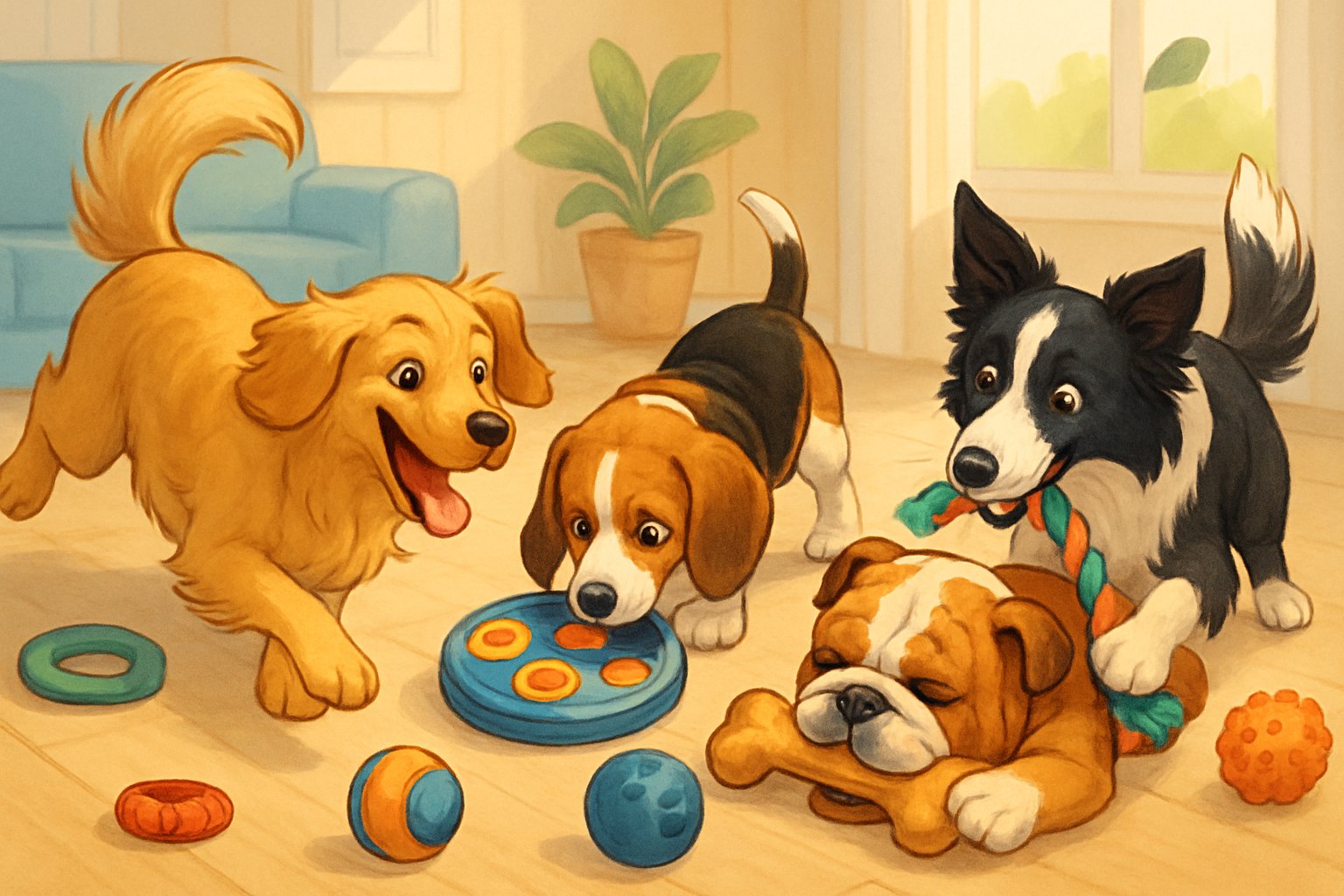
Choosing the right dog toy starts with knowing what kind of play makes each dog happy. Size, strength, and energy all affect what toys will be safe, fun, and long-lasting.
When toys fit a dog’s natural instincts, they bring mental satisfaction and healthy exercise.
Understand Your Dog’s Play Style
Every dog plays in a unique way. Some like to run and chase, while others enjoy sitting with a toy and gnawing on it.
Observing when and how a dog engages with playtime helps identify their preferences. Keep a short list or note what excites them most—retrieving, wrestling, or carrying soft objects.
High-energy dogs often prefer interactive games like fetch or tug. Calmer dogs may spend more time cuddling or gently chewing.
Different play styles match specific toy types:
| Play Habit | Toy Example | Notes |
|---|---|---|
| Chasing | Fetch toys or balls | Choose a safe size for the dog’s mouth |
| Chewing | Durable chew toys | Pick heavy-duty materials for strong jaws |
| Solving problems | Puzzle toys | Good for mental engagement on quiet days |
Identify Chewers, Fetchers, Tuggers, Cuddlers, and Problem-Solvers
Dogs can usually be grouped by their favorite activities. Chewers need rubber bones or nylon sticks that can handle strong teeth.
Fetchers thrive on balls and flying discs—avoid toys too small to prevent choking. Tuggers enjoy tug toys or rope toys designed with sturdy knots and handles.
These encourage bonding but should be used with care to prevent injury. Cuddlers love plush toys, especially soft ones with squeakers or textures that comfort them.
Problem-solvers enjoy puzzle toys such as treat-dispensing balls or snuffle mats that make them think. These mentally challenge dogs who like to “work” for rewards, as discussed in PetTalk Daily’s tips on matching toys to personality.
Consider Age, Size, and Energy Level
A dog’s age and build strongly influence toy safety and enjoyment. Puppies need softer chew toys to soothe teething gums.
Senior dogs may prefer lightweight, gentle toys that do not stress their joints or teeth. Size matters for safety.
Small dogs do better with mini plush toys or small balls, while large dogs need durable, heavy-duty materials that resist tearing. Energy also plays a role.
Active breeds such as retrievers need exercise through fetch toys or tug ropes, whereas low-energy breeds might enjoy quiet play indoors. The Pet Dog Planet guide emphasizes matching toy design to both body type and temperament.
Best Toy Types for Every Personality
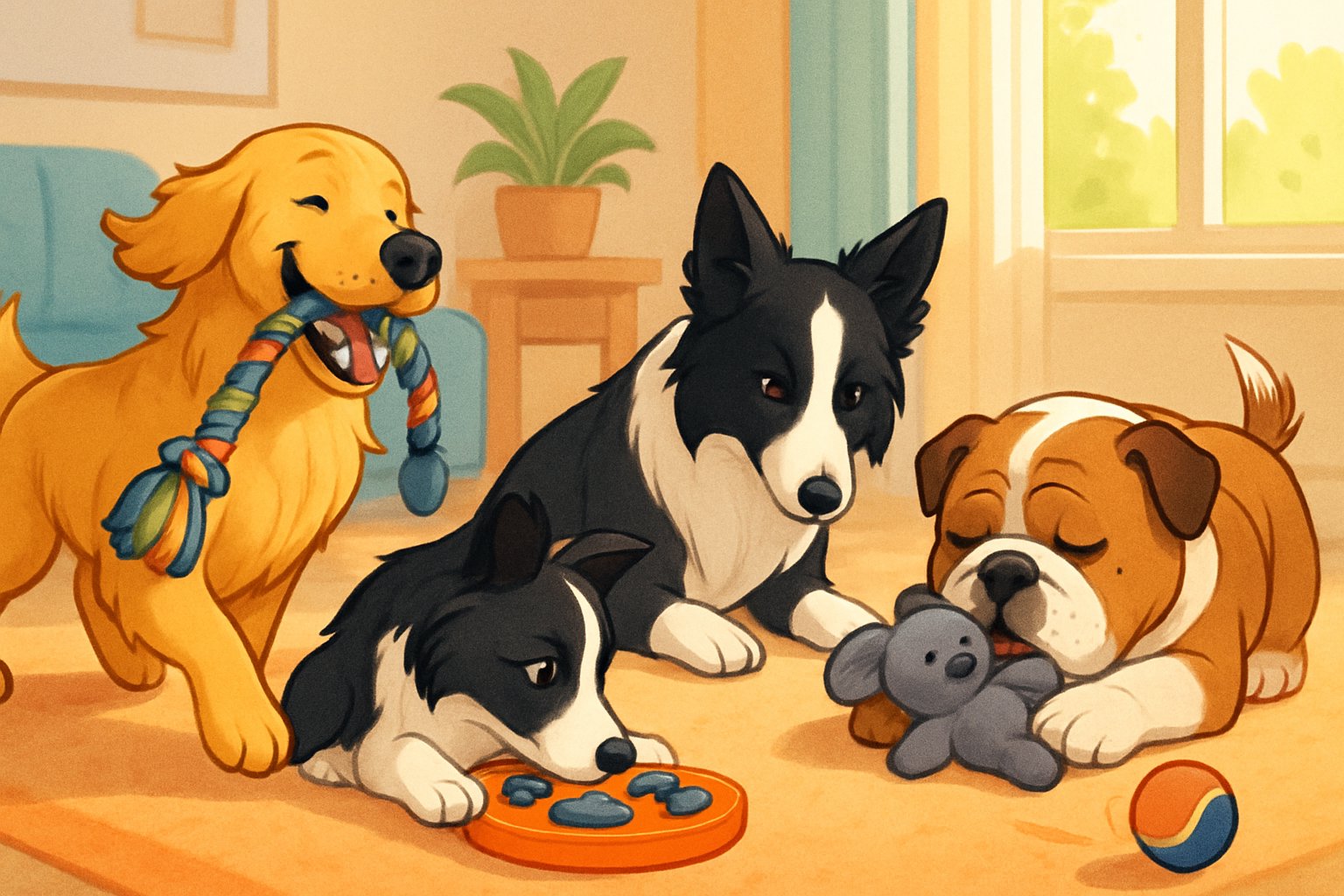
Matching a dog’s play style with the right toy improves safety and helps manage energy. The right toy can reduce boredom, support mental development, and make daily playtime more rewarding.
Chew Toys for Power Chewers
Dogs with strong jaws and endless chewing energy benefit most from heavy-duty chew toys. These dogs often destroy regular rubber or fabric toys within minutes.
Durable options like nylon bones, rubber rings, or reinforced rope chews keep their teeth busy and protect furniture. Owners should look for chew toys labeled for power chewers, which resist tearing and splintering.
Non-toxic rubber and natural rubber blends work well. According to Dogality Test’s guide on choosing toys by personality, durable chew toys also help calm independent dogs after active play.
Rotating two or three sturdy chews keeps play fresh. Scented or flavored varieties can hold a dog’s interest longer, while textured surfaces help clean teeth and gums naturally.
Fetch Toys: Balls, Tennis Balls, and Frisbees
Dogs that love movement thrive on fetch toys. Breeds like retrievers, border collies, and terriers often prefer games that let them chase and return items.
Classic fetch toys include balls, tennis balls, and frisbees, all encouraging active play and coordination. Design matters—rubber or foam balls last longer and are easier to clean than felt tennis balls.
Lightweight frisbees made from soft plastic fly smoothly but won’t hurt a dog’s teeth or mouth. The Good Dog People guide to toys by play style explains that fetch play keeps energetic dogs focused and builds endurance.
Fetch sessions also serve as great exercise. A simple tip is to bring multiple toys outdoors, so the dog stays engaged without overworking its joints.
Tug Toys for Social Players
Social and interactive dogs love shared activities. Tug toys allow for controlled, friendly competition and active bonding between dog and owner.
These toys typically include rope pulls, rubber handles, or reinforced fabric loops. Thick, braided rope toys reduce fraying, and handles help owners maintain a safe grip.
Playing tug strengthens a dog’s neck, shoulders, and jaw muscles. The Dogality Test article on social dogs notes that rope tug toys are ideal for dogs that play to connect with their humans.
To keep tug games safe, avoid overly aggressive pulling. Encourage drops using commands like “release,” so play remains fun without promoting unwanted dominance.
Puzzle Feeders and Treat-Dispensing Toys for Smart Dogs
Dogs that enjoy mental stimulation perform best with puzzle feeders and treat-dispensing toys. These items challenge dogs to think, encouraging problem-solving and focus.
Puzzle toys come in different levels—from simple sliders to complex multi-step feeders. Food-motivated breeds often thrive with adjustable treat dispensers that reward persistence.
Louie the Lab’s guide to toy selection emphasizes that puzzle and treat toys prevent boredom and support learning. Popular options include wobble feeders, rolling treat balls, and snuffle mats.
These toys slow down eating, improve emotional balance, and provide enrichment for dogs who spend long hours indoors.
Plush Toys for Cuddlers
Gentle and affectionate dogs often prefer soft plush toys. These toys give comfort and are easy to carry, making them perfect for dogs that bond through touch and closeness.
Small or sensitive breeds are particularly drawn to soft fabrics, squeakers, and stuffed friends. Plush toys can act as companions for sensitive or affectionate dogs, helping them feel secure during rest or alone time.
Owners should check stitching and watch for loose filling to avoid choking hazards. Keeping a few favorite plush toys on rotation lets dogs enjoy both comfort and novelty.