Meet the Border Collie: Understanding Their Unique Needs

The border collie breed stands out for sharp intelligence, strong drive, and constant motion. These dogs need clear tasks, daily physical activity, and guidance that fits their natural herding behavior.
High Intelligence and Learning Style
A border collie shows very high intelligence and learns new skills fast. They watch people closely and respond to clear signals.
Many pick up patterns after only a few repeats, which helps with basic commands and advanced training. This quick learning also means they get bored easily.
Repeating the same drill for too long often leads to distraction or problem behavior. Short sessions with changing tasks work best.
They respond well to rewards, calm praise, and structure. Clear rules help them feel secure.
Guides that focus on understanding Border Collie behavior and learning needs explain why mental work matters as much as physical work. See this helpful overview on training Border Collies and their behavior needs.
Energy Levels and Exercise Requirements
Border collies have very high exercise needs. They were bred for long days of work, not short walks.
Without enough movement, they often become restless or destructive. Daily physical activity should include both body and mind.
Running alone is not enough. They do best when exercise has a goal or task.
Common daily exercise options include:
- Long walks with training stops
- Fetch with rules, not free play
- Agility or obstacle courses
- Structured games that require focus
The table below shows a simple guide:
| Activity Type | Purpose |
|---|---|
| Walking | Endurance and calm focus |
| Running | Energy release |
| Games | Mental work |
Veterinarian-backed guidance on exercise and training tips for Border Collies appears in this vet-approved Border Collie training guide.
Herding Instincts and Breed Traits
Herding instincts shape nearly everything a border collie does. Their herding abilities rely on focus, movement control, and quick decisions.
These traits often show up as chasing cars, nipping heels, or circling kids. This behavior does not mean poor training.
It reflects strong herding instincts that need direction. Owners can redirect this drive into safe outlets like herding games, advanced obedience, or dog sports.
Understanding these breed traits helps prevent frustration. Articles that explain essential Border Collie training traits for new owners highlight why structure and purpose matter.
A clear breakdown appears in this guide on essential Border Collie training tips.
Training Fundamentals for Border Collies
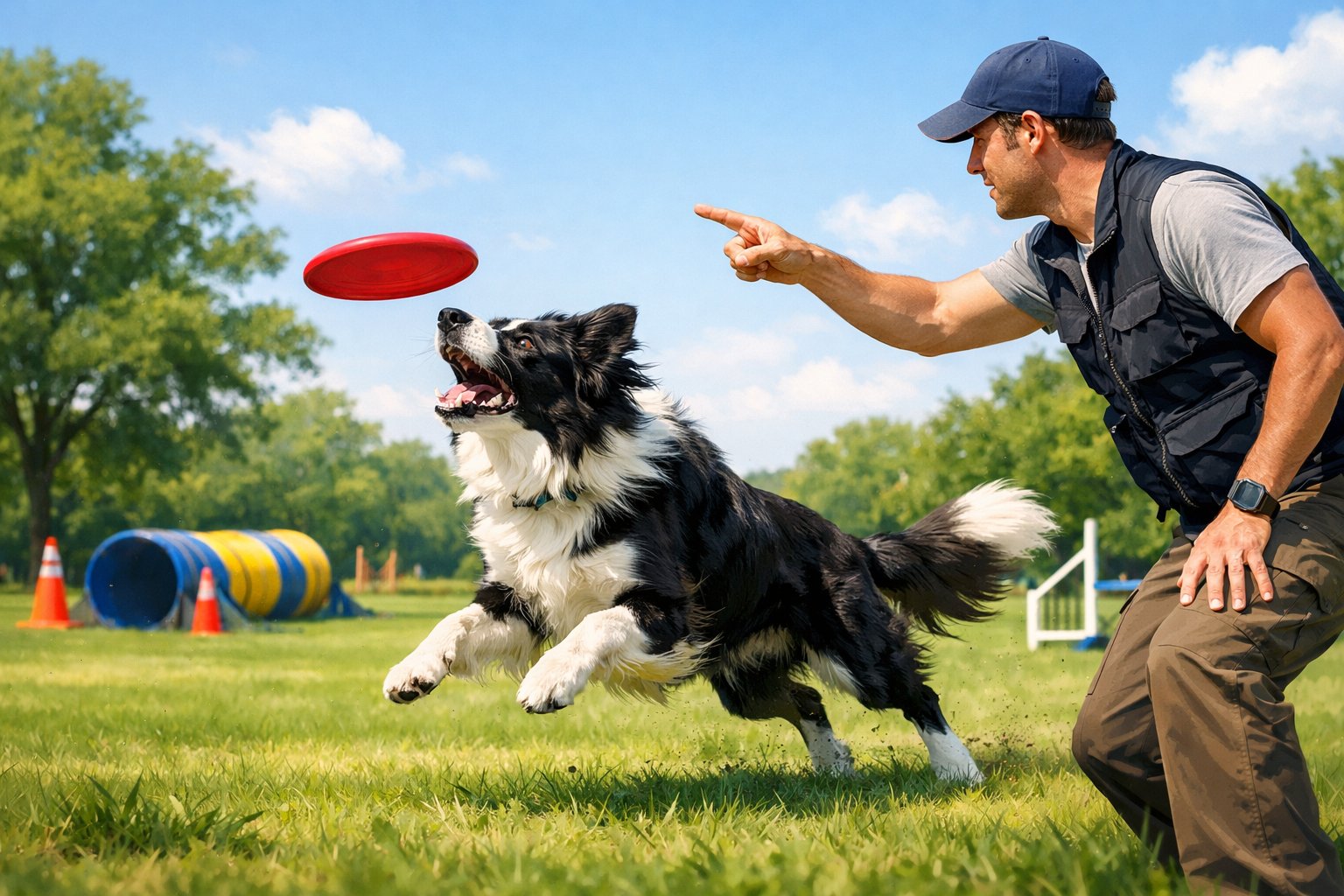
Border Collies learn fast, but they need structure. Early practice, steady routines, and clear rewards shape good habits and help manage their energy and focus.
Starting Early: Training Border Collie Puppies
People can start training border collie puppies at about eight weeks old. Early lessons focus on calm behavior, name response, and short focus time.
Puppies learn best in 5–10 minute sessions, once or twice a day. Short sessions prevent frustration and keep attention high.
Trainers often begin with simple cues like sit and come. Early social exposure also matters.
Meeting people, dogs, and new places reduces fear and nipping tied to herding instincts. Guides on training Border Collie puppies early stress gentle handling and steady rewards.
Consistency and Routine in Training
Consistency in training builds trust and clarity. Dogs learn faster when commands, tone, and rules stay the same each day.
A fixed schedule helps Border Collies settle and focus. Many trainers follow a simple routine:
- Exercise first to reduce excess energy
- Train next while the dog feels calm
- Reward quickly after correct behavior
Using the same words for each cue avoids confusion. For example, always say down, not lie down sometimes.
Regular timing also helps. Daily practice at the same hours supports learning and reduces stress during training border collie sessions.
Positive Reinforcement Methods
Positive reinforcement training rewards correct actions instead of punishing mistakes. This approach suits Border Collies because they respond well to praise and food rewards.
Reward-based training improves focus without fear. Common rewards include:
- Small, soft treats
- Verbal praise
- Short play breaks
Clicker training adds a clear sound that marks the exact moment the dog succeeds. Many handlers use it for timing and precision.
Articles on positive reinforcement training for Border Collies highlight faster learning and better confidence when rewards stay consistent and immediate.
Essential Basic Obedience Commands
Basic obedience commands form the core of safe behavior. Trainers teach these commands early and practice them daily.
Each cue should work at home, outside, and around distractions.
Key basic commands and goals
| Command | Purpose |
|---|---|
| Sit | Builds impulse control |
| Stay | Improves safety and patience |
| Come | Supports recall and off-leash safety |
| Down | Encourages calm behavior |
| Heel | Promotes polite walking |
Clear steps for basic obedience commands stress short practice and steady rewards. These commands support long-term obedience training and give Border Collies clear jobs to do.
Keeping Minds and Bodies Busy: Advanced Training and Enrichment
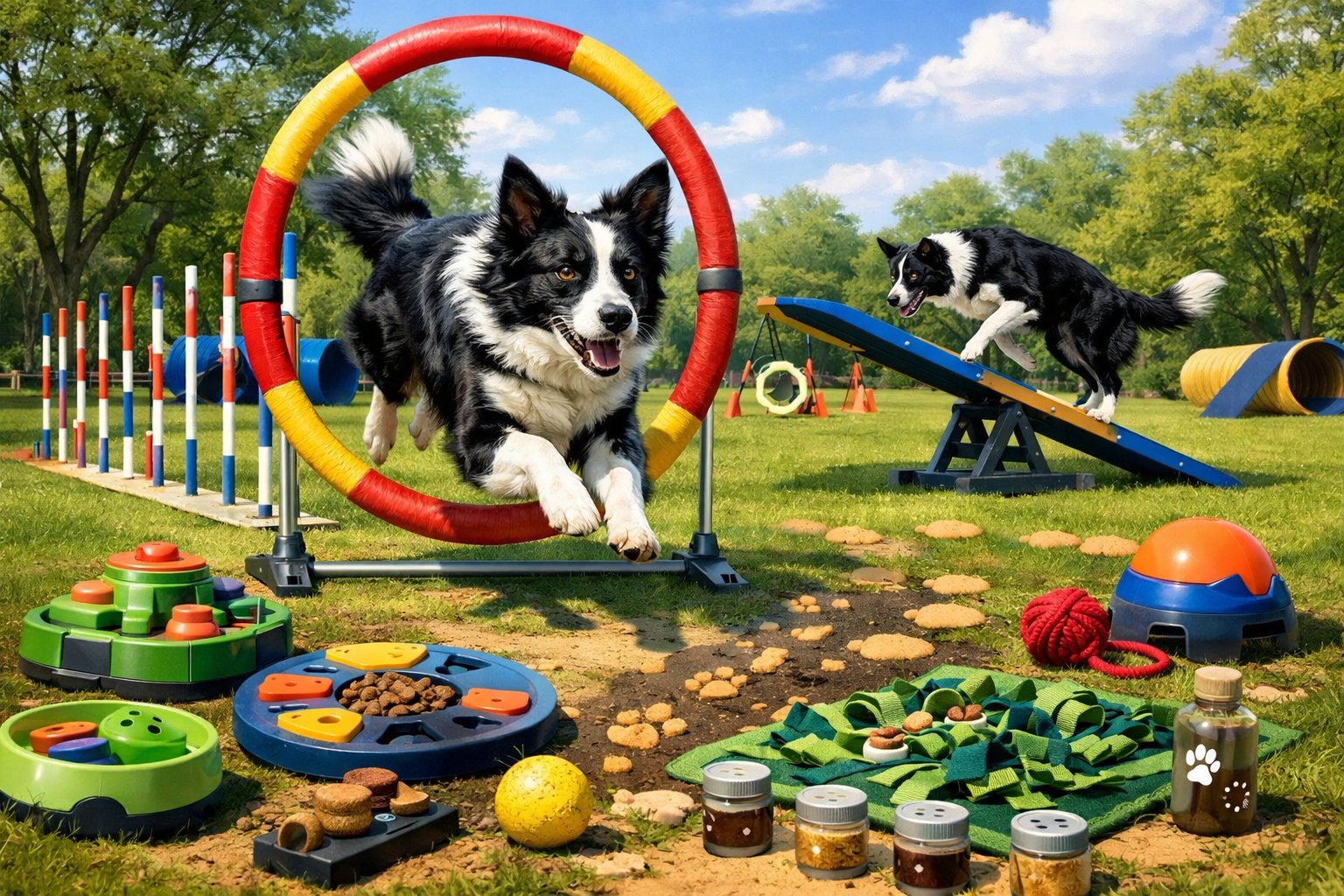
Border Collies need daily tasks that work both the brain and the body. Clear structure, variety, and purpose help prevent boredom and common behavior problems in this high-drive breed.
Mental Stimulation and Puzzle Toys
Mental stimulation matters as much as physical exercise for Border Collies. They learn fast, but they also get bored fast.
Interactive toys and puzzle toys help fill this gap. Food-dispensing puzzles, sliding trays, and scent games force the dog to think before acting.
These tools work best when rotated every few days so the challenge stays fresh. Short daily sessions often work better than long ones.
Training also counts as mental work. Trick training, object naming, and task-based games push problem-solving skills.
Many owners use ideas similar to those in guides on daily mental stimulation for Border Collies to reduce anxiety and destructive habits. Mental effort should feel rewarding, not frustrating.
Clear cues and simple goals keep progress steady.
Physical Activities and Agility Training
Border Collies thrive on structured physical outlets that demand focus, not just speed. Long walks alone rarely meet their needs.
Agility training combines mental and physical exercise. Jumping, weaving, and tunneling force quick decisions at high speed.
Home setups or formal agility courses both work when trainers keep sessions short and precise. This type of work builds body control and handler focus.
Many dogs also enjoy dog sports like flyball, disc games, and rally obedience. These activities channel energy into rules and patterns.
Articles on keeping a Border Collie busy in small spaces often stress quality over distance. Rest days still matter.
Muscles and joints need time to recover.
Redirecting Herding and Managing Behavioral Issues
Herding instinct often shows up as nipping, chasing kids, or excessive barking. These are training challenges, not bad behavior.
Redirecting the instinct works better than trying to stop it. Herding training, controlled games, or even herding trials teach rules around movement and pressure.
Some owners work with herding livestock under guidance to give the instinct a clear job. When problems persist, a professional dog trainer can assess timing, cues, and reinforcement.
Many trainers follow approaches outlined in guides on training high-energy Border Collies. Clear structure reduces stress.
Consistent work prevents most long-term behavioral problems.