Labradoodle Breed Basics and Types
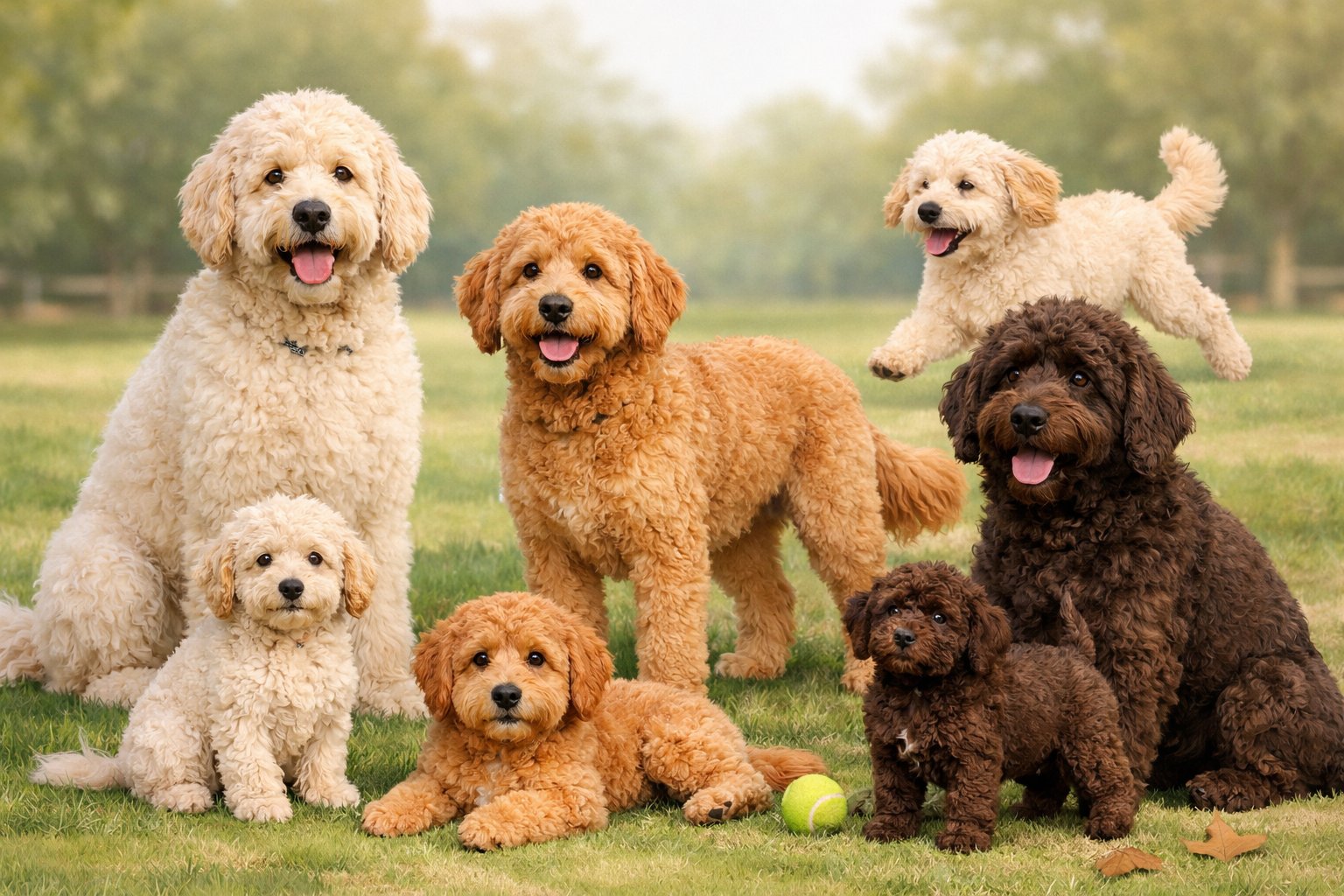
The labradoodle breed blends Labrador retriever and poodle traits in one dog. Size, coat, and background shape how each labradoodle fits into daily life as a family dog.
What Makes Labradoodles Unique
A labradoodle combines the Labrador’s friendly nature with the poodle’s intelligence. Many owners value this mix because it often creates a social and easygoing family dog.
Labradoodles usually bond closely with people and prefer daily interaction. Coat type varies widely.
Some dogs have curly coats, while others have wavy or straighter hair. Many labradoodles shed less than Labrador retrievers, though no dog is fully hypoallergenic.
Regular grooming still matters. Energy level also stands out.
Labradoodles need daily exercise and mental tasks. Without enough activity, they may become bored or restless.
This makes them a better fit for active households. Learn more about core labradoodle traits from this detailed labradoodle breed overview.
Standard, Mini, and Medium Labradoodles
Labradoodles come in three main size groups. Size affects space needs, food costs, and exercise routines.
| Type | Height | Weight |
|---|---|---|
| Standard labradoodle | 21–24 inches | 50–75 pounds |
| Medium labradoodle | 17–20 inches | 26–45 pounds |
| Mini labradoodle / miniature labradoodle | 14–16 inches | 18–28 pounds |
A standard labradoodle suits families with larger homes and yards. Medium labradoodles balance size and strength well.
Mini labradoodles fit smaller spaces but still need daily walks and playtime. Temperament stays similar across sizes.
All types benefit from training, structure, and routine.
Australian Labradoodle vs. Standard Labradoodle
A standard labradoodle comes from a Labrador retriever and a poodle. Breeder Wally Conron first developed this cross in Australia during the 1980s.
His goal focused on creating a guide dog with a lower-shedding coat. An australian labradoodle follows a different path.
This type includes Labrador retriever, poodle, and cocker spaniel. Breeders worked over many generations to create more predictable coats and temperaments.
Australian labradoodles often show greater consistency in size and coat. Standard labradoodles can vary more between litters.
Understanding this difference helps buyers choose the right dog for their home. This guide on labradoodle history and background explains how both types developed.
Essential Labradoodle Care and Training
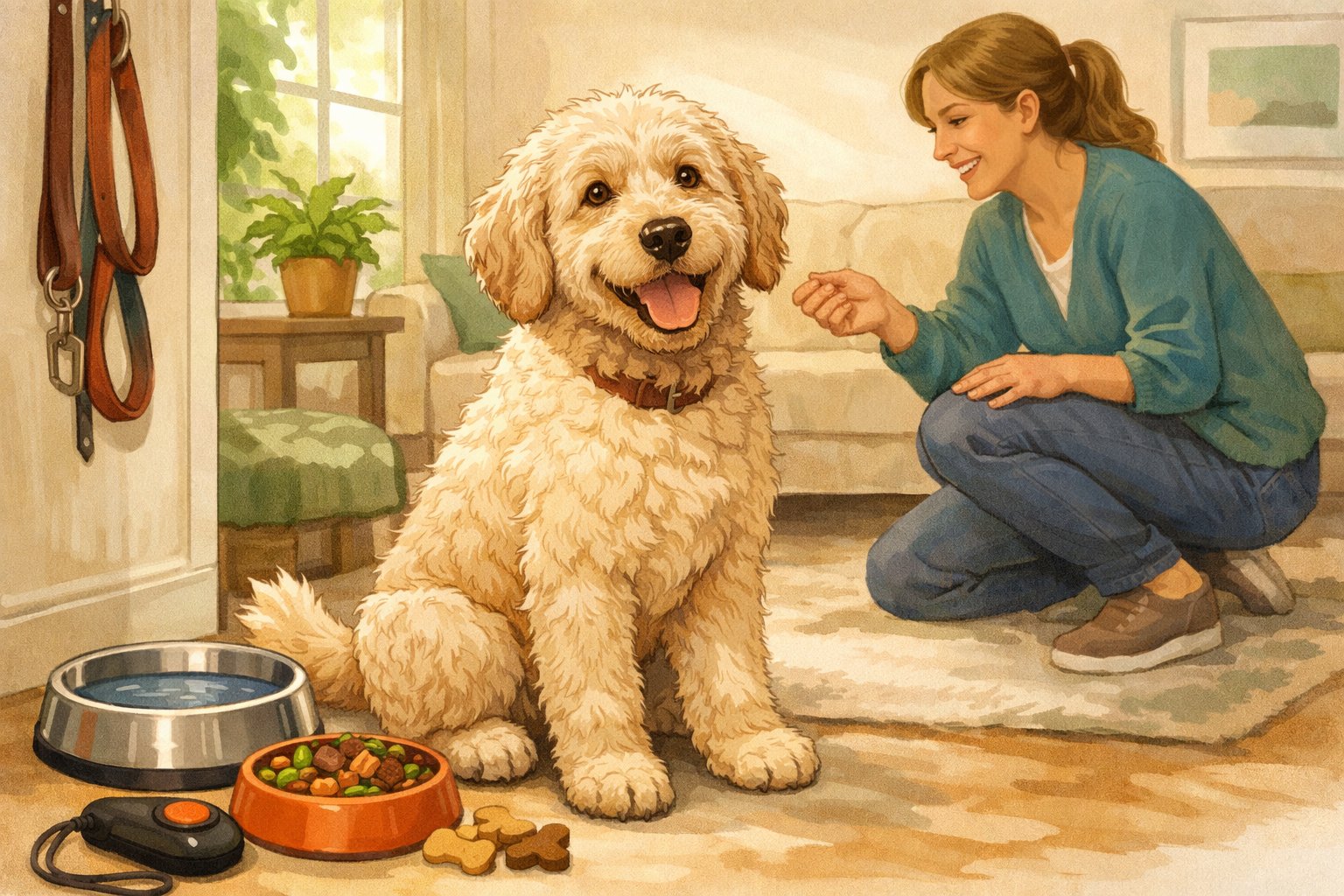
Labradoodles need steady care, daily activity, and clear training to stay healthy and calm. Their coat, energy level, and diet shape how owners plan each day.
Understanding the Hypoallergenic Coat
Many owners choose Labradoodles for a hypoallergenic coat, but results vary by dog. The coat type depends on genetics and breeding lines.
Some Labradoodles shed very little, while others shed more than expected. A reputable breeder explains coat types before adoption and shows the parents.
This matters for families with allergies and for a first-time dog owner. Common coat types include:
- Fleece: soft waves, low shedding
- Wool: tight curls, lowest shedding
- Hair: straight coat, higher shedding
The coat traps dirt and moisture, so owners must plan for routine care. Guides that explain important Labradoodle characteristics and care tips help set realistic expectations.
Grooming and Maintenance
Grooming a Labradoodle prevents mats, skin issues, and discomfort. Most dogs need brushing 3–4 times per week.
Puppies should start grooming early to build comfort with handling. Baths work best every 4–6 weeks.
Owners should use a hypoallergenic shampoo to protect sensitive skin. Human shampoo can dry out the coat and cause itching.
Basic grooming tasks include:
- Brushing ears and tail daily
- Trimming hair around eyes
- Checking ears for redness
- Clipping nails every 3–4 weeks
Professional grooming every 6–8 weeks keeps the coat manageable. Practical routines like those outlined in Labradoodle care basics for grooming and exercise help owners stay consistent.
Exercise and Socialization Needs
Labradoodles need both physical and mental activity. A bored dog often chews, jumps, or barks too much.
Daily walks alone rarely meet their needs. Most adult Labradoodles need:
- 60–90 minutes of daily exercise
- Interactive play like fetch or tug
- Short training sessions
Socialization should start early, especially for labradoodle puppies. Calm exposure to people, dogs, and sounds builds confidence.
Puppy classes help a labradoodle puppy learn focus and manners. Clear training works best with rewards and consistency.
Step-by-step methods from vet-reviewed Labradoodle training tips support steady progress.
Feeding and Health Considerations
Diet affects energy, coat quality, and digestion. Labradoodles do best on balanced food made for their size and age.
Puppies need formulas that support steady growth. Key feeding guidelines:
- Measure meals to avoid weight gain
- Split food into 2–3 meals per day
- Limit treats to training only
Fresh water must stay available at all times. Owners should also schedule routine vet visits for vaccines and checks.
Health planning starts before adoption. Advice from first-time Labradoodle owner tips helps families prepare for costs, time, and long-term care.
Raising and Training Your Labradoodle
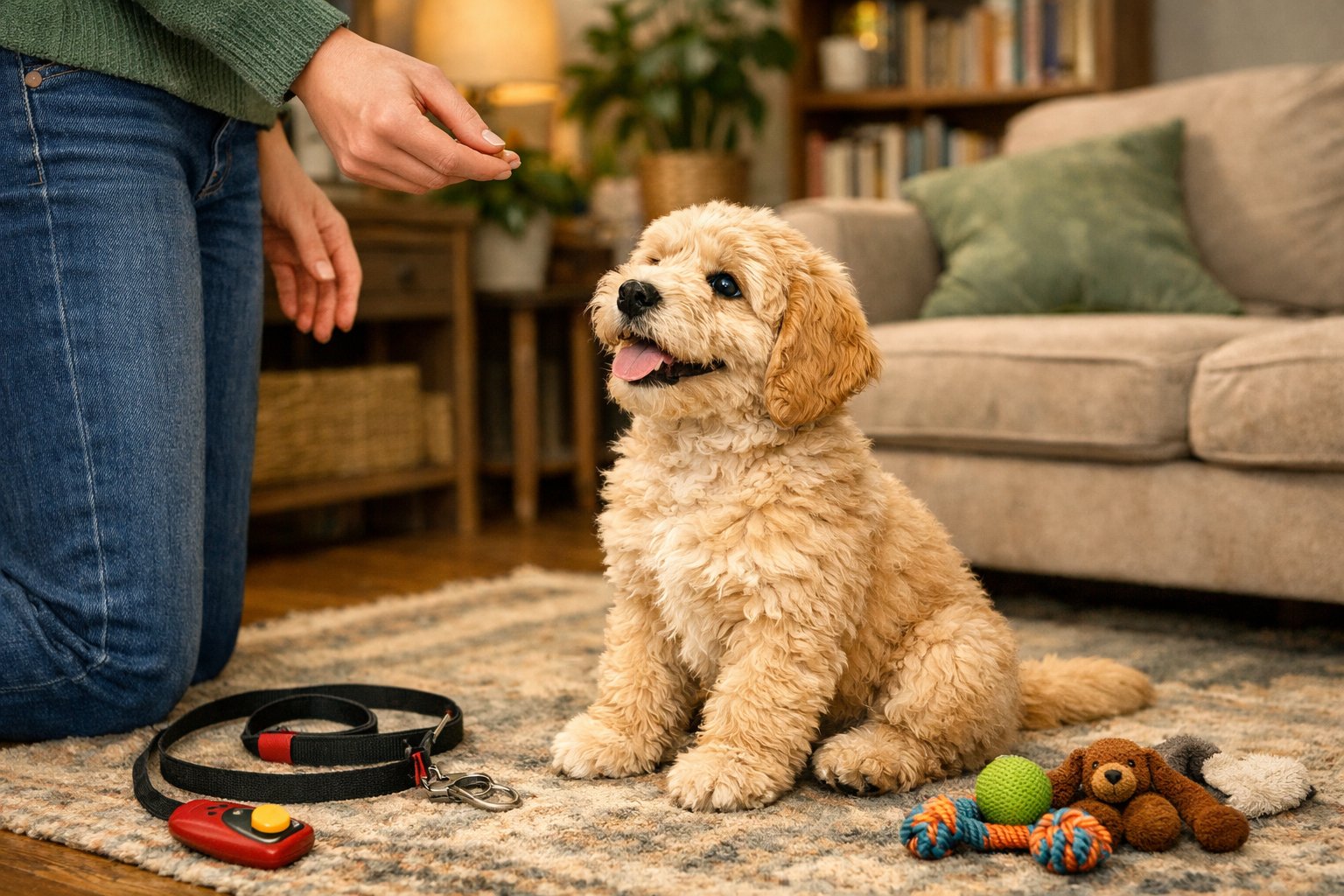
Raising a Labradoodle takes steady training, clear rules, and daily structure. Consistent habits help prevent behavior problems and build calm, reliable routines at home.
Training a Labradoodle: Positive Reinforcement
When training a Labradoodle, owners get the best results with positive reinforcement training. This method rewards good behavior with treats, praise, or play.
Labradoodles respond well because they enjoy attention and like to please. Rewards should come right after the behavior.
Timing helps the dog connect the action with the reward. Short sessions work better than long ones.
Five to ten minutes keeps focus strong. Owners should use the same words and hand signals every time.
Clear cues reduce confusion and speed learning. Basic commands like sit, stay, and come should start early, as advised in vet-reviewed Labradoodle training tips.
Avoid yelling or punishment. Harsh responses increase stress and slow progress.
Calm, steady guidance builds trust and improves obedience over time.
Potty Training and Crate Training Tips
Potty training works best with a schedule. Puppies need bathroom breaks after waking, eating, playing, and before bed.
Owners should take them to the same spot each time to build routine. Crate training supports potty training and gives the dog a safe space.
The crate should feel comfortable, not restrictive. It should only fit the dog well enough to stand, turn, and lie down.
Helpful crate timing guide:
| Puppy Age | Max Crate Time |
|---|---|
| 8–10 weeks | 1 hour |
| 3–4 months | 2 hours |
| 5–6 months | 3–4 hours |
Dogs learn faster when owners stay consistent. Clear house-training routines for Labradoodles stress patience and frequent breaks, especially during early weeks.
Preventing Destructive Behavior and Separation Anxiety
To prevent destructive behavior, Labradoodles need daily exercise and mental tasks. Long walks, puzzle toys, and short training sessions reduce boredom.
A tired dog is less likely to chew furniture or dig. Separation anxiety often shows as barking, pacing, or damage near doors.
Owners should practice short departures and calm returns. Leaving without fuss teaches the dog that alone time is safe.
Chew toys help redirect stress. Rotating toys keeps interest high.
According to Labradoodle behavior guidance from puppy to adult, early structure lowers anxiety risks.
Routine matters. Feeding, walks, and rest at set times create stability and confidence.