• Skip to main content
  • Skip to primary sidebar

superduperdog

superduperdog

How Much Exercise Does a French Bulldog Really Need? A Complete Activity Guide

December 26, 2025 by Jason Huskey

How Much Exercise Does a French Bulldog Really Need?
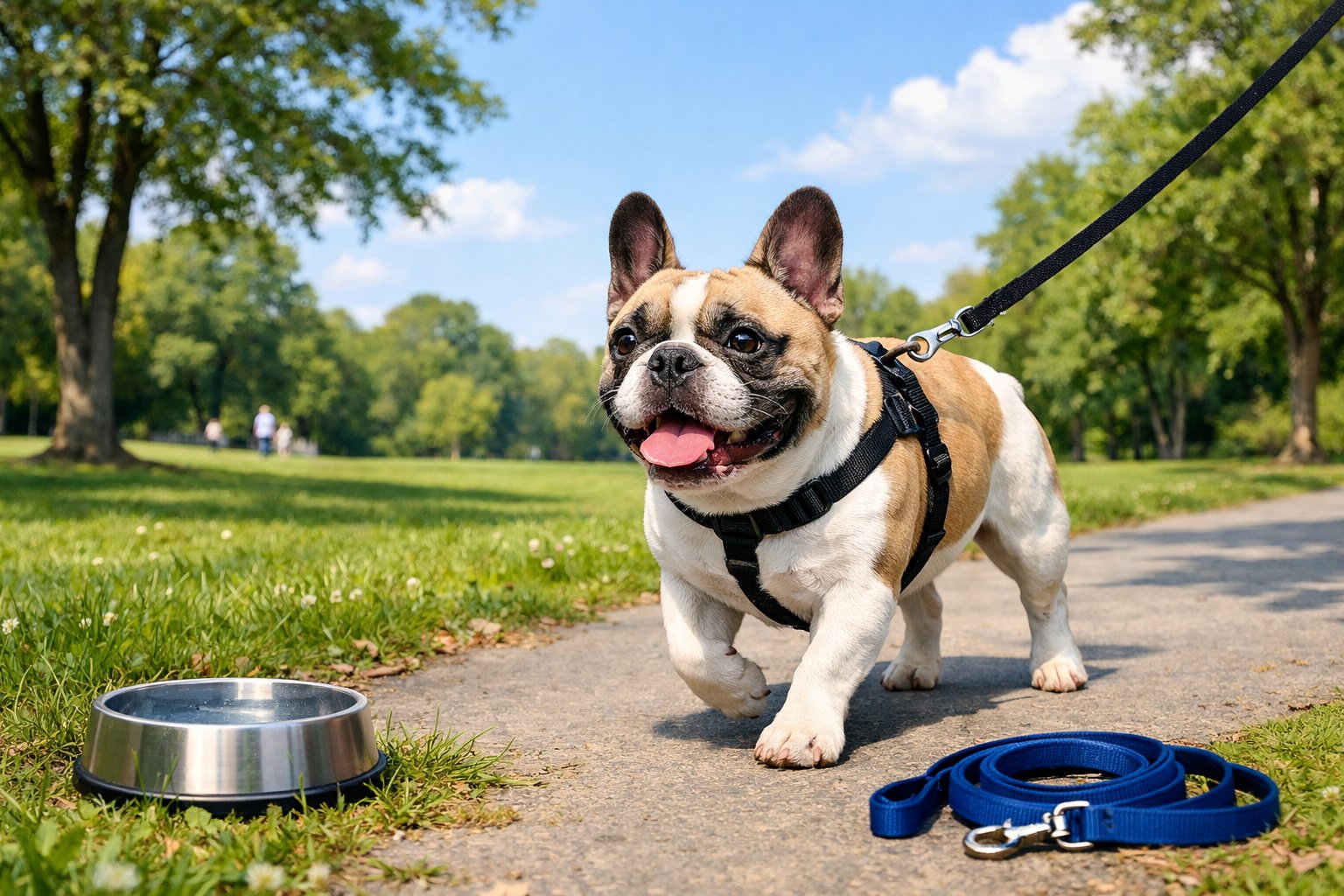
A French Bulldog walking on a leash in a green park with trees and a water bowl nearby.

French bulldogs need short, gentle activity to stay healthy. Their bodies limit how long and how hard they can move, so owners must balance daily exercise, age, and signs of fatigue.

Recommended Daily Exercise Duration

Most experts agree on a clear range for how much exercise does a French bulldog need each day. An adult french bulldog does best with 30 to 60 minutes of activity, split into short sessions.

This keeps muscles active without stressing breathing or joints. Light walks and indoor play work best.

Long runs or intense games do not fit the exercise needs of french bulldogs. According to guidance on daily French bulldog exercise limits, activity should stay gentle because frenchies tire fast.

Good daily options include:

  • 2–3 short walks of 10–20 minutes
  • Indoor play with toys
  • Short training games

Avoid heat and humidity. Warm weather raises the risk of breathing trouble.

Exercise Needs by Life Stage

Age changes the french bulldog exercise needs in clear ways. Puppies, adults, and seniors all need different routines.

Life stage Daily activity focus
Puppy (under 1 year) Short play, social time
Adult (1–7 years) Walks, play, mental games
Senior (7+ years) Very short walks, gentle movement

Puppies follow a simple rule. They should get about 5 minutes of exercise per month of age, once or twice daily.

Structured walks should stay short. Healthy adults usually manage the full 30–60 minutes.

Many vets note that French bulldogs have low exercise needs compared to other breeds. Seniors often slow down.

Joint pain and stiffness may limit walks.

Signs of Overexertion and Exercise Intolerance

Frenchies often show exercise intolerance before owners expect it. Their flat faces restrict airflow, which makes recovery slow.

Watch closely for these warning signs:

  • Heavy or noisy breathing
  • Stopping or lying down suddenly
  • Blue or pale gums
  • Excess drooling
  • Trouble cooling down

These signs mean the dog needs rest right away. According to details on breathing limits during French bulldog exercise, pushing past fatigue can cause heat stress or injury.

Short sessions and frequent breaks protect the long-term health of french bulldogs.

Best Types of Exercise for French Bulldogs
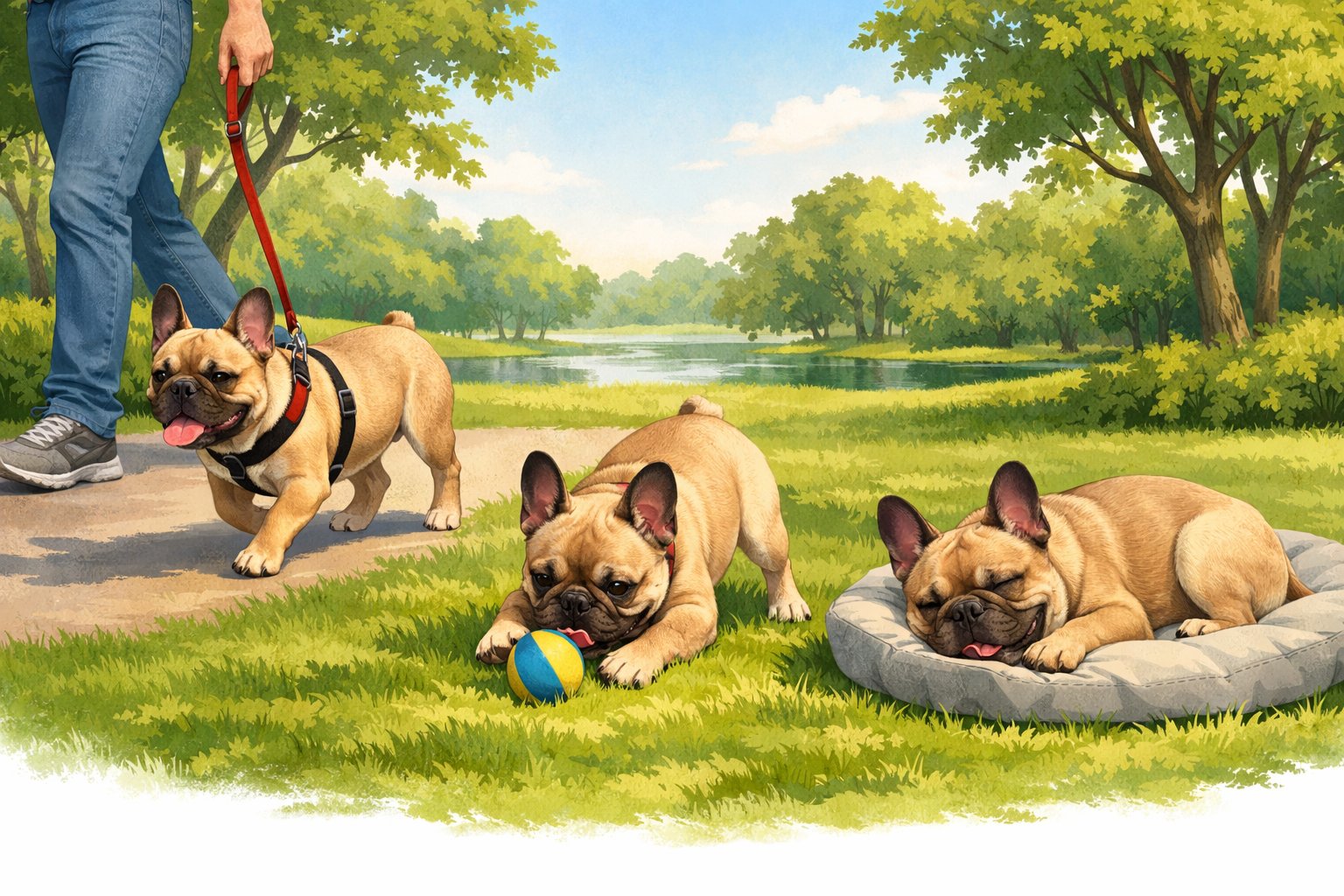
A French Bulldog walking on a leash, playing with a ball, and resting in a green park with trees and sunlight.

Frenchies stay healthy with short walks, simple indoor play, and calm time with other dogs. Each activity needs limits to protect breathing, joints, and energy levels.

Walking Guidelines and Duration

French bulldog walking works best when owners keep walks short and steady. Most adult dogs do well with 30–60 minutes per day, split into two or three walks.

This range matches common advice on French Bulldog exercise needs. Walks should stay slow and flat.

Heat and humidity raise risk fast for frenchies.

Key walking rules:

Guideline What to Do
Time 10–20 minutes per walk
Pace Easy, no jogging
Weather Cool mornings or evenings
Gear Harness, not a collar

If the dog slows down, sits, or pants hard, the walk should stop. Short walks done often work better than one long outing for french bulldog exercise.

Indoor Play and Enrichment Activities

Indoor play supports exercise for french bulldogs when weather limits outdoor time. These dogs enjoy quick bursts of movement with rest in between.

Owners should aim for 10–15 minutes per session, once or twice a day. Good options focus on the brain as much as the body.

Safe indoor activities include:

  • Tug with soft toys
  • Treat puzzles or snuffle mats
  • Hide-and-seek with food
  • Short hallway fetch on carpet

Mental games tire frenchies without stressing their lungs. Many vets support this balance, as explained in guides on how to exercise your French Bulldog safely.

Socializing Safely with Other Dogs

Social play helps french bulldog exercise, but it needs structure. Frenchies often enjoy other dogs, yet rough play can lead to breathing trouble or injury.

Owners should choose calm, friendly dogs of similar size. Play sessions should stay short.

Best practices for social exercise:

  • Start with 5–10 minutes
  • Use shaded or indoor spaces
  • Avoid high-speed chasing
  • Watch breathing and posture

Dog parks often overwhelm frenchies. Small playgroups or one-on-one meetups work better.

Breed guides on French Bulldog exercise needs stress calm interaction over nonstop running.
Filed Under: Border Collies

Common French Bulldog Behavior Problems (And How to Fix Them)

December 26, 2025 by Jason Huskey

Common French Bulldog Behavior Problems and Solutions

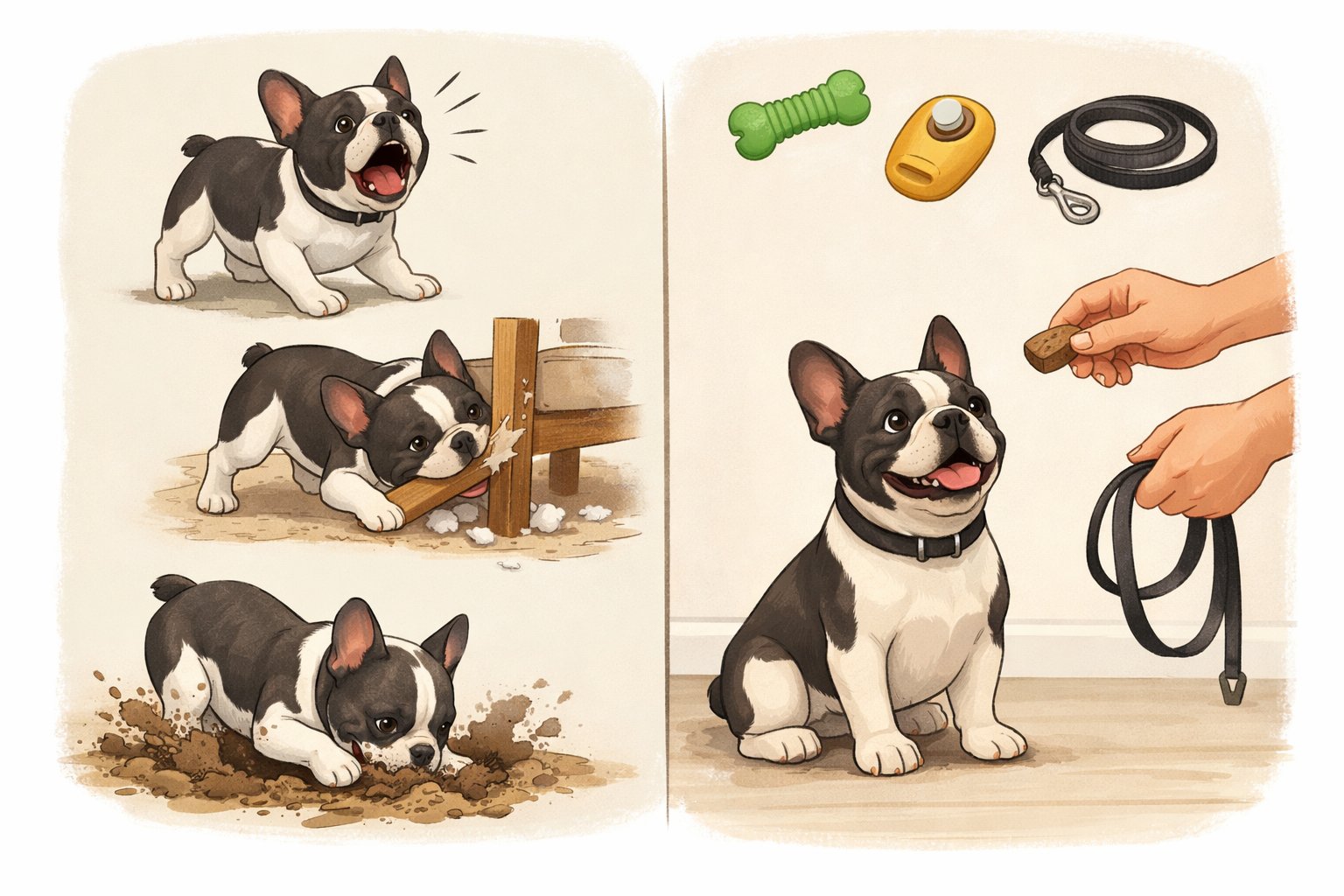
Two scenes showing a French Bulldog exhibiting problem behaviors like barking and chewing, and the same dog calmly sitting next to a person offering a treat and leash.

French bulldog behavior problems often follow clear patterns tied to boredom, stress, and routine. Owners see the best results when they act early and match training to the breed’s needs.

Separation Anxiety Signs and Management

Separation anxiety in French Bulldogs shows up fast and loud. Common signs include nonstop barking, pacing, drooling, or accidents soon after the owner leaves.

Frenchies bond closely with people, so sudden alone time feels stressful. Many owners mistake this behavior for stubbornness, but anxiety drives it.

Clear warning signs appear in guides on separation anxiety in French Bulldogs.

Simple steps help reduce stress:

  • Keep departures calm and brief
  • Practice short absences several times a day
  • Offer a food puzzle only during alone time

Crates help some dogs but stress others. Owners should test slowly and watch body language.

Excessive Barking and Attention-Seeking

French Bulldogs bark to get results. They bark when bored, excited, or rewarded by attention.

This behavior often grows when owners react by talking, touching, or yelling. Articles on French bulldog behavior problems note that attention-seeking barking works because it gets a response.

Effective fixes focus on timing:

  • Ignore barking until it stops
  • Reward calm behavior right away
  • Add short daily play and training sessions

Mental activity matters more than long walks. Puzzle toys and scent games reduce barking without overexertion.

Destructive Chewing and Furniture Damage

Chewing feels normal to dogs, but Frenchies often target furniture, pillows, and shoes. This usually happens during teething, boredom, or anxiety.

Owners often lack enough safe chew options. Many behavior guides, including common French Bulldog behavior problems, point to poor chew rotation as a key issue.

Helpful chewing rules:

  • Keep 3–5 approved chews available
  • Rotate chews every few days
  • Remove access to problem areas

Bitter sprays help, but supervision matters more.

Resource Guarding and Aggression

Resource guarding appears when a dog stiffens, growls, or snaps over food or toys. It often starts small and worsens if ignored.

French Bulldogs guard items when they feel insecure or rushed. Guides on French Bulldog behavior issues stress early training to prevent escalation.

A simple trade-up method works well:

Step Action
1 Approach calmly
2 Offer higher-value food
3 Say “trade”
4 Return the item

Punishment increases fear and risk. Calm exchanges build trust and reduce aggressive responses over time.

Essential Training Strategies and Prevention Methods

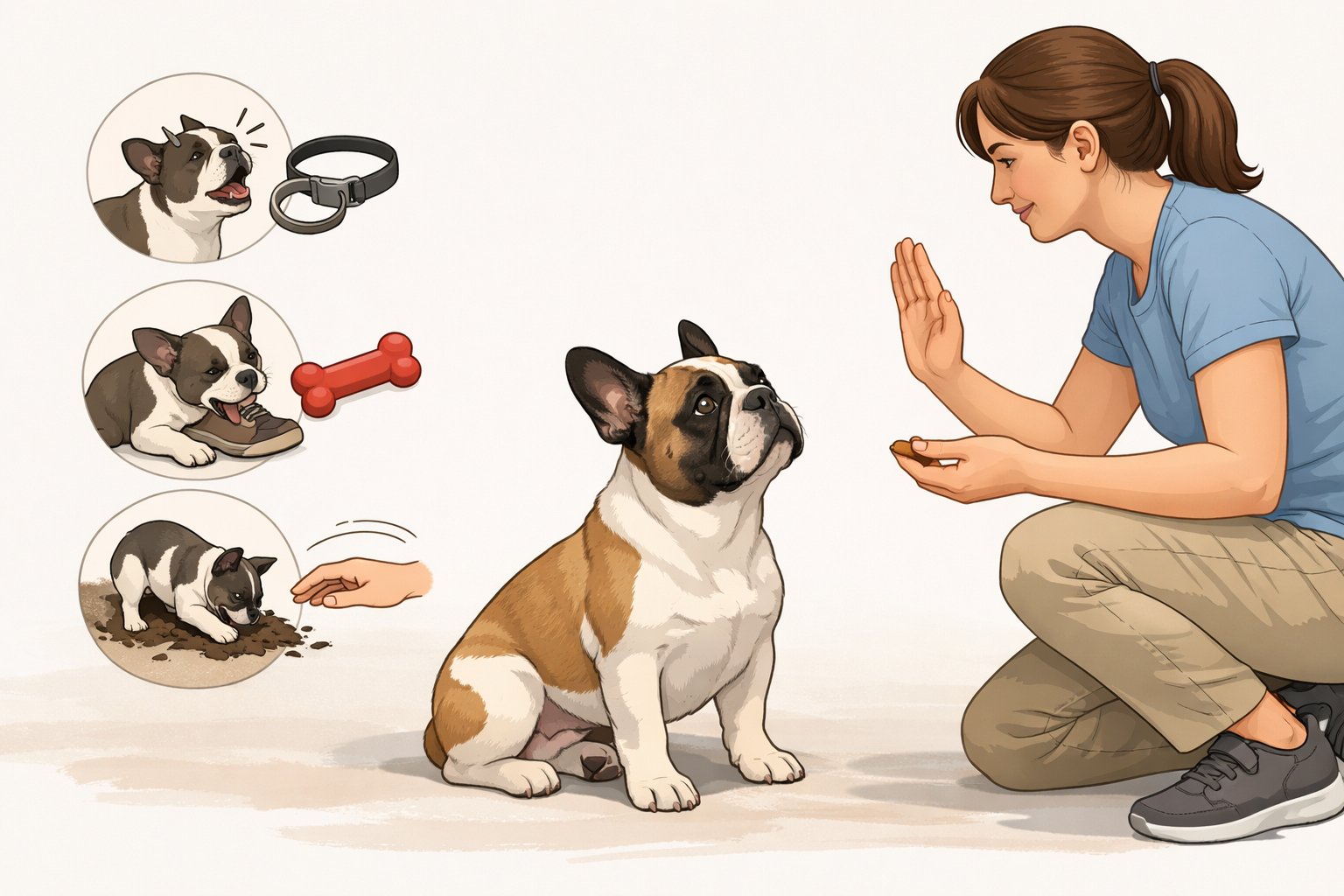
A French Bulldog being gently trained by a person using hand signals and treats, surrounded by icons representing common dog behavior problems and their solutions.

French Bulldogs respond best to clear rules and steady routines. Training works best when owners focus on rewards, early exposure to new situations, and timely help when problems grow beyond basic home training.

Positive Reinforcement Training Techniques

Positive reinforcement training helps French Bulldogs learn faster and with less stress. Owners should reward wanted behavior right away using small treats, praise, or play.

Timing matters more than the reward size. Short sessions work best because French Bulldogs lose focus quickly.

Five to ten minutes, two or three times a day, keeps training productive. Consistency across all family members prevents confusion.

Common rewards that work well include:

  • Soft treats that are easy to chew
  • Verbal praise in a calm, happy tone
  • Brief play with a favorite toy

Punishment often increases fear or stubborn behavior. Many guides on French Bulldog behavior problems and training methods stress that reward-based methods protect trust while correcting issues like barking or leash pulling.

Early Socialization Tips

Early socialization reduces fear-based behavior later in life. Puppies should meet new people, see other dogs, and experience different sounds before bad habits form.

Owners should start with controlled settings. Calm dogs, quiet parks, and short car rides help build confidence.

Each new experience should stay brief and positive. Key socialization areas include:

  • People of different ages and appearances
  • Other dogs with gentle temperaments
  • Environments like sidewalks, stores, and vet offices

Lack of mental activity often leads to behavior problems. Some trainers note that missing daily mental work is a major cause of issues, as explained in common French Bulldog behavior issue breakdowns.

Puzzle toys and scent games help meet this need.

When to Consult a Professional Dog Trainer

Some behavior problems need expert help. Aggression, severe anxiety, or ongoing disobedience often signal the need for a professional dog trainer.

A qualified trainer assesses the dog’s triggers. They build a plan that fits the breed’s limits.

French Bulldogs struggle with harsh methods. Owners should look for trainers who use reward-based systems.

Signs it is time to seek help include:

  • Escalating aggression toward people or pets
  • Separation anxiety that causes damage or distress
  • Training stalls despite consistent effort

Breed-specific guidance matters. Many owners benefit from structured programs like those outlined in essential French Bulldog training strategies, which focus on patience and realistic expectations.

Filed Under: Border Collies

Why French Bulldogs Are Such Great Companion Dogs: Traits & Tips

December 26, 2025 by Jason Huskey

Key Qualities That Make French Bulldogs Outstanding Companions

A French Bulldog sitting next to a smiling person in a cozy home, showing a close and happy companionship.

French bulldogs stand out as companion dogs because they form strong bonds, adjust well to daily routines, and stay calm in busy homes. They suit many households, from single adults to families with pets.

Affectionate and Loyal Nature

French bulldogs rank high among affectionate dogs because they enjoy close contact with their people. They often follow owners from room to room and prefer to rest nearby.

This behavior reflects the loving and affectionate nature of French Bulldogs, which many owners value in a companion dog. A frenchie shows loyalty through attention rather than guarding.

They respond well to calm voices and gentle handling. This makes them easy to bond with, even for first-time dog owners.

They also read human moods well. Many owners notice their french bulldog becomes quiet during stressful moments and playful during relaxed times.

Adaptability to Different Lifestyles

Frenchies adapt well to many living situations. They do not need long daily runs and feel comfortable in apartments or houses.

This flexibility explains why French Bulldog personality traits appeal to city and suburban owners. They adjust to work schedules as long as they get steady attention.

Short walks, indoor play, and routine feeding keep them content.

Lifestyle fit at a glance

Situation How French Bulldogs Respond
Apartment living Calm indoors, low space needs
Busy owners Do well with routines
Quiet homes Relaxed and observant
Active homes Playful in short bursts

This balance helps frenchies stay easy to manage without constant activity.

Good With Children and Other Pets

French bulldogs usually show patience with kids when adults set clear rules. Their size and friendly temperament help reduce rough play.

Many families describe them as good with children because they prefer gentle interaction. They also tend to be good with other pets.

Early social time helps them accept cats and other dogs without tension. A french bulldog often treats new animals as part of the group rather than a threat.

Supervision still matters, especially with young children. With guidance, frenchies fit smoothly into multi-pet and family homes.

Unique Features and Care Considerations

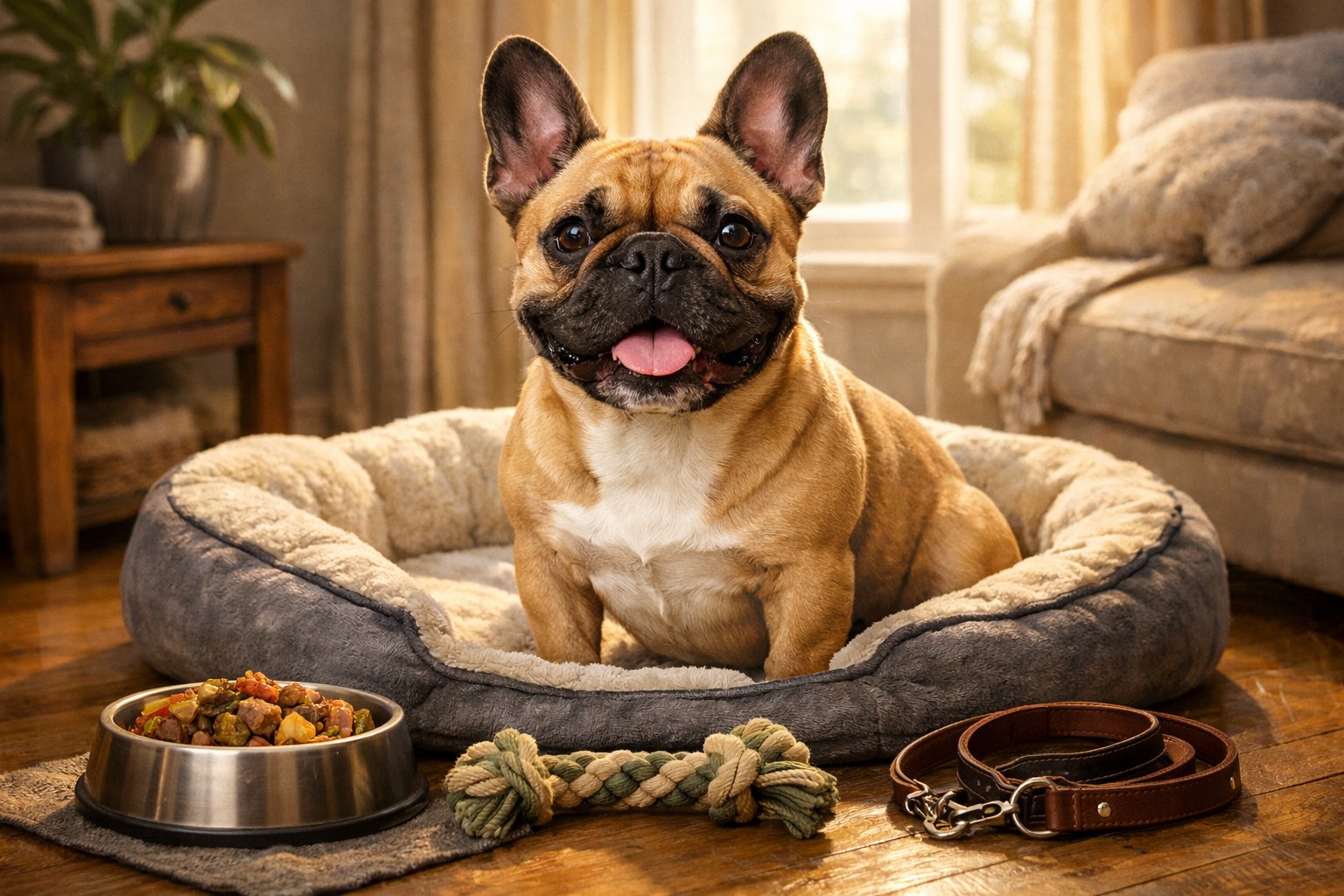
A French Bulldog sitting comfortably in a cozy living room with a dog bed, food bowl, leash, and chew toy nearby.

French Bulldogs stand out for their looks, easy daily care, and well-known variations. Their bodies, faces, and coats shape how owners care for them at home.

Distinctive Appearance and Physical Traits

French Bulldogs have bat ears, a wrinkled face, and a compact size that fits well in small homes. They usually weigh under 28 pounds and have a strong, muscular build.

Their short nose gives them a flat face, which many people love, but it also affects breathing. These traits mean owners should watch heat and exercise levels.

Long runs and hot weather can stress them. Vets often note breathing limits tied to flat faces, which owners should plan for, as explained in this guide to French Bulldog breed characteristics and care.

French Bulldog puppies show these traits early. Their ears often stand up within the first few months, and facial wrinkles deepen as they grow.

Low Maintenance and Grooming Needs

French Bulldogs have short coats that shed lightly and need simple grooming. Weekly brushing removes loose hair and keeps skin healthy.

Bathing every few weeks usually works well. Daily care focuses on skin folds and ears.

Moisture can build up in wrinkles, so gentle cleaning helps prevent irritation. Nail trims and dental care also matter.

Basic grooming tasks

Task How Often Why It Matters
Face fold cleaning Daily Prevents skin infections
Brushing Weekly Reduces shedding
Nail trimming Monthly Supports joint health

Their grooming needs stay low compared to many breeds, as noted in this overview of French Bulldog physical traits.

Popular French Bulldog Variations

French Bulldogs come in several coat colors and types. Standard coats include fawn, brindle, and cream.

Some owners seek rare looks, such as the lilac French Bulldog, which shows a pale gray-purple coat due to specific genetics. Another growing trend is the fluffy French Bulldog.

This type has longer hair caused by a recessive gene. While eye-catching, it needs more brushing than standard coats.

Color and coat do not change personality, but some rare traits link to higher costs and added care. Breed guides like this complete French Bulldog overview explain these differences in clear terms.

Important Health Insights for Owners

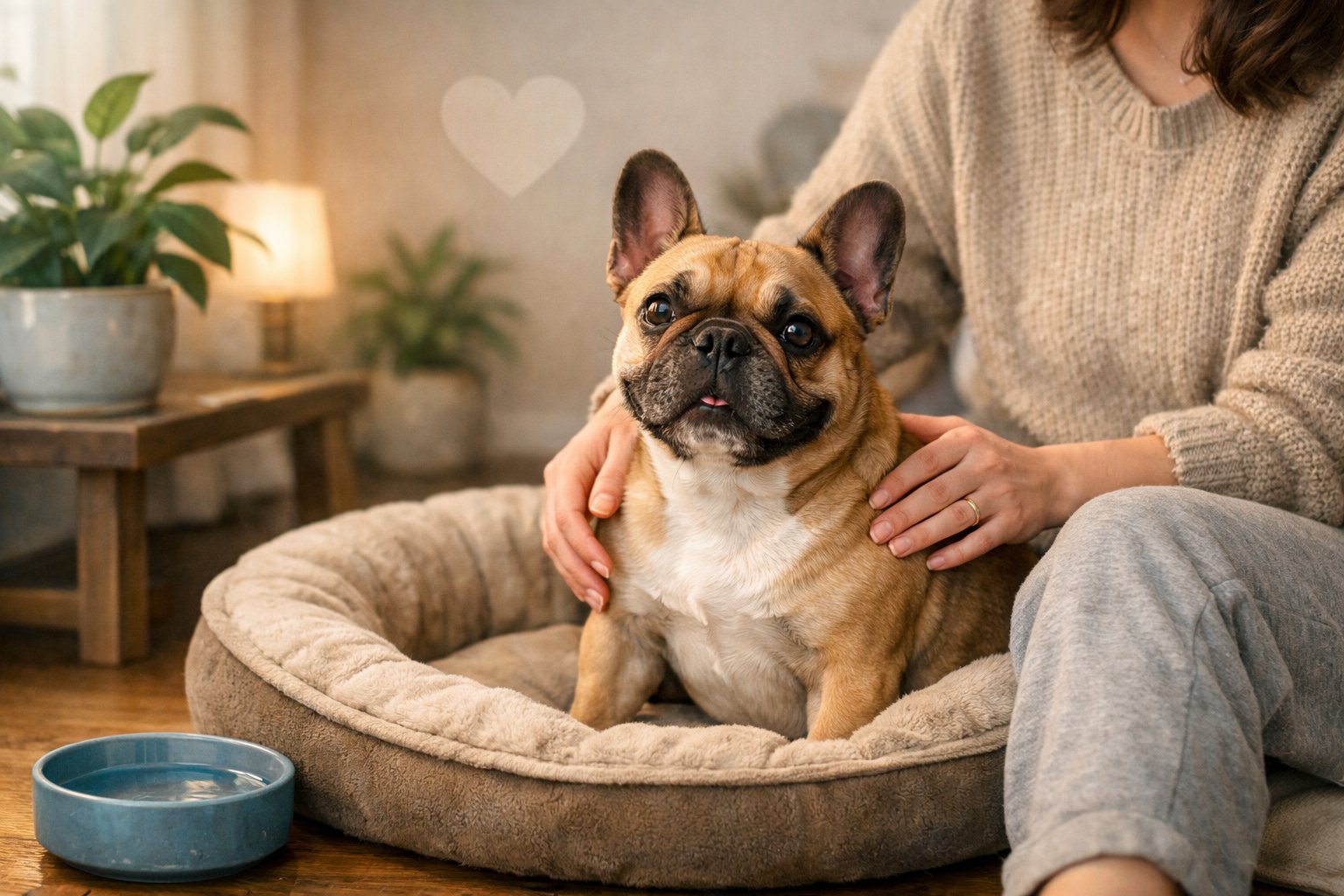
A French Bulldog sitting comfortably next to a person in a cozy home setting, showing a warm and friendly bond between them.

French Bulldogs bring a lot of joy, but they also have specific health needs. Owners who understand breathing limits and common medical risks can make better daily choices and spot problems early.

Brachycephalic Traits and Breathing

French Bulldogs are a brachycephalic breed. They have short noses, narrow airways, and compact skulls.

These traits shape how they breathe, rest, and handle exercise. Many Frenchies face BOAS, which stands for brachycephalic obstructive airway syndrome.

This condition can cause loud breathing, snoring, heat stress, and trouble after activity. Hot weather and overexertion raise the risk.

Owners should keep walks short, avoid midday heat, and watch for signs like heavy panting or blue gums. A vet familiar with brachycephalic breeds can explain testing and treatment options, including lifestyle changes or surgery when needed.

Detailed guidance appears in this expert guide to French Bulldog breathing risks and BOAS.

Common Health Concerns

French Bulldogs also face several non-breathing health issues. Skin allergies, ear infections, and eye problems rank high on the list.

One well-known eye issue is cherry eye, which causes a red bulge near the eyelid and often needs treatment.

Back health matters too. Their short, muscular build increases the risk of intervertebral disc disease (IVDD).

IVDD can lead to pain, weakness, or trouble walking. Jumping off furniture often makes it worse.

Owners can help by using ramps and keeping weight stable. Scheduling regular vet visits is also important.

Veterinarians outline these risks clearly in discussions about French Bulldog health concerns and care needs.

Filed Under: Border Collies

French Bulldog Puppies vs. Adults: What to Expect at Every Life Stage

December 26, 2025 by Jason Huskey

Growth Stages and Development Differences

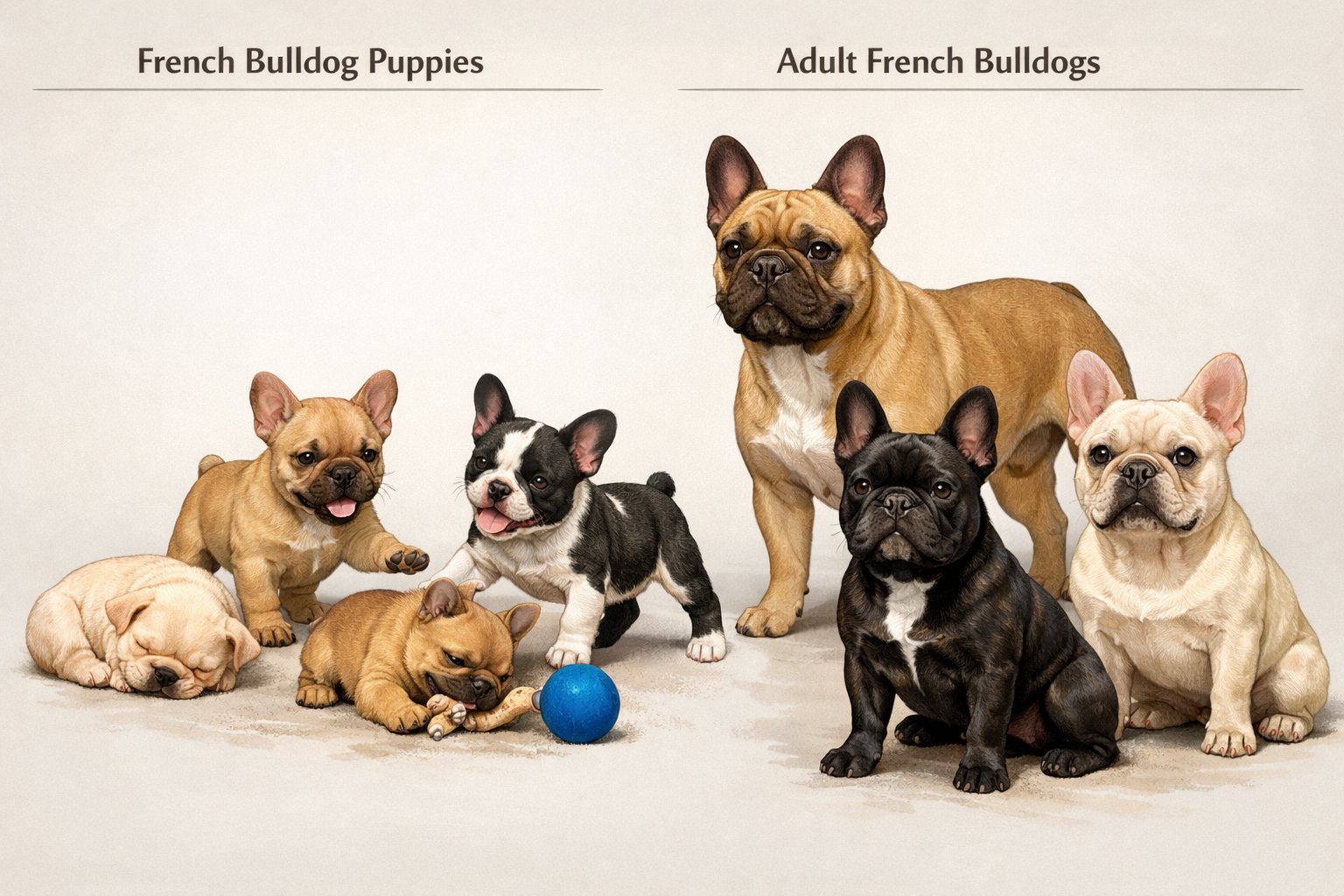
Two groups of French Bulldogs side by side, with playful puppies on one side and calm adult dogs on the other, showing differences in size and features.

French Bulldogs change fast from birth to adulthood. Each stage brings clear shifts in size, behavior, and care needs.

Newborn to Weaning: Milestones and Needs

Newborn French Bulldogs depend fully on their mother. A newborn french bulldog cannot see or hear at first and spends most time sleeping and nursing.

During the earliest french bulldog growth stages, weight gain matters more than play or training. Care focuses on warmth, steady feeding, and safety.

Handling should stay gentle and brief.
Key needs during this stage include:

  • Warmth to support body temperature
  • Frequent nursing for steady growth
  • Low stress to protect health

As explained in guides on French Bulldog growth stages from birth, eyes and ears open within the first few weeks. By weaning, newborn french bulldogs start to stand, wobble, and react to sound.

Puppyhood to Adolescence: Socialization and Training

A french bulldog puppy becomes alert, curious, and social between 8 weeks and 6 months. This period shapes behavior more than any other stage.

French bulldog puppies need daily exposure to people, sounds, and safe places. Short training sessions help them learn manners and basic commands.

Consistency matters more than strict rules.
Important focus areas include:

  • Positive social contact with people and pets
  • Basic training like sit and leash walking
  • Balanced food to support french bulldog growth

Growth charts, like those used in French Bulldog puppy growth tracking, show rapid weight and muscle changes. Adolescence may bring stubborn behavior, so patience stays important.

Adulthood: Personality, Maturity, and Physical Changes

Adult French Bulldogs reach full height by about 10–12 months. Most filling out finishes soon after, as noted in studies on when a French Bulldog stops growing.

Adult french bulldogs show steadier energy and more predictable behavior. Training holds better, and routines feel easier to manage.

Common adult traits include:

  • Stable temperament with strong attachment to owners
  • Moderate exercise needs, not intense activity
  • Ongoing health care to manage weight and breathing

An adult french bulldog keeps the playful personality of puppyhood but needs less supervision and fewer daily adjustments.

Comparing Puppies vs. Adults: What Owners Should Know

A French Bulldog puppy and an adult French Bulldog side by side, showing differences in size and appearance in a cozy home setting.

French Bulldog puppies and adults bring different needs, costs, and daily routines. Owners should understand training time, health risks tied to a brachycephalic breed, and how age affects temperament and lifestyle fit.

Training and Socialization Needs

French Bulldog puppies need daily training and steady social time. They learn house rules, leash manners, and basic cues from scratch.

Short sessions work best because attention spans stay limited. Early exposure to people, pets, and sounds helps shape calm adult behavior.

Adult French Bulldogs often arrive with habits already formed. Many know basic commands and may be house-trained.

This saves time but leaves less room to change behavior. Adopting adults often means working with known traits, which many owners prefer.

Articles comparing adopting an adult French Bulldog vs a puppy highlight how predictability can reduce stress for first-time owners.

Health Considerations and Vet Care

French Bulldogs face health risks at all ages due to their brachycephalic build. Flat faces raise concerns tied to brachycephalic syndrome, including breathing trouble and heat sensitivity.

Puppies need vaccines, parasite control, and spay or neuter surgery within the first year. Adults may already show signs of chronic issues.

These can include airway limits, skin folds infections, or joint strain. Weight matters at every stage.

A healthy French Bulldog weight usually ranges from 16–28 pounds, depending on size and build. Owners often track growth using a French Bulldog growth chart during puppyhood.

Breed health guidance from the American Kennel Club’s French Bulldog overview explains these risks clearly.

Lifestyle, Commitment, and Temperament

Puppies demand more time at home. They need frequent bathroom breaks, feeding schedules, and close supervision.

Growth happens fast, and routines change often during the first year. Puppies also test limits, which requires patience and consistency.

Adult French Bulldogs usually settle into calmer patterns. They nap more and handle short periods alone better.

Temperament stays easier to predict, which helps match the dog to the household. Most adults still enjoy play but balance it with rest.

Their compact size and moderate exercise needs fit apartment living well when owners manage heat and breathing limits.

Common Challenges and Rewards

Puppies challenge owners with chewing, accidents, and night waking. Vet bills add up early.

Training mistakes can set habits that last. Owners shape behavior from the start and watch steady growth into adulthood.

Adults may bring unknown history. Some need help adjusting or unlearning past behaviors.

Medical costs may rise sooner. Many owners value giving an adult French Bulldog a stable home while gaining a dog with a clear personality and lower daily training demands.

Filed Under: Border Collies

Best Diet and Nutrition Tips for French Bulldogs: Expert Feeding Guide

December 26, 2025 by Jason Huskey

Balanced Diet Essentials for French Bulldogs

A healthy French Bulldog sitting next to bowls of nutritious food including vegetables, meat, and supplements.

A balanced diet for French Bulldogs supports steady energy, healthy weight, and fewer stomach issues. The right mix of protein, fat, and carbs helps manage common breed concerns like allergies and easy weight gain.

Macronutrient Requirements

French bulldog nutrition depends on balance, not extremes. Protein supports muscle and daily activity.

Fat provides energy and helps the skin and coat. Carbohydrates add fiber and steady fuel.

Most adult French Bulldogs do well with this general range:

Nutrient Daily Focus
Protein 22–26% from animal sources
Fat 12–16% from quality oils
Carbs + Fiber Moderate and easy to digest

Too many calories lead to fast weight gain. A measured diet for French Bulldogs helps protect breathing, joints, and long-term health.

Choosing Quality Protein Sources

Protein quality matters more than protein amount. French Bulldogs often have sensitive digestion and skin.

Foods for French Bulldogs should list a named animal protein as the first ingredient. Good options include chicken, turkey, beef, lamb, and fish.

Clear labels signal better quality and easier digestion. Avoid vague terms like “meat by-products” or “animal meal.”

Animal-based protein supports muscle without extra fillers. Many French Bulldogs handle single-protein diets better, especially when food allergies appear.

Simple recipes reduce stress on the gut and lower the risk of itching or loose stools.

Healthy Fats and Oils

Healthy fats play a key role in a balanced diet for French Bulldogs. They support skin health, brain function, and energy levels.

The focus should stay on quality, not quantity. Useful fat sources include fish oil, chicken fat, and flaxseed.

These provide omega-3 and omega-6 fatty acids. According to a detailed French Bulldog nutrition guide, these fats help manage skin irritation and dryness.

Too much fat causes weight gain fast. Controlled portions help keep French Bulldogs active without stressing their compact bodies.

Digestible Carbohydrates and Fiber

Carbohydrates should support digestion, not overload it. French Bulldogs benefit from carbs that digest easily and add fiber for gut health.

Common well-tolerated options include:

  • Sweet potatoes
  • Brown rice
  • Oats
  • Pumpkin

Fiber helps firm stools and reduce gas. Low-quality fillers like corn and wheat often trigger bloating or itching.

A focused approach to carbs supports smoother digestion and better nutrient absorption. Simple, whole ingredients work best.

Feeding Strategies and Special Considerations

A French Bulldog sitting next to bowls of nutritious dog food and water, surrounded by symbols representing healthy feeding and diet considerations.

French Bulldogs need careful feeding choices to support breathing, digestion, skin health, and weight control. Smart portions, the right food type, and safe treats help reduce common health risks.

French Bulldog Feeding Guide by Life Stage

A French bulldog feeding guide should change with age. Puppies need more calories and protein to support growth.

Adults need steady energy without weight gain. Seniors need fewer calories and more joint support.

  • Puppies (up to 12 months): Feed 3–4 meals daily with puppy-formulated food.
  • Adults (1–7 years): Feed 2 meals daily with balanced protein and fat.
  • Seniors (8+ years): Feed 2 smaller meals with fewer calories and added fiber.

Many vets suggest watching body shape, not just weight. Clear guidance appears in this detailed French Bulldog feeding guide by age and weight.

Portion Control and Feeding Frequency

Portion control matters when feeding French Bulldogs because the breed gains weight easily. Even small weight changes can affect breathing and joints.

Most adults eat ½ to 1½ cups per day, split into two meals. Exact amounts depend on size, activity, and food type.

Dog Type Meals Per Day Portion Tip
Puppy 3–4 Measure every meal
Adult 2 Adjust for activity
Senior 2 Reduce calories

Owners should avoid free-feeding. Scheduled meals help digestion and make weight changes easier to spot.

Food Formats: Kibble, Wet, Raw, and Home-Cooked

Each food format has clear pros and cons. The best choice depends on budget, time, and the dog’s digestion.

  • Kibble: Easy to store and measure. Choose small pieces for flat faces.
  • Wet food: Adds moisture and flavor. Often helps picky eaters.
  • Raw or fresh: Uses whole ingredients but needs careful balance.
  • Home-cooked: Gives control but requires vet guidance.

Some Frenchies do better with limited ingredients due to allergies. A balanced approach like those explained in this French Bulldog nutrition guide helps owners compare options safely.

French Bulldog Treats: Safe Choices

French bulldog treats should stay simple and limited. Treats should make up no more than 10% of daily calories.

Good options include:

  • Single-ingredient meat treats
  • Small pieces of cooked chicken
  • Commercial treats made for small breeds

Avoid treats with fillers, artificial colors, or sweeteners like xylitol. Crunchy treats may also support dental health when used sparingly.

Treat choices matter as much as meals. Practical tips appear in these French Bulldog feeding tips that focus on safety and portion size.

Managing Food Allergies and Sensitivities

A French Bulldog sitting calmly in a kitchen surrounded by allergy-friendly foods like vegetables and hypoallergenic treats.

French Bulldogs often react to certain foods with skin or stomach problems. Careful ingredient choices, simple diets, and vet-guided formulas help reduce flare-ups and keep daily feeding predictable.

Identifying Food Allergies in French Bulldogs

Food allergies in French Bulldogs often show up as itchy skin, ear infections, or loose stools. Some dogs also lick their paws or rub their face often.

These signs usually last for weeks, not days. Common triggers include chicken, beef, eggs, dairy, and wheat.

Many owners confuse food allergies with seasonal issues, so vets often suggest an elimination diet. This plan removes suspect foods for 8 to 12 weeks and adds them back one at a time.

Common signs linked to food reactions

Skin Signs Digestive Signs
Redness Diarrhea
Itching Gas
Ear infections Vomiting

Clear tracking helps narrow causes, which many guides on food allergies in French Bulldogs stress as a key step.

Hypoallergenic and Novel Protein Diets

Hypoallergenic dog food limits ingredients to reduce reactions. These formulas avoid common proteins and fillers that often cause trouble.

Fewer ingredients also make label reading easier. Novel proteins like lamb, duck, or salmon work well if the dog has never eaten them before.

The immune system is less likely to react to new proteins. Many plans also skip grains, soy, and artificial colors.

Owners should still check labels closely. Some foods claim to be hypoallergenic but include mixed proteins.

Articles on choosing the best dog food for French Bulldogs with allergies note that protein clarity matters more than marketing terms.

Hydrolyzed Protein and Special Formulas

A hydrolyzed protein diet breaks proteins into very small pieces. The body cannot recognize them as allergens.

Vets often suggest this option when other diets fail. These formulas usually require a prescription.

They cost more, but they help dogs with multiple or severe reactions. Many also include added fiber and fatty acids to support digestion and skin health.

Hydrolyzed diets appear often in vet-reviewed lists of dog foods for French Bulldogs with allergies. Owners should follow feeding rules closely and avoid treats that could undo progress.

Filed Under: Border Collies

French Bulldog Training Tips for Stubborn but Sweet Pups: What Works

December 26, 2025 by Jason Huskey

Key Training Strategies for Stubborn French Bulldogs

A dog trainer gently encouraging an attentive French Bulldog to sit in a cozy indoor training space.

Training a stubborn but sweet French bulldog works best when owners match clear structure with kind rewards. The right mix of patience, routine, and food motivation helps a Frenchie stay focused and willing to learn.

Understanding Stubbornness and Breed Traits

A stubborn French bulldog often shows independence, not defiance. The breed likes comfort, routine, and choice, so it may pause before obeying a command.

This behavior links to personality, not intelligence. Frenchies respond better when training feels useful or fun.

Short legs and flat faces also affect focus, especially during active drills. Owners who adjust expectations tend to see faster progress when training stubborn French bulldogs with proven methods.

Common traits that shape training:

  • Strong food motivation
  • Short attention span
  • Preference for calm, repeatable tasks

Understanding these traits helps reduce frustration and improves timing during lessons.

Importance of Patience and Consistency

Patience and consistency guide behavior change in a French bulldog. Learning happens through repetition, not force.

When commands stay the same each time, the dog connects words with actions faster. Consistency matters across the household.

Everyone should use the same cues, tone, and rules. Mixed signals slow progress and confuse the dog.

Helpful habits include:

  • Training at the same time each day
  • Using one word per command
  • Rewarding the same behavior every time

Clear routines support calm learning.

Positive Reinforcement and Reward-Based Methods

Positive reinforcement builds trust and motivation. A Frenchie learns faster when good behavior earns something valuable.

Reward-based training avoids fear and supports long-term habits. Rewards should follow behavior right away.

This timing helps the dog link action and outcome. Praise, toys, and treats all work, but food often wins.

Effective reward-based training uses:

  • Immediate treats or praise
  • Calm, upbeat voice
  • Short sessions under 10 minutes

Trainers widely recommend this approach for positive reinforcement techniques for French bulldogs. It keeps training cooperative, not confrontational.

How to Choose High-Value Training Treats

High-value treats increase focus during training. These treats smell strong, taste rich, and stay small.

A stubborn French bulldog often works harder for better rewards. Soft treats work best because they chew fast.

Reserve special treats only for training to keep interest high.

Examples of high-value training treats:

Treat Type Why It Works
Cooked chicken Strong smell, easy to chew
Freeze-dried liver Very motivating in short bursts
Soft commercial training treats Consistent size and texture

Owners often succeed faster by pairing commands with high-value training treats for French bulldogs. This choice supports steady progress without overfeeding.

Fundamental Skills and Habits for French Bulldog Training

A French Bulldog puppy sitting obediently on a mat with a trainer kneeling beside it, holding a treat in a cozy indoor setting.

Strong daily habits shape good behavior in Frenchies. Clear routines, calm rewards, and short practice sessions help when training a stubborn French Bulldog that still wants to please.

Leash Training Success for Frenchies

Leash training works best when it starts indoors. French Bulldogs focus better in quiet spaces, which helps early dog training stick.

Many owners choose a harness instead of a collar. A harness protects the neck and supports easier breathing, which matters for this breed.

This approach aligns with common advice in guides on how to train French Bulldogs.

Key leash rules to follow:

  • Stop walking when pulling starts
  • Reward walking beside the handler
  • Keep sessions under 10 minutes

Short walks with clear rules build better habits than long, unfocused outings.

Crate Training Basics for Better Behavior

Crate training gives French Bulldogs a safe place to rest. It also helps reduce chewing, barking, and stress when alone.

The crate should feel calm and positive. Owners should place it in a quiet area and add soft bedding.

Many trainers stress consistency, which appears often in French Bulldog training techniques and tips.

A simple schedule helps:

  • Crate after meals
  • Crate during short absences
  • Crate overnight

They should never use the crate as punishment. Calm exits and entries matter.

Potty Training and Housebreaking Tips

Potty training depends on routine. French Bulldogs learn faster when meals, walks, and sleep follow the same schedule each day.

Frequent outdoor trips reduce accidents. Puppies may need breaks every one to two hours.

This matches advice shared in French Bulldog training 101 guides.

Helpful habits include:

  • Taking the dog to the same spot
  • Praising right after success
  • Cleaning accidents with enzyme cleaners

Patience matters when training a French Bulldog with a stubborn streak.

Recall Training for Reliable Response

Recall training teaches the dog to come when called. This skill keeps French Bulldogs safe at home and outdoors.

Training starts indoors with few distractions. Handlers should use a happy voice and reward fast responses.

Many trainers highlight this method in beginner French Bulldog training guides.

A strong recall uses:

  • One clear command
  • High-value treats
  • Short practice sessions

They should never punish slow responses. Calm repetition builds trust and better recall over time.

Reducing Stubborn Behavior and Advancing Progress

A dog trainer gently working with a French Bulldog in a bright indoor training space, using treats and hand signals while the dog listens attentively.

French Bulldogs often resist training when they feel bored, confused, or overstimulated. Clear routines, steady mental work, and smart adjustments help reduce stubborn behavior while keeping a stubborn Frenchie confident and willing to learn.

Mental Stimulation and Enrichment Ideas

Mental work matters as much as walks for a stubborn Frenchie. Short thinking games lower frustration and cut down on refusal behaviors.

These activities help the dog focus and follow cues.

Effective enrichment options include:

  • Puzzle feeders that slow eating and reward effort
  • Hide-and-seek games using treats or toys
  • Basic scent games with one clear target

Training sessions work best at 5–10 minutes, two or three times a day. Ending on a success keeps motivation high.

According to guidance from trainers who specialize in Frenchies, mental games help manage stubborn habits without pressure, as explained in this guide on training a stubborn French Bulldog.

Socialization and Group Training Classes

Social exposure helps reduce stubborn behavior tied to fear or control. Puppy classes and group training classes teach French Bulldogs how to respond around distractions.

Group settings improve:

  • Focus around other dogs
  • Calm behavior with new people
  • Response to commands under mild stress

A well-run class uses reward-based methods and small group sizes. Trainers guide owners on timing, tone, and body language.

Many programs also coach owners on consistency at home, which supports long-term progress. Structured classes like those described in French Bulldog training essentials help sweet but strong-willed pups learn faster without harsh correction.

Adapting When Challenges Arise

Progress rarely moves in a straight line.

When a French Bulldog regresses, trainers often adjust the environment before changing the command.

Distractions, noise, or fatigue can trigger pushback.

Helpful adjustments include:

  • Training in a quieter space
  • Lowering expectations for one session
  • Switching from treats to praise or toys

If stubborn behavior increases, short breaks help reset focus.

Some owners also benefit from one-on-one support.

Professional guidance, like the approach outlined in this article on how to train a stubborn French Bulldog, can clarify next steps and keep training steady without stress.

Filed Under: Border Collies

  • « Go to Previous Page
  • Page 1
  • Interim pages omitted …
  • Page 13
  • Page 14
  • Page 15
  • Page 16
  • Page 17
  • Interim pages omitted …
  • Page 33
  • Go to Next Page »

Primary Sidebar

Do Labradoodles Need Puzzle Toys? A Friendly Guide to the Best Options for Your Pup

Labradoodles are smart, energetic dogs that need both physical exercise and mental challenges to … [Read More...] about Do Labradoodles Need Puzzle Toys? A Friendly Guide to the Best Options for Your Pup

Best Interactive Training Tools for Smart Labradoodles: Engaging Games and Gadgets to Boost Your Dog’s Intelligence

Labradoodles are smart, energetic dogs that need mental stimulation to stay happy and healthy. … [Read More...] about Best Interactive Training Tools for Smart Labradoodles: Engaging Games and Gadgets to Boost Your Dog’s Intelligence

Top Training Treats for Food-Motivated Labradoodles That Actually Work

Training treats are small rewards used to reinforce good behavior in dogs. They help your … [Read More...] about Top Training Treats for Food-Motivated Labradoodles That Actually Work

Best Harnesses for Labradoodles That Pull on Leash: Top Picks to Stop Tugging in 2026

Labradoodles are energetic and strong dogs that often pull on their leash during walks. This pulling … [Read More...] about Best Harnesses for Labradoodles That Pull on Leash: Top Picks to Stop Tugging in 2026

How to Choose the Right Grooming Table for Your Labradoodle: A Complete Guide for Pet Parents

Grooming your Labradoodle at home can save you money and help your dog feel more comfortable during … [Read More...] about How to Choose the Right Grooming Table for Your Labradoodle: A Complete Guide for Pet Parents

Best Shampoos for Labradoodles With Sensitive Skin: Gentle Solutions for Your Curly Companion

Labradoodles are popular family dogs known for their friendly personalities and curly … [Read More...] about Best Shampoos for Labradoodles With Sensitive Skin: Gentle Solutions for Your Curly Companion

Must-Have Grooming Tools Every Labradoodle Owner Needs to Keep Their Pup Looking Perfect

Labradoodles have thick, curly coats that need regular care to stay healthy and tangle-free. Without … [Read More...] about Must-Have Grooming Tools Every Labradoodle Owner Needs to Keep Their Pup Looking Perfect

Best Clippers for Grooming Your Labradoodle at Home: Top Picks for a Professional Finish

Labradoodles have thick, curly coats that need regular grooming to stay healthy and tangle-free. … [Read More...] about Best Clippers for Grooming Your Labradoodle at Home: Top Picks for a Professional Finish

Top Detangling Sprays for Preventing Labradoodle Mats: Keep Your Pup’s Coat Smooth and Tangle-Free

Labradoodles have thick, curly coats that can tangle and mat easily without proper care. Mats form … [Read More...] about Top Detangling Sprays for Preventing Labradoodle Mats: Keep Your Pup’s Coat Smooth and Tangle-Free

Best Brushes for Labradoodles: Complete Guide to Grooming Curly, Wavy and Straight Coats

Labradoodles have unique coats that need regular brushing to stay healthy and tangle-free. These … [Read More...] about Best Brushes for Labradoodles: Complete Guide to Grooming Curly, Wavy and Straight Coats

Categories

  • Border Collies
  • Uncategorized

Superduperdog.com - Copyright © 2026