• Skip to main content
  • Skip to primary sidebar

superduperdog

superduperdog

Best Toys for Border Collies That Get Bored Easily: Top Picks & Guide

December 24, 2025 by Jason Huskey

Essential Toy Types for Border Collies Prone to Boredom
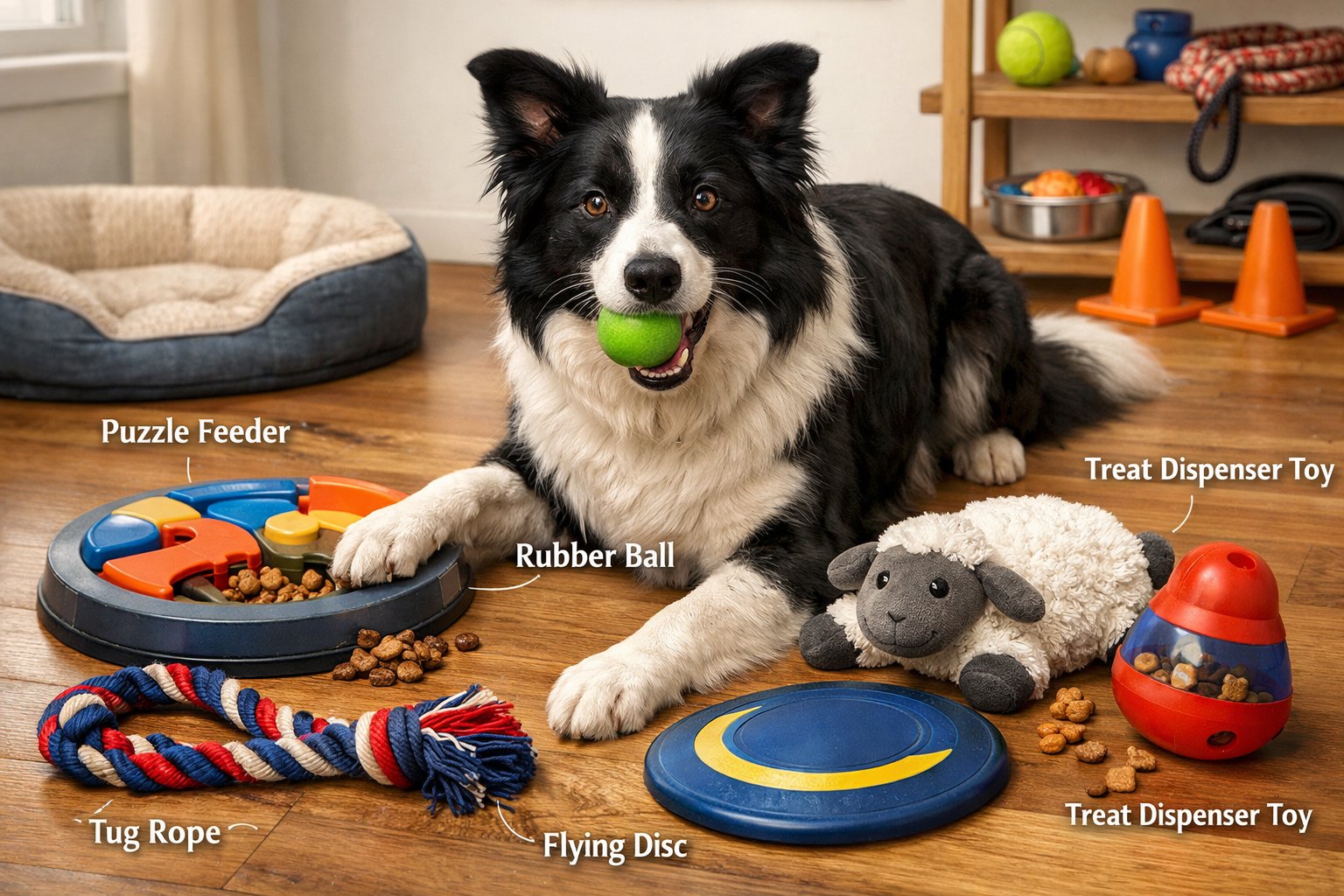
A Border Collie playing with various toys including a ball, frisbee, puzzle feeder, tug rope, and plush toy in a bright indoor space.

Border Collies need toys that work their minds and bodies. The right mix reduces boredom, limits chewing problems, and supports healthy daily activity for herding dogs with high energy.

Interactive and Puzzle Toys

Interactive toys give Border Collies a clear job to solve. These toys ask the dog to slide, lift, or spin parts to find treats.

This taps into the breed’s problem‑solving skills and keeps focus longer than basic dog toys. Puzzle toys work best when the difficulty matches the dog’s skill level.

Many owners start with simple designs and increase challenge over time. Brands that specialize in puzzles for smart breeds, like those featured in the best Border Collie puzzle toys, help prevent frustration.

What to look for

  • Non-slip base
  • Clear treat compartments
  • Adjustable difficulty

Short daily sessions often work better than long play periods.

Chew Toys for Intense Chewers

Chew toys help Border Collies release stress and avoid destructive habits. This matters because bored dogs often chew furniture or shoes.

Durable chew toys made from rubber or nylon tend to last longer than soft materials. Many best dog toys for chewers also support dental health.

Textured surfaces can reduce plaque while the dog chews. Reviews of durable Border Collie chew toys often highlight toughness over novelty.

Key features

  • Thick rubber or nylon
  • No small breakable parts
  • Size matched to the dog

Owners should check chew toys often and replace damaged ones right away.

Fetch and Retrieving Toys

Fetch toys help Border Collies burn energy fast. This suits herding dogs that thrive on running and chasing.

Balls, launchers, and glow toys extend play time and add variety. Fetch toys work best in open areas.

Long throws reduce the number of repetitions needed to tire the dog. Products listed in the best fetch toys for Border Collies often focus on bounce, grip, and visibility.

Helpful options

  • High‑bounce rubber balls
  • Ball launchers for distance
  • Glow toys for low light

Short, focused fetch sessions help avoid joint strain.

Tug and Rope Toys

Tug toys give Border Collies a controlled way to use strength. Rope toys also support bonding when two‑player games stay structured.

These toys work well for dogs that enjoy resistance play. Strong rope toys made with tight knots tend to last longer.

Some tug toys include handles, which protect hands during play. Lists of top tug and rope toys for Border Collies often stress grip and durability.

Best practices

  • Set clear start and stop cues
  • Avoid frayed ropes
  • Use tug as a reward after training

Supervised tug play keeps the game safe and positive.

Top-Rated Toys to Keep Border Collies Engaged
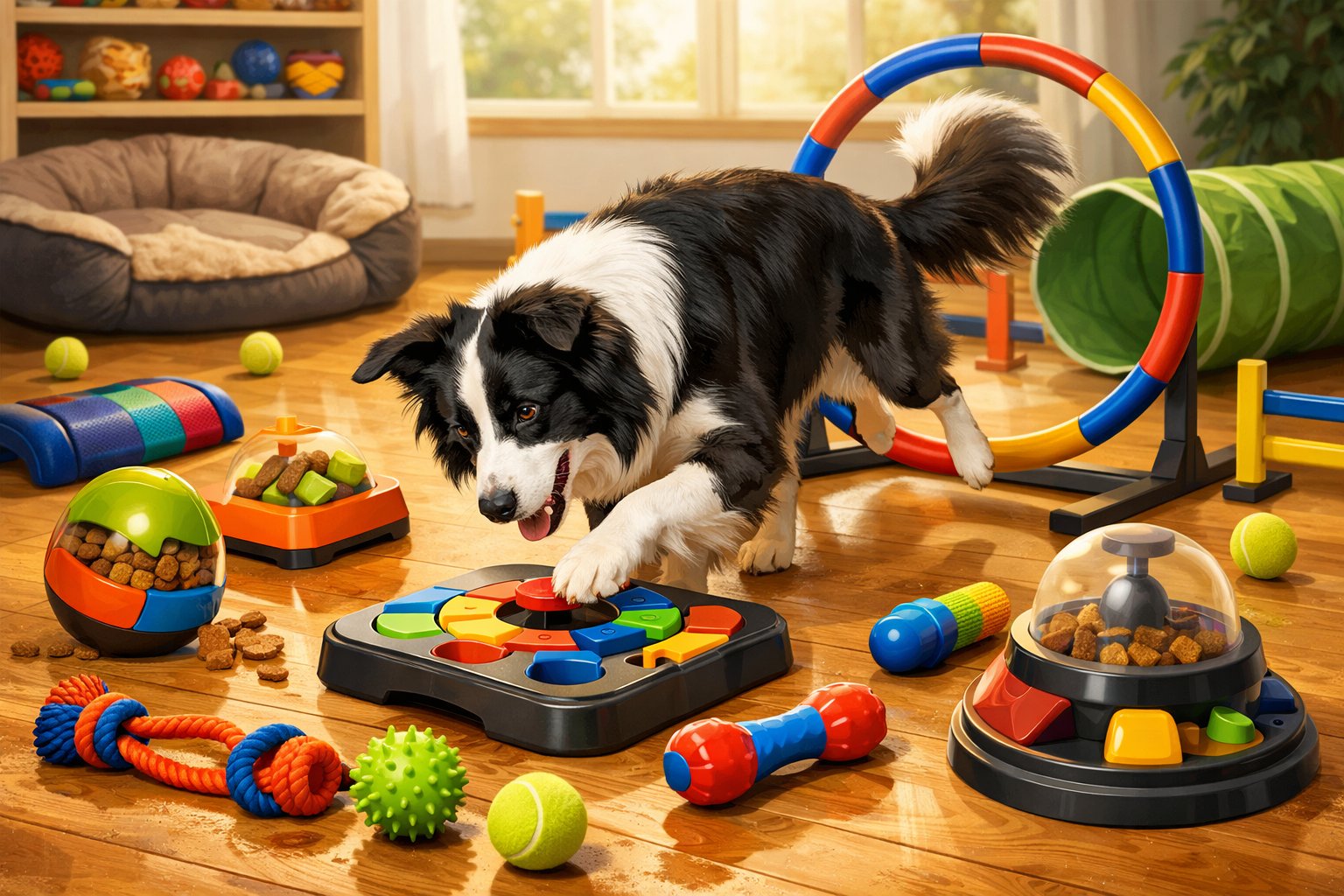
A Border Collie playing with various interactive toys in a bright indoor play area filled with agility equipment and puzzle feeders.

Border Collies stay focused longer when toys match their speed, brain power, and need to work. The right mix includes mental puzzles, tough chews, fast fetch gear, and herding-style play that uses instinct.

Best Puzzle Toys and Treat Dispensers

Puzzle toys slow the mind and cut boredom fast. Border Collies solve simple toys quickly, so adjustable treat-dispensing toys work best.

Popular options include puzzle feeders, a treat dispenser dog toy, and scent-based games like a snuffle mat. These force the dog to sniff, slide, and spin parts to earn food.

Puzzle toys like the Dr Catch dog puzzle and similar designs work well for daily meals. They also help fast eaters slow down.

Many owners rotate toys to keep interest high. Reviews of interactive options often highlight puzzle toys in lists of the best Border Collie toys for mental stimulation.

What to look for

  • Multiple difficulty settings
  • Strong plastic or rubber
  • Easy cleaning

Durable Chew Toy Recommendations

Chewing helps Border Collies release stress. Durable chews also protect furniture and shoes.

Rubber and nylon toys last longer than soft plastics. For young dogs, the KONG Puppy Goodie Bone suits border collie puppies and other toys for puppies.

It soothes gums and holds treats without breaking teeth. Adult dogs often prefer flavored nylon chews.

These focus the dog on one task and reduce pacing or digging. Chew toys should match jaw strength and size.

Many buyers rely on long-term testing found in guides to durable chew toys for Border Collies.

Best Fetch Balls and Frisbees

Fetch burns energy fast. Border Collies excel at long throws and quick returns.

Frisbees encourage jumping and tracking. Soft-edged discs protect teeth and gums.

Balls work better for tight spaces or short sessions. Chuckit! gear stands out for bounce and visibility.

Tools like Chuckit! launchers extend throw distance without strain. Indoor play works well with the Chuckit! Indoor Fetch Ball, which stays soft and quiet.

Fetch toys earn top marks in lists of high-energy toys for Border Collies.

Toy Type Best Use
Frisbees Open fields
Rubber balls Yard play
Soft balls Indoor games

Innovative Herding and Tug Toys

Herding toys tap into instinct. A herding ball or large herding balls give the dog a job that feels natural.

These balls resist bites and encourage pushing, circling, and control. Many dogs stay busy for long stretches without human help.

For shared play, tug toys work well. Products like the Jolly Pets Tree Tugger anchor to a tree and allow solo tug sessions.

Standard tug ropes and some squeaky toys also add variety. Toy roundups focused on instinct-driven play often recommend herding options in Border Collie toy guides built for engagement.

Choosing and Using Toys Safely for Your Border Collie
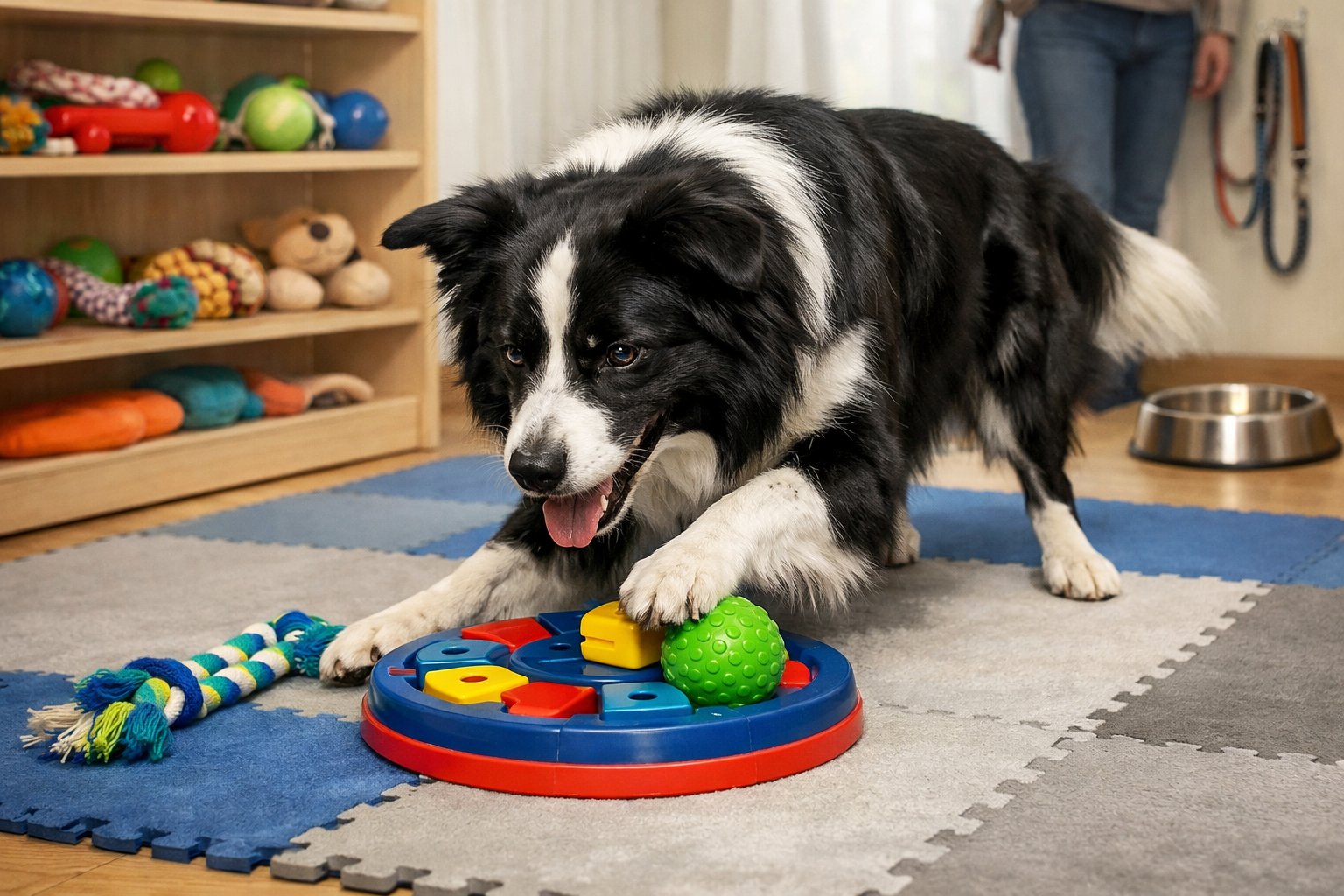
A Border Collie playing with various safe toys in a bright indoor area designed for active dogs.

Smart play keeps a border collie busy and safe at the same time. The right choices reduce choking risks, slow toy damage, and help match play to strong instincts and energy levels.

Durability and Safe Materials

Durability matters because a border collie chews with focus and speed. Thin plastic and weak seams fail fast and can break into sharp pieces.

Many guides to the best toys for border collies stress reinforced rubber, dense nylon, or layered fabric. Safe materials matter just as much.

Natural rubber and BPA-free plastics lower health risks. Avoid toys with glued eyes, loose strings, or small caps.

What to check before buying:

Feature What to look for
Material Natural rubber, heavy-duty nylon
Size Larger than the dog’s muzzle
Build One solid piece or tight stitching

Replace toys once cracks, deep tears, or loose parts appear.

Matching Toys to Your Collie’s Play Style

A border collie does not play at random. Many chase, herd, solve problems, or tug with purpose.

Choosing toys that fit these habits keeps interest high and damage low. Dogs that love fetch do best with thick rubber balls that bounce and float.

Herding-driven dogs benefit from large push balls that resist punctures. Problem solvers need puzzle toys that hide food and require steps to unlock.

Reviews like those from Dogster’s Border Collie toy picks often group toys by play style, which helps narrow choices. Avoid forcing one type of toy.

A tug-only dog may ignore puzzles, while a puzzle-focused dog may shred plush toys from boredom.

Toy Rotation and Supervision Tips

Rotation keeps toys feeling new and limits wear. Keep only three to five toys out at once.

Swap them every few days to reset interest. Supervision matters most with new toys.

Watch how the dog bites, pulls, or tries to tear seams. Remove toys used only during shared play, like ropes, once the session ends.

Helpful rotation habits:

  • Wash rubber and food toys weekly
  • Rest heavily chewed toys for several days
  • Store unused toys out of sight

Active oversight extends durability and keeps play safe for an easily bored border collie.
Filed Under: Border Collies

Border Collie Training Mistakes New Owners Often Make: Key Pitfalls & Solutions

December 24, 2025 by Jason Huskey

Fundamental Training Mistakes With Border Collies

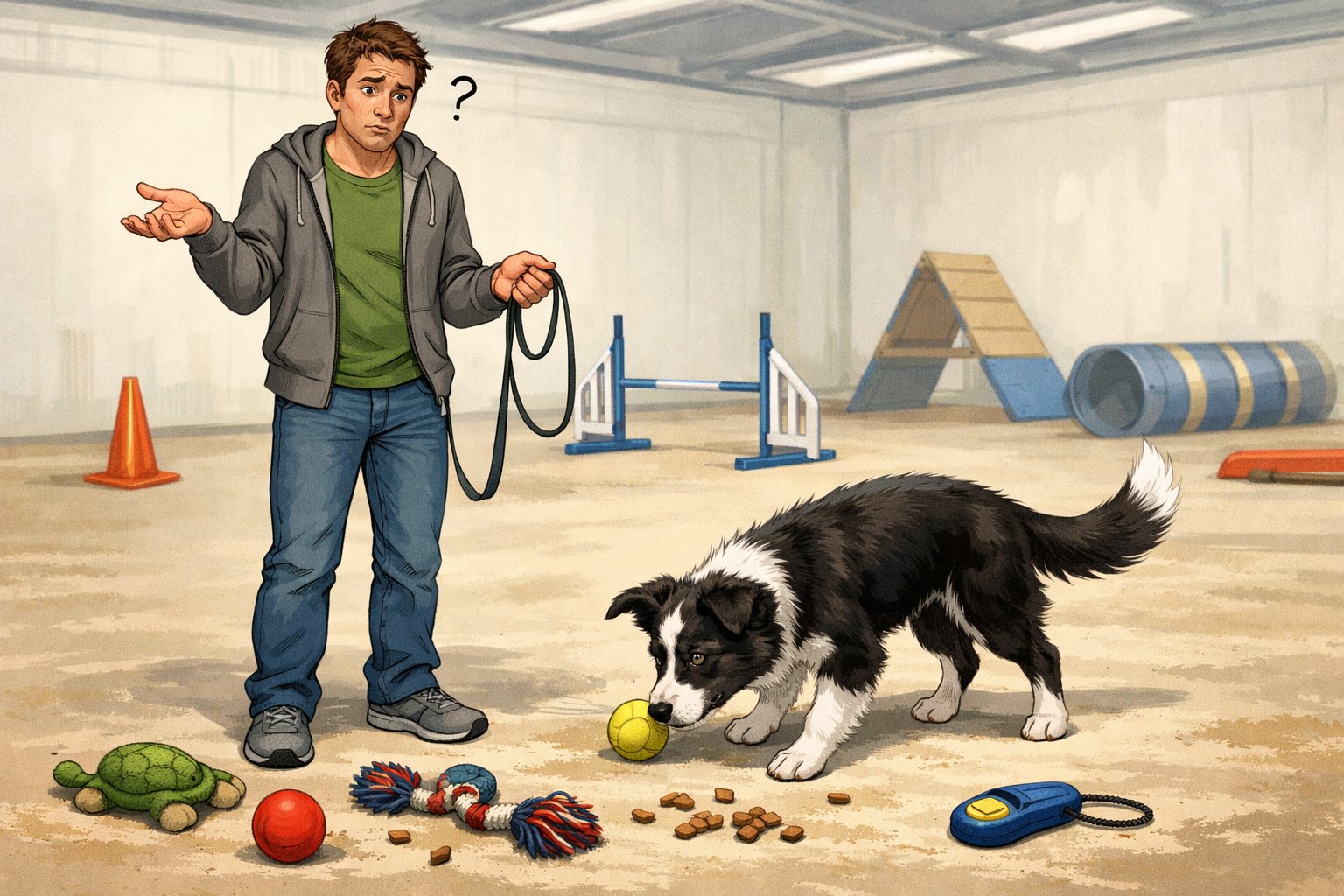
A new dog owner and a Border Collie puppy during a training session showing common mistakes like loose leash handling and puppy distraction indoors with training equipment around.

Many new owners struggle with the same early issues when working with a border collie. These problems often involve mental needs, daily structure, social exposure, and natural instincts that shape behavior from a young age.

Underestimating Border Collie Intelligence

A common mistake in border collie training involves treating the dog like an average breed. A border collie learns fast and notices patterns quickly.

When training feels repetitive or too easy, boredom often shows up as barking, chewing, or ignoring commands. A border collie puppy needs mental work as much as physical exercise.

Short training games, problem toys, and learning new cues help keep focus. Owners who skip mental challenges often see setbacks later.

Simple steps help:

  • Teach new skills weekly
  • Rotate toys and tasks
  • Use food puzzles during meals

Inconsistent Training Schedule and Methods

Dogs learn faster when rules stay the same. A consistent training schedule helps a border collie understand what behavior earns rewards.

Changing cues, timing, or rules confuses the dog and slows progress. Many households train differently without realizing it.

One person allows jumping while another corrects it. This mixed message creates stress and testing behavior.

A simple structure works best:

Training Element Best Practice
Commands Use the same words
Timing Train at set times
Rewards Stay consistent

Neglecting Early Socialization

Early socialization shapes how a dog reacts to the world. When owners delay it, a border collie may become fearful, reactive, or overly alert.

This risk increases if the dog only sees one environment during puppyhood. A border collie puppy should meet different people, dogs, sounds, and places in controlled settings.

Calm exposure builds confidence and reduces stress later. Many behavior problems shared in training mistake discussions trace back to missed social time.

Good social habits include:

  • Short visits to new places
  • Positive dog meetups
  • Exposure to common noises

Overlooking Herding Instincts

A border collie carries strong herding instincts. Ignoring this drive often leads to chasing cars, children, or other pets.

These actions reflect instinct, not disobedience. Effective how to train a border collie plans give that instinct a safe outlet.

Structured games, fetch with rules, and agility-style work help redirect focus. Owners who respect this trait see fewer behavior issues.

Helpful outlets include:

  • Controlled fetch games
  • Directional commands
  • Obedience tasks with movement

Common Missteps in Reinforcement and Stimulation

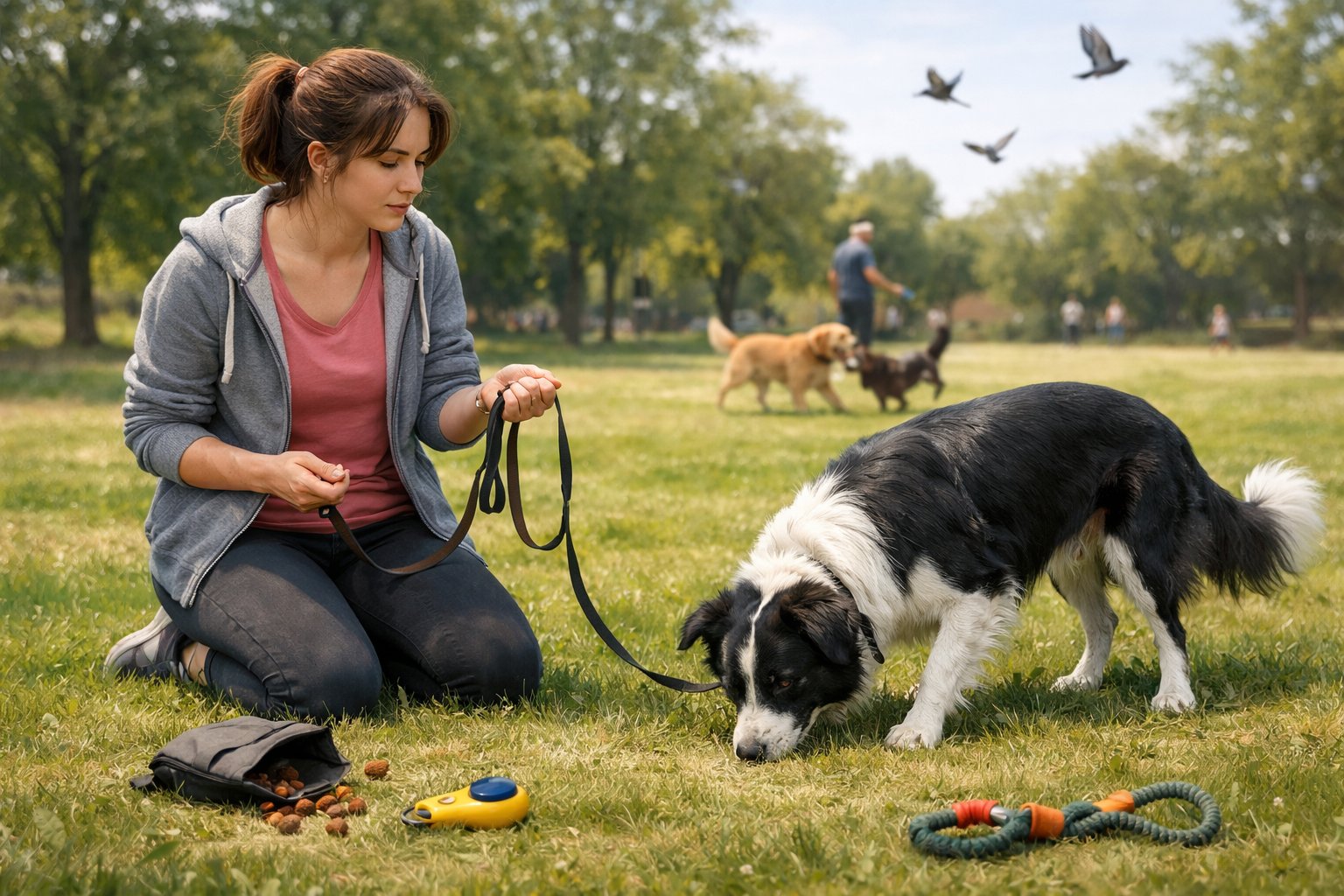
A young woman training a distracted Border Collie in a park, with scattered training tools nearby and other dogs playing in the background.

Many training problems start when owners miss key details in how they reward behavior, challenge the dog’s mind, and teach core skills. Border Collies need clear feedback, steady practice, and daily tasks that use both brain and body.

Insufficient Positive Reinforcement Techniques

Some owners delay rewards or use them in unclear ways. Border Collies learn best when positive reinforcement happens right after the behavior.

Late rewards confuse them and slow progress. Effective positive reinforcement techniques include treats, praise, or a favorite toy.

Owners should reward the exact action they want, such as sitting or making eye contact. Short, focused training sessions work better than long drills.

A common mistake involves mixing rewards with punishment. This weakens trust and reduces focus.

Lack of Mental Stimulation Activities

Physical exercise alone does not meet a Border Collie’s needs. Without enough mental stimulation, they may bark, chew, or ignore commands.

Their brains need daily challenges. Useful activities include puzzle feeders, scent games, and learning new cues.

Rotating tasks keeps interest high and prevents boredom. Even ten minutes of problem-solving can calm restless behavior.

Owners often underestimate this need.

Simple mental stimulation ideas

  • Hide treats for scent searches
  • Teach object names
  • Practice short trick chains

Ignoring Recall Training

Recall training teaches the dog to come when called, even with distractions. Many owners delay this skill or only practice it indoors.

That creates risk outdoors. Strong recall training starts early and uses high-value rewards.

Owners should call the dog once, reward fast responses, and avoid repeating the cue. Practice should happen on long lines before going off leash.

Skipping this step leads to poor control.

Overlooking the Importance of Obedience Training

Basic obedience training builds structure and communication. Some owners rush past skills like sit, stay, and loose-leash walking.

That creates gaps later. These commands help manage excitement and focus energy.

Border Collies respond well to clear rules and consistent practice. Training should happen in short bursts across different places.

Mistakes Related to Exercise and Advanced Training

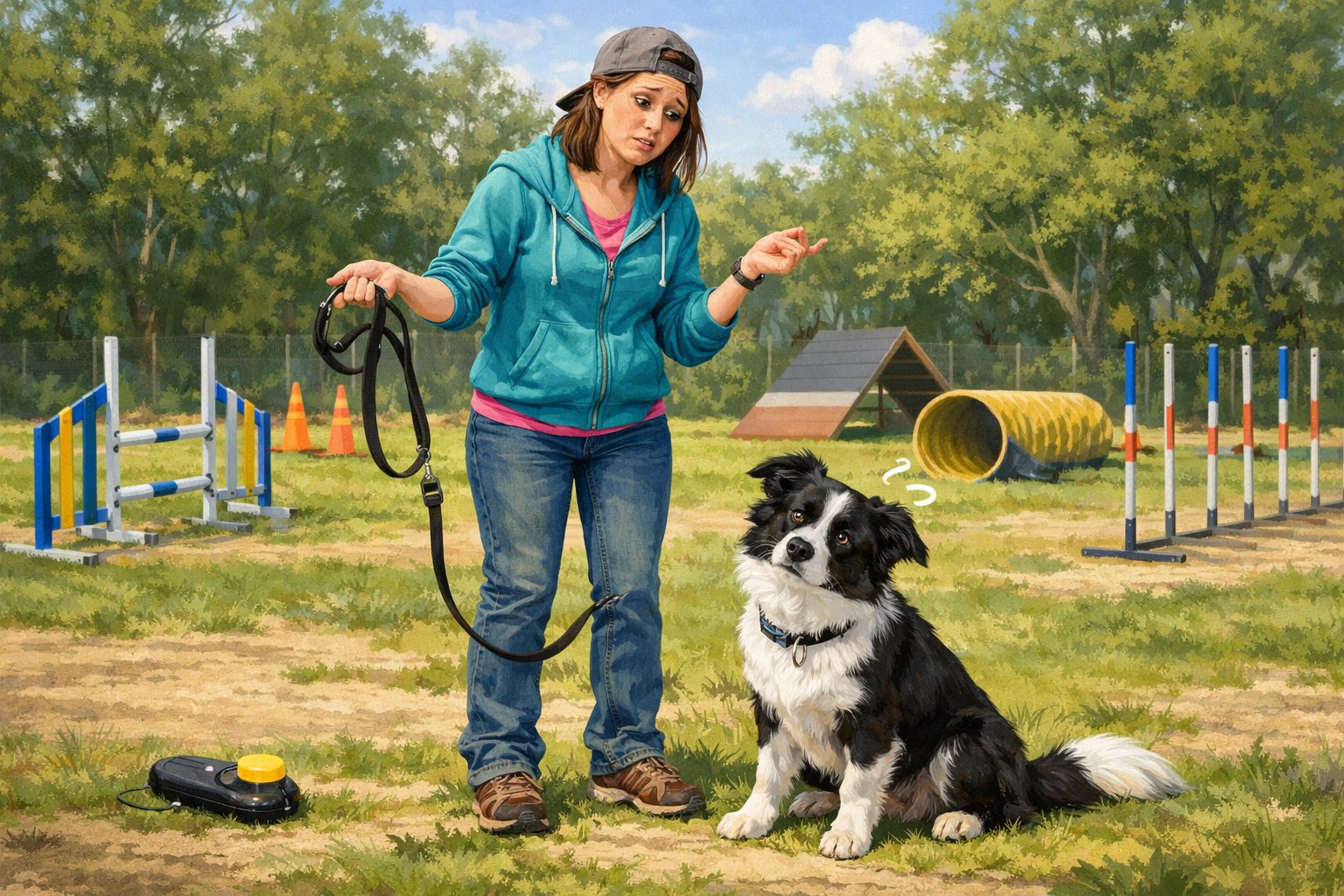
A young Border Collie and its owner in an outdoor training area, showing signs of confusion and hesitation during a training session.

Border Collies need daily movement and steady skill building to stay calm and focused. Many problems start when owners limit exercise, wait too long to teach complex skills, or skip shared training settings.

Providing Inadequate Physical Exercise

Border Collies need daily physical exercise, not short walks around the block. When owners fail to meet this need, the dog often shows pacing, barking, or chewing.

These behaviors come from unused energy, not bad manners. Most adults need 60–90 minutes of active movement each day.

This includes brisk walks, running, fetch, or structured play.

Helpful exercise options include:

  • Long leash walks with direction changes
  • Fetch with rules, not free chasing
  • Hill walks or trail hikes

Owners often think mental work replaces movement. It does not.

Delaying Agility or Advanced Training

Some owners wait too long to start agility training or other advanced training. This delay can waste the dog’s strong learning drive during early development.

Border Collies learn fast and enjoy clear tasks. Advanced work does not mean unsafe jumps for puppies.

It can include body awareness, direction cues, and obstacle basics.

Good early options include:

  • Low-impact agility foundations
  • Target training and distance cues
  • Beginner flyball skills like recalls

Skipping Group Obedience Classes and Sports

Many owners skip obedience classes because they train at home. This choice often limits progress.

Group classes teach dogs to listen around distractions, not just in quiet rooms. Classes also expose dogs to people, sounds, and movement.

These settings build control and calm behavior.

Group activities that help include:

  • Basic and advanced obedience classes
  • Flyball teams for speed and control
  • Beginner agility groups

Training experts who share Border Collie training strategies explain that sports and classes sharpen skills faster than solo practice. Dogs learn teamwork, not just commands.

Filed Under: Border Collies

Living with a Border Collie in an Apartment: Essential Owner Guide

December 24, 2025 by Jason Huskey

Can Border Collies Really Live in Apartments?

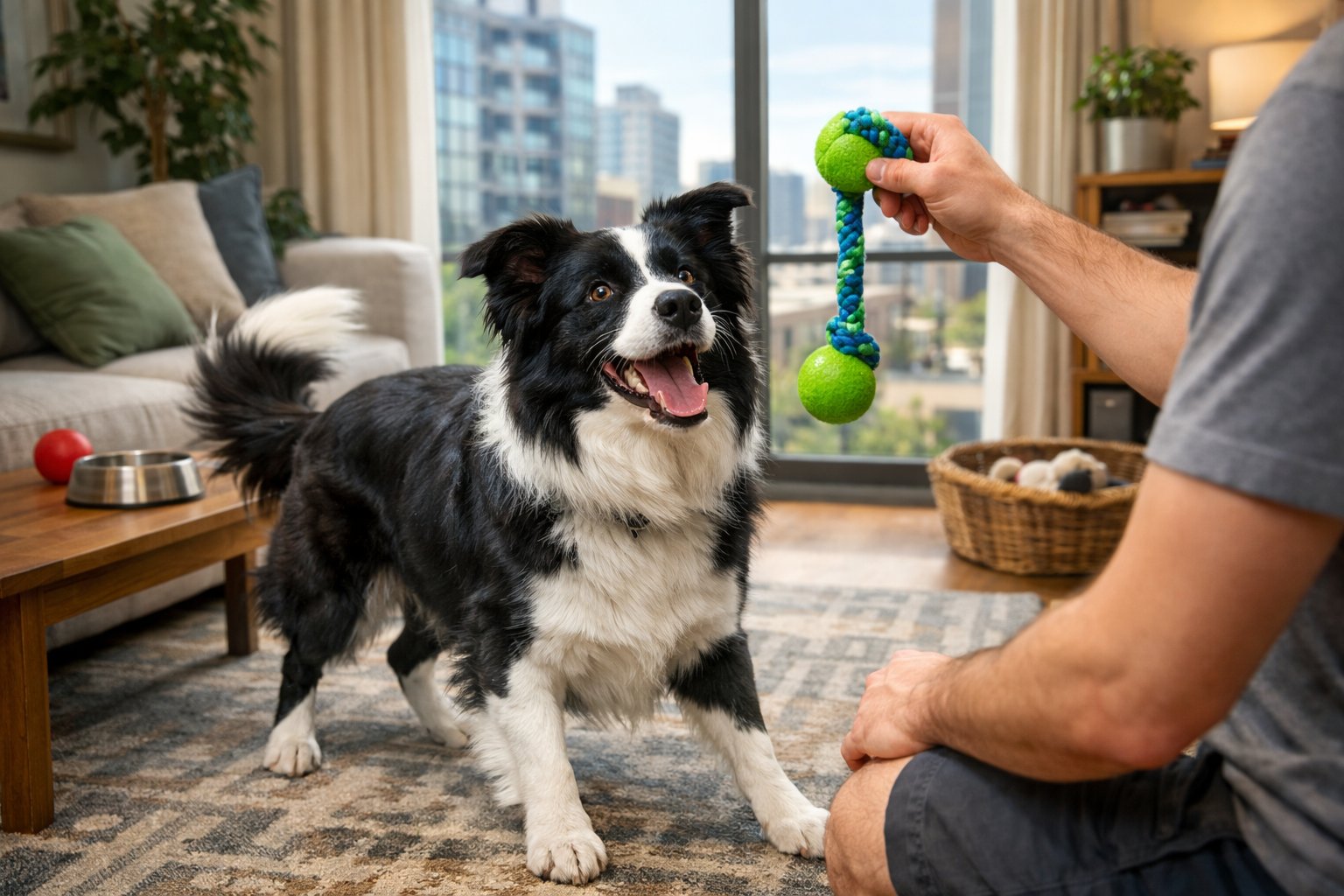
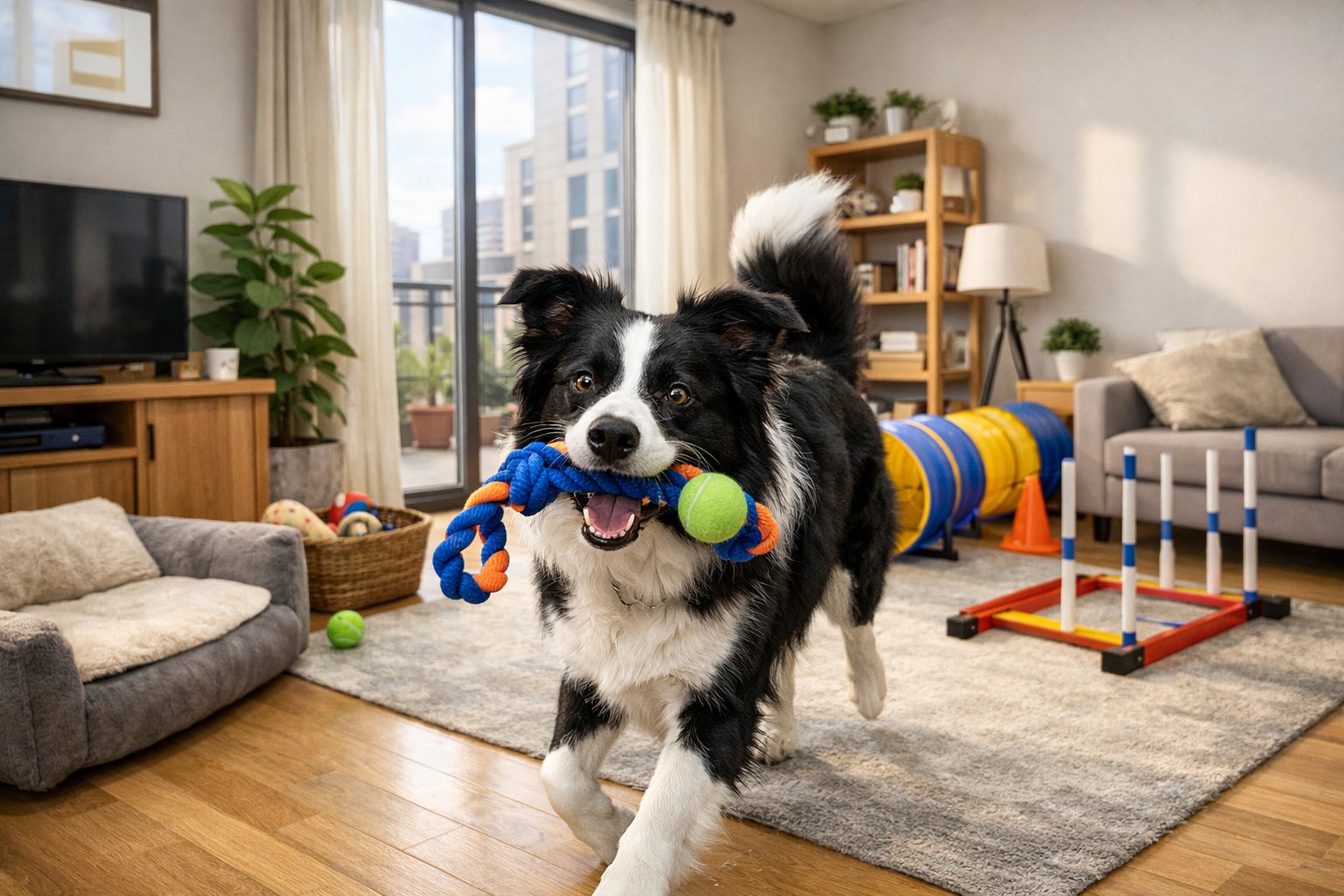
A Border Collie playing with a person inside a bright apartment living room with furniture and plants.

A border collie can adapt to apartment living when daily routines meet clear mental and physical needs. Space matters less than structure, time, and consistent engagement in an apartment setting.

Challenges of Small Living Spaces

A small living space limits free movement, which can frustrate a border collie if the owner skips daily activity. Apartment life removes easy yard access, so every bathroom break and exercise session depends on the owner’s schedule.

Noise creates another challenge. Border collies often react to hallway sounds, neighbors, and street activity.

Without training, barking can cause problems for city dwellers and property managers. This issue shows up often in discussions about border collies in apartments.

Alone time also matters. Long workdays without breaks can lead to boredom and stress.

Many apartment dogs cope well alone, but this breed needs planning, such as dog walkers, daycare, or structured enrichment during the day.

Breed Traits That Impact Apartment Life

The border collie breed ranks high in intelligence and problem-solving ability. This trait helps with training but raises daily demands in an apartment setting.

Mental work matters as much as physical activity. Herding instincts influence behavior indoors.

Some dogs chase shadows, fixate on moving objects, or try to “herd” people. Training helps redirect these habits into games, obedience, or scent work.

Sensitivity also plays a role in urban living. Border collies often notice changes in routine, sound, and movement.

Early exposure and calm handling reduce stress in busy buildings. Guides on apartment life with border collies often stress routine and predictability over square footage.

Typical Exercise Requirements

Border collies in apartments need structured daily exercise, not casual walks. Most require 90 minutes to 2 hours per day, split into several sessions, to stay balanced and calm.

Exercise should mix body and brain work. Useful options include:

Activity Type Examples
Physical Fast walks, jogging, fetch, stairs
Mental Puzzle feeders, trick training
Social Dog parks, training classes

Urban living can support these needs. Many city dwellers rely on parks, group classes, and dog-friendly spaces.

Articles on border collies and apartment exercise needs emphasize consistency, not intensity, as the key factor for success.

Keeping a Border Collie Happy and Healthy Indoors

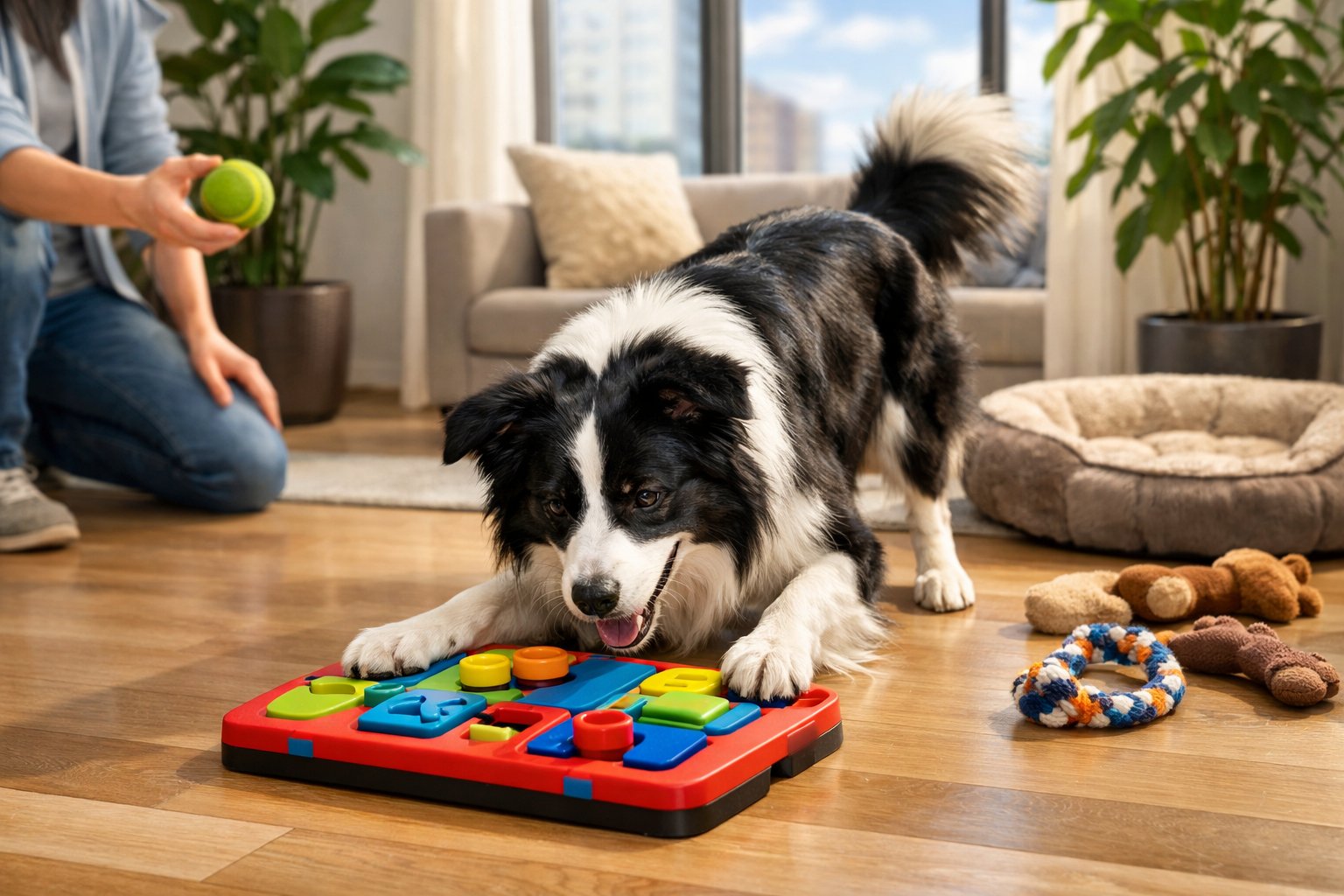
A Border Collie playing with a puzzle toy on the floor of a bright, modern apartment living room while a person throws a ball to it.

A Border Collie can do well indoors when owners meet clear exercise needs and provide steady mental stimulation. Structure, variety, and calm training reduce stress, barking tendencies, and destructive behaviors in small spaces.

Daily Routine and Schedule for Apartment Dogs

Border Collies thrive on a predictable daily routine. Owners should plan set times for walks, meals, play, and rest.

This structure helps high-energy dogs stay calm and lowers stress. Most apartment dogs need two long walks and one shorter outing each day.

Walks should include brisk movement, not just slow pacing. Many guides on apartment living with Border Collies stress that regular outdoor activities matter more than home size.

Indoor exercise fills gaps between walks. Short training sessions, hallway fetch, or stair climbs help meet exercise requirements.

Consistent sleep times also reduce restlessness at night.

Mental Stimulation and Enrichment Ideas

Border Collies are working dogs, so mental work matters as much as physical exercise. Without mental enrichment, they often invent their own tasks, which leads to problems.

Puzzle feeders, scent games, and hide-and-seek use problem-solving skills. These activities meet daily mental stimulation needs and work well in apartments.

Articles on keeping Border Collies engaged indoors note that focused brain work can tire them faster than long walks, as explained in tips for a happy indoor Border Collie.

Short obedience drills also help. Five-minute sessions spread through the day improve focus and reduce boredom.

Rotating toys each week keeps interest high.

Managing Barking and Destructive Behaviors

Barking and chewing often signal unmet needs. Border Collies may bark at hallway noise or destroy items when bored or anxious.

Owners should first check exercise needs and daily structure. Calm training helps manage barking tendencies.

Reward quiet behavior and block visual triggers when possible. White noise can reduce outside sounds.

Advice on keeping Border Collies happy and active often highlights prevention over correction. Destructive behaviors also link to separation anxiety.

Gradual alone-time training, safe chew items, and a quiet rest area reduce stress. A tired, mentally fulfilled dog rests instead of reacts.

Top Strategies for Apartment Success with Border Collies

A Border Collie playing with a toy inside a bright, cozy apartment living room with dog-friendly features.

Smart routines, clear training, and the right home setup help active dogs thrive in small spaces. Consistent exercise, calm guidance, and access to people and dogs matter most.

Exercise Solutions for Apartment Settings

Border Collies need daily movement that challenges both body and mind. Owners should plan 90 minutes or more split across the day.

Short walks alone fall short. Useful options include:

  • Fetch and sprint games at nearby dog parks or open fields
  • Agility training classes or simple weave poles at home
  • Stair climbs and hallway drills for rainy days

Many city owners rely on dog walking services or a trusted dog walker for midday breaks. Structured outings prevent boredom and reduce noise issues.

Apartment life works best when owners commit to a fixed schedule, not just weekend exercise, as explained in this guide to Border Collies in apartments.

Training and Positive Reinforcement Approaches

Clear rules and steady training sessions keep Border Collies calm indoors. Owners should focus on obedience training early, using rewards instead of punishment.

Effective tools include:

  • Positive reinforcement training with treats or praise
  • Short, focused drills that match their herding instinct
  • Help from a certified dog trainer when problems start

Mental work matters as much as running. Puzzle feeders, puzzle games, and treat-dispensing toys tire the brain fast.

Many owners rotate interactive toys to keep interest high. Consistent training reduces barking and stress, which many apartment owners report as a key challenge in living successfully with a Border Collie indoors.

Socialization and Community Tips

City life offers strong chances for socialization if owners use them well. Regular exposure builds confidence and lowers fear.

Helpful habits include:

  • Visits to busy sidewalks and elevators
  • Controlled play at local dog parks
  • Group walks or dog sports clubs

Some owners choose doggy daycare once or twice a week. Daycare provides supervised play and rest.

It also helps dogs stay calm when home alone. Urban routines can feel intense, but steady exposure works.

Articles on apartment living with Border Collies often stress early social skills as a major success factor.

Dog-Friendly Apartment Features

The right home setup makes daily life easier. A dog-friendly apartment should support movement and calm rest.

Key features to look for:

  • Easy access to outdoor areas
  • Durable floors that handle activity
  • Space for crates and training mats

Owners should plan quiet zones for recovery after exercise. Regular veterinary check-ups also matter, especially for active breeds at risk for hip dysplasia.

Many apartment guides note that layout and location matter more than square footage. This includes advice found in this overview on raising a Border Collie in an apartment.

Filed Under: Border Collies

How Much Exercise Does a Border Collie Really Need? Complete Daily Guide

December 24, 2025 by Jason Huskey

How Much Exercise Does a Border Collie Really Need?

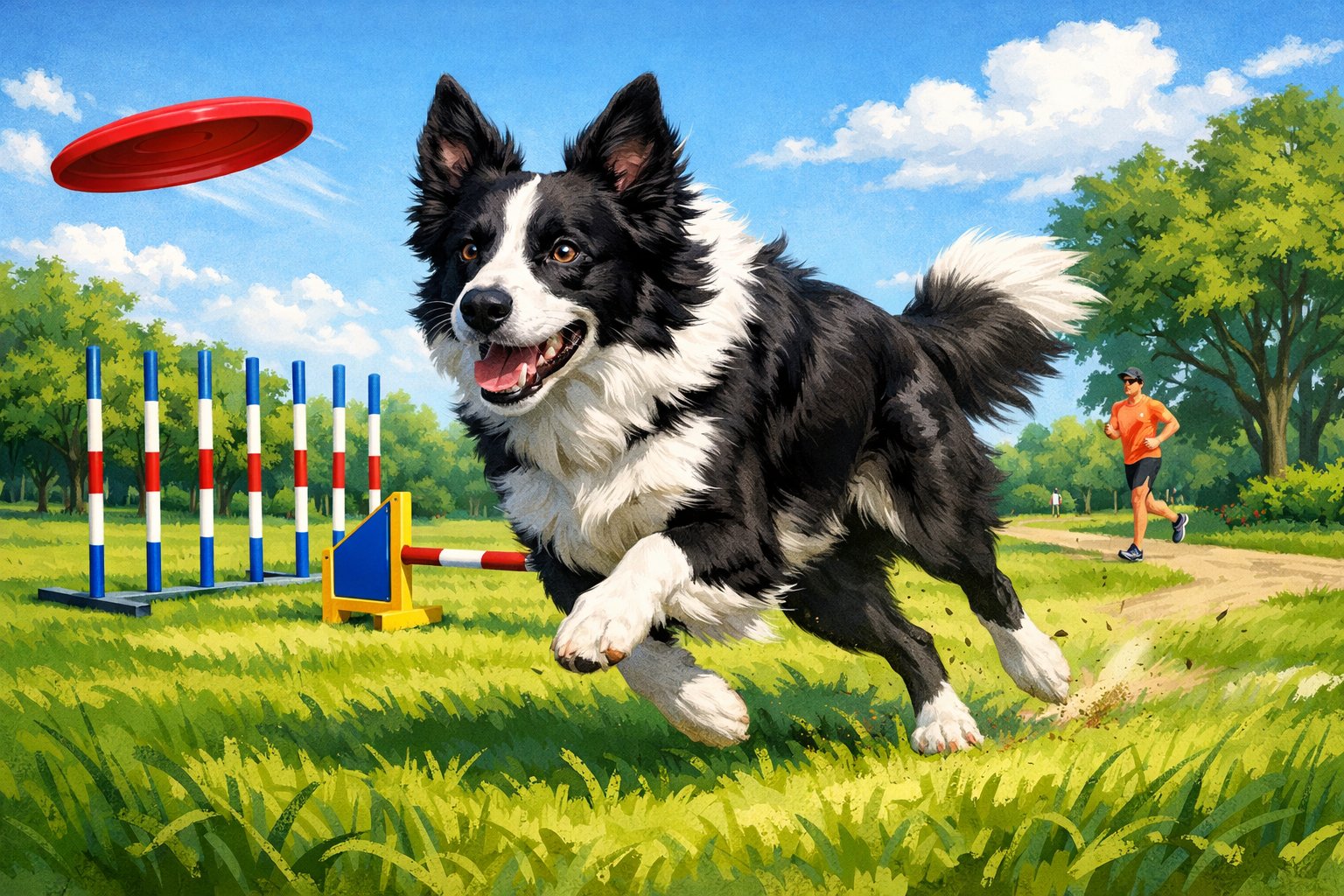
A Border Collie running energetically in a park with agility obstacles and a frisbee in the air.

Border collies need structured activity that matches their strong drive to move and think. The right amount depends on energy level, age, health, and daily routine.

Understanding Border Collie Energy Levels

Border collies rank among the most active herding dogs. Breeders developed them to work for hours while herding livestock.

This background explains their high exercise needs and sharp focus. Most border collies need vigorous exercise that raises the heart rate.

Slow walks rarely meet this need. Activities like running, fast-paced fetch, agility, and hiking work better.

Individual temperament matters. Some dogs settle with less activity, while others need more time to burn energy.

Articles on how much exercise Border Collies need note that most adults need about one to two hours each day. Mental work also matters.

Training, puzzle toys, and learning new commands help protect border collie health and reduce stress. Physical and mental activity work best together.

Daily Exercise Guidelines by Age

Age and health shape safe and effective daily exercise. Puppies, adults, and seniors need different routines.

Age Group Daily Activity Focus Typical Time
Puppy Short play, training, rest 30–60 minutes
Adult Running, games, training 90–120 minutes
Senior Low-impact movement 45–60 minutes

Puppies should avoid long runs. Short play sessions protect growing joints.

Adults thrive on structured exercise routines with both speed and skill. Many experts suggest 90 minutes to 2 hours of daily exercise for healthy adults.

Seniors still need movement. Gentle walks and light games support mobility without strain.

Always adjust exercise for age and health limits.

Signs Your Border Collie Needs More Activity

Behavior often shows when activity levels fall short. Common signs include pacing, chewing objects, or constant demand for attention.

Other signs include weight gain, restlessness indoors, and trouble settling after walks. These issues often improve when owners increase vigorous exercise and mental tasks.

Working breeds also show focus problems when bored. They may ignore cues or fixate on motion.

Guides on Border Collie exercise needs link these behaviors to unmet activity demands. Changes should happen slowly.

Adding time, variety, or intensity helps meet needs without injury. Regular activity supports mood, focus, and long-term health.

Best Types of Exercise and Enrichment for Border Collies

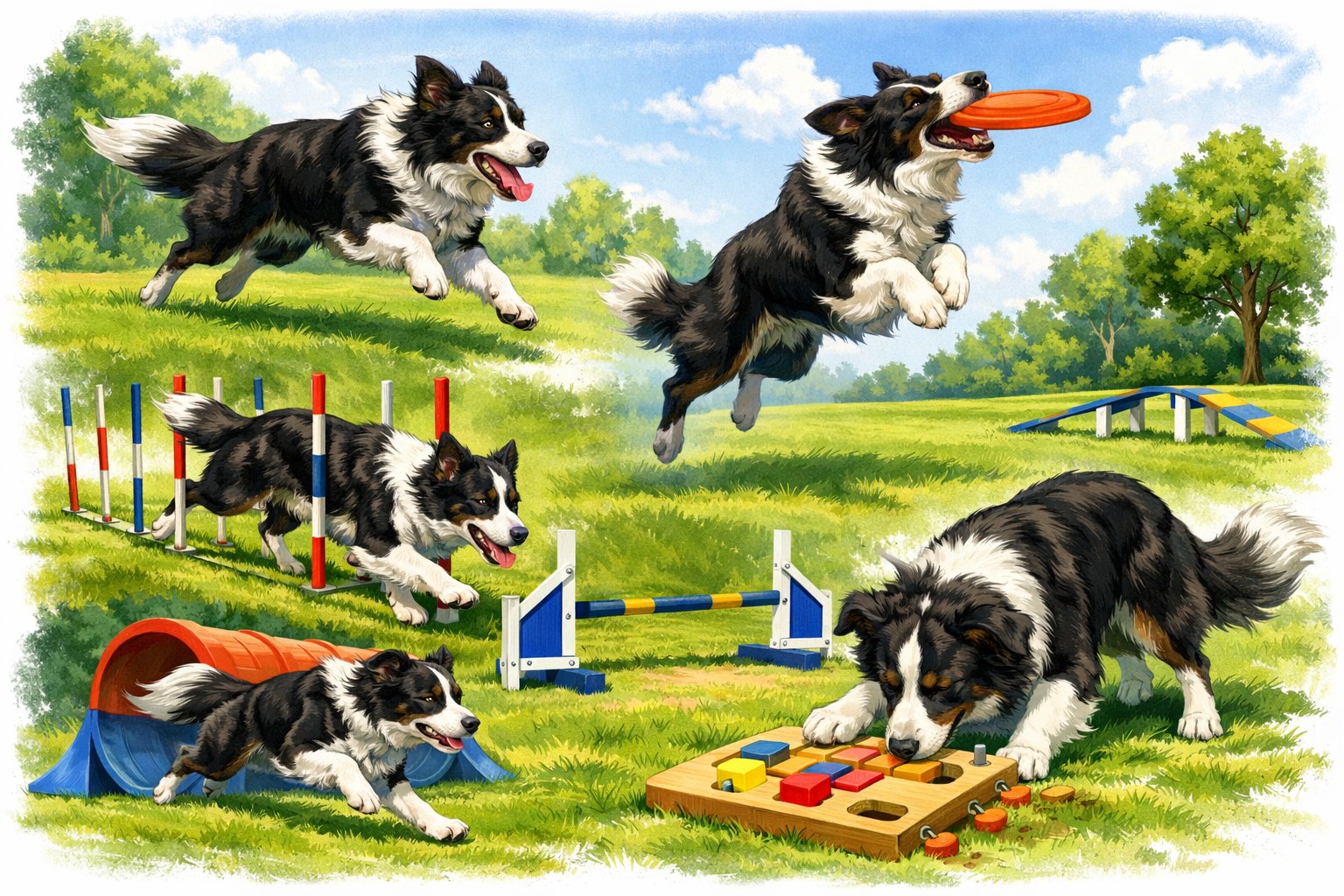
A Border Collie running, catching a frisbee, navigating an agility course, and playing with a puzzle toy in a green park.

Border Collies need daily physical exercise and mental enrichment to stay calm and focused. The right mix of movement, thinking tasks, and structured play keeps energy levels balanced and behavior steady.

Physical Exercise: Walks, Runs, and Outdoor Activities

Border Collies need vigorous activity every day. Long walks help, but brisk walks, runs, and hikes work better for this high-energy breed.

Many owners aim for 60–120 minutes of movement spread across the day. Outdoor activities like hiking and swimming give joints a break while still burning energy.

Playing fetch and other fetch games allow fast sprints and quick turns, which suit herding dogs well. Safe off-leash areas or fenced yards work best.

A dog walker can help on busy days. Some owners use dog daycare for supervised playtime, but not all dogs enjoy group settings.

Watch behavior and stress levels closely.

Mental Stimulation and Enrichment Ideas

Mental stimulation matters as much as physical exercise for border collie exercise needs. Without it, excess energy often turns into pacing, barking, or destructive habits.

Short training sessions during the day build focus and confidence. Basic obedience, trick training, and impulse control games work well.

Puzzle toys, puzzle feeders, and interactive toys slow eating and encourage problem solving. Scent games offer simple mental enrichment.

Hide treats or toys and let the dog search by smell. Rotate activities often to avoid boredom.

Even 10–15 minutes of focused thinking can reduce restless behavior.

Structured Activities and Canine Sports

Structured activities give Border Collies a clear job to do. Many thrive in agility training, which combines speed, balance, and listening skills.

Courses challenge both body and brain. Canine sports like flyball and disc games reward fast reactions and teamwork.

These sports suit dogs that enjoy rules and repetition. Proper training and rest prevent overuse injuries.

Some dogs benefit from controlled herding lessons, where available. This taps into natural instincts without creating bad habits.

Visits to well-managed dog parks can help with social skills, but only for dogs that enjoy group play.

Tailoring Exercise to Your Border Collie’s Life Stage and Personality

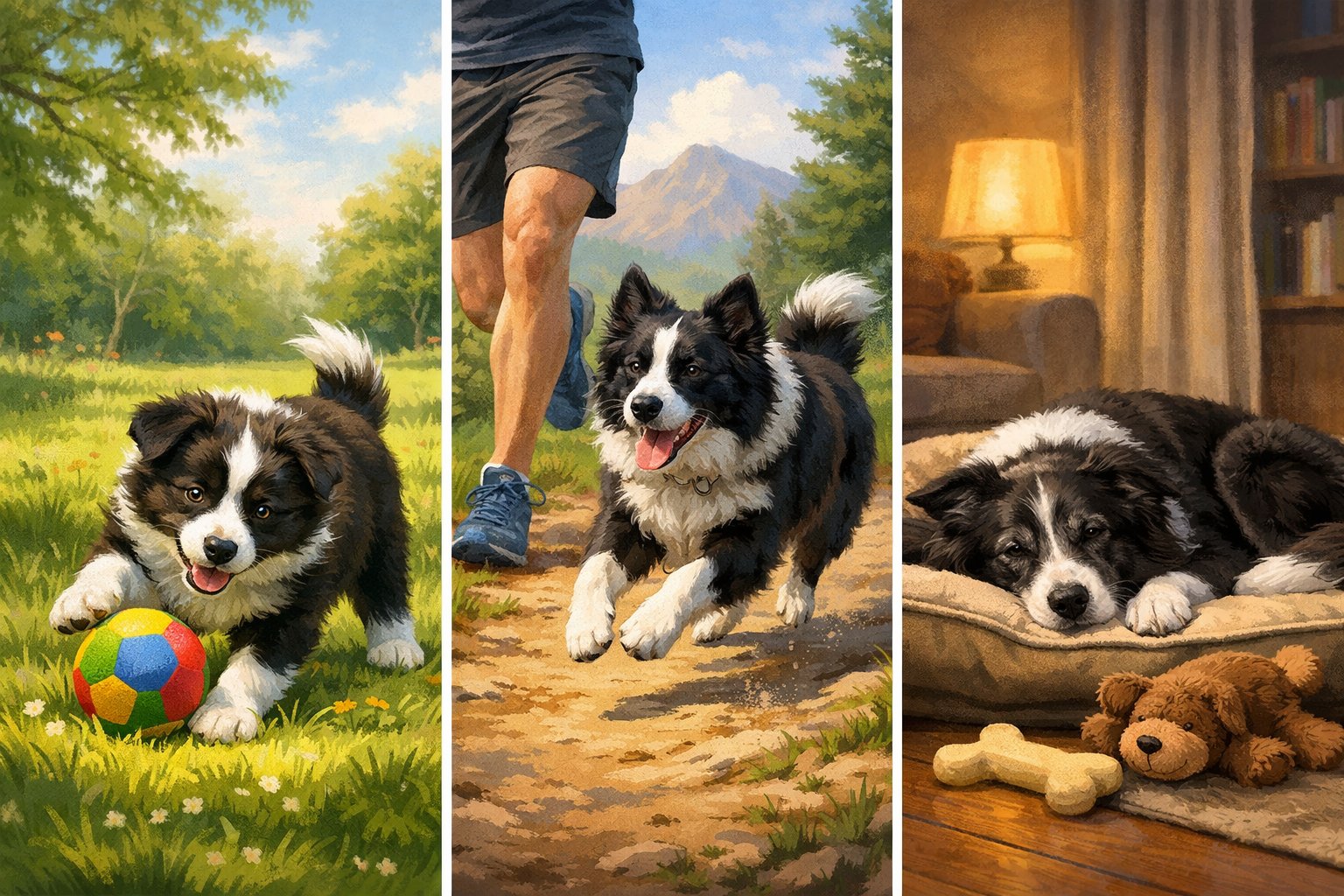
Three Border Collies at different life stages: a puppy playing with a ball outside, an adult dog running with a person on a trail, and a senior dog resting indoors on a bed.

Border collies do not all need the same amount or type of activity. Age, daily role, and individual temperament shape the right exercise schedule.

Health and recovery matter just as much as time spent moving.

Exercise Needs of Border Collie Puppies

Border collie puppies need short, controlled activity that protects growing joints. Their bones stay soft during early months, so long runs and hard jumping increase injury risk.

Many vets follow the five minutes per month of age rule for walks, which helps prevent overuse injuries. Puppies benefit most from mental work mixed with play.

Simple training, puzzle toys, and scent games tire the brain without stressing the body. Light play in the yard or house works well.

Several guides warn against overdoing walks at this stage, including this breakdown of border collie puppy exercise needs by age. Rest periods matter.

Puppies need quiet time after activity to avoid overtired behavior that looks like excess energy.

Activity Guidelines for Adults and Seniors

Healthy adult border collies usually need 90 minutes to 2 hours of daily activity. This should include both movement and thinking tasks.

Long walks, fetch, agility basics, and training sessions work well when spread across the day. Many adults thrive on a varied exercise routine rather than the same walk every day.

Working dogs often need more structure and challenge than pet dogs. This guide explains how most adults need around 2 hours of daily exercise, though some need less.

Senior border collies still need daily movement, but intensity should drop. Short walks, gentle games, and light training help protect joints while supporting dog health and mobility.

Adjusting for Health, Age, and Temperament

Individual temperament matters as much as age. Some border collies settle easily after exercise, while others become overstimulated.

Calm cooldown time reduces pacing and restlessness after activity. Dogs with joint issues, heart conditions, or weight concerns need custom exercise plans.

A vet should guide changes tied to border collie health or recovery. Mental work can replace some physical strain during healing.

Owners should watch behavior cues. A dog that refuses to continue feels tired.

One that cannot settle may need calmer routines.

Filed Under: Border Collies

Border Collie Health Issues: What Owners Should Watch Out For

December 24, 2025 by Jason Huskey

Critical Border Collie Health Issues to Monitor

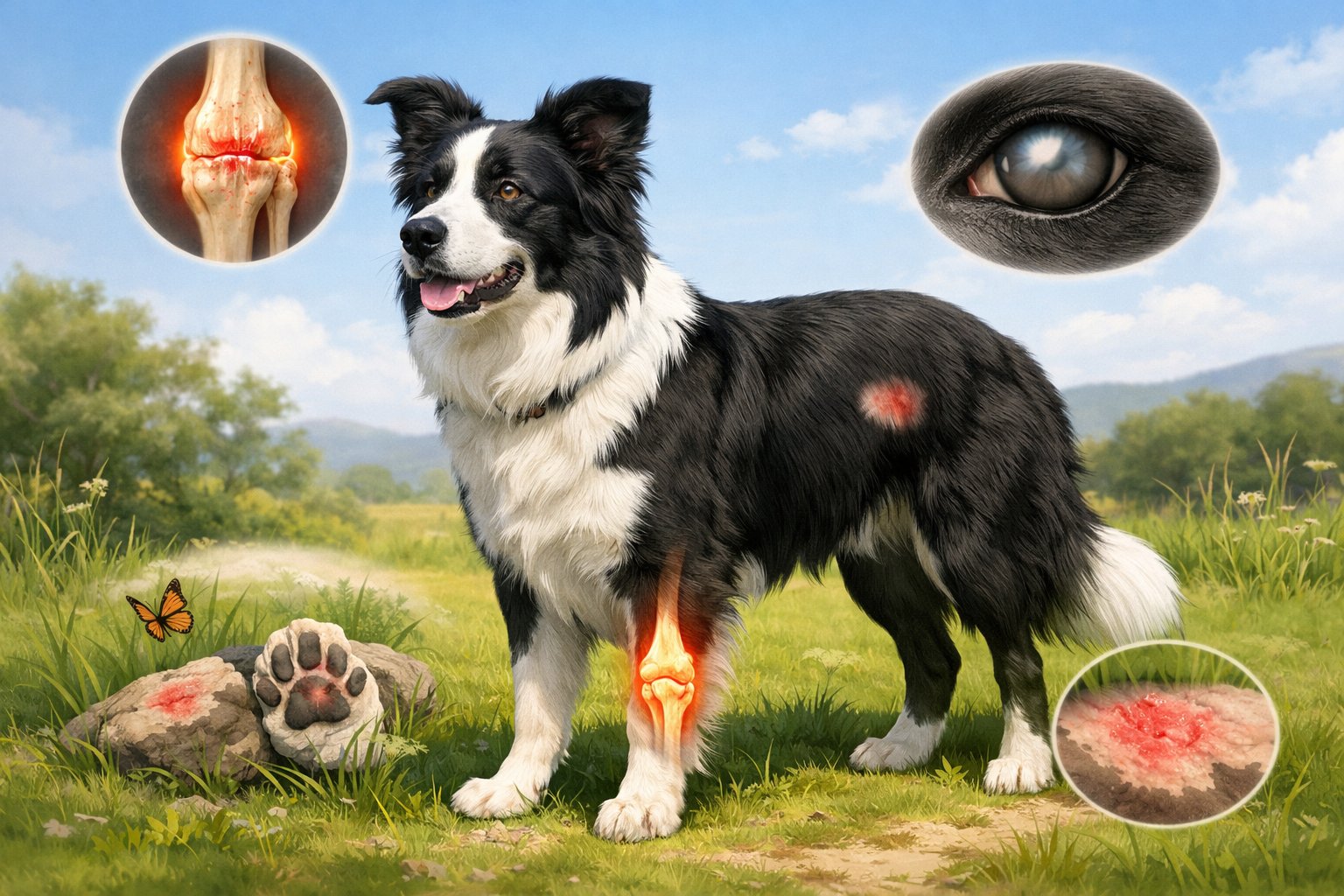
A Border Collie standing alert outdoors with subtle visual symbols representing common health issues to watch for in the breed.

Border Collies face several serious health problems that often have a genetic cause. Owners should watch for joint pain, vision loss, seizures, and rare immune disorders, and use early screening to guide care and breeding choices.

Hip Dysplasia in Border Collies

Hip dysplasia affects how the hip joint fits and moves. In Border Collies, this problem can limit running, jumping, and daily comfort.

It often starts early but worsens with age. Signs of hip dysplasia in Border Collies include stiffness after rest, trouble standing, limping, and less interest in exercise.

Weight gain can make symptoms worse. Vets diagnose hip dysplasia with X-rays.

Treatment may include weight control, joint supplements, pain medicine, or surgery in severe cases. Responsible breeding practices and early screening reduce risk.

Owners can learn more about hip dysplasia in Border Collies.

Collie Eye Anomaly and Progressive Retinal Atrophy

Collie Eye Anomaly (CEA) and Progressive Retinal Atrophy (PRA) both affect vision. These genetic health problems can lead to partial or total blindness.

CEA changes how the eye develops. Many dogs show no pain but may struggle in low light.

PRA causes slow damage to the retina, often starting with night blindness and later vision loss. There is no cure for CEA or PRA.

DNA testing helps identify carriers before breeding. Regular eye exams help track changes.

Owners can read about Collie Eye Anomaly in Border Collies.

Epilepsy and Seizure Disorders

Epilepsy in Border Collies causes repeated seizures with no clear trigger. Seizures may include shaking, collapse, drooling, or confusion after the event.

Signs of epilepsy often begin between one and five years of age. Stress, illness, or fatigue may increase episodes.

A vet will rule out other causes before diagnosing epilepsy. Treatment focuses on seizure control with daily medicine and routine care.

Keeping a seizure log helps track patterns. Clear guidance on epilepsy in Border Collies can help owners know what to watch for.

Trapped Neutrophil Syndrome and Other Genetic Disorders

Trapped Neutrophil Syndrome (TNS) is a rare but severe immune disorder in Border Collies. Puppies with TNS cannot fight infections and often fail to grow normally.

Symptoms include frequent illness, poor weight gain, and weakness. There is no cure, and many affected dogs do not survive long.

Other genetic health problems include neuronal ceroid lipofuscinosis (NCL or CL), which causes nerve damage and behavior changes. Genetic testing and DNA testing support safer breeding.

Detailed information on genetic disorders in Border Collies helps owners understand these risks.

Additional Conditions and Prevention Strategies

A Border Collie standing outdoors with a veterinarian examining it, surrounded by icons representing health and prevention.

Several less obvious conditions can affect Border Collies and change daily care needs. Medication safety, joint health, hormone balance, and exercise limits all play a role in long-term health.

Multidrug Resistance Mutation and Medication Sensitivities

Some Border Collies carry the mdr1, also called the multidrug resistance mutation. This gene problem affects how the body handles certain drugs.

Dogs with it can have serious reactions to common medications.

Drugs often linked to risk include:

Medication type Examples
Parasite control ivermectin, milbemycin
Digestive meds loperamide
Cancer drugs vincristine

A simple DNA test can confirm the mutation. Vets adjust drug choices and doses once they know the result.

Owners should remind every vet about this risk. Clear records help avoid preventable reactions.

More details appear in this guide on Border Collie health issues and medication risks.

Osteochondritis Dissecans and Joint Support

Osteochondritis dissecans (OCD) affects growing joints, often in the shoulders. It starts when cartilage fails to attach to bone during growth.

Rapid weight gain and genetics raise the risk. Dogs may limp, avoid play, or seem stiff after rest.

X-rays confirm the problem. Treatment ranges from rest to surgery, based on severity.

Daily care focuses on joint support. Many vets suggest joint supplements with chondroitin and omega-3 fatty acids to support cartilage and reduce inflammation.

Controlled exercise also matters. This overview of osteochondritis dissecans in Border Collies explains warning signs owners often miss.

Hypothyroidism and Endocrine Challenges

Hypothyroidism occurs when the thyroid gland makes too little hormone. In Border Collies, signs often develop slowly and seem mild at first.

Common signs include:

  • Weight gain without diet change
  • Low energy and mental dullness
  • Thin coat or hair loss

Blood tests confirm the diagnosis. Most dogs respond well to thyroid hormone replacement therapy, taken daily for life.

Vets recheck levels to adjust the dose. Early treatment improves energy and skin health.

This article on common Border Collie health problems outlines how hormone imbalance affects daily behavior.

Exercise-Induced and Border Collie Collapse

Border Collie Collapse, also called exercise-induced collapse (EIC), causes sudden weakness after intense activity. Episodes often start after 5–15 minutes of hard play, especially in hot weather.

Dogs may stagger, fall, or seem confused. Most recover within minutes once activity stops.

Unlike heart defects such as PDA (patent ductus arteriosus), collapse episodes do not usually involve pain. Management focuses on prevention.

Owners limit high-intensity work, add rest breaks, and avoid heat stress. Tracking patterns helps reduce repeat episodes.

This resource on exercise-induced collapse in active Border Collies explains common triggers and safety steps.

Proactive Health Management for Border Collies

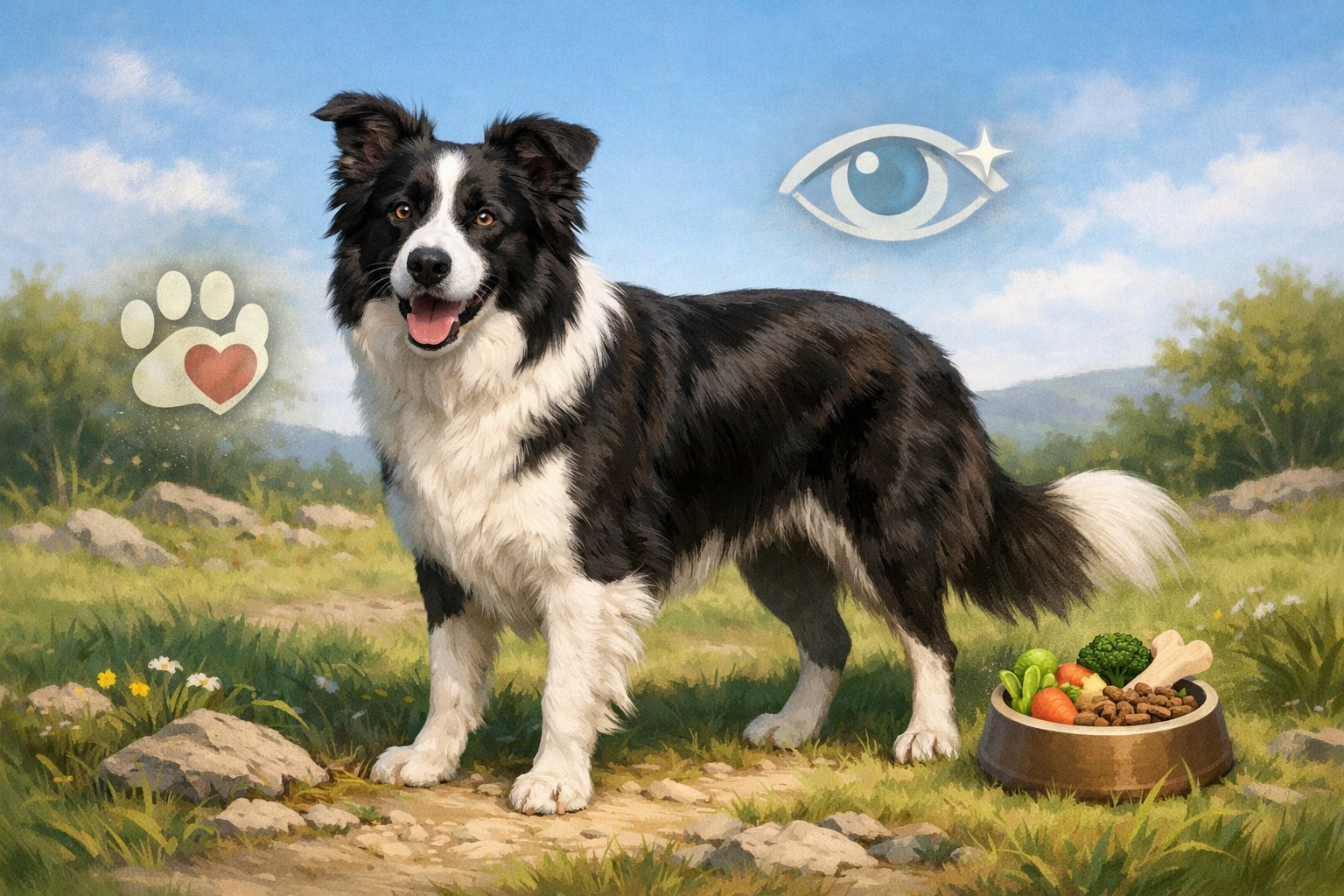
A Border Collie standing alert on a grassy field with subtle symbols around it representing health care and wellbeing.

Good health for a Border Collie depends on routine care, smart daily habits, and an understanding of breed-specific risks. Owners who act early can reduce the impact of many common problems linked to the Border Collie breed.

Veterinary Check-Ups and Early Detection

Regular veterinary check-ups play a key role in protecting Border Collie health. Most vets recommend exams at least twice a year, even when the dog appears healthy.

These visits help catch early signs of joint issues, eye disease, or nerve problems before they worsen. Vets often check hips, eyes, weight, and movement during routine veterinary care.

They may suggest eye exams or imaging for dogs used as working dogs, since heavy activity can stress joints. Blood tests can also flag hidden issues like inflammation or metabolic changes.

Owners should track changes at home. Limping, restlessness at night, or vision changes often signal a need for a vet visit.

Early action usually leads to better outcomes.

Diet, Weight Control, and Lifestyle Tips

A balanced diet helps Border Collies stay active and maintain strong joints. High-quality food with clear protein sources supports muscle health and energy needs.

Portion control matters, since extra weight adds stress to hips and knees. Daily exercise should match age and condition.

Young dogs need controlled activity, while adult dogs benefit from steady routines like walks, agility, or herding games. Overtraining can raise injury risk, especially in working dogs.

Helpful daily habits include:

  • Feeding measured meals at set times
  • Limiting high-calorie treats
  • Using soft surfaces for intense play
  • Allowing rest days after heavy activity

These steps support long-term mobility and comfort.

Understanding Inherited and Breed-Specific Risks

The Border Collie breed carries known inherited health risks. Common concerns include hip dysplasia, epilepsy, and eye disorders such as Collie Eye Anomaly.

Many of these conditions have genetic links. Responsible breeders often screen for these issues.

Owners can also ask vets about genetic testing or early eye exams. One overview of common conditions appears in this guide on Border Collie health issues owners should know.

Stiff movement, seizures, or vision trouble should never be ignored. Informed owners can plan care that fits their dog’s needs and activity level.

Filed Under: Border Collies

Best Jobs and Activities for Border Collies Who Need a Purpose: Engage Their Minds and Energy

December 24, 2025 by Jason Huskey

Top Purposeful Jobs and Activities for Border Collies

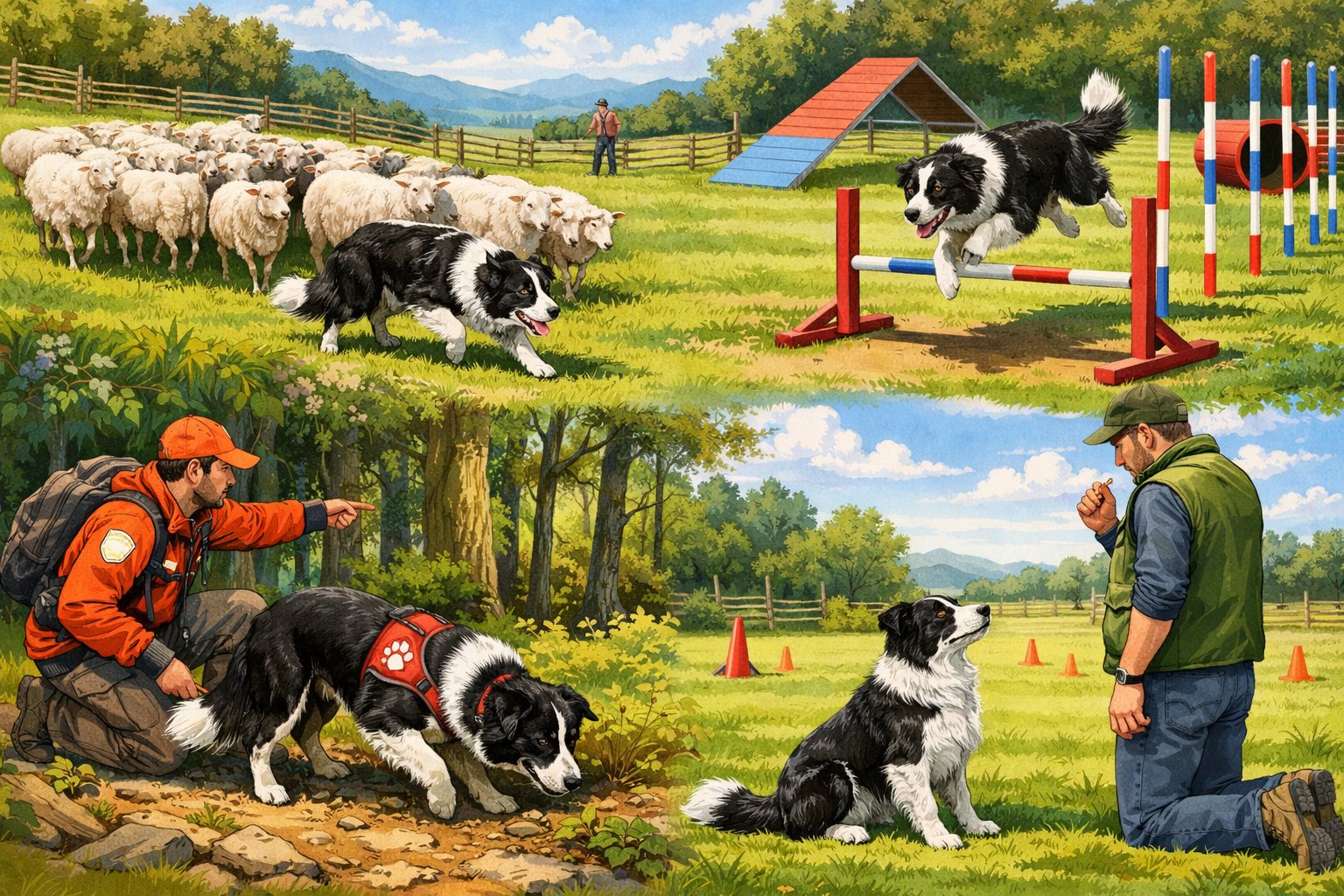
Several Border Collies engaged in different activities including herding sheep, navigating an agility course, assisting in search and rescue, and obedience training in outdoor natural settings.

Border collies thrive when daily life includes clear tasks and steady training. Both mental and physical stimulation are essential for their well-being.

Purposeful work channels their focus and reduces problem behaviors. It also builds strong habits in active homes.

Herding and Herding Trials

Herding taps into the herding instinct that defines the border collie as a working dog. Real livestock work offers the most natural outlet, but herding trials also give structure and goals.

These trials test control, distance work, and calm movement around sheep. Handlers start with basic commands and progress to longer sends and stops.

Many trainers use puppy herding to safely introduce young dogs. Even short sessions can meet deep needs for focus and problem solving.

For owners without livestock, organized events and classes provide access to this work. See examples of structured herding trials and jobs at https://thinkersvine.com/jobs-for-your-border-collie/.

Why it matters

  • Uses natural herding instincts
  • Builds impulse control
  • Suits working breeds with high drive

Agility Training and Obstacle Courses

Agility training combines speed, precision, and teamwork. Border collies excel at jumps, tunnels, weave poles, and tight turns.

These obstacle courses demand fast thinking and body control, which suits the breed’s sharp mind. Training a border collie for agility starts with flatwork and short sequences.

Handlers focus on cues, timing, and safe movement. Backyard setups work well for practice, while clubs offer full courses and trials.

Regular agility sessions provide strong physical stimulation without long, repetitive runs. Many owners use agility to replace boredom with routine.

For practical examples of agility-style jobs, visit https://juniperpets.com/20-stimulatingjobs-for-your-border-collie/.

Canine Sports: Flyball, Disc Dog, and Dock Diving

Canine sports add competition and variety. Flyball blends sprinting, jumping, and ball retrieval in a team format.

Disc dog focuses on controlled chasing and clean catches. Dock diving rewards strong swimmers that enjoy water retrieves.

Each sport suits a different drive profile. Flyball fits dogs that love structure and speed.

Disc dog rewards precision and handler focus. Dock diving suits confident dogs with water interest.

Sport Best Fit
Flyball High-speed, social dogs
Disc Dog Focused retrievers
Dock Diving Strong swimmers

Many border collies rotate between sports. Organized options appear in guides to working roles and canine sports at https://lifeatherpaw.com/border-collie-working-roles/.

Search and Rescue and Scent Work

Search and rescue (SAR) and scent work rely on the border collie’s problem-solving skills. These dogs learn to track human scent, locate hidden targets, and alert handlers.

SAR work demands calm focus, stamina, and strong obedience. Formal SAR training requires time and certification.

Recreational nose work offers a simpler path. Handlers hide scented items indoors or outdoors and reward accurate finds.

This work tires the mind faster than long runs and suits aging dogs as well. Scent-based jobs mirror real tasks used by working dogs worldwide.

Step-by-step scent games and training ideas appear at https://thepuppymag.com/keep-your-border-collie-mentally-stimulated/.

Mental Stimulation and Enrichment for Intelligent Border Collies

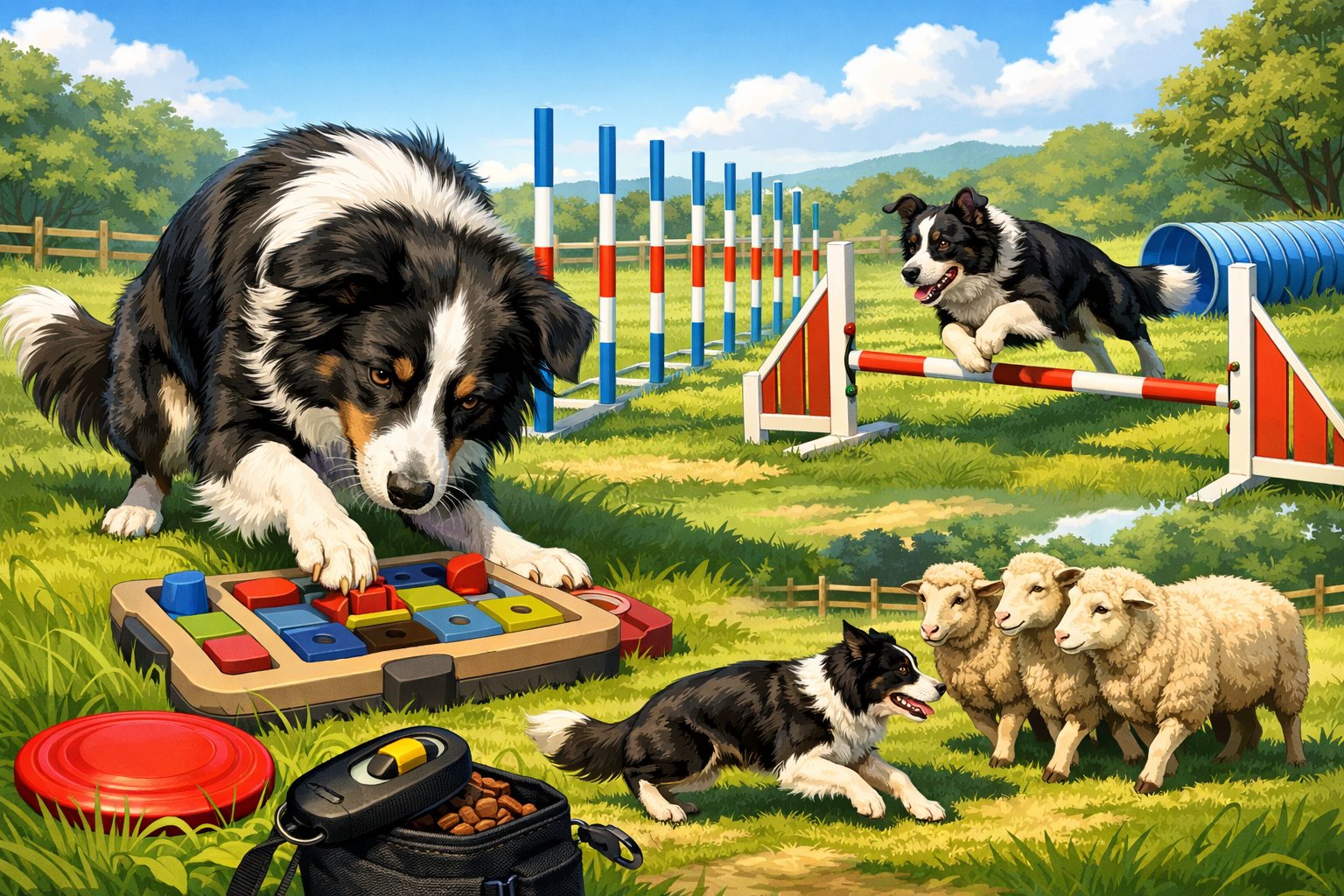
A Border Collie engaged in various activities including solving a puzzle toy, running an agility course, and herding sheep in a green field.

Border Collies need daily mental stimulation to stay calm and focused. Clear tasks, varied games, and short training sessions give these intelligent dogs a real sense of purpose.

Interactive Puzzle Toys and Games

Interactive toys give Border Collies mental exercise when people feel busy. Puzzle toys work best when they require steps, like sliding parts or lifting lids, to reach food.

These toys slow eating and push problem-solving skills. Owners should start easy and increase difficulty over time.

That keeps frustration low and learning high. Rotating puzzles every few days also prevents boredom.

Good options include treat boards, rolling dispensers, and layered puzzles. Many owners rely on structured ideas from guides on keeping Border Collies mentally stimulated with puzzle games.

Short play sessions of 10–15 minutes work better than long ones. Mental effort tires a Border Collie faster than running alone.

Trick Training and Obedience Exercises

Trick training gives Border Collies clear jobs and steady goals. These dogs learn fast, so obedience training should stay challenging and active.

Commands like “spin,” “back up,” or “put toys away” add purpose to daily routines. Training sessions should stay short and focused.

Two or three sessions a day often work better than one long session. Positive reinforcement, such as small treats or praise, keeps learning steady and stress low.

Structured plans help many owners succeed. Lists of daily needs, like those explained in mental stimulation essentials for Border Collies, help balance skills and rest.

Hide and Seek, Fetch, and Extreme Fetch

Interactive games combine movement with thinking. Fetch works best when owners add rules, such as waiting, naming toys, or returning items to a basket.

These steps turn a simple game into mental work. Extreme fetch raises the challenge.

Owners throw multiple balls in different directions and ask the dog to collect them one by one. This builds memory, focus, and impulse control.

Hide and seek adds scent work. The dog waits, then searches for a person or toy.

Many activity plans, like those found in stimulating jobs for Border Collies, show how to turn games into real tasks. These games work best in short, focused rounds.

Rotating Toys and Mental Exercise Routines

Routine matters, but variety matters more. Rotating toys every few days keeps interest high and prevents habits.

Owners can group toys by type and switch them on a schedule.

Example rotation plan:

  • Day 1–2: Puzzle toys and slow feeders
  • Day 3–4: Interactive games like tug or scent toys
  • Day 5–6: Training tools and fetch items

Mental exercise routines work best when paired with physical movement. Many enrichment plans, such as those in brain games for Border Collies, stress balance over intensity.

Simple changes keep intelligent dogs engaged without overstimulation.

Unique Jobs, Socialization, and Everyday Activities

Several Border Collies are shown outdoors engaging in herding sheep, playing fetch, assisting people, and socializing in a green park setting.

Border Collies thrive when daily life gives them clear tasks, regular social contact, and ways to use both their minds and bodies. Purposeful routines help them stay calm, focused, and confident.

Household Tasks and Service Roles

Border Collies learn household tasks fast because they watch closely and respond to cues from the eye. Owners often train them to pick up toys, carry laundry, or bring specific items on command.

These tasks give steady mental work and light physical stimulation. Some Border Collies also succeed as therapy dogs or service dogs.

Their focus and sensitivity make them strong helpers when training matches their temperament. This type of work demands calm behavior, impulse control, and comfort around strangers.

Not every dog fits this role, but the structure alone helps many dogs thrive. Simple tools help with training consistency.

  • Interactive toys to reinforce tasks
  • Clear verbal cues and hand signals
  • Short sessions to prevent stress

Structured work matters more than difficulty.

Socialization and Group Activities

Regular socialization helps Border Collies handle busy spaces without stress. Group classes, playdates, and public walks teach them to stay focused despite noise and movement.

This matters for dogs with a strong prey drive that react to bikes, runners, or children. Many owners use dog sports to combine structure with social exposure.

Activities like agility or flyball train control, speed, and teamwork. These settings also teach dogs to work near others without losing focus.

Controlled group settings work best.

  • Small class sizes
  • Clear rules and rest breaks
  • Positive reinforcement only

Guides on channeling a Border Collie’s natural drive through social activities explain how purpose reduces unwanted behaviors when dogs interact often and early.

Swimming Lessons and Water Games

Swimming lessons give Border Collies low-impact exercise that still burns energy. Many dogs enjoy water, but early lessons build confidence and safety.

Owners should start slow, use a dog life vest, and keep sessions short. Water games also satisfy instinctive behaviors.

Fetch in shallow water or herding floating toys gives mental focus without joint strain. These games work well for dogs that need heavy physical stimulation but tire of land activities.

Water Activity Key Benefit
Swimming lessons Endurance and confidence
Dock-style fetch Focus and recall
Floating toy herding Prey drive control

Filed Under: Border Collies

  • « Go to Previous Page
  • Page 1
  • Interim pages omitted …
  • Page 15
  • Page 16
  • Page 17
  • Page 18
  • Page 19
  • Interim pages omitted …
  • Page 33
  • Go to Next Page »

Primary Sidebar

Do Labradoodles Need Puzzle Toys? A Friendly Guide to the Best Options for Your Pup

Labradoodles are smart, energetic dogs that need both physical exercise and mental challenges to … [Read More...] about Do Labradoodles Need Puzzle Toys? A Friendly Guide to the Best Options for Your Pup

Best Interactive Training Tools for Smart Labradoodles: Engaging Games and Gadgets to Boost Your Dog’s Intelligence

Labradoodles are smart, energetic dogs that need mental stimulation to stay happy and healthy. … [Read More...] about Best Interactive Training Tools for Smart Labradoodles: Engaging Games and Gadgets to Boost Your Dog’s Intelligence

Top Training Treats for Food-Motivated Labradoodles That Actually Work

Training treats are small rewards used to reinforce good behavior in dogs. They help your … [Read More...] about Top Training Treats for Food-Motivated Labradoodles That Actually Work

Best Harnesses for Labradoodles That Pull on Leash: Top Picks to Stop Tugging in 2026

Labradoodles are energetic and strong dogs that often pull on their leash during walks. This pulling … [Read More...] about Best Harnesses for Labradoodles That Pull on Leash: Top Picks to Stop Tugging in 2026

How to Choose the Right Grooming Table for Your Labradoodle: A Complete Guide for Pet Parents

Grooming your Labradoodle at home can save you money and help your dog feel more comfortable during … [Read More...] about How to Choose the Right Grooming Table for Your Labradoodle: A Complete Guide for Pet Parents

Best Shampoos for Labradoodles With Sensitive Skin: Gentle Solutions for Your Curly Companion

Labradoodles are popular family dogs known for their friendly personalities and curly … [Read More...] about Best Shampoos for Labradoodles With Sensitive Skin: Gentle Solutions for Your Curly Companion

Must-Have Grooming Tools Every Labradoodle Owner Needs to Keep Their Pup Looking Perfect

Labradoodles have thick, curly coats that need regular care to stay healthy and tangle-free. Without … [Read More...] about Must-Have Grooming Tools Every Labradoodle Owner Needs to Keep Their Pup Looking Perfect

Best Clippers for Grooming Your Labradoodle at Home: Top Picks for a Professional Finish

Labradoodles have thick, curly coats that need regular grooming to stay healthy and tangle-free. … [Read More...] about Best Clippers for Grooming Your Labradoodle at Home: Top Picks for a Professional Finish

Top Detangling Sprays for Preventing Labradoodle Mats: Keep Your Pup’s Coat Smooth and Tangle-Free

Labradoodles have thick, curly coats that can tangle and mat easily without proper care. Mats form … [Read More...] about Top Detangling Sprays for Preventing Labradoodle Mats: Keep Your Pup’s Coat Smooth and Tangle-Free

Best Brushes for Labradoodles: Complete Guide to Grooming Curly, Wavy and Straight Coats

Labradoodles have unique coats that need regular brushing to stay healthy and tangle-free. These … [Read More...] about Best Brushes for Labradoodles: Complete Guide to Grooming Curly, Wavy and Straight Coats

Categories

  • Border Collies
  • Uncategorized

Superduperdog.com - Copyright © 2026