Key Aspects of Senior French Bulldog Care
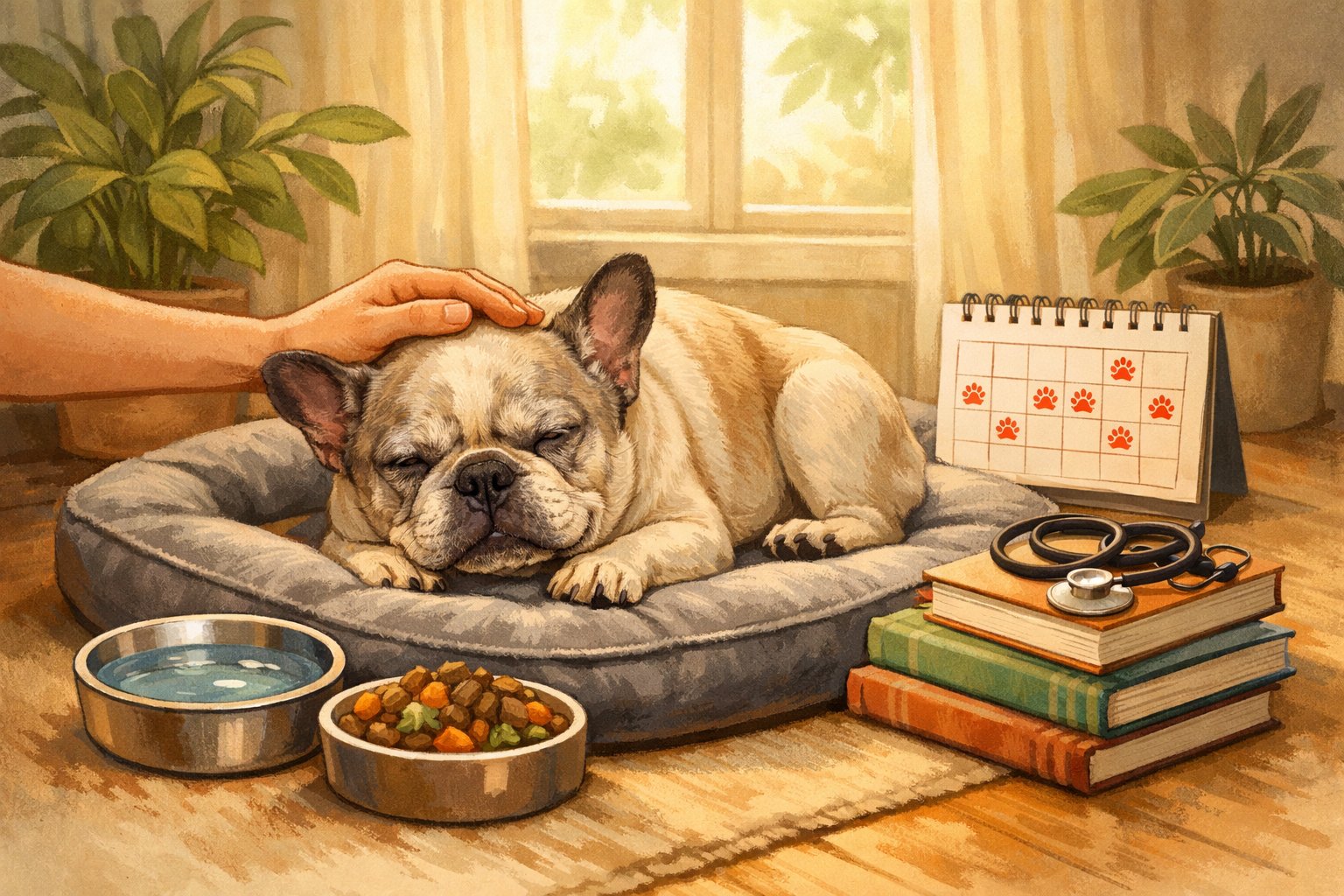
Senior French Bulldog care focuses on early detection, steady routines, and comfort. Owners who watch daily habits, manage health risks, and keep up with vet visits give an aging Frenchie the best chance at a calm, happy life.
Recognizing Signs of Aging in Frenchies
An aging French bulldog often shows small changes before major problems appear. Owners may notice slower movement, longer naps, or trouble with stairs.
A senior Frenchie may also gain weight even with the same diet. Behavior can change too.
Some dogs seem confused at night or less interested in play. Others become clingy or irritable.
These shifts matter and should not be ignored. Common signs to watch include:
- Stiffness after rest
- Heavy snoring or noisy breathing
- Cloudy eyes or weaker vision
- Accidents in the house
Guides on caring for senior French Bulldogs note that most Frenchies show clear aging signs around eight years old. Early attention helps slow decline and improves comfort.
Common Age-Related Health Issues in French Bulldogs
French bulldogs face specific risks as they age. Joint disease often leads the list, especially arthritis in hips and spine.
Breathing problems can worsen due to their short airways. Skin infections may appear more often because seniors groom less.
Dental disease also becomes common and can affect the heart and kidneys if untreated. Frequent issues in a senior French bulldog include:
- Arthritis and mobility loss
- Brachycephalic airway problems
- Dental disease
- Vision or hearing decline
According to a detailed overview of senior French Bulldog health problems, many conditions progress quietly. Regular checks and weight control reduce stress on the body and help manage pain.
Veterinary Care and Health Monitoring for Seniors
Consistent vet care forms the core of care for senior French bulldogs. Most vets recommend visits every six months once a dog enters senior years.
These visits catch problems before they limit quality of life. Routine testing matters more than long exams.
Blood work, urine checks, and dental exams give clear signals about internal health.
| Checkup Item | Typical Schedule | Purpose |
|---|---|---|
| Blood panel | Every 6 months | Organ function |
| Urinalysis | Every 6 months | Kidney and bladder health |
| Dental exam | Yearly | Infection prevention |
Veterinary guidance plays a key role in senior french bulldog care. Close monitoring helps owners adjust diet, exercise, and medications as their aging Frenchie’s needs change.
Optimizing Comfort and Daily Life for Aging Frenchies
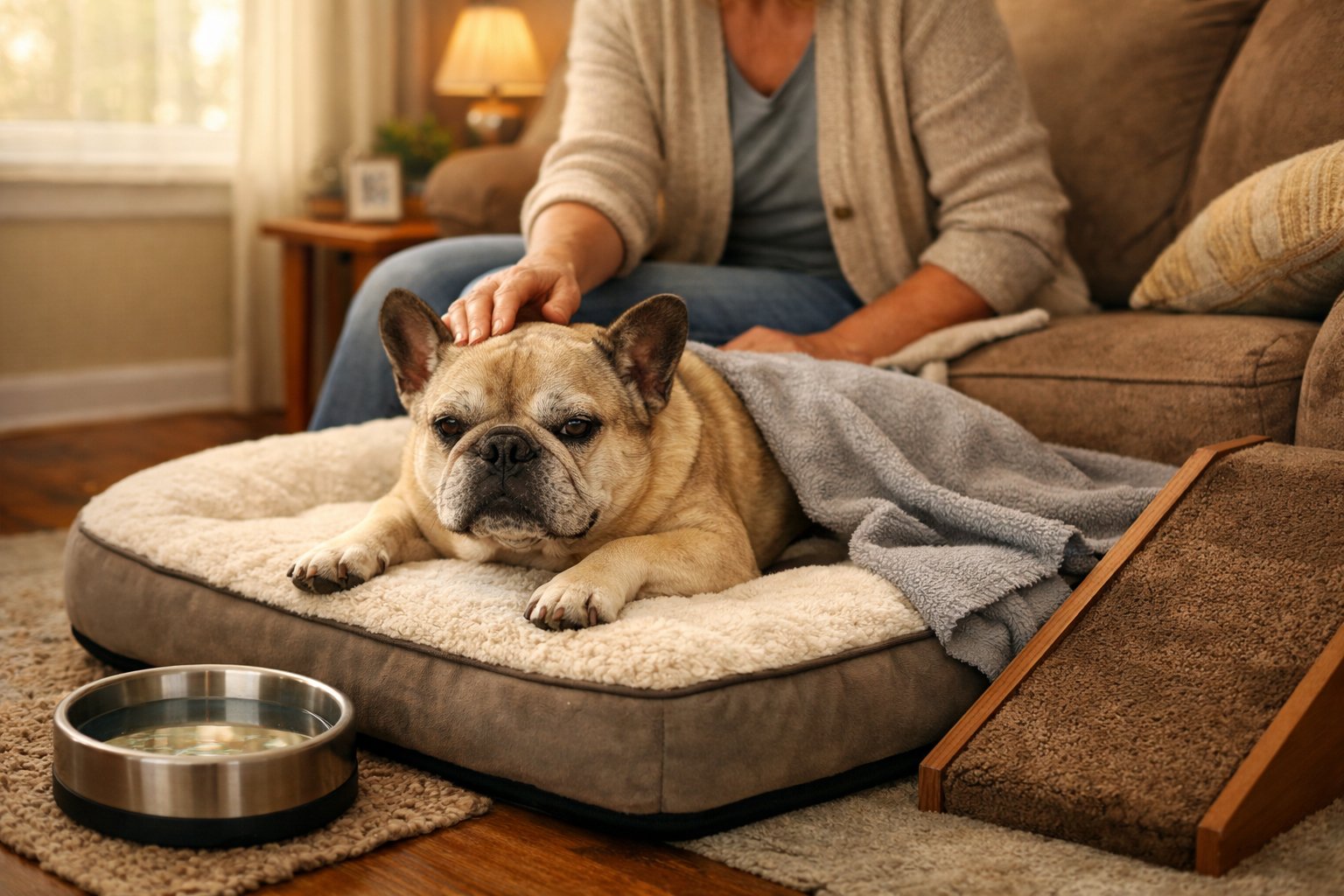
Aging Frenchies need steady routines, less strain on their bodies, and daily care that supports comfort. Small changes to food, movement, and home layout can reduce pain and help a senior French Bulldog feel secure.
Diet and Nutrition for Senior French Bulldogs
Diet plays a big role in comfort for a senior French Bulldog. Extra weight puts pressure on joints and makes movement harder.
Owners often switch to lower-calorie meals with more fiber to support digestion and weight control. Many vets suggest foods with real meat as the first ingredient and fewer fillers.
Omega-3 fats from fish can help manage joint stiffness. Some owners add vet-approved joint supplements when advised.
Helpful diet adjustments include:
| Change | Why it Helps |
|---|---|
| Smaller meal portions | Limits weight gain |
| Added veggies like green beans | Boosts fiber without extra calories |
| Extra water mixed into food | Supports hydration |
More detail on senior French Bulldog diet needs appears in this guide to senior French Bulldog care and nutrition.
Exercise and Mobility Support
Exercise keeps french bulldogs mobile, but seniors need a slower pace. Short walks taken once or twice a day help maintain muscle without stressing joints.
Flat surfaces work best. Jumping and stairs often cause pain.
Many owners replace these with ramps to protect hips and knees. Some senior Frenchies also benefit from light stretching after walks.
Safe movement tips:
- Keep walks under 15 minutes
- Stop if limping or fatigue appears
- Use a harness for better control
The French Bull Dog Club of America explains how aging affects mobility in their overview of geriatric French Bulldog care.
Adapting the Home Environment
The home should support comfort and stability for a senior French Bulldog. Slippery floors increase the risk of falls.
Non-slip rugs give better footing near beds and couches. Soft, supportive bedding helps sore joints rest.
Many owners place beds in quiet areas away from noise and drafts. Keeping food, water, and sleeping areas on one level reduces daily strain.
Simple home upgrades:
- Pet ramps for furniture
- Orthopedic dog beds
- Raised food and water bowls
More practical home tips appear in this guide on caring for senior French Bulldogs at home.
Preventing and Managing Breed-Specific Health Challenges
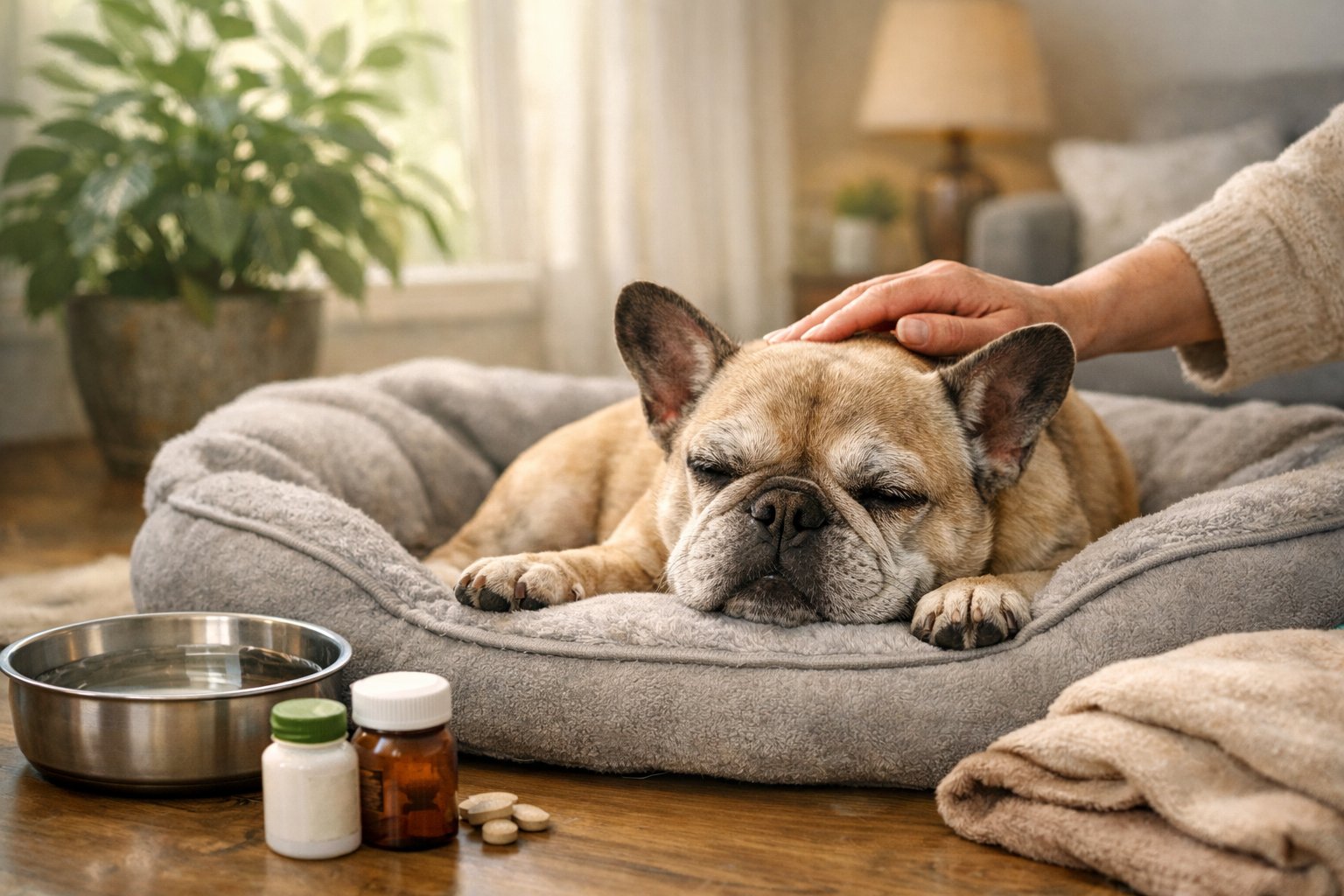
A senior French Bulldog faces health risks that increase with age. Breathing limits, joint strain, and mental changes need steady care and early action to keep daily life comfortable.
Managing Brachycephalic Airway Syndrome
Brachycephalic airway syndrome often worsens as an aging French Bulldog gets older. Narrow nostrils, a long soft palate, and a small windpipe can make breathing harder, especially during heat or stress.
Owners should watch for loud snoring, coughing, or blue gums. Short walks, cooler temperatures, and a slow pace reduce strain.
A harness works better than a collar because it avoids pressure on the neck. Routine vet visits help track changes over time.
A vet familiar with the breed can guide care, as explained in this guide on breed-specific airway concerns in senior bulldogs. Some dogs benefit from medication or surgery, but many improve with daily management and weight control.
Daily breathing support tips
- Keep rooms cool and well ventilated
- Avoid exercise during hot or humid weather
- Stop activity at the first sign of distress
Addressing Joint and Mobility Problems
Joint pain limits movement in many senior French Bulldogs. Arthritis, hip issues, and spine problems often appear slowly and worsen without support.
Stiffness after rest, slower walking, or trouble with stairs signal joint strain. Low-impact exercise keeps joints moving without overload.
Short, frequent walks work better than long ones. Diet also matters.
Extra weight adds pressure to sore joints. Many vets recommend foods made for mobility support.
This detailed overview of senior French Bulldog health problems explains how joint care fits into long-term wellness.
Helpful home adjustments include:
- Non-slip rugs on smooth floors
- Raised food and water bowls
- Orthopedic beds with firm support
Supporting Cognitive Function
Cognitive decline affects some aging French Bulldogs. Changes may include confusion, night pacing, or forgetting house training.
A stable routine helps reduce stress. Feeding, walks, and rest should happen at the same times each day.
Mental activity also matters. Simple puzzle toys and short training sessions keep the brain active.
Vets may suggest supplements or diet changes when signs appear. The French Bull Dog Club of America outlines early care steps in its advice on geriatric care for French Bulldogs.
Ways to support brain health
- Keep lighting soft at night
- Use familiar bedding and scents
- Maintain calm, predictable routines