Why Beagles Are Escape Artists
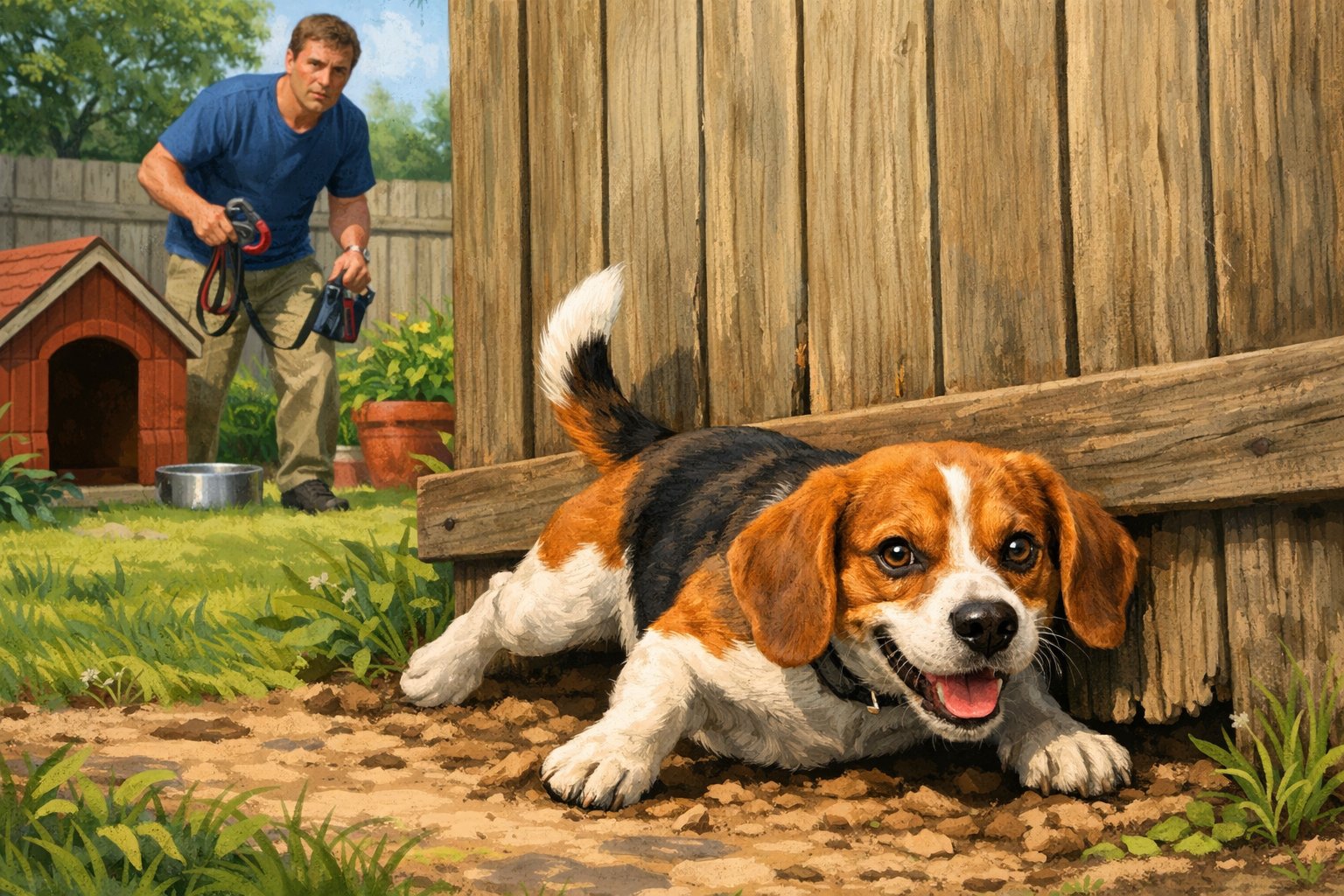
Beagles often run off because their nose leads the way, their mind seeks action, and their emotions push them to move. Understanding beagle behavior helps explain why beagles run away and what triggers those choices.
Instincts Driving Beagle Escapes
Beagles are scent hounds bred to track animals over long distances. Their powerful nose can pull their body forward before the brain checks for danger.
When a strong smell appears, many beagles run away without warning. This instinct answers a common question: why do beagles run away even from caring homes?
The behavior comes from genetics, not defiance. Once a scent locks in, recall often fails.
Key instinct traits include:
- Strong prey drive
- Focus on smell over sound
- Low awareness of distance
Many owners notice this pattern when learning why beagles run away due to hunting instincts. The trait shows up even in well-trained dogs.
The Role of Curiosity and Exploration
Beagles show deep curiosity about the world around them. New smells, sounds, or movement can spark a sudden need to explore.
This curiosity explains why beagles run away through open doors or gaps in fences. They explore with purpose.
A trail is not random to a beagle. It feels like a clear path that needs following.
This behavior fits within normal beagle behavior, not poor manners. Owners often underestimate how fast curiosity turns into distance.
Articles that explain why beagles are known escape artists point to curiosity as a main driver. Curiosity increases when the environment changes, such as:
- New animals nearby
- Fresh outdoor scents
- Unfamiliar places
Boredom, Anxiety, and Social Needs
Beagles need daily activity and social contact. Without it, boredom builds fast.
A bored beagle looks for stimulation, and escape becomes an option. Anxiety also plays a role.
Loud noises, loneliness, or sudden routine changes can push a beagle to flee. Some beagles run away trying to find comfort or familiarity.
Understanding beagle behavior means watching emotional cues, not just physical ones. Guides that cover common triggers that make beagles run away often stress unmet needs.
Common emotional triggers include:
- Long periods alone
- Lack of exercise
- Stress from noise or change
How to Prevent Your Beagle From Running Away
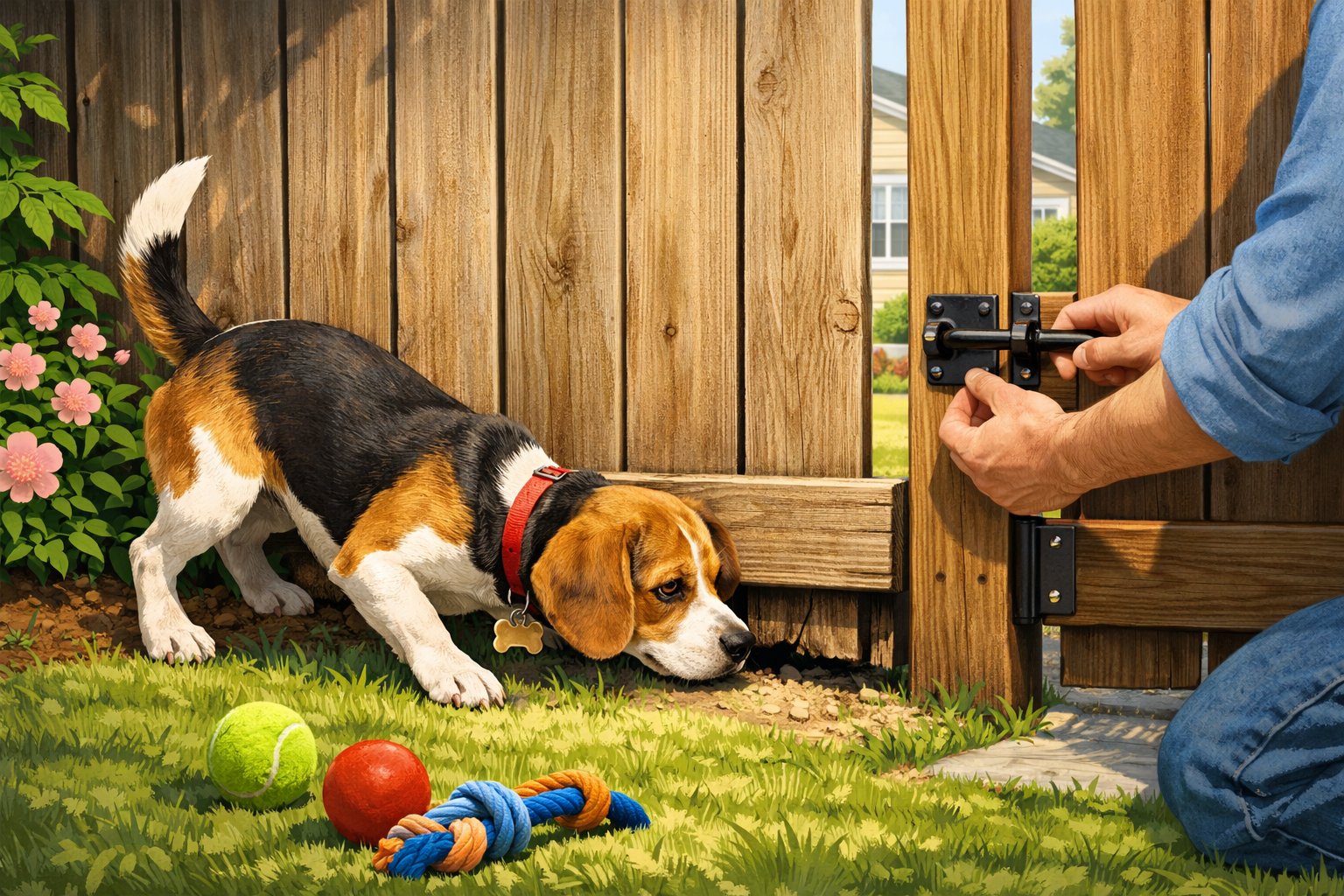
Stopping a beagle running away takes planning, daily effort, and clear rules. Owners see the best results when they secure the space, meet the dog’s need for activity, and use positive reinforcement training that builds strong habits.
Securing Your Home and Yard
A secure home blocks the most common escape paths. Beagles run away when they find gaps, loose gates, or low fences that invite exploring.
Key steps that reduce risk:
- Fences should stand 5–8 feet high and touch the ground with no gaps.
- Gates need locks or tight latches, not simple hooks.
- Remove items near fences that a beagle can climb.
Inside the home, doors create another risk. Baby gates help during busy times, and leash control works well near entryways.
Many owners also add ID tags and tracking tools as backups. Guides on preventing beagle runaways with secure environments explain how small fixes can stop repeat escapes.
Engaging and Stimulating Activities
Boredom drives many cases where beagles run away. A tired beagle focuses better and feels less urge to roam.
Daily activity should mix physical movement and mental work. Long walks matter, but sniffing games matter just as much.
Beagles think with their noses. Helpful activity ideas include:
- Food puzzle toys or stuffed Kongs
- Hide-and-seek with treats
- Short training games during the day
Most adult beagles need at least 1–2 hours of activity spread across the day. Owners who meet this need see fewer escape attempts.
Articles that explain why beagles escape due to boredom and instincts show how routine play lowers that risk.
Effective Recall and Positive Reinforcement Training
Training gives owners control when distractions appear. Recall training matters most for stopping a beagle running away once a scent takes over.
Positive reinforcement training works better than punishment. Rewards teach the dog that staying close pays off.
Focus on these core commands:
- Come
- Stay
- Leave it
Training should start on a leash, then move to long lines, and only later to safe off-leash areas. High-value treats help when smells compete for attention.
Clear recall methods from guides on how to train a beagle not to run away show why consistency matters more than speed.
What to Do If Your Beagle Runs Away
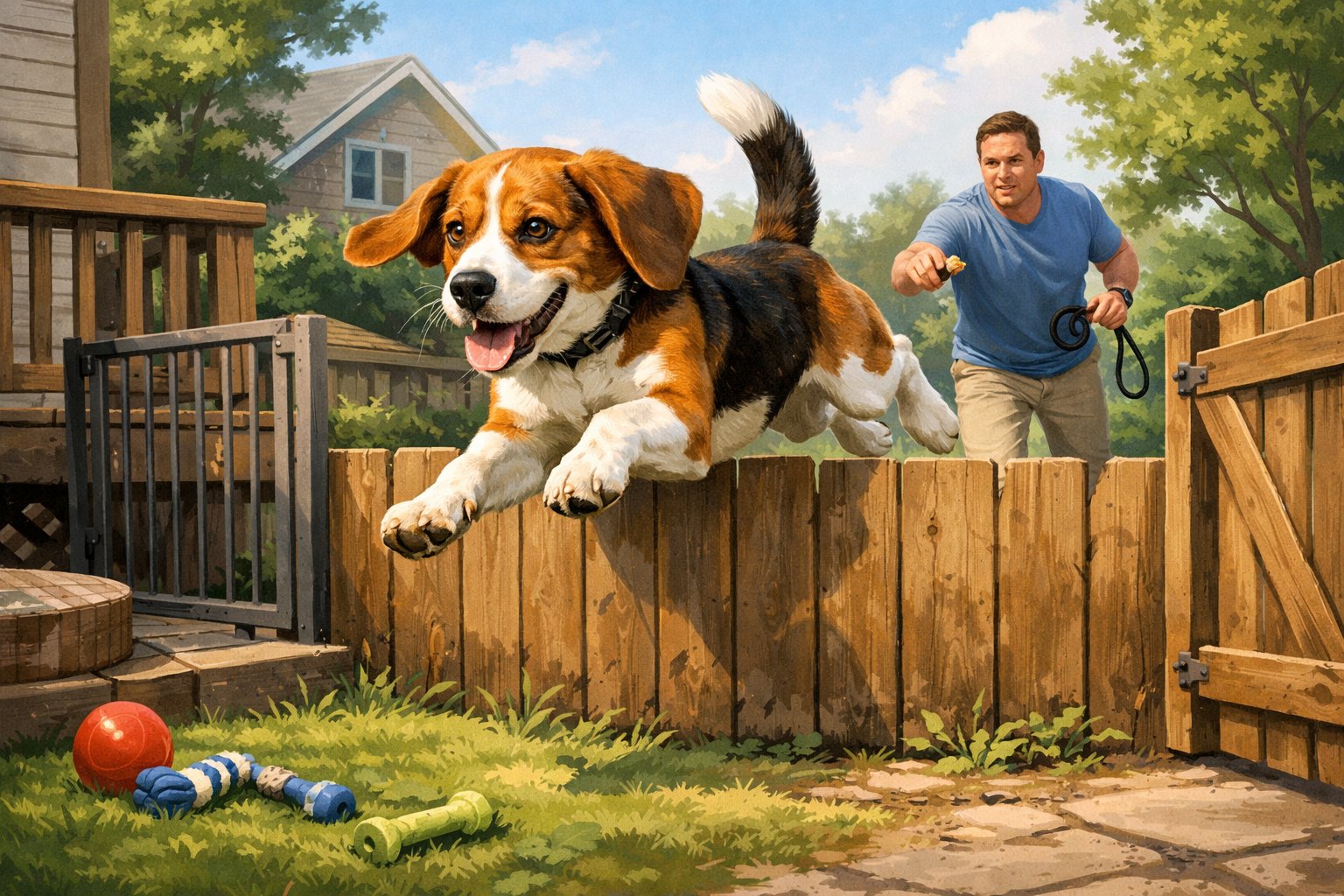
Stay calm and act fast. Beagles often stay close to familiar places, so quick steps can make a big difference.
Start by checking the yard, nearby streets, and favorite sniffing spots. Call the beagle’s name in a clear, happy voice, and listen for movement or barking.
Helpful first actions
- Leave gates open in case the beagle finds the way back
- Place food, water, or a worn item with the owner’s scent outside
- Avoid yelling or chasing, which can push the dog farther away
If the beagle does not return, widen the search. Neighbors can help by checking garages, sheds, and fenced yards.
Posting online also helps. Local social media groups and missing pet pages spread the word fast, especially when they include a clear photo and last known location.
Contact nearby shelters and rescue groups right away. Many shelters suggest calling daily, since dogs arrive at different times.
Sites like local animal shelters and rescue groups explain why early contact matters.
When the beagle comes home, greet it with praise and calm affection. Avoid punishment, since fear can make future escapes worse.
If the beagle has a microchip or GPS collar, update contact details and check the device often. Guides on what to do if your beagle runs away stress that preparation helps recovery happen faster.