Recognizing Allergy Symptoms in French Bulldogs
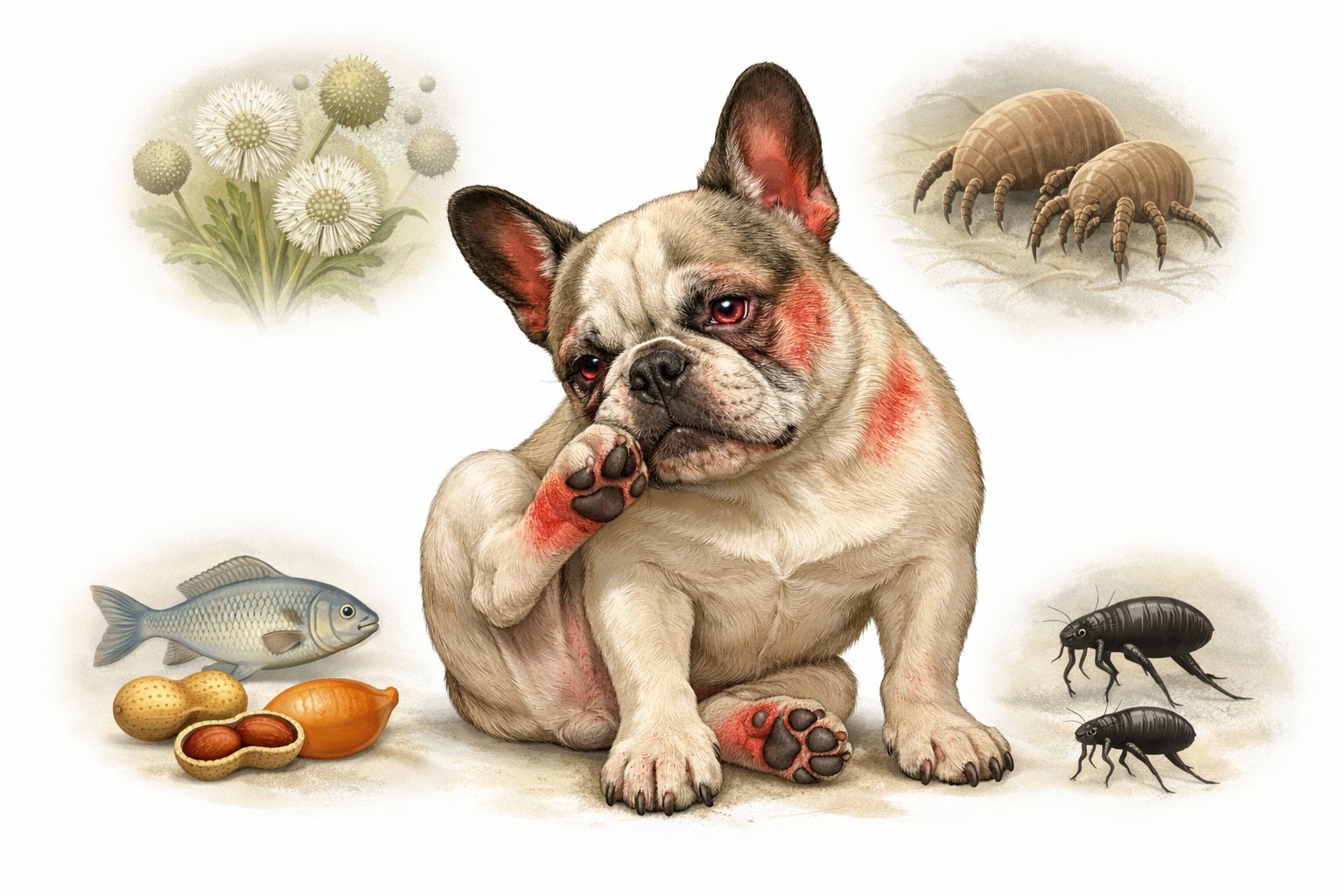
Allergies in French Bulldogs often show up in the skin, stomach, ears, eyes, or breathing. Spotting these signs early helps reduce discomfort and prevents infections that can follow ongoing irritation.
Common Skin Reactions
Skin problems are the most visible allergy symptoms in French Bulldogs. Many dogs scratch, lick, or chew the same spots every day.
Paws, belly, face folds, and armpits often take the most damage. Red patches, small bumps, and flaky skin may appear.
Some dogs lose hair in areas they lick often. Brown saliva stains on light-colored paws signal constant licking.
Skin allergies also cause hot spots and open sores when scratching breaks the skin. These wounds can become infected fast.
Ongoing itching ranks among the most common signs of allergies in French Bulldogs, especially with environmental or food triggers. A detailed breakdown of these reactions appears in this guide on French Bulldog allergies and skin symptoms.
Digestive Issues Linked to Allergies
Food allergies often affect the digestive system. Symptoms may start hours or days after eating a trigger food.
Many dogs vomit, have loose stools, or pass gas more than usual. Some French Bulldogs show less interest in food.
Others eat normally but still have diarrhea or mucus in the stool. Weight loss can happen if digestion stays poor for weeks.
Digestive problems often appear alongside skin issues. This combo strongly suggests allergies in French Bulldogs tied to diet.
Common food triggers include chicken, beef, dairy, and eggs. Chronic stomach upset should not be ignored, even if skin signs seem mild.
Chronic Ear and Eye Problems
Recurring ear infections rank among the clearest signs of allergies in French Bulldogs. Ears may smell bad, look red, or produce dark discharge.
Many dogs shake their heads or scratch at one ear more than the other. Eye issues can appear at the same time.
Watery eyes, redness, and mucus around the corners are common. Some dogs squint or rub their face on furniture.
These problems happen when allergies cause inflammation in sensitive tissues. Wrinkles around the face can trap moisture and make symptoms worse.
Breed-specific risks are outlined in this overview of French Bulldog allergy causes and symptoms.
Respiratory Signs
Respiratory symptoms appear less often but still matter. Some dogs sneeze often or have a runny nose during certain seasons.
Others show mild coughing after outdoor exposure. Environmental allergens like pollen, dust mites, or mold often trigger these signs.
Indoor irritants such as smoke or strong cleaners can also play a role. Breathing issues rarely cause severe distress in allergy cases.
Still, ongoing nasal discharge or frequent sneezing points to allergy symptoms in French Bulldogs linked to the environment. Tracking when symptoms flare helps narrow down triggers and guides treatment choices.
Major Causes of Allergies in French Bulldogs
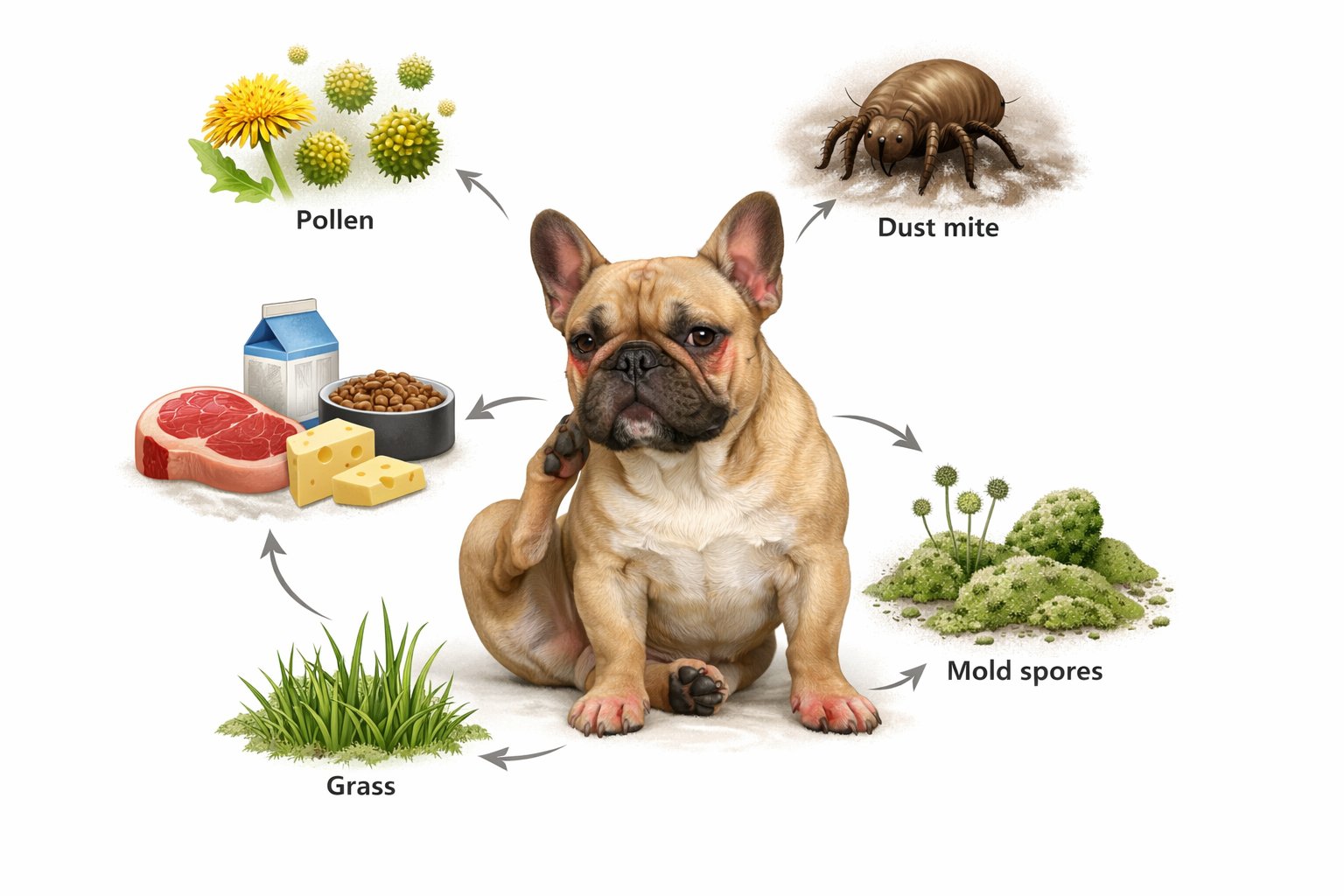
French Bulldogs often react to specific foods, airborne particles, and everyday chemicals. These triggers can affect the skin, ears, and stomach, and they tend to cause repeat flare-ups if owners do not address them.
Food Allergies and Their Triggers
Food allergies in French Bulldogs often start with proteins they eat often. Common triggers include chicken, beef, dairy, eggs, wheat, and soy.
The immune system treats these foods as threats, which leads to skin and digestive problems. Many dogs show itching, paw licking, ear infections, or loose stools.
Some also vomit or pass gas more than normal. These signs may appear days after eating the trigger food, which makes them hard to trace.
Veterinarians often use elimination diets to confirm food allergies. This process removes common triggers and slowly adds them back.
Guides on food allergies in French Bulldogs explain why patience matters during this step.
Common food-related signs include:
- Red or itchy skin
- Chronic ear issues
- Digestive upset
Environmental and Seasonal Allergies
Environmental allergens affect French Bulldogs year-round or during certain seasons. Pollen, dust mites, mold, and grass are common causes.
These particles enter through the air or land on the skin. Symptoms of environmental allergies often focus on the skin and face.
Dogs may rub their eyes, lick their paws, or scratch their belly and neck. Sneezing and watery eyes also appear in some cases.
Seasonal patterns help owners spot this issue. Many Frenchies worsen in spring or fall.
Articles on symptoms of environmental allergies in French Bulldogs describe how outdoor exposure plays a major role.
Frequent signs include:
- Paw chewing
- Red skin folds
- Repeated itching
Contact Allergies and Chemical Irritants
Contact allergies develop when a French Bulldog’s skin reacts to something it touches. These reactions usually affect the belly, paws, or chin, where the coat is thin.
Common irritants include cleaning sprays, laundry detergents, fabric softeners, carpets, plastic bowls, and lawn chemicals. Even scented grooming products can cause trouble.
Symptoms often appear fast and stay local. The skin may look red, bumpy, or moist.
Once the irritant goes away, the skin usually improves. Veterinary guides on allergies in French Bulldogs stress switching to fragrance-free products and stainless steel bowls to lower risk.
Effective Solutions and Management for French Bulldog Allergies

Managing french bulldog allergies works best with a clear plan. Diet changes, cleaner living spaces, routine grooming, and proper vet care all reduce flare-ups and help dogs stay comfortable.
Hypoallergenic and Novel Protein Diets
Food changes often bring the biggest improvement, especially when symptoms of food allergies include itching, ear infections, or loose stool. Many French Bulldogs react to common proteins like chicken or beef.
A novel protein diet uses meats the dog has not eaten before, such as duck, venison, or salmon. Some dogs do better on hypoallergenic dog food made with limited ingredients or hydrolyzed proteins.
These diets lower the chance of immune reactions. Vets often confirm food triggers with elimination diets, which experts describe in detail in this guide on French Bulldog food allergies and elimination diets.
Owners should avoid treats and table scraps during testing.
Reducing Environmental Triggers
Environmental allergens affect many French Bulldogs year-round. Pollen, dust mites, and mold often cause constant scratching and red skin.
Simple home changes help when managing allergies in french bulldogs. Washing bedding weekly in hot water removes allergens.
HEPA air purifiers reduce airborne particles. Limiting outdoor time during high pollen days also helps.
Flea prevention matters even for indoor dogs. A single bite can trigger intense itching in sensitive dogs, as explained in this overview of French Bulldog environmental and flea allergies.
Consistent prevention lowers the risk of sudden flare-ups.
Safe Cleaning Habits and Grooming
Harsh cleaners often worsen skin irritation. Many dogs react to scented sprays, floor cleaners, or laundry detergents.
Using pet-safe cleaning products reduces chemical exposure. Unscented detergents and mild floor cleaners work best.
Avoid air fresheners and strong disinfectants in areas where the dog sleeps. Regular grooming removes allergens before they irritate the skin.
Short, lukewarm baths help when done every 1–2 weeks. Medicated or oatmeal shampoos soothe inflamed skin.
This advice aligns with vet-backed grooming tips in French Bulldog allergy care recommendations.
Medications, Supplements, and Vet Care
Some dogs need medication to control itching and inflammation. Vets tailor treatment based on symptom severity and triggers.
Common options include:
| Option | Purpose | Notes |
|---|---|---|
| Apoquel | Reduces itch signals | Works fast |
| Cytopoint | Controls itching | Lasts weeks |
| Antihistamines | Mild relief | Vet approval needed |
| Omega-3s | Supports skin | Daily use |
Supplements help, but they do not replace vet care. Persistent symptoms need professional diagnosis.
Regular checkups keep treatment safe and effective.