Genetic and Inherited Health Problems
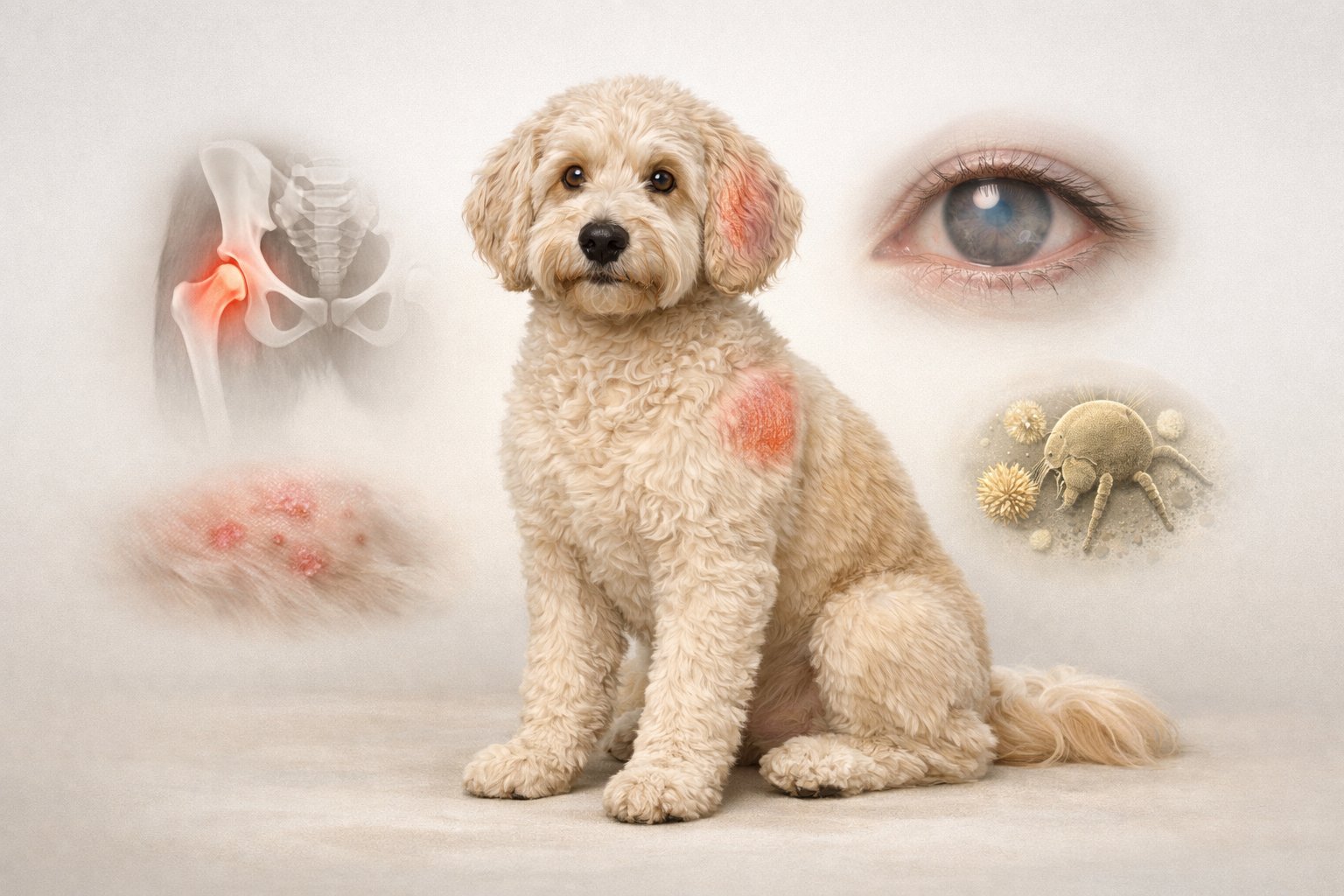
Some labradoodle health problems start at the genetic level. These conditions often affect joints, eyes, and skin.
They can shape long-term comfort, movement, and quality of life.
Hip Dysplasia
Hip dysplasia is one of the most common health issues in labradoodles. It happens when the hip joint forms poorly, which causes looseness and wear over time.
Pain often grows as the dog ages. Owners may notice stiffness after rest, trouble standing, or less interest in running and jumping.
Weight gain can make symptoms worse. Care often includes weight control, joint supplements, and pain relief.
Severe cases may need surgery. Many breeders screen parents through the Orthopedic Foundation for Animals, which helps lower risk.
Early exams support better labradoodle health and long-term mobility.
Learn more about hip dysplasia in labradoodles.
Elbow Dysplasia
Elbow dysplasia affects how the elbow joint develops. It can cause pain, swelling, and uneven movement, often starting in young dogs.
Labradoodles with this issue may limp or avoid putting weight on one front leg. This condition often comes from inherited bone growth problems.
Fast growth and high-impact exercise during puppyhood can add strain. Vets usually manage elbow dysplasia with controlled exercise and medication.
Some dogs need surgery to reduce pain. Genetic testing and careful breeding help lower the risk of elbow dysplasia in labradoodles.
Details on elbow dysplasia as a labradoodle health issue.
Progressive Retinal Atrophy (PRA)
Progressive retinal atrophy is an inherited eye disease that leads to gradual vision loss. It damages the retina over time and often starts with night blindness.
Owners may see hesitation in low light or trouble finding toys. The condition affects both eyes and usually leads to full blindness.
There is no cure for progressive retinal atrophy. Dogs often adapt well with routine and safe home layouts.
Responsible breeders test for PRA to reduce spread. Genetic screening plays a key role in preventing this labradoodle health problem.
A clear overview of progressive retinal atrophy in labradoodles.
Sebaceous Adenitis
Sebaceous adenitis is a skin disorder that affects oil glands. It can cause dry skin, hair loss, and a dull or brittle coat.
Standard poodles carry this risk, and labradoodles may inherit it. Signs include flaky patches, odor, and thinning hair along the back or ears.
Symptoms may appear slowly. Treatment focuses on skin care, not cure.
Vets often recommend medicated baths, moisturizers, and diet changes. Early care improves comfort and coat quality.
Genetic awareness helps reduce sebaceous adenitis among labradoodles.
More details on skin-related labradoodle health issues.
Other Common Labradoodle Health Concerns
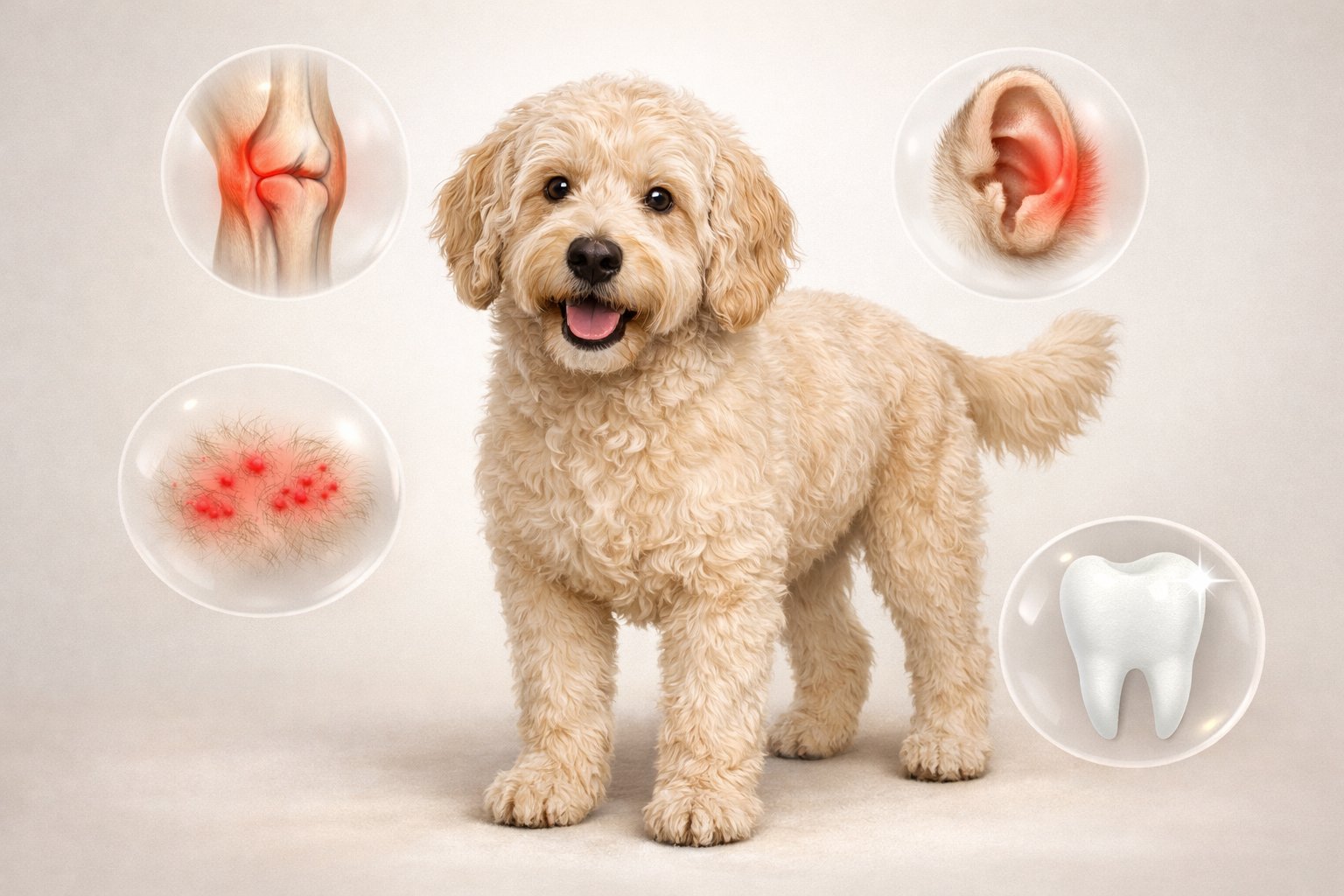
Several common health issues in Labradoodles affect daily comfort and can turn serious if owners miss early signs. These problems often involve the skin, ears, stomach, or hormone system and need steady care.
Allergies
Allergies rank among the most frequent labradoodle health problems. They often come from food, pollen, dust, or flea bites.
Many dogs show itchy skin, red patches, hair loss, or repeated ear trouble. Digestive signs also matter.
Loose stools or vomiting can point to a food allergy. A vet may suggest diet changes, allergy testing, or long-term control plans.
Allergies usually need management, not a one-time fix. Common allergy signs include:
- Constant scratching or licking
- Red or inflamed skin
- Ear infections that keep returning
Veterinarians often explain these patterns in guides on Labradoodle allergy symptoms and causes.
Ear Infections
Ear infections affect labradoodle health because their floppy ears and inner ear hair trap moisture and debris. Yeast and bacteria then grow quickly.
Dogs may shake their heads, paw at their ears, or give off a strong smell. Thick discharge often appears during active infection.
Left untreated, ear infections can damage hearing or cause balance problems. Regular ear checks help reduce risk.
Groomers often remove excess hair, while vets treat infections with drops or cleaners. Repeated ear trouble may link back to allergies, not poor hygiene alone.
Veterinary details on this issue appear in articles about ear infections in Labradoodles.
Gastric Dilatation-Volvulus (Bloat)
Gastric dilatation-volvulus, often called bloat, is a fast and dangerous condition. The stomach fills with gas, then twists and cuts off blood flow.
Larger Labradoodles face higher risk, especially those that eat fast. Warning signs include a swollen belly, pacing, drooling, and failed attempts to vomit.
This condition needs emergency surgery. Delay can lead to death within hours.
Risk lowers when owners:
- Feed smaller meals instead of one large meal
- Avoid heavy exercise after eating
- Use slow-feed bowls
Bloat remains one of the most serious labradoodle health problems due to its sudden onset.
Addison’s Disease
Addison’s disease affects hormone production from the adrenal glands. It appears more often in dogs with Poodle ancestry, which puts the labradoodle at risk.
Symptoms vary and often confuse owners. Dogs may show weakness, weight loss, vomiting, or sudden collapse.
Stress can trigger severe episodes called Addisonian crises. Diagnosis takes blood tests and careful review.
Treatment involves daily medication and routine vet visits. With steady care, dogs often live normal lives.
Veterinary explanations of hormone disorders appear in guides on Addison’s disease in Labradoodles.
Prevention, Care, and Choosing Healthy Labradoodles
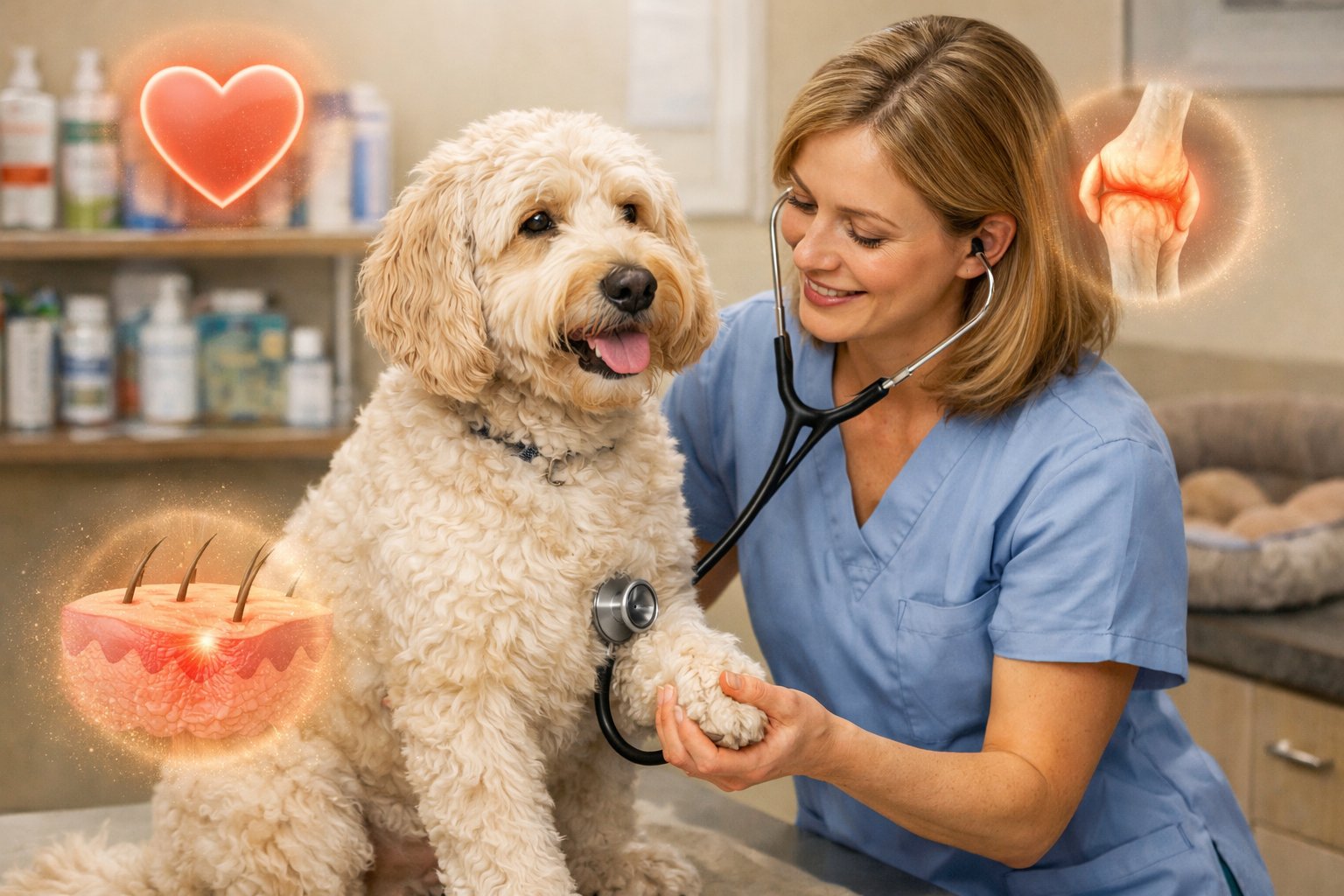
Good prevention starts early and continues through daily care. Smart breeder choices, proper puppy food, regular grooming, and basic health screenings lower the risk of many common Labradoodle health issues.
Finding a Responsible Labradoodle Breeder
A responsible labradoodle breeder tests parent dogs for inherited conditions. They often share proof of hip and elbow results from the Orthopedic Foundation for Animals, along with eye exam records.
These checks help reduce the risk of joint disease and vision loss. Good breeders also raise puppies in clean home settings.
They allow visits and answer clear questions about health history. Many provide written contracts and health guarantees.
Some Labradoodles work as hypoallergenic guide dog candidates, but no breeder should promise perfect allergy safety. Owners often ask are labradoodles hypoallergenic, and the answer depends on the individual dog, not the label.
Nutrition and Puppy Food
Strong health depends on the right puppy food during growth. Labradoodle puppies need balanced meals that support bones, joints, and muscles.
Look for foods that meet AAFCO standards for growth. Portion control matters.
Overfeeding raises the risk of hip and elbow problems, especially in fast-growing pups. Breeders and vets can help set feeding schedules.
Key nutrition tips:
- Choose food with clear protein sources
- Avoid excess treats and table scraps
- Keep fresh water available at all times
A steady diet helps maintain a healthy weight and energy level.
Grooming and Coat Maintenance
Many Labradoodles have a low-shedding coat, but grooming still matters. Regular brushing prevents mats and skin irritation.
A slicker brush works well for curly and wavy coats. Owners should brush 3–4 times per week.
Professional grooming every 6–8 weeks keeps the coat clean and manageable. Routine care also lowers ear infection risk.
Floppy ears trap moisture, so weekly ear checks help spot redness or odor early. Grooming does more than improve looks.
It supports skin health and comfort.
Essential Health Screenings
Early screening helps catch problems before they worsen. Vets often recommend hip and elbow checks, eye exams, and basic blood tests.
Many breeders use OFA records to show joint health in parent dogs. Eye exams help detect issues like progressive retinal atrophy.
Common screenings include:
- Hip and elbow evaluations
- Annual eye exams
- Routine blood and urine tests