How Much Do Labradoodles Shed?
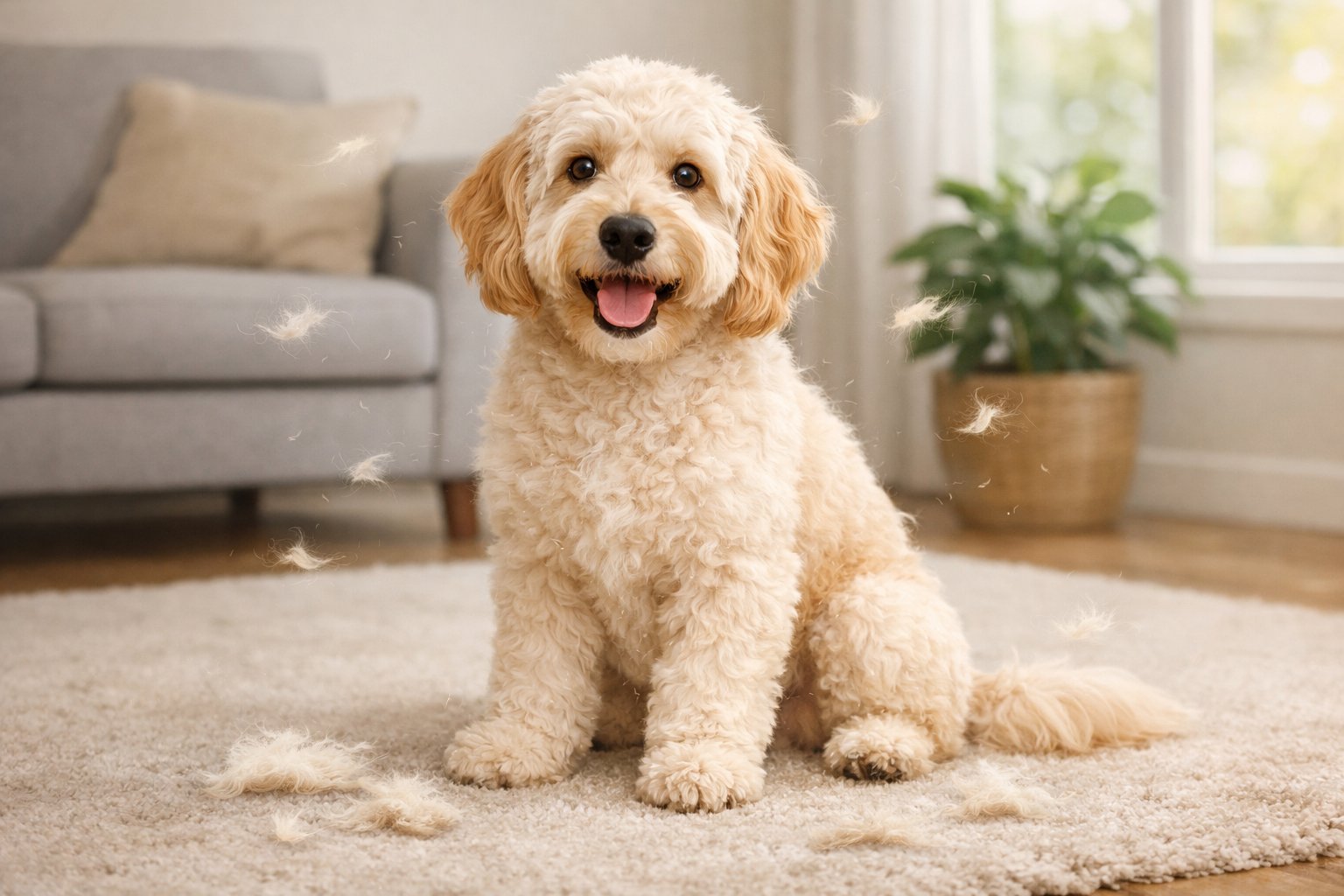
Labradoodle shedding depends on coat type, genetics, and age.
Some shed very little, while others drop more hair than owners expect.
Understanding these differences helps set clear expectations and avoid common surprises.
Truth vs Myth: Are Labradoodles Really Hypoallergenic and Low-Shedding?
Many people ask, are Labradoodles hypoallergenic?
The short answer is no dog is fully hypoallergenic.
Labradoodles often shed less than many breeds, but they still produce dander, which triggers allergies.
Some Labradoodles have curly, Poodle-like coats that trap loose hair.
These dogs often fit better among low-shedding dogs.
Others have straighter or wavy coats and shed more.
This explains why owners report very different experiences.
Articles like Do Labradoodles Shed? Labradoodle Shedding Guide explain why the “non-shedding” label causes confusion.
Low shedding does not mean no shedding.
Allergy-sensitive owners should spend time with the dog before deciding.
Why All Labradoodles Shed: Understanding Mixes and Coat Genetics
People often ask, do Labradoodles shed if Poodles do not?
The answer lies in mixed genetics.
Labradoodles inherit traits from both the Labrador Retriever and the Poodle, and those traits vary widely.
A Labradoodle with more Labrador genes may shed year-round.
One with stronger Poodle traits may shed very little but still lose hair during brushing.
Even dogs from the same litter can differ.
According to How Much Does a Labradoodle Shed?, coat texture plays a major role.
Wool and curly coats shed the least.
Wavy coats shed lightly.
Straighter coats shed the most.
Shedding in Labradoodle Puppies vs Adults
Labradoodle puppy shedding often surprises new owners.
Puppies usually shed very little at first because their coats are soft and thin.
This changes as they grow.
Between 6 and 12 months, many Labradoodles lose their puppy coat.
Adult hair grows in, and shedding patterns become clearer.
Some dogs shed more during this stage, even if they later settle into a low-shedding routine.
Guides like Do Labradoodle Puppies Shed? A Comprehensive Guide note that adult coats need steady grooming.
Regular brushing helps manage loose hair and shows what owners can expect long term.
Labradoodle Coat Types and Shedding Levels
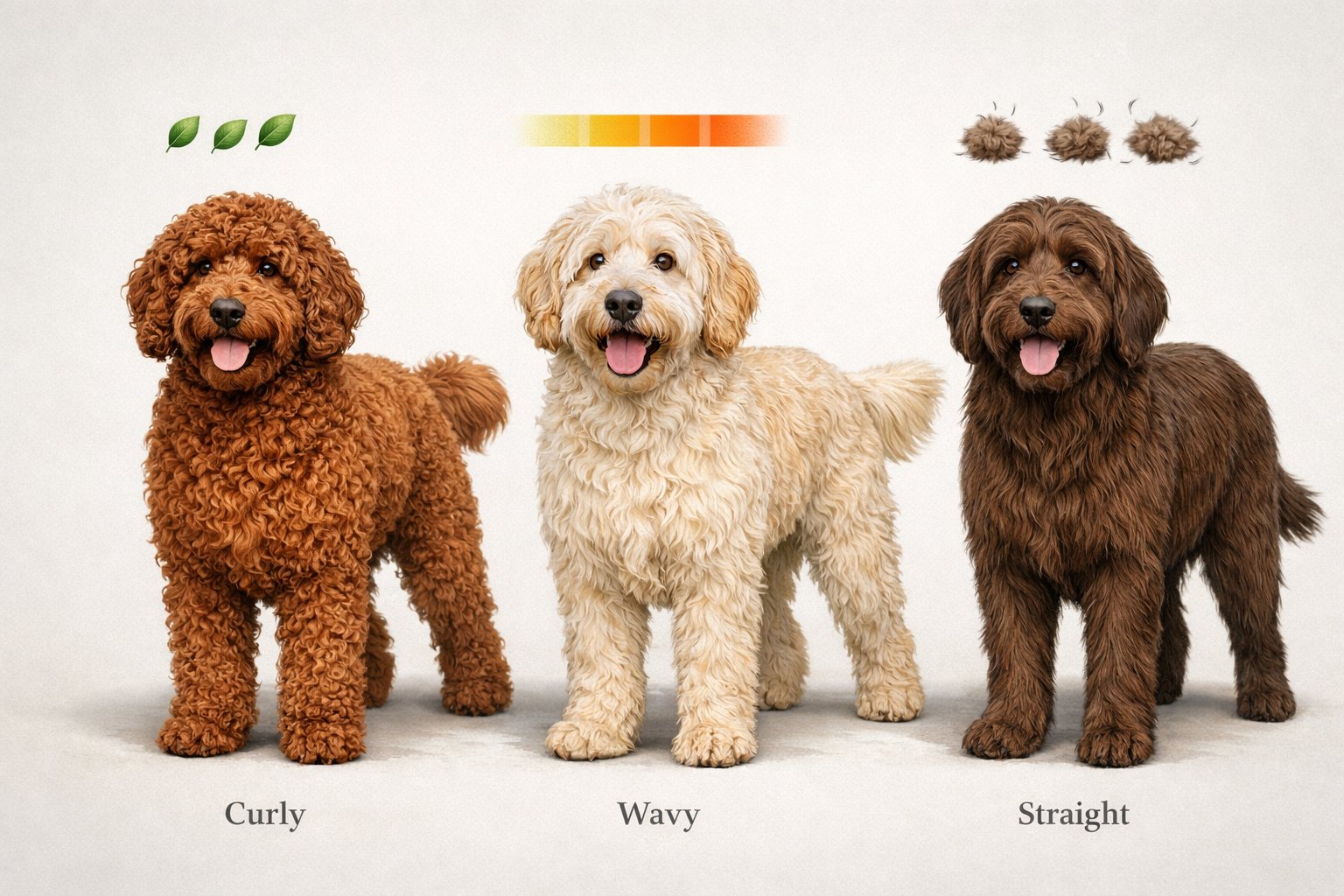
A Labradoodle’s shedding depends on coat texture, breeding generation, and the time of year.
Coat type plays the biggest role, while genetics and seasonal shedding can change what owners see at home.
The 3 Labradoodle Coat Types: Curly Wool, Fleece, and Hair
Labradoodle coat types fall into three main groups.
Each one sheds at a different level and needs different care.
Doodle coats can also change as puppies grow, so early shedding may not match adult shedding.
| Coat Type | Texture | Shedding Level | Grooming Needs |
|---|---|---|---|
| Curly wool coat | Tight curls | Very low | Daily brushing |
| Fleece coat | Soft waves | Low to moderate | Brushing every few days |
| Hair coat | Straight | Moderate to high | Weekly brushing |
The curly wool coat looks most like a Poodle and sheds the least.
Hair coats resemble Labradors and release more loose fur.
Many owners choose fleece coats as a middle option.
This breakdown matches what guides explain about Labradoodle coat types and shedding levels.
How Generations and Genetics Impact Shedding (F1, F1B, F2, Multigenerational)
Genetics shape how much a Labradoodle sheds.
An F1 Labradoodle comes from a Labrador and a Poodle, so shedding stays less predictable.
Some shed lightly, while others shed more than expected.
An F1B Labradoodle has more Poodle genetics.
These dogs often shed less and keep curlier coats.
An F2 Labradoodle comes from two Labradoodle parents, which can increase coat variation.
Multigenerational Labradoodles usually have more stable coats, but shedding still varies by dog.
No generation guarantees zero shedding.
This aligns with what experts note about how Labradoodles shed more than many owners expect.
Seasonal Changes and Shedding Cycles
Seasonal shedding affects most Labradoodles, even those with low-shedding coats.
Many shed more during spring and fall as daylight and temperature change.
This process helps the body adjust its coat.
Curly wool coats tend to trap loose hair instead of dropping it on floors.
Fleece and hair coats release fur more easily during seasonal shedding cycles.
Regular brushing helps remove loose hair before it builds up.
Diet, stress, and indoor heating can also affect shedding patterns.
Groomers often see an increase during winter-to-spring transitions, which matches guidance on seasonal Labradoodle shedding and coat changes.
Managing and Reducing Labradoodle Shedding
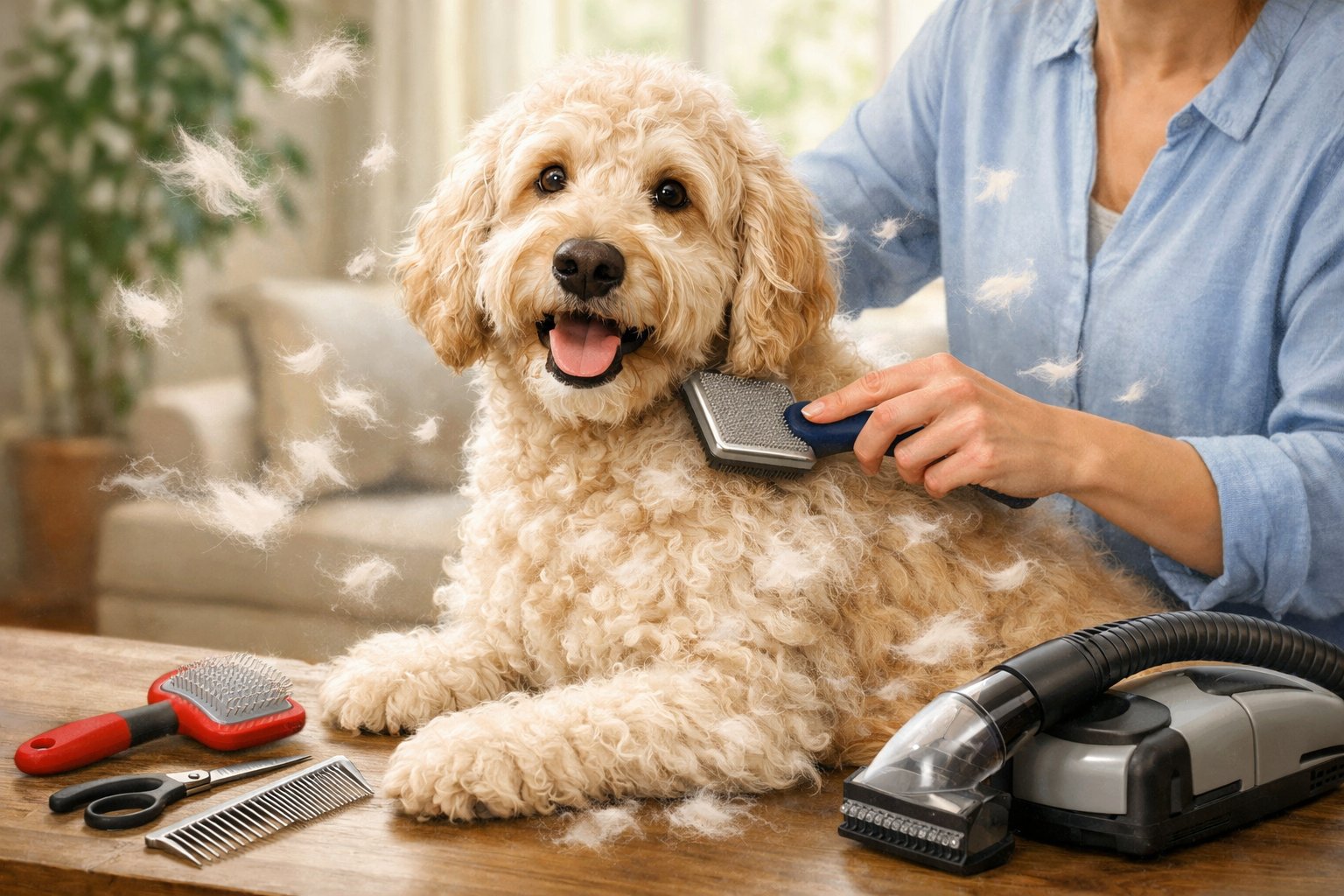
Owners can reduce loose hair with steady grooming, smart coat care, and attention to skin health.
Simple habits, done often, make the biggest difference in how much fur ends up on floors and furniture.
The Right Brushing Routine and Grooming Tools
Regular brushing removes loose hair before it sheds around the home.
Most Labradoodles need brushing 2–3 times per week, and more during heavy shed periods.
A slicker brush works best for curly and wavy coats because it pulls trapped hair from the curls.
A dematting comb helps break up knots behind the ears, under the legs, and near the tail.
Straight coats may also benefit from a grooming rake.
Brushing should reach the skin without scratching it.
Short, gentle strokes work better than fast passes.
Many vets recommend coat-specific brushing methods like those outlined in this guide on how to deal with Labradoodle shedding.
Professional Grooming vs At-Home Maintenance
At-home grooming handles daily coat maintenance, but professional grooming plays a key role in shedding control.
Most Labradoodles benefit from a full groom every 6–10 weeks, depending on coat type.
Professional groomers trim the coat evenly and remove packed hair that brushing misses.
This reduces matting, which can trap shed hair and worsen skin issues.
Groomers also spot early signs of irritation or infection.
Owners who want to learn proper techniques can follow detailed steps similar to those shared in this guide on how to groom a Labradoodle.
Combining home care with scheduled grooming creates consistent coat maintenance.
Nutrition, Skin Health, and Other Shedding Factors
Diet affects coat strength and shedding levels.
A balanced food with omega-3 fatty acids supports skin health and reduces dry, flaky skin that leads to excess hair loss.
Stress, allergies, and seasonal changes also impact shedding.
Many Labradoodles shed more in late winter and spring, as explained in this article on seasonal Labradoodle shedding.
Owners should watch for red skin, constant scratching, or patchy hair loss.
These signs may point to allergies or infection rather than normal shedding.
A vet check helps rule out medical causes and supports long-term shedding prevention.
Products and Techniques for Shedding Control
The right products help manage Labradoodle shedding without harming the coat. A shed control shampoo cleans the skin while protecting natural oils.
Overbathing can dry the skin, so most dogs only need a bath every 4–6 weeks.
Helpful tools include:
- Detangling sprays to loosen trapped hair before brushing
- Air purifiers to reduce dander indoors
- High-suction vacuums designed for pet hair
Many owners use product tips like those shared in this breakdown of tools that help with Labradoodle hair. Consistent use matters more than buying many products.