Labradoodle Myths and Common Misconceptions
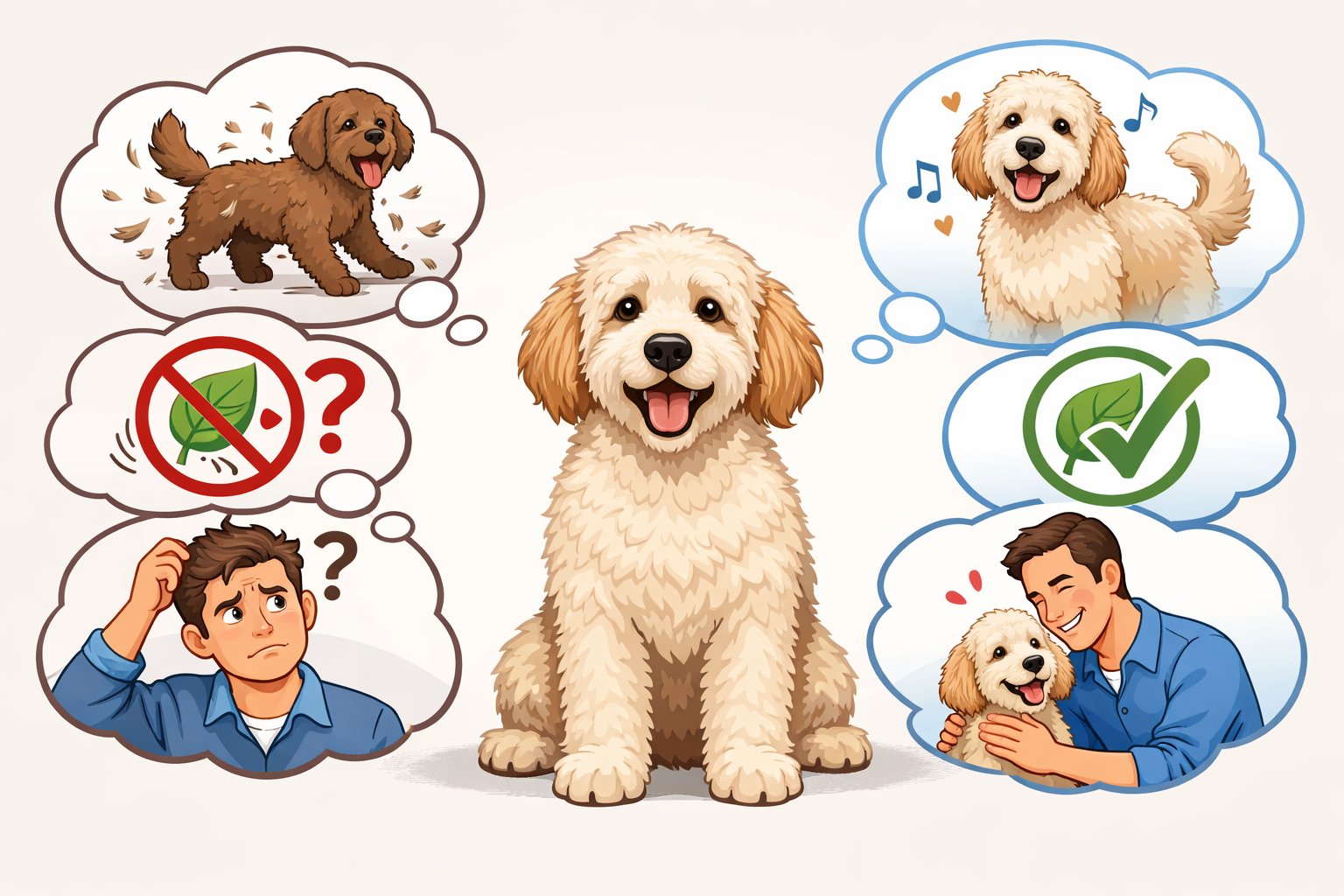
Many people choose a labradoodle based on ideas they hear online or from other dog owners. Some of these beliefs sound simple, but real life with this designer breed looks more complex.
Do Labradoodles Really Not Shed?
Many people believe labradoodles do not shed at all. This belief often leads to surprise once the dog comes home.
Labradoodles can shed, and the amount depends on coat type. They may have curly, wavy, or straight coats.
Curly coats tend to shed the least, while straight coats shed the most. Wavy coats fall somewhere in between.
A labradoodle is often a low-shedding dog, not a no-shedding one. Grooming still matters.
Regular brushing helps control loose hair and keeps mats from forming. People asking do labradoodles shed should expect some hair, even if it is less than many other breeds.
Are Labradoodles Hypoallergenic Dogs?
Labradoodles often get labeled as a hypoallergenic dog, but no dog fits that label fully. Allergies react to dander, saliva, and skin oils, not just fur.
Some labradoodles trigger fewer reactions, especially those with tight curls. Others may still cause issues, even if they shed less.
Because this is a mixed breed, results vary from dog to dog. Two puppies from the same litter may affect allergies in different ways.
Anyone with allergies should spend time with an adult labradoodle before choosing one. This approach gives a clearer picture than relying on the breed name alone.
Labradoodle Temperament: Are They Always Family-Friendly?
Many people expect every labradoodle to act like a perfect friendly dog. While the breed often shows a warm nature, behavior depends on training, social time, and genetics.
Most labradoodles enjoy people and seek attention. This trait makes them popular as family dogs.
They usually do well with children when raised in calm homes. Still, they can feel anxious or overly excited without structure.
Lack of exercise may lead to barking or chewing. The typical labradoodle personality works best with daily activity, clear rules, and early social exposure.
Are Labradoodles Recognized as a Purebred Dog?
Many owners assume kennel clubs treat labradoodles as a purebred dog. In reality, major groups do not recognize them as such.
A labradoodle is a designer breed created by crossing a Labrador Retriever with a Poodle. This mix leads to wide differences in size, coat, and behavior.
The American Kennel Club does not list labradoodles as a recognized breed, as noted in explanations of common labradoodle myths. Some clubs track breeding lines, but standards vary.
This lack of uniform rules explains why labradoodles can look and act so different from one another.
Facts About Labradoodle Traits and Care
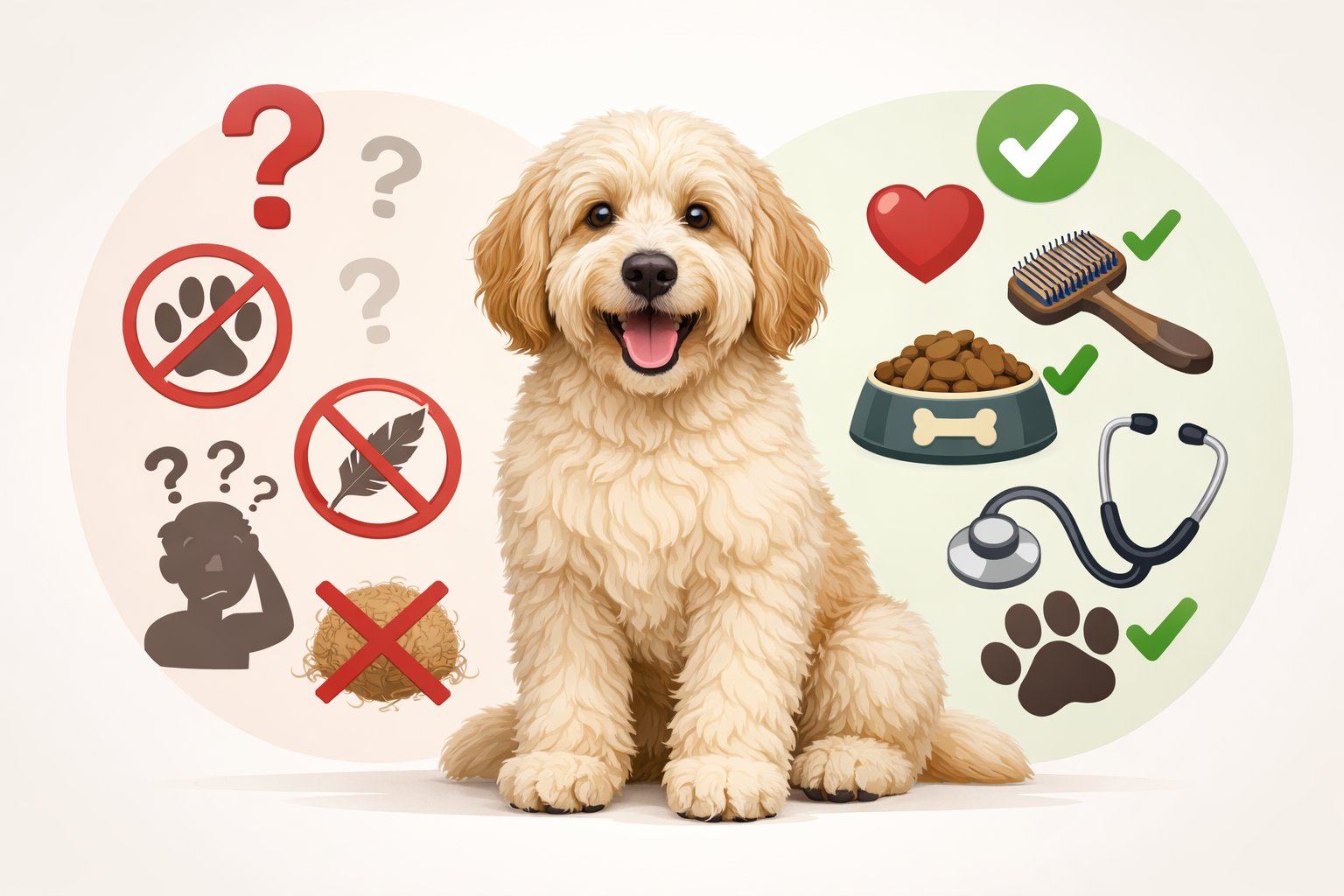
The labradoodle breed combines traits from the labrador retriever and the poodle. These dogs vary widely in size, coat, and care needs.
They share clear patterns in health, work ability, and daily care.
Labradoodle Origins and the Story of Wally Conron
Wally Conron developed the first labradoodle in Australia during the 1980s. He worked with the Royal Guide Dogs Association and wanted a dog that could assist people with allergies.
He crossed a labrador retriever with a standard poodle to create a working dog with a low-shedding coat. One puppy became a successful labradoodle guide dog, which increased public interest.
Many people confuse this mix with the Australian labradoodle. That dog later added cocker spaniel lines and differs from the original cross.
This history explains why coat type and temperament still vary today, as described in this detailed Labradoodle breed history and care guide.
Variations in Size and Coat Types
Labradoodles do not follow a single size or coat pattern. Breeders use different pairings, which leads to clear differences between dogs.
Common size ranges include:
| Size type | Typical weight |
|---|---|
| Miniature | 18–30 pounds |
| Medium | 30–45 pounds |
| Standard | 50–75 pounds |
Coats may be curly like a poodle, wavy, or straight like a labrador. Shedding levels vary by coat type and genetics.
Low shedding does not mean low grooming. Most coats need brushing several times a week and professional trimming every six to eight weeks to prevent matting and skin issues.
Service, Therapy, and Guide Dog Roles
Labradoodles often succeed as assistance dogs because they combine focus with a calm, social nature. Trainers value their ability to learn tasks and work closely with people.
They serve as service dogs for mobility support, therapy dogs in schools and hospitals, and guide dogs for people with vision loss. Not every labradoodle fits these roles, but many meet the physical and behavioral standards.
Strong training and early social exposure matter more than coat type or size. Programs select dogs based on temperament, health, and stress tolerance rather than breed labels alone.
Health Issues and Lifespan
Labradoodle health reflects risks from both parent breeds. Responsible breeding lowers risk, but it does not remove it.
Common concerns include progressive retinal atrophy, hip dysplasia, and elbow dysplasia. Floppy ears also increase the risk of ear infections if owners skip routine cleaning.
Most owners ask, how long do labradoodles live? The average lifespan ranges from 12 to 16 years.
Diet, exercise, and regular vet care play a major role. This overview of labradoodle health concerns and lifespan expectations explains why health testing and routine checkups matter.
Labradoodle Coat, Generations, and Designer Dog Debate
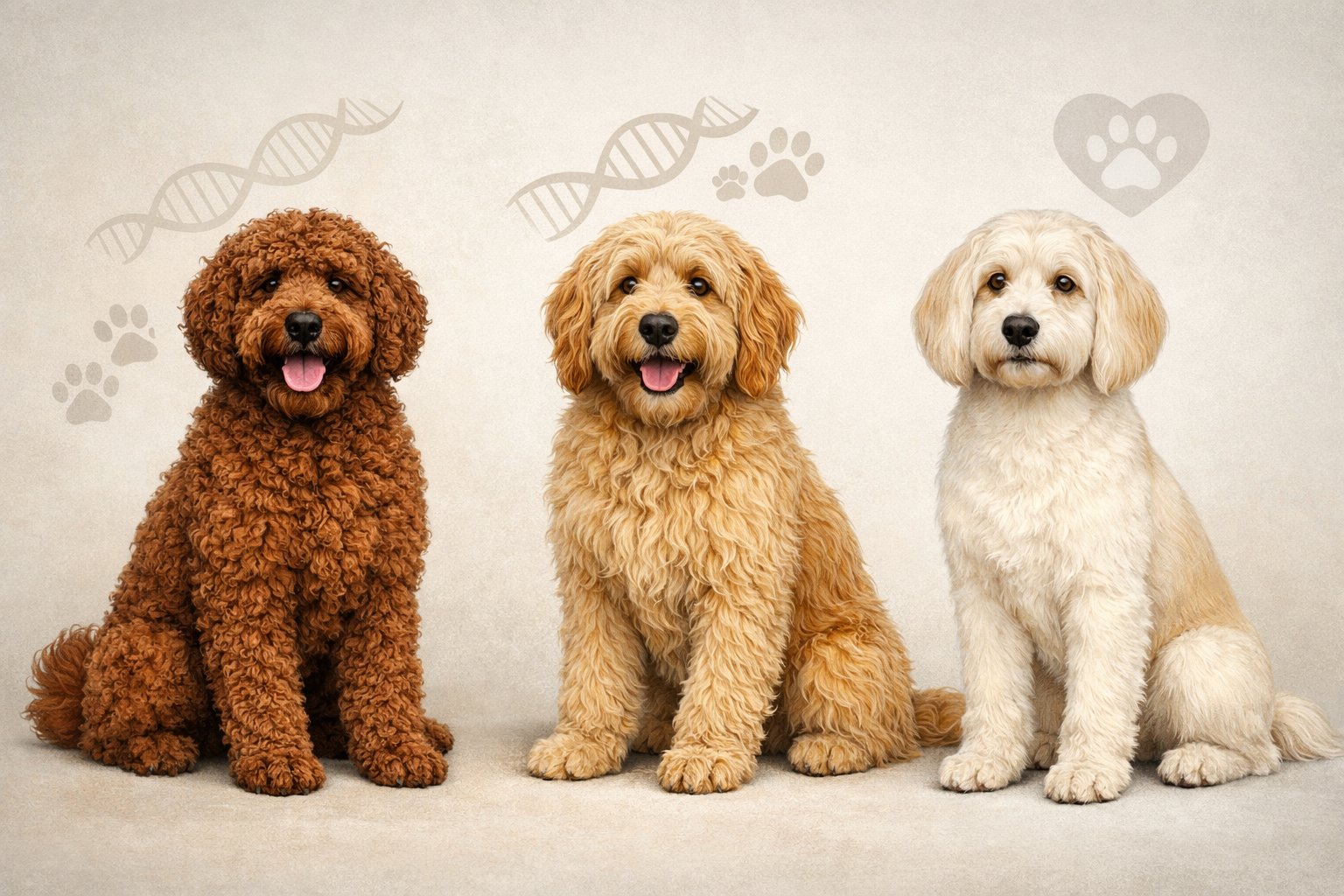
Labradoodles vary more than many people expect. Their coat, generation, and breeding background shape how they look, shed, and fit into a home.
Coat Types: Fleece, Wool, and Hair
A Labradoodle coat can fall into three main types. Each type affects shedding, grooming, and allergy concerns.
Common Labradoodle coat types
| Coat type | Texture | Shedding | Grooming needs |
|---|---|---|---|
| Fleece | Soft, wavy | Low to moderate | Regular brushing |
| Wool | Tight curls | Low | Frequent grooming |
| Hair | Straight or flat | Moderate to high | Basic brushing |
Fleece and wool coats often come from the Poodle mix side. Many people choose these coats for lower shedding, but no coat is allergy-free.
Hair coats act more like a Labrador’s coat and shed more. Coat type can vary even within the same litter.
Size also plays a role. A mini Labradoodle may have a softer coat, while medium Labradoodles and standard Labradoodles often show more coat variety.
For a deeper look at coat differences, guides on Labradoodle coat types explain how texture and care needs change over time.
F1B and Other Generations Explained
Labradoodle generations describe how breeders cross Labradors and Poodles. These labels help predict coat traits, not personality.
Common generations explained
- F1 Labradoodle: 50% Labrador, 50% Poodle
- F1B Labradoodle: F1 crossed back to a Poodle
- Multigen: Labradoodle bred to Labradoodle
An F1B Labradoodle often has a curlier coat and less shedding because it carries more Poodle genetics. Many Labradoodle breeders prefer F1B or multigen dogs for coat consistency.
The “designer dog” label causes debate, but it simply describes intentional crossbreeding. A responsible Labradoodle breeder focuses on health testing, stable traits, and clear generation records.
The breed’s background and public debate trace back to the history of Labradoodle breeding. This history shaped how modern breeders work today.