How Much Exercise Does a Beagle Really Need Each Day?
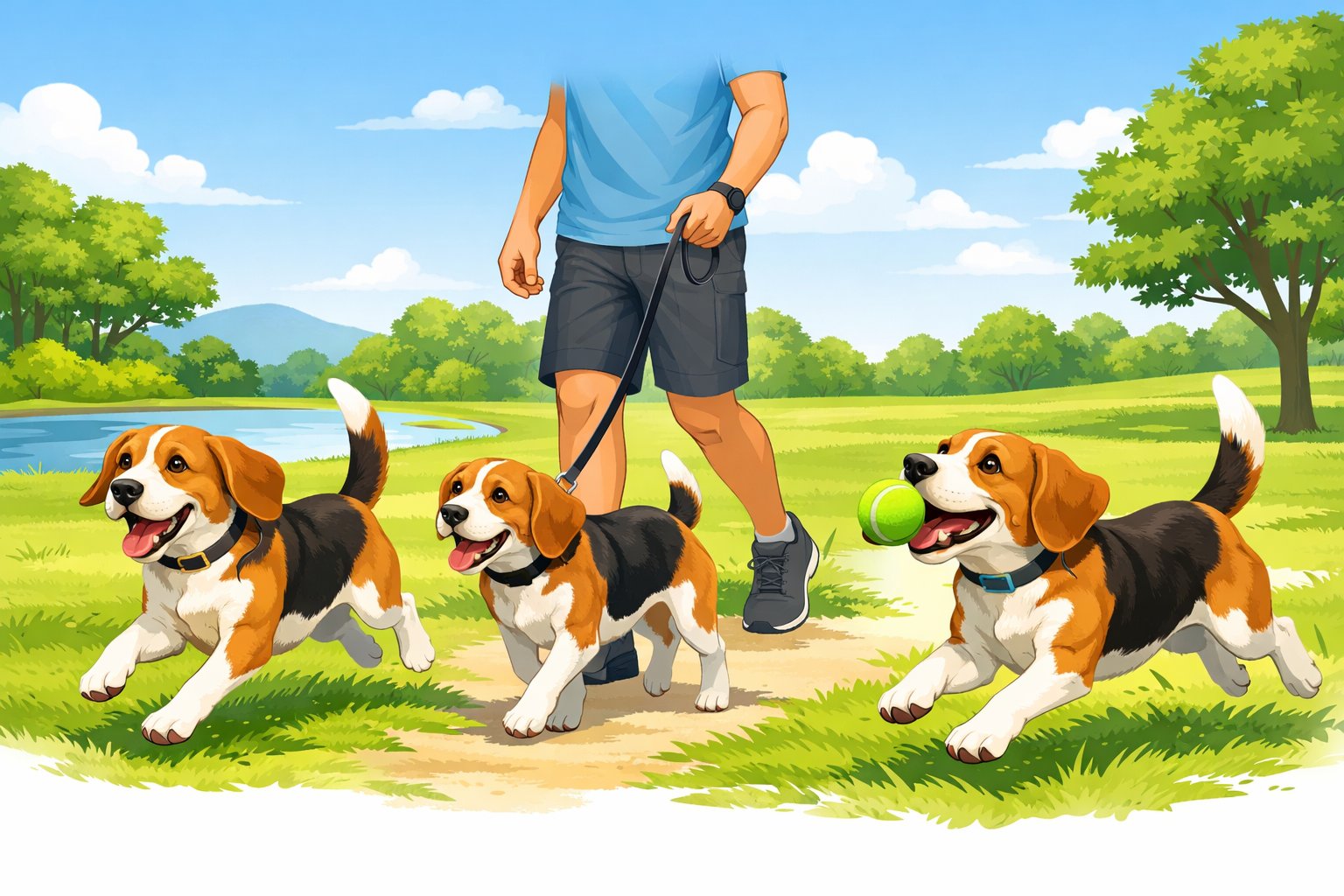
Most Beagles need daily activity that burns energy and keeps their minds busy. The right amount depends on age, health, and how active the dog acts at home.
Daily Exercise Recommendations by Age
Age plays a big role in how much exercise does a Beagle need each day. Puppies have short bursts of energy.
They do best with 20–30 minutes, split into several play sessions to protect growing joints. Adult Beagles usually need 60–90 minutes of daily exercise.
This often includes walks, play, and scent-based games, as noted in this guide on daily Beagle exercise needs. Many owners split this time into two sessions.
Senior Beagles still need movement, but at a slower pace. 30–45 minutes of gentle walks and light play helps keep joints flexible.
Short sessions work better than long outings for older dogs.
Physical vs. Mental Exercise: Striking the Right Balance
Beagle exercise requirements go beyond walking. Beagles were bred to track scents, so mental work matters as much as physical movement.
Physical exercise includes walks, short runs, and games like fetch. These activities help control weight and reduce restlessness.
Most adult Beagles need at least an hour of this type of activity each day, according to complete Beagle exercise recommendations. Mental exercise tires Beagles faster than many owners expect.
Scent games, puzzle toys, and basic training sessions keep their brains active. A mix of both types prevents boredom and improves behavior at home.
Risks of Too Much or Too Little Exercise
Too little exercise often leads to weight gain and problem behaviors. A bored Beagle may chew, dig, or bark more than usual.
Regular activity helps manage these issues and supports long-term health. Too much exercise also causes problems.
Long runs or intense play can strain joints, especially in puppies and seniors. Signs of overdoing it include limping, heavy panting, or slowing down.
Most experts agree that 60 minutes is the minimum, with many dogs benefiting from more when done safely, as explained in this overview of Beagle exercise requirements. Balance matters more than pushing limits.
Planning the Perfect Exercise Routine for Your Beagle
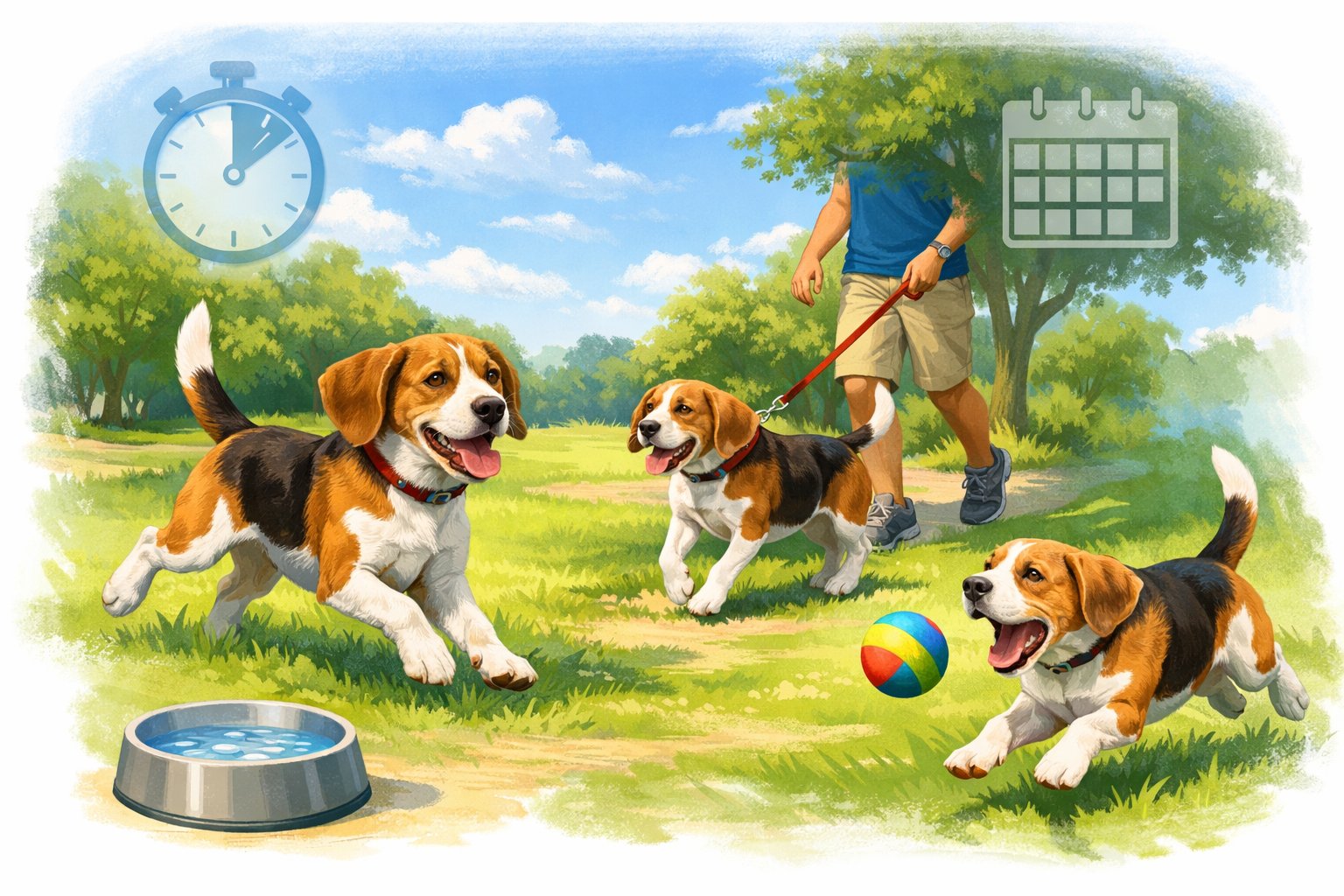
A solid routine blends daily movement, mental work, and safety checks. The right mix keeps weight in check, supports behavior, and fits the dog’s age and health.
Types of Activities for Beagles
Beagles need both physical work and thinking games. Daily walks form the base of any exercise for beagles, with a brisk pace to burn energy.
Many guides note adults do best with 60–90 minutes per day, split into two sessions, as explained in this overview of beagle exercise needs. Short runs, fetch, and hiking add cardio.
Swimming works well for dogs that enjoy water and need low-impact movement. Mental tasks matter.
Scent games, puzzle toys, and short training sessions help reduce boredom. These activities fit well into a simple beagle exercise plan and often tire the dog faster than movement alone.
A weekly mix keeps interest high:
- Daily: brisk walks and sniff time
- 3–4 days: fetch or running
- Several times: puzzle toys or scent games
Adjusting Exercise to Your Beagle’s Life Stage
Age changes how much and how hard a beagle should work. Puppies need short play sessions spread through the day.
Five to ten minutes at a time protects growing joints. Adult dogs handle longer sessions.
Many experts suggest at least an hour daily, split morning and evening, as described in this guide to how much exercise beagles need. Cardio and mental tasks should share the time.
Senior beagles slow down. They still need movement, but with less strain.
Gentle walks and light play help keep joints flexible and weight steady. A simple comparison helps:
| Life stage | Daily focus |
|---|---|
| Puppy | Short play, frequent rest |
| Adult | Walks, cardio, brain games |
| Senior | Gentle walks, easy play |
Essential Beagle Exercise Safety Tips
Safety keeps beagle exercise helpful instead of harmful.
A secure leash matters because beagles follow scents without warning.
Harnesses often give better control than collars.
Weather affects routine.
Owners should walk early or late in hot months and shorten sessions in cold weather.
Fresh water should always be available.
Health checks matter.
Dogs need up-to-date vaccines before parks or trails.
Paws should be checked after long outings.
Clear habits reduce risk:
- Use a strong leash outdoors
- Avoid peak heat
- Watch for limping or heavy panting