• Skip to main content
  • Skip to primary sidebar

superduperdog

superduperdog

Julia Huskey

Are Border Collies Good Service Dogs? A Comprehensive Look

December 9, 2025 by Julia Huskey

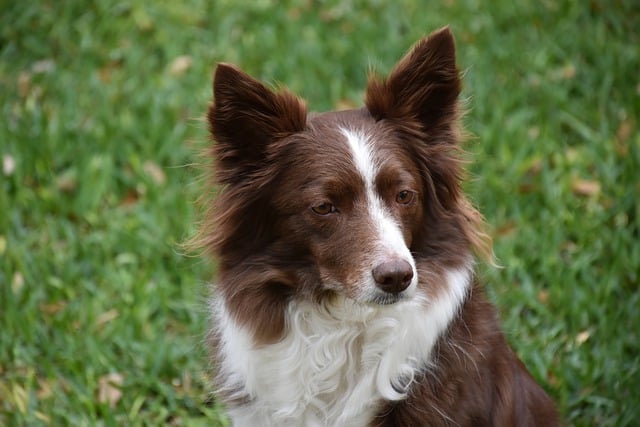
Image by Ray Shrewsberry • from Pixabay

Border collies are a highly intelligent breed of dog that is known for their herding abilities. They are often used as working dogs on farms and ranches, but they have also gained popularity as service dogs. Many people wonder if border collies make good service dogs, and the answer is yes, they can be excellent service dogs for the right person.

One of the reasons that border collies can make good service dogs is their intelligence. They are quick learners and can be trained to perform a wide variety of tasks. They are also highly observant and can pick up on subtle cues from their handler, which can be especially helpful for individuals with certain disabilities. Additionally, border collies are known for their intense focus and determination, which can make them well-suited for tasks that require precision and attention to detail.

Understanding Border Collies

Border Collies are a medium-sized breed of herding dogs that are known for their high energy levels, intelligence, and sensitivity. They are often referred to as “workaholics” due to their strong work ethic and desire to please their owners.

Border Collies have a distinctive appearance with their long, thick coats and pointed ears. They come in a variety of colors, including black and white, red and white, and blue merle. Their size ranges from 18 to 22 inches in height and 30 to 45 pounds in weight.

These energetic dogs require a lot of exercise and mental stimulation to keep them happy and healthy. They are highly intelligent and need plenty of training and socialization to prevent them from becoming bored or destructive.

Border Collies are also known for their sensitivity and protective nature. They can be wary of strangers and may need to be socialized early on to prevent any aggressive behavior. However, with proper training and socialization, they can make excellent service dogs.

Overall, the Border Collie breed is a great choice for those looking for a smart, energetic, and loyal companion. However, they require a lot of time and attention to keep them happy and healthy, so they may not be the best choice for everyone.

Service Dogs: An Overview

Service dogs are specially trained to assist people with disabilities in performing various tasks. They are a type of assistance dog that is trained to provide support and assistance to people with physical, emotional, or mental disabilities. Service dogs are recognized by the Americans with Disabilities Act (ADA) and are allowed to accompany their owners in public places.

There are different types of service dogs that are trained to perform specific tasks. Some of the most common types of service dogs include guide dogs, hearing dogs, medical alert dogs, and psychiatric service dogs. Guide dogs help visually impaired people navigate their surroundings, while hearing dogs alert their owners to important sounds. Medical alert dogs can detect changes in their owner’s blood sugar levels, and psychiatric service dogs provide support to people with mental health conditions.

Under the ADA, service dogs are not required to be certified or registered. However, they must be trained to perform specific tasks that are directly related to their owner’s disability. Service dogs must also be well-behaved and under their owner’s control at all times.

It is important to note that emotional support dogs and animals are not considered service animals under the ADA. Emotional support animals provide comfort to their owners but are not trained to perform specific tasks related to a disability.

In conclusion, service dogs are a valuable resource for people with disabilities. They provide support and assistance to their owners and help them live more independent lives. The ADA recognizes the importance of service dogs and allows them to accompany their owners in public places.
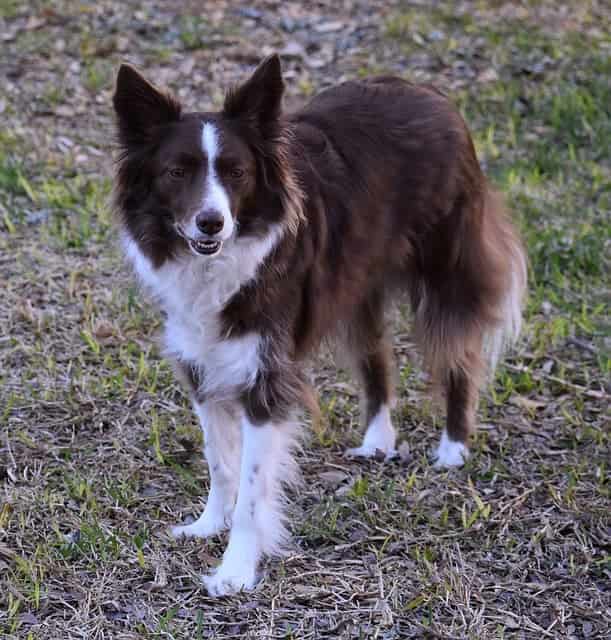
Image by Ray Shrewsberry • from Pixabay

Training Border Collies as Service Dogs

Border Collies are known for their high intelligence, focus, and eagerness to please, making them excellent candidates for service dog training. However, it’s important to note that not all Border Collies are suitable for service work, and extensive training is required to ensure they are up to the task.

One of the key factors in training Border Collies as service dogs is their trainability and obedience. They are generally easy to train and respond well to positive reinforcement techniques. Their high energy levels and work ethic also make them well-suited for service work that requires physical activity, such as guiding individuals with mobility impairments or assisting with search and rescue efforts.

However, their intense focus and drive can also make them prone to fixating on a task or object, which can be a challenge in certain service dog roles. It’s important for trainers to work with Border Collies to develop their ability to switch tasks and remain focused on the handler’s needs.

Training Border Collies as service dogs requires a significant investment of time and energy, both from the trainer and the dog. It’s important to start training early and consistently reinforce desired behaviors to ensure success. With the right training and guidance, Border Collies can make excellent service dogs with their intelligence, focus, and eagerness to please.

Border Collies and Specific Disabilities

Border Collies are known for their intelligence, loyalty, and trainability. These traits make them excellent candidates for service dog work. While they can be trained to assist with a variety of disabilities, some specific disabilities that Border Collies can be especially helpful for are:

  • Autism: Border Collies can provide a calming presence and help individuals on the autism spectrum feel more grounded and connected.

  • Anxiety: Border Collies can be trained to provide deep pressure therapy, which can help alleviate anxiety symptoms.

  • PTSD: Border Collies can be trained to provide emotional support and help individuals with PTSD feel more safe and secure.

  • Seizures: Border Collies can be trained to detect and respond to seizures, providing assistance and alerting others if needed.
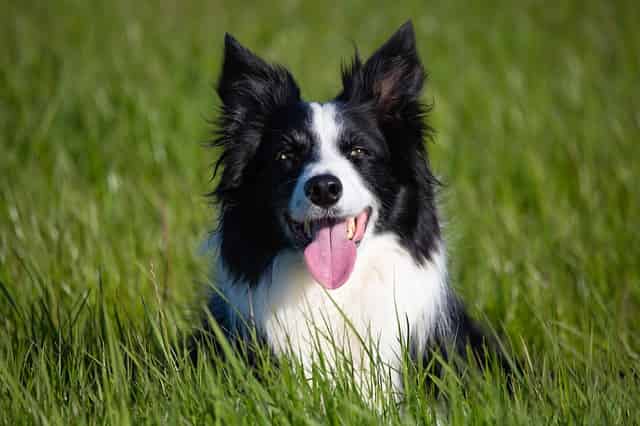
  • Diabetes: Border Collies can be trained to detect changes in blood sugar levels and alert their handler if levels become too high or too low.

  • Physical disabilities: Border Collies can be trained to assist with mobility tasks, such as opening doors, picking up objects, and turning on lights.

  • Psychiatric and neurological disabilities: Border Collies can be trained to provide emotional support and help individuals with psychiatric and neurological disabilities feel more calm and centered.

  • ADHD: Border Collies can be trained to provide focus and help individuals with ADHD stay on task.

  • Epilepsy: Border Collies can be trained to detect and respond to seizures, providing assistance and alerting others if needed.

Image by Kev from Pixabay

Overall, Border Collies can be excellent service dogs for individuals with a variety of disabilities. However, it’s important to note that not all Border Collies will be suitable for service dog work, and that each individual’s needs and preferences should be taken into account when selecting a service dog.

Benefits of Border Collies as Service Dogs

Border collies make excellent service dogs due to their intelligence, adaptability, and loyalty. Here are some of the benefits of using a border collie as a service dog:

  • Intelligence: Border collies are one of the most intelligent dog breeds, making them quick learners and highly trainable. This makes them ideal for tasks that require a high level of intelligence, such as guiding the visually impaired or alerting their owner to an oncoming seizure.

  • Sensitivity: Border collies are known for their sensitivity and ability to pick up on their owner’s emotions. This makes them excellent emotional support animals and ideal for individuals with anxiety or depression.

  • Reliability: Border collies are extremely reliable and consistent in their behavior, making them ideal for tasks that require a high level of reliability, such as alerting their owner to an oncoming medical emergency.

  • Adaptability: Border collies are highly adaptable and can easily adjust to new environments and situations. This makes them ideal for service dogs that need to travel frequently or work in a variety of settings.

  • Friendliness: Border collies are friendly and affectionate dogs that love to be around people. This makes them ideal for individuals who need a constant companion and emotional support.

Overall, border collies make excellent service dogs due to their intelligence, sensitivity, reliability, adaptability, and friendliness. If you are considering getting a service dog, a border collie may be a great option for you.
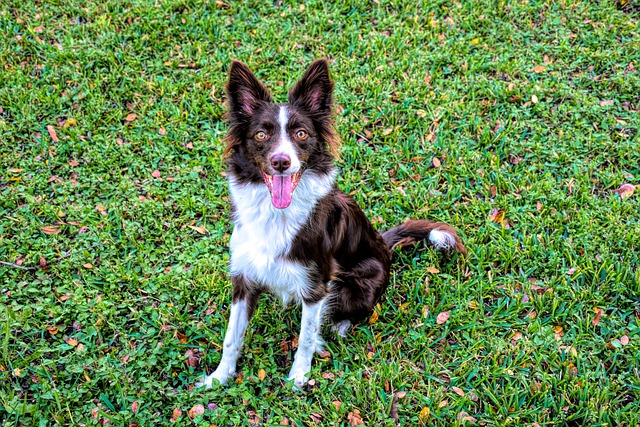
Image by Ray Shrewsberry • from Pixabay

Comparing Border Collies to Other Service Dog Breeds

When it comes to service dogs, there are many breeds that can excel in this role. Here, we will compare Border Collies to other popular service dog breeds, such as Golden Retrievers, Poodles, Labrador Retrievers, Boxers, Doberman Pinschers, Great Danes, and Saint Bernards.

Golden Retrievers are one of the most popular service dog breeds due to their friendly and obedient nature. They are known for their ability to assist people with mobility issues and are also used as therapy dogs. Similarly, Labrador Retrievers are also highly trainable and make excellent service dogs.

Poodles are another breed that is often used as service dogs due to their intelligence and hypoallergenic coat. They come in three different sizes, making them versatile for different needs. Boxers are also known for their intelligence and are often used as hearing or mobility assistance dogs.

Doberman Pinschers are a breed that is often used for protection and security, but they can also make great service dogs due to their loyalty and intelligence. Great Danes and Saint Bernards are larger breeds that can be used as mobility assistance dogs due to their size and strength.

While all of these breeds have their unique strengths, Border Collies are known for their high intelligence, trainability, and work ethic. They excel in tasks that require problem-solving and can be trained for a variety of service dog roles, including mobility assistance, hearing dogs, and psychiatric service dogs.

In conclusion, there are many breeds that can make excellent service dogs, and the choice ultimately depends on the specific needs of the individual. However, Border Collies should not be overlooked as a great option due to their intelligence, trainability, and work ethic.

Specific Tasks and Roles of Border Collie Service Dogs

Border Collies are highly intelligent and trainable dogs that excel in various tasks and roles as service dogs. They are well-suited for individuals with physical disabilities, psychiatric conditions, and autism spectrum disorders. Here are some specific tasks and roles that Border Collie service dogs can perform:

  • Assistance with mobility: Border Collies can be trained to pull wheelchairs, open and close doors, and retrieve dropped items for individuals with physical disabilities. They can also provide balance and stability support for individuals with mobility impairments.

  • Alerting to prescribed medication: Border Collies can be trained to alert their owners when it is time to take their prescribed medication. They can also retrieve medication from a designated location and bring it to their owners.

  • Emotional support: Border Collies are known for their affectionate and loyal nature. They can provide emotional support and comfort to individuals with psychiatric conditions, such as anxiety and depression.

  • Public access: Border Collies can accompany their owners in public spaces, such as restaurants, stores, and airports. They can also provide assistance with navigating crowds and avoiding obstacles.

  • Scent detection: Border Collies have a keen sense of smell and can be trained to detect scents associated with medical conditions, such as low blood sugar in individuals with diabetes.

  • Object retrieval: Border Collies can be trained to retrieve specific objects, such as a phone or a remote control, for individuals with physical disabilities.

  • Protection: Border Collies can provide protection and security for their owners, especially for individuals with hearing impairments who may not be able to hear someone approaching.

Overall, Border Collies can be excellent service dogs for a variety of tasks and roles. However, it is important to remember that not all Border Collies are suitable for service work, and each dog should be evaluated for temperament, trainability, and physical ability before being trained as a service dog.

Image by Kanashi from Pixabay

Frequently Asked Questions

What makes a good service dog?

A good service dog should be intelligent, trainable, and able to perform tasks that assist their handler with a disability. They should be able to remain calm in all situations and have a strong desire to please their handler.

What are the most common breeds used as service dogs?

The most common breeds used as service dogs are Labrador Retrievers, Golden Retrievers, and German Shepherds. However, other breeds such as Border Collies can also make excellent service dogs.

Can Border Collies be trained as service dogs?

Yes, Border Collies can be trained as service dogs. They are highly intelligent and trainable, which makes them well-suited for the job.

What tasks can Border Collies perform as service dogs?

Border Collies can perform a variety of tasks as service dogs, including guiding their handler, alerting to sounds, retrieving items, and providing emotional support.

What are the advantages of having a Border Collie as a service dog?

The advantages of having a Border Collie as a service dog include their high intelligence, trainability, and ability to perform a wide range of tasks. They are also highly adaptable to different environments and can be excellent problem-solvers.

Are there any disadvantages to having a Border Collie as a service dog?

One potential disadvantage of having a Border Collie as a service dog is their high energy level. They require a lot of exercise and mental stimulation, which may be challenging for some handlers. Additionally, they may have a strong herding instinct, which could cause them to try to herd people or other animals. However, with proper training and socialization, these issues can be minimized.
Filed Under: Uncategorized

DIY Dog Treat Recipes Your Pup Will Love: Homemade & Healthy Ideas

December 9, 2025 by Julia Huskey

Must-Try DIY Dog Treat Recipes

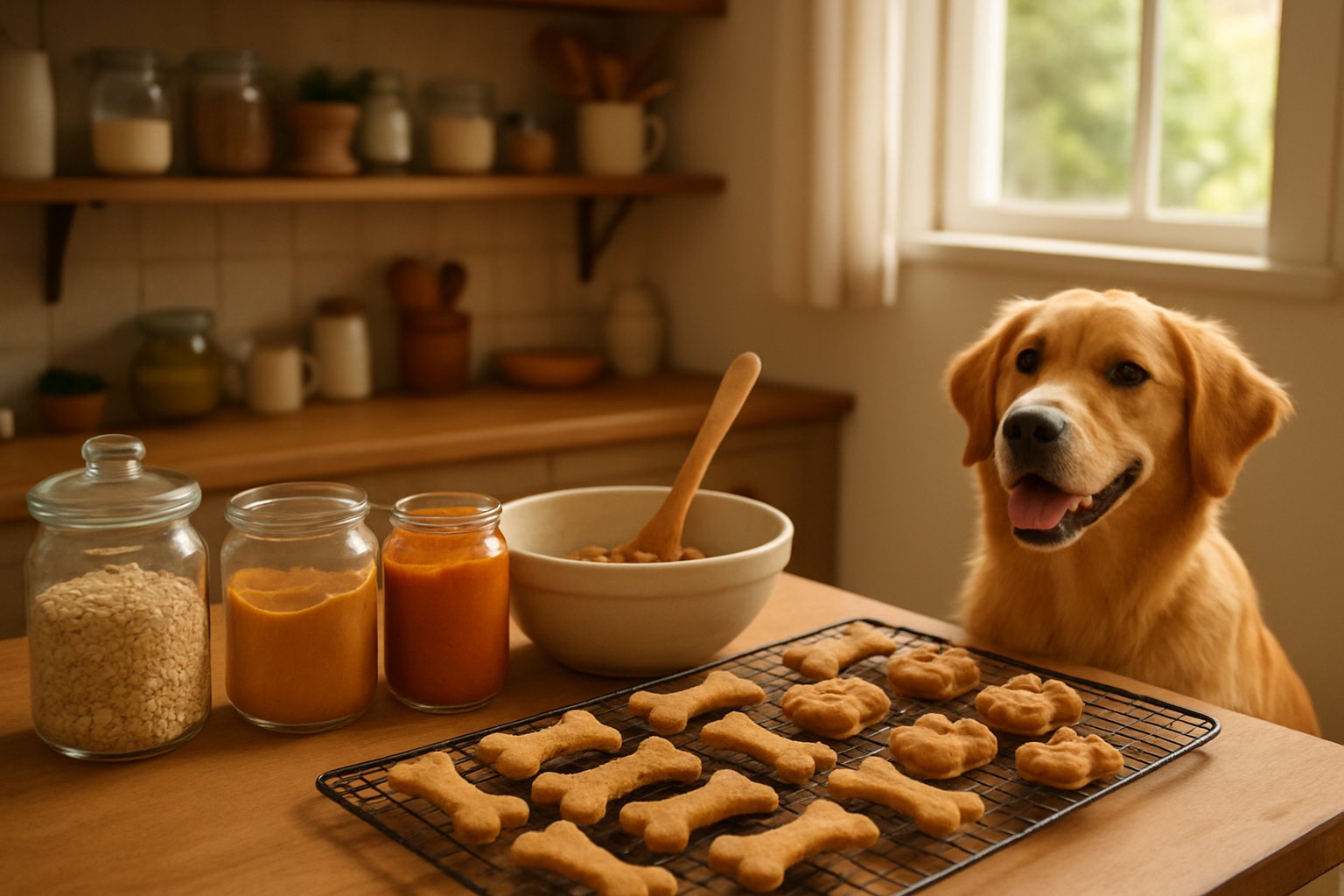
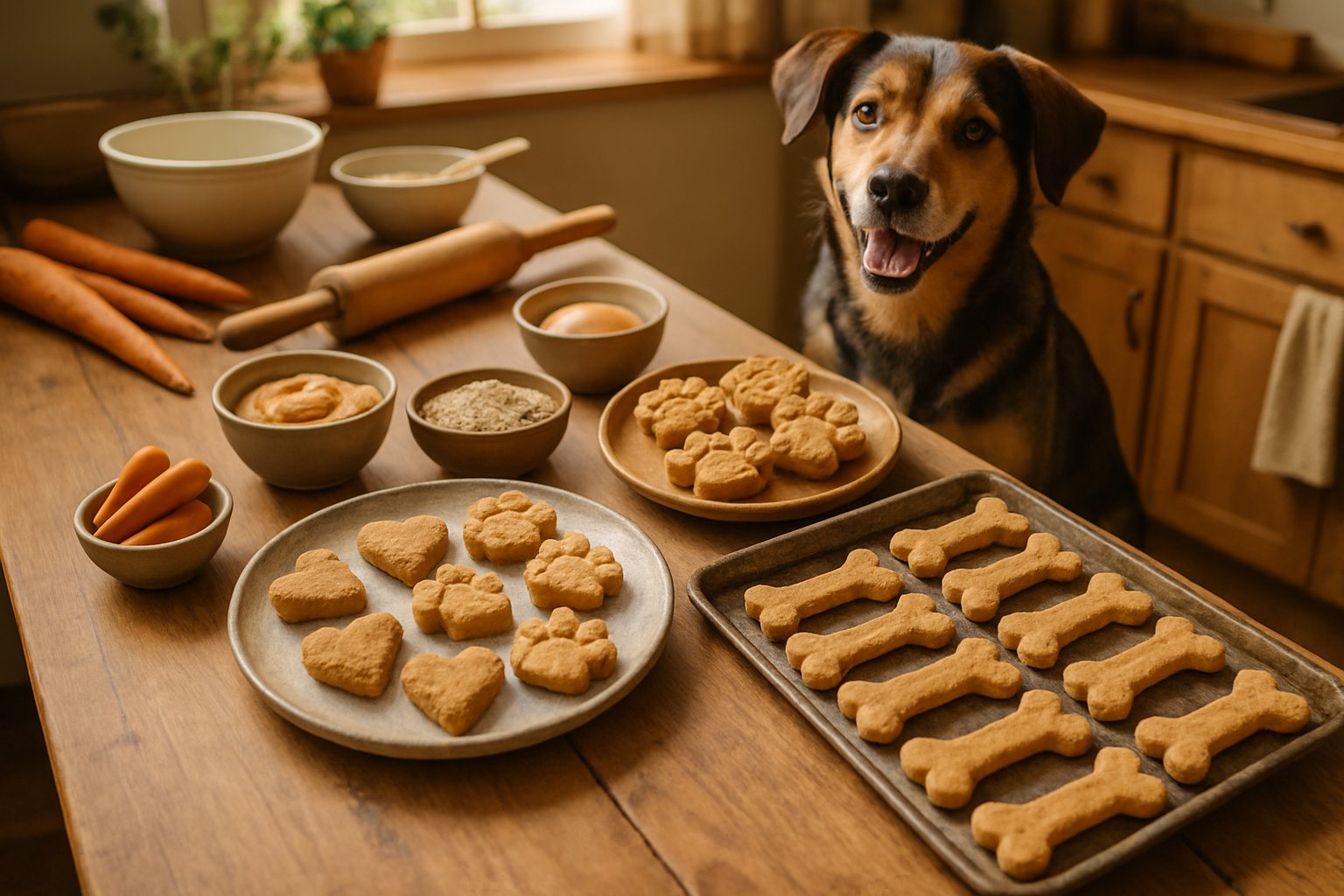
A dog watches homemade dog treats shaped like bones and paws on a kitchen counter with baking ingredients nearby.

Owners can make tasty and healthy homemade dog treats with simple ingredients from their pantry. These recipes focus on wholesome foods like peanut butter, pumpkin, banana, and sweet potato that most dogs enjoy and tolerate well.

Easy Peanut Butter Dog Biscuits

Peanut butter dog treats are one of the easiest recipes to make at home. Dogs love their nutty flavor, and the dough comes together with just a few kitchen staples—whole wheat flour, eggs, water, and natural peanut butter (without xylitol).

To prepare, mix the ingredients into a firm dough, roll it out, and cut into fun shapes with cookie cutters. Bake at 350°F until the biscuits turn golden and crisp.

These peanut butter biscuits store well in an airtight container for up to two weeks. Adding a thin glaze made from peanut butter and honey gives them a little shine and extra taste.

For a detailed recipe, check out these peanut butter dog biscuit recipes from Hepper, which are vet-approved and simple to follow.

Irresistible Pumpkin Dog Treats

Pumpkin adds fiber and moisture to diy dog treats, helping digestion while keeping dogs satisfied. To make this recipe, combine pumpkin puree, egg, peanut butter, and whole wheat flour into a soft dough.

Roll the dough to about ¼ inch thickness, cut it into pieces, and bake until firm around the edges. The result is a batch of chewy, fragrant pumpkin dog treats that are easy to digest and loaded with nutrients.

For variety, bakers can add a sprinkle of cinnamon or oats for texture. The Canine Bible’s homemade dog treat recipes include pumpkin-based options that balance nutrition and taste.

Banana-Based Dog Biscuits

Bananas make a naturally sweet base for homemade dog treats and don’t require added sugar. They provide potassium, vitamin B6, and fiber, making them a good choice for everyday snacks.

Mash ripe bananas and mix with rolled oats, peanut butter, and a small amount of egg to bind the mixture. Form small balls or flatten them into cookies before baking until set.

The result is a soft and chewy dog biscuit with mild sweetness dogs enjoy. Because the dough contains fruit, these treats should be stored in the refrigerator and eaten within a week.

Dogs that prefer gentle textures will find these banana dog treats especially tasty.

Sweet Potato Chews Your Pup Will Love

Sweet potato chews are one-ingredient diy dog treats that satisfy dogs who like to gnaw. Slice sweet potatoes thinly into long strips (about ¼ inch thick), then bake at a low temperature, around 250°F, for two to three hours.

This slow bake removes moisture and creates a tough, chewy texture similar to jerky. Sweet potatoes are full of beta-carotene, fiber, and vitamin A, making them a nutritious replacement for processed snacks.

Owners can adjust baking time for different levels of chewiness. According to Pup’s Gourmet Kitchen’s easy dog treat recipes, this method produces healthy, tail-wagging results with minimal ingredients and no additives.

Fun Frozen Dog Treat Recipes

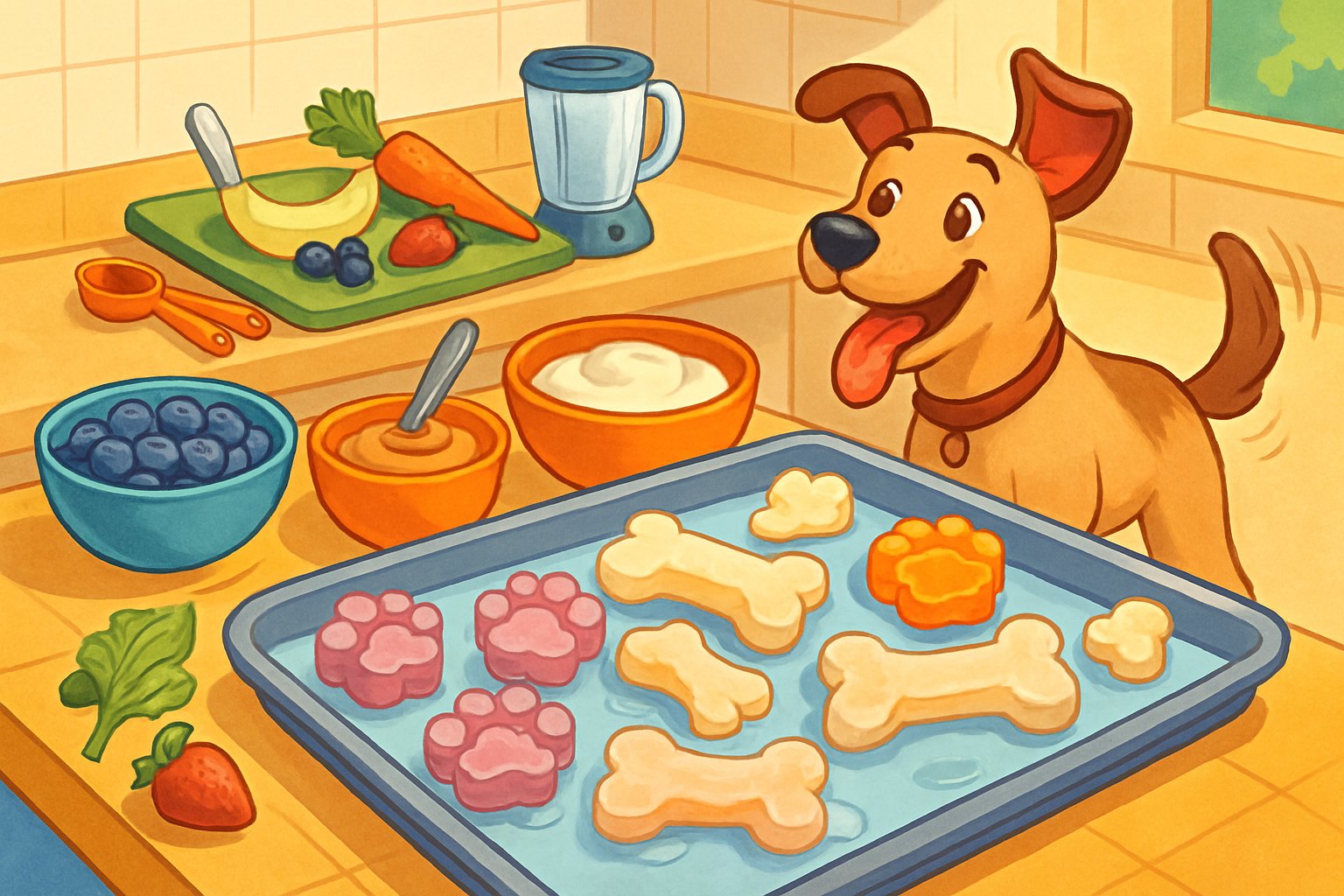
A kitchen scene showing bowls of natural ingredients and frozen dog treats shaped like bones and paws, with a happy dog watching nearby.

Frozen dog treats help dogs stay cool, hydrated, and satisfied during warm weather. Using ingredients like fruit, yogurt, and pumpkin gives these homemade dog treats both flavor and nutrition while keeping them easy to prepare and store in an airtight container.

Watermelon Pupsicles for Hot Days

Watermelon pupsicles are a light and refreshing option for dogs. Since watermelon is naturally hydrating and low in calories, it’s a great base for frozen snacks.

To make them, blend seedless watermelon chunks with a little water until smooth. Pour the mixture into silicone molds, ice cube trays, or paper cups.

Freeze them for about three hours or until firm. Serve one cube as a snack or mix a few pieces into a bowl after playtime.

According to Canine Journal, watermelon-based treats help dogs stay cool and can be safely enjoyed as long as seeds and rind are removed. Store leftovers in an airtight container in the freezer for up to two weeks for easy grab-and-go summer treats.

Yogurt & Berry Frozen Dog Treats

A simple mix of plain yogurt and berries creates a creamy, nutrient-rich frozen dog treat. Yogurt adds calcium and probiotics for gut health, while strawberries and blueberries supply antioxidants and natural sweetness.

These ingredients combine well without added sugar or flavoring. To prepare, combine one cup of unsweetened yogurt with a handful of fresh or frozen berries.

Spoon the mixture into a silicone mold and freeze. The team at Rover notes that using molds shaped like paws or bones makes treats fun and portion-controlled.

Yogurt & berry treats can last about one month in an airtight container. Dogs enjoy them as a cool snack after walks or outdoor play.

Pumpkin and Yogurt Freezies

Pumpkin dog treats offer a gentle option for dogs with sensitive stomachs. Pumpkin adds fiber, vitamins A and C, and a smooth texture when blended with plain yogurt.

For this recipe, mix one cup of 100% pure canned pumpkin with a half cup of plain yogurt and a small splash of water. Blend until smooth and freeze in molds or small bowls.

These creamy orange bites make cooling down tasty and healthy. The recipes featured on PetHubUSA include similar pumpkin-based treats ideal for warm days.

Keep these freezies in an airtight container for quick snacks that double as nutritious rewards your pup will look forward to.

Homemade Treat Storage, Ingredients & Tips

A kitchen countertop with jars of ingredients, a mixing bowl with dough, freshly baked dog treats on a rack, and a golden retriever watching nearby.

Healthy, tasty DIY dog treats depend on clean ingredients, proper storage, and a few creative touches. Focusing on freshness, safety, and variety helps owners make snacks their dogs enjoy while keeping them nutritious and easy to manage at home.

Choosing Wholesome Ingredients and Avoiding Preservatives

He or she can start by picking wholesome ingredients like oats, eggs, and natural peanut butter. Recipes that skip fillers and artificial preservatives help dogs stay healthy and reduce upset stomachs.

Ingredients such as pumpkin, carrots, or sweet potato add valuable fiber and vitamins. When baking, it’s important to use dog-safe products.

For instance, peanut butter should be xylitol-free, as noted in AKC’s homemade dog treat guide. Whole wheat or barley flour works well for most dogs, though grain-free flour like tapioca can help sensitive pups.

Using fresh produce ensures that every treat stays natural and unprocessed. Lean meats such as chicken or salmon can add protein without needing preservatives.

The fewer ingredients on the list, the easier it is to track what a dog eats and how it affects their health.

Best Ways to Store DIY Treats

Homemade dog treats tend to spoil faster because they lack stabilizers. Keeping them fresh depends on how they’re stored.

Once baked and cooled, the treats should go into an airtight container to prevent moisture absorption. Owners can place containers in a cool, dry cabinet for up to a week or refrigerate for longer shelf life.

Freezer-safe bags or boxes extend freshness for several months. Soft treats with moist ingredients like meat or cheese do better in the fridge, while dry biscuits keep fine at room temperature.

Labeling each batch with the date helps avoid serving outdated snacks. Storing treats in smaller portions also helps dogs enjoy fresh bites each time.

For those using molds like the “pyramid” pans mentioned by the American Kennel Club article, smaller shapes cool faster and freeze easily.

Creative Add-Ins and Flavor Combinations

Simple bases can become exciting with thoughtful mix-ins. Combining bacon and tapioca flour, as seen in the Easy 3 Ingredient Dog Treats recipe, adds protein and flavor while staying minimal.

Other options include apples for sweetness, or shredded cheese for extra aroma. Peanut butter pairs nicely with banana or pumpkin, creating a creamy texture most dogs love.

For something savory, sardines or chicken can be blended with oat flour for a nutritious protein snack. Balance flavor with nutrition by keeping add-ins moderate.

Too much dairy or fat can upset some dogs. Owners can rotate ingredients weekly so pets enjoy new flavors without disrupting their diet.

Tips for Safe and Enjoyable Snacking

Even healthy treats should only make up about 10% of daily calories. Overfeeding can lead to weight gain, so smaller portions work best during training.

Dogs often respond better to bite-sized rewards. Before trying new recipes, he or she should check with a veterinarian to confirm that all ingredients are safe.

This is especially important for dogs with allergies or medical issues. Using fun shapes or small molds adds variety to snack time.

Owners should store treats properly and inspect them regularly for mold or spoilage.

Filed Under: Uncategorized

Top 5 Dog Breeds for Families with Kids: Ultimate Guide to Loving Family Dogs

December 9, 2025 by Julia Huskey

Top 5 Dog Breeds for Families with Kids

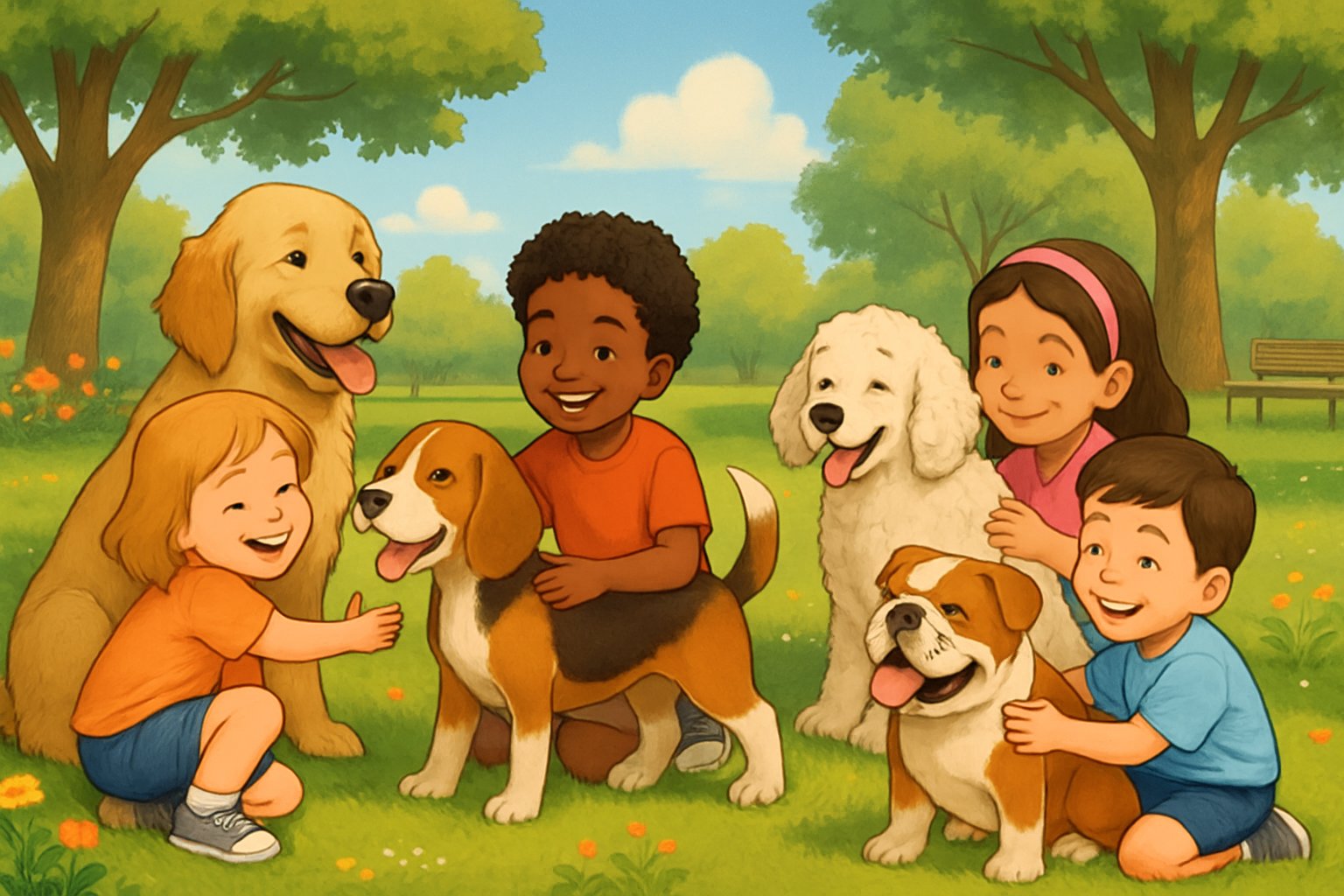
A group of children happily playing and interacting with five different dog breeds in a sunny park.

Families often look for dogs that are gentle, patient, and adaptable to both energetic play and quiet time. Breeds known for stable temperaments, loyalty, and easy training usually make the best companions for households with children.

Labrador Retriever

The Labrador Retriever stands out as one of the best family dogs because of its gentle personality and eagerness to please. Labs are friendly, outgoing, and patient, which makes them a natural fit for kids.

They thrive in homes with plenty of attention and consistent playtime. This medium-to-large breed loves outdoor activity and needs daily exercise such as jogging, swimming, or fetch.

Families who enjoy active lifestyles will find that Labs match their energy level perfectly. Labradors respond well to positive reinforcement, so they learn routines quickly.

Their short coats are easy to maintain, but they do shed. Regular brushing helps keep shedding under control and strengthens the pet-owner bond.

Key Traits:

TemperamentEnergy LevelGrooming Needs
Gentle, reliable, affectionateHighModerate

Golden Retriever

The Golden Retriever remains a favorite among dog breeds for families. This breed is affectionate, intelligent, and loyal, making them easy to train and great with children.

Their steady temperament helps them stay calm, even in busy homes. Goldens love to play both inside and outdoors.

They require daily exercise to keep their bodies and minds healthy. Because of their cooperative nature, they often excel in obedience classes and family games like fetch or frisbee.

Their thick, water-repellent coats need regular brushing to manage shedding. Families who spend time outside, such as hiking or going to the park, often find Golden Retrievers a perfect match for their lifestyle.

Tip: Consistent routines and attention help Golden Retrievers stay happy and well-behaved.


Beagle

The Beagle is a small yet energetic family dog breed known for its curiosity and love of companionship. Beagles enjoy being part of a family “pack” and are especially good with children due to their gentle approach and fun-loving spirit.

They adjust well to smaller spaces, but they need daily walks and playtime. Their strong sense of smell means they may follow scents on a whim, so supervised outdoor time is essential.

Beagles have short coats that are easy to care for. Weekly brushing keeps them tidy.

They also appreciate interactive toys and brain games to keep them mentally active.

Highlights:

  • Size: Small to medium
  • Attitude: Cheerful and social
  • Needs: Consistent activity and attention

Poodle

The Poodle, available in toy, miniature, and standard sizes, is one of the most intelligent and adaptable breeds. Their quick learning ability and even temperament make them one of the best dog breeds for families.

Poodles enjoy both mental and physical challenges. They love water play, short runs, and puzzle toys.

Because of their hypoallergenic coat, families with allergy concerns often choose them. Regular grooming is necessary to prevent mats, but their low-shedding coat keeps homes cleaner.

They thrive on companionship and do best when included in family activities. Whether playing with children or joining walks, Poodles show warm affection without being overly demanding.

Good to Know: Poodles are sensitive to tone; gentle guidance works best for training.


Cavalier King Charles Spaniel

The Cavalier King Charles Spaniel is a small, affectionate breed that bonds closely with its family. Known for its loving expression and silky coat, it adapts easily to various living conditions, from apartments to larger homes.

This breed enjoys both play and relaxation. Children often love their calm and patient nature.

Regular walks and some gentle indoor play keep them content. Their moderate energy level makes them easy to manage compared with more athletic breeds.

The Cavalier’s coat needs brushing a few times a week to prevent tangles. With steady care and affection, they become loyal companions who enjoy close contact with family members.

Families seeking a smaller but heartwarming dog often find the Cavalier an ideal choice among family-friendly dog breeds.

Choosing the Right Family Dog Breed

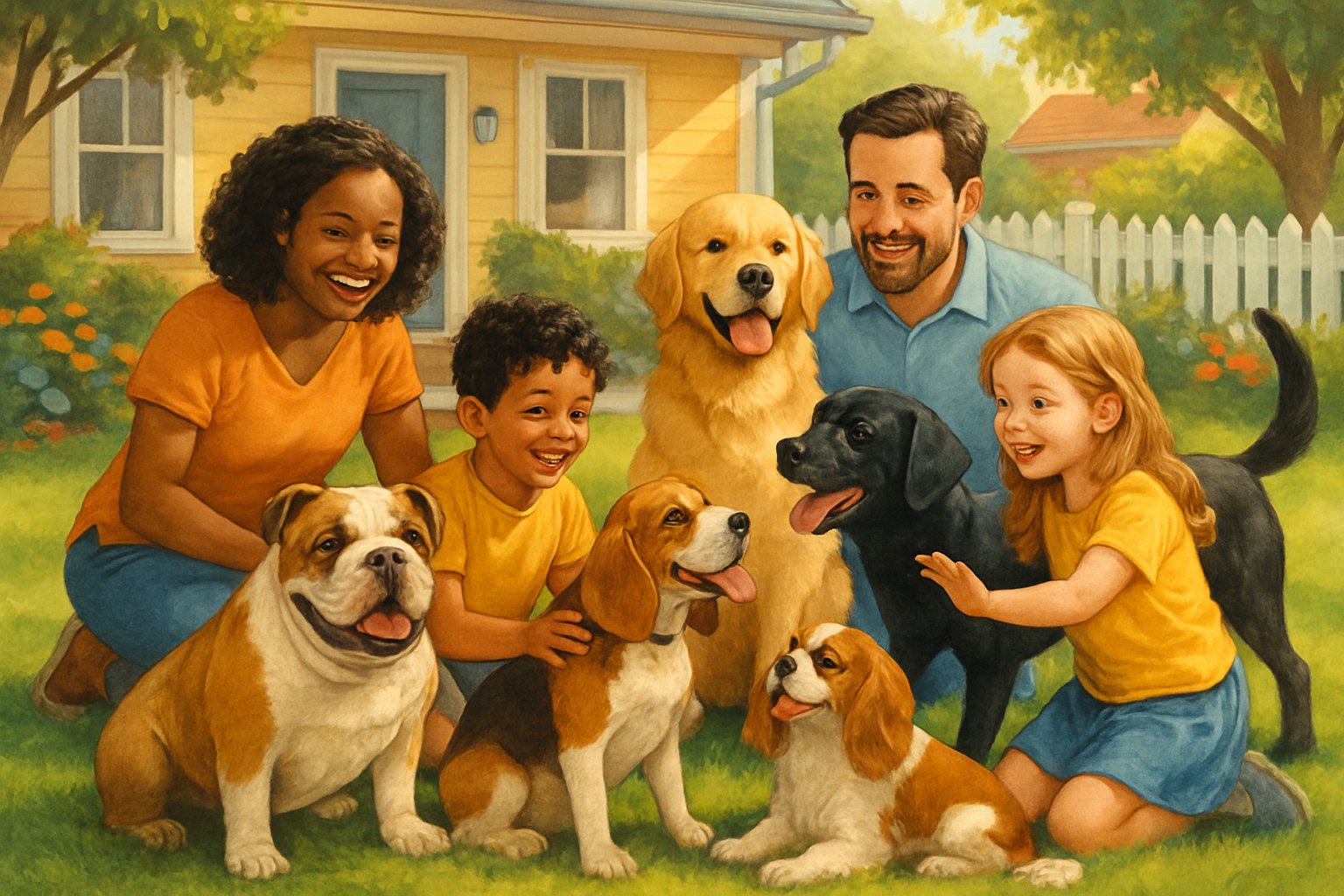
A family with two children playing happily with five different friendly dog breeds in a sunny backyard.

Families should think carefully about a dog’s temperament, energy level, and trainability before deciding on a breed. Some dogs, like Bulldogs, fit well in laid-back homes, while others, such as Collies or Irish Setters, do best with active people who enjoy outdoor time together.

Matching a dog’s traits to a family’s daily routine makes for a happier and longer-lasting bond.

Breed Temperament and Personality

A dog’s temperament affects how well it interacts with both children and adults. Breeds with calm, patient natures tend to adjust easily to busy households.

For example, the Bulldog is known for being loyal, gentle, and adaptable, fitting perfectly into homes that value downtime and companionship. In contrast, the Collie, admired for its loyalty and protective instincts, thrives around children and quickly forms close family ties.

Dogs that enjoy being around people, like the Boxer, add energy and affection to family life but may need consistent boundaries to avoid rough play. When families choose a dog, it helps to talk to breeders or visit shelters to observe behavior firsthand.

Reading reputable guides, such as the AKC’s list of best family dogs, can also help identify breeds with trustworthy, steady personalities.

Energy Level and Exercise Needs

Every dog breed has its own level of stamina and playfulness. Some dogs, like the Irish Setter, have high energy that suits families who enjoy running, hiking, or playing outdoors.

Others, such as the Bulldog, prefer moderate activity and short walks. Here’s a quick look at how activity levels vary:

BreedTypical Energy LevelBest For
BulldogLow to ModerateFamilies with relaxed lifestyles
BoxerHighPlayful, active families
CollieModerate to HighFamilies who enjoy time outdoors
Irish SetterVery HighAthletic, outdoorsy households

Regular exercise keeps dogs healthier and reduces unwanted behaviors like barking or chewing. Families should consider both the dog’s needs and their own availability for walks, playtime, or supervised yard activity.

Trainability and Socialization

Training and socialization shape how a dog behaves around children, guests, and other pets. Breeds that are eager to please, such as the Collie and the Boxer, respond well to early obedience training and positive reinforcement.

Even-tempered dogs, including the Bulldog, tend to learn best through gentle consistency rather than strict discipline. Socialization helps prevent fear or aggression in new situations.

Visiting parks, meeting other dogs, and exposing young pups to everyday sounds and people all build confidence. Resources like The Spruce Pets’ guide to family dogs stress that regular, patient social interaction encourages trust.

Families who invest time in teaching rules and routines often see better behavior, stronger bonds, and smoother daily life with their canine companion.

Honorable Mentions: Other Great Dogs for Kids

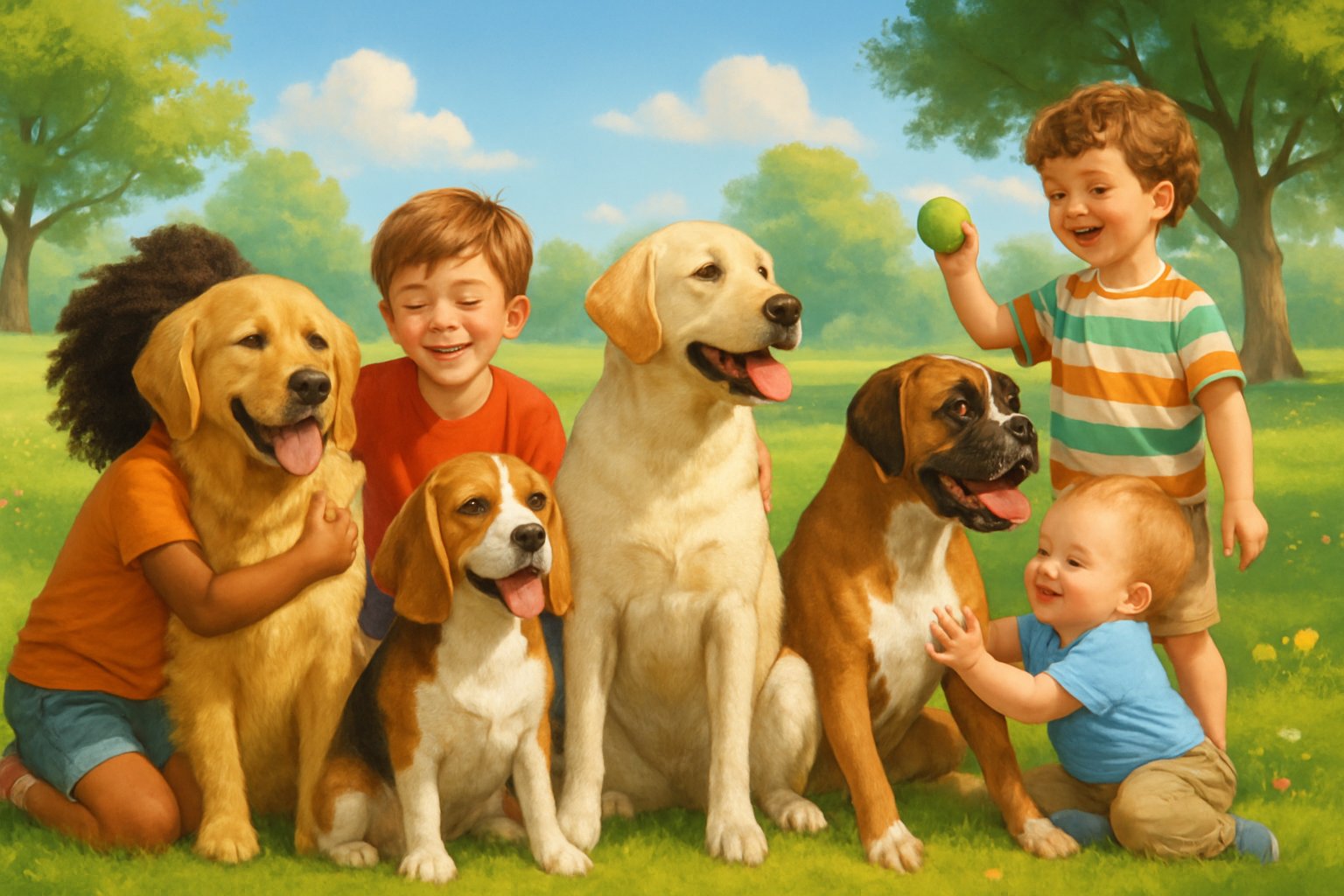
Five different dog breeds playing happily with children in a sunny park setting.

Families often find great companions in breeds that mix friendliness, patience, and playfulness. Some dogs excel as gentle protectors, while others charm with cheerful energy and easy care.

Goldendoodle

The Goldendoodle, a cross between a Golden Retriever and a Poodle, blends intelligence and affection into one family-friendly dog. Known for being outgoing and social, this breed tends to bond closely with children and adults alike.

Many families appreciate its low-shedding coat, which can make grooming easier. Goldendoodles thrive on activity.

Regular walks, playtime, and light training help them stay mentally and physically engaged. They often inherit the Poodle’s cleverness and the Retriever’s patience, making them quick learners who enjoy games that challenge their problem-solving skills.

Families who spend time outdoors often find Goldendoodles fit right in. Their enthusiasm and stamina make them excellent hiking or park companions, and their sociable nature means they usually get along with other pets or children.

For more information about how well this hybrid interacts with families, the American Kennel Club includes it in its discussion of family-friendly breeds.

Bernese Mountain Dog

The Bernese Mountain Dog stands out for its calm, loyal, and affectionate character. Originally bred to work on Swiss farms, this large dog brings strength and stability to family life.

Its thick tri-colored coat and gentle eyes often win over anyone who meets it. Though big, the Bernese Mountain Dog behaves tenderly with children.

It tends to stay patient even during noisy play. Its steady nature can make young kids feel safe, while its protective instinct provides parents with confidence.

Families must keep in mind this breed sheds heavily and needs daily brushing. Bernese Mountain Dogs do best in cooler climates and with enough space to move around.

Regular outdoor time supports their physical and emotional health. The breed also shares a patient quality often seen in other large dogs like the Newfoundland, which makes both ideal options for families willing to commit to proper care and grooming.

Boxer

The Boxer combines energy, loyalty, and affection in a compact yet muscular frame. Boxers are known for their playful spirit and animated expressions.

This breed tends to form deep attachments to its family and remains gently protective toward children. With consistent training, Boxers can channel their energetic personality into healthy play.

They love being part of family activities such as backyard games or brisk walks. Their intelligence and eagerness to please make them responsive to basic obedience lessons.

Boxers adapt well to homes where they receive plenty of interaction. They’re alert and curious, making them helpful watchdogs without being overly aggressive.

Families can explore more about the breed’s nature through Rover’s guide to dog breeds for families, which includes dogs known for loyalty and playful energy.

Bichon Frise

The Bichon Frise is a cheerful lap dog that thrives in close companionship with its humans. Its soft white coat and friendly personality make it a delightful option for families living in apartments or smaller homes.

Despite its size, this breed enjoys active play. Short daily walks and brief play sessions indoors help keep it fit.

Many children love the breed’s entertaining and people-focused behavior. The Bichon’s non-shedding, hypoallergenic coat needs regular brushing but rewards owners with a fluffy, tidy appearance.

Families interested in low-to-moderate energy dogs often find the Bichon comparable to smaller Poodle varieties like the Miniature Poodle or Cocker Spaniel in friendliness. It builds strong bonds with children and tends to stay happy as long as it has near-constant company.

For examples of other adaptable family pets, The Spruce Pets lists similar dogs that thrive with kids.

Filed Under: Uncategorized

How to Choose the Perfect Toy for Your Dog’s Personality: A Tailored Guide

December 9, 2025 by Julia Huskey

Match Toys to Your Dog’s Unique Personality

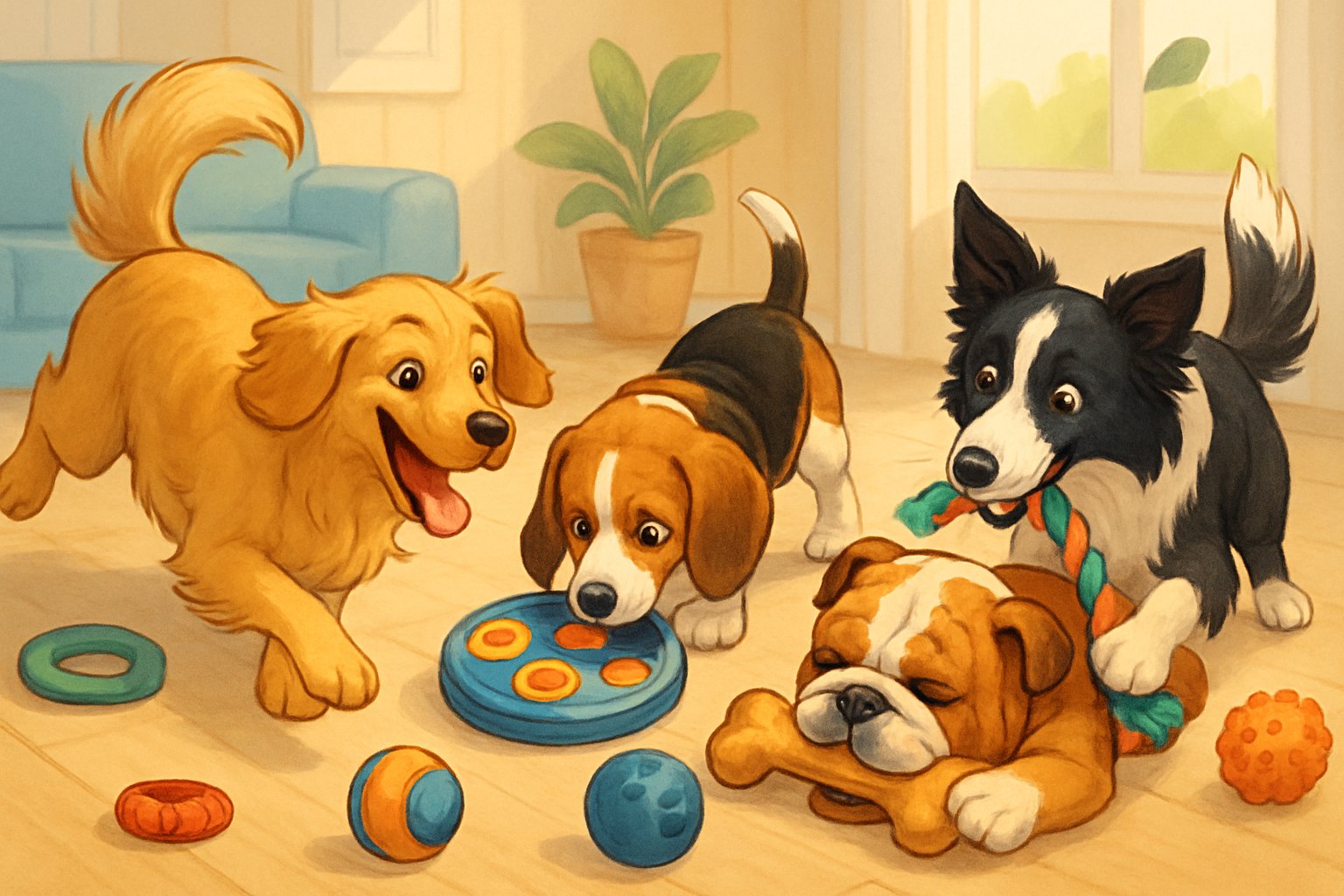
Several dogs with different personalities playing with various toys in a cozy indoor setting.

Choosing the right dog toy starts with knowing what kind of play makes each dog happy. Size, strength, and energy all affect what toys will be safe, fun, and long-lasting.

When toys fit a dog’s natural instincts, they bring mental satisfaction and healthy exercise.

Understand Your Dog’s Play Style

Every dog plays in a unique way. Some like to run and chase, while others enjoy sitting with a toy and gnawing on it.

Observing when and how a dog engages with playtime helps identify their preferences. Keep a short list or note what excites them most—retrieving, wrestling, or carrying soft objects.

High-energy dogs often prefer interactive games like fetch or tug. Calmer dogs may spend more time cuddling or gently chewing.

Different play styles match specific toy types:

Play HabitToy ExampleNotes
ChasingFetch toys or ballsChoose a safe size for the dog’s mouth
ChewingDurable chew toysPick heavy-duty materials for strong jaws
Solving problemsPuzzle toysGood for mental engagement on quiet days

Identify Chewers, Fetchers, Tuggers, Cuddlers, and Problem-Solvers

Dogs can usually be grouped by their favorite activities. Chewers need rubber bones or nylon sticks that can handle strong teeth.

Fetchers thrive on balls and flying discs—avoid toys too small to prevent choking. Tuggers enjoy tug toys or rope toys designed with sturdy knots and handles.

These encourage bonding but should be used with care to prevent injury. Cuddlers love plush toys, especially soft ones with squeakers or textures that comfort them.

Problem-solvers enjoy puzzle toys such as treat-dispensing balls or snuffle mats that make them think. These mentally challenge dogs who like to “work” for rewards, as discussed in PetTalk Daily’s tips on matching toys to personality.

Consider Age, Size, and Energy Level

A dog’s age and build strongly influence toy safety and enjoyment. Puppies need softer chew toys to soothe teething gums.

Senior dogs may prefer lightweight, gentle toys that do not stress their joints or teeth. Size matters for safety.

Small dogs do better with mini plush toys or small balls, while large dogs need durable, heavy-duty materials that resist tearing. Energy also plays a role.

Active breeds such as retrievers need exercise through fetch toys or tug ropes, whereas low-energy breeds might enjoy quiet play indoors. The Pet Dog Planet guide emphasizes matching toy design to both body type and temperament.

Best Toy Types for Every Personality

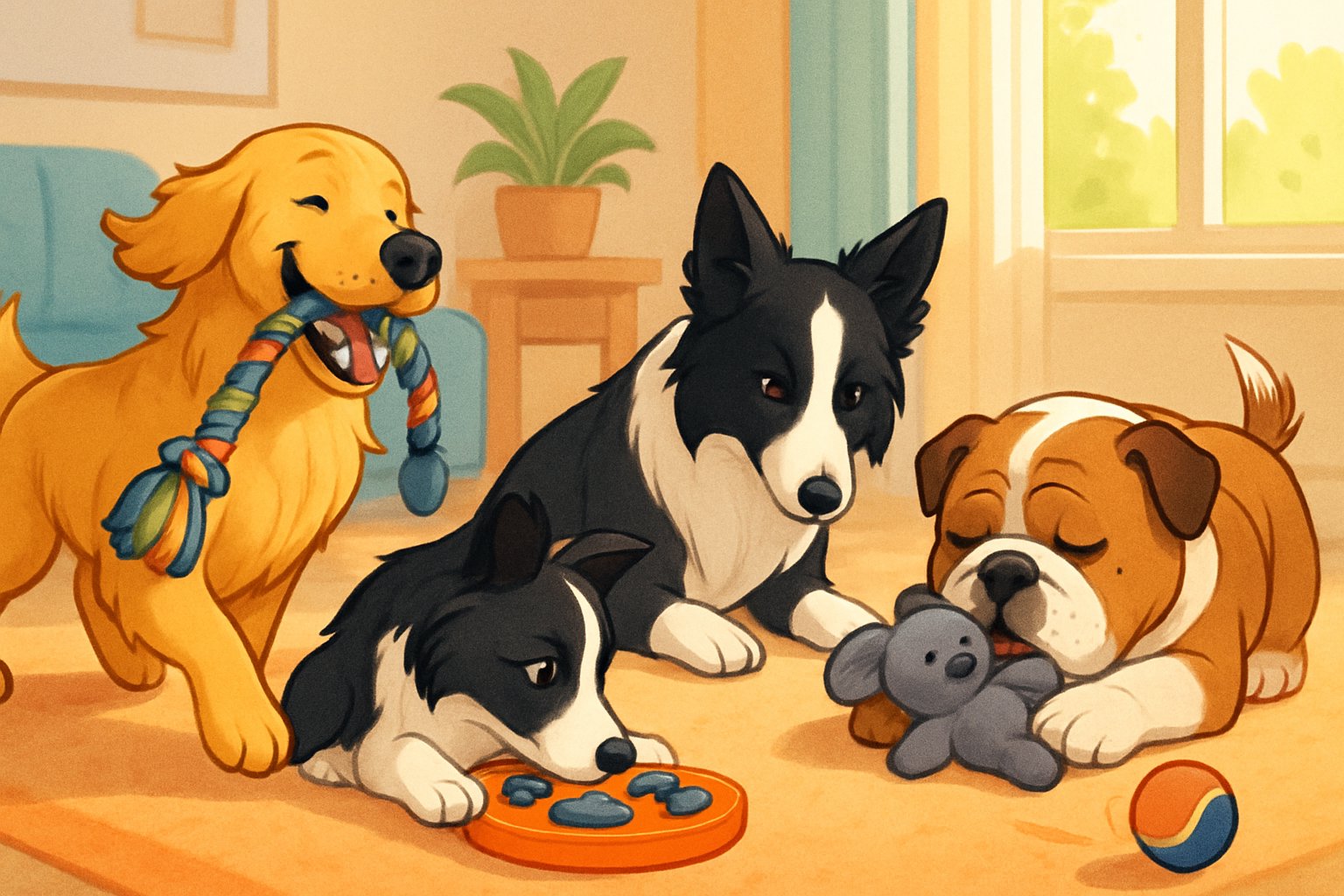
Several dogs of different breeds playing with various toys that match their personalities in a bright indoor setting.

Matching a dog’s play style with the right toy improves safety and helps manage energy. The right toy can reduce boredom, support mental development, and make daily playtime more rewarding.

Chew Toys for Power Chewers

Dogs with strong jaws and endless chewing energy benefit most from heavy-duty chew toys. These dogs often destroy regular rubber or fabric toys within minutes.

Durable options like nylon bones, rubber rings, or reinforced rope chews keep their teeth busy and protect furniture. Owners should look for chew toys labeled for power chewers, which resist tearing and splintering.

Non-toxic rubber and natural rubber blends work well. According to Dogality Test’s guide on choosing toys by personality, durable chew toys also help calm independent dogs after active play.

Rotating two or three sturdy chews keeps play fresh. Scented or flavored varieties can hold a dog’s interest longer, while textured surfaces help clean teeth and gums naturally.

Fetch Toys: Balls, Tennis Balls, and Frisbees

Dogs that love movement thrive on fetch toys. Breeds like retrievers, border collies, and terriers often prefer games that let them chase and return items.

Classic fetch toys include balls, tennis balls, and frisbees, all encouraging active play and coordination. Design matters—rubber or foam balls last longer and are easier to clean than felt tennis balls.

Lightweight frisbees made from soft plastic fly smoothly but won’t hurt a dog’s teeth or mouth. The Good Dog People guide to toys by play style explains that fetch play keeps energetic dogs focused and builds endurance.

Fetch sessions also serve as great exercise. A simple tip is to bring multiple toys outdoors, so the dog stays engaged without overworking its joints.

Tug Toys for Social Players

Social and interactive dogs love shared activities. Tug toys allow for controlled, friendly competition and active bonding between dog and owner.

These toys typically include rope pulls, rubber handles, or reinforced fabric loops. Thick, braided rope toys reduce fraying, and handles help owners maintain a safe grip.

Playing tug strengthens a dog’s neck, shoulders, and jaw muscles. The Dogality Test article on social dogs notes that rope tug toys are ideal for dogs that play to connect with their humans.

To keep tug games safe, avoid overly aggressive pulling. Encourage drops using commands like “release,” so play remains fun without promoting unwanted dominance.

Puzzle Feeders and Treat-Dispensing Toys for Smart Dogs

Dogs that enjoy mental stimulation perform best with puzzle feeders and treat-dispensing toys. These items challenge dogs to think, encouraging problem-solving and focus.

Puzzle toys come in different levels—from simple sliders to complex multi-step feeders. Food-motivated breeds often thrive with adjustable treat dispensers that reward persistence.

Louie the Lab’s guide to toy selection emphasizes that puzzle and treat toys prevent boredom and support learning. Popular options include wobble feeders, rolling treat balls, and snuffle mats.

These toys slow down eating, improve emotional balance, and provide enrichment for dogs who spend long hours indoors.

Plush Toys for Cuddlers

Gentle and affectionate dogs often prefer soft plush toys. These toys give comfort and are easy to carry, making them perfect for dogs that bond through touch and closeness.

Small or sensitive breeds are particularly drawn to soft fabrics, squeakers, and stuffed friends. Plush toys can act as companions for sensitive or affectionate dogs, helping them feel secure during rest or alone time.

Owners should check stitching and watch for loose filling to avoid choking hazards. Keeping a few favorite plush toys on rotation lets dogs enjoy both comfort and novelty.

Filed Under: Uncategorized

The Ultimate Guide to Dog Nutrition: What Your Pup Really Needs for Optimal Health

December 9, 2025 by Julia Huskey

Core Nutritional Needs for Dogs

Balanced dog nutrition supports healthy growth, clear eyes, strong muscles, and a shiny coat. It involves the right amounts of proteins, fats, carbohydrates, vitamins, minerals, and water to maintain energy and proper body function at every life stage.

Essential Nutrients Every Dog Requires

Every dog relies on six key nutrients: protein, fat, carbohydrates, vitamins, minerals, and water. Each works together to maintain daily health and body systems.

Dogs cannot create all these nutrients on their own, so their diet must supply what they need. Proteins build and repair tissues; fats fuel energy and support brain development.

Carbohydrates provide quick energy and fiber. Vitamins and minerals guide metabolism and keep bones and organs strong.

Water regulates temperature, helps digestion, and moves nutrients through the bloodstream. According to PetMD’s overview on balanced dog food, a complete diet ensures all these elements meet the standards of the Association of American Feed Control Officials (AAFCO).

Feeding an AAFCO-compliant food helps meet everyday needs.

The Role of Protein, Fats, and Carbohydrates

Protein fuels growth, maintains cells, and supports healthy skin and coat. Dogs need high-quality proteins from sources like chicken, fish, or eggs.

Animal proteins are usually easier to digest and contain more essential amino acids than plant proteins. Adult dogs should get at least 18% crude protein while puppies need over 22%, based on a dog nutrition breakdown from DogFoodReviewz.

Fats provide up to twice as much energy per gram as protein or carbohydrate. They supply essential omega-3 fatty acids that reduce inflammation and support heart, joint, and brain health.

Common sources include fish oil, poultry fat, and flaxseed oil. Fats also help absorb vitamins A, D, E, and K.

Though not essential, carbohydrates boost energy and aid digestion through fiber. Whole grains or vegetables like peas, beans, and potatoes are typical sources.

Balanced carbohydrates help maintain healthy gut flora.

Vitamins, Minerals, and Hydration

Vitamins control hundreds of body functions. Fat-soluble vitamins (A, D, E, K) assist with vision, skin, bones, and blood clotting.

Water-soluble ones (B and C) aid metabolism and nerve function. Dogs usually make enough vitamin C but may need more during stress or illness.

Minerals like calcium, phosphorus, magnesium, zinc, and iron support bones, teeth, muscles, and the immune system. A proper calcium-to-phosphorus ratio—about 1.2:1—is vital for puppies and large breeds.

Too much or too little of any mineral can affect growth or heart health, as noted in Country Grove Vet’s canine nutrition guide.

Water is essential. It makes up most of a dog’s body weight and supports every organ.

Dogs should always have access to fresh, clean water, especially after exercise or in warm weather, to prevent dehydration and maintain healthy kidney function.

Choosing and Feeding the Right Dog Food

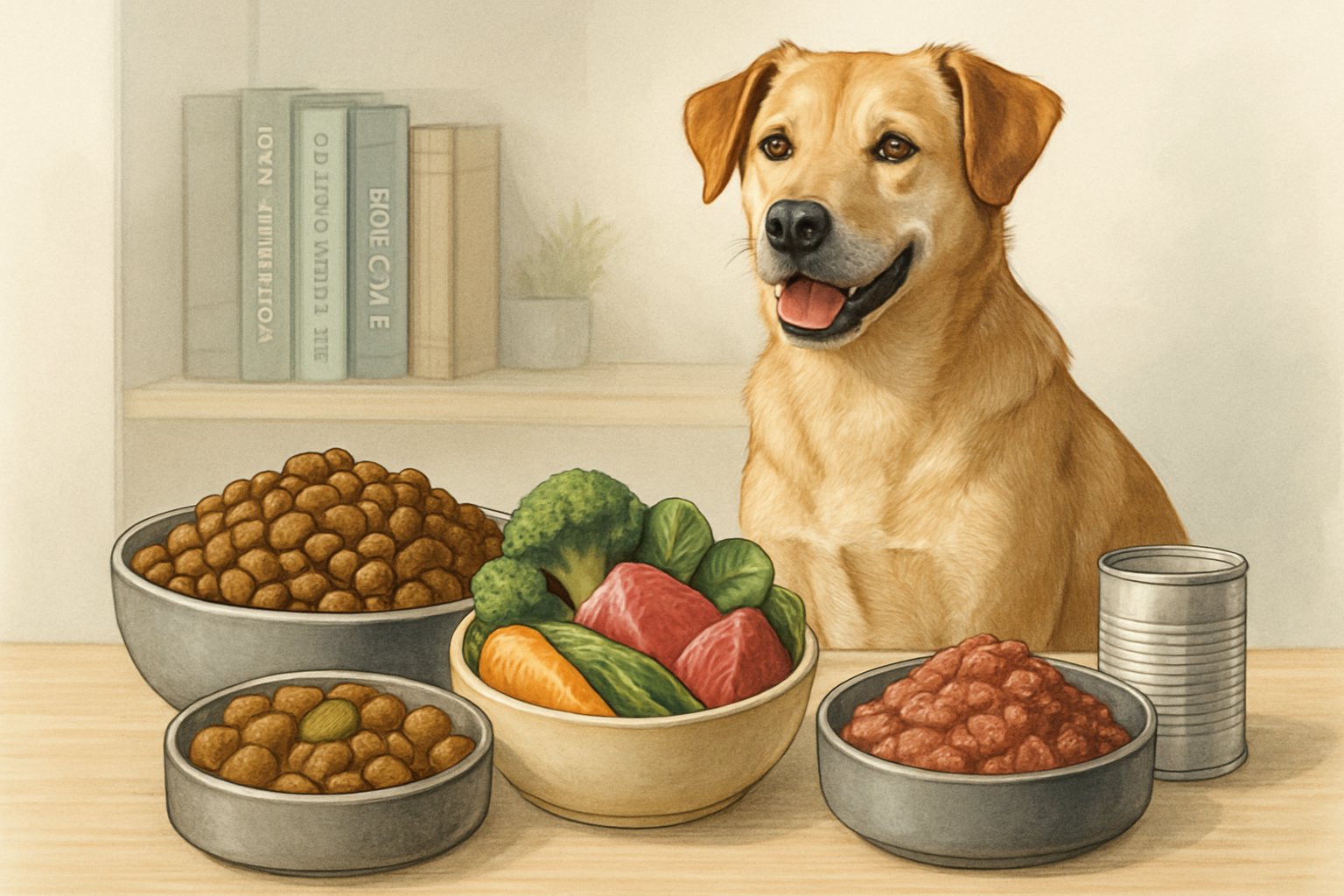
A healthy dog sitting next to bowls of various dog foods and fresh ingredients on a table.

A healthy diet keeps a dog’s body strong, coat shiny, and energy steady. Good nutrition depends on balanced ingredients, correct portions, and close attention to a dog’s age, size, and activity level.

Thoughtful choices can help owners avoid common dog nutrition mistakes, such as overfeeding or relying on poor-quality fillers.

Evaluating Commercial Dog Food Options

Owners can find hundreds of commercial dog food brands, each claiming to be the best. Trusted foods labeled “complete and balanced” meet nutrition standards set by the Association of American Feed Control Officials (AAFCO), ensuring all essential nutrients are included.

Reading expert advice from the American Kennel Club helps owners identify quality options tested for safety and nutritional completeness. A food that lists real meat, fish, or poultry as the first ingredient often provides better protein quality.

Dog food comes in various formulations for life stage and breed size. For example, large-breed puppies need controlled calcium for steady bone growth, while small breeds may require calorie-dense kibble.

Choosing food that matches a dog’s unique needs supports long-term health and reduces avoidable dietary issues.

Deciding Between Dry, Wet, Raw, and Homemade Diets

Each type of dog food has benefits and downsides. According to Dog Food First, dry kibble is easy to store and supports dental health, while wet food offers more moisture and flavor for dogs that prefer softer textures.

Raw diets appeal to some owners seeking less processed food, yet they carry a higher risk of bacterial contamination if not handled safely. Homemade diets give full ingredient control but can easily lack vital nutrients without veterinary guidance.

When comparing diet types, consistency matters more than novelty. Dogs thrive when they get steady, reliable nutrition.

Any major diet change should happen slowly over several days to avoid stomach upset or rejection of new food textures.

Portion Control and Avoiding Overfeeding

Maintaining a healthy weight prevents many health issues. Overfeeding is one of the most common dog nutrition mistakes, often caused by guessing serving sizes or frequent treats.

Feeding guidelines printed on packaging give a rough starting point but should be adjusted based on the dog’s age, energy, and condition. Veterinarians often recommend routine body condition checks: ribs should be easy to feel but not visible, and the waist should be clear from above.

Owners can monitor calorie intake using measuring cups, slow feeders, or feeding charts. For dogs prone to obesity, meals divided into smaller servings throughout the day can help manage hunger.

Regular exercise also plays a key role in achieving balanced pet nutrition.

Reading Ingredient Labels and Avoiding Fillers

Labels can be confusing, but they hold valuable information. The product name gives major clues—terms like “chicken dinner” mean only about 10% chicken content, while “with chicken” means about 3%, as explained in the AKC guide.

Owners should compare ingredient lists to ensure that protein sources appear first and artificial additives stay low. Good-quality foods use grain, fruits, and vegetables as nutrient sources, not fillers.

Low-quality products may rely on byproducts, corn, or soy to bulk up weight without adding nutrition.

Checklist for reading labels:

What to Look ForWhy It Matters
Real named meat firstIndicates high-protein quality
AAFCO “complete and balanced” claimConfirms full nutrient profile
Clear feeding guidelinesHelps set accurate portions

Customizing Your Dog’s Diet for Life Stages and Special Needs

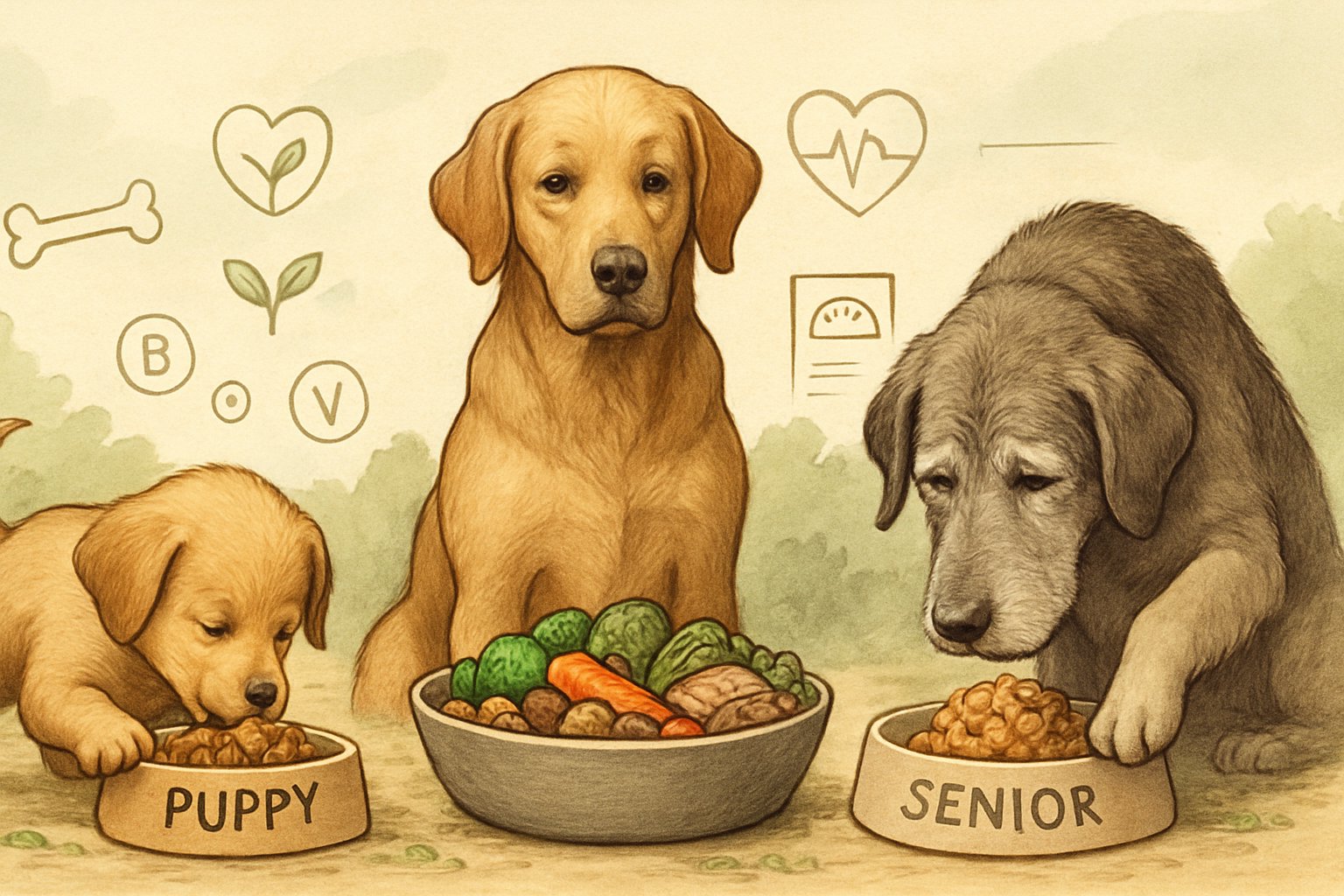
Various dogs of different ages eating appropriate food in a natural setting representing their life stages and dietary needs.

A dog’s body changes from puppyhood to its golden years, and its diet should change with it. Nutrition affects growth, energy, muscle tone, and even joint health.

Adjusting meals to match a dog’s age, size, and medical condition supports balanced canine nutrition and overall well-being.

Puppy Nutrition and Growing Dogs

Puppies grow rapidly and need high-quality food with the right mix of protein, fats, vitamins, and minerals. Their diet should include complete puppy formulas that meet AAFCO standards.

These formulas provide balanced nutrients essential for tissue growth and strong bones.
Key components for puppy diets:

  • Protein (22–32%) to support muscles and organ development
  • Fat (8–20%) to fuel energy and brain growth
  • Calcium and phosphorus for proper skeletal formation
  • DHA, an omega-3 fatty acid, for healthy eyes and brain

Feeding frequency matters too. Young pups often eat 3–4 small meals a day, gradually reducing to twice daily as they grow.

Avoid overfeeding or giving human food since excess calories can cause joint and weight problems. For details on growth stage diet planning, the guide from New Age Pet provides useful examples based on breed size.

Adult Dog Dietary Adjustments

Adult dogs need steady energy and nutrient balance rather than extra growth support. Their meal plan depends on size, breed, and activity level.

For most, a maintenance diet includes about 18–25% protein and 10–15% fat to sustain muscle tone and a shiny coat. Adding complex carbohydrates from rice or oats helps maintain energy without weight gain.

Fresh fruits and vegetables supply natural fiber and antioxidants. Serving food twice daily helps prevent overeating, and portion control keeps weight consistent.

For canines with high activity, such as working or sporting breeds, slightly richer foods may be beneficial. When formulating adult diets, many owners follow AAFCO guidance to maintain balanced dog nutrition across life stages.

Senior Dog Nutrition and Common Diet Changes

Older dogs experience slower metabolism and potential joint or dental challenges. They often thrive on foods lower in calories but higher in fiber and easily digestible proteins.

Maintaining a moderate protein content supports muscle mass without straining kidneys. Nutrients like omega-3 fatty acids play a big role in reducing inflammation and supporting cognitive health.

Supplements such as glucosamine and chondroitin are frequently included in senior blends to help joints stay flexible. Choosing softer kibbles or wet food makes chewing easier for dogs with dental wear.

Weight control and hydration remain priorities for seniors. Specific age-based recommendations, such as those on the Animalzoid feeding guide, help owners make age-appropriate changes.

Addressing Special Dietary Needs and Supplementation

Some dogs face allergies, food sensitivities, or medical issues requiring tailored nutrition. Common allergens include beef, chicken, and wheat.

In those cases, switching to limited-ingredient diets or hydrolyzed protein recipes can ease symptoms. Dogs with diabetes or kidney disease may need prescription diets formulated for controlled nutrient intake.

Omega-3 supplements are often used to reduce skin inflammation and aid coat health. For joint support, glucosamine and fish oil remain popular.

It’s important that owners consult a veterinarian before adding any supplement to ensure proper dosage and benefit.

Custom meal planning, such as breed-focused or individualized options from DoggoBaggins, helps dogs with special conditions receive balanced, digestible meals. These plans are designed to match their unique nutritional requirements.

Filed Under: Uncategorized

10 Tips to Train Your Dog Like a Pro: Expert Strategies That Work

December 9, 2025 by Julia Huskey

Master Essential Training Foundations

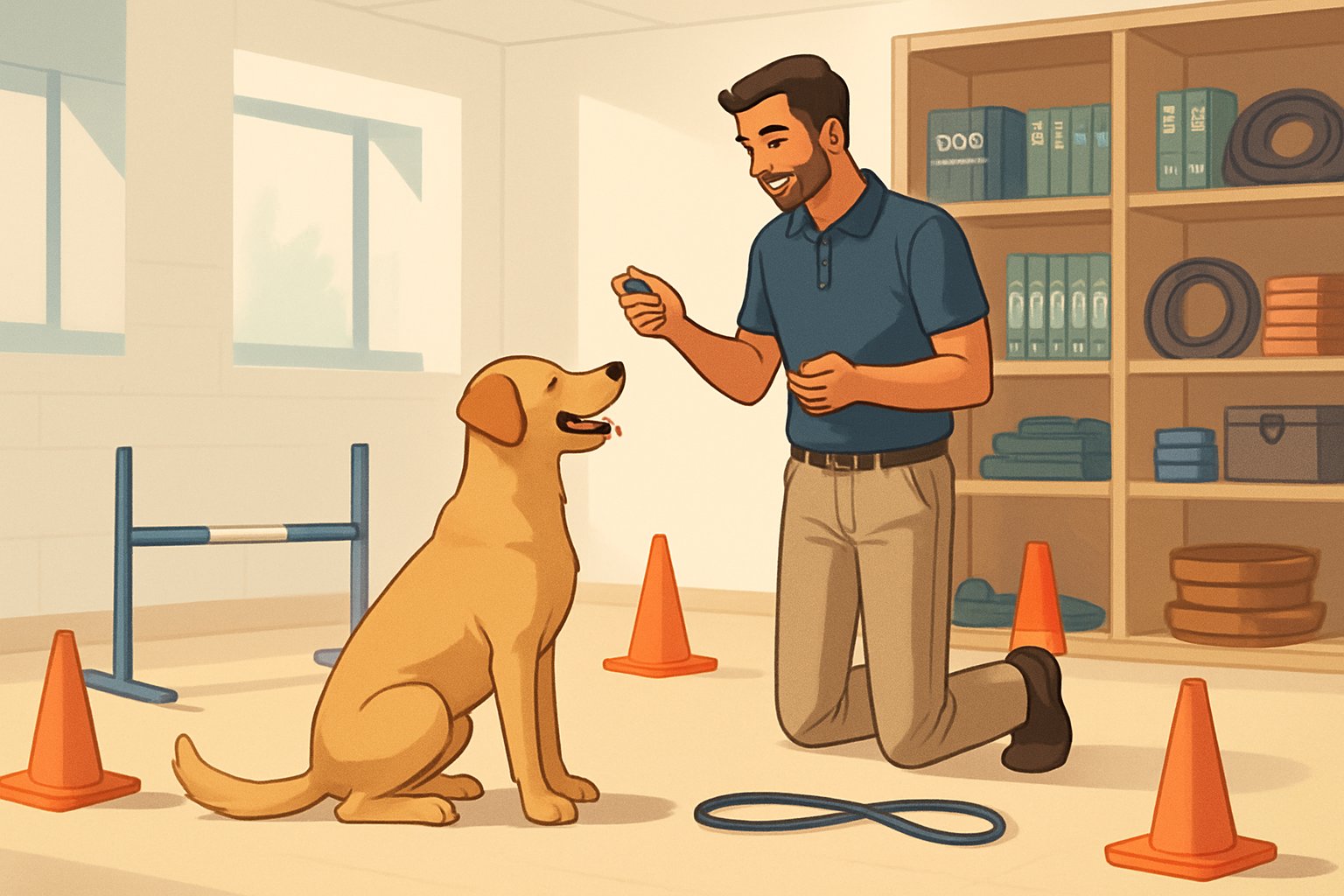
A dog trainer working with a dog using treats and training tools in an indoor training area.

Good dog training starts with clear understanding, simple structure, and rewards that motivate the dog. Dogs learn best when their owners communicate clearly, use short sessions, and make training consistent and fun.

Understand Your Dog’s Mindset

Every dog thinks differently, depending on breed, age, and personality. Some dogs, like retrievers, enjoy tasks and fetch, while others, such as terriers, prefer problem-solving games.

Recognizing these instincts helps owners adjust training methods to fit the dog’s natural behavior. Dogs respond best when training feels like teamwork rather than control.

Staying calm and patient helps them feel safe and ready to learn. When a dog struggles, it usually needs clearer guidance—not harsher correction.

Owners can study breed traits and typical behavior patterns through expert advice such as the guide from Dog Breed Pro, which explains how breed instincts influence learning. Understanding a dog’s mindset builds trust and reduces frustration.

Set Up the Right Training Environment

A well-chosen training environment helps dogs focus and stay calm. Quiet spaces with few distractions allow the dog to pay attention during early sessions.

Later on, introducing busier locations helps them apply learned commands in real-world situations. Clear boundaries make training smoother.

Keeping toys, treats, and leashes nearby avoids interruptions. Consistent locations for training—like the same corner of a living room or yard—help the dog understand when it’s time to work.

Short sessions, around five to ten minutes, are enough to hold attention. As recommended by Dogs Trust, ending each session on a success keeps the mood positive.

Use Positive Reinforcement

Positive reinforcement strengthens desired behaviors by rewarding them with treats, praise, or play. Dogs quickly learn which actions bring rewards and repeat them more often.

Correct timing is crucial—rewards should come within seconds of the good behavior. It’s better to show what the dog should do rather than punish mistakes.

According to The Trusted Companion, consistent rewards improve obedience and build strong communication between pet and owner.

Examples of rewards:

BehaviorReward TypeDescription
Sitting on commandVerbal praise“Good sit!” in a cheerful tone
Coming when calledTreatSmall bite-sized snack
Staying calm with guestsPlayShort fetch or gentle petting

This method helps maintain enthusiasm while avoiding fear-based responses.

Choose High-Value Training Treats

Effective training requires the right type of reward. High-value training treats are small, soft, and easy to chew so the dog quickly returns to focus.

These might include bits of cooked chicken, cheese cubes, or commercial training treats low in fillers. Different dogs value rewards differently.

What excites one dog may not interest another. Experimenting with a few treat types helps find what motivates best.

During sessions with many rewards, treats should remain tiny to prevent overfeeding. Guides from Pet Syllabus explain how small, frequent rewards keep training engaging without adding extra calories.

Mixing treats with verbal praise or brief play helps keep sessions balanced and enjoyable for both dog and trainer.

Teach and Strengthen Core Commands

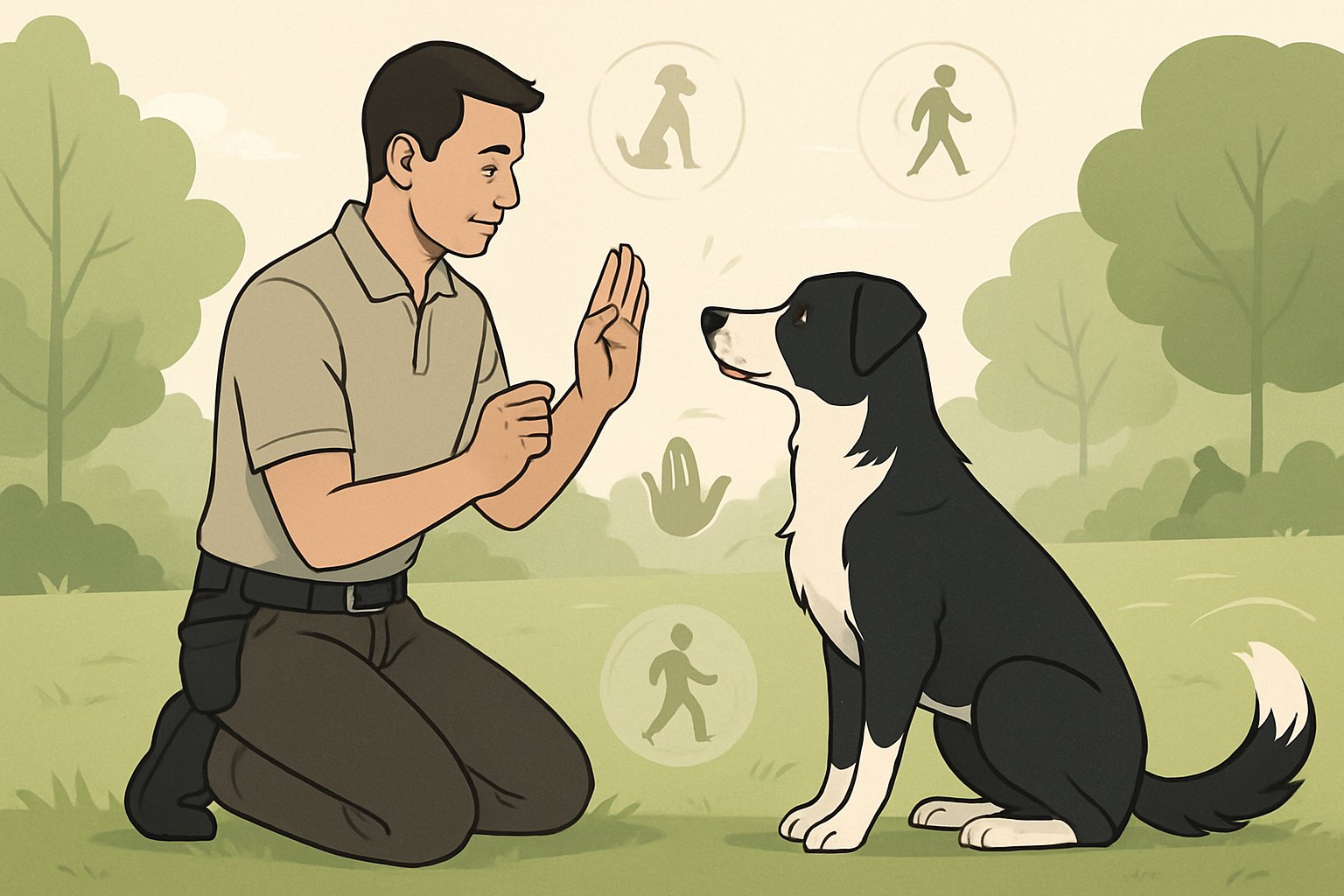
A dog trainer kneeling on grass giving a hand signal to a sitting dog in a park setting.

Dogs learn best through clear, repeated guidance and steady progress. Focusing on core obedience skills like “sit,” “stay,” and “come” creates a strong foundation for calm behavior and easier communication between owners and their pets.

Introduce Basic Commands Step-by-Step

When training begins, professional trainers recommend breaking down basic commands into short, focused sessions. Start with “sit,” as it’s easy for dogs to grasp quickly.

Use treats and praise right after the dog performs the action to connect the behavior with the reward. Next, move on to “stay,” “come,” and “down.”

Each command teaches structure and helps prevent accidents or impulsive actions. According to Dog Breed Pro, keeping lessons short and consistent makes the learning process smoother for both the dog and the owner.

Links between actions and cues must remain consistent. Always use the same word, gesture, and tone.

Over time, reduce treats and rely more on verbal praise or petting, so the dog follows commands even without food rewards.

CommandBenefitWhen to Use
SitBuilds controlBefore meals, greetings
StayPrevents wanderingAt doors, during chores
ComeImproves safetyOff-leash recall

Build Impulse Control Skills

Impulse control helps dogs think before they act. Teaching commands like “wait,” “leave it,” and “drop it” teaches patience and focus.

Dogs that practice self-control are safer and calmer in busy settings. Start with easy setups.

Hold a treat in front of the dog and use “wait.” If the dog pauses, reward it.

Gradually add difficulty, such as walking past toys or food without grabbing them. The “Leave It” command also prevents a dog from eating unsafe objects during walks.

Structured routines make a big difference. Short bursts of calm behavior build mental strength over time.

When trained well, dogs learn to pause before reacting, lowering the chance of jumping, barking, or chasing.

Progress Tracking and Consistency

Tracking training progress helps measure improvement and keeps goals realistic. A simple notebook or phone app can record which commands the dog has mastered and which need work.

Progress isn’t always linear—some days go better than others. Consistency matters most.

Every household member should use the same words and hand signals. Inconsistent cues confuse dogs and slow learning.

DWDogTraining.com notes that a united approach helps reinforce discipline and trust. Weekly reviews can be motivating.

For instance, track the length of time the dog can “stay” without moving. Setting small, measurable targets keeps training structured while showing clear results.

Handle Challenges Like a Pro

Every dog learns at a different pace. Some behaviors take longer to correct.

When progress stalls, professional trainers suggest adjusting the approach rather than repeating the same routine. Shorter sessions, new rewards, or a quieter space can reset focus.

If a dog ignores commands or becomes distracted, return to simpler exercises. Avoid scolding or punishment.

Calm, firm guidance keeps trust intact. Reading a dog’s body language—like tail position or ear movement—helps identify stress or confusion during training.

For persistent problems like jumping or pulling, guidance from a certified trainer can help tailor solutions. Experienced professionals use proven techniques that encourage progress while protecting a dog’s confidence and motivation.

Filed Under: Uncategorized

  • Page 1
  • Page 2
  • Page 3
  • Interim pages omitted …
  • Page 13
  • Go to Next Page »

Primary Sidebar

Are Border Collies Good Service Dogs? A Comprehensive Look

Border collies are a highly intelligent breed of dog that is known for their herding abilities. They … [Read More...] about Are Border Collies Good Service Dogs? A Comprehensive Look

A dog watches homemade dog treats shaped like bones and paws on a kitchen counter with baking ingredients nearby.

DIY Dog Treat Recipes Your Pup Will Love: Homemade & Healthy Ideas

Must-Try DIY Dog Treat Recipes Owners can make tasty and healthy homemade dog treats with … [Read More...] about DIY Dog Treat Recipes Your Pup Will Love: Homemade & Healthy Ideas

A group of children happily playing and interacting with five different dog breeds in a sunny park.

Top 5 Dog Breeds for Families with Kids: Ultimate Guide to Loving Family Dogs

Top 5 Dog Breeds for Families with Kids Families often look for dogs that are gentle, … [Read More...] about Top 5 Dog Breeds for Families with Kids: Ultimate Guide to Loving Family Dogs

Several dogs with different personalities playing with various toys in a cozy indoor setting.

How to Choose the Perfect Toy for Your Dog’s Personality: A Tailored Guide

Match Toys to Your Dog’s Unique Personality Choosing the right dog toy starts with knowing … [Read More...] about How to Choose the Perfect Toy for Your Dog’s Personality: A Tailored Guide

A healthy dog surrounded by images of meat, eggs, grains, vegetables, fruits, seeds, fish oil, and a bowl of water representing its core nutritional needs.

The Ultimate Guide to Dog Nutrition: What Your Pup Really Needs for Optimal Health

Core Nutritional Needs for Dogs Balanced dog nutrition supports healthy growth, clear eyes, … [Read More...] about The Ultimate Guide to Dog Nutrition: What Your Pup Really Needs for Optimal Health

A dog trainer working with a dog using treats and training tools in an indoor training area.

10 Tips to Train Your Dog Like a Pro: Expert Strategies That Work

Master Essential Training Foundations Good dog training starts with clear understanding, … [Read More...] about 10 Tips to Train Your Dog Like a Pro: Expert Strategies That Work

Several dogs displaying different body language signals while a person watches them attentively in an outdoor setting.

Understanding Your Dog’s Body Language: Reading Signs for a Happier Pup

Interpreting Common Dog Body Language Signals Dogs communicate through their entire body, … [Read More...] about Understanding Your Dog’s Body Language: Reading Signs for a Happier Pup

Jobs for Border Collies: Best Career Opportunities for the Breed

Are you a Border Collie who's tired of chasing sheep all day long? Do you feel like your life has … [Read More...] about Jobs for Border Collies: Best Career Opportunities for the Breed

Do Border Collies Have Tails? A Clear Answer to Your Question

Do border collies have tails? Yes, border collies do have tails, but they are typically shorter … [Read More...] about Do Border Collies Have Tails? A Clear Answer to Your Question

When Do Border Collies Go Into Heat: Understanding Their Reproductive Cycle

When do Border Collies go into heat? Female border collies typically go into heat for the first time … [Read More...] about When Do Border Collies Go Into Heat: Understanding Their Reproductive Cycle

Categories

  • Border Collies
  • Uncategorized

Superduperdog.com - Copyright © 2025