Most Common Beagle Health Issues
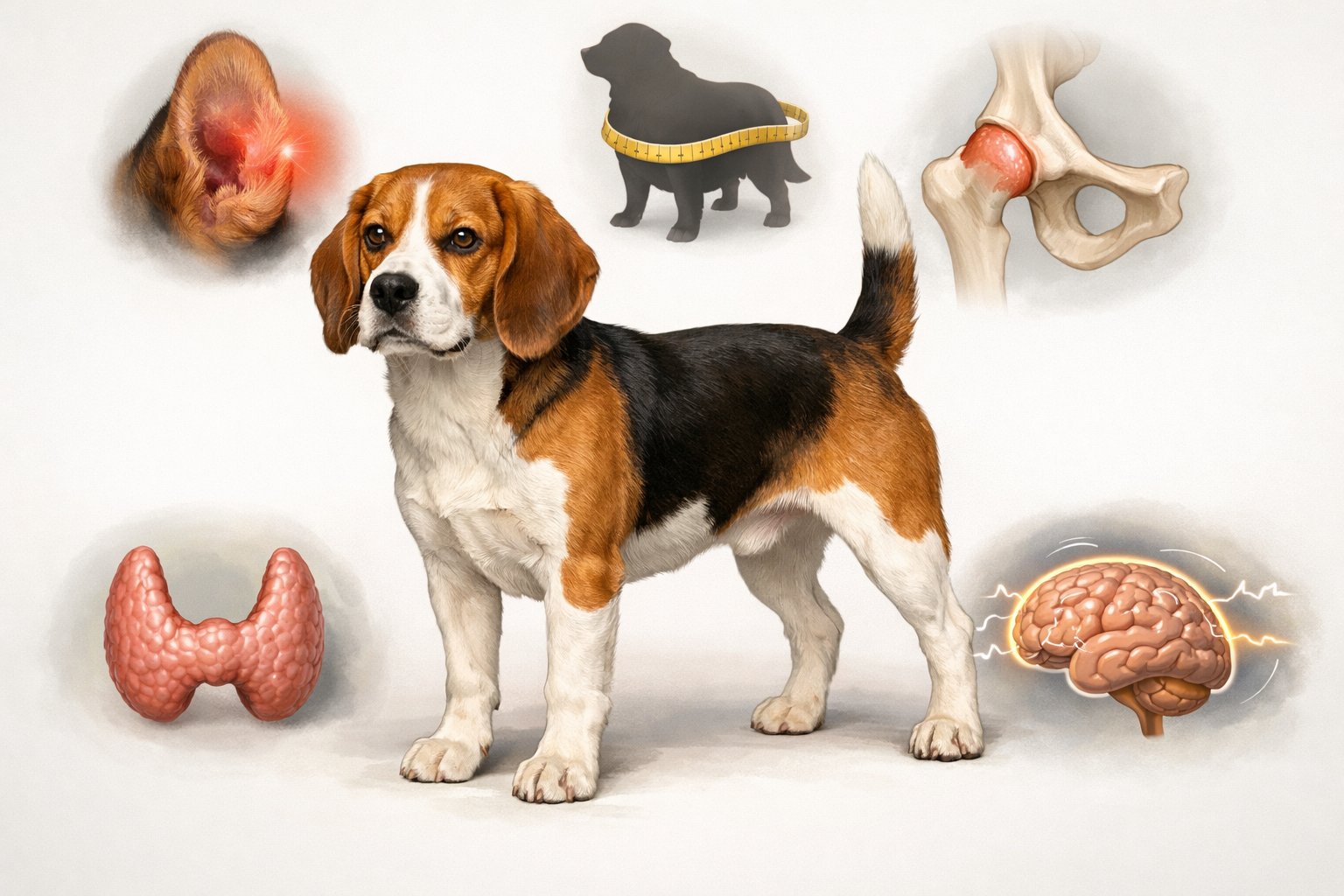
Several beagle health problems appear more often because of genetics, body shape, and daily habits. These conditions affect movement, skin, eyes, and ears, and they often show clear early warning signs.
Hip Dysplasia and Mobility Concerns
Hip dysplasia in Beagles affects how the hip joint fits together. The joint forms loosely, which leads to pain, stiffness, and arthritis over time.
This condition often starts early but worsens with age. Common signs include limping, trouble standing up, and less interest in walks or play.
Some dogs also avoid stairs or jump less often. Extra weight can make symptoms worse.
Treatment depends on severity. Vets often suggest weight control, joint supplements, and low-impact exercise.
Severe cases may need surgery.
Allergies in Beagles
Beagle allergies are among the most common health issues in Beagles. They often come from food, pollen, dust, or flea bites.
The immune system overreacts and causes skin or ear problems. Signs include itching, red skin, paw licking, and repeated ear infections.
Some dogs also get stomach upset with food allergies. Symptoms may last all year or appear during certain seasons.
Vets treat allergies by finding the trigger. Care may include diet changes, flea control, or allergy medicine.
Eye Disorders: Cherry Eye, PRA, and Entropion
Eye problems play a major role in common Beagle health issues. Cherry eye, also called third eyelid prolapse, shows as a red lump in the inner corner of the eye.
It often needs surgery. Progressive retinal atrophy (PRA) slowly damages the retina.
Dogs lose night vision first, then daytime vision. There is no cure, but early diagnosis helps owners plan care.
Entropion happens when the eyelid rolls inward. Lashes rub the eye and cause pain or ulcers.
Ear Infections
Floppy ears make ear infections a frequent problem in beagle health. Limited airflow traps moisture and creates a place for bacteria and yeast to grow.
Signs include head shaking, strong odor, redness, and dark discharge. Dogs may scratch or rub their ears often.
Allergies can make infections return again and again. Treatment usually involves cleaning and medicated ear drops.
Regular checks and gentle cleaning help reduce risk.
Serious and Chronic Health Problems
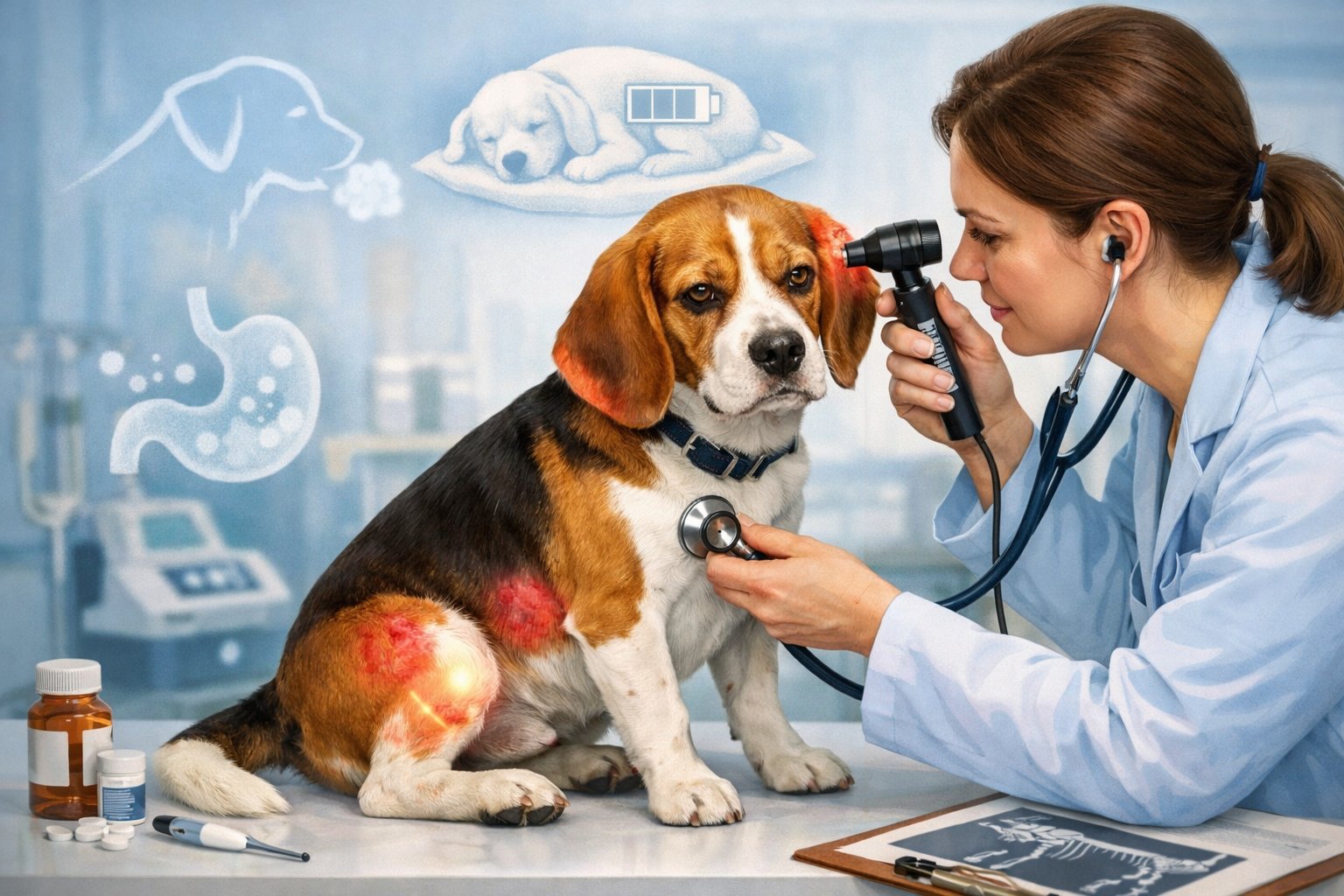
Some beagle health problems last for years and need steady care. Seizures, hormone disorders, and spinal issues can change daily life if an owner misses early warning signs.
Epilepsy and Seizure Management
Epilepsy in beagles often starts between one and five years of age. Many dogs have idiopathic epilepsy, which means no clear cause shows up on tests.
A seizure may look like stiff legs, shaking, drooling, or brief loss of awareness. Vets often manage epilepsy with anti-seizure medication given every day.
Common drugs can reduce how often seizures happen, but they rarely stop them fully. Owners should never change doses without a vet’s advice.
Tracking patterns helps a lot. A simple list can guide care:
- Date and length of each seizure
- Possible triggers like stress or missed doses
- Recovery time after each episode
Hypothyroidism in Beagles
Hypothyroidism in beagles happens when the thyroid gland makes too little hormone. This problem is also common in other breeds, so vets know it well.
It often appears in middle-aged dogs. Signs include weight gain without more food, low energy, hair thinning, and skin infections.
These changes tend to appear slowly, which can delay diagnosis. Blood tests confirm hypothyroidism in dogs, and treatment usually involves daily hormone pills.
Most dogs respond well within weeks. Energy improves first, while coat and skin changes take longer.
Regular testing matters because doses may change over time.
Intervertebral Disc Disease Risks
Intervertebral disc disease affects the soft discs between the spine bones. In beagles, this condition can cause back pain, weakness, or sudden trouble walking.
Jumping off furniture can raise the risk. Early signs include stiffness, yelping when picked up, or reluctance to climb stairs.
Severe cases may cause paralysis. Some dogs also show neck pain linked to steroid-responsive meningitis, which needs fast vet care.
Treatment depends on severity:
- Mild cases: rest, pain control, anti-inflammatory drugs
- Severe cases: surgery and rehab
Prompt treatment lowers the chance of lasting damage.
Essential Beagle Preventive Care

Preventive care helps protect long-term beagle health and lowers the risk of common problems. Two areas need close attention: weight control and steady protection from heartworm disease.
Weight and Dietary Management
Beagles gain weight easily because they love food and often act hungry. Extra weight raises the risk of joint pain, diabetes, and heart strain.
Obesity ranks among the most common beagle health issues reported by vets and owners, including those described in guides on common Beagle health issues. Owners should measure meals instead of free-feeding.
Treats should stay under 10% of daily calories. High-protein food with moderate fat works well for most adult beagles.
Daily activity matters as much as diet. Two brisk walks and short play sessions help burn energy and support muscle strength.
A simple check helps track progress:
| Sign | Healthy | Overweight |
|---|---|---|
| Waist | Visible | Hard to see |
| Ribs | Easy to feel | Hard to feel |
Heartworm Prevention
Heartworm disease spreads through mosquito bites and can cause lasting heart and lung damage. Prevention matters even for indoor dogs.
Vets strongly recommend year-round heartworm prevention as part of routine beagle health care, as noted in Beagle health care guides. Most preventives come as monthly chewables or topical treatments.
Some products also protect against roundworms and hookworms. A vet should test for heartworm once a year before renewing medication.
Skipping doses increases risk. Owners can set phone reminders or link medication to a monthly routine.