Can Border Collies Really Live in Apartments?
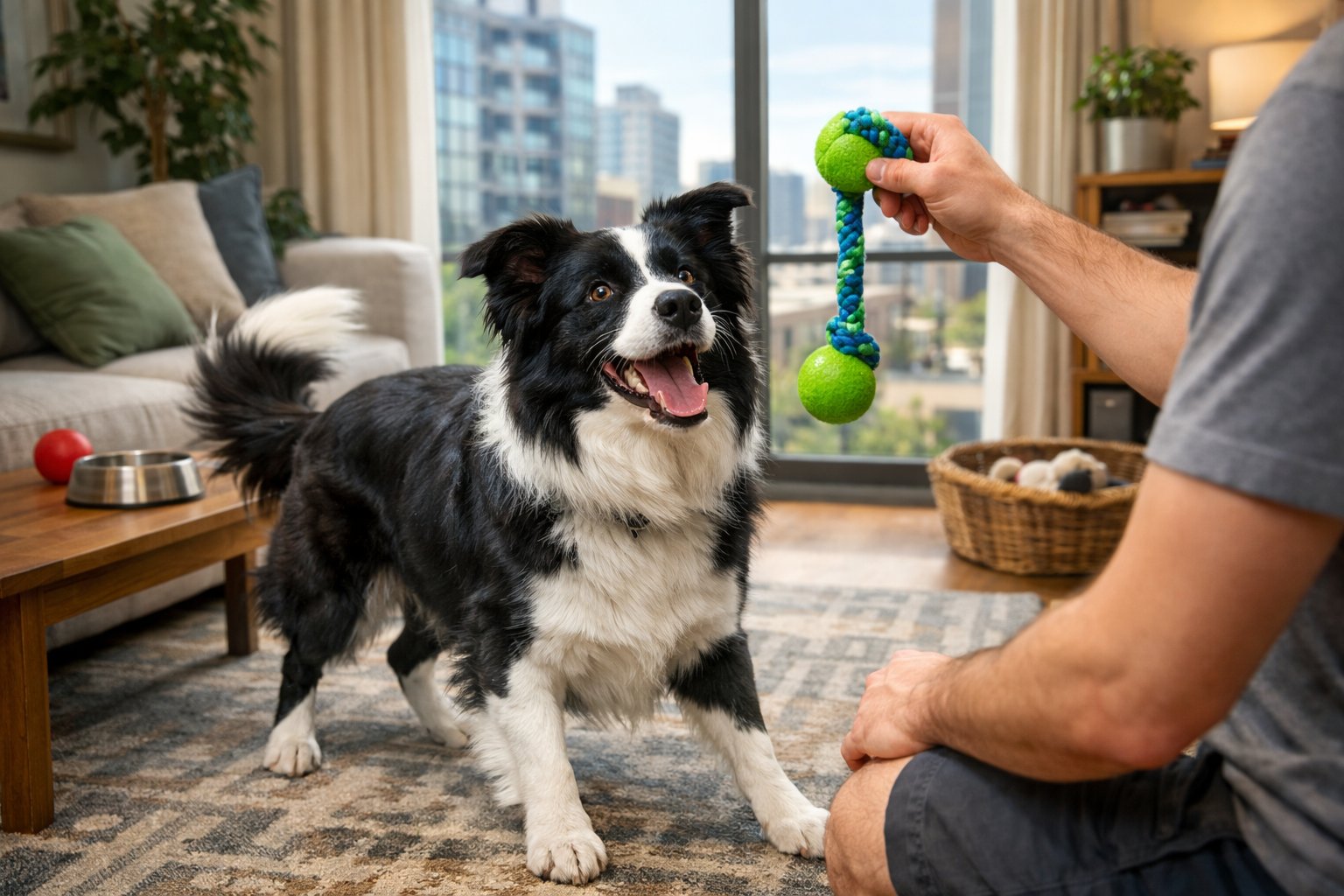
A border collie can adapt to apartment living when daily routines meet clear mental and physical needs. Space matters less than structure, time, and consistent engagement in an apartment setting.
Challenges of Small Living Spaces
A small living space limits free movement, which can frustrate a border collie if the owner skips daily activity. Apartment life removes easy yard access, so every bathroom break and exercise session depends on the owner’s schedule.
Noise creates another challenge. Border collies often react to hallway sounds, neighbors, and street activity.
Without training, barking can cause problems for city dwellers and property managers. This issue shows up often in discussions about border collies in apartments.
Alone time also matters. Long workdays without breaks can lead to boredom and stress.
Many apartment dogs cope well alone, but this breed needs planning, such as dog walkers, daycare, or structured enrichment during the day.
Breed Traits That Impact Apartment Life
The border collie breed ranks high in intelligence and problem-solving ability. This trait helps with training but raises daily demands in an apartment setting.
Mental work matters as much as physical activity. Herding instincts influence behavior indoors.
Some dogs chase shadows, fixate on moving objects, or try to “herd” people. Training helps redirect these habits into games, obedience, or scent work.
Sensitivity also plays a role in urban living. Border collies often notice changes in routine, sound, and movement.
Early exposure and calm handling reduce stress in busy buildings. Guides on apartment life with border collies often stress routine and predictability over square footage.
Typical Exercise Requirements
Border collies in apartments need structured daily exercise, not casual walks. Most require 90 minutes to 2 hours per day, split into several sessions, to stay balanced and calm.
Exercise should mix body and brain work. Useful options include:
| Activity Type | Examples |
|---|---|
| Physical | Fast walks, jogging, fetch, stairs |
| Mental | Puzzle feeders, trick training |
| Social | Dog parks, training classes |
Urban living can support these needs. Many city dwellers rely on parks, group classes, and dog-friendly spaces.
Articles on border collies and apartment exercise needs emphasize consistency, not intensity, as the key factor for success.
Keeping a Border Collie Happy and Healthy Indoors
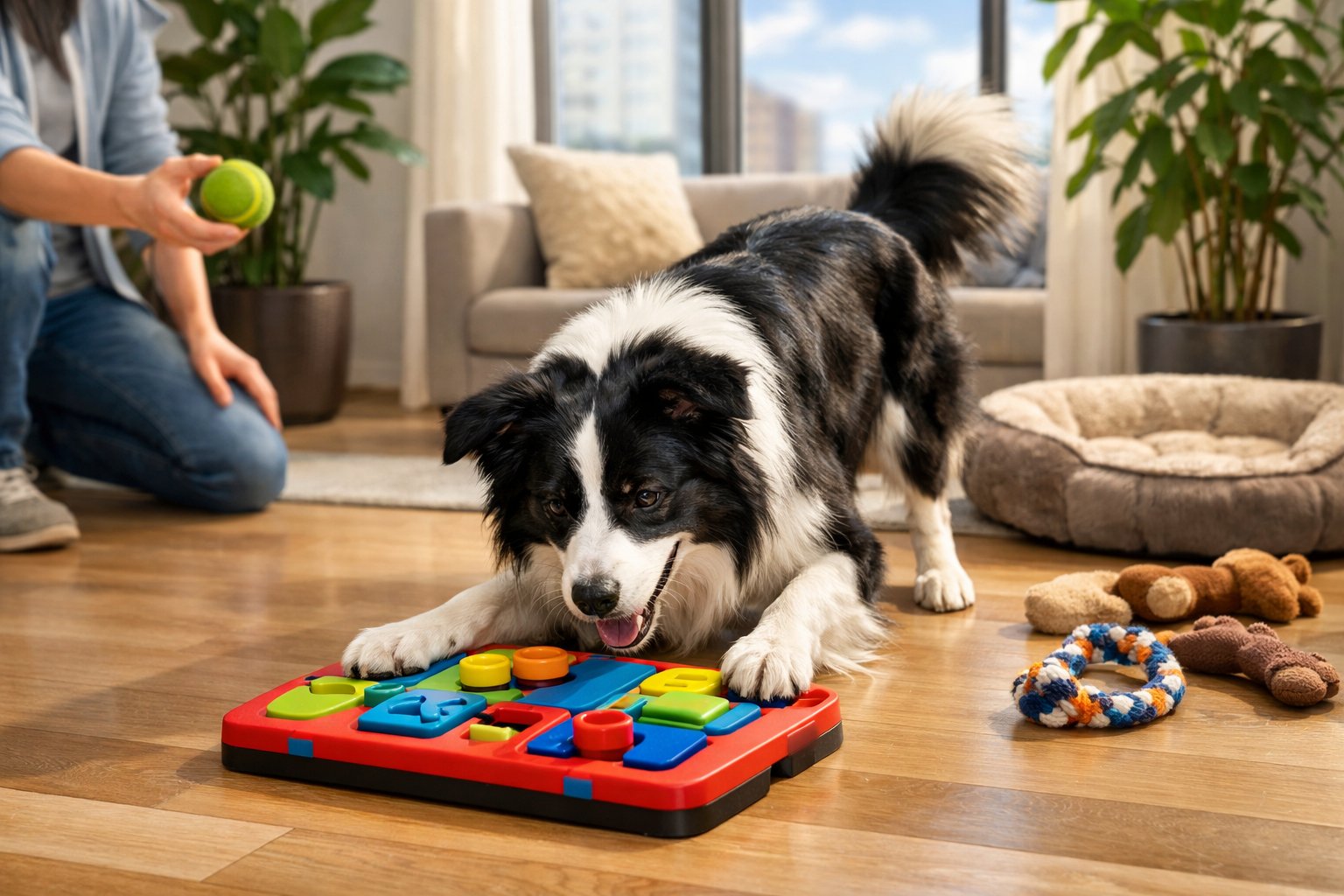
A Border Collie can do well indoors when owners meet clear exercise needs and provide steady mental stimulation. Structure, variety, and calm training reduce stress, barking tendencies, and destructive behaviors in small spaces.
Daily Routine and Schedule for Apartment Dogs
Border Collies thrive on a predictable daily routine. Owners should plan set times for walks, meals, play, and rest.
This structure helps high-energy dogs stay calm and lowers stress. Most apartment dogs need two long walks and one shorter outing each day.
Walks should include brisk movement, not just slow pacing. Many guides on apartment living with Border Collies stress that regular outdoor activities matter more than home size.
Indoor exercise fills gaps between walks. Short training sessions, hallway fetch, or stair climbs help meet exercise requirements.
Consistent sleep times also reduce restlessness at night.
Mental Stimulation and Enrichment Ideas
Border Collies are working dogs, so mental work matters as much as physical exercise. Without mental enrichment, they often invent their own tasks, which leads to problems.
Puzzle feeders, scent games, and hide-and-seek use problem-solving skills. These activities meet daily mental stimulation needs and work well in apartments.
Articles on keeping Border Collies engaged indoors note that focused brain work can tire them faster than long walks, as explained in tips for a happy indoor Border Collie.
Short obedience drills also help. Five-minute sessions spread through the day improve focus and reduce boredom.
Rotating toys each week keeps interest high.
Managing Barking and Destructive Behaviors
Barking and chewing often signal unmet needs. Border Collies may bark at hallway noise or destroy items when bored or anxious.
Owners should first check exercise needs and daily structure. Calm training helps manage barking tendencies.
Reward quiet behavior and block visual triggers when possible. White noise can reduce outside sounds.
Advice on keeping Border Collies happy and active often highlights prevention over correction. Destructive behaviors also link to separation anxiety.
Gradual alone-time training, safe chew items, and a quiet rest area reduce stress. A tired, mentally fulfilled dog rests instead of reacts.
Top Strategies for Apartment Success with Border Collies
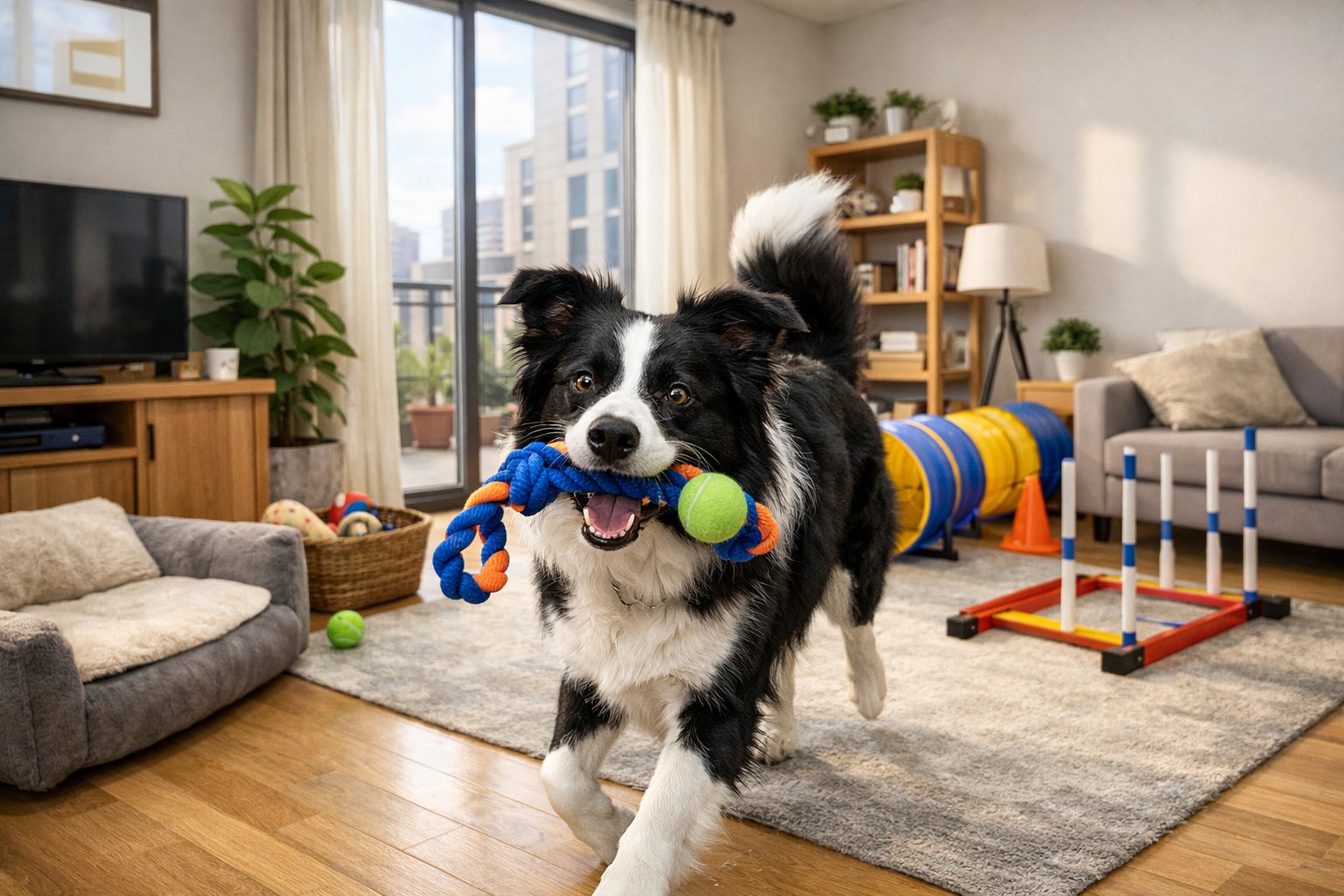
Smart routines, clear training, and the right home setup help active dogs thrive in small spaces. Consistent exercise, calm guidance, and access to people and dogs matter most.
Exercise Solutions for Apartment Settings
Border Collies need daily movement that challenges both body and mind. Owners should plan 90 minutes or more split across the day.
Short walks alone fall short. Useful options include:
- Fetch and sprint games at nearby dog parks or open fields
- Agility training classes or simple weave poles at home
- Stair climbs and hallway drills for rainy days
Many city owners rely on dog walking services or a trusted dog walker for midday breaks. Structured outings prevent boredom and reduce noise issues.
Apartment life works best when owners commit to a fixed schedule, not just weekend exercise, as explained in this guide to Border Collies in apartments.
Training and Positive Reinforcement Approaches
Clear rules and steady training sessions keep Border Collies calm indoors. Owners should focus on obedience training early, using rewards instead of punishment.
Effective tools include:
- Positive reinforcement training with treats or praise
- Short, focused drills that match their herding instinct
- Help from a certified dog trainer when problems start
Mental work matters as much as running. Puzzle feeders, puzzle games, and treat-dispensing toys tire the brain fast.
Many owners rotate interactive toys to keep interest high. Consistent training reduces barking and stress, which many apartment owners report as a key challenge in living successfully with a Border Collie indoors.
Socialization and Community Tips
City life offers strong chances for socialization if owners use them well. Regular exposure builds confidence and lowers fear.
Helpful habits include:
- Visits to busy sidewalks and elevators
- Controlled play at local dog parks
- Group walks or dog sports clubs
Some owners choose doggy daycare once or twice a week. Daycare provides supervised play and rest.
It also helps dogs stay calm when home alone. Urban routines can feel intense, but steady exposure works.
Articles on apartment living with Border Collies often stress early social skills as a major success factor.
Dog-Friendly Apartment Features
The right home setup makes daily life easier. A dog-friendly apartment should support movement and calm rest.
Key features to look for:
- Easy access to outdoor areas
- Durable floors that handle activity
- Space for crates and training mats
Owners should plan quiet zones for recovery after exercise. Regular veterinary check-ups also matter, especially for active breeds at risk for hip dysplasia.
Many apartment guides note that layout and location matter more than square footage. This includes advice found in this overview on raising a Border Collie in an apartment.