What Makes French Bulldogs Snore?
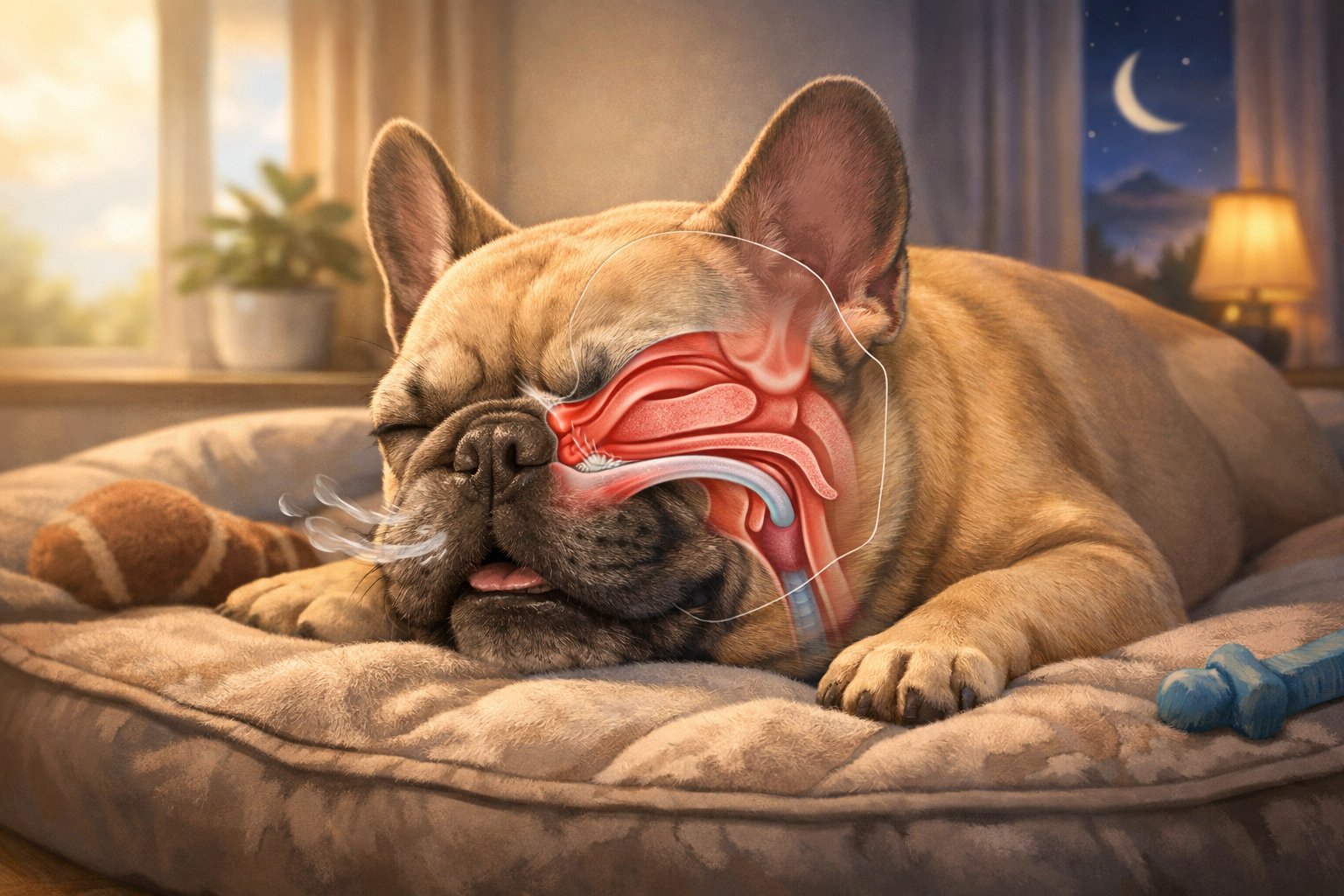
French bulldog snoring happens because several parts of their airway work against easy breathing. Their face shape, nose length, and throat tissues all narrow airflow, especially during sleep when muscles relax.
Brachycephalic Anatomy and Flat Faces
French Bulldogs belong to a brachycephalic breed, which means they have a flat face and a wide head. This look comes from brachycephalic anatomy that shortens the bones of the face without shrinking the soft tissues inside.
Because of this mismatch, air has less room to move. When a snoring Frenchie sleeps, relaxed tissues vibrate as air passes through tight spaces.
Common traits linked to a flat face include:
- Narrow nostrils that limit airflow
- A shorter skull that crowds nasal passages
- Thicker soft tissues in the throat
Many owners ask, do French Bulldogs snore all the time? The answer often ties back to this structure, which affects breathing even when the dog seems healthy.
Learn more about how flat faces affect breathing in this guide on why French Bulldogs snore due to their anatomy.
Short Snout and Restricted Airways
A short snout plays a major role in why French Bulldogs snore. The nose may look small on the outside, but the airway inside also runs shorter and tighter.
Air must travel through:
- Smaller nasal openings
- Narrow nasal passages
- A compact windpipe
This restriction increases airflow resistance. When the dog lies down, gravity adds pressure to already tight airways.
Frenchie snoring often grows louder during deep sleep or when the dog rests on its back. Restricted airflow also explains why some dogs snort or gasp before settling.
These sounds do not always signal danger, but they show how little space air has to move. This breakdown of airflow limits appears in this explanation of why a Frenchie snores so much.
Elongated Soft Palate and Crowded Throat
An elongated soft palate creates one of the most direct causes of snoring. The soft palate is a flap of tissue at the back of the mouth.
In many French Bulldogs, it grows too long for the space available. When the dog sleeps, this tissue can:
- Hang into the airway
- Vibrate as air passes
- Partly block breathing
A crowded throat adds to the problem. The tongue, tonsils, and soft palate all compete for space.
This crowding explains why snoring Frenchies may also gag or cough. Vets often watch this area closely because severe cases can affect airflow even when awake.
This article on French Bulldog snoring causes and health concerns explains how throat structure influences breathing sounds.
When French Bulldog Snoring Is a Reason to Worry

Some snoring sounds normal for this breed, but certain patterns signal real health risks. Loud, constant noise, breathing trouble, or behavior changes often point to blocked airways or related illness that needs care.
Brachycephalic Obstructive Airway Syndrome (BOAS) and Health Risks
Many French Bulldogs snore because of brachycephalic obstructive airway syndrome, often called BOAS. Their short skull and flat face narrow the nose and throat.
This shape limits airflow, especially during sleep. BOAS can strain the heart and lungs over time.
Dogs may struggle to cool down, tire fast, or wake often at night. Severe cases cause pauses in breathing or gasping.
Veterinarians diagnose BOAS through exams and imaging. Treatment ranges from weight control to surgery in serious cases.
Learning the risks of brachycephalic airway obstructive syndrome in French Bulldogs helps owners act early and protect long-term French Bulldog health.
Warning Signs of Concerning Snoring
Snoring becomes a problem when it affects breathing or daily life. Owners should watch for changes that last more than a few days.
Signs that need a vet visit include:
| Sign | What It May Mean |
|---|---|
| Very loud snoring | Airway blockage |
| Pauses in breathing | Sleep apnea risk |
| Blue or pale gums | Low oxygen |
| Heavy panting at rest | Breathing strain |
| Low energy | Poor sleep or oxygen |
Daytime clues matter too. Dogs that avoid play or overheat easily may not breathe well at night.
These signs often mean the dog cannot rest deeply, which makes it harder for a Frenchie to sleep better.
Other Conditions That Worsen Snoring
BOAS is common, but other issues can make snoring worse. Extra weight adds pressure to already narrow airways.
Even small weight gain can increase noise and breathing effort. Allergies also play a role.
Dust, pollen, or food reactions can swell nasal tissues. This swelling blocks airflow and raises snoring volume.
Infections like colds or bronchitis cause congestion and throat irritation. Dental disease can also affect the jaw and soft tissues.
Treating these conditions often reduces snoring and improves sleep quality.
How to Help Your French Bulldog Snore Less

Owners can take clear steps at home to reduce French Bulldog snoring. The most effective steps focus on weight, sleep setup, air quality, and daily habits that support easier breathing and help a Frenchie sleep better.
Managing Weight for Easier Breathing
Extra weight puts pressure on a French Bulldog’s already narrow airway. Even a small gain can make snoring louder and more frequent.
Keeping a healthy weight can help stop French Bulldog snoring linked to airway strain. They should eat measured meals, not free-fed bowls.
Treats should stay small and limited, especially high-fat snacks. Daily movement matters, but it should stay low impact.
Short walks and gentle play work better than intense exercise. A vet can confirm a safe target weight and rule out other causes of breathing trouble.
Weight control ranks as one of the most reliable ways to reduce snoring tied to breathing effort, as noted in guidance on how to reduce French Bulldog snoring through weight management.
Improving Sleep Environment
Sleep position affects airflow more than many owners expect. French Bulldogs often snore louder when they sleep on their backs.
A firm bed that supports side sleeping can keep the airway more open. Raised edges or bolsters help them stay in that position during the night.
Room temperature also matters. Warm air can worsen snoring by increasing airway swelling.
A cool, well-ventilated room often leads to quieter sleep. Simple positioning changes like these appear in many tips on how to stop a French Bulldog snoring at night.
Reducing Allergens and Airborne Irritants
French Bulldogs react strongly to dust, pollen, smoke, and strong scents. These irritants inflame nasal tissue and make breathing noisy.
Owners should vacuum often and wash bedding weekly. Unscented cleaners reduce irritation in sensitive airways.
Air quality tools can help. HEPA air purifiers remove fine particles that trigger congestion.
Smoke exposure, including secondhand smoke, should stay completely out of the home. Allergy-related swelling plays a clear role in snoring, as explained in overviews of French Bulldog snoring causes tied to respiratory health.
Simple At-Home Strategies
Small daily habits can lower snoring without special equipment. These steps work best when combined with weight and air control.
Helpful strategies include:
- Keeping water available to prevent dry airways
- Cleaning facial folds to reduce irritation
- Using a humidifier during dry seasons
Some owners also track patterns to spot triggers. A simple log helps identify what works.
| What to Track | Why It Helps |
|---|---|
| Sleep position | Shows which positions reduce noise |
| Room conditions | Links heat or dryness to snoring |
| Activity level | Highlights fatigue-related snoring |