Core French Bulldog Temperament: Playful, Clingy, or Calm?
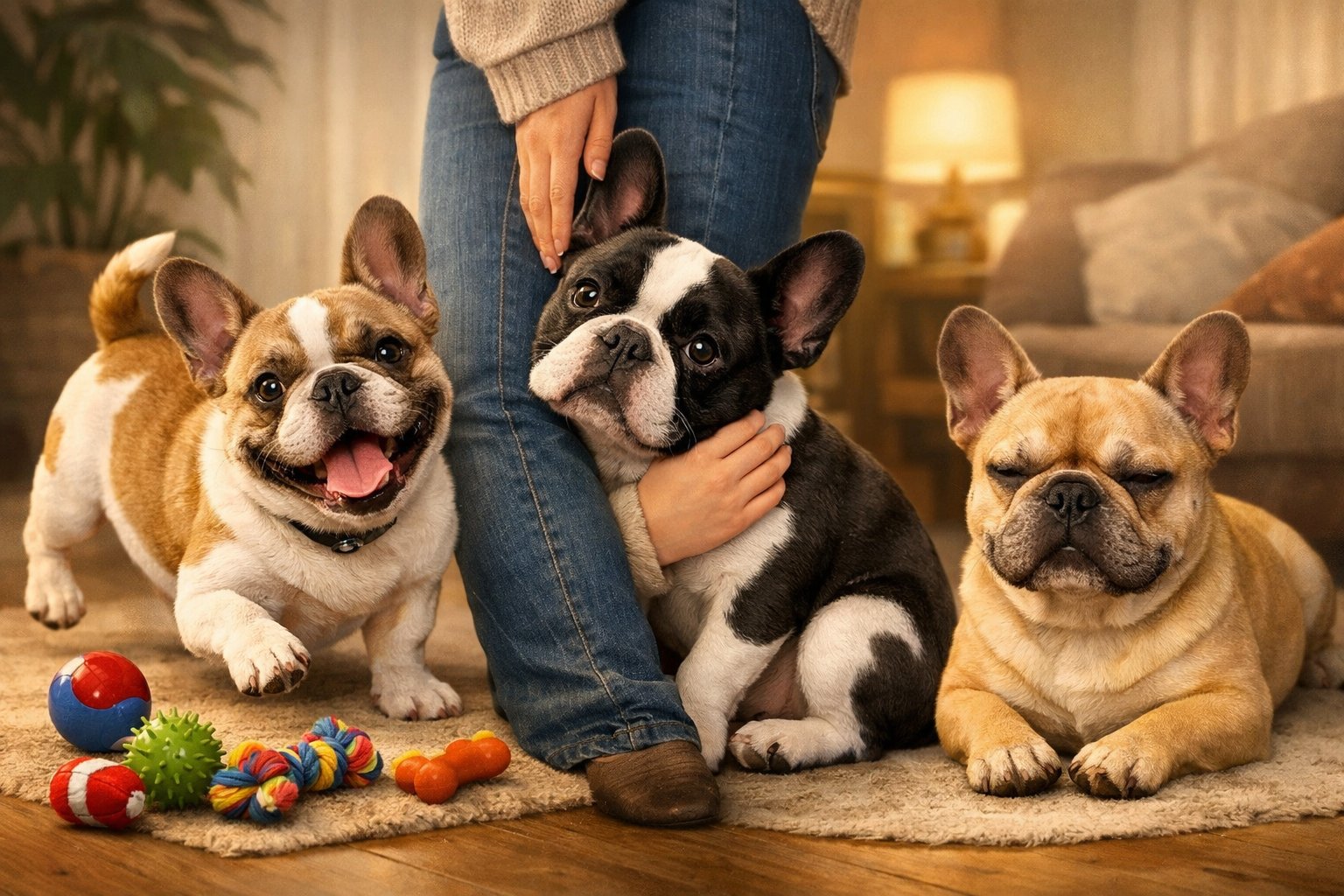
A french bulldog often shows three clear traits: short bursts of play, strong attachment to people, and long calm periods. These traits shape daily life with a frenchie and explain why the breed fits some homes better than others.
Playfulness and Energy Bursts
French bulldogs enjoy play, but they do not stay active for long. They like quick games of tug, short walks, or chasing a toy across the room.
After that, they rest. This pattern matches the typical French Bulldog temperament, which mixes fun with low stamina.
As a brachycephalic breed, they can overheat or struggle with heavy exercise. Owners should watch breathing and stop play early.
Common play traits include:
- Short zoomies indoors
- Strong interest in toys
- Fast fatigue after activity
Affectionate and People-Focused Nature
A frenchie personality centers on people. They follow owners from room to room and prefer human contact over independence.
Many choose laps over dog beds. French bulldogs enjoy eye contact, touch, and calm talk.
They often greet familiar people with excitement but stay reserved with strangers. This people-first focus makes them good companions for homes where someone stays around most of the day.
Clinginess and Separation Anxiety
Clinginess can turn into separation anxiety if left unmanaged. A french bulldog may bark, whine, or scratch when alone for long periods.
Some refuse food or pace. Early training helps.
Short absences, calm exits, and safe spaces reduce stress.
Helpful habits include:
- Leaving for brief periods each day
- Avoiding emotional goodbyes
- Using puzzle toys during alone time
The Calm Side of French Bulldogs
Despite their playful image, french bulldogs spend much of the day resting. They nap often and enjoy quiet routines.
This calm side makes them suited for apartments. They usually match the household’s pace.
Loud homes bring energy. Quiet homes bring calm.
Personality Variations and Living With a Frenchie

Frenchies share common traits, but each dog shows them in different ways. Daily life depends on the dog’s personality, age, and home setup.
These factors shape how people experience the french bulldog personality.
Individual Differences in Frenchie Personality
No two Frenchies act the same. Some stay calm and observant, while others seek attention all day.
Genetics, early care, and daily routine all shape behavior. People adopting a Frenchie should expect a range of temperaments, not a single type.
Common personality patterns include:
- Clingy: follows people room to room and wants close contact
- Playful: enjoys short games and interactive toys
- Independent: rests alone and asks for space at times
Rescue groups often stress matching lifestyle to temperament, not looks. This approach reduces stress and prevents mismatches.
Temperament Across Life Stages
Age changes how Frenchies behave. Puppies show curiosity and bursts of energy.
They need structure, short training sessions, and rest breaks. Adult Frenchies often balance play with long naps and prefer routine.
Senior Frenchies slow down more and seek comfort. They may become more attached and less patient with noise.
Owners should adjust expectations and activity.
| Life Stage | Common Traits | Owner Focus |
|---|---|---|
| Puppy | Active, distracted | Training, social time |
| Adult | Steady, playful | Routine, exercise |
| Senior | Calm, clingy | Comfort, vet care |
French Bulldogs With Children and Other Pets
Frenchies usually bond well with family members. With children, they act patient and tolerant when kids treat them gently.
Adults should supervise play due to the breed’s flat face and low heat tolerance. With other dogs, Frenchies often enjoy play, especially with similar sizes.
Early social time helps reduce guarding over toys or people. Many also live well with cats and show low prey drive.
Supporting a Balanced Temperament: Training and Environment
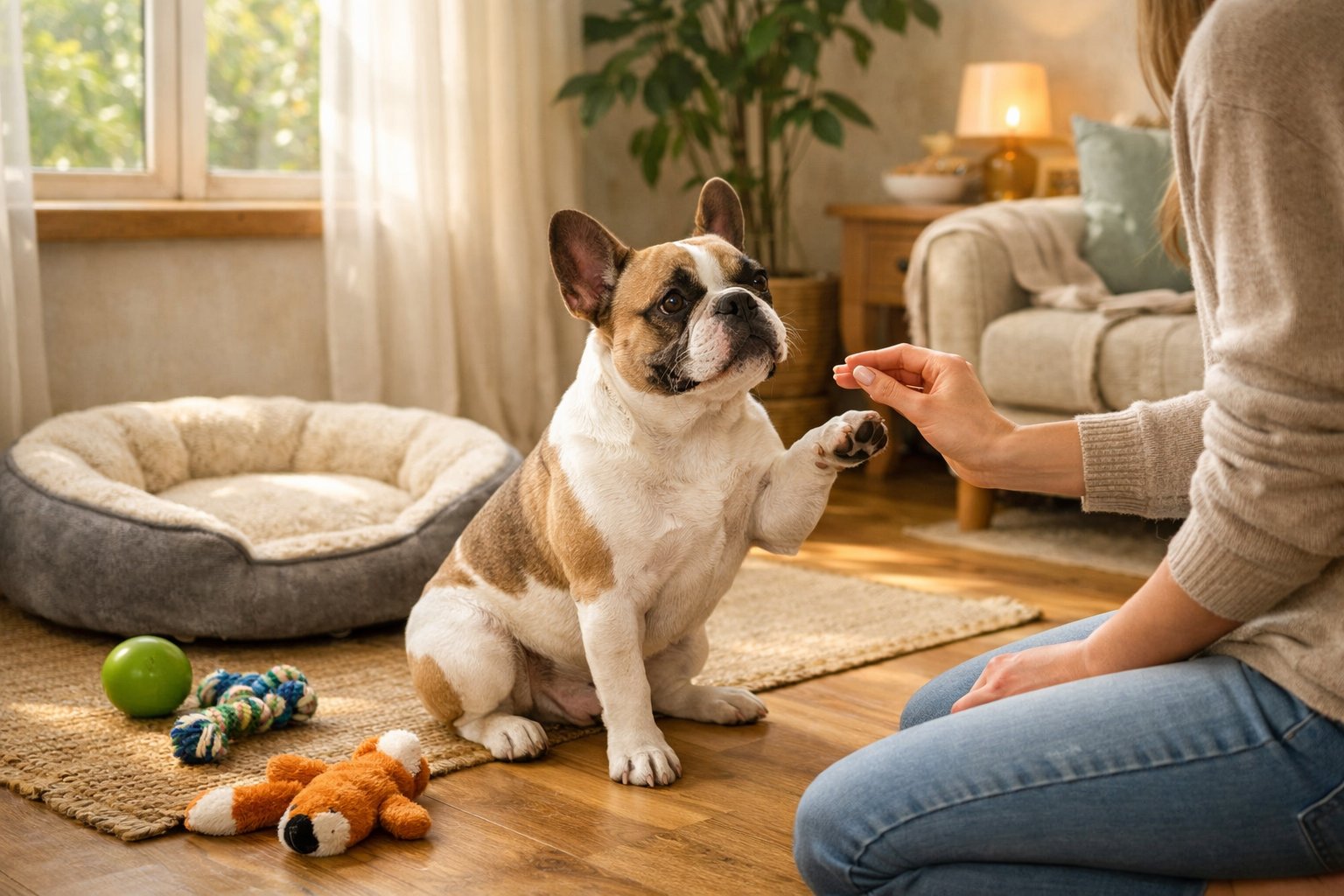
A French Bulldog’s mood depends on daily training habits, mental outlets, and early life care. Clear routines, short lessons, and a calm home help reduce clingy behavior and support steady, relaxed energy.
Positive Reinforcement and Short Training Sessions
French Bulldogs respond best to positive reinforcement like treats, praise, and gentle play. Harsh correction often leads to stress or stubborn behavior.
Keep lessons short to match their attention span and prevent frustration. When training a French Bulldog, aim for 5–10 minute sessions, two to three times a day.
Focus on one skill at a time.
Effective rewards
- Soft treats in small sizes
- Calm verbal praise
- Brief play with a favorite toy
Consistent, reward-based methods support focus and trust, which helps shape a steady temperament.
Mental Stimulation With Puzzle Toys
Mental work matters as much as physical activity. Puzzle toys reduce boredom, which often shows up as chewing, barking, or constant following.
Use toys that require simple problem-solving. Rotate them every few days to keep interest high.
| Puzzle Type | Benefit |
|---|---|
| Treat-dispensing balls | Builds focus and patience |
| Sliding puzzles | Encourages calm problem-solving |
| Snuffle mats | Slows eating and reduces anxiety |
Ten to fifteen minutes of mental play can calm a Frenchie more than a long walk. Daily enrichment supports calm behavior, as explained in this temperament overview.
Role of Responsible Breeding and Early Socialization
Temperament starts early. A responsible breeder prioritizes health, stable parents, and early handling.
Puppies raised in clean, calm spaces often adjust better to new homes. Early socialization shapes confidence.
Between 8 and 16 weeks, exposure to people, sounds, and gentle dogs matters.
Early experiences that help
- Short car rides
- Calm visitors of different ages
- Safe meetings with vaccinated dogs
Many breed experts highlight this link in discussions of French Bulldog temperament, such as this detailed look at personality traits and early development.