How Much Should You Feed a Labradoodle?
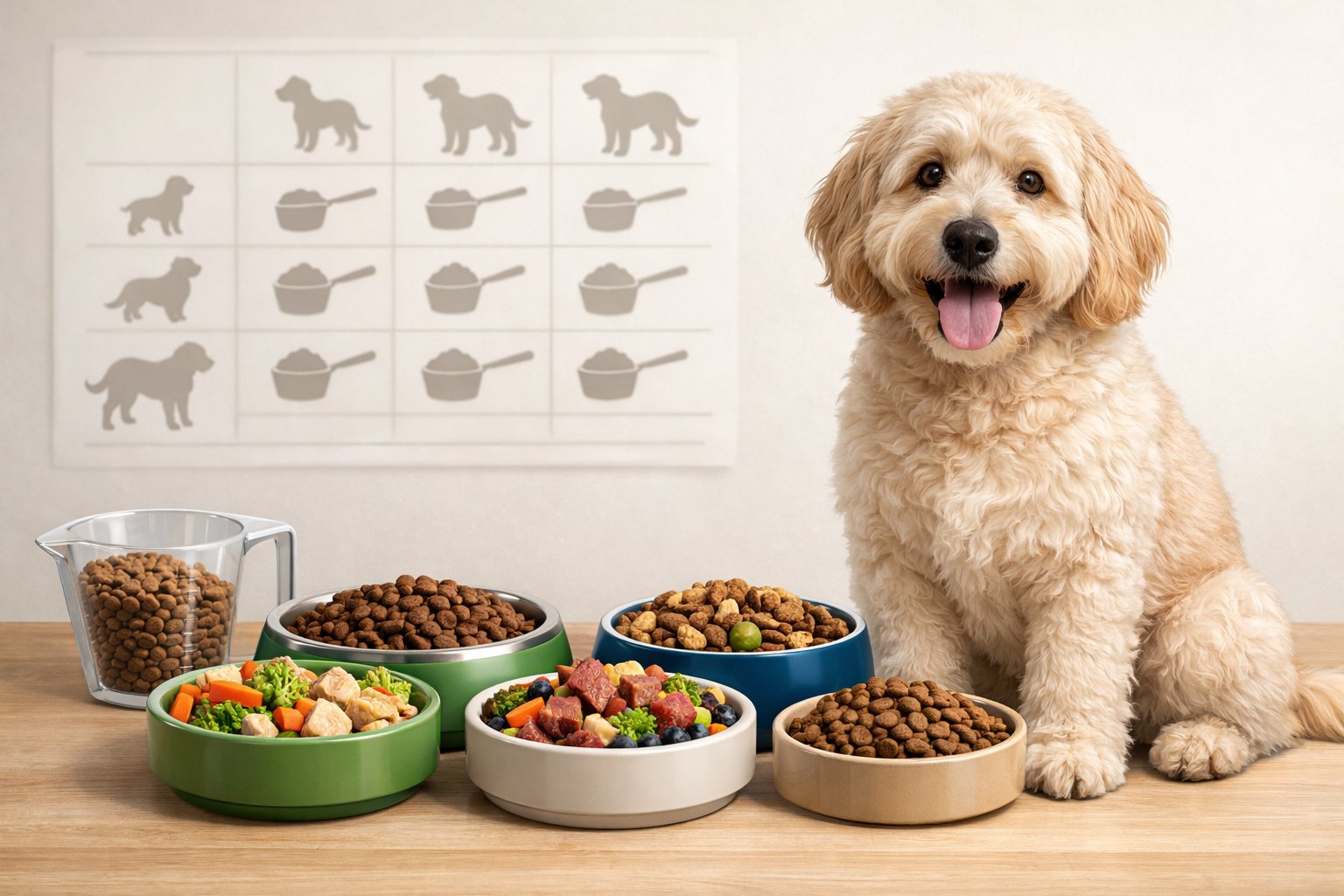
The right portion size depends on age, size, and daily activity. A clear feeding plan helps support steady growth and healthy weight.
Labradoodle Feeding Chart by Life Stage
A Labradoodle feeding guide works best when it matches the dog’s life stage. Puppies need more calories for growth, while adults and seniors need controlled portions.
General daily feeding amounts (standard size):
| Life Stage | Daily Amount |
|---|---|
| Puppy (1–4 months) | ½–2½ cups |
| Puppy (5–12 months) | 2½–4½ cups |
| Adult (1–6 years) | 3–4½ cups |
| Senior (7+ years) | 2¼–3½ cups |
A puppy feeding chart pairs best with a puppy feeding schedule of three to four meals per day. Adult Labradoodle feeding usually shifts to two meals daily.
These ranges reflect common guidance found in detailed resources like this Labradoodle feeding chart by age. Toy and Mini Labradoodles often need smaller portions.
Key Factors That Affect Feeding Amounts
How much to feed a Labradoodle depends on more than age alone. Size plays a major role, especially across Toy, Mini, and Standard types.
Activity level also matters. A highly active dog may need the higher end of the feeding range, while a calm dog may need less.
Health status can change feeding needs. Feeding an overweight Labradoodle often means smaller portions and fewer treats.
Vets may suggest high‑fiber, lower‑calorie food. Food type affects portions as well.
Dry kibble, wet food, and raw diets have different calorie densities. Guides like this Labradoodle food calculator and feeding guide help fine‑tune daily amounts.
Signs of Overfeeding and Underfeeding
Body shape offers the clearest clues. A healthy Labradoodle shows a visible waist when viewed from above.
Overfeeding often leads to weight gain, low stamina, and difficulty feeling the ribs. This issue can develop fast when treats exceed 10% of daily calories.
Underfeeding shows up as visible ribs, low energy, or slow growth in puppies. A puppy feeding chart helps avoid this problem during fast growth stages.
Regular weigh‑ins and portion checks help keep feeding a Labradoodle on track. Small adjustments usually work better than sudden changes.
Feeding Recommendations for Labradoodle Puppies, Adults, and Seniors
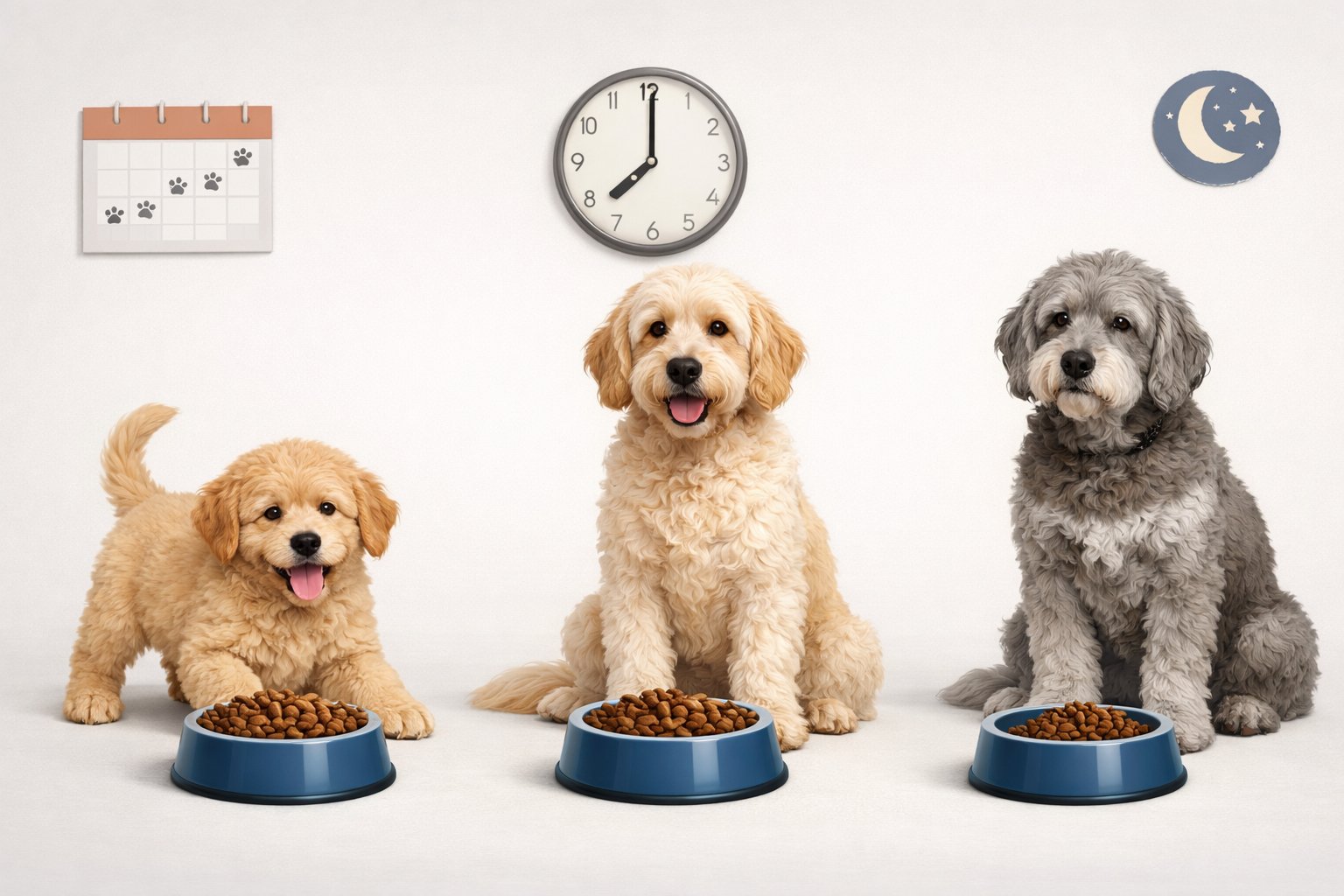
Labradoodles need different food amounts as they grow. Age, size, and activity level shape how much and how often they should eat.
Labradoodle Puppy Feeding
Labradoodle puppy feeding focuses on steady growth and strong bones. Puppies need high‑quality puppy food with enough protein and fat to support fast development.
Most puppies eat 3 to 4 meals per day. A clear puppy feeding schedule helps prevent stomach upset and overeating.
Typical daily amounts by size:
| Puppy Size | Daily Food (Cups) | Meals Per Day |
|---|---|---|
| Toy | 0.25–0.75 | 3–4 |
| Miniature | 0.5–1.25 | 3–4 |
| Standard | 0.75–1.5 | 3–4 |
A detailed puppy feeding chart like the one in this Labradoodle puppy feeding guide helps owners adjust portions as weight and age change.
Adult Labradoodle Feeding
Adult Labradoodle feeding shifts from growth to weight control. Most adults do well with two meals per day, spaced about 12 hours apart.
Portion size depends on body size and activity. Many adult Labradoodles eat 1 to 2.5 cups of dry food daily.
Larger or very active dogs may need more, while calm or neutered dogs often need less.
Daily food ranges:
- Toy: 1–1.5 cups
- Miniature: 1.5–2 cups
- Standard: 2–2.5 cups
According to this adult Labradoodle feeding guide, splitting food into two meals lowers the risk of bloating and helps keep energy steady.
Senior Labradoodle Feeding
Senior Labradoodle feeding supports digestion and joint health. Older dogs burn fewer calories, so portions usually drop after age eight.
Most seniors eat once or twice daily, based on appetite and activity. Food should contain lower fat and moderate protein to protect muscles without adding weight.
Common daily amounts:
- Toy: 1–1.25 cups
- Miniature: 1.5–1.75 cups
- Standard: 1.5–2 cups
This senior Labradoodle feeding chart shows how calorie needs decline with age. Fresh water and consistent meal times help seniors eat well and stay comfortable.
Choosing the Best Food and Solving Common Feeding Issues
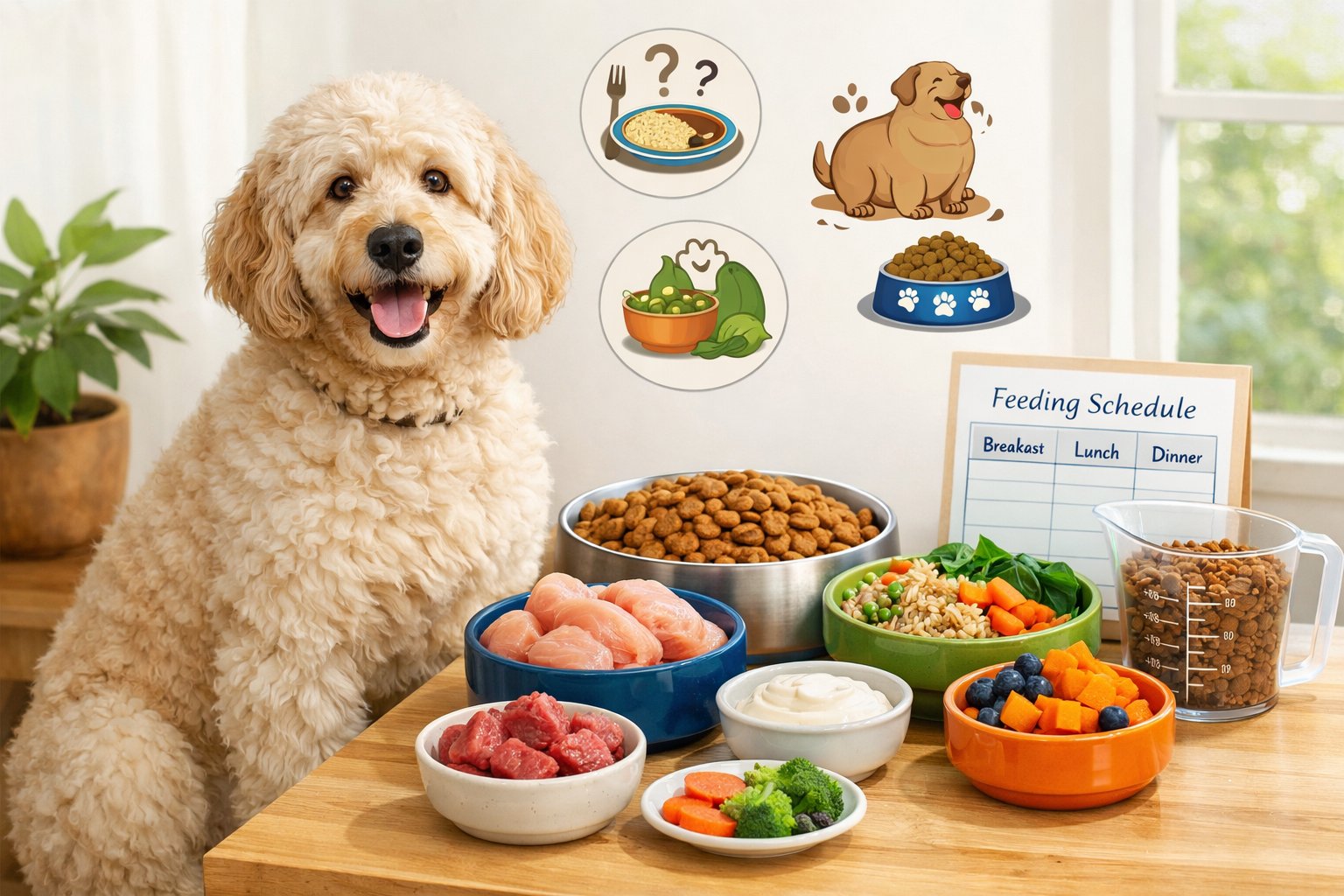
Food quality and daily habits affect energy, weight, and digestion. Smart choices help prevent picky eating and stomach trouble.
Best Food for Labradoodles
The best food for Labradoodle diets start with balanced nutrition. Most Labradoodles do well on high-quality dry kibble made with real meat as the first ingredient.
Many owners choose kibble because it supports dental health and is easy to measure. According to this guide on feeding Labradoodles the right food types, dry, wet, raw, and freeze-dried foods can all work when they meet nutrition standards.
What to look for in the best dog food for Labradoodles:
| Nutrient | Why It Matters |
|---|---|
| Animal protein | Builds muscle and supports growth |
| Healthy fats | Helps skin, coat, and energy |
| Fiber | Aids digestion |
| Vitamins and minerals | Supports immune health |
Most dogs can eat good-quality kibble without special formulas, as explained in this overview of best dog food for Labradoodle diets.
Special Diets and Nutrition Tips
Some Labradoodles need diet changes due to allergies, weight gain, or low energy. Chicken, beef, and grains sometimes cause itching or loose stool.
Switching to a limited-ingredient food can help. This advice on wet versus dry food for Labradoodles explains that wet food adds moisture and taste, while dry food helps with teeth.
Many owners mix both for balance.
Helpful Labradoodle nutrition tips:
- Keep treats under 10% of daily calories
- Measure meals instead of free-feeding
- Change foods slowly over 7–10 days
- Match calories to age and activity level
A vet should guide any prescription or homemade diet.
Why Is My Labradoodle Not Eating?
Owners often ask, why is my Labradoodle not eating? The cause is usually simple.
Stress, schedule changes, too many treats, or recent food changes often reduce appetite. Illness, dental pain, or stomach upset can also play a role, according to this article on reasons a Labradoodle may stop eating.
Common signs that need attention:
- Skipping meals for more than 24 hours
- Weight loss or low energy
- Vomiting or diarrhea
If appetite does not return or other symptoms appear, a vet visit is the safest step.