Assessing Labradoodle Suitability for Apartment Life
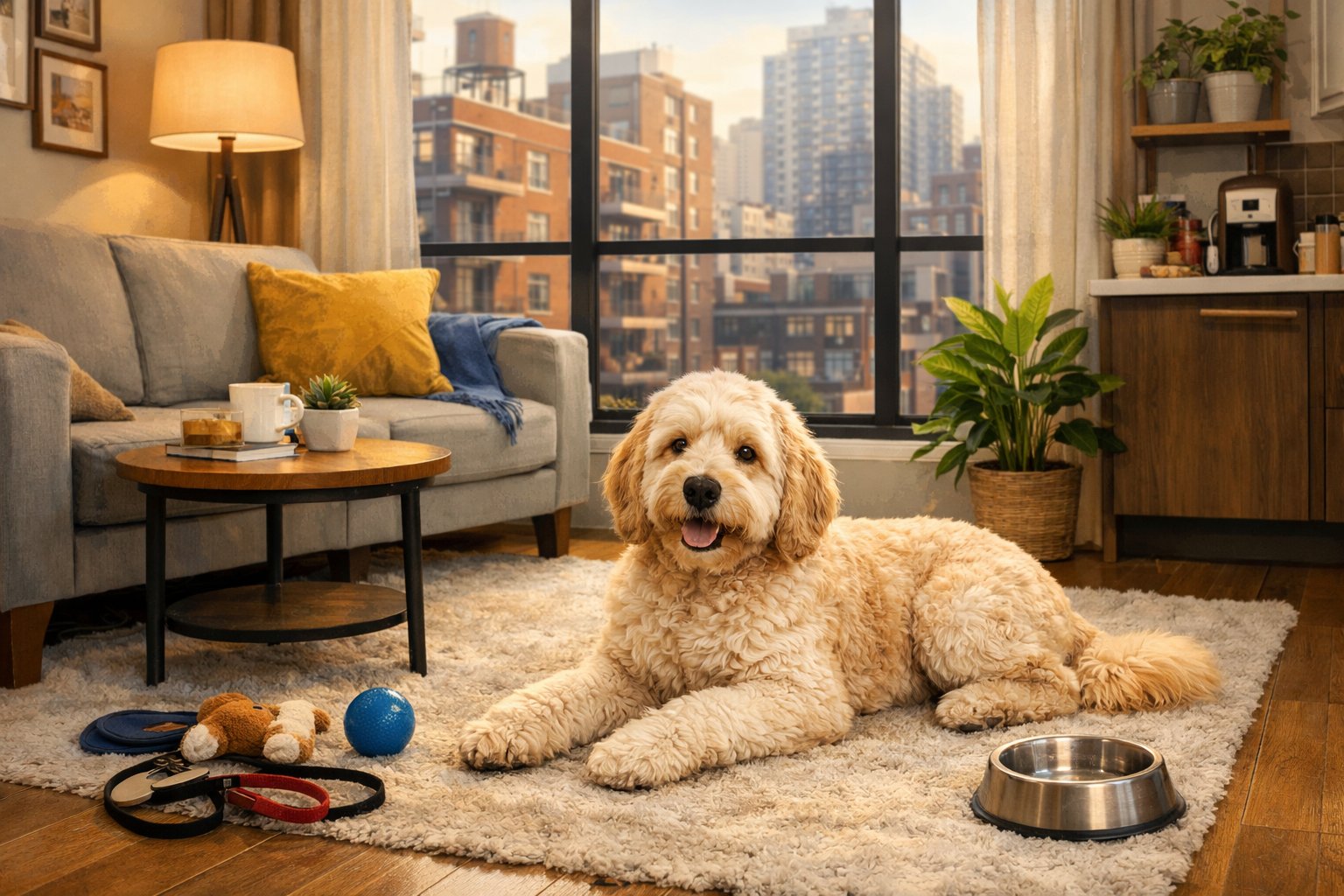
Living with a labradoodle in an apartment depends on behavior, size, and daily routines. Owners need to match the dog’s needs with limited space, shared walls, and time alone.
Labradoodle Temperament and Adaptability
A labradoodle usually shows a friendly and people-focused temperament. Many labradoodles enjoy routines and adjust well when owners set clear rules.
This trait supports living with a labradoodle in an apartment when daily walks and training stay consistent. They often learn quickly and respond well to basic obedience.
This helps reduce barking and jumping, which matters in multi-unit buildings. Articles on labradoodle apartment living tips stress that structure and mental activity matter more than floor space.
Australian labradoodles often show calmer indoor behavior due to selective breeding. Still, individual personality matters more than labels.
Calm adults tend to adapt faster than high-energy puppies.
Labradoodle Size Variations and Their Impact
Size plays a clear role in apartment comfort. Smaller dogs move more easily in tight spaces and elevators.
Larger dogs need more outdoor time to stay settled indoors.
Common size ranges:
| Type | Weight Range | Apartment Impact |
|---|---|---|
| Miniature labradoodle | 15–25 lb | Easiest to manage |
| Medium labradoodle | 30–45 lb | Works with daily exercise |
| Standard labradoodle | 50–65 lb | Needs strict routines |
Guides on labradoodle apartment space needs note that size alone does not decide success. Energy level and owner commitment carry equal weight.
A standard labradoodle can live in an apartment if outdoor exercise stays reliable. Missed walks often lead to restlessness indoors.
Importance of Social Needs and Alone Time
Labradoodles form strong bonds with people. They often struggle with long periods alone, especially in apartments where noise travels easily.
This can lead to barking or pacing. Many experts agree that labradoodles do better when owners work flexible hours or arrange midday breaks.
Articles discussing whether labradoodles can live happily in apartments highlight the need for company and stimulation. Short absences usually pose no issue when dogs receive enough exercise and enrichment.
Puzzle feeders, short training sessions, and predictable schedules help meet social needs without adding space demands.
Meeting Exercise and Stimulation Needs in an Apartment
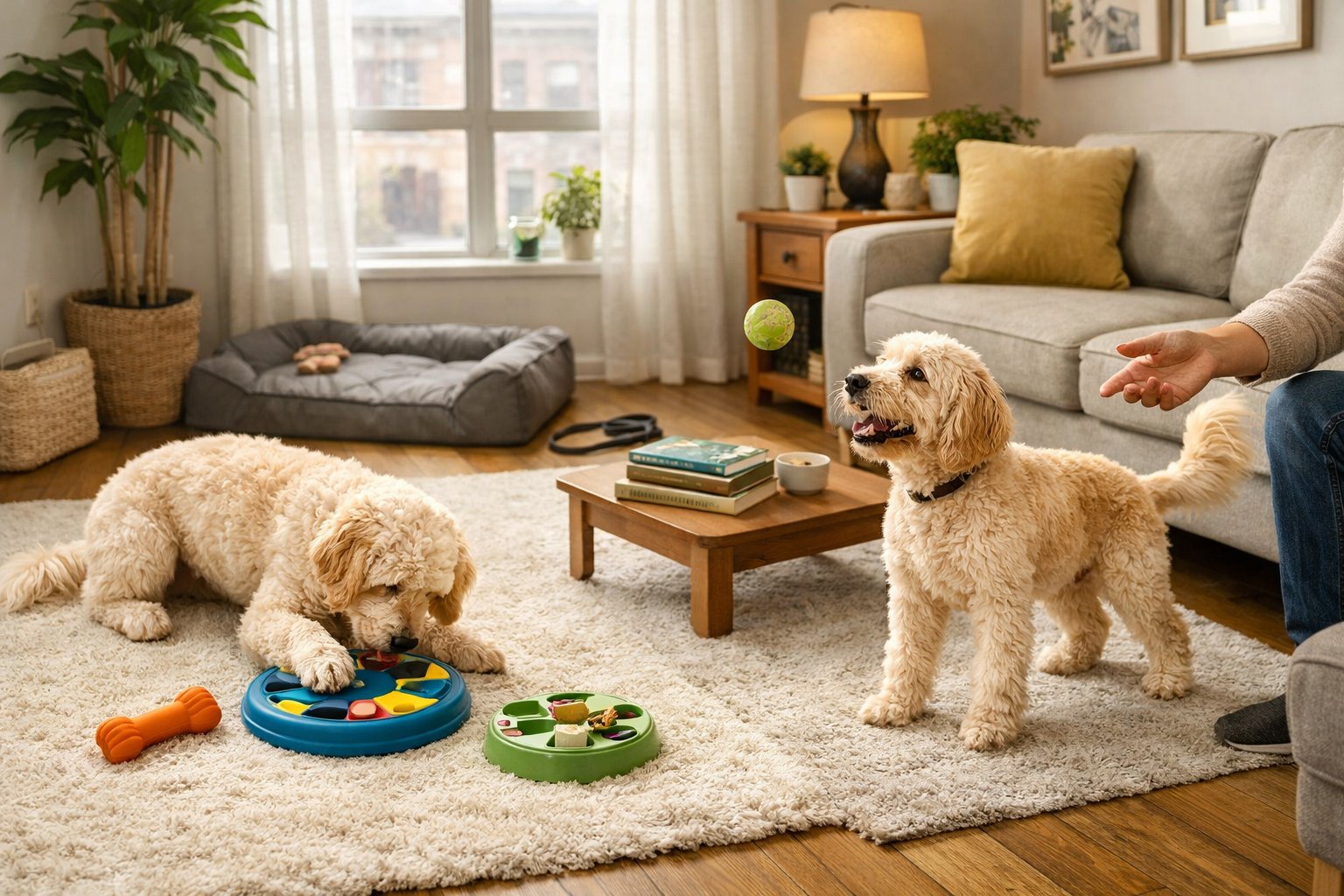
A Labradoodle can stay healthy in an apartment with a clear exercise plan and daily mental work. Size, age, and energy level all shape how much activity the dog needs and how the owner should provide it.
How Much Exercise Does a Labradoodle Need Daily
Most Labradoodles need 30 to 60 minutes of exercise each day. A miniature Labradoodle often does well with shorter walks and play sessions.
A medium Labradoodle usually needs closer to 45 minutes. A standard Labradoodle often needs an hour or more.
Exercise does not need to happen all at once. Two or three shorter walks can meet daily needs.
Many vets suggest at least one solid walk per day, which aligns with common guidance on how much exercise a Labradoodle needs daily. Puppies and older dogs need less intense activity.
Owners should avoid long runs or hard play for young dogs with growing joints.
Creative Physical Activity Options Indoors and Outdoors
Apartment living limits space, but movement still matters. Owners can mix outdoor walks with short indoor sessions to keep the dog active.
Practical options include:
-
Leashed walks around the block or nearby parks
-
Hallway fetch with soft toys
-
Stair climbing in short bursts, if allowed
-
Weekend trips to dog-friendly trails or open areas
Many Labradoodles adapt well when owners plan exercise on purpose. Several guides on apartment living with Labradoodles stress routine over yard size.
Consistency matters more than variety. Dogs stay calmer when they know when activity will happen.
Mental Enrichment for Apartment-Bound Labradoodles
Mental work matters as much as physical exercise. Labradoodles are smart and can grow restless without daily challenges.
Simple tools work well in small spaces:
-
Food puzzle toys
-
Short training sessions using basic commands
-
Hide-and-seek games with treats
-
Rotating toys every few days
Training can start early and continue through adulthood. Many owners manage high energy by combining walks with daily brain games, a common theme in advice on managing Labradoodle energy in apartments.
A mentally busy dog often rests better, even in a small home.
Training, Routine, and Daily Living Tips for Success
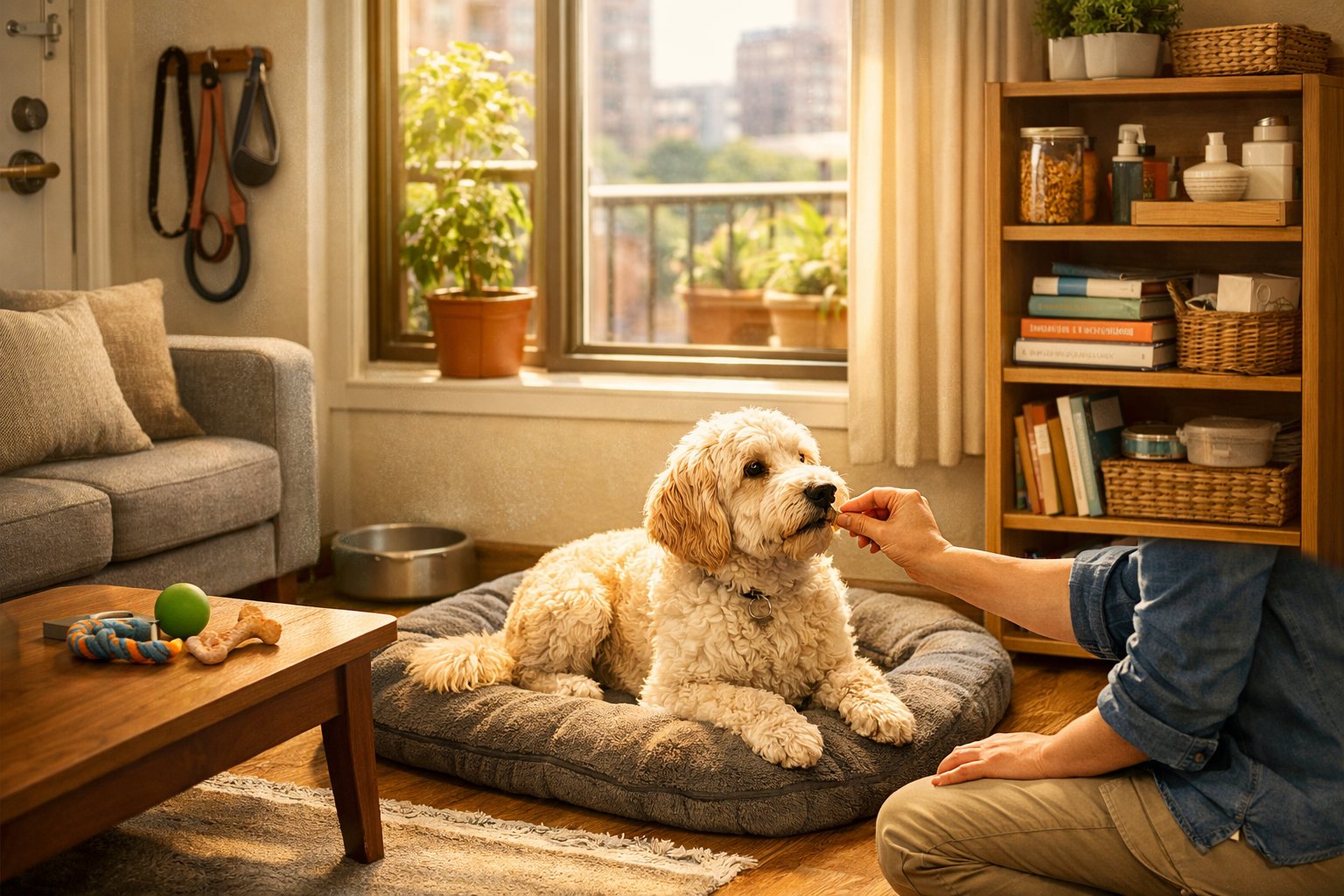
Success in an apartment depends on clear training, steady routines, and respect for shared spaces. Daily structure helps a Labradoodle stay calm, quiet, and easy to manage indoors.
Training a Labradoodle in an Apartment
Training a Labradoodle in an apartment works best with positive reinforcement training. They learn faster when rewards follow calm behavior, quiet greetings, and focus.
Short sessions done several times a day keep attention strong. Basic commands matter more in small spaces.
Sit, stay, leave it, and place help control movement and noise. Crate training also helps with rest and alone time when done slowly and kindly.
Daily training should mix manners and mental work. Many owners rely on guidance like the tips in this Labradoodle training guide to keep sessions clear and consistent.
High‑value apartment skills
-
Quiet when someone walks past the door
-
Waiting calmly for elevators
-
Settling on a mat during meals
Establishing Routines and Designated Spaces
Living with a Labradoodle in an apartment works better with a fixed daily rhythm. Regular walk times, meals, and play reduce restlessness.
Dogs relax when they know what comes next. Designated spaces also matter.
A Labradoodle should have a clear sleep spot, feeding area, and calm zone away from doors or windows. These areas limit pacing and alert barking.
A simple daily routine may look like this:
| Time | Activity |
|---|---|
| Morning | Walk + short training |
| Midday | Potty break + puzzle toy |
| Evening | Longer walk + calm play |
Clear routines like those suggested in Labradoodle apartment living tips help dogs adjust faster to limited space.
Managing Noise, Grooming, and Community Etiquette
Noise control protects relationships with neighbors. Owners should train calm responses to hallway sounds and visitors.
White noise or soft music can block sudden triggers.
Grooming also affects apartment life. Regular brushing reduces hair buildup and odors.
Most Labradoodles need professional grooming every 6–8 weeks to keep coats manageable indoors.
Good etiquette goes a long way. Leash control in common areas and quick cleanup show respect.
Many owners find helpful guidance in resources like managing a Labradoodle’s energy in an apartment.
Good neighbor habits
- Avoid early or late play indoors
- Respond quickly to barking
- Communicate politely if issues arise