• Skip to main content
  • Skip to primary sidebar

superduperdog

superduperdog

Border Collies

Why Beagles Are Escape Artists (and How to Stop It): Practical Owner Strategies

February 10, 2026 by Jason Huskey

Why Beagles Are Escape Artists
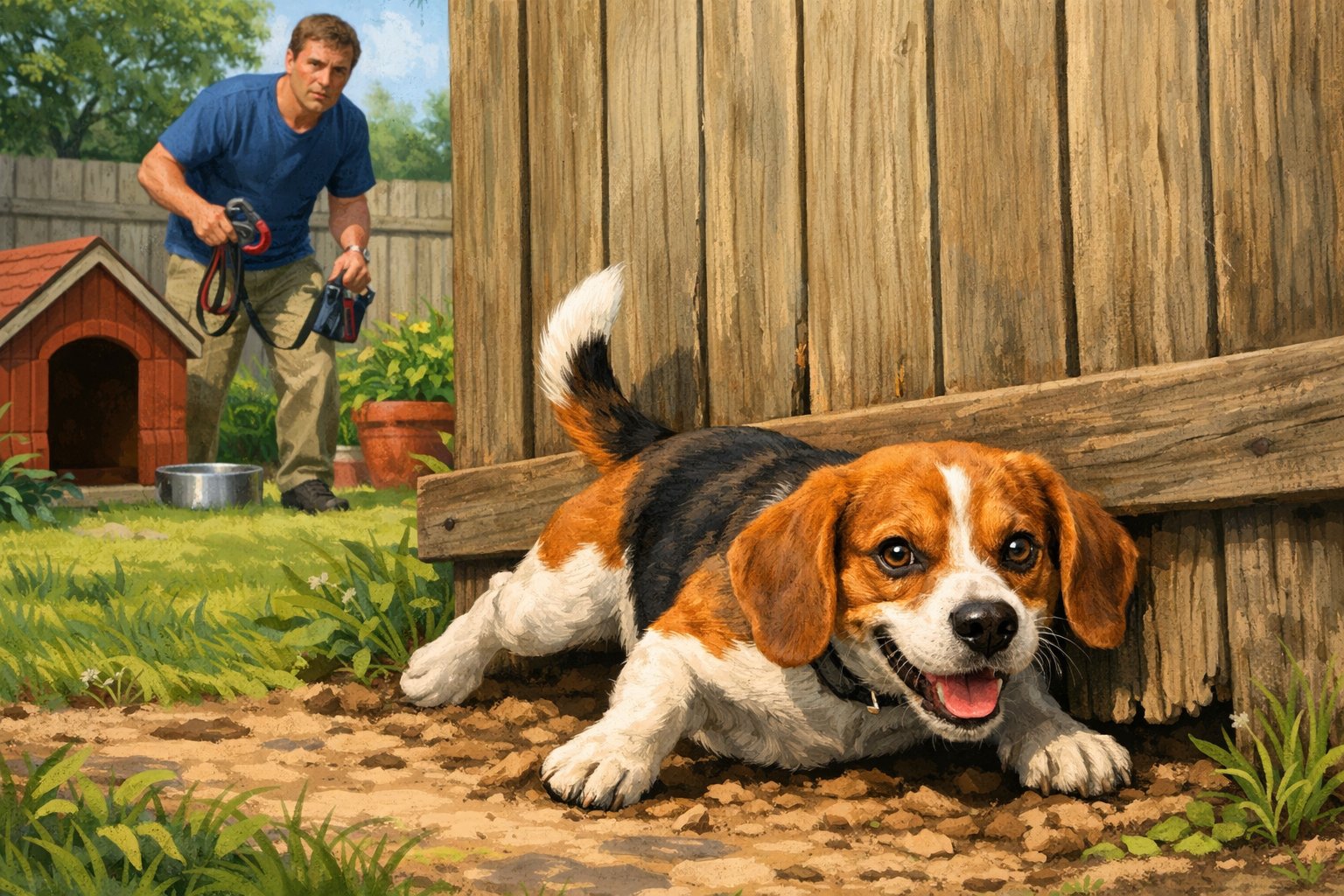
A beagle slipping under a fence to escape a backyard while the owner watches with concern holding a leash.

Beagles often run off because their nose leads the way, their mind seeks action, and their emotions push them to move. Understanding beagle behavior helps explain why beagles run away and what triggers those choices.

Instincts Driving Beagle Escapes

Beagles are scent hounds bred to track animals over long distances. Their powerful nose can pull their body forward before the brain checks for danger.

When a strong smell appears, many beagles run away without warning. This instinct answers a common question: why do beagles run away even from caring homes?

The behavior comes from genetics, not defiance. Once a scent locks in, recall often fails.

Key instinct traits include:

  • Strong prey drive
  • Focus on smell over sound
  • Low awareness of distance

Many owners notice this pattern when learning why beagles run away due to hunting instincts. The trait shows up even in well-trained dogs.

The Role of Curiosity and Exploration

Beagles show deep curiosity about the world around them. New smells, sounds, or movement can spark a sudden need to explore.

This curiosity explains why beagles run away through open doors or gaps in fences. They explore with purpose.

A trail is not random to a beagle. It feels like a clear path that needs following.

This behavior fits within normal beagle behavior, not poor manners. Owners often underestimate how fast curiosity turns into distance.

Articles that explain why beagles are known escape artists point to curiosity as a main driver. Curiosity increases when the environment changes, such as:

  • New animals nearby
  • Fresh outdoor scents
  • Unfamiliar places

Boredom, Anxiety, and Social Needs

Beagles need daily activity and social contact. Without it, boredom builds fast.

A bored beagle looks for stimulation, and escape becomes an option. Anxiety also plays a role.

Loud noises, loneliness, or sudden routine changes can push a beagle to flee. Some beagles run away trying to find comfort or familiarity.

Understanding beagle behavior means watching emotional cues, not just physical ones. Guides that cover common triggers that make beagles run away often stress unmet needs.

Common emotional triggers include:

  • Long periods alone
  • Lack of exercise
  • Stress from noise or change

How to Prevent Your Beagle From Running Away
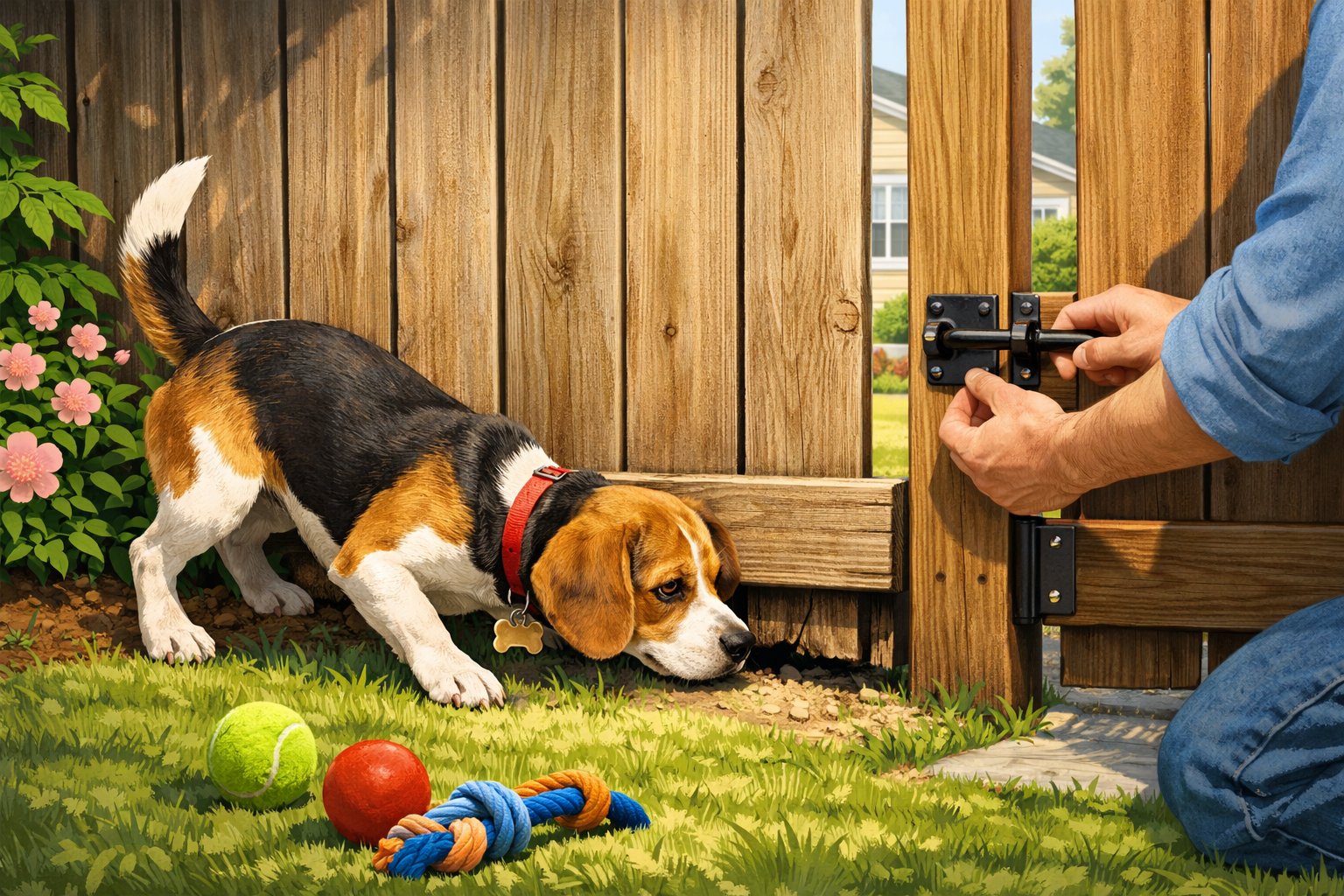
A Beagle near a garden fence with a person securing the gate to prevent the dog from escaping.

Stopping a beagle running away takes planning, daily effort, and clear rules. Owners see the best results when they secure the space, meet the dog’s need for activity, and use positive reinforcement training that builds strong habits.

Securing Your Home and Yard

A secure home blocks the most common escape paths. Beagles run away when they find gaps, loose gates, or low fences that invite exploring.

Key steps that reduce risk:

  • Fences should stand 5–8 feet high and touch the ground with no gaps.
  • Gates need locks or tight latches, not simple hooks.
  • Remove items near fences that a beagle can climb.

Inside the home, doors create another risk. Baby gates help during busy times, and leash control works well near entryways.

Many owners also add ID tags and tracking tools as backups. Guides on preventing beagle runaways with secure environments explain how small fixes can stop repeat escapes.

Engaging and Stimulating Activities

Boredom drives many cases where beagles run away. A tired beagle focuses better and feels less urge to roam.

Daily activity should mix physical movement and mental work. Long walks matter, but sniffing games matter just as much.

Beagles think with their noses. Helpful activity ideas include:

  • Food puzzle toys or stuffed Kongs
  • Hide-and-seek with treats
  • Short training games during the day

Most adult beagles need at least 1–2 hours of activity spread across the day. Owners who meet this need see fewer escape attempts.

Articles that explain why beagles escape due to boredom and instincts show how routine play lowers that risk.

Effective Recall and Positive Reinforcement Training

Training gives owners control when distractions appear. Recall training matters most for stopping a beagle running away once a scent takes over.

Positive reinforcement training works better than punishment. Rewards teach the dog that staying close pays off.

Focus on these core commands:

  • Come
  • Stay
  • Leave it

Training should start on a leash, then move to long lines, and only later to safe off-leash areas. High-value treats help when smells compete for attention.

Clear recall methods from guides on how to train a beagle not to run away show why consistency matters more than speed.

What to Do If Your Beagle Runs Away
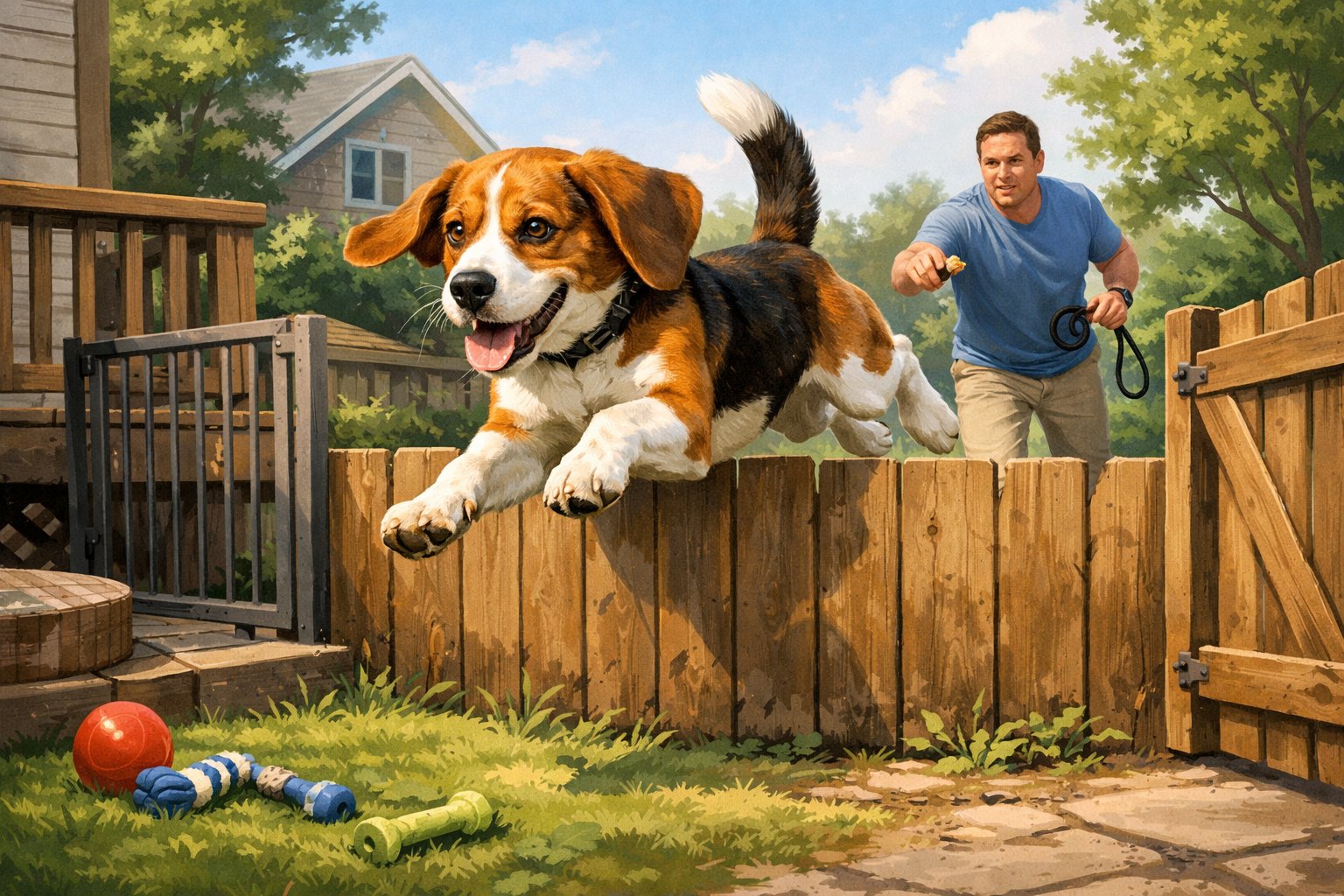
A beagle jumping over a backyard fence while its owner runs after it holding a leash and treat.

Stay calm and act fast. Beagles often stay close to familiar places, so quick steps can make a big difference.

Start by checking the yard, nearby streets, and favorite sniffing spots. Call the beagle’s name in a clear, happy voice, and listen for movement or barking.

Helpful first actions

  • Leave gates open in case the beagle finds the way back
  • Place food, water, or a worn item with the owner’s scent outside
  • Avoid yelling or chasing, which can push the dog farther away

If the beagle does not return, widen the search. Neighbors can help by checking garages, sheds, and fenced yards.

Posting online also helps. Local social media groups and missing pet pages spread the word fast, especially when they include a clear photo and last known location.

Contact nearby shelters and rescue groups right away. Many shelters suggest calling daily, since dogs arrive at different times.

Sites like local animal shelters and rescue groups explain why early contact matters.

When the beagle comes home, greet it with praise and calm affection. Avoid punishment, since fear can make future escapes worse.

If the beagle has a microchip or GPS collar, update contact details and check the device often. Guides on what to do if your beagle runs away stress that preparation helps recovery happen faster.
Filed Under: Border Collies

Best Toys and Games for Beagles Who Get Bored Easily: Top Picks & Tips

February 10, 2026 by Jason Huskey

Top Toy Categories for Bored Beagles

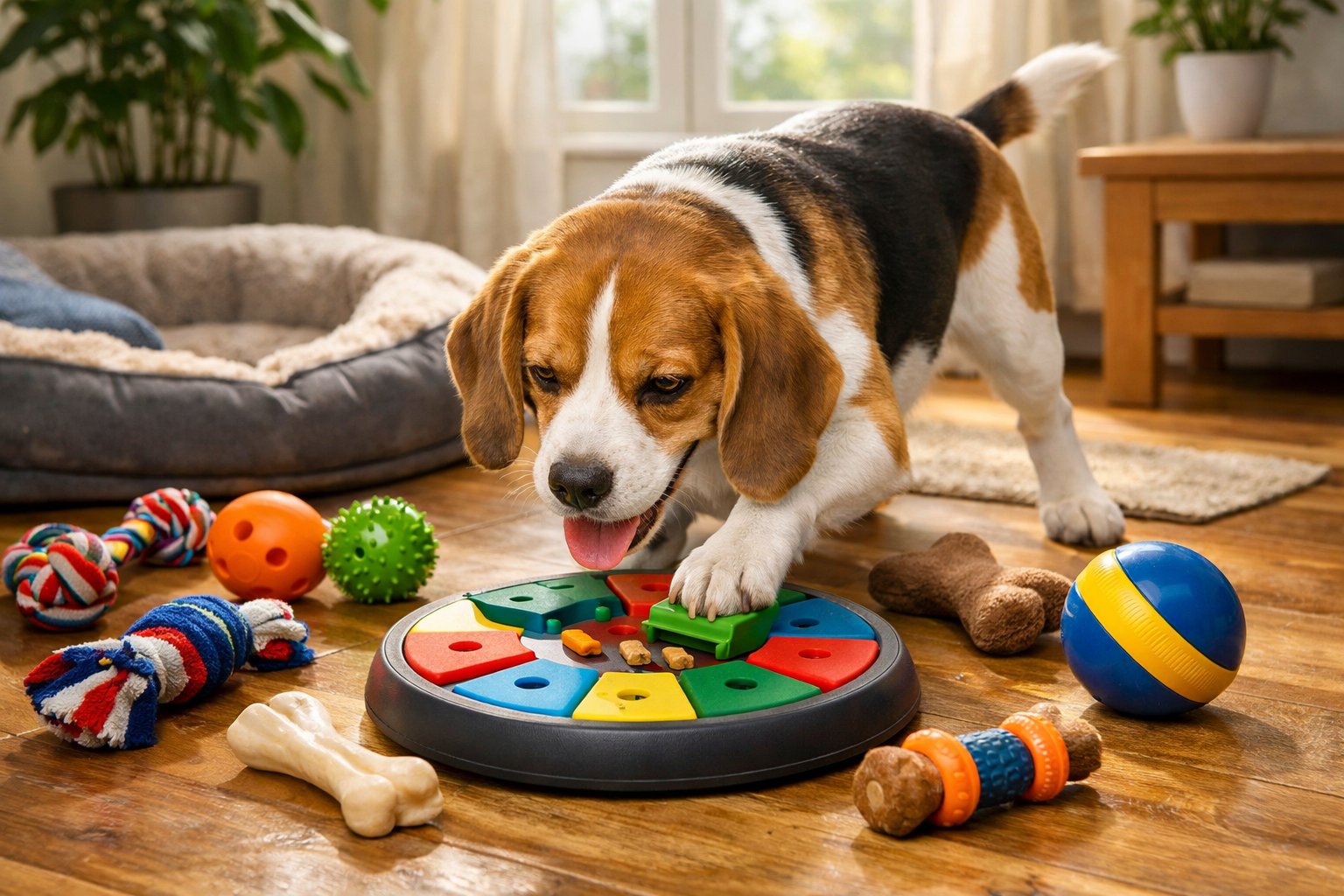
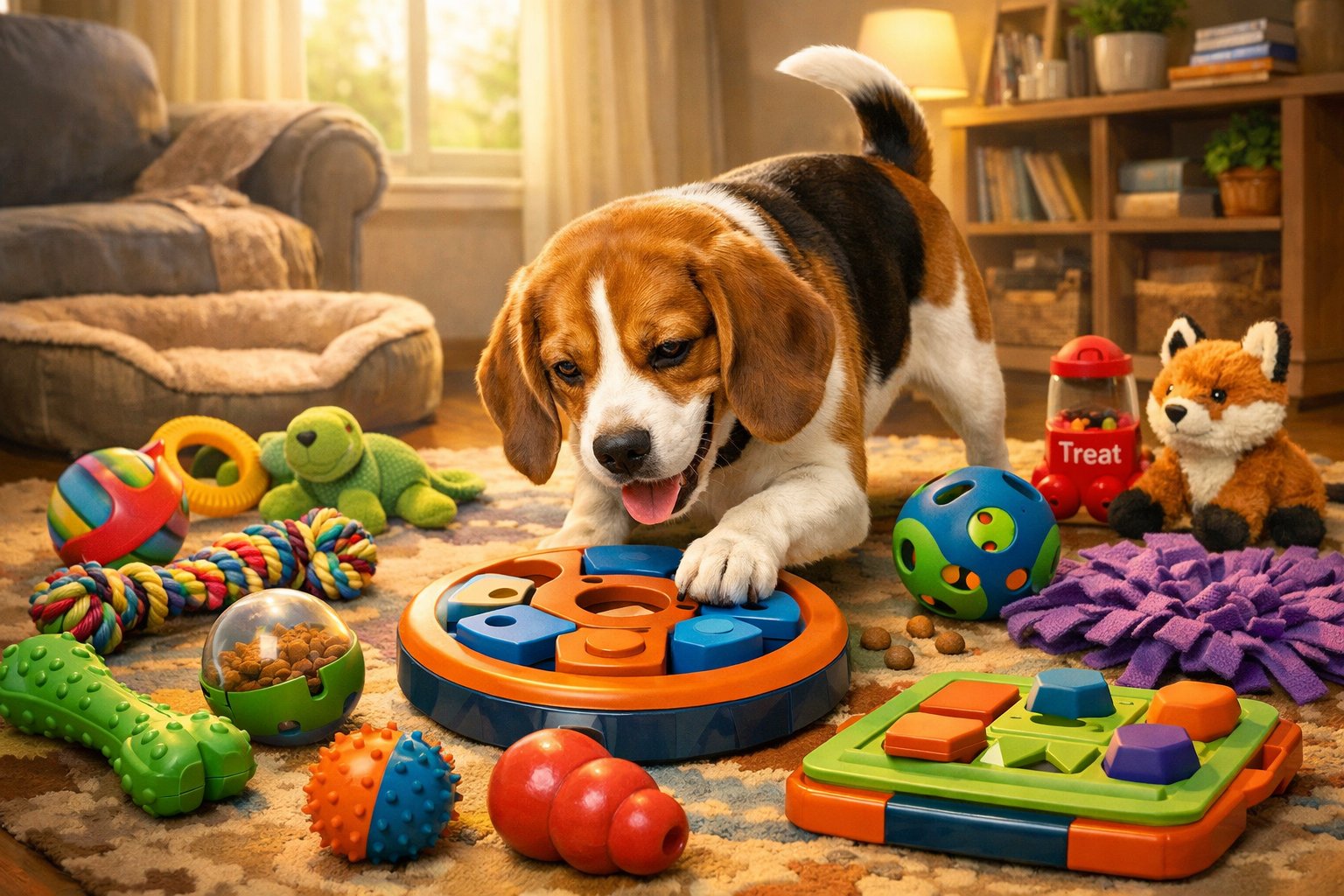
A Beagle dog playing with various toys and games in a cozy indoor play area.

Beagles get bored fast when toys do not match their energy, chewing habits, and strong noses. The right toy type keeps them busy, lowers stress, and reduces destructive behavior.

Interactive Puzzle & Treat-Dispensing Toys

Beagles love to use their nose and brain, so puzzle toys work well for mental exercise. These dog toys for beagles hide treats and force the dog to solve a task before eating.

That effort slows fast eaters and keeps the mind active. Puzzle plush toys that involve searching and pulling pieces out feel like a game.

A good example is hide-and-seek style toys similar to those in the Hide-A-Squirrel style puzzle toys for Beagles. These toys reward patience and focus.

What to look for

  • Multiple treat pockets or hiding spots
  • Clear challenge without being frustrating
  • Soft parts combined with durable seams

Toys for Aggressive Chewers and Durability

Many beagles chew hard, even if they look small. Durable chew toys protect furniture and help satisfy that need.

Rubber and heavy-duty synthetic materials last longer than soft fabric alone. Some of the best toys for beagles in this category use flexible rubber that bends but does not break.

Brands highlighted in guides like durable chew toys made for Beagles focus on safety and strength.

Key durability features

  • Thick rubber or reinforced nylon
  • Smooth edges to protect teeth
  • No small parts that can break off

These toys for aggressive chewers work best when rotated to keep interest high.

Best Plush and Comfort Toys

Not all beagle toys need to be tough. Many beagles bond with soft toys they can carry, nap with, or gently chew.

Plush toys often reduce stress and provide comfort, especially when the dog rests. Classic comfort toys like Multipet Lamb Chop remain popular because they feel familiar and safe.

Reviews of plush toys Beagles love to carry often note how these toys support emotional comfort, not just play.

Best uses for plush toys

  • Supervised indoor play
  • Crate time or quiet evenings
  • Dogs that enjoy carrying toys around

Choose plush toys with reinforced stitching and minimal stuffing.

Toys for Beagle Puppies

Beagle puppies need toys that match growing teeth and short attention spans. Soft chew toys help with teething pain while preventing damage to shoes and furniture.

Guides focused on toys for beagle puppies and young dogs often suggest lighter rubber chews, small plush toys, and beginner puzzle toys.

These options teach healthy play habits early.

Good puppy toy traits

  • Smaller size for easy grip
  • Gentle materials for sore gums
  • Simple designs with light sounds

Early exposure to safe beagle toys builds confidence and reduces boredom as they grow.

Engaging Games and Play Activities

A beagle dog playing with various toys in a bright indoor playroom filled with puzzle toys, balls, and plush toys.

Beagles stay calmer and happier when play meets their need to move, think, and sniff. The activities below focus on simple games that reduce boredom and fit daily routines.

Indoor Games to Beat Boredom

Indoor play helps on busy or rainy days. Interactive dog toys keep a beagle focused without constant help from a person.

Puzzle boards and sliding boxes work well when paired with treat dispensing toys that release food slowly. Short games work best.

Hide-and-seek with treats behind furniture builds patience and focus. Tug games burn energy, but owners should set clear start and stop cues.

Helpful indoor options include:

  • Treat-dispensing toys that roll or wobble
  • Soft fetch games down a hallway
  • Simple training games using sit, stay, and come

Many owners rotate toys every few days to keep interest high. Ideas from indoor and outdoor beagle games show how variety prevents boredom.

Outdoor Activities for Active Beagles

Outdoor games let beagles use their energy in healthy ways. Fetch works best in short bursts, since beagles may lose focus.

A long leash adds safety while allowing room to run. Agility-style games also help.

Low jumps, tunnels, or cones challenge the body and brain. These setups do not need special gear.

Popular outdoor play includes:

  • Fetch with soft balls
  • Backyard agility courses
  • Structured walks with stop-and-go cues

Beagles respond well to clear goals and rewards. Many owners rely on ideas from beagle playtime games and activities to balance fun and control.

Scent and Nose Work Games

Beagles thrive on scent work because smell drives their behavior. Nose games reduce stress and tire them faster than running alone.

Simple scent games also limit unwanted chewing. Owners can hide treats in boxes, towels, or the yard.

Treat-dispensing toys with scent holes extend play time and boost focus. Common nose games include:

  • Find-the-treat searches indoors
  • Scent trails using food or toys
  • Box or cup guessing games

These games match a beagle’s instincts. Many trainers recommend treat-dispensing toys and scent challenges found in brain games for beagles to keep their minds busy.

Choosing and Using the Best Toys for Beagles

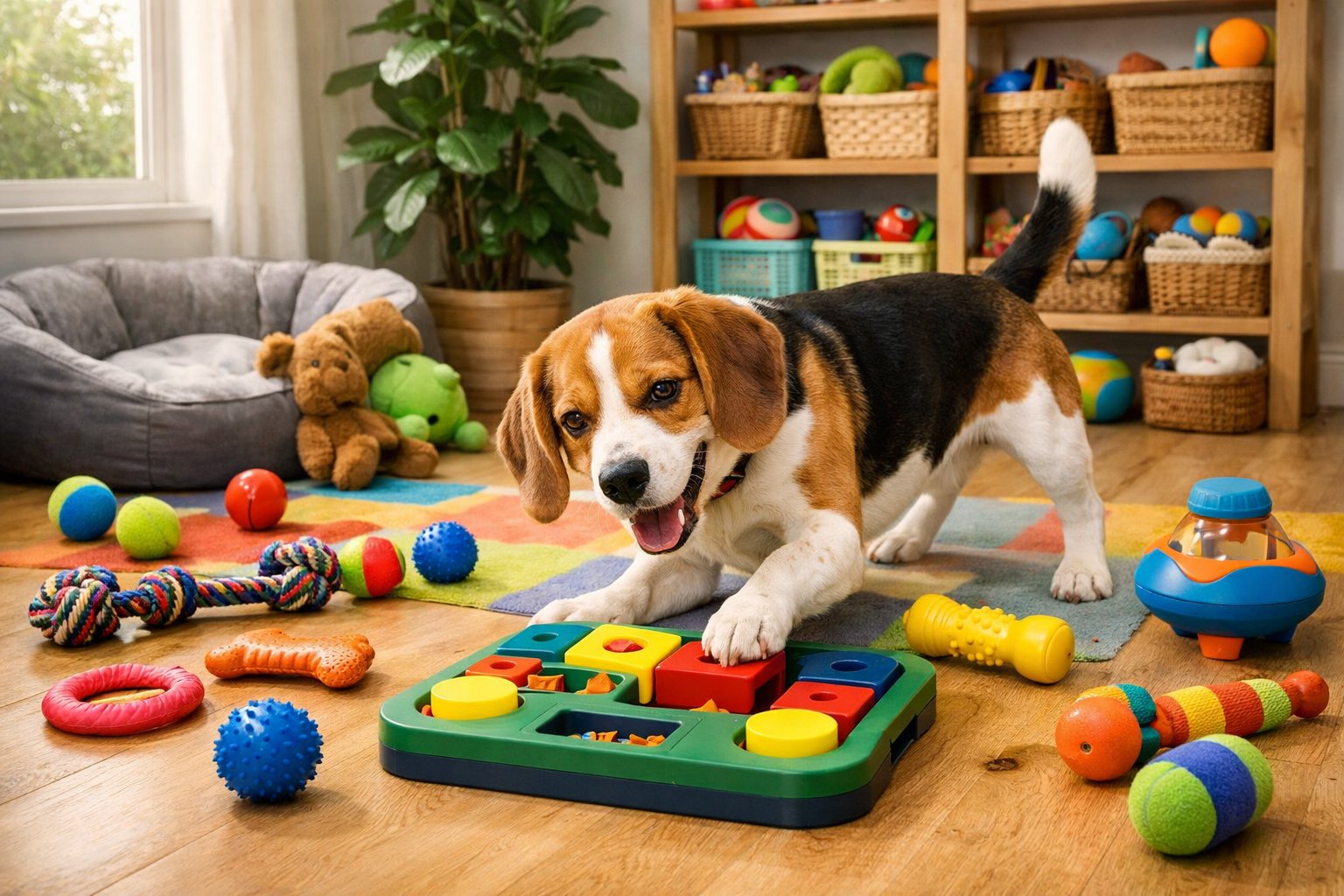
A Beagle dog playing with puzzle toys and surrounded by various dog toys in a cozy living room.

Beagles get bored fast, especially when they lack a clear task. The right toys give them a job to do, protect the home, and help them burn mental and physical energy each day.

What to Look for in a Beagle Toy

A Beagle toy must match the breed’s strong nose, steady energy, and love of chewing. Size matters.

A toy should feel big enough to avoid choking but small enough to carry with ease.

Key features to prioritize:

  • Durable materials like rubber or nylon for daily chewing
  • Food or scent play to support natural sniffing behavior
  • Mental challenge through puzzles or treat release
  • Easy cleaning since Beagles use their mouths and noses often

Many owners look for puzzle feeders such as the PetSafe Busy Buddy. These toys keep dogs working for treats and slow down fast eaters.

Breed guides often note that Beagles respond best to toys that reward effort, not just noise or motion, as seen in reviews of best dog toys for Beagles.

Top Picks: Best Dog Toys for Beagles

Beagles do best with a mix of toy types. Each type serves a clear purpose during the day and prevents boredom from setting in.

Toy Type Why It Works for Beagles
Puzzle toys Keep the nose and brain busy
Rubber chew toys Handle steady chewing
Indoor fetch balls Burn energy in small spaces
Plush toys Offer comfort during rest

Many roundups of the best dog toys for Beagles highlight puzzle toys, crinkle toys, and soft fetch balls. The PetSafe Busy Buddy line often stands out for treat play that lasts longer than basic chew toys.

Safety and Rotation Tips

Supervision matters, especially with new toys. Beagles test toys with strong jaws and quick focus, which can expose weak seams fast.

Owners should:

  • Remove toys with torn fabric or loose parts
  • Match toy strength to the dog’s chewing style
  • Wash toys weekly to reduce germs

Toy rotation keeps interest high. Swapping toys every few days makes old items feel new again.

Filed Under: Border Collies

Beagle Recall Training: Teaching Your Dog to Come Back Every Time

February 10, 2026 by Jason Huskey

Training Beagle Recall—Building a Dependable Come Command

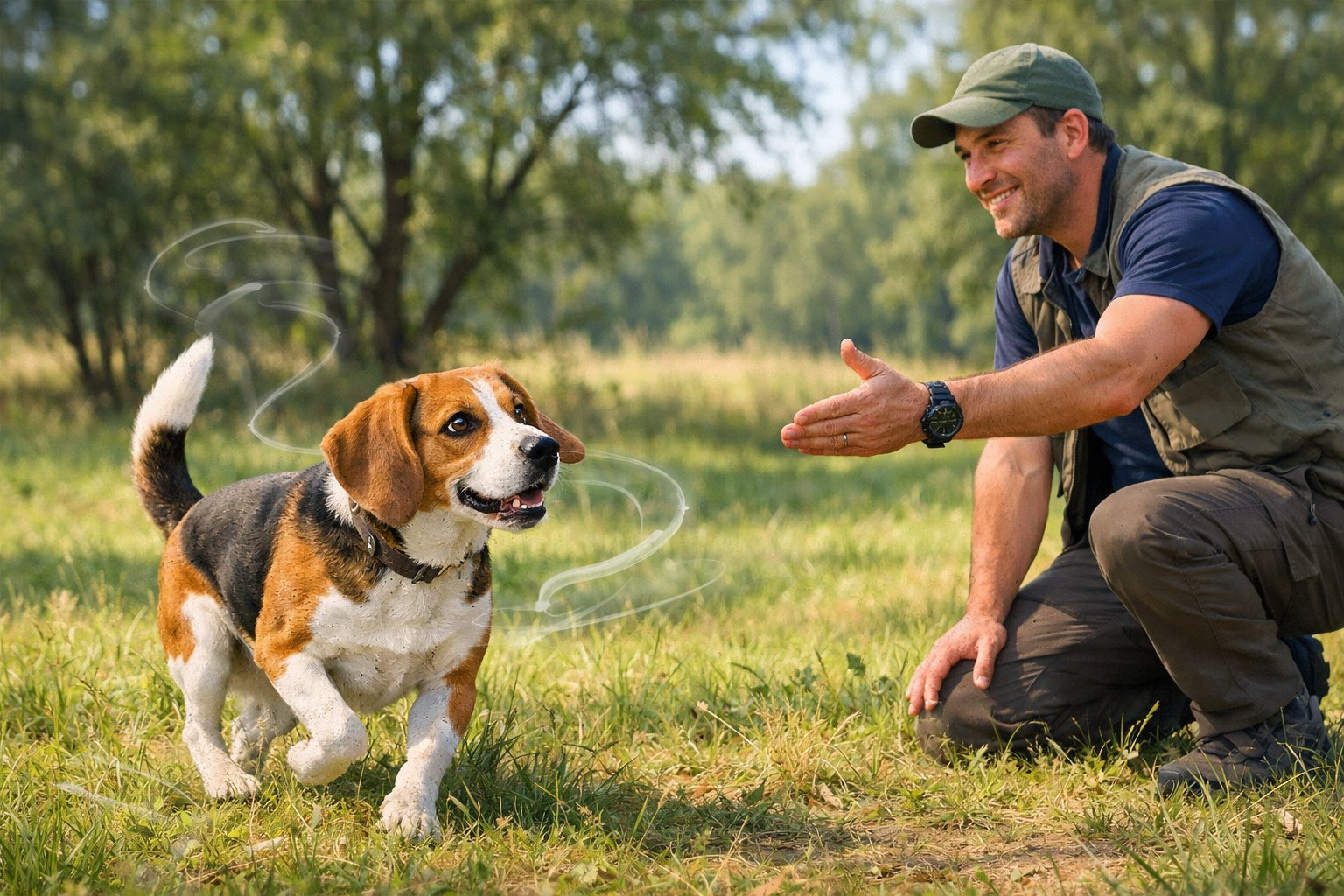
A beagle dog turning to come back to its owner in a grassy outdoor area, with the owner kneeling and reaching out to the dog.

Beagles follow their noses, so recall training must work with natural dog behavior, not against it. Clear cues, strong rewards, and controlled practice help the dog choose the handler over a scent.

Choosing the Right Recall Cue

A recall cue must sound clear and stay special. Short words like “come” or “here” work best because they cut through noise.

The handler should pick one cue and never change it. They should avoid using the cue when the Beagle will likely ignore it.

Repeated failures weaken the word and teach the dog to tune it out. This matters with scent hounds, since smell often overrides hearing.

Many trainers suggest pairing the cue with a happy tone and open body language. Calm posture helps, but energy matters more.

Guides on how to train a Beagle to come when called stress consistency to shape reliable response patterns.

Making Recall Rewarding and Fun

Rewards drive recall success. Beagles respond well to food, play, and praise, especially when distractions rise.

The reward should appear every time the dog returns during early training. High‑value treats matter more than regular kibble.

Soft, smelly foods often beat dry snacks. Fun games also help reset focus after following a scent.

Effective recall rewards

Situation Best reward
Low distraction Praise + small treat
New environment High‑value food
Strong scent nearby Favorite toy or jackpot treat

Positive methods outlined in Beagle recall training tips show that rewards build trust and reduce avoidance. Punishment after recall often causes slower returns or refusal.

Practicing Recall in Controlled Environments

Controlled practice builds habits before real tests. Trainers often start indoors or in a fenced yard with few smells.

This lowers stress and supports learning. A long line adds safety while giving the dog room to move.

The handler can guide the dog back without chasing, which often triggers playful avoidance. Gradual distractions matter.

First add mild smells, then movement, and later outdoor spaces. Step‑by‑step methods described in training recall for Beagles in stages match how dogs process new challenges.

Short sessions work best. Frequent success strengthens recall behavior and keeps training positive.

Overcoming Challenges—Recalling Beagles on a Scent Trail

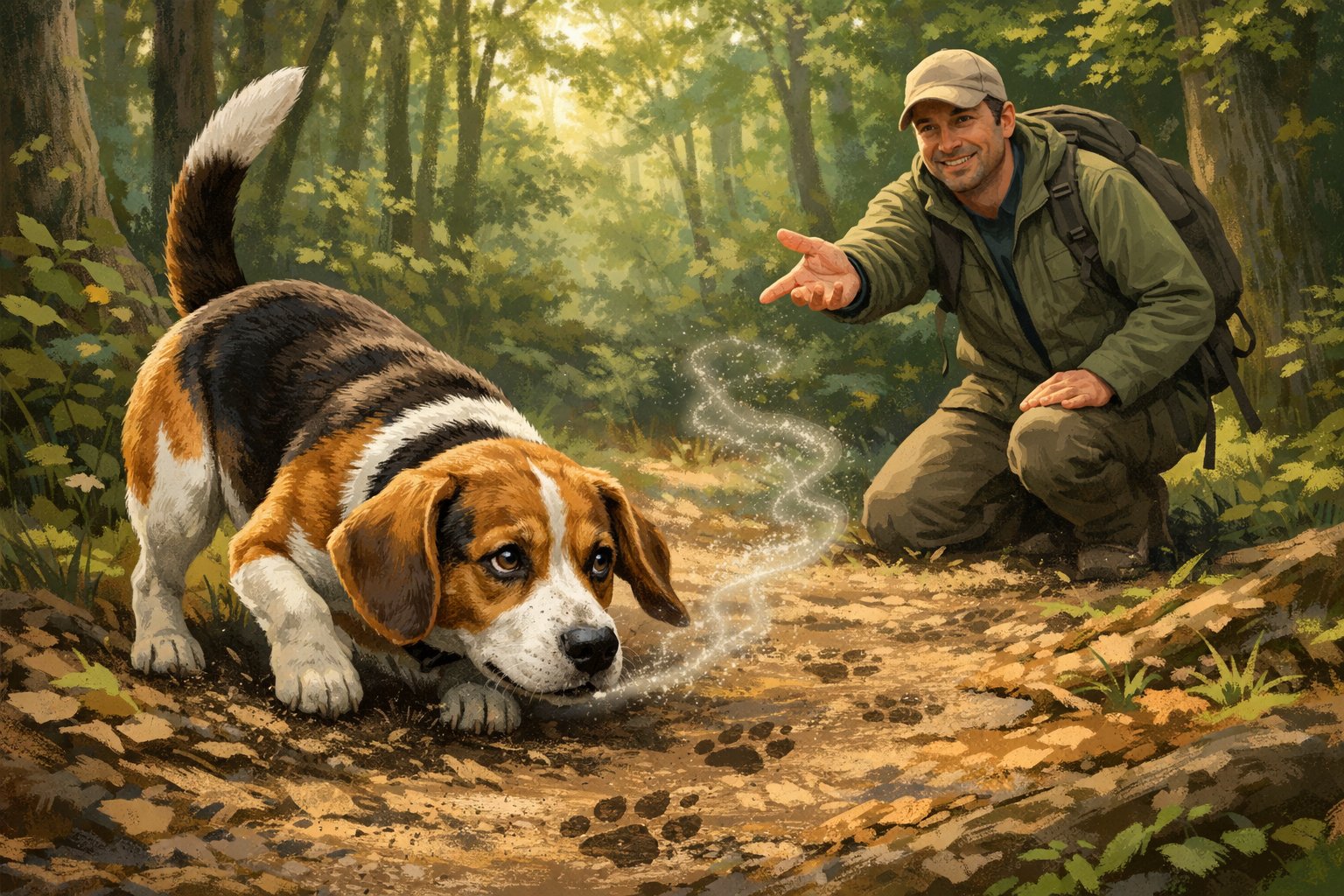
A Beagle dog turning back toward its owner in a forest while following a scent trail.

Beagles follow their noses by instinct, not stubbornness. Recall problems often come from normal dog behavior tied to scent work.

Trainers can improve results by adding distractions with care, managing scent-driven choices, and using tools that allow safe practice.

Introducing Real-World Distractions

Beagles struggle most with recall when training moves outside. New smells, sounds, and movement compete with the handler’s voice.

Trainers should start in low-distraction areas, such as a quiet yard or empty park. They can then add one new distraction at a time, like another person walking by or light wildlife scent.

A step-by-step approach like the one outlined in this beagle recall training guide helps dogs succeed before pressure builds.

Helpful progression examples:

  • Empty field
  • Field with light scents
  • Field near trails or brush

Short sessions work best. Ending practice early prevents frustration and protects recall confidence.

Handling Scent-Based Disobedience

When a Beagle ignores recall on a scent trail, it reflects genetics, not defiance. Scent hounds prioritize smell over sound once tracking begins.

Handlers should avoid repeating the recall cue. Repetition teaches the dog that the cue has no urgency.

Instead, trainers can reward voluntary check-ins and fast returns. High-value food works best when competing with scent.

Many trainers also blend recall with nose work, as shown in this scent-friendly recall approach for Beagles.

Effective rewards include:

  • Soft meat treats
  • Cheese in small pieces
  • Short play sessions

Using Long Leashes and Gradual Progression

Long leashes allow freedom without risk. They give Beagles space to explore while keeping recall enforceable.

A leash length of 15–30 feet works well for early outdoor training. The handler can step on the line if the dog ignores the cue.

This setup prevents self-reward from running off. It also builds a habit of returning, even with scent present.

Guidance like this step-by-step recall method for Beagles stresses slow progress over quick wins.

Key leash rules:

  • Never jerk the leash
  • Keep tension low
  • Praise every return

As reliability improves, trainers can shorten the line before going fully off-leash.

Filed Under: Border Collies

Living With a Beagle in an Apartment: Is It Possible? Practical Tips

February 10, 2026 by Jason Huskey

Can Beagles Thrive in Apartments?

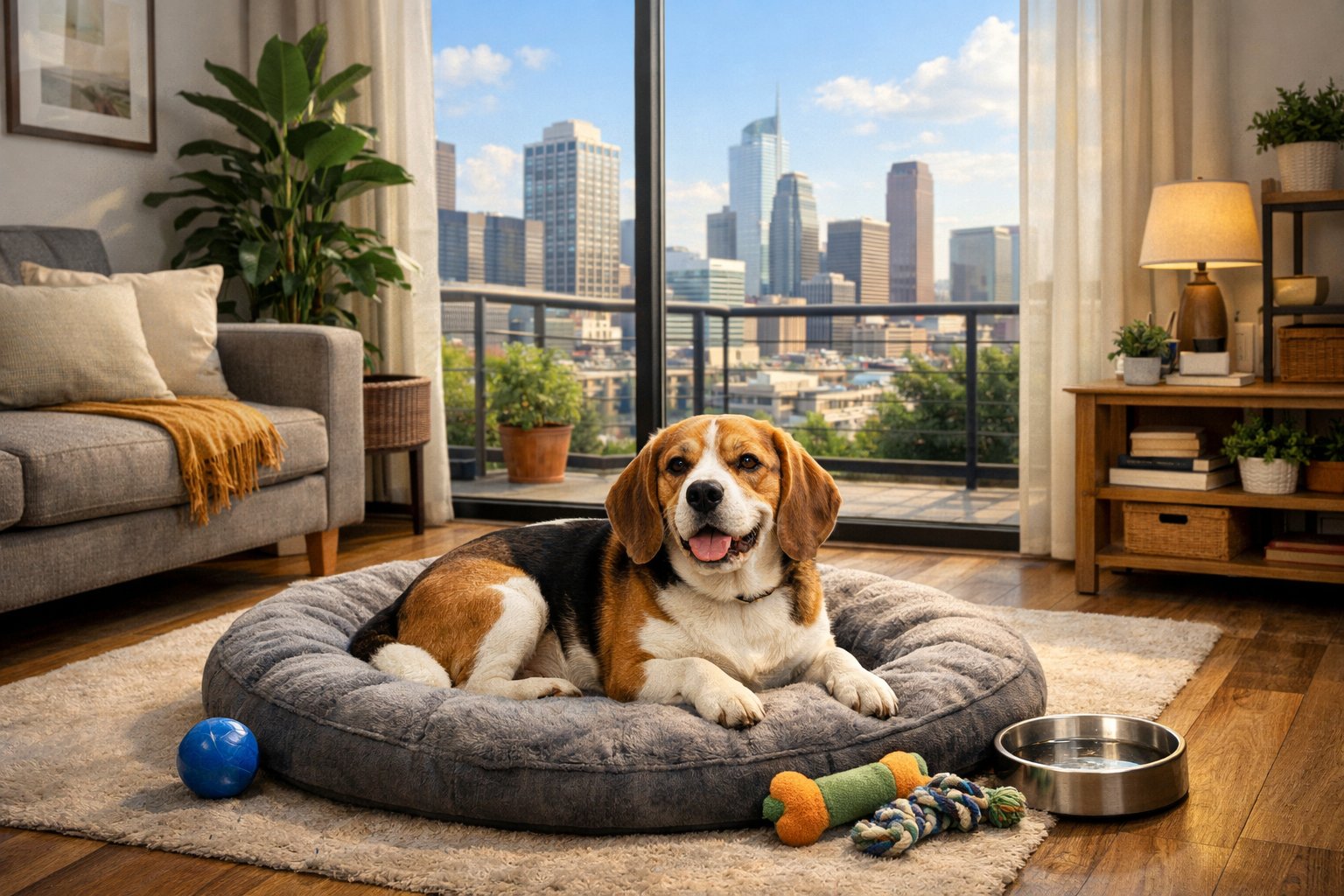
A Beagle resting comfortably on a dog bed inside a bright apartment living room with furniture and plants, with a city view outside the window.

Beagles can adapt well to apartment living when owners manage space, daily routines, and behavior indoors. Size, layout, and temperament matter more than total square footage.

Beagle Size and Space Needs

A beagle is a small to medium dog that usually weighs 20–30 pounds and stands about 13–15 inches tall. This size makes apartment living possible, even in smaller units.

The dog does not need large open rooms, but it does need clear areas to move, rest, and play. Daily exercise matters more than floor space.

Many experts note that beagles in apartments stay healthier with 60–90 minutes of activity per day, split between walks and play. According to guides on can Beagles live in apartments, owners who meet exercise needs see fewer behavior problems.

A small apartment works best when the beagle has a set spot for sleeping, eating, and calm time. This structure helps the dog feel secure indoors.

Apartment Layout Tips for Beagles

Smart layout choices make living with a beagle easier. Clear walking paths reduce stress and prevent indoor accidents.

Owners should keep food, shoes, and trash behind closed doors to limit chewing. Helpful layout tips include:

  • Place dog beds in quiet corners away from doors
  • Use baby gates to block unsafe areas
  • Store toys in bins to reduce clutter
  • Secure balconies for supervised sniff time only

Some apartment beagle owners use low shelves or window views to give the dog visual interest. Articles like Is a Beagle Right for Apartment Living? stress that boredom causes more problems than limited space.

Simple changes support calm apartment living and protect shared spaces.

Beagle Temperament and Behavior Indoors

Beagles are social, curious, and driven by scent. Indoors, this means they often follow smells, watch doors, and stay close to people.

They usually handle apartment living well when they get enough attention and routine. Noise control matters.

Beagles can bark or bay when bored or anxious. Training the “quiet” command and keeping a steady schedule helps.

Many guides on beagles in apartments link barking to unmet exercise or mental needs.

Mental stimulation reduces indoor issues. Puzzle toys, short training sessions, and scent games keep the dog busy.

A calm, predictable home supports better behavior during apartment living.

Making Apartment Life Work for Your Beagle

A Beagle resting on a dog bed in a cozy apartment living room while a person interacts with it near a window with city buildings outside.

Keeping a beagle in an apartment works best when owners plan for exercise, mental work, noise control, and daily routines. Small, steady habits help meet a beagle’s needs while respecting shared living spaces.

Daily Exercise and Energy Outlets

Beagles need daily movement to stay calm indoors. Most do best with 1–2 hours of activity, split into morning and evening sessions.

Walks should include time to sniff, not just fast pacing. Short play sessions help between walks.

Tug toys, fetch in a hallway, or stair walking can burn energy without much space. Consistency matters more than intensity when raising a beagle in an apartment.

Helpful exercise options

  • Leash walks with sniff breaks
  • Secure dog park visits
  • Indoor fetch or tug
  • Basic obedience drills

Many owners succeed by following advice from guides on beagle apartment exercise needs.

Mental Stimulation and Scent Games

A bored beagle finds trouble fast. Mental work tires them as much as walking.

Scent games work especially well because beagles follow their nose. Simple games fit small spaces.

Owners can hide treats under cups or inside towels. Puzzle feeders also slow eating and add focus.

Rotating toys every few days keeps interest high.

Easy scent games for apartments

Game How it works
Treat hunt Hide treats around one room
Snuffle mat Scatter kibble in fabric
Box search Hide food in cardboard boxes

Ideas like these appear in apartment beagle enrichment tips.

Managing Baying and Reducing Barking

Baying poses the biggest challenge when keeping a beagle in an apartment. Training must start early and stay consistent.

Owners should reward quiet behavior instead of reacting to noise. Positive reinforcement training works better than punishment.

Teaching a “quiet” cue and rewarding calm moments helps reduce barking over time. Exercise and mental games also lower noise by easing frustration.

Common barking triggers include hallway sounds and outside smells. Covering windows and using white noise can help.

Practical steps from managing beagle barking in apartments support these methods.

Building a Healthy Routine and Preventing Separation Anxiety

Beagles bond closely with people. Without structure, they may panic when left alone.

A predictable schedule lowers stress and helps prevent separation anxiety.

Owners should practice short departures and returns. Calm exits teach the dog that leaving is normal.

Interactive toys given only during alone time build positive associations.

Daily routine basics

  • Same walk times each day
  • Feeding after exercise
  • Quiet time after activity
  • Gradual alone-time training

Many apartment owners rely on advice from beagle apartment living routines to keep dogs settled and secure.

Filed Under: Border Collies

Do Beagles Shed? Grooming Tips for Easy Coat Care

February 10, 2026 by Jason Huskey

Do Beagles Shed? Understanding Hair Loss and Coat Type

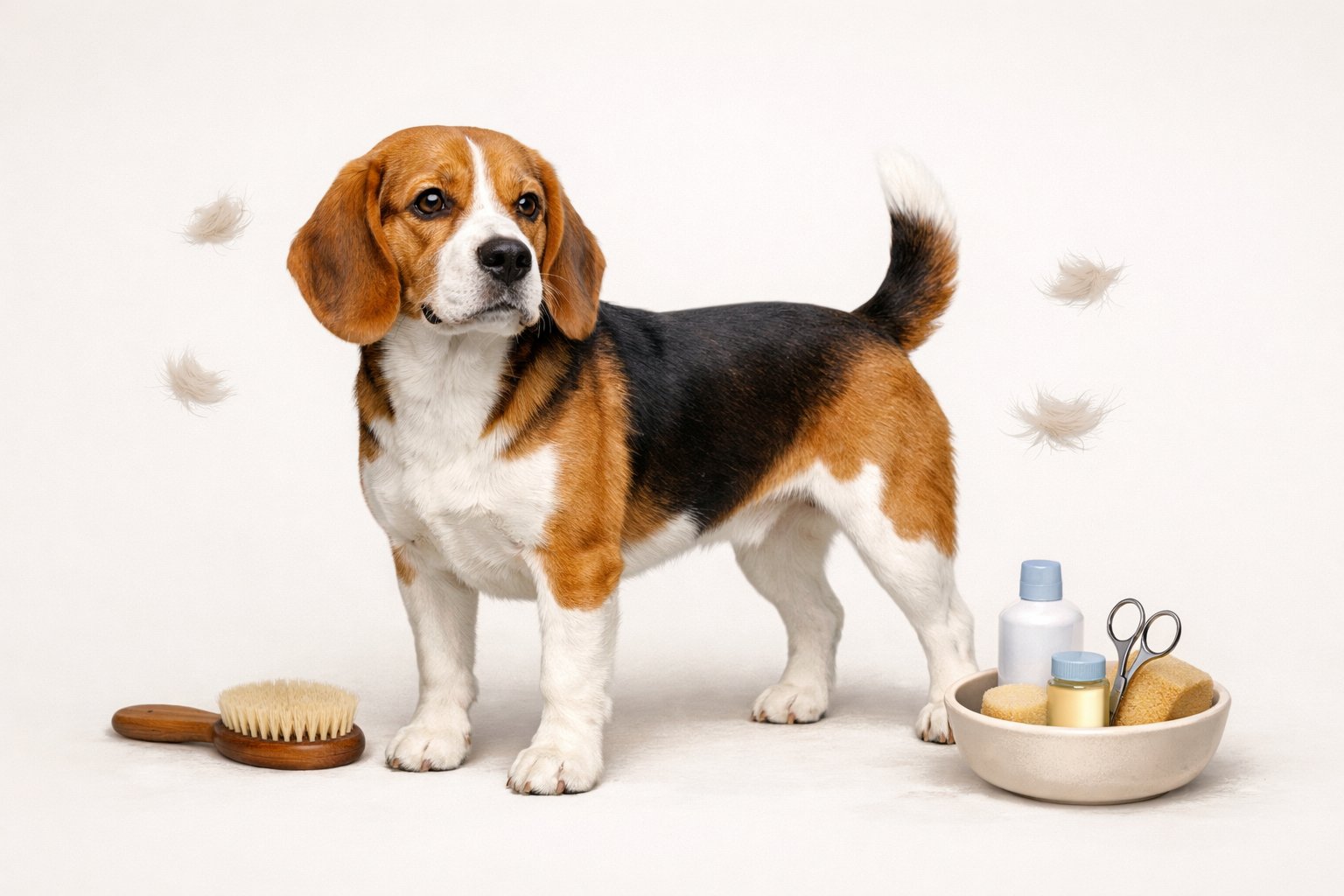
An adult Beagle dog standing calmly with a grooming brush and loose hair nearby, illustrating shedding and coat care.

Beagles shed year-round, with heavier hair loss at certain times of the year. Their coat type and natural growth cycle explain why shedding happens and how much hair owners can expect to see.

Shedding Patterns and Seasonal Changes

Yes, do Beagles shed—and they shed often. Most of the year, beagle shedding stays moderate and steady.

Hair falls out as part of a normal growth cycle, not because of poor health. Shedding increases during spring and fall.

These seasonal shedding periods help the dog adjust to temperature changes. Many owners notice more loose hair on furniture and clothing during these months.

Common shedding patterns include:

  • Light, daily hair loss all year
  • Heavy shedding in spring and fall
  • Short hairs that stick to fabric

Regular brushing helps manage this cycle. Brushing more during peak seasons removes loose hair before it spreads around the home, as explained in this guide on how much Beagles shed during seasonal changes.

Double Coat Structure and Beagle Coat Specifics

The beagle coat has a double coat, which plays a big role in shedding. The topcoat feels short and firm.

It protects the skin from dirt and weather. The undercoat stays soft and dense.

It helps control body temperature. When seasons change, this undercoat sheds in larger amounts.

Key double coat traits include:

Coat Layer Purpose Shedding Impact
Topcoat Protection Light, steady
Undercoat Insulation Heavy, seasonal

Because of this structure, Beagles release more hair than single-coat breeds. A short coat does not mean low shedding.

Vets note that Beagles shed all year, with strong increases in spring and fall, as outlined in this vet-reviewed guide to Beagle coat shedding.

Best Grooming Tips for Beagle Shedding

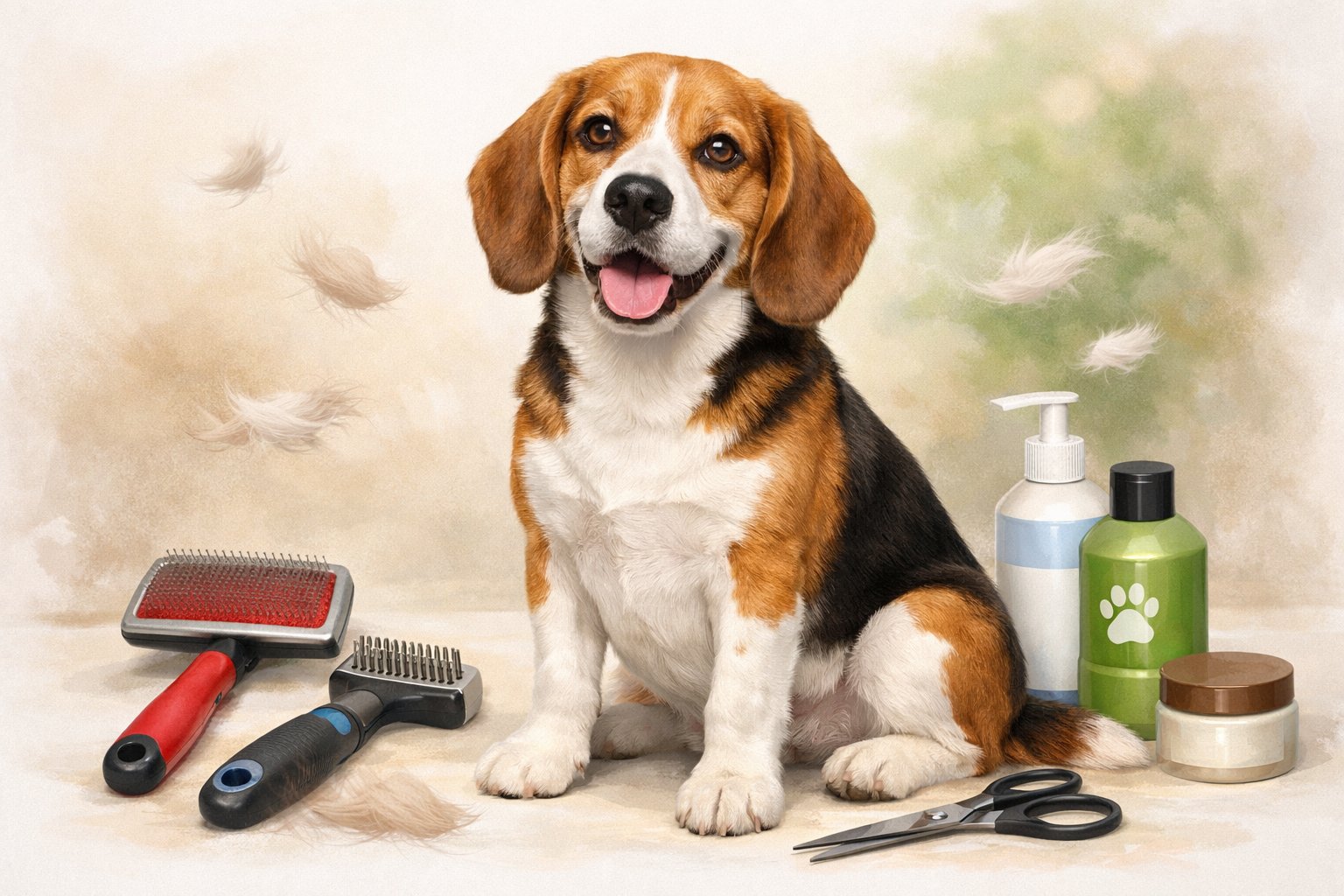
A happy Beagle dog sitting calmly with grooming tools like brushes and shampoo around it, showing a scene of coat care and shedding management.

Good grooming habits reduce loose hair and keep a Beagle’s coat healthy. The right brushing method, proper bathing, and simple tools make shedding easier to manage at home.

Brushing Techniques and Tools

Regular brushing removes loose hair before it spreads around the house. Most Beagles do well with brushing at least once a week, and more often during seasonal shedding.

A medium-bristle brush works well for routine care. It reaches the short coat without scraping the skin.

A slicker brush helps during heavy shedding, but they should use light pressure to avoid irritation.
Helpful brushing tips:

  • Brush in the direction of hair growth
  • Use short, gentle strokes
  • Brush outdoors to keep hair inside the home down

Consistent brushing supports healthy Beagle grooming and keeps shedding under control.

Bathing and Dog Shampoo Recommendations

Bathing loosens dead hair and keeps the coat clean, but too many baths dry out the skin. Most Beagles only need a bath every 4 to 6 weeks, unless they get very dirty.

They should always use a dog shampoo, not human shampoo. Dog formulas protect the natural oils that keep skin healthy.

When choosing a dog shampoo, look for:

  • Mild, soap-free formulas
  • Ingredients for sensitive skin
  • No strong fragrances

Rinse the coat fully. Leftover shampoo can cause itching and extra shedding.

Choosing the Right Grooming Mitt and De-Shedding Tools

A rubber grooming mitt works well for daily hair removal. It pulls loose hair while giving a light massage, which many Beagles enjoy.

Owners often use it during quick touch-ups or bath time. A de-shedding tool removes deeper loose hair from the undercoat.

These tools help most during seasonal shedding, but they should not be used every day. Overuse can thin the coat.

This overview of tools for managing Beagle shedding highlights how each tool serves a different purpose.

Tool Best Use Frequency
Rubber grooming mitt Daily loose hair Several times a week
De-shedding tool Heavy shedding 1–2 times weekly
Medium-bristle brush Routine grooming Weekly or more

Maintaining a Healthy Coat and Managing Loose Fur

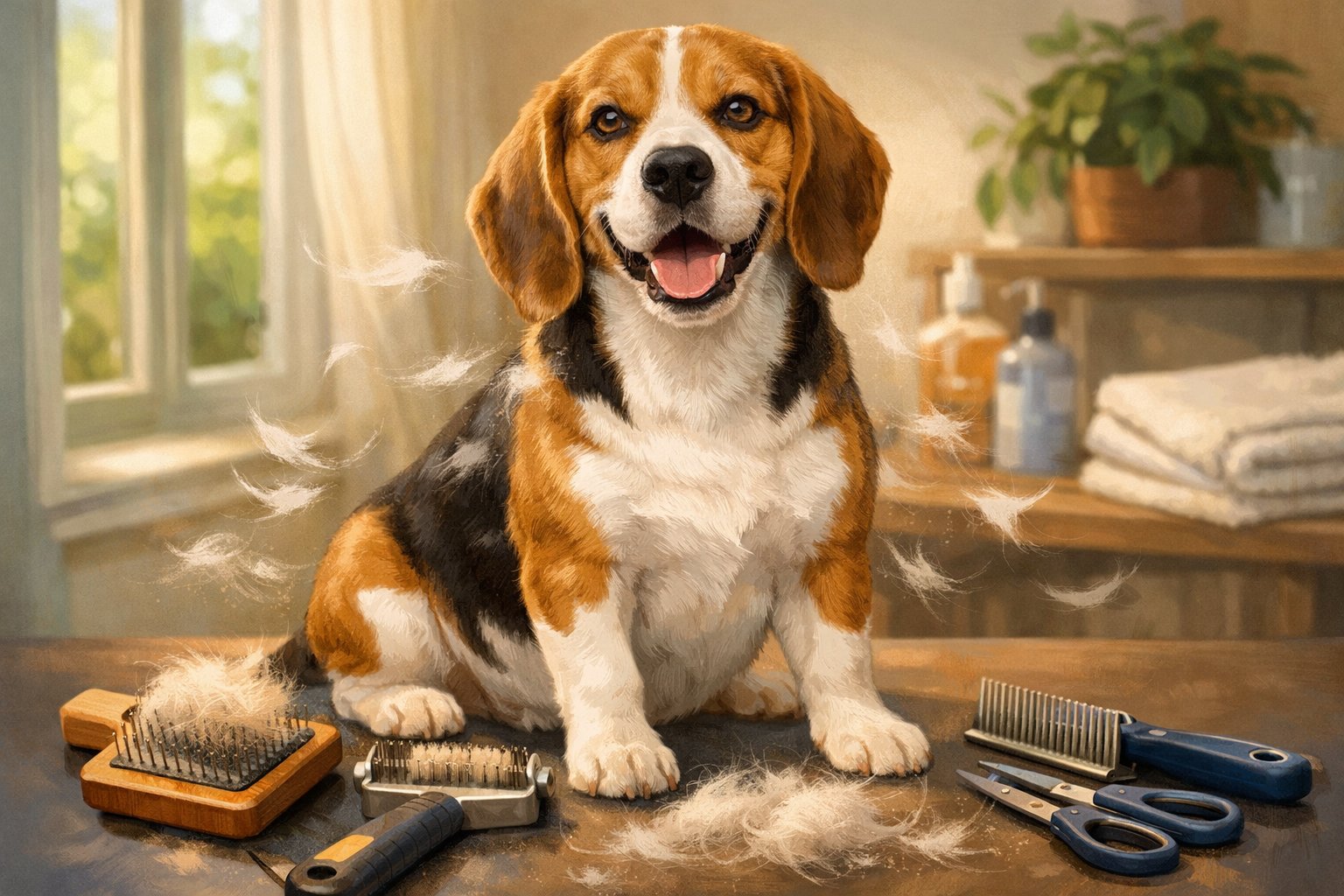
A Beagle dog sitting calmly with grooming tools nearby, showing a clean and well-maintained coat.

A Beagle’s coat stays in better shape with the right food and simple habits at home. Diet affects skin and hair quality, while small cleaning tools help control loose fur between grooming sessions.

Nutrition for Coat Health

Good beagle coat care starts with food. A Beagle needs a balanced diet with enough protein to support hair growth and skin repair.

Low-quality food often leads to dull fur and more shedding. Healthy fats matter most.

Omega-3 and omega-6 fatty acids help reduce dry skin and flaky coats. Many dog foods include fish oil or flaxseed for this reason.

Fresh water also matters because dehydration can cause brittle hair. Some owners notice better coat shine after switching to a food made for skin and coat health.

This approach aligns with guidance from articles on skin and coat care for Beagles.

Key diet tips:

  • Choose food with named meat as the first ingredient
  • Look for added fatty acids
  • Avoid frequent food changes

### House Cleaning and Lint Roller Tips

Even with good grooming, Beagles drop hair year-round.

Regular cleaning keeps loose fur under control and reduces buildup on furniture and clothes.

Vacuum high-use areas two to three times a week.

Focus on dog beds, couches, and corners where hair collects.

Wash dog bedding weekly to prevent fur from spreading back into the home.

A lint roller offers a fast fix for clothing, car seats, and fabric furniture.

Keep one near the door or in the car.

Helpful tools to keep nearby:

  • Sticky lint rollers
  • Rubber pet hair brushes
  • Washable furniture covers

Filed Under: Border Collies

Beagle Feeding Guide: How Much and How Often to Feed Every Age

February 10, 2026 by Jason Huskey

How Much and How Often to Feed Your Beagle

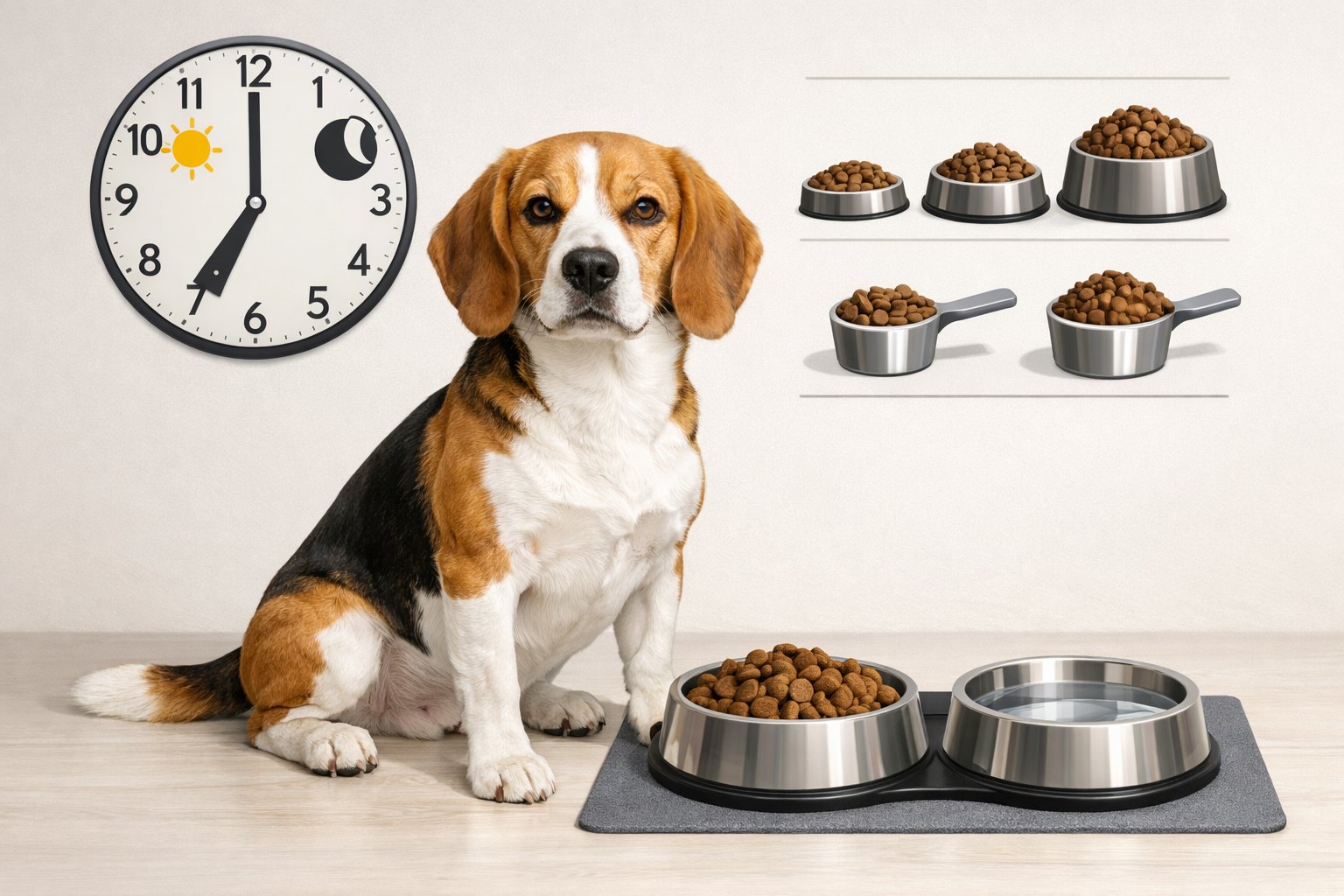
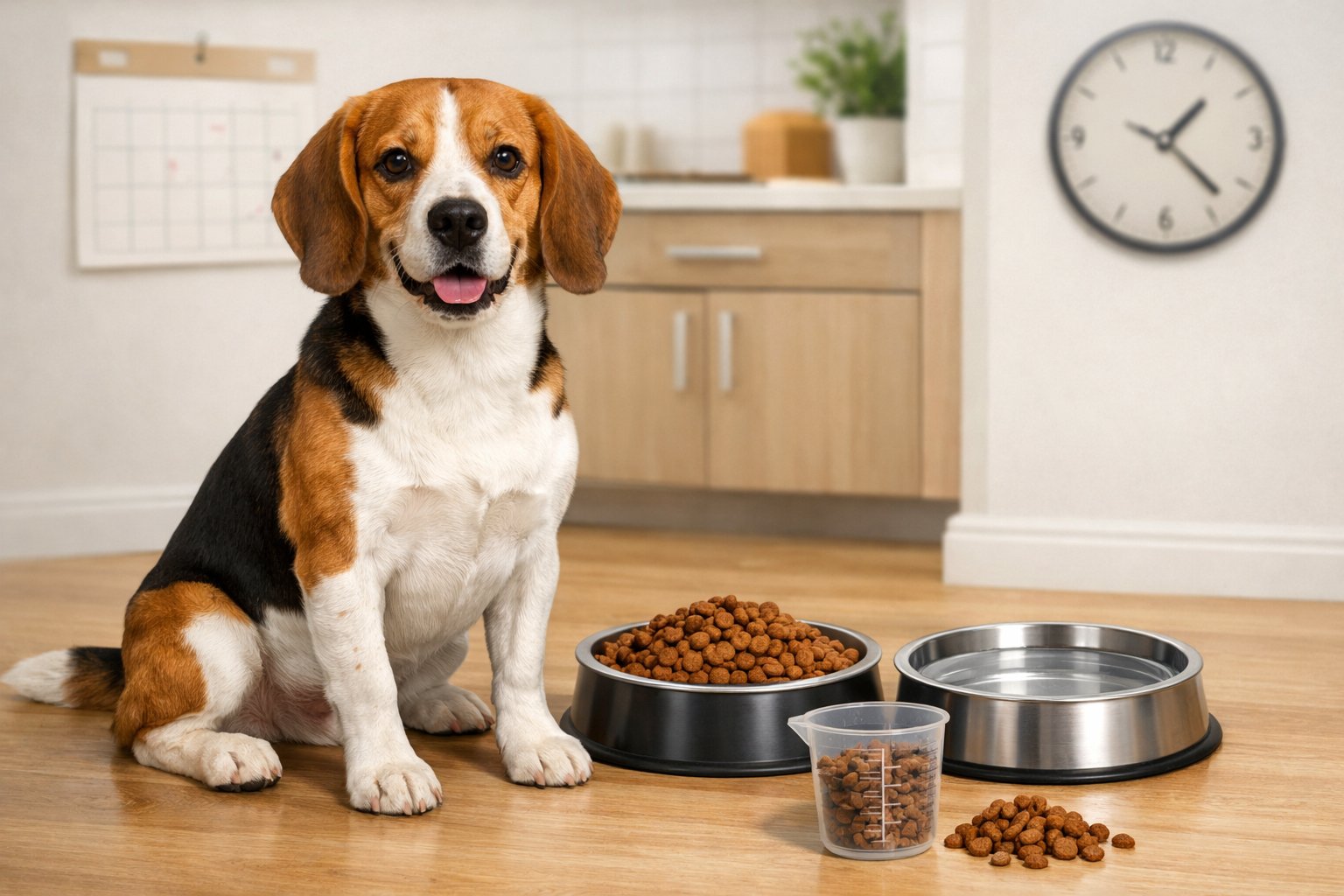
A Beagle dog sitting next to a food bowl and water bowl, with a clock and portion size indicators nearby.

Beagles need the right portion size and a steady feeding routine to stay healthy. Age, weight, and activity level affect how much food they need and how often they should eat.

Beagle Feeding Chart by Age

A beagle feeding chart helps owners adjust portions as the dog grows. Puppies need more food for growth, while adults need steady portions to avoid weight gain.

Seniors need fewer calories but balanced nutrition.

Beagle Age Daily Meals General Portion Guidance
Under 2 months Free-fed Small amounts available all day
2–5 months 4 meals Puppy food split into small meals
5–12 months 3 meals Gradually increase portion size
1–7 years 2 meals Measured adult food portions
7+ years 2 meals Smaller portions, lower calories

This chart gives a starting point. Owners should adjust based on body condition and vet advice.

Feeding Frequency and Schedules

Feeding beagles on a set schedule helps control weight and digestion. Free feeding works only for very young puppies.

Older beagles tend to overeat if food stays out all day. Most adult beagles do best with two meals per day.

Morning and evening feedings help keep energy levels steady. Puppies need more frequent meals because their stomachs are small.

A consistent schedule also supports house training. Regular meal times lead to more predictable bathroom habits.

Treats should stay limited and count as part of daily food intake.

Puppy, Adult, and Senior Beagle Feeding Amounts

How much to feed a beagle depends on age and life stage. Puppies need more calories per pound than adults.

A growing puppy may eat about ⅔ to 1¾ cups per day, split into several meals, based on size and food type. This aligns with common puppy feeding chart ranges found in guides like beagle puppy feeding recommendations.

Adult beagle feeding usually falls between 1 to 1.5 cups per day, split into two meals. Active dogs may need slightly more, while less active dogs need less.

Guides such as how much to feed an adult beagle give similar ranges. Senior beagle feeding requires smaller portions, often ½ to 2 cups per day, depending on weight and health.

Lower-calorie food helps manage slower metabolism.

Choosing the Best Food for Beagles

A Beagle dog sitting next to bowls of dog food and water in a kitchen with a measuring cup and a clock in the background.

Beagles stay active and curious, so they need food that supports steady energy and healthy weight. The right choices depend on ingredient quality, food type, and the dog’s age.

Best Dog Food Ingredients for Beagles

High-quality dog food starts with real animal protein. Chicken, turkey, beef, or fish should appear first on the label.

Protein supports muscle, energy, and growth. Healthy fats also matter.

Look for fish oil or chicken fat to support skin and coat health. Beagles do well with moderate fat levels since they gain weight easily.

Carbohydrates should come from whole foods, not fillers. Brown rice, oats, and sweet potatoes provide steady energy.

Avoid foods with excess fillers and artificial colors. These add calories but little nutrition.

Key ingredients to look for:

Nutrient Why it matters
Protein Supports muscles and energy
Healthy fats Helps skin, coat, and brain
Whole carbs Provides steady fuel
Vitamins Supports immune health

Many owners choose premium brands like Orijen because they focus on meat-based recipes. Reviews of high-quality beagle dog food options often highlight the value of clear ingredient lists.

Commercial vs. Home-Cooked Meals

Commercial dog food offers convenience and balanced nutrition. Reputable brands design formulas to meet daily needs without extra supplements.

Dry food also supports dental health and stores easily. Home-cooked meals give owners more control.

Fresh meat, vegetables, and grains can work well when portions stay balanced. Dogs still need vitamins and minerals, which often require supplements.

Some owners mix both approaches. They serve high-quality dog food as a base and add small amounts of fresh food.

A vet should review any long-term home-cooked plan.

Feeding Beagle Puppies: Food Choices

Beagle puppies need food made for growth. Beagle puppy food contains more calories, protein, and fat than adult formulas.

Puppies often start with softened dry food or wet food. This makes chewing easier during early months.

By six months, most puppies handle regular dry kibble. Owners should still choose formulas labeled for puppies or “all life stages.”

Good puppy food traits include:

  • Smaller kibble size
  • Clear meat-based ingredients
  • No artificial flavors

Many feeding charts for beagle puppies and portions show that quality matters more than volume. Consistent meals help puppies grow without excess weight gain.

Special Feeding Considerations

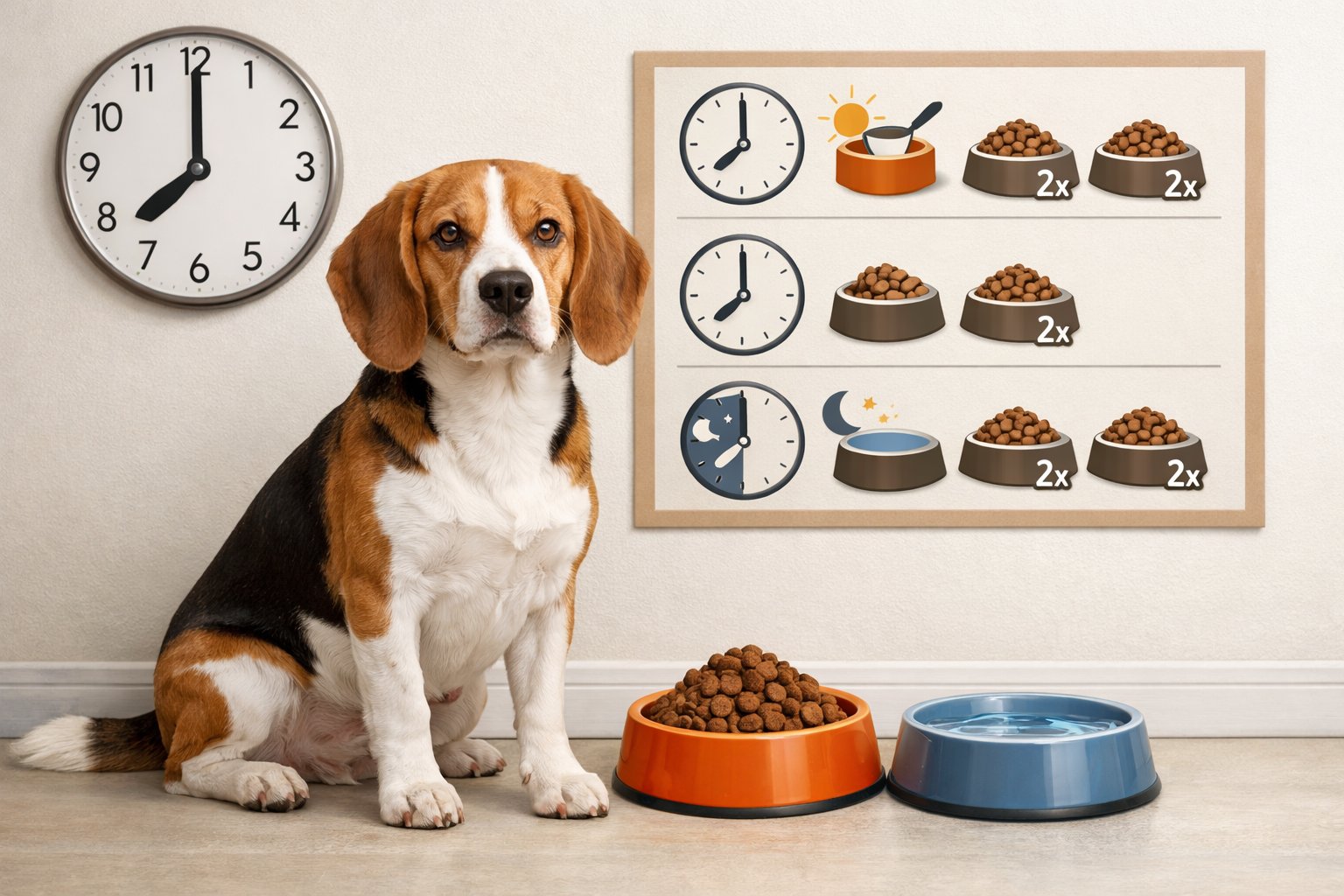
A Beagle sitting next to a feeding area with a bowl of food, a water bowl, and a feeding schedule chart.

Beagles often need extra care with portions, food choices, and treats. Weight control, accurate portion sizing, and safe chewing habits all affect long-term health and daily comfort.

Feeding an Overweight Beagle

When a beagle gains excess weight, food control becomes the top priority. Extra pounds increase stress on joints and raise the risk of health problems.

Owners should measure every meal and stop free feeding right away. A vet-approved weight target helps guide daily intake.

Most adult beagles do better with two measured meals per day and limited treats. Treats should make up less than 10% of daily calories.

Helpful adjustments include:

  • Switching to lower-calorie, high-protein food
  • Replacing treats with small pieces of carrot or green beans
  • Increasing daily walks by 10–15 minutes

Many vets and feeding charts explain safe portion changes for feeding an overweight beagle. Slow, steady weight loss works best and helps avoid muscle loss.

Using a Dog Food Calculator

A dog food calculator helps match food portions to a beagle’s size, age, and activity level. These tools estimate daily calories, which makes portion control more accurate than guessing.

Most calculators ask for:

  • Current weight
  • Age (puppy, adult, or senior)
  • Activity level

The result gives a daily calorie range, not an exact rule. Owners should still watch body shape and energy levels.

If ribs are hard to feel or the waist disappears, portions may be too large. Online tools like a dog food calculator for beagles work best when paired with regular weigh-ins.

Adjust portions every few weeks, not daily, to track real progress.

Can Beagles Eat Bones?

Many owners ask, can beagles eat bones? The short answer depends on the type of bone.

Cooked bones are never safe because they splinter and can cause choking or internal injury.

Raw bones can be safer, but only under strict rules. Choose large, raw bones that cannot be swallowed.

Supervise at all times. Remove the bone after 10–15 minutes.

Soft raw bones, like chicken necks, still carry risk for beagles who gulp food.

Dental chews designed for dogs offer a safer option for teeth and gums.

Some feeding guides explain safe chewing choices when discussing beagle feeding and diet basics. When in doubt, owners should skip bones and choose approved chew products.

Filed Under: Border Collies

  • « Go to Previous Page
  • Page 1
  • Interim pages omitted …
  • Page 4
  • Page 5
  • Page 6
  • Page 7
  • Page 8
  • Interim pages omitted …
  • Page 26
  • Go to Next Page »

Primary Sidebar

Must-Have Puppy Essentials for New Labradoodle Owners: Your Complete Starter Guide

Bringing home a Labradoodle puppy is an exciting time filled with wagging tails and playful energy. … [Read More...] about Must-Have Puppy Essentials for New Labradoodle Owners: Your Complete Starter Guide

Best Cooling Mats for Labradoodles in Summer: Keep Your Pup Comfortable During Hot Weather

Labradoodles have thick, fluffy coats that can make them uncomfortable during hot summer months. … [Read More...] about Best Cooling Mats for Labradoodles in Summer: Keep Your Pup Comfortable During Hot Weather

Top Car Seat Covers for Labradoodle Owners: Protect Your Vehicle from Fur and Mess

Labradoodles are wonderful family dogs, but they shed fur and can track dirt into your car. Their … [Read More...] about Top Car Seat Covers for Labradoodle Owners: Protect Your Vehicle from Fur and Mess

Best Dog Beds for Large Labradoodles: Comfortable and Durable Options for Your Furry Friend

Large Labradoodles need a comfortable place to rest after a day of play and exercise. A good dog bed … [Read More...] about Best Dog Beds for Large Labradoodles: Comfortable and Durable Options for Your Furry Friend

Best Crates for Labradoodles: Complete Mini vs Standard Size Guide for 2026

Labradoodles are popular dogs that come in different sizes, from mini versions around 15-30 pounds … [Read More...] about Best Crates for Labradoodles: Complete Mini vs Standard Size Guide for 2026

Best Healthy Treats for Labradoodle Training: Expert-Approved Options for 2026

Training a Labradoodle requires patience, consistency, and the right rewards to reinforce good … [Read More...] about Best Healthy Treats for Labradoodle Training: Expert-Approved Options for 2026

Are Elevated Bowls Good for Labradoodles? What Every Owner Should Know

Labradoodles are energetic and lovable dogs that need proper care at mealtime. One important choice … [Read More...] about Are Elevated Bowls Good for Labradoodles? What Every Owner Should Know

Best Supplements for Labradoodle Joint Health: Keep Your Pup Active and Pain-Free

Labradoodles are active dogs that love to run, jump, and play throughout their lives. Their … [Read More...] about Best Supplements for Labradoodle Joint Health: Keep Your Pup Active and Pain-Free

Top Slow Feeders for Labradoodles Who Eat Too Fast: A Guide to Healthier Mealtimes

Labradoodles are energetic dogs who often get very excited at mealtime. Many of them eat their food … [Read More...] about Top Slow Feeders for Labradoodles Who Eat Too Fast: A Guide to Healthier Mealtimes

Best Dog Food for Labradoodles: Top Picks for Puppies, Adults and Seniors in 2026

Labradoodles are energetic and friendly dogs that need the right nutrition to stay healthy … [Read More...] about Best Dog Food for Labradoodles: Top Picks for Puppies, Adults and Seniors in 2026

Categories

  • Border Collies
  • Uncategorized

Superduperdog.com - Copyright © 2026