• Skip to main content
  • Skip to primary sidebar

superduperdog

superduperdog

Jason Huskey

Beagle Puppies vs. Adults: What to Expect at Every Stage

February 10, 2026 by Jason Huskey

Beagle Growth Stages and Physical Development

Three Beagle dogs showing the stages from a small puppy to a juvenile and then a fully grown adult, arranged side by side.

A beagle’s body changes in clear and predictable ways from birth through old age. Size, muscle tone, energy level, and beagle weight shift with each stage.

Owners should adjust care as those changes happen.

Puppyhood: Birth to 6 Months

Beagle puppies grow fast during the first six months. They double their weight quickly and gain height each month.

Most puppies leave their mother at about eight weeks, when they weigh only a few pounds. Bones and joints are still soft, so short play sessions work best.

Long runs or jumping can stress growing legs. Puppies need several small meals a day to support beagle growth and weight gain.

Teething starts around three to four months. Chew toys help protect furniture and ease sore gums.

Regular vet visits track beagle growth stages and catch issues early.

Adolescence: 6 to 18 Months

Adolescence brings slower height growth and steady weight gain. Most beagles reach adult height by eight to ten months, but their chest and muscles continue to fill out.

Energy stays high during this stage. Daily walks and scent games help manage behavior and support healthy muscle growth.

Training matters more now because curiosity and stubborn habits peak. Diet also changes.

Many dogs switch from puppy food to adult food between 12 and 18 months. Monitoring beagle weight helps prevent early obesity, which is common in this breed.

Adulthood: 18 Months to 7 Years

An adult beagle has a stable body size and predictable energy level. Most adults weigh between the mid-teens and mid-twenties in pounds, depending on height and build.

Owners can use a beagle growth and weight chart as a general reference. Muscle tone stays strong with regular exercise.

Without it, weight gain happens quickly. Beagles love food, so measured meals and limited treats matter.

Routine vet checks help track joint health, teeth, and body condition during these prime years.

Senior Years: 7 Years and Beyond

A senior beagle shows gradual physical changes. Muscle mass declines, and joints may stiffen.

Weight can increase or drop, so regular weigh-ins help spot problems early. Activity levels slow, but daily walks still support joint health.

Softer bedding and shorter outings improve comfort for senior beagles. Diet often shifts to lower-calorie or senior formulas.

These foods support aging organs while helping manage weight. Physical aging usually becomes noticeable after seven years, as outlined in guides on when a beagle is considered fully grown.

Beagle Behavior by Age and Key Changes
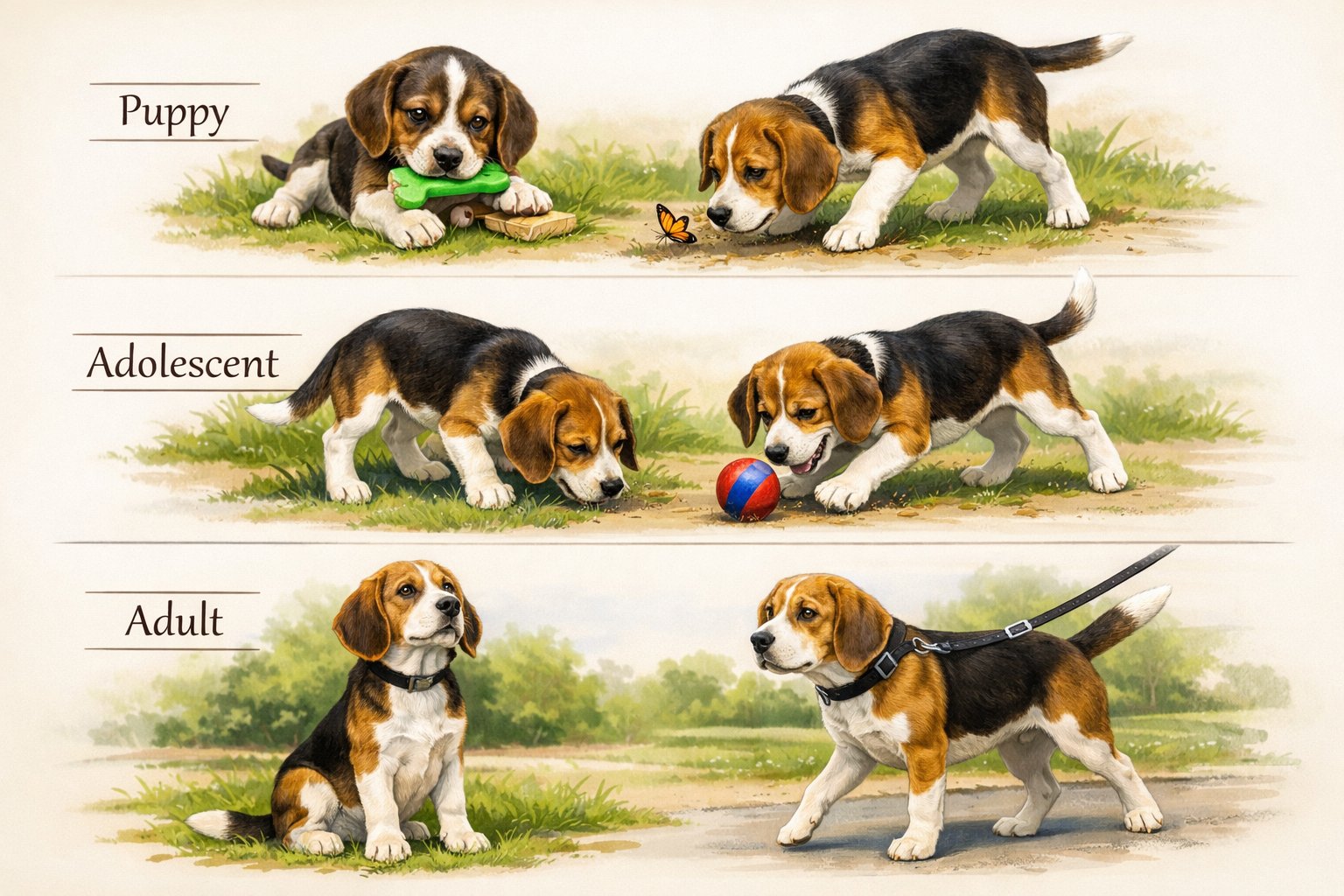
Three Beagles showing different behaviors: a playful puppy with a toy, an energetic adolescent sniffing a ball, and a calm adult sitting attentively outdoors.

Beagle behavior by age follows clear patterns tied to growth, energy, and health. Each stage brings specific needs in training, exercise, and daily care.

Puppy Behavior and Training Focus

Beagle puppies show high energy, strong curiosity, and short attention spans. They explore with their nose and mouth, which often leads to chewing, digging, and distracted behavior.

Early routines matter because habits form fast at this age. Training should focus on house training, basic commands, and social skills.

Short sessions work best since puppies tire quickly. Consistent rewards help guide good behavior.

Social exposure also plays a key role. Puppies benefit from meeting people, other dogs, and new environments early, as explained in this guide on beagle behavior by age.

Key priorities for puppies

  • Potty training and crate use
  • Bite control during teething
  • Calm exposure to sounds and places

Adolescent Behaviors and Challenges

Between six months and one year, beagles enter an adolescent phase marked by testing limits. Energy levels rise, and listening skills often drop.

They may ignore commands they already know. This stage often frustrates owners.

Beagles may pull on the leash, bark more, or wander due to strong scent instincts. Regular exercise helps reduce these issues.

Training should stay firm and predictable. Skipping rules during adolescence often leads to long-term problems, as noted in discussions of beagle behavior changes by age.

Common adolescent challenges

  • Selective hearing
  • Increased independence
  • Strong desire to roam

Adult Beagle Behavior and Lifestyle

Adult beagles usually settle into steadier routines between one and seven years. Energy remains moderate, but behavior becomes more predictable.

Many owners see improved focus and calmer indoor habits. Adult beagle behavior still requires daily activity.

Walks, scent games, and food puzzles prevent boredom-driven habits like barking or digging. Mental work matters as much as physical exercise.

Training does not stop at adulthood. Ongoing practice helps maintain manners and supports a balanced lifestyle, as outlined in this overview of adult beagle behavior and maturity.

Typical adult traits

  • Consistent energy patterns
  • Strong food motivation
  • Improved impulse control

Behavioral Shifts in Senior Beagles

Senior beagles, usually seven years and older, slow down both physically and mentally. They sleep more and prefer shorter, gentler activities.

Long walks often give way to relaxed sniffing sessions. Behavioral changes may link to health issues like joint pain or hearing loss.

Patience becomes essential, especially if training response declines. Clear routines help reduce confusion.

Owners should watch for new habits such as restlessness or clinginess. These shifts often appear in later life stages discussed in guides on senior beagle behavior changes.

Common senior changes

  • Lower stamina
  • Increased need for comfort
  • Slower response to cues

Filed Under: Border Collies

Are Beagles Good Family Dogs? Honest Pros and Cons for Families

February 10, 2026 by Jason Huskey

Key Qualities of Beagles as Family Dogs

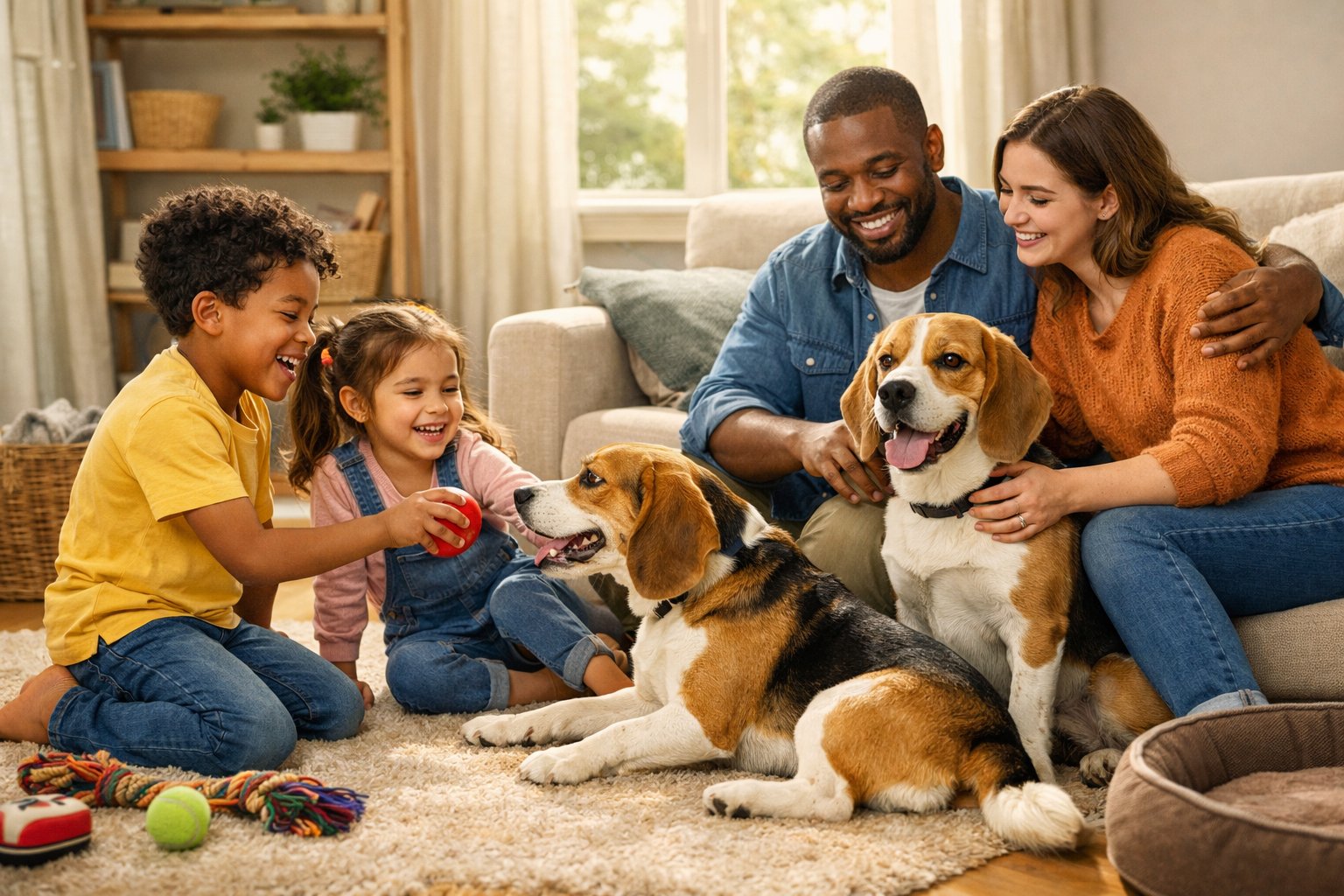
A happy Beagle playing and sitting calmly with smiling family members in a cozy living room.

The beagle breed stands out for its friendly nature, small size, and strong social drive. These traits shape how beagles behave at home and interact with children and pets.

They also help beagles adjust to different living spaces.

Temperament and Social Behavior

Beagles are social dogs that enjoy being around people and other animals. They were bred to work in packs, which helps explain their comfort in busy homes with regular activity.

Many families choose them as family pets because they seek attention and stay engaged with daily routines. The American Kennel Club describes beagles as loyal and friendly companions.

They tend to greet visitors without fear or aggression, which makes them poor guard dogs but pleasant housemates. Their need for company means they do best in homes where someone is around for much of the day.

Long periods alone can lead to barking or boredom-based habits.

Compatibility With Children and Other Pets

Beagles often show patience and tolerance with children. Their medium size and sturdy build help them handle play that may feel overwhelming to smaller dogs.

Families with school-age kids often find that a beagle fits well into active schedules and shared playtime. Many experts, including the National Beagle Club, note that beagles usually get along with other dogs.

Early social time helps them adjust to cats and smaller pets, though their strong scent drive still matters. Supervision and training reduce chasing behavior.

Clear rules and calm introductions help beagles settle into multi-pet homes.

Key interaction traits:

  • Gentle play style
  • High interest in group activity
  • Best results with early training

Adaptability to Different Living Environments

Beagles adapt well to many home types, from houses with yards to apartments. Their size makes them manageable indoors, but they still need daily exercise.

Regular walks and outdoor play support good behavior and health. Family dogs like beagles adjust better when owners provide structure.

Consistent schedules for meals, walks, and rest reduce stress. While they enjoy outdoor space, a nearby park can meet their needs.

Pros and Cons of Owning a Beagle

A family with children happily interacting with a Beagle dog in a living room, showing both joyful moments and small challenges of owning the dog.

Beagles offer warmth, playfulness, and strong family bonds. They also bring noise, stubborn habits, and high activity needs.

Families benefit most when they understand both the strengths and limits of this scent hound.

Major Benefits for Families

Beagles thrive in family settings because they enjoy company and routine. They often show patience with children and prefer group life, which makes them a natural fit for busy homes.

Many families value how well beagles interact with other dogs, as noted in guides about beagles as family companions. Owning a beagle also means sharing life with an affectionate dog that likes physical closeness.

Beagle puppies tend to seek attention and often follow family members from room to room. Their medium size helps them fit into apartments or houses without special space needs.

They also have simple grooming needs. A short coat and minimal shedding reduce upkeep, which helps families with limited time.

Notable Challenges and Drawbacks

Beagles test limits, especially during training. They often follow their nose instead of commands, which frustrates first-time owners.

This stubborn streak appears often in lists of common beagle drawbacks. Food behavior creates another challenge.

Beagles steal food if given the chance, which requires locked bins and strict rules with kids. A beagle puppy learns bad habits fast if the household stays inconsistent.

Noise also causes stress. Howling and barking happen often, especially when the dog feels bored or alert.

Families in close neighborhoods may struggle with complaints if they cannot manage this behavior early.

Beagle Energy Levels and Exercise Needs

Beagles carry steady energy throughout the day. They need daily walks, active play, and time to explore scents.

Without this outlet, they may chew, dig, or bark. Articles about beagle activity needs stress regular exercise as a must, not an option.

Because they are a scent hound, beagles gain mental relief from sniffing games. Hiding treats or using puzzle toys helps burn energy indoors.

A tracking dog mindset means they enjoy tasks with purpose. Families should plan at least one long walk plus playtime each day.

This routine supports better behavior and calmer evenings at home.

Vocalization and Prey Drive

Beagles communicate through barking, baying, and howling. This trait comes from their history as a tracking dog bred to signal hunters.

Guides on beagle vocal behavior note that training can reduce noise but rarely removes it fully. Their prey drive also runs strong.

Beagles chase squirrels, rabbits, and strong smells without warning. A leash remains essential in open areas, even with training.

Families must teach children to keep doors and gates closed. This habit prevents escapes and keeps the beagle safe when instincts take over.

Training, Health, and Care Considerations

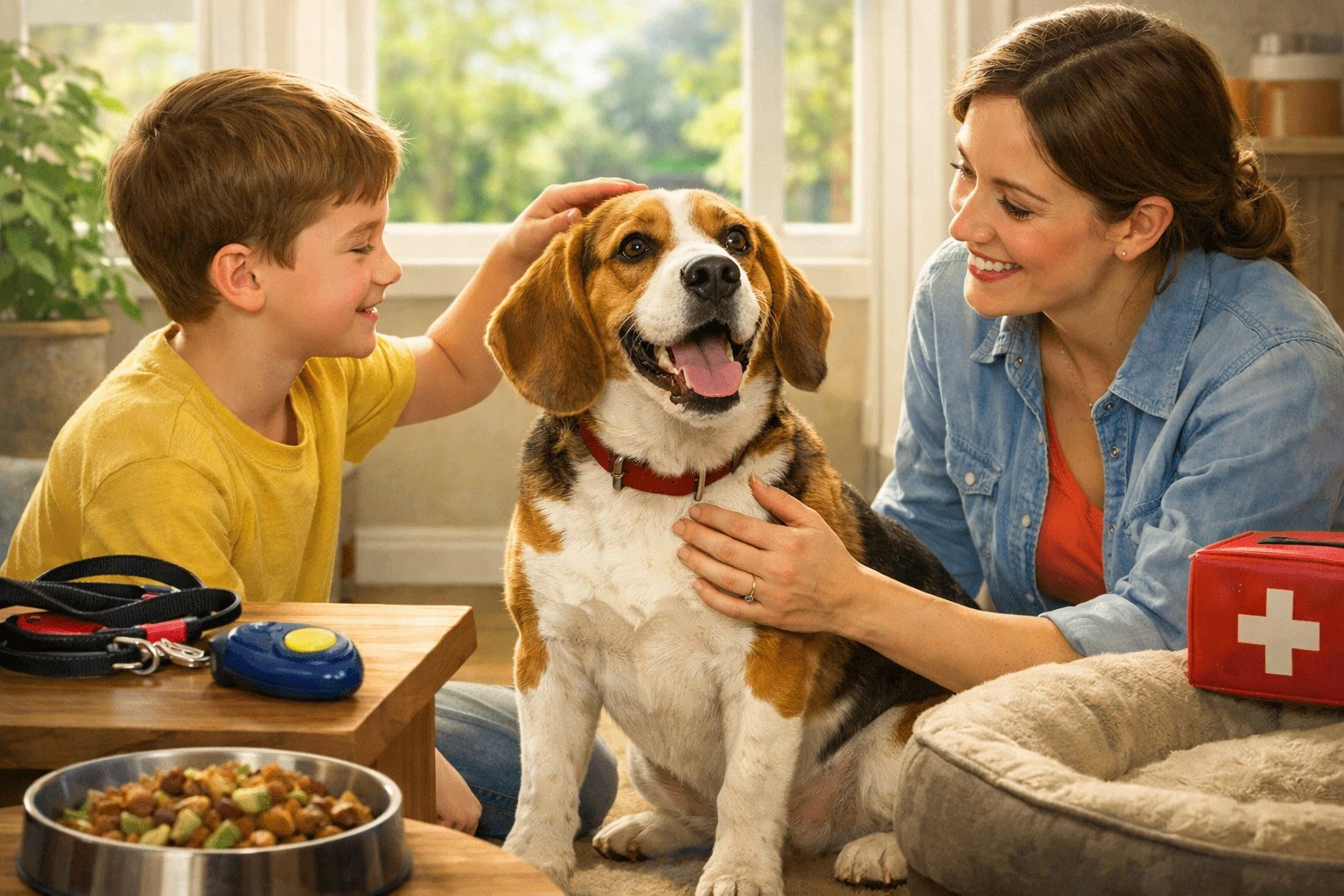
A Beagle dog happily interacting with a child and an adult in a bright, clean home with pet care items nearby.

Beagles need steady training, regular health care, and simple grooming to stay happy at home. Families should plan for patience, daily routines, and basic preventive care.

Training a Beagle: What to Expect

Training a beagle takes time and consistency. They learn fast, but their strong nose often pulls focus away from commands.

Short sessions work best, especially with food rewards. Positive reinforcement helps reduce stubborn behavior.

Treats, praise, and calm repetition keep them engaged. Harsh methods often fail and can slow progress.

Beagle puppies need early training. Basic cues like sit, stay, and come should start right away.

Early leash training matters because beagles like to follow scents. Many families notice better results when they understand common beagle training challenges and plan around them.

Helpful training tips:

  • Keep sessions under 10 minutes
  • Train before meals for better focus
  • Practice recall in fenced areas

Beagle Health and Longevity

Beagle health stays strong with proper care. Most beagles live about 12 to 15 years.

Regular vet visits help catch issues early. Common concerns include weight gain, ear infections, and joint problems.

Beagles love food, so portion control matters. Daily walks help manage weight and support joint health.

Floppy ears trap moisture and dirt. Weekly ear checks reduce infection risk.

Families who understand common beagle health concerns can plan simple routines that support long-term wellness.

Routine care basics:

  • Annual vet exams
  • Balanced diet by age and size
  • Daily exercise

Grooming and Maintenance

Grooming a beagle stays simple. Their short coat sheds, but brushing once a week helps control hair and keeps skin healthy.

Baths are only needed every few months unless the dog gets dirty. Nails should be trimmed about once a month to avoid discomfort.

Beagle puppies need early grooming habits. Gentle brushing and paw handling help them stay calm as adults.

Care Task How Often
Brushing Weekly
Ear cleaning Weekly
Nail trimming Monthly
Bathing Every 2–3 months

Filed Under: Border Collies

Common Beagle Behavior Problems (and How to Fix Them) Effectively

February 10, 2026 by Jason Huskey

Understanding Beagle Behavior Problems

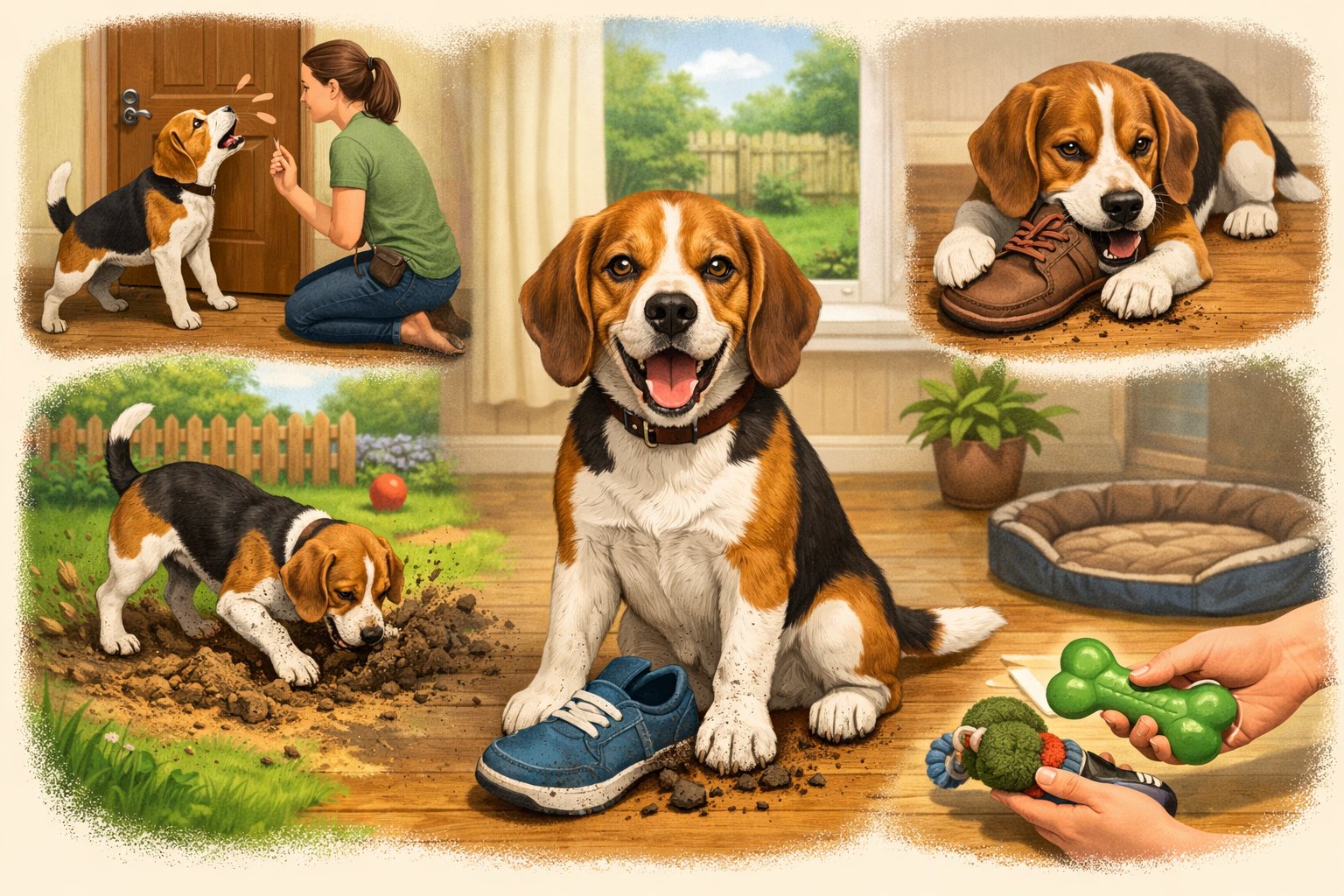
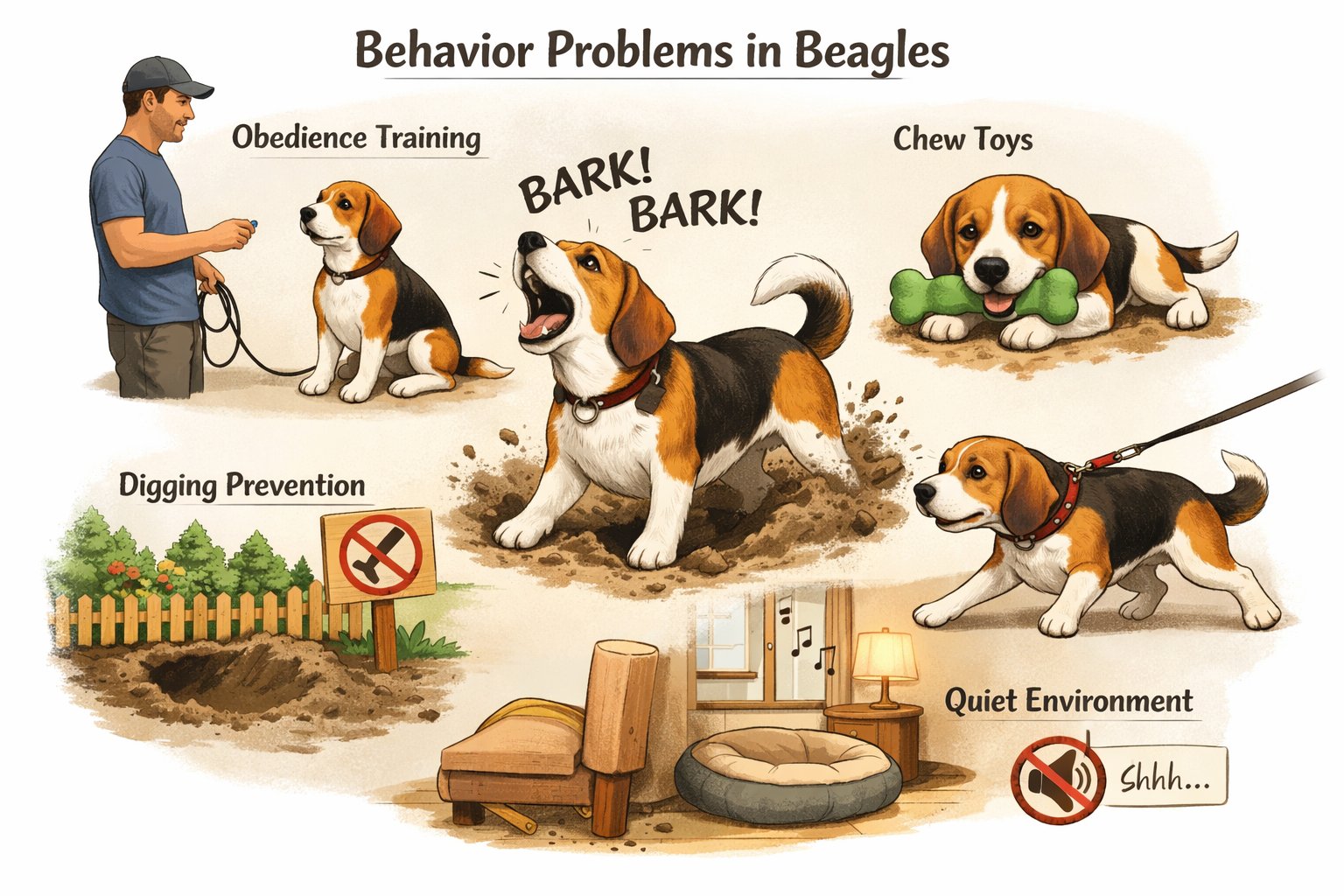
A Beagle dog showing common behavior problems like barking, digging, and chewing, with a caring owner nearby providing guidance in a home and garden setting.

Beagle behavior often links to breed traits, daily routines, and natural instincts. Understanding beagle behavior helps owners respond with clear training and realistic expectations.

Breed Traits That Influence Behavior

Beagles are scent hounds bred to track and follow trails. This background shapes many beagle behavior problems seen in the home.

They tend to show high energy, strong curiosity, and a need for mental work. When daily exercise falls short, behaviors like chewing or barking often appear.

Beagles also thrive on social contact. They prefer company and may struggle when left alone too long.

This trait explains why some common behavioral problems in beagles include whining or destructive habits during absences. Stubborn moments happen, but they reflect focus, not defiance.

Beagles often prioritize smells over commands, especially outdoors.

Typical Behavioral Issues and Why They Happen

Common behavioral problems in beagles usually have clear causes tied to boredom, hunger, or anxiety.

Frequent issues include:

  • Excessive barking or howling, often triggered by noise or scents
  • Destructive chewing, linked to unused energy
  • Food stealing and begging, driven by scent and opportunity
  • Ignoring commands, caused by distractions

Many of these behaviors start when needs go unmet. A lack of structured walks, training, or play can quickly lead to frustration.

Clear routines and consistent rules reduce confusion. Owners who understand beagle behavior can address problems early, before habits set in.

For a detailed breakdown of these patterns, this guide on common behavioral problems in beagles offers practical context.

The Role of Scent and Instinct

A beagle’s strong sense of smell guides much of its behavior. Once a scent catches attention, focus narrows fast.

This instinct explains wandering, pulling on the leash, and selective hearing. The dog follows its nose first and people second.

Indoors, scent drives food obsession. Outdoors, it increases roaming risk if off leash.

These actions reflect instinct, not poor training. Channeling scent work helps.

Activities like sniff walks or hide-and-seek games give purpose to the behavior. Owners who respect this scent hound nature see better results.

This overview of beagle behavior problems and how to fix them highlights how instinct-based training reduces conflict.

Most Common Beagle Behavior Problems and Practical Fixes

A Beagle dog showing common behavior problems like barking, digging, chewing, and leash pulling, with nearby illustrations of practical fixes such as training, toys, and a fenced yard.

Many beagle behavioral issues come from strong instincts, high energy, and a love of food and scents. Clear rules, daily routines, and the right outlets can reduce these problems and improve behavior at home.

Excessive Barking and Howling

Excessive barking and howling often frustrate beagle owners. Beagles bark to alert, seek attention, or release boredom.

Their history as scent hounds also makes them vocal when excited or anxious. Owners should first identify the trigger, such as door noises or being left alone.

Daily exercise matters. Long walks, scent games, and short training sessions lower pent-up energy.

Teaching a “quiet” command works best when paired with calm rewards. Ignoring attention-seeking noise also helps.

Respond only when the dog stays quiet. Consistent routines and mental work reduce vocal habits linked to boredom, as shown in guides on common beagle behavior problems and how to fix them.

Separation Anxiety and Solutions

Separation anxiety in beagles shows through barking, pacing, or destructive chewing when alone. Beagles bond closely with people, so sudden absences feel stressful.

Managing separation anxiety starts with short departures. Owners should leave for minutes, not hours, and increase time slowly.

Calm exits and returns prevent building fear. A safe space with bedding and puzzle toys can also help.

Mental work matters as much as physical exercise. Feeding from interactive toys keeps the dog busy after the owner leaves.

Clear steps for managing separation anxiety appear in expert advice on beagle behavioral issues and management strategies.

Digging and Outdoor Destruction

Digging feels natural to beagles. They dig to follow scents, burn energy, or escape boredom.

Yards with loose soil or wildlife smells increase the risk. A designated digging area gives the dog a safe outlet.

Owners can bury toys or treats there to guide behavior. Praise should follow digging in the right spot.

Fences should extend below ground to prevent escapes. Daily walks and scent-based games reduce the urge to dig.

Practical digging fixes often appear in training advice that covers addressing common beagle behavioral problems.

Food Stealing and Counter Surfing

Food stealing happens because beagles stay highly food motivated. Counters, tables, and trash bins attract them with strong smells.

Prevention works better than punishment. Owners should clear counters and use sealed trash cans.

Teaching a “place” command during meals keeps the dog away from food prep areas. Reward calm behavior with treats given away from the table.

Never feed scraps by hand during meals. Clear rules and consistency reduce food stealing, as outlined in guides on beagle behavior problems and training tips.

Effective Training and Prevention Strategies

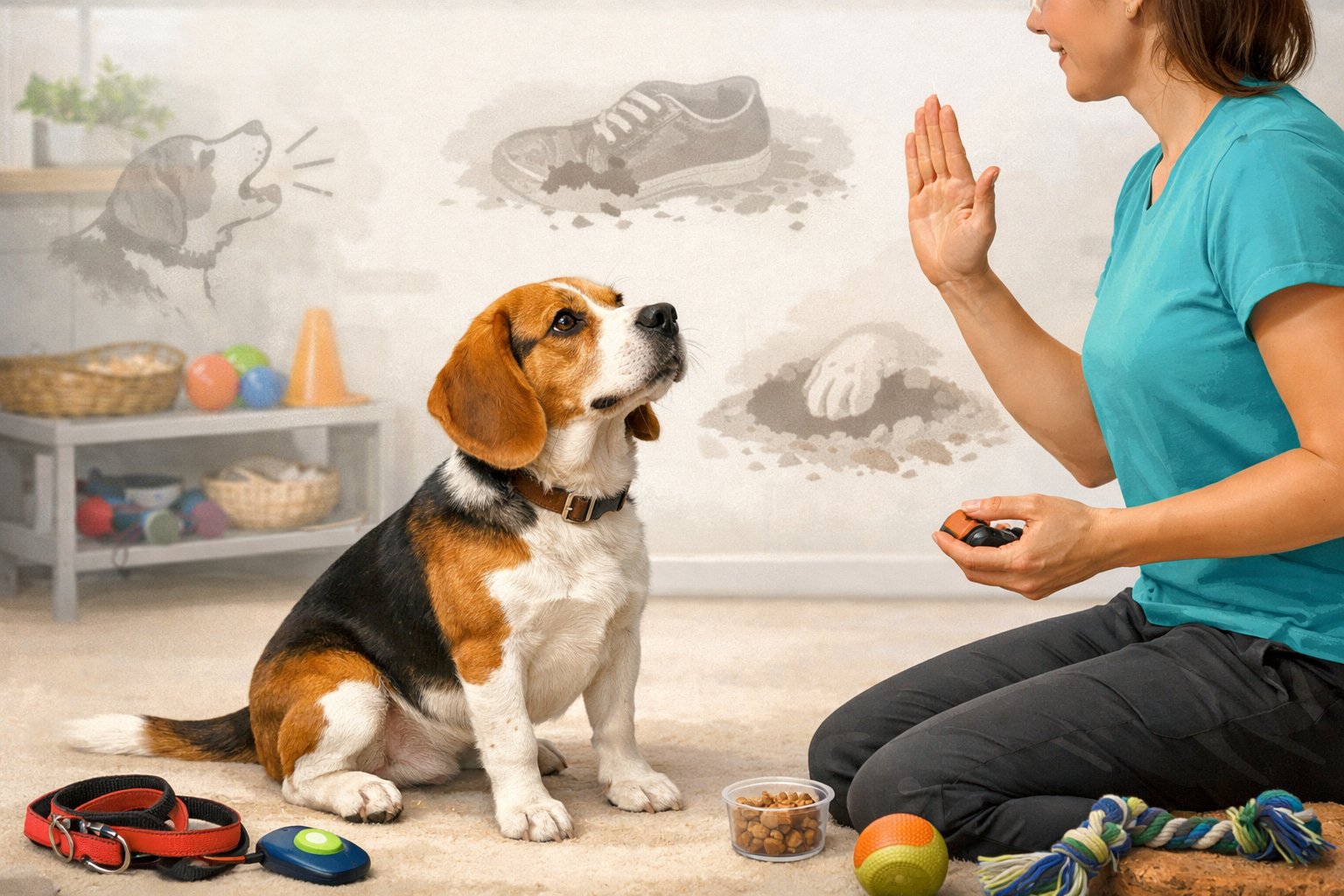
A Beagle dog sitting calmly while a trainer uses treats and hand signals to guide it in a bright training room with training tools nearby.

Beagles respond best to training that respects their instincts and energy level. Clear rewards, steady routines, and early exposure to new situations help prevent many common behavior problems.

Positive Reinforcement and Reward-Based Training

Positive reinforcement training works well for Beagles because they stay highly food motivated. The trainer rewards a desired behavior right away, which helps the dog repeat it.

This approach forms the core of reward-based training and builds trust instead of fear. Rewards should match the task.

Simple behaviors may need kibble, while hard tasks often need chicken or cheese. Timing matters more than quantity.

Key tips for success:

  • Reward within one second of the behavior
  • Use praise along with treats
  • Ignore mistakes instead of punishing them

Many trainers recommend this method because it reduces stress and improves focus, as explained in guides on effective Beagle training methods.

Leash Training and Recall Commands

Leash training helps control pulling, which often happens when a Beagle follows scents. A front-clip harness gives better control without pain.

The handler should stop walking when pulling starts and move again only when the leash relaxes. Recall command training protects the dog’s safety.

Beagles may ignore calls if a smell distracts them, so rewards must feel valuable.

Practical steps:

  • Practice recall indoors first
  • Use a long line outdoors
  • Reward every successful return

Many owners struggle here due to scent drive, which training experts highlight in discussions of common Beagle behavior problems.

Establishing a Consistent Routine

A consistent routine reduces anxiety and unwanted behaviors. Beagles feel calmer when they know what happens next.

Feeding, walks, training, and rest should follow the same daily pattern. Routine helps manage barking, chewing, and restlessness.

Dogs that lack structure often create their own activities, which leads to trouble.

A steady routine includes:

  • Fixed meal times
  • Daily walks with sniff breaks
  • Short training sessions

Behavior specialists note that structure supports learning and emotional balance, as seen in guides on Beagle behavior and training basics.

Importance of Early Socialization

Early socialization shapes how a Beagle reacts to people, dogs, sounds, and places. Puppies should meet many safe and calm experiences before adulthood.

This lowers fear and reduces future aggression or anxiety. Socialization should stay positive.

Overwhelming situations can backfire.

Helpful socialization ideas:

  • Short visits to new places
  • Calm meetings with friendly dogs
  • Exposure to household noises

Filed Under: Border Collies

Beagle Training Tips for Strong‑Willed but Loving Dogs: Proven Methods & Solutions

February 10, 2026 by Jason Huskey

Essential Training Tips for Strong‑Willed Beagles

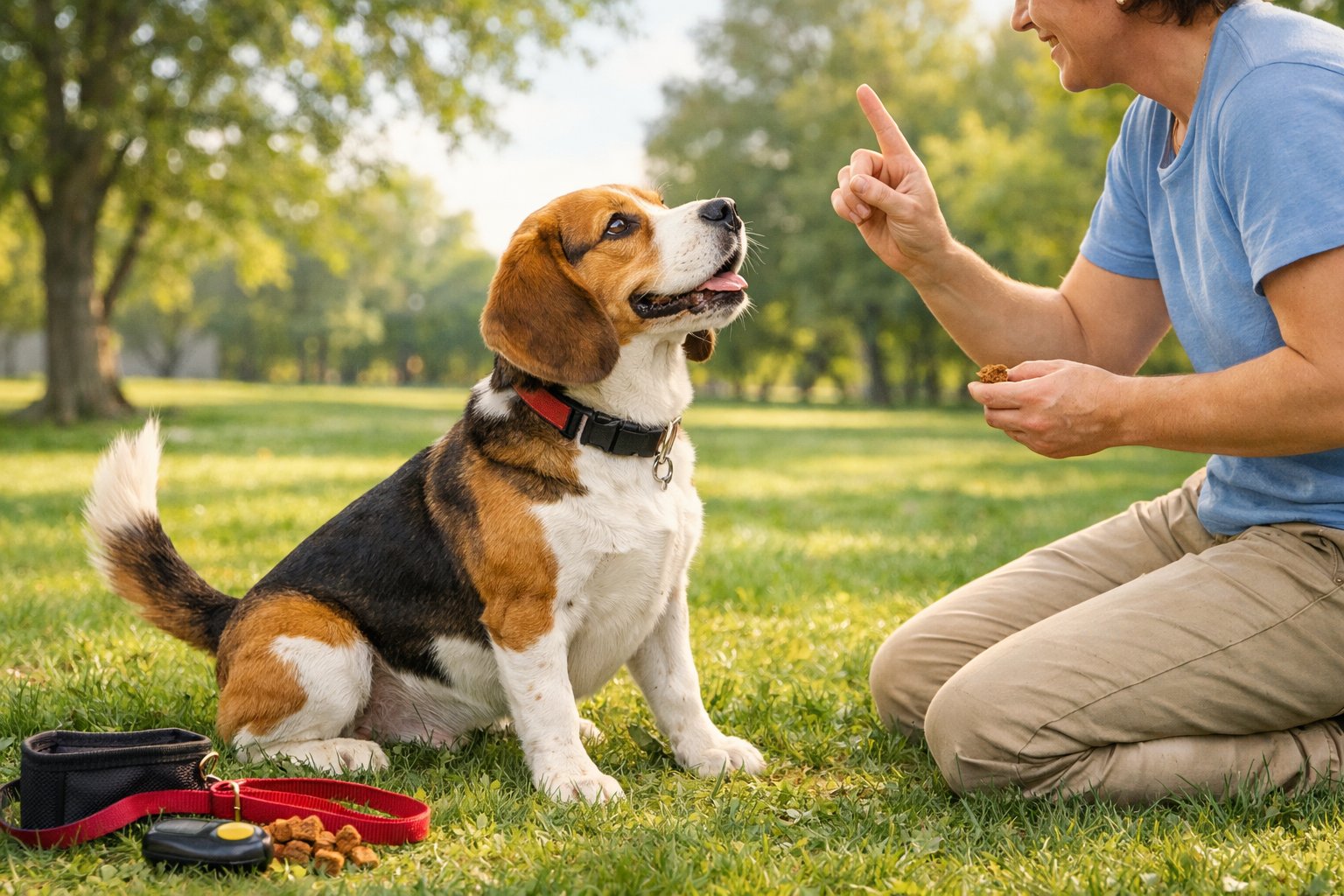
A person training a focused Beagle dog outdoors in a park with greenery and trees.

Strong‑willed beagles respond best to training that respects their instincts while setting clear limits. Success depends on understanding motivation, keeping routines steady, rewarding the right behavior, and handling common problems with patience.

Understanding Beagle Temperament and Motivation

A beagle’s temperament mixes curiosity, independence, and affection. They follow their nose first, which shapes much of their behavior.

This trait can slow training when scents distract them, even during simple commands. Food often drives motivation more than praise alone.

Many trainers rely on small, tasty rewards to keep focus. Articles on beagle temperament and training challenges explain how scent work and short sessions help maintain attention.

Beagles also bond closely with people. They want interaction and routine.

When training beagles, handlers should use calm energy and clear signals. Harsh methods often backfire and reduce trust.

Establishing Consistent Routines and Boundaries

Consistency builds trust and reduces confusion. Beagles learn faster when meals, walks, and training happen at the same times each day.

This structure supports good beagle behavior inside and outside the home. Clear boundaries matter just as much.

Everyone in the household should follow the same rules. Mixed signals slow progress and increase stubborn behavior.

A simple routine may look like this:

Time of Day Activity
Morning Potty break, short walk
Midday Play or training session
Evening Walk, calm indoor time

Many owners ask are beagles hard to house train. Guides on beagle housebreaking routines show that frequent potty breaks and close supervision improve results.

Using Positive Reinforcement Techniques Effectively

Positive reinforcement techniques work best when rewards match effort. Beagles respond well to food, toys, and brief play.

Rewards should come within seconds of the correct action. Short sessions keep learning strong.

Five to ten minutes works better than long drills. Trainers should end on a success to keep motivation high.

Effective rewards include:

  • Soft treats broken into small pieces
  • Verbal praise paired with treats
  • Quick games like tug or fetch

Many step‑by‑step plans for positive reinforcement training for beagles stress timing and consistency. When handlers reward only desired actions, habits form faster.

Overcoming Common Training Challenges

Common issues include pulling on the leash, barking, and ignoring commands outdoors. These problems often come from excess energy or scent distractions.

Daily exercise reduces many setbacks. Leash pulling improves with harnesses and frequent direction changes.

Barking often drops when boredom ends. Digging decreases with designated play zones and scent games.

Some owners worry training a beagle takes longer than other breeds. Resources on training beagles with strong scent drives show progress depends on repetition, not force.

Patience matters most. When handlers stay calm and consistent, strong‑willed beagles usually respond with steady improvement.

Managing Stubborn Behaviors and Channeling Energy

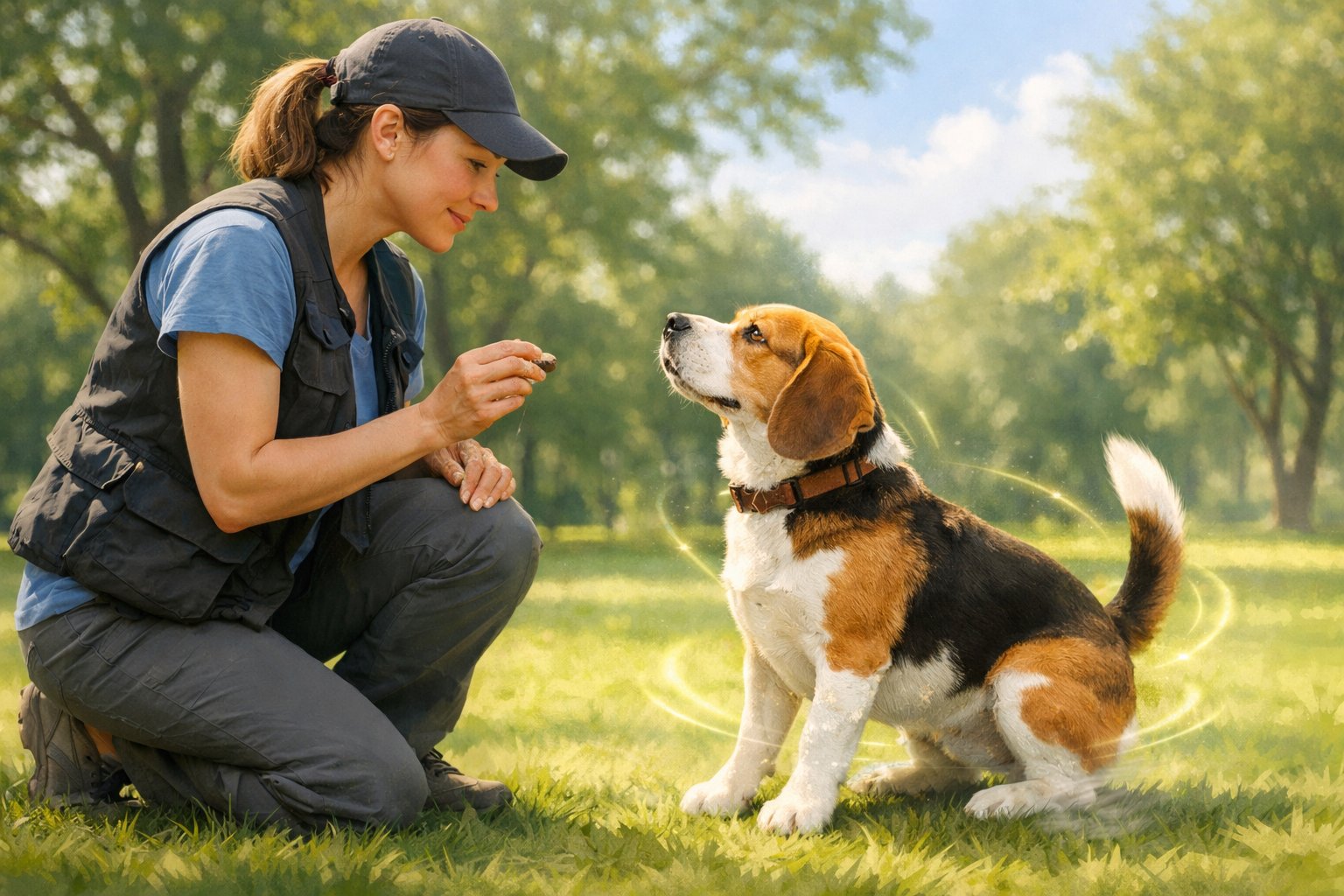
A dog trainer calmly working with a focused Beagle in a peaceful outdoor park.

Beagles act on instinct, especially their nose and voice. Clear rules, daily activity, and smart outlets for energy reduce barking, improve focus, and build better habits at home and on walks.

Preventing Excessive Barking and Howling

Beagles bark and howl because they are vocal scent hounds. They react to smells, sounds, and boredom.

Owners should first spot the trigger instead of correcting the noise alone.

Common Trigger What Helps
Door sounds Ask for a sit before opening
Outdoor smells Close windows during rest
Boredom Add short play breaks

Reward quiet moments right after the dog settles. Ignore demand barking when it is safe to do so.

Consistent responses matter more than volume. Many trainers note that structured routines help reduce vocal habits, as explained in guides on dealing with a stubborn beagle.

Providing Mental Stimulation and Scent Games

Beagles need mental stimulation as much as exercise. Their nose drives their behavior, so scent work tires them faster than long walks alone.

Simple scent games work well:

  • Hide treats in boxes or towels
  • Scatter kibble in the yard
  • Use beginner tracking paths indoors

Rotate interactive toys every few days to keep interest high. Short games before meals improve focus and reduce restlessness.

Many training plans recommend scent-based activities because they match breed instincts, which aligns with advice from beagle training and behavior tips.

Leash Training and Reliable Recall

Beagles pull because scents override attention. A front-clip harness gives better control without pain.

Owners should reward loose-leash walking every few steps at first. Recall training works best with a long line.

Practice in quiet areas before adding distractions. Use one clear word, then reward fast returns with food or praise.

Never rely on off-leash recall near traffic or wildlife. Even trained dogs can follow a scent.

Many handlers stress leash safety due to wandering risks, a point covered in how to control a beagle.

House Training Strategies for Beagles

People often ask, are beagles hard to house train. They can be, mainly due to distraction and stubborn streaks.

Structure solves most issues. Key steps include:

  • Fixed feeding times
  • Frequent outdoor breaks
  • Immediate rewards after success

Clean indoor accidents with enzyme cleaners to remove scent cues. Crates help when used for short periods and paired with positive routines.

Patience matters. Consistent schedules usually lead to steady progress over time.

Socialization, Enrichment, and Well‑Being

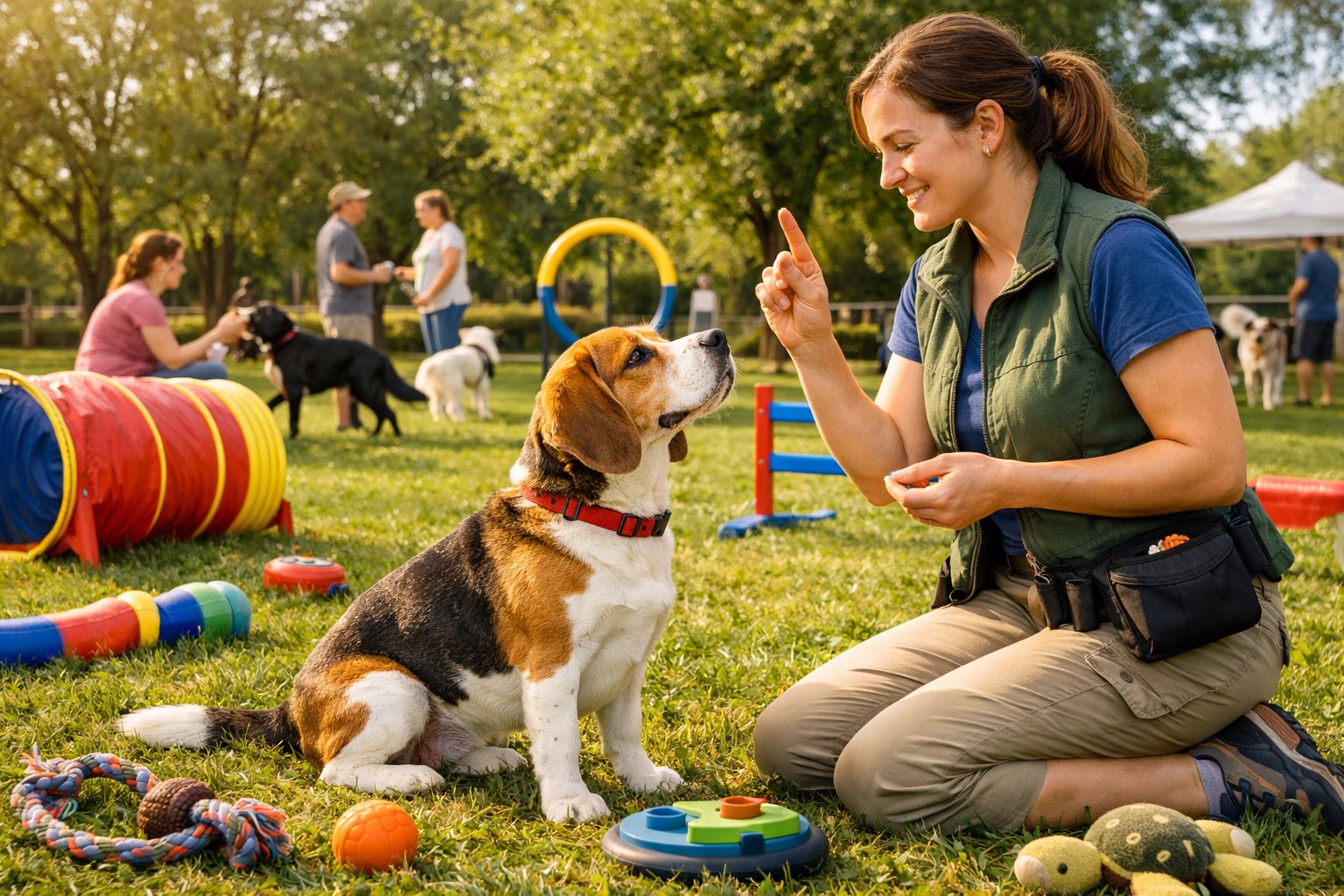
A beagle dog attentively interacting with a trainer in a park surrounded by agility equipment and toys, with other dogs and people socializing in the background.

Beagles do best when they get steady social contact, daily mental work, and calm routines. These habits lower stress, limit problem behavior, and support long-term health.

Socializing Your Beagle with People and Dogs

Early and steady socializing a Beagle builds trust and reduces fear. They should meet adults, children, and calm dogs in short, planned sessions.

Start in quiet places and add busier settings over time. Good social practice helps prevent dog aggression later.

Reward calm behavior with treats and praise. Stop sessions if the dog shows stress, such as stiff posture or tucked tail.

Helpful social activities include:

  • Leashed walks in new neighborhoods
  • Small playdates with known dogs
  • Group classes that focus on manners

Many trainers follow guidance similar to these Beagle socialization tips to match the breed’s curious nature.

Handling Separation Anxiety and Emotional Needs

Beagles form strong bonds and may struggle with separation anxiety. Signs include barking, pacing, or chewing when alone.

Owners should train alone time in small steps, starting with minutes, not hours. A steady routine helps.

Feeding, walks, and rest should happen at the same times each day. Leave safe chew toys or food puzzles to keep the mind busy.

Key support habits:

  • Calm exits and arrivals
  • No punishment for anxiety behavior
  • Daily exercise before alone time

If anxiety stays severe, a veterinarian can rule out health issues and suggest behavior plans or referrals.

Safe Outings: Dog Parks and New Environments

Dog parks can help with social skills, but they are not right for every Beagle.

Dogs should know basic commands and respond to recall before entering off-leash areas.

Choose parks with separate areas for size and energy level.

Watch closely for signs of stress or rough play.

Leave early if behavior shifts.

For safer outings:

  • Visit during low-traffic hours
  • Keep first visits short
  • Bring high-value treats for focus

Some owners prefer structured walks or classes over parks, as noted in guides like how to socialize a Beagle step by step.

Filed Under: Border Collies

How Much Exercise Does a Beagle Really Need? Daily Guidelines & Activities

February 10, 2026 by Jason Huskey

How Much Exercise Does a Beagle Really Need Each Day?

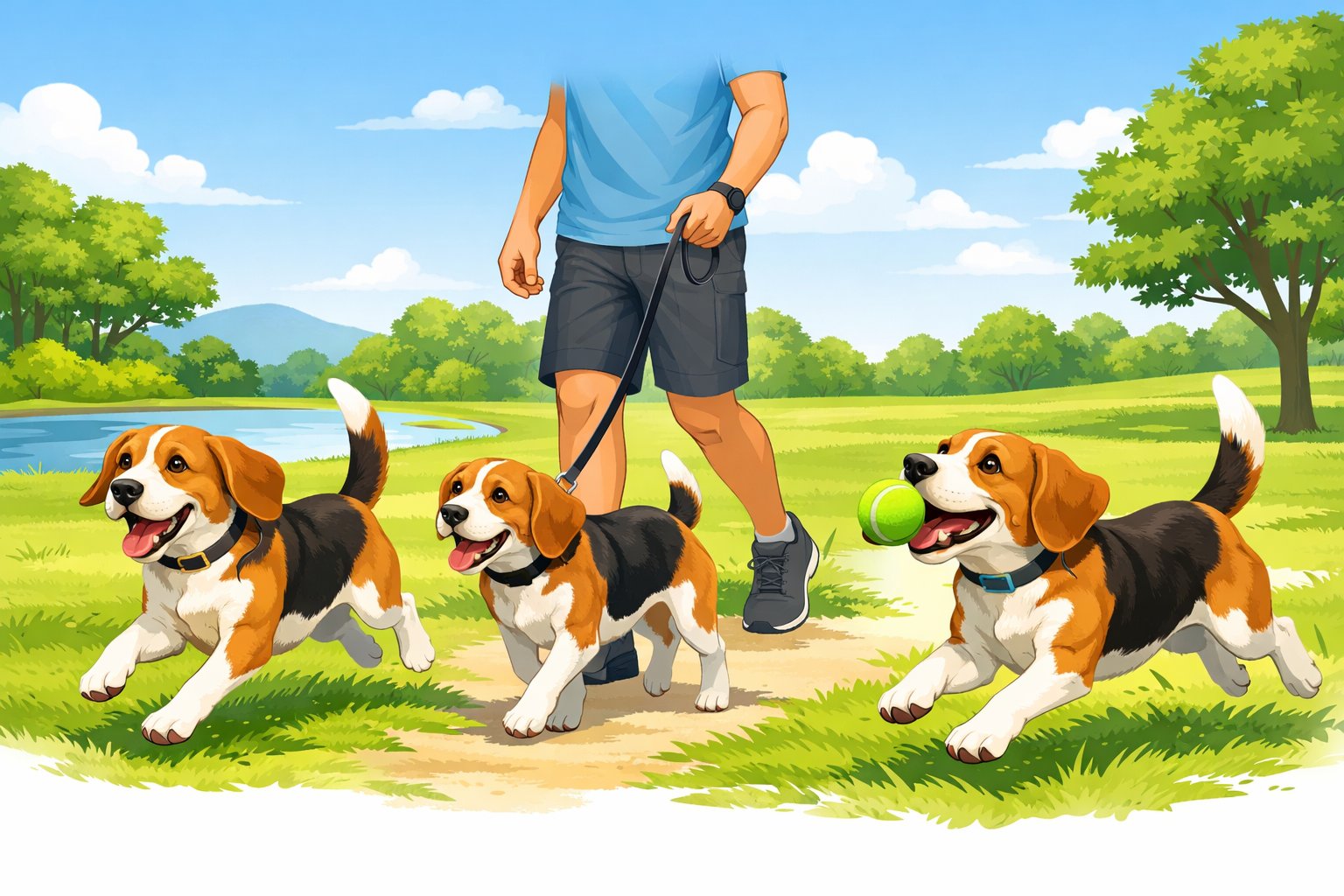
A Beagle dog running, walking on a leash, and playing fetch outdoors in a sunny park.

Most Beagles need daily activity that burns energy and keeps their minds busy. The right amount depends on age, health, and how active the dog acts at home.

Daily Exercise Recommendations by Age

Age plays a big role in how much exercise does a Beagle need each day. Puppies have short bursts of energy.

They do best with 20–30 minutes, split into several play sessions to protect growing joints. Adult Beagles usually need 60–90 minutes of daily exercise.

This often includes walks, play, and scent-based games, as noted in this guide on daily Beagle exercise needs. Many owners split this time into two sessions.

Senior Beagles still need movement, but at a slower pace. 30–45 minutes of gentle walks and light play helps keep joints flexible.

Short sessions work better than long outings for older dogs.

Physical vs. Mental Exercise: Striking the Right Balance

Beagle exercise requirements go beyond walking. Beagles were bred to track scents, so mental work matters as much as physical movement.

Physical exercise includes walks, short runs, and games like fetch. These activities help control weight and reduce restlessness.

Most adult Beagles need at least an hour of this type of activity each day, according to complete Beagle exercise recommendations. Mental exercise tires Beagles faster than many owners expect.

Scent games, puzzle toys, and basic training sessions keep their brains active. A mix of both types prevents boredom and improves behavior at home.

Risks of Too Much or Too Little Exercise

Too little exercise often leads to weight gain and problem behaviors. A bored Beagle may chew, dig, or bark more than usual.

Regular activity helps manage these issues and supports long-term health. Too much exercise also causes problems.

Long runs or intense play can strain joints, especially in puppies and seniors. Signs of overdoing it include limping, heavy panting, or slowing down.

Most experts agree that 60 minutes is the minimum, with many dogs benefiting from more when done safely, as explained in this overview of Beagle exercise requirements. Balance matters more than pushing limits.

Planning the Perfect Exercise Routine for Your Beagle

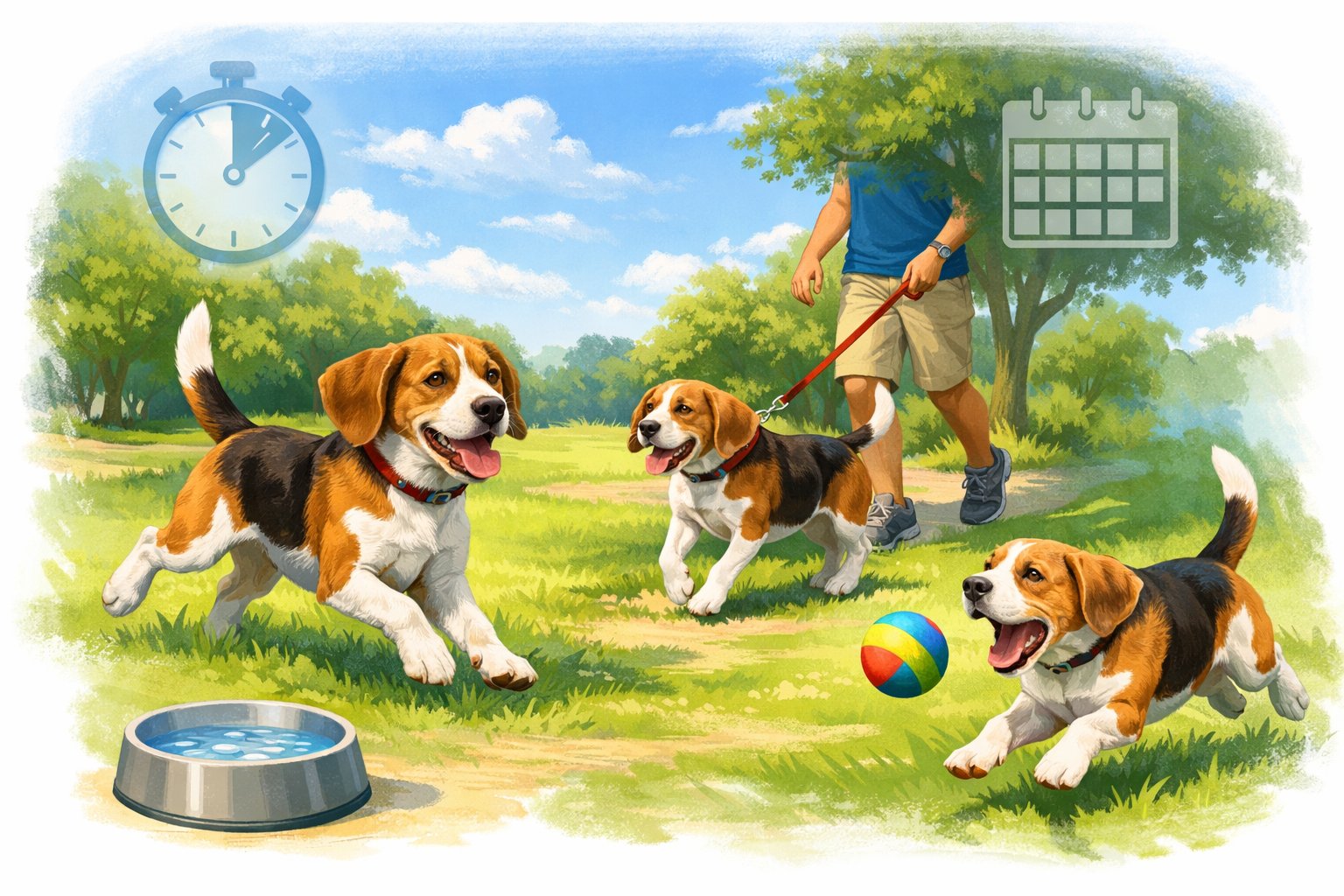
A Beagle running in a park, being walked on a leash, and playing fetch with a ball, surrounded by icons representing exercise and routine.

A solid routine blends daily movement, mental work, and safety checks. The right mix keeps weight in check, supports behavior, and fits the dog’s age and health.

Types of Activities for Beagles

Beagles need both physical work and thinking games. Daily walks form the base of any exercise for beagles, with a brisk pace to burn energy.

Many guides note adults do best with 60–90 minutes per day, split into two sessions, as explained in this overview of beagle exercise needs. Short runs, fetch, and hiking add cardio.

Swimming works well for dogs that enjoy water and need low-impact movement. Mental tasks matter.

Scent games, puzzle toys, and short training sessions help reduce boredom. These activities fit well into a simple beagle exercise plan and often tire the dog faster than movement alone.

A weekly mix keeps interest high:

  • Daily: brisk walks and sniff time
  • 3–4 days: fetch or running
  • Several times: puzzle toys or scent games

Adjusting Exercise to Your Beagle’s Life Stage

Age changes how much and how hard a beagle should work. Puppies need short play sessions spread through the day.

Five to ten minutes at a time protects growing joints. Adult dogs handle longer sessions.

Many experts suggest at least an hour daily, split morning and evening, as described in this guide to how much exercise beagles need. Cardio and mental tasks should share the time.

Senior beagles slow down. They still need movement, but with less strain.

Gentle walks and light play help keep joints flexible and weight steady. A simple comparison helps:

Life stage Daily focus
Puppy Short play, frequent rest
Adult Walks, cardio, brain games
Senior Gentle walks, easy play

Essential Beagle Exercise Safety Tips

Safety keeps beagle exercise helpful instead of harmful.

A secure leash matters because beagles follow scents without warning.

Harnesses often give better control than collars.

Weather affects routine.

Owners should walk early or late in hot months and shorten sessions in cold weather.

Fresh water should always be available.

Health checks matter.

Dogs need up-to-date vaccines before parks or trails.

Paws should be checked after long outings.

Clear habits reduce risk:

  • Use a strong leash outdoors
  • Avoid peak heat
  • Watch for limping or heavy panting

Filed Under: Border Collies

Why Beagles Follow Their Nose: Understanding and Handling This Instinct

February 10, 2026 by Jason Huskey

The Science and Instinct Behind a Beagle’s Nose

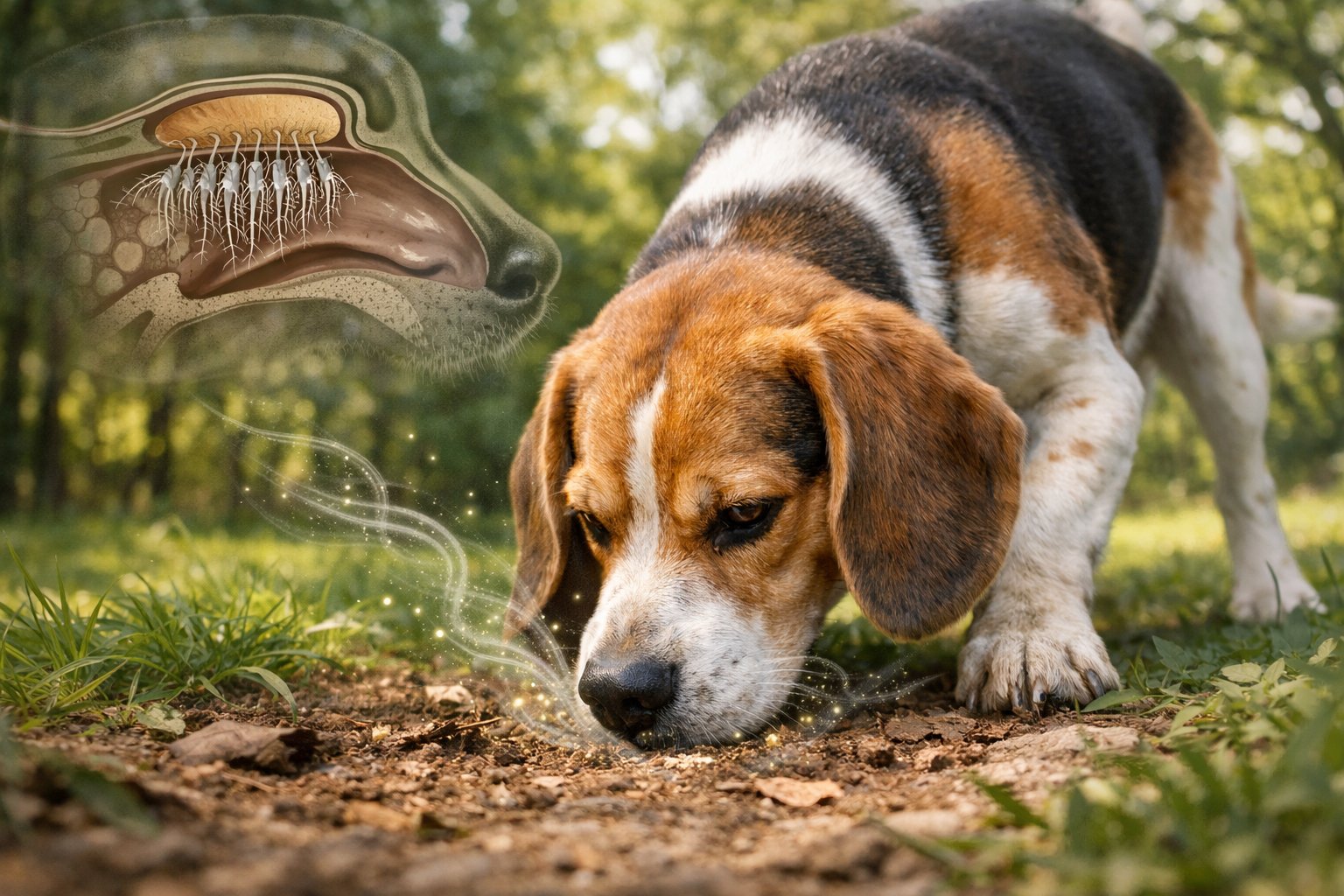
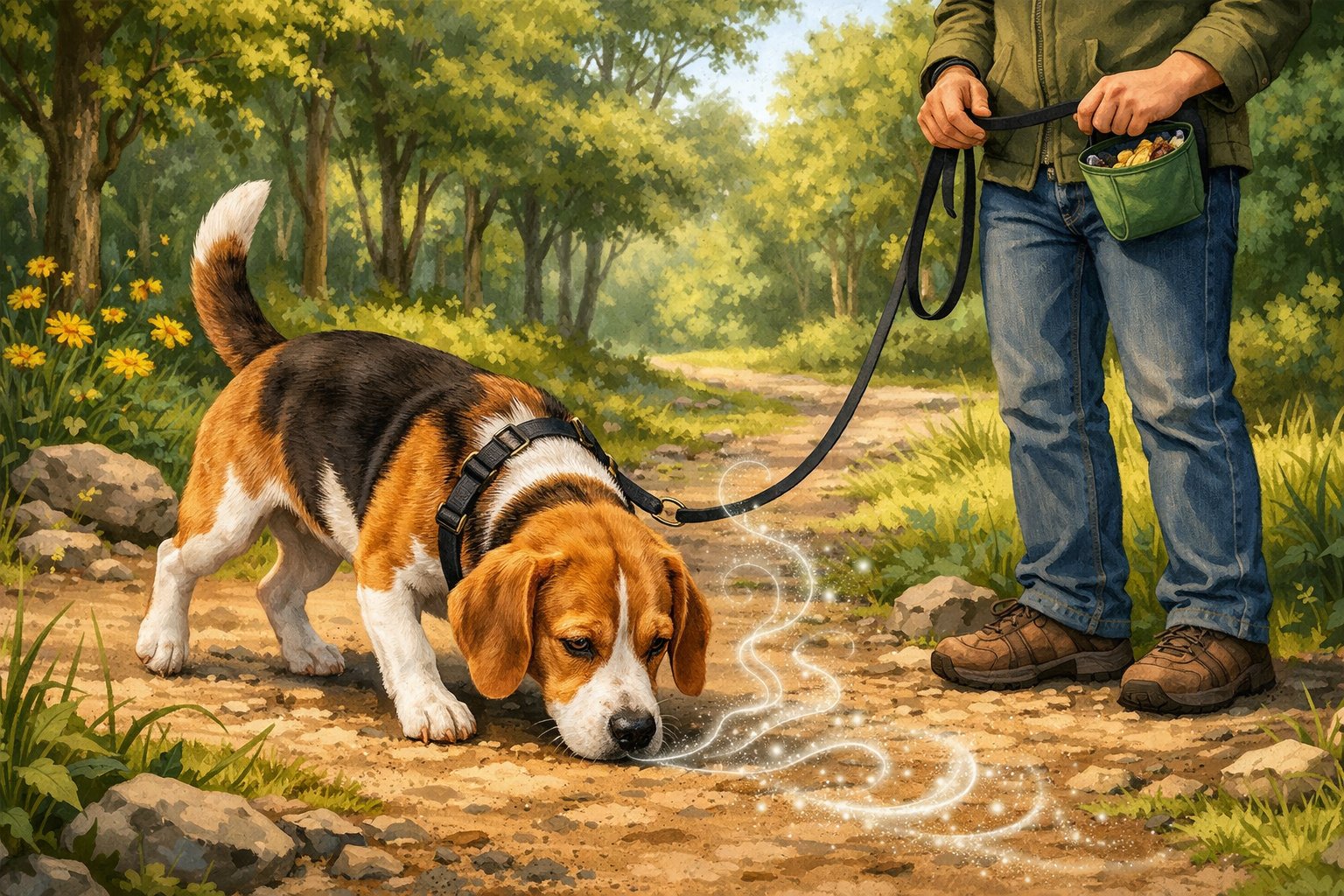
A Beagle dog sniffing the ground outdoors with scent trails visible, surrounded by grass and trees.

A beagle relies on scent more than sight or sound. Breeding, biology, and daily behavior all push the nose to the front of every choice it makes.

Why Beagles Are Natural Scent Hounds

Breeders developed the beagle as a scent hound for tracking small game. Hunters needed a dog that could follow a trail without constant direction.

This history shaped how the breed thinks and moves today. A beagle works with focus once it finds a smell.

That focus can look like stubbornness, but it reflects independence bred into the dog. Articles on beagle instinctive behavior and hunting roots explain how scent work drove these traits.

This background helps explain why commands sometimes lose priority. The nose often takes control first.

The Anatomy of a Beagle’s Super Sniffer

A beagle has about 220 million scent receptors, far more than humans. These receptors sit deep in the nasal cavity and sort smells with high detail.

The long ears and loose lips play a role too. As the dog tracks, the ears sweep scent particles toward the nose.

The lips help trap smells close to the face. Guides on how strong a beagle’s sense of smell is describe these features in simple terms.

Key physical traits that boost scent tracking:

Feature Purpose
Long ears Funnel scent toward the nose
Wide nostrils Pull in more air and odor
Large scent area Process many smells at once

How Scent Drives Beagle Behavior

A beagle experiences the world through smell first. New scents can override training in seconds.

Walks often turn into slow zigzags as the dog checks the ground. This behavior shows up at home too.

Food smells pull the dog into kitchens or trash bins. Trainers often note this pattern when discussing beagle nose addiction and obedience challenges.

Structured scent games and controlled sniff time give the nose a job. That approach works with the dog’s instincts instead of against them.

Smart Strategies for Handling Beagle Nose-Driven Adventures

A Beagle dog sniffing the ground in a park while its owner calmly holds the leash and a treat pouch nearby.

Beagles explore the world through scent, which shapes how they learn, play, and behave. Clear training, a thoughtful home setup, and scent-based activities help beagle owners guide that instinct in useful ways.

Training Techniques for a Scent-Driven Beagle

Training a beagle works best when it respects the nose instead of fighting it. Short sessions keep focus strong, especially outdoors where smells compete for attention.

Owners should use high-value treats and reward fast responses. Consistency matters.

When they train a beagle, they should practice the same cues every day and in many places. This builds habits that hold even when distractions rise.

Many trainers note that scent hounds respond well to reward-based methods, as explained in guides on training a beagle with a strong nose.

Helpful tips

  • Keep sessions under 10 minutes
  • Practice recall on a long leash
  • Reward eye contact before movement

Creating a Stimulating Environment at Home

Living with a beagle gets easier when the home supports mental work. A bored beagle often finds trouble, like digging or barking.

Simple changes can prevent that. Owners can rotate toys weekly to keep interest high.

Food puzzles add daily challenge without much effort. Calm rest areas also matter, since mental work can tire them out.

Experts on living with a nose-driven beagle stress that scent work indoors can reduce problem behaviors. It gives the dog a clear job.

Home Setup Idea Why It Helps
Puzzle feeders Slow eating and focus the mind
Snuffle mats Encourage natural sniffing
Quiet rest spot Supports recovery after training

Fun Scent Games and Positive Channeling

Scent games turn instinct into play. They work well for beagle training because they feel natural and rewarding.

Simple games fit into daily routines and need little space. A basic hide-and-seek game uses treats hidden around one room.

Owners should start easy and increase difficulty over time. “Find it” cues help connect scent work to listening skills.

Articles on why beagles follow their nose note that sniffing reduces stress. Five minutes of focused scent work can equal a longer walk.

Easy scent games

  • Treat trails in the yard
  • Hidden toys under cups
  • Box searches with one reward

Filed Under: Border Collies

  • « Go to Previous Page
  • Page 1
  • Interim pages omitted …
  • Page 7
  • Page 8
  • Page 9
  • Page 10
  • Page 11
  • Interim pages omitted …
  • Page 22
  • Go to Next Page »

Primary Sidebar

Must-Have Puppy Essentials for New Labradoodle Owners: Your Complete Starter Guide

Bringing home a Labradoodle puppy is an exciting time filled with wagging tails and playful energy. … [Read More...] about Must-Have Puppy Essentials for New Labradoodle Owners: Your Complete Starter Guide

Best Cooling Mats for Labradoodles in Summer: Keep Your Pup Comfortable During Hot Weather

Labradoodles have thick, fluffy coats that can make them uncomfortable during hot summer months. … [Read More...] about Best Cooling Mats for Labradoodles in Summer: Keep Your Pup Comfortable During Hot Weather

Top Car Seat Covers for Labradoodle Owners: Protect Your Vehicle from Fur and Mess

Labradoodles are wonderful family dogs, but they shed fur and can track dirt into your car. Their … [Read More...] about Top Car Seat Covers for Labradoodle Owners: Protect Your Vehicle from Fur and Mess

Best Dog Beds for Large Labradoodles: Comfortable and Durable Options for Your Furry Friend

Large Labradoodles need a comfortable place to rest after a day of play and exercise. A good dog bed … [Read More...] about Best Dog Beds for Large Labradoodles: Comfortable and Durable Options for Your Furry Friend

Best Crates for Labradoodles: Complete Mini vs Standard Size Guide for 2026

Labradoodles are popular dogs that come in different sizes, from mini versions around 15-30 pounds … [Read More...] about Best Crates for Labradoodles: Complete Mini vs Standard Size Guide for 2026

Best Healthy Treats for Labradoodle Training: Expert-Approved Options for 2026

Training a Labradoodle requires patience, consistency, and the right rewards to reinforce good … [Read More...] about Best Healthy Treats for Labradoodle Training: Expert-Approved Options for 2026

Are Elevated Bowls Good for Labradoodles? What Every Owner Should Know

Labradoodles are energetic and lovable dogs that need proper care at mealtime. One important choice … [Read More...] about Are Elevated Bowls Good for Labradoodles? What Every Owner Should Know

Best Supplements for Labradoodle Joint Health: Keep Your Pup Active and Pain-Free

Labradoodles are active dogs that love to run, jump, and play throughout their lives. Their … [Read More...] about Best Supplements for Labradoodle Joint Health: Keep Your Pup Active and Pain-Free

Top Slow Feeders for Labradoodles Who Eat Too Fast: A Guide to Healthier Mealtimes

Labradoodles are energetic dogs who often get very excited at mealtime. Many of them eat their food … [Read More...] about Top Slow Feeders for Labradoodles Who Eat Too Fast: A Guide to Healthier Mealtimes

Best Dog Food for Labradoodles: Top Picks for Puppies, Adults and Seniors in 2026

Labradoodles are energetic and friendly dogs that need the right nutrition to stay healthy … [Read More...] about Best Dog Food for Labradoodles: Top Picks for Puppies, Adults and Seniors in 2026

Categories

  • Border Collies
  • Uncategorized

Superduperdog.com - Copyright © 2026